Will you need a coronavirus test to fly? Everything we know right now

Editor's Note
As travel begins to slowly resume across the globe, it's abundantly clear that preparing for a trip abroad will be much more complicated than simply checking your passport's validity and packing enough clean socks.
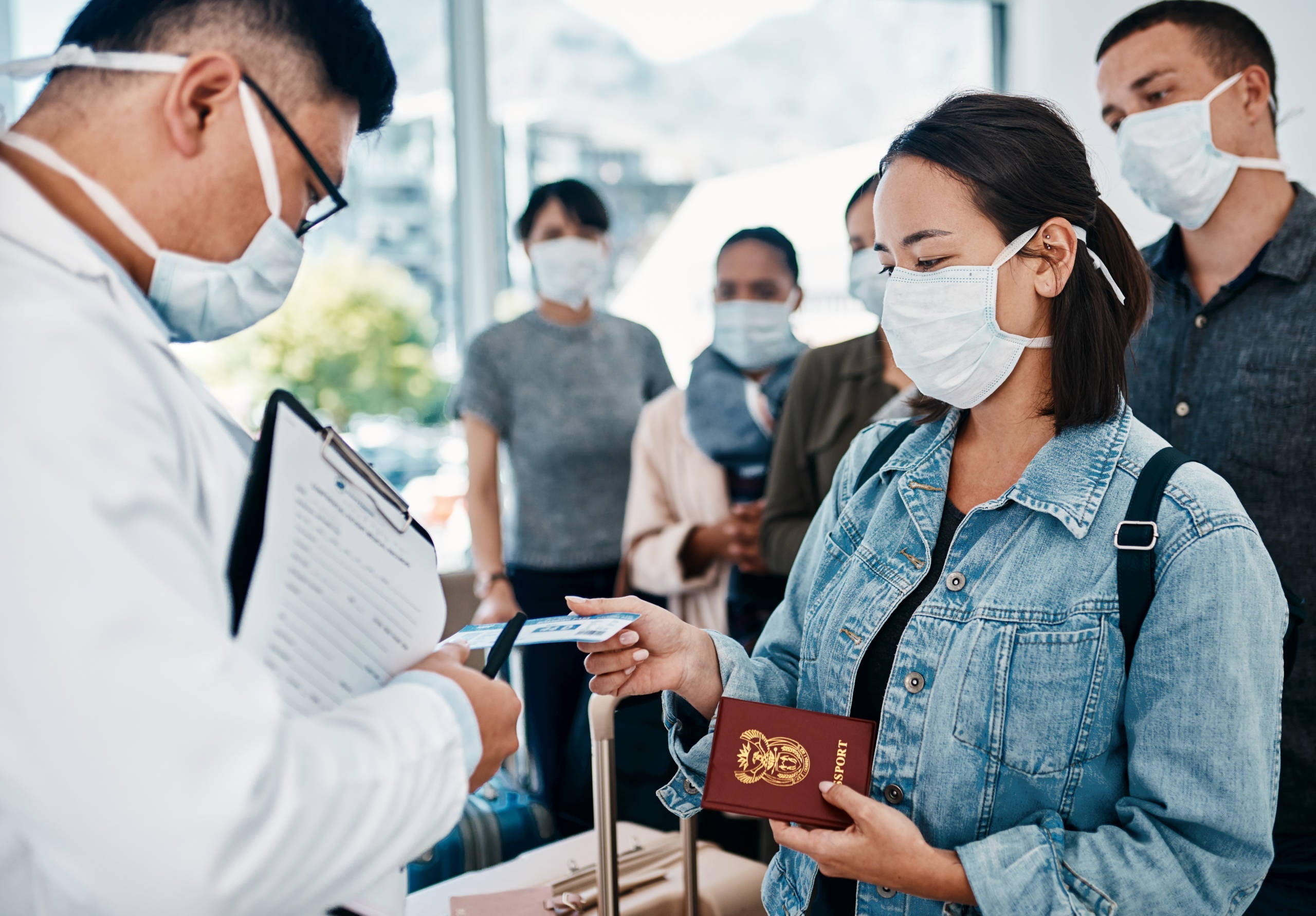
In April, Emirates became the first airline to test passengers for COVID-19 before check in. For travelers departing Dubai (DXB) en route to Tunis, Tunisia (TUN), Emirates' rapid blood test was designed to provide results in as little as 10 minutes. Travelers who tested negative were cleared to fly — and provided with a clean bill of health, which is quickly becoming a common requirement for entry to many countries.
Visit TPG's guide to all coronavirus news and updates
Countries are cautiously reopening, but the future of travel is shifting at a rapid pace. And health screening measures may become an increasingly prominent part of the travel experience in the months, and maybe even years, to come.
Whether or not you need a coronavirus test to fly will depend largely on your origin and destination — and as this global health crisis progresses, the methods for screening and testing travelers will likely evolve in kind. In some instances, such as the Emirates route connecting the United Arab Emirates to Tunisia, travelers may be required to submit to on-site coronavirus testing before boarding an airplane. In other instances, negative results may be required before you can enter a country, or leave the airport.
When a coronavirus test isn't required, temperature checks and other precautions are likely to play an outsized role in the screening process. Airlines such as Frontier and Air Canada have added passenger temperature checks to their own safety procedures, and travelers could be denied boarding if they present a fever.
Though the situation is still very much developing, here are some of the instances when you might need a coronavirus test to fly.
For more TPG news delivered each morning to your inbox, sign up for our daily newsletter.
Where you can get a Coronavirus test upon arrival
Iceland
Iceland welcomed back some international travelers on June 15, though Americans are still not welcome. But unless travelers want to immediately enter a two-week quarantine, they may be required to take a COVID-19 test upon arrival at Kevlavík International Airport (KEF). Same-day results are expected, and travelers will be permitted to wait for the results at their hotel or other accommodations.

The details: Reports suggested the Icelandic government would pay for the initial tests for incoming travelers — an initiative expected to last about two weeks, according to The Reykjavík Grapevine. After that, travelers will shoulder the cost (about 50,000 Icelandic króna, or $360). Travelers may be able to avoid both the on-site test and the 14-day quarantine by presenting an acceptable clean bill of health obtained before departure.
Austria
Though only travelers from within the Schengen Area and exempt individuals are allowed to travel to Austria at this time, Austria recently introduced on-site coronavirus testing at Vienna International Airport (VIE). Similar to the testing process in Iceland, results are available in approximately two to three hours and — if negative — allow travelers to skip the requisite 14-day quarantine.
The details: The tests cost 190 euros (about $206). Travelers can also provide a health certificate from home that shows a negative test result.
Related: EU confirms Americans banned; Where can we go instead?
Hong Kong
Hong Kong is requiring travelers to endure an arduous screening process upon arrival. One Hong Kong-based journalist, Laurel Chor, flew to Hong Kong International (HKG) from Paris (CDG) on May 14 and described an eight-hour ordeal involving paperwork (a quarantine order and a good-health declaration) and a transfer to the AsiaWorld-Expo convention center to self-collect a deep-throat saliva sample for an on-site test. After more than six hours, Chor received her results — negative — and was allowed to leave. Still, she was required to enter a 14-day quarantine and take a follow-up test later.
The details: All asymptomatic, inbound travelers are required to immediately take a shuttle bus to the convention center for specimen collection and testing. Only residents are allowed entry to Hong Kong, and a two-week quarantine is required regardless of the test results.
Related: When will international travel return? A country-by-country guide to coronavirus recovery
Antigua
Incoming travelers will be tested for COVID-19 upon arrival in Antigua. Until a clean bill of health is confirmed, travelers will have to remain quarantined. Presenting a negative COVID-19 test taken before arrival can help you bypass some of the screening protocols on the ground.
The details: If you do not take a test before departing for Antigua, travelers may have to pay $100 for the 15-minute test upon arrival, and the results will be released within 48 hours.
Where you'll need a negative Coronavirus test to enter
Even if you don't technically need a coronavirus test to board a flight, or need to submit to testing upon arrival, you may very well find yourself seeking a coronavirus test before your next international — or in some cases, domestic — trip. As countries and even states evaluate the global health crisis and make plans to reopen, travelers should expect to see many more destinations welcome only travelers who can provide an official clean bill of health. The requirements for what documentation will be valid will likely vary. Here are just a few examples:
Czech Republic
The Czech Republic, for example, is currently allowing travelers from nearby countries to visit – but only if they can provide a negative COVID-19 test at the border.
St. Lucia
St. Lucia is requiring visitors to present certified proof of a negative PCR (nasal swab) test taken within seven days of travel.
United Arab Emirates
The United Arab Emirates is requiring anyone coming into the country to carry a negative COVID-19 certificate completed within 96 hours of departure.
The announcement comes as Emirates introduces a similar rule to select Dubai-bound passengers in early July. The country is making exceptions for children under the age of 12 and anyone with moderate to severe disabilities.
If the UAE government has specified a designated laboratory in the country of origin, then the traveler must get the certificate from that lab. Travelers must first try to arrange a test with a Pure Health medical facility if the country of departure has any approved clinics.
If there are no clinics listed, UAE-based airlines are offering lists of approved clinics where travelers can get test results. Etihad passengers can check this website, and Emirates passengers can look at a list of laboratories here.
Despite these requirements, Emirates passengers departing from select countries and airports will be required to get another test on arrival. For passengers coming from the U.S., those departing from the following airports will be subject to additional testing:
- Dallas-Fort Worth International (DFW)
- George Bush Intercontinental in Houston (IAH)
- Los Angeles International (LAX)
- San Francisco International (SFO)
- Fort Lauderdale-Hollywood International (FLL)
- Orlando International (MCO)
Anyone originating from California, Florida and Texas connecting onto an Emirates flight at an airport not listed above will also be subjected to this on-arrival testing requirement, too.
Hawaii and Alaska
These provisions aren't just limited to countries other than the United States. In fact, Hawaii and Alaska will only allow visitors to enter if they present a negative COVID-19 test. The rules are fairly similar but there are slight nuances between the states.
As of June 6, visitors and returning residents to Alaska can present a negative test in lieu of the mandatory two-week quarantine. Travelers can present proof of a negative COVID-19 test completed within 72 hours before boarding their flight. This test must also be the PCR test. Depending on test availability, travelers may be able to have a test done at the airport upon landing.
Additionally, if you get tested within five days of departure and provide negative results, you'll be asked to take another test upon landing in Alaska. You'll be required to quarantine until you get the second test results back (usually within 24 to 48 hours), but if they're negative, you're free to explore. Children under the age of 2 are exempt from these requirements.
Beginning Aug. 1, travelers to Hawaii with a valid negative COVID-19 test result (taken up to 72 hours before arriving at a Hawaii airport) will not be subject to the 14-day quarantine. You must take an FDA-approved PCR test from a CLIA-certified laboratory before arrival, and no testing will be done at the airport.
Related: Dubai is reopening, and this is what you have to know
How to get a coronavirus test
Coronavirus testing varies considerably from one location to the next — and not everyone is necessarily eligible.
For more information about coronavirus testing, TPG spoke with Hanh Le, M.D., head of medical affairs at Healthline Media (also owned by TPG's parent company, Red Ventures).
Where can I find a coronavirus test?
First things first: Le says travelers should first call their doctor.
Depending on your reasons for seeking a test, you may be able to get a test through your general practitioner. Testing may also be available at your local pharmacy or a walk-in clinic. Your state's public health lab website will also say whether or not tests are being offered to the public, she added.
"There are an increasing number of [drive-thru] sites offering tests," Le said, "as well as at-home collection kits."
You may even be able to get a test from your airport's XpresSpa, since some locations (starting with New York-JFK) may be ditching airport manicures and massages for coronavirus tests.
What you don't want to do? Drop by the emergency department at your local hospital for a coronavirus test — unless, of course, you're actually experiencing a medical emergency.
Related: XpresSpa may be ditching airport manicures for coronavirus tests
Who can get a coronavirus test — and how long does it take?
"You may need to 'qualify' for a test in places where there are not enough tests to meet demand," Le said. "In places where the testing capacity can't meet demand, criteria for who should receive a test is determined by state and local public health departments and based on the clinical judgment of your healthcare provider."
In some cities and states, testing is being prioritized for people with certain symptoms and risk factors, Le explained.
The availability of testing can also vary significantly from one clinic to the next in the same area.
Katharine Leitch says she wasn't able to find anywhere to get a same-day test in Charlotte, North Carolina. Though many places advertised "no appointment needed," she said, they ultimately required an appointment upon arrival. Many places ran out of tests in the middle of the day, too, and once she was able to get an appointment, was told her time would be bumped. Over 72 hours later, she had not received her results.
But two hours away in Chapel Hill, North Carolina, Stella Shon says all the locations are currently testing by appointment only — save for a Walgreens with drive-up testing that can have a 2-hour wait. Shon was able to make a next-day appointment at CVS, however, received a quick nasal swab and had her results within 28 hours.
In New York City, testing seems to be widely available, but can also take too long for destination requiring results within 72 hours before a trip. TPG's director of video, Tom Grahsler, said he was able to make an appointment for an antibody blood test and an active COVID-19 swab on a Thursday for the following Monday in Brooklyn. The antibody test results were returned in 24 hours, but the active test could take two or three days.
Texas-based staffers say there are a handful of urgent care clinics where you can get a walk-in COVID-19 test. In fact, those without symptoms are able to get a test via the Express Testing Service. But many clinics have reported being out of tests, not having rapid tests, and having wait times many hours long. Summer Hull said she finally waited 90 minutes for a swab test, but won't receive results for seven to 10 days. Near Round Rock, you can also wait in line for over an hour for a same-day swab, though Lauren Atkinson says those results were returned in 48 hours and that the test cost nothing.
No matter where you're based, the bottom line is you'll want to do some research and make an appointment in advance whenever possible.
What types of coronavirus tests are available?
There are currently two main types of tests being used at this time: viral testing and antibody testing.
"Viral tests can tell us if someone currently has an active infection," Le explained. "Antibody tests can only tell us if someone has been exposed to the virus in the past."
Destinations that require the results of a coronavirus test will be looking at viral tests, not antibody tests. "Someone with an active infection is much more likely to spread the virus to others than someone who had the infection in the past or is on the tail-end of an infection," said Le.
"Since we don't know if antibodies to the virus provide protection from reinfection, someone with antibodies could also potentially become reinfected during their stay in that country, thus spreading the virus again," Le added.
"Keep in mind," Le said, "that none of the tests currently available are 100% accurate."
Viral testing
There are two types of viral testing, Le said. One uses RT-PCR technology and tests for viral RNA. Though very accurate, RNA tests tend to take longer to produce results — typically three to five days — though you may receive your results faster if the test is run in house or on site.
The other type of viral test is antigen testing, which identifies "parts of proteins" found on the virus. Tests can provide results very quickly — making them more practical for travelers — but are not as sensitive as the aforementioned RNA test.
"[This] means that it may 'miss' the proteins, producing a false negative," Le explained.
So, what's involved? For viral tests, a healthcare provider may swab the inside of your nose or the back of your throat. A sample of saliva or mucus can also be collected.
Antibody testing
An antibody test can only detect if your immune system responded to the virus in the past — it does not "detect an active infection," Le said.
"Antibodies can also be present when an infection is still active," Le explained, "but has been in the body long enough to produce a specific immune response. But again, this can't be used to diagnose an infection."
At this time, Le added, "It's not known whether antibodies for SARS-CoV-2 provide protection from reinfection."
Antibody tests can also return conflicting results — something The Points Guy himself, Brian Kelly, experienced firsthand.
Le told TPG earlier this month that many antibody tests were "rushed to market without the requisite testing."
Either way, if you're seeking or require a COVID-19 viral or antibody test, consult your healthcare provider for more information.
An antibody test requires a blood sample. "Some testing sites can run the test in-house, but many will need to send [the sample] to the lab for testing," said Le.
Will insurance cover a coronavirus test?
"Most insurance plans, including Medicare and Medicaid, are required to waive fees associated with COVID-19 testing," Le said. That includes fees associated with the visit or lab testing.
As always, however, there are exceptions. Le recommends you call your health insurance company to find out the specifics of your plan. She added that if you don't have health insurance, you may be able to take advantage of special enrollment periods opened in response to the health crisis. "These [state-run] plans would cover testing at no cost."
Additional reporting by Brian Kim and Samantha Rosen.
Feature photo by PeopleImages/Getty Images.
TPG featured card

at Capital One's secure site
Terms & restrictions apply. See rates & fees.
| 5X miles | Earn 5X miles on hotels, vacation rentals and rental cars booked through Capital One Travel |
| 2X miles | Earn unlimited 2X miles on every purchase, every day |
Pros
- Stellar welcome offer of 75,000 miles after spending $4,000 on purchases in the first three months from account opening. Plus, a $250 Capital One Travel credit to use in your first cardholder year upon account opening.
- You'll earn 2 miles per dollar on every purchase, which means you won't have to worry about memorizing bonus categories
- Rewards are versatile and can be redeemed for a statement credit or transferred to Capital One’s transfer partners
Cons
- Highest bonus-earning categories only on travel booked via Capital One Travel
- LIMITED-TIME OFFER: Enjoy $250 to use on Capital One Travel in your first cardholder year, plus earn 75,000 bonus miles once you spend $4,000 on purchases within the first 3 months from account opening - that’s equal to $1,000 in travel
- Earn unlimited 2X miles on every purchase, every day
- Earn 5X miles on hotels, vacation rentals and rental cars booked through Capital One Travel
- Miles won't expire for the life of the account and there's no limit to how many you can earn
- Receive up to a $120 credit for Global Entry or TSA PreCheck®
- Use your miles to get reimbursed for any travel purchase—or redeem by booking a trip through Capital One Travel
- Enjoy a $50 experience credit and other premium benefits with every hotel and vacation rental booked from the Lifestyle Collection
- Transfer your miles to your choice of 15+ travel loyalty programs
- Top rated mobile app