FDA approves new at-home test; Are rapid COVID-19 tests the way to get everyone traveling again?
Editor's Note
Editor's note: This post has been updated with new information.
Almost a year into the COVID-19 pandemic, infections are still skyrocketing. With air passenger traffic at 34% of what it was pre-pandemic, and travelers hungry to get back on the road and into the skies, the scramble to find a solution is on.
For more TPG news delivered each morning to your inbox, sign up for our daily newsletter.
Vaccines have arrived, but mass production and broad availability could still be months away. As the industry continues to explore ways to jumpstart travel, some airports and airlines have a potential solution to make flying safer and easier -- COVID-19 tests.
On Tuesday, Dec. 15, the Food and Drug Administration approved the first at-home, over-the-counter coronavirus test. CNN reports the FDA gave emergency authorization to the new test developed by Australian company Ellume. It's the first rapid test that can be taken fully at-home. Results appear in about 20 minutes and it's been shown to be more than 90% effective -- in other words, significantly more effective than other rapid tests currently on the market.
While this new test might be a major step toward helping people gather and socialize before a vaccine is widely available, is testing a silver bullet for travel, especially when it comes to international travel?
Here's what we found.
The push for testing
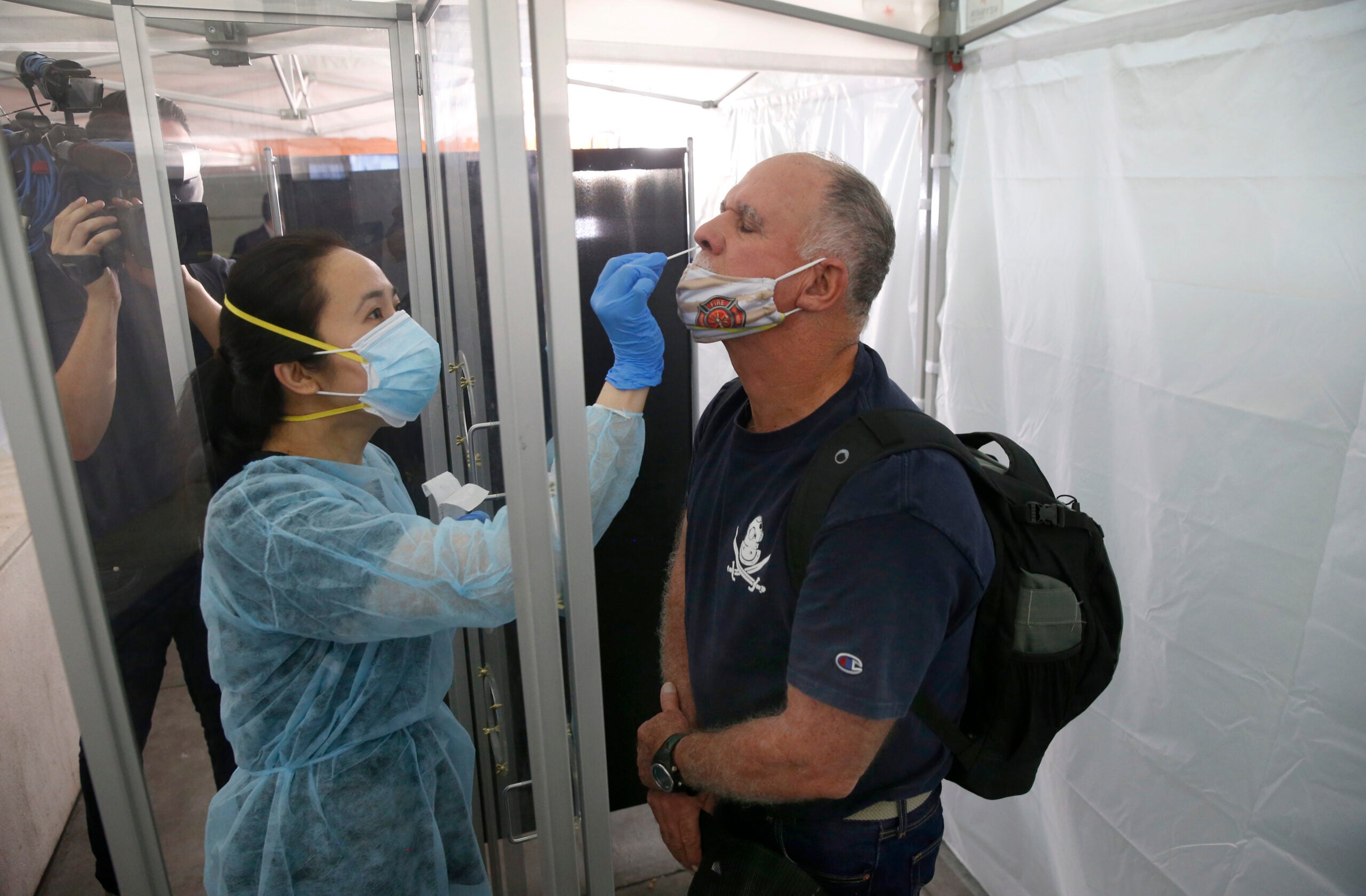
Airlines, cruise lines and destinations around the world are requiring mask wearing, increased the disinfecting of planes and improved air filtration, among other efforts, since the pandemic hit. Now a growing number are offering COVID-19 testing in the hopes of stopping sick passengers from boarding planes and entering countries while allowing others to avoid quarantines once they reach their destinations.
Related: State-by-state guide to coronavirus reopening

Travel industry groups have been pushing for the widespread use of COVID-19 testing to bypass travel bans and quarantines, which they say are hurting air travel. In September, the International Air Transport Association (IATA), which represents 290 airlines, called for the development and deployment of rapid, accurate, affordable, easy-to-operate, scalable and systematic COVID-19 testing for all passengers before departure as an alternative to quarantine measures as "the key to restoring the freedom of mobility across borders."
Slow or rapid: How different kinds of tests measure up
Public health experts believe that widespread testing for travel, however, is just not that simple, since COVID-19 tests aren't all created equal. PCR tests are considered the gold standard, but are more expensive than other kinds of tests, in addition to the challenges they pose around timing. Rapid tests, including molecular and antigen tests, are appealing because they deliver quick results.
Related: Do you need a negative coronavirus test to fly?
PCR – short for polymerase chain reaction – testing is widely believed to be the most accurate COVID-19 testing available, with 71%-98% sensitivity, according to the British Medical Journal. This is the kind of test that most countries are currently requiring for entry. The problem? These tests must be sent out to a lab, and travelers risk that they won't get results within the necessary window to board their flight or enter their destination. These windows vary from country to country, but many require a negative result from a PCR test taken within 72 hours of departure or arrival. Without predictable and fast results, all or part of a trip can be put in jeopardy.
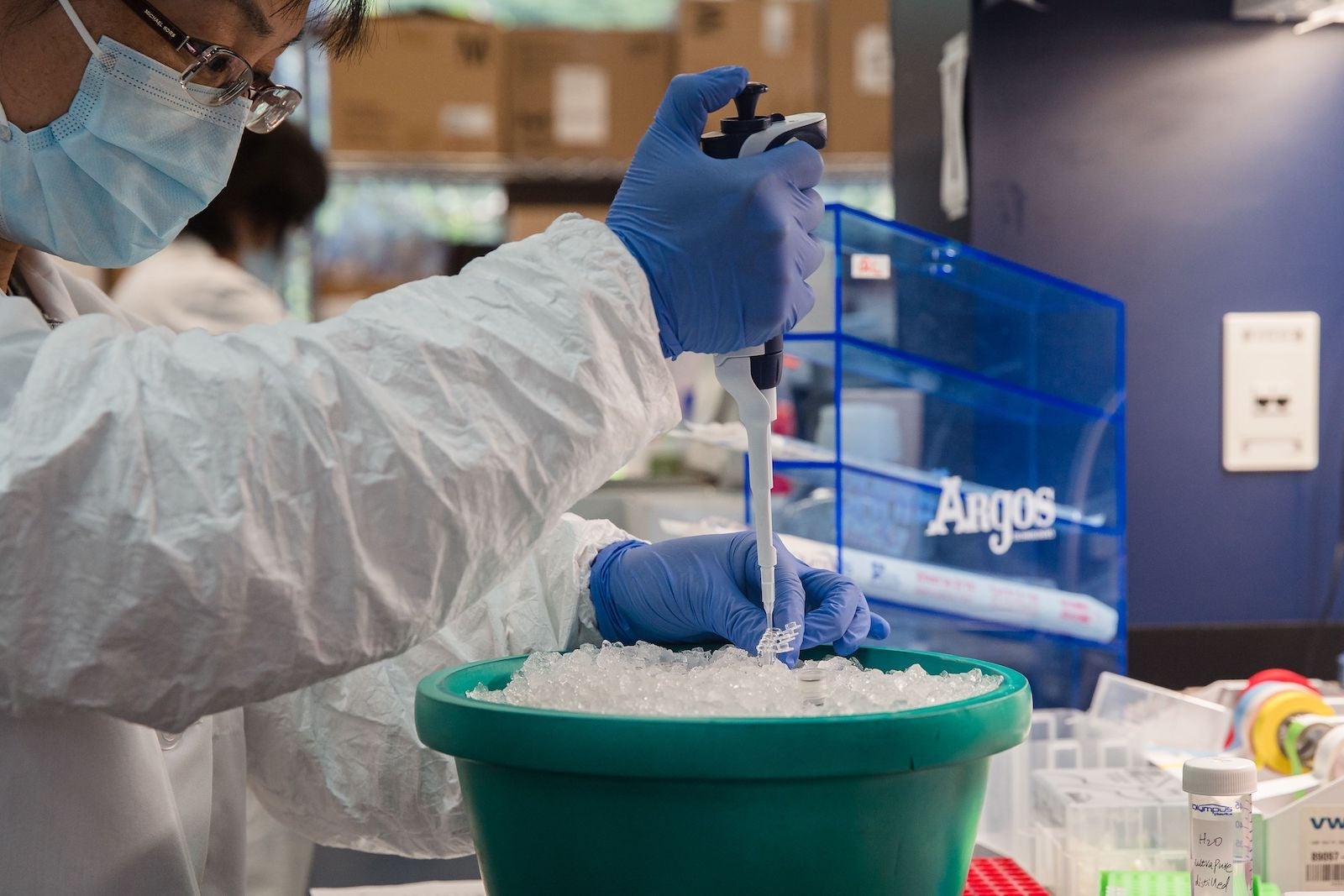
A potential answer to this problem? Rapid testing. These tests, usually administered as a nasal swab, can be analyzed on the spot and do not require a lab – a potential boon for travelers and travel companies alike.
Related: 3 largest NYC airports now offer testing.
"This first generation of rapid result tests are the first step towards something that will, I hope, be useful. They are certainly a positive development and they will contribute towards international and potentially, if we need it, to domestic travel," says Henry Harteveldt, a travel industry analyst at the Atmosphere Research Group, a travel industry market research firm. "If you take a rapid result test before your flight, and […] one is required after, and that means you're either exempt from a quarantine or the quarantine is reduced to what we might consider something reasonable, let's say 24 hours, then it's definitely going to help."
But health experts caution against putting too much faith in rapid tests.
"Rapid tests have a lot of benefits, the [fast] turnaround time is really crucial in a lot of different settings. But the issue with the rapid tests is that their level of accuracy can often be lower," says Dr. Makeda Robinson, an infectious disease expert at Stanford University. These tests, she adds, could give travelers a false sense of security. "When people feel as though the test has been rubber-stamped, they assume the results they get back are 100% precise. "
Who's testing now
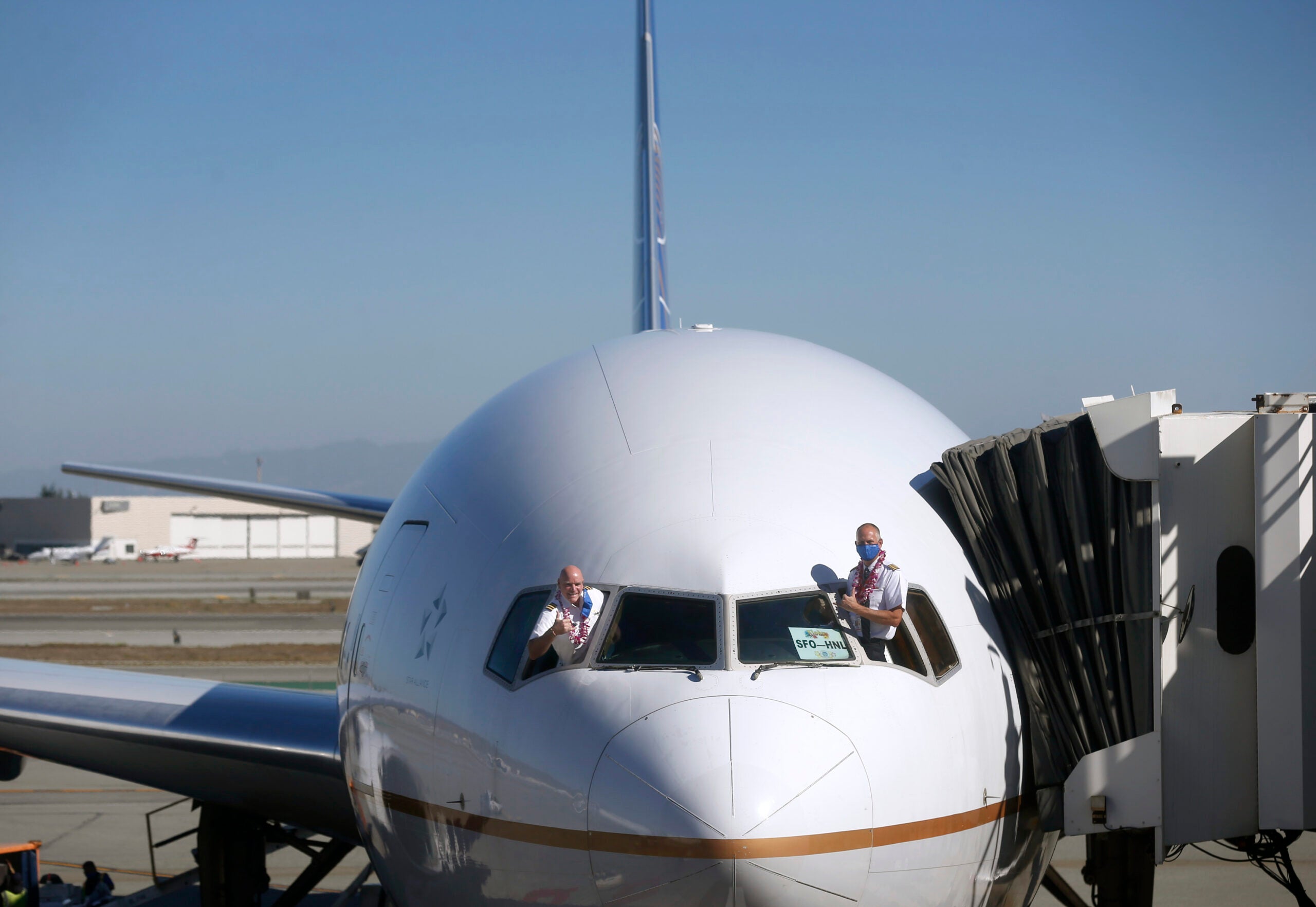
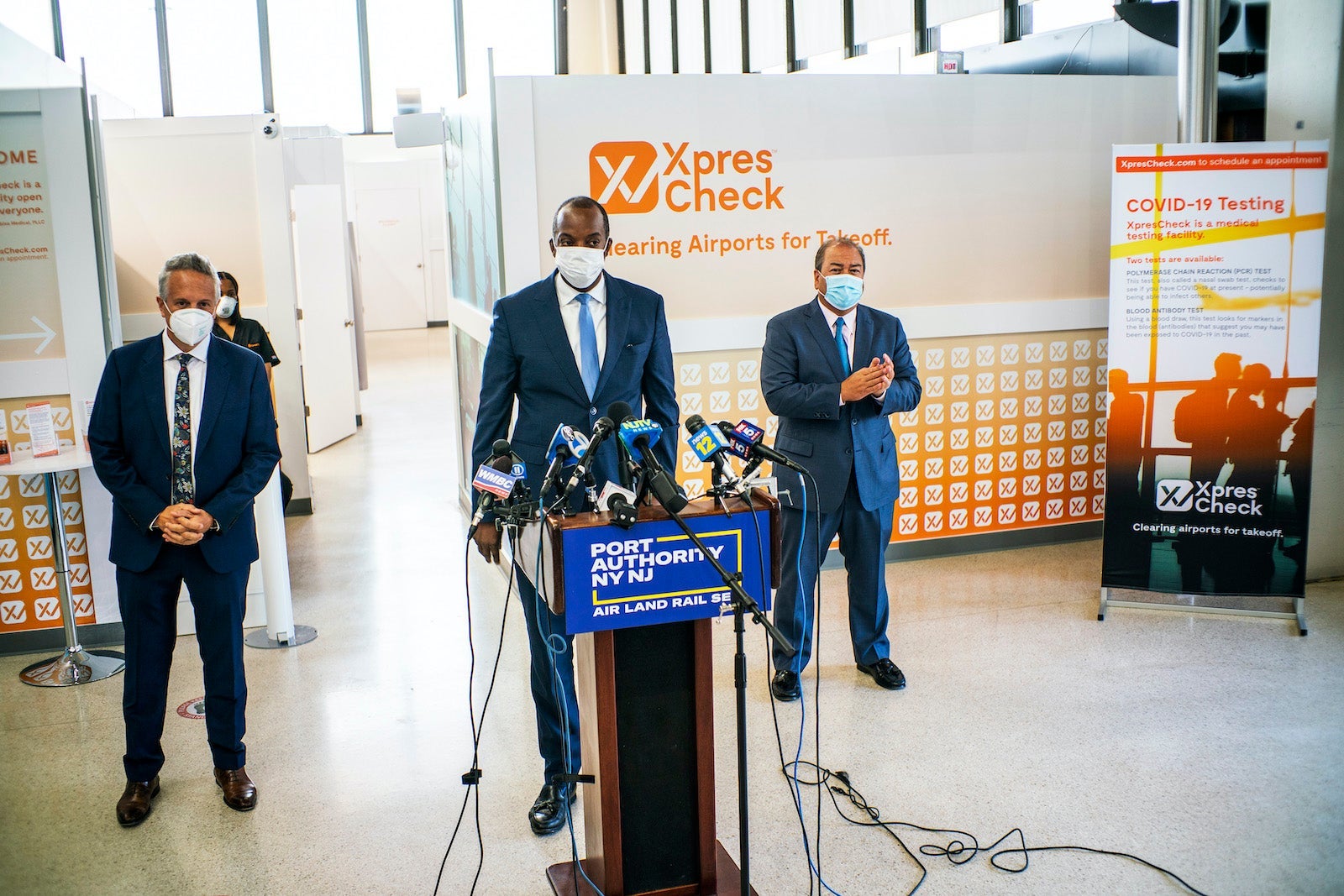
So far, no U.S. airline is requiring a negative COVID-19 test to fly, but some have started offering tests at the airport if they're traveling to destinations that require proof of a negative test. United Airlines and American Airlines, for example, are offering pre-flight rapid testing for destinations such as the Caribbean and Hawaii. The latter destination now lets travelers skip the mandatory two-week quarantine if they can show a negative FDA-approved test result. A few major U.S. airports now also have on-site rapid testing, including Newark, New York's JFK, Tampa International Airport and San Francisco (SFO), joining international hubs such as London's Heathrow Airport that are doing the same.
Related: Airlines are rushing to add pre-flight tests
Related: What it's like to fly in the U.S. right now
Testing partnerships with destinations may also be an answer. JetBlue announced that passengers heading to Aruba would have access to PCR testing via its partner, Vault, through an agreement with Aruba Tourism Authority. Travelers who request it – a PCR saliva home test that is performed with the guidance of a Vault staffer via video chat – can carefully time the test so that results arrive exactly in time for their trip.
At home testing
The FDA just gave emergency authorization to a new test by Ellume that will be sold over-the-counter. It will not require a prescription or any external lab work, and you can take it from the comfort of your own home.
The Food and Drug Administration says it identified 96% of positive samples and 100% of negative samples in people with symptoms and 91% of positive samples and 96% of negative samples in people without symptoms.
FDA Commissioner Dr. Stephen Hahn said in a written statement:
"Today's authorization is a major milestone in diagnostic testing for COVID-19. By authorizing a test for over-the-counter use, the FDA allows it to be sold in places like drug stores, where a patient can buy it, swab their nose, run the test and find out their results in as little as 20 minutes."
The FDA says the test lets consumers use an app on their phones to help them take the test and then interpret the results.
The Ellume test is an antigen test that "correctly identified 96% of positive samples and 100% of negative samples in individuals with symptoms," the FDA said.
In people without symptoms, the test correctly identified 91% of positive samples and 96% of negative samples, the FDA said.
Ellume said it will charge just $30 for the test.
Most countries (and some states) won't accept antigen tests for travel, so keep that in mind as you make your plans.
But this can be an incredibly helpful -- and affordable -- tool for those looking to gather with family and friends. This is especially important given that small group gatherings and holiday get-togethers are driving the latest wave of the pandemic.
The trouble with testing
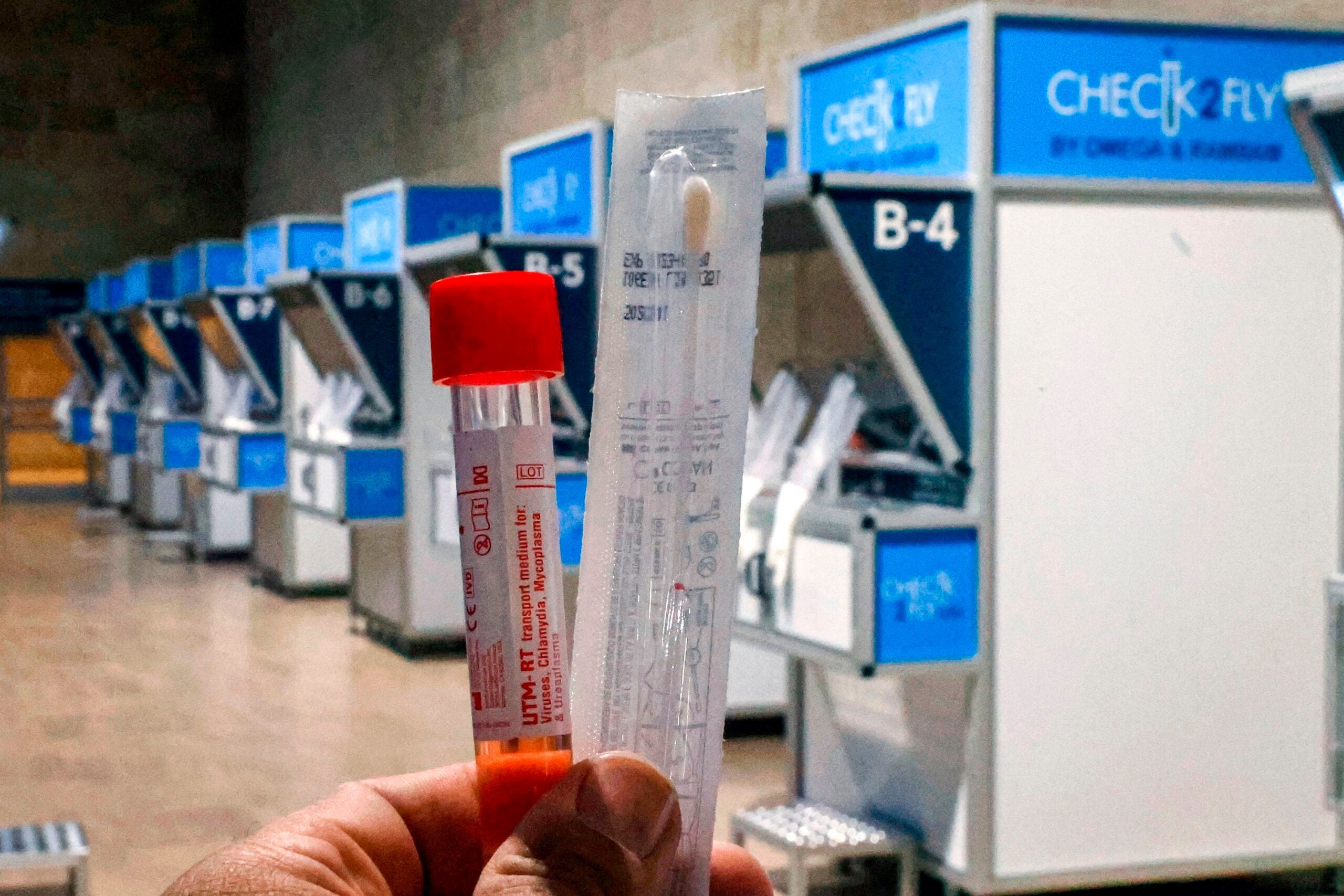
Though testing can help limit the spread of COVID-19, especially by catching people who have the virus but are asymptomatic, it's not foolproof. Travelers can still pick up the virus after getting tested, or they can be infected but test negative if they have low levels of the virus at the time of testing. People with COVID-19 have an incubation period when the virus can't be detected yet by tests but they can still transmit it.
Related: How to get a coronavirus test to travel.
"Every test is a snapshot," says Dr. Gigi Kwik Gronvall, a senior scholar at the Johns Hopkins Center for Health Security. "Your result is only true for that time that you took the test. So for somebody who tests negative upon arrival, especially using the less sensitive test, the next day they could be very positive. So you probably will miss cases. Will you miss fewer of them? That's more likely than if you did no testing at all."
Robinson agrees that rapid testing can be helpful, and says there's been improving test accuracy and sensitivity. Rapid tests are also becoming more available as new manufacturers and innovations enter the space. But she cautions against using rapid tests to totally do away with quarantine periods, particularly for international travel.
Related: A country-by-country guide to coronavirus recovery.
"The real question here is how long is your incubation period before you develop symptoms? This time window can be quite variable with this virus," she says, adding that most people have symptoms within a week. Given that, "having a pre-flight test, a shorter quarantine and a post-flight test could be a reasonable solution" to cut down but not eliminate quarantines.
Testing as a first step – not a complete solution
Testing, experts say, is also only one part of the equation. Travelers must still take other precautions to stay safe, like wearing a mask, washing their hands, keeping physical distance from other travelers, and being outside as much as possible.
Related: Study suggests getting COVID-19 on a plane is rare.
Still, a recent IATA survey shows that travelers are in favor of COVID-19 testing, with 88% willing to undergo testing as part of the travel process, and that testing would help rebuild passengers' confidence in air travel. It's too early to tell if rapid tests will be the key to boosting domestic and international travel, especially with COVID-19 surging in many U.S. states and European countries. But with things changing so quickly on the testing front, they hold much promise.
Related: Airlines expect a post-coronavirus boom in leisure travel, they just don't know when
"What I think is really good is that we're now seeing a number of different airlines try a number of different approaches and solutions, and inevitably a few winners will emerge, winners based on accuracy of test results, efficiency of how they can be processed, and how passengers feel about the test," Harteveldt says. "I expect that within just perhaps even a few months we may start to see some winners emerge."
Additional reporting by Clint Henderson.
TPG featured card
at American Express's secure site
Terms & restrictions apply. See rates & fees.
| 4X | Earn 4X Membership Rewards® points per dollar spent on purchases at restaurants worldwide, on up to $50,000 in purchases per calendar year, then 1X points for the rest of the year. |
| 4X | Earn 4X Membership Rewards® points per dollar spent at US supermarkets, on up to $25,000 in purchases per calendar year, then 1X points for the rest of the year. |
| 5X | Earn 5X Membership Rewards® points on prepaid hotel stays booked through AmexTravel.com or the Amex Travel App™. |
| 3X | Earn 3X Membership Rewards® points on flights booked through AmexTravel.com, the Amex Travel App™, or purchased directly from airlines. |
| 2X | Earn 2X Membership Rewards® points on prepaid car rentals booked through AmexTravel.com or the Amex Travel App™ and cruises booked and paid through AmexTravel.com. |
| 1X | Earn 1X Membership Rewards® point per dollar spent on all other eligible purchases. |
Pros
- Valuable dining and food-related credits
- Flexible rewards with airline and hotel transfer partners
- Multiple travel and purchase protections
- No foreign transaction fees
- Access to Amex Offers for additional savings (enrollment required)
Cons
- Not as useful for those living outside the U.S.
- Some may have trouble using Uber and other dining credits
- You may be eligible for as high as 100,000 Membership Rewards® Points after you spend $8,000 in eligible purchases on your new Card in your first 6 months of Card Membership. Welcome offers vary and you may not be eligible for an offer. Apply to know if you’re approved and find out your exact welcome offer amount – all with no credit score impact. If you’re approved and choose to accept the Card, your score may be impacted.
- Earn 4X Membership Rewards® points per dollar spent on purchases at restaurants worldwide, on up to $50,000 in purchases per calendar year, then 1X points for the rest of the year.
- Earn 4X Membership Rewards® points per dollar spent at US supermarkets, on up to $25,000 in purchases per calendar year, then 1X points for the rest of the year.
- Earn 5X Membership Rewards® points on prepaid hotel stays booked through AmexTravel.com or the Amex Travel App™.
- Earn 3X Membership Rewards® points on flights booked through AmexTravel.com, the Amex Travel App™, or purchased directly from airlines.
- Earn 2X Membership Rewards® points on prepaid car rentals booked through AmexTravel.com or the Amex Travel App™ and cruises booked and paid through AmexTravel.com.
- Earn 1X Membership Rewards® point per dollar spent on all other eligible purchases.
- Pay It® lets you tap in the American Express® App to quickly pay for small purchase amounts throughout the month and still earn rewards the way you usually do. Plan It® gives you the option to split up big purchases into equal monthly payments with a fixed fee. You’ll know upfront exactly how much you’ll pay.
- $120 Dining Credit: Earn up to a total of $10 in statement credits monthly when you pay with the Gold Card at Grubhub (including Seamless), Buffalo Wild Wings, Five Guys, The Cheesecake Factory, and Wonder. This can be an annual savings of up to $120. Enrollment required.
- $100 Resy Credit: Get up to $100 in statement credits each calendar year at over 10,000 qualifying U.S. Resy restaurants after you pay for eligible purchases with the American Express® Gold Card. That’s up to $50 in statement credits semi-annually. Enrollment required.
- $84 Dunkin' Credit: Earn up to $7 in monthly statement credits after you pay with the American Express® Gold Card at U.S. Dunkin’ locations. Enrollment required.
- $120 Uber Cash on Gold: Enjoy up to $120 in Uber Cash annually with your Gold Card. Just add your Card to your Uber account and you'll get $10 in Uber Cash each month to use on orders and rides in the U.S. when you select an Amex Card for your transaction.
- Enjoy complimentary Hertz Five Star® Status benefits like skipping the counter at select locations, adding an additional driver at no additional cost*, and vehicle upgrades**. Benefit enrollment and Hertz Gold+ registration are required. *Additional drivers must meet standard rental qualifications and must be a spouse or domestic partner to qualify as complimentary. Other additional drivers subject to fees. **Benefits are subject to availability and vary by location. Additional Hertz program Terms and Conditions including age restrictions apply.
- Book two nights or more with The Hotel Collection through AmexTravel.com or the Amex Travel App™ and receive a $100* credit towards eligible charges at over 1,400 upscale hotels worldwide. *Eligible charges vary by property.
- Book your travel through the Amex Travel App™ with added peace of mind – backed by American Express® service and support. Only for American Express® Card Members.
- Whenever you need us, we're here. Our Member Services team will ensure you are taken care of. From lost Card replacement to statement questions, we are available to help 24/7.
- No Foreign Transaction Fees.
- Annual Fee is $325.
- Terms Apply.