Risk of coronavirus on planes less than getting struck by lightning, airline group says

Travelers concerned about contracting the coronavirus on a flight can breath at least a small sigh of relief following new evidence that there is a very low risk of catching COVID-19 onboard an airplane.
The International Air Transport Association (IATA) has found only 44 confirmed cases of COVID-19 caught on a flight from among the 1.2 billion people that flew between January and July this year, in a study released Thursday. That translates to one case for every 27.3 million flyers.
In other words, you have a better chance of getting struck by lightning than catching COVID on an airplane, the study found.
Sign up for the free daily TPG newsletter for more airline news!
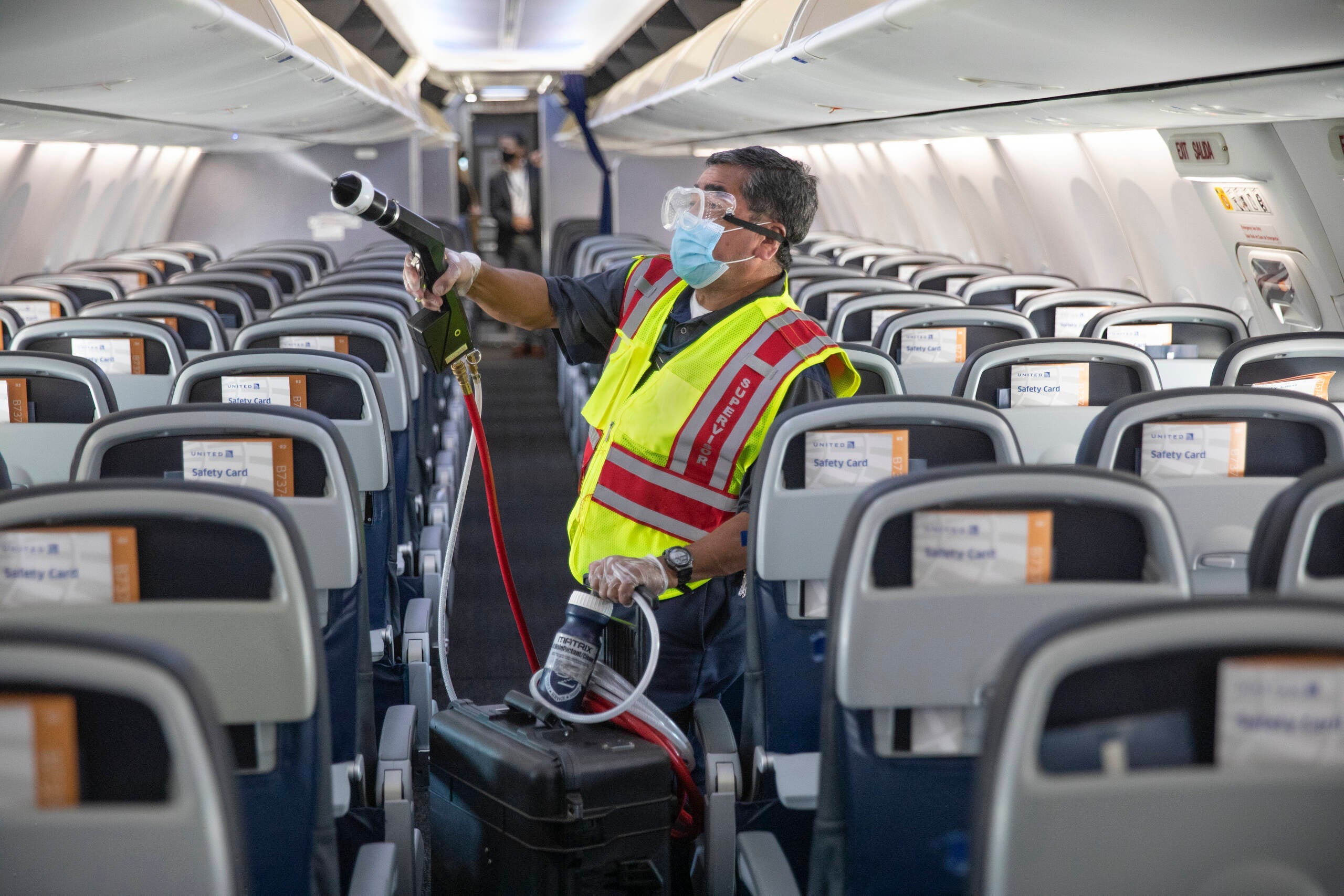
IATA, as well as experts from Airbus, Boeing and Embraer, all agreed that the combination of wearing a mask and the constant airflow through high-efficiency particulate air (HEPA) filters keep cabins safe.
Brazilian planemaker Embraer found that masks alone reduced a flyer's risk of inhaling COVID particles by six times. This is greater than the benefit of, for example, blocking a middle seat for the appearance of social distancing on a plane.
"The social distance onboard an aircraft are ensured by the airflow," IATA medical advisor Dr. David Powell said during a briefing Thursday. "That's the best protection onboard an aircraft."
Related: What the heck is a HEPA filter? How airplane air stays clean
IATA's study backs up assertions by American Airlines, United Airlines and others that blocking seats does not provide safety from the virus. Instead, those sides say that masks, air filtration and enhanced cleaning measures are the best defense against transmission on a plane.

Delta Air Lines CEO Ed Bastian has said that his carrier's decision to block seats into next year is more a matter of building traveler confidence than anything else. In addition, the carrier has been able to command slightly higher fares than its competitors throughout the crisis possibly mitigating the impact of blocked seats.
Alaska Airlines, JetBlue Airways and Southwest Airlines also either block seats or cap the number of flyers on their flights.
Related: Delta will block seats into January as it tries to boost traveler confidence
The U.S. Centers for Disease Control and Prevention (CDC), when asked about inflight transmission in August, told TPG that the data was inconclusive.
Despite the new data showing a low risk of COVID-19 transmission on an aircraft, IATA and the planemakers agreed that risks remain elsewhere in the travel process. For example, in the airport terminal or on the way to the airport.
And the trade group is not bullish on a general recovery in air travel. IATA does not expect a full return to 2019 levels of flying until at least 2024, with domestic markets returning before international ones.
"If you want to travel and minimize the risks of COVID-19, put on a mask and get on an airplane," Luis Carlos Alfonso, vice president of engineering, technology and strategy at Embraer, said during the briefing.
TPG featured card
at American Express's secure site
Terms & restrictions apply. See rates & fees.
| 4X | Earn 4X Membership Rewards® points per dollar spent on purchases at restaurants worldwide, on up to $50,000 in purchases per calendar year, then 1X points for the rest of the year. |
| 4X | Earn 4X Membership Rewards® points per dollar spent at US supermarkets, on up to $25,000 in purchases per calendar year, then 1X points for the rest of the year. |
| 5X | Earn 5X Membership Rewards® points on prepaid hotel stays booked through AmexTravel.com or the Amex Travel App™. |
| 3X | Earn 3X Membership Rewards® points on flights booked through AmexTravel.com, the Amex Travel App™, or purchased directly from airlines. |
| 2X | Earn 2X Membership Rewards® points on prepaid car rentals booked through AmexTravel.com or the Amex Travel App™ and cruises booked and paid through AmexTravel.com. |
| 1X | Earn 1X Membership Rewards® point per dollar spent on all other eligible purchases. |
Pros
- Valuable dining and food-related credits
- Flexible rewards with airline and hotel transfer partners
- Multiple travel and purchase protections
- No foreign transaction fees
- Access to Amex Offers for additional savings (enrollment required)
Cons
- Not as useful for those living outside the U.S.
- Some may have trouble using Uber and other dining credits
- You may be eligible for as high as 100,000 Membership Rewards® Points after you spend $8,000 in eligible purchases on your new Card in your first 6 months of Card Membership. Welcome offers vary and you may not be eligible for an offer. Apply to know if you’re approved and find out your exact welcome offer amount – all with no credit score impact. If you’re approved and choose to accept the Card, your score may be impacted.
- Earn 4X Membership Rewards® points per dollar spent on purchases at restaurants worldwide, on up to $50,000 in purchases per calendar year, then 1X points for the rest of the year.
- Earn 4X Membership Rewards® points per dollar spent at US supermarkets, on up to $25,000 in purchases per calendar year, then 1X points for the rest of the year.
- Earn 5X Membership Rewards® points on prepaid hotel stays booked through AmexTravel.com or the Amex Travel App™.
- Earn 3X Membership Rewards® points on flights booked through AmexTravel.com, the Amex Travel App™, or purchased directly from airlines.
- Earn 2X Membership Rewards® points on prepaid car rentals booked through AmexTravel.com or the Amex Travel App™ and cruises booked and paid through AmexTravel.com.
- Earn 1X Membership Rewards® point per dollar spent on all other eligible purchases.
- Pay It® lets you tap in the American Express® App to quickly pay for small purchase amounts throughout the month and still earn rewards the way you usually do. Plan It® gives you the option to split up big purchases into equal monthly payments with a fixed fee. You’ll know upfront exactly how much you’ll pay.
- $120 Dining Credit: Earn up to a total of $10 in statement credits monthly when you pay with the Gold Card at Grubhub (including Seamless), Buffalo Wild Wings, Five Guys, The Cheesecake Factory, and Wonder. This can be an annual savings of up to $120. Enrollment required.
- $100 Resy Credit: Get up to $100 in statement credits each calendar year at over 10,000 qualifying U.S. Resy restaurants after you pay for eligible purchases with the American Express® Gold Card. That’s up to $50 in statement credits semi-annually. Enrollment required.
- $84 Dunkin' Credit: Earn up to $7 in monthly statement credits after you pay with the American Express® Gold Card at U.S. Dunkin’ locations. Enrollment required.
- $120 Uber Cash on Gold: Enjoy up to $120 in Uber Cash annually with your Gold Card. Just add your Card to your Uber account and you'll get $10 in Uber Cash each month to use on orders and rides in the U.S. when you select an Amex Card for your transaction.
- Enjoy complimentary Hertz Five Star® Status benefits like skipping the counter at select locations, adding an additional driver at no additional cost*, and vehicle upgrades**. Benefit enrollment and Hertz Gold+ registration are required. *Additional drivers must meet standard rental qualifications and must be a spouse or domestic partner to qualify as complimentary. Other additional drivers subject to fees. **Benefits are subject to availability and vary by location. Additional Hertz program Terms and Conditions including age restrictions apply.
- Book two nights or more with The Hotel Collection through AmexTravel.com or the Amex Travel App™ and receive a $100* credit towards eligible charges at over 1,400 upscale hotels worldwide. *Eligible charges vary by property.
- Book your travel through the Amex Travel App™ with added peace of mind – backed by American Express® service and support. Only for American Express® Card Members.
- Whenever you need us, we're here. Our Member Services team will ensure you are taken care of. From lost Card replacement to statement questions, we are available to help 24/7.
- No Foreign Transaction Fees.
- Annual Fee is $325.
- Terms Apply.