Analyzing the Marriott/SPG Integration: Success, Failure or Something In-Between?


If you've been off the grid for the last three-and-a-half weeks, Saturday, August 18 marked the official launch of the combined Marriott, Ritz-Carlton and SPG program. This was a long time coming: The merger between the companies was approved by shareholders in April 2016, full details on the combined program were released in April 2018 and roughly four months later, the integration started.
Unfortunately, it hasn't been smooth sailing since then. So what happened? Was this a case of under-preparing and under-delivering? Or were the two programs faced with an impossible task that was bound to have issues? We set out to investigate exactly what happened, reaching out to IT experts, Marriott leadership and even a former technology head of SPG to try to uncover what took place over the last few weeks and determine what the future holds for the combined program.
Climbing the Mount Everest of Loyalty Program Integrations
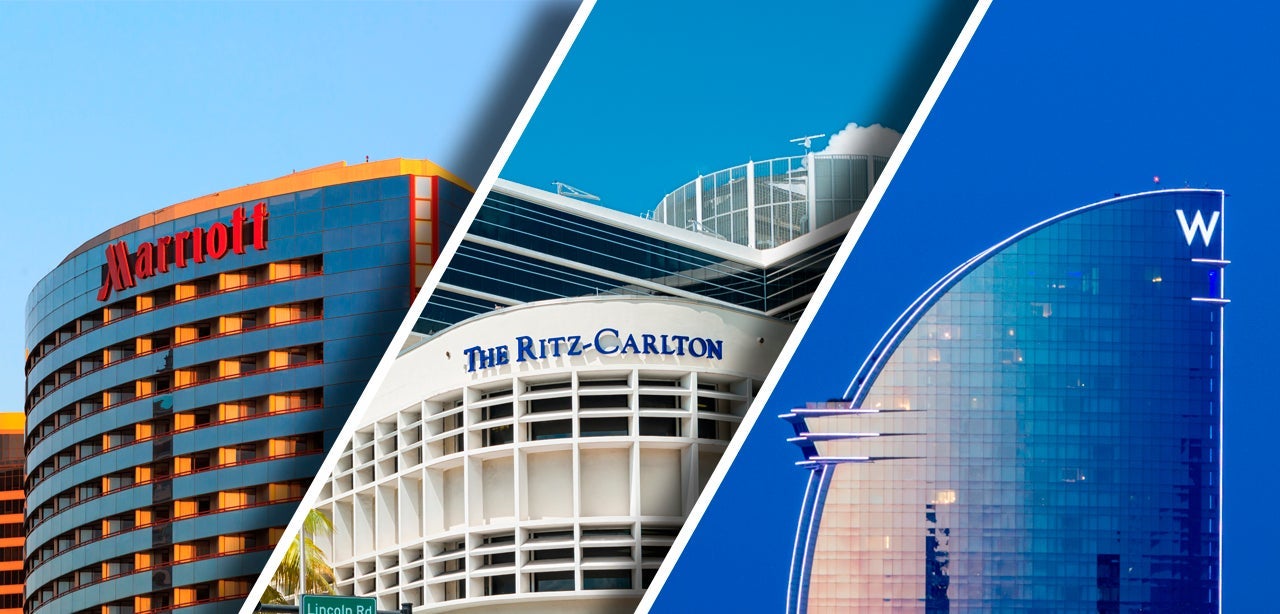
It's important to start out with a key fact: Merging the Marriott Rewards, Ritz-Carlton Rewards and Starwood Preferred Guest programs was likely the single biggest IT integration in the history of the hospitality industry. Any time you take three large entities operating on different IT platforms with different subsets of customers and attributes, you're bound to encounter issues, both expected and unexpected.
A few interesting data points that Marriott leadership has shared with The Points Guy:
- The programs had a combined 110 million members.
- There were over 4 billion (with a 'b') records that needed to be ported over.
- The combined portfolio has over 6,700 properties spanning 29 brands and over 130 countries.
Then add in the fact that the loyalty program wasn't the only aspect of the merger. The newly combined company also had to consider reservations, training (both for phone support and local staff at individual hotels), branding, legal concerns, accounting issues... the list goes on and on.
Aviram Jenik, CEO of Beyond Security, underscored the near impossibility of bringing together multiple complex systems without problems, providing The Points Guy with an interesting analogy:
"Imagine taking a Dostoevsky novel written in the original Russian and integrating it into an Agatha Christie. How would you even start? One would argue that both are fiction works with a beginning, a middle and an end. But in reality, both were meant to be 'standalone' pieces and have their own flow. They are obviously in different languages - you would have to translate one, good luck with that! And what is the 'integration point' exactly? The exact same thing applies to big, complex, IT systems."
And of course, it's not as if Marriott could simply take two weeks "off" to allow for everything to get ironed out. It had to "do this integration while running on a treadmill," according to Jenik, ensuring that the hundreds of thousands of customers who stayed at Marriott, Ritz-Carlton or SPG properties over the last month saw little to no tangible impact on their guest experience.
How much planning typically goes into an IT integration like this? It depends, says Jerry Sanchez, a CIO who's worked through several acquisitions. The age of the systems is a major factor, but Sanchez believes that an integration as large as the Marriott/SPG one "needs to be broken down in to manageable phases that could take somewhere in the neighborhood of 5+ years."

This extended timeline may not always mesh with the business needs of the company, which can raise concerns. Sanchez speculates that Marriott decided to simply "take their hits from unhappy customers" or alternatively felt that "customer support teams could help buffer the impact with manual changes when customers called in" with the goal of potentially accelerating the implementation of the combined program.
In any case, the integration was clearly a complex one. But some believe that a critical mistake was made early in the process.
Early Successes and a Crucial Decision

Many Starwood loyalists were fearful for the future of their beloved program when the merger was finalized. But out of the gate, it appeared that Marriott had done a good job at easing those concerns. The day the merger closed, members could link their accounts, transfer points and match existing elite status levels, a hopeful signal for the future generosity of a combined program. Even when the details of the new program were finally released in April, there was a (generally) positive reaction.
However, the early days of the merger also included a critical choice that, almost two years later, may have reared its ugly head. Israel del Rio, a former SVP of Technology Solutions at Starwood Hotels & Resorts, wrote a fascinating article on LinkedIn in October 2016 about this very decision: that the combined program would use Marriott's legacy technology platform (MARSHA) rather than Starwood's "21st Century solution" (his words). He elaborated on this decision in a recent email to The Points Guy:
"It appears that the ultimate decision to dispose of the Starwood system was based on the argument that the cost of moving 3,000 [sic] Marriott hotels to the Starwood system would be higher than the cost of moving 1,000 Starwood hotels to the Marriott system. This simplistic cost analysis of course fails to take into consideration the totality of costs involved in trying to move a more elaborate set of functionalities to a narrower and more restrictive footprint."
Marriott leadership confirmed that part of the decision to stick with Marriott's platform was related to the comparative "scale" of the two programs. But would this explain the issues that TPG readers have reported since August 18?
Del Rio thinks there may be something to this idea. "The apparent complexity of the migration approach seems baffling and might explain the reported issues," he told TPG, noting that his own account showed mismatched points as of a week into the integration. He went on to add...
"I have no doubt the issues will be ultimately solved, but at what cost? What is certain however, is that if the more advanced Starwood system had been chosen as the migration target, it would have given the planners better options to design a more seamless, and ultimately a less costly, migration approach."
There's no way to go back in time and analyze whether the opposite decision — keeping the legacy Starwood system — would have reduced the issues reported over the last several days. But given the above, it's certainly a possibility.
However, there's one important aspect of the integration that was within Marriott's control, one where the program clearly didn't live up to expectations.
Communication Is Where Marriott Failed

In the weeks and months leading up to August 18, I would've given Marriott a solid A- or B+ in communication. For the most part, the chain provided ample warning of upcoming changes, and in certain cases adjusted course when members raised valid concerns — most notably in the expansion of Lifetime Platinum Premier. The combined award chart was released in late June, allowing over seven weeks to lock in stays at pre-integration prices, and the company continued to provide updates to program elements like Platinum Choice Benefits and the new (albeit terrible) Hotel + Air Package rates.
However, it's hard to overstate the magnitude of the communication issues we've seen since August 18. This started early on, with the launch of the conversion chart for existing travel package certificates. While TPG advised readers to apply these certificates before the integration, not all members were able to do so. But there's simply no justification for why Marriott should have kept the conversion information secret. The company has since decided to allow certain certificate-holders to downgrade to less-expensive packages that mapped to the same property category, but withholding this information until it was too late prevented members from making a fully informed decision about whether to upgrade, downgrade or otherwise adjust their packages based on where they intended to use the certificates.
Speaking of certificates, I can't help but question the wisdom of publishing a month-long blackout period for using these certificates only to suddenly reverse course after just two days. The end result wasn't surprising: many frustrated members trying to use their converted certificates only to be told by multiple phone reps (including supervisors) that they couldn't do so until September 18. I had a chance to ask Marriott brass why this decision was made — here's what Marriott's SVP of Loyalty, David Flueck, had to say:
"I completely understand our members' frustration here. As soon as we had the technology ready, we allowed members to start booking. Unfortunately this didn't get communicated as efficiently as possible. Our focus was to allow our members to adjust existing reservations and make new reservations as quickly as possible."
I've also received at least one report of a 100-night Platinum member being unable to use his pre-integration certificate at a legacy SPG property, adding yet another wrinkle to this aspect of the integration. After reaching out to Marriott on his behalf, we received confirmation that a member must first have an agent convert an existing certificate into the new award chart, and then it should be applicable to legacy SPG properties. Unfortunately this wasn't explicitly communicated to customers, nor did it make its way to phone reps, apparently including Ambassadors for the program's most loyal customers.
On the topic of phone support, this has been another hot-button issue for members. From being told incorrect information about these certificates to struggling to use existing free-night awards from credit cards, to simply waiting on hold for hours, inconsistency has been the one common thread I've seen.
Earlier this month, I even had a reader note that a phone representative told him that cancelling an old SPG award reservation would only result in a refund of the number of Starpoints he used, even though they're tripled in the combined program. As a former internal sales trainer, I know first-hand how challenging it is to fully train employees on new processes and procedures, but from an outsider's perspective, these front-line individuals were woefully unprepared for the transition despite months of notice.
This inconsistent call center experience also relates to another set of communication issues: booking suites-only legacy SPG properties. This was one of the most anticipated aspects of the integrated program, especially since these incredible resorts would only set you back 60,000 points per night through the end of 2018 thanks to the delayed implementation of the Category 8 award chart band and peak pricing. We were initially told these properties would be bookable after the integration, but the best resorts weren't available in the first few days, and it was only on day three that some people had success locking in these redemptions, though still not as low as 60,000 points per night and only by calling.
It wasn't until two-and-a-half weeks after the integration started that a TPG reader alerted us that these all-suites properties were finally bookable through the Marriott app. Even then, the experience still wasn't consistent, and as of this writing nearly a full month after the integration, these properties still aren't bookable online. In fact, we're still getting reports of phone reps being unable to book, even when the lowest-level room is available.
Finally, there's the issue of pre-August 18 Marriott reservations booked using the program's Points Advance functionality suddenly jumping in price. Many TPG readers noticed this when the sites started coming back online on August 18 and 19 and quickly brought it to our attention. I reached out to Marriott's PR team on Monday night, August 20, to inquire about these discrepancies. After initially being told (incorrectly) that members would have to pony up the additional points, I finally got a formal, on-the-record statement about these reservations on Sunday night, August 26, confirming that the pre-integration prices would be honored.
It's inexcusable to leave members in the lurch for almost a week, and I can't help but wonder if any members unknowingly spent more points than they needed over the last several weeks. (If you did, please email me the details of your stay so I can follow up on your behalf.)
From my perspective — one that's likely shared by many readers — Marriott could have generated a lot of goodwill by simply putting out a statement recognizing these issues and providing concrete steps it was taking to address them. Instead, the integration's status page has had the "all good" message for the vast majority of time since August 18. I finally saw acknowledgement of these problems when I logged into my account over the Labor Day weekend:
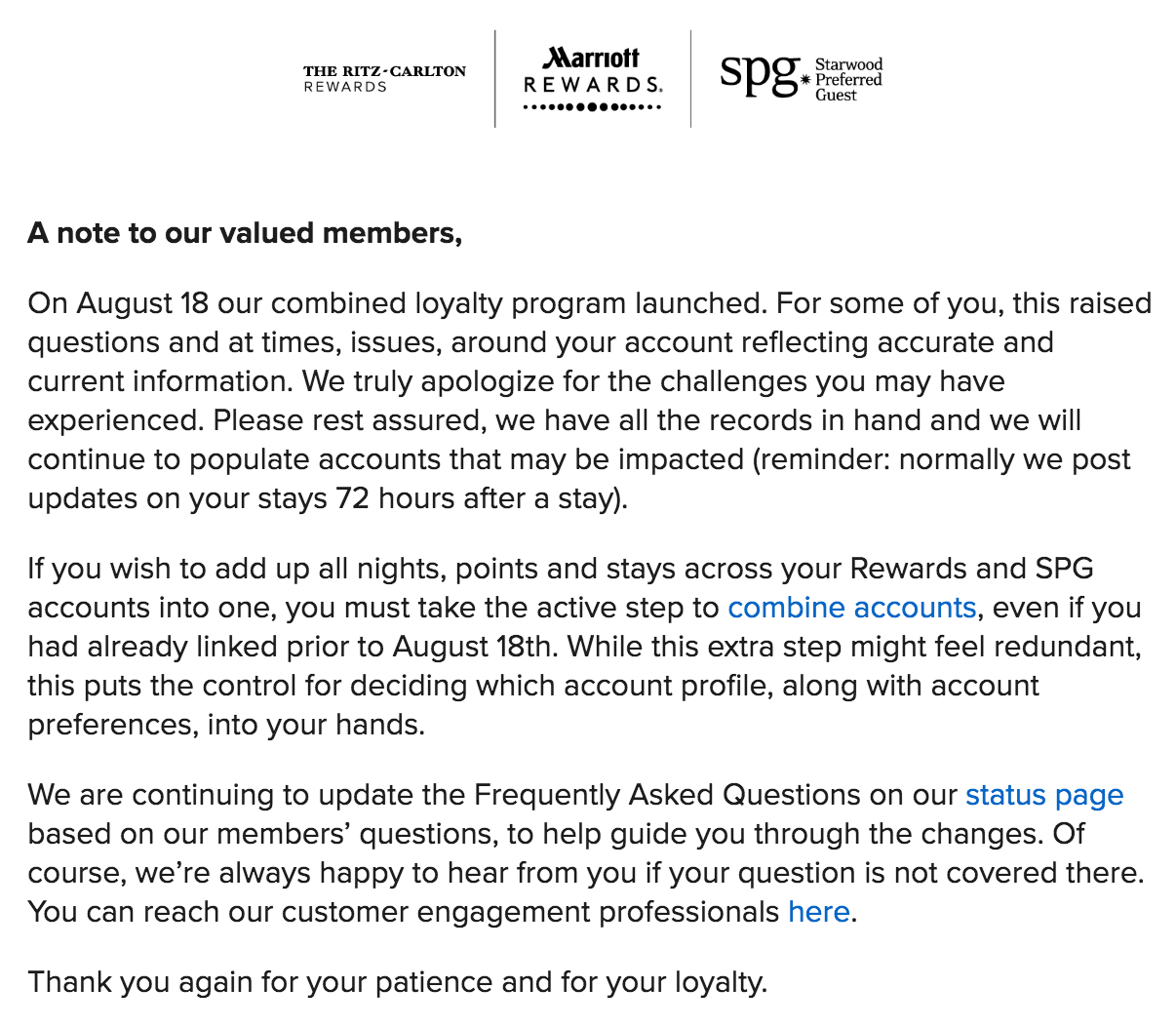
This screenshot was taken two weeks after the official launch of the program, and it was the first time I had ever seen it (despite logging into my account on an almost daily basis since August 18). Why wasn't this put out earlier? Even if the majority of members weren't having issues, it's obvious that many were running into problems.
I reached out to our contacts at Marriott for a formal response to this poor communication, and here's what they had to say:
"Our associates have been working around the clock and around the world to make this transformation as seamless as possible for our members. For the vast majority of our members the unification of our loyalty programs has gone smoothly, and our members are able to take advantage of Marriott's combined portfolio of 6,700 hotels in 130 countries in a seamless way. Despite our efforts to communicate proactively with members beforehand and during the transition, we know there were some issues that left some members frustrated, and we are sorry for any inconvenience. The integration, the largest in the history of hospitality, is very complex and unexpected things can and have happened, and solutions sometimes take longer than we would hope.
While most of the transition is complete, we continue to work one on one with members who have account issues or questions. We know it takes a lot of patience when something doesn't go perfectly, and we are grateful for the loyalty of our members all the time, but particularly this past month."
I also asked what you should do if you continue to encounter errors on your account, and was told to use the contact via email option on the website, especially for non-urgent issues that don't impact a stay in the next few weeks. While the program's call volume and average call duration have decreased since August 18, we're still receiving reports of long hold times, so if your issue isn't time-sensitive, your best bet may be to send a message electronically rather than sitting on the phone.
I'd also encourage you to send Marriott your general feedback on the integration. Leadership has shown a willingness to listen to members' concerns and adjust course when necessary, so if you're frustrated with any aspect, everyone's combined voices will be the only way to convince the program to go in a different direction.
What Comes Next?

Flueck has stressed that the integrated program will continue to address these remaining one-off issues, and we'll hopefully see the approach switch from "fixes" to "enhancements" in the near future. One particularly anticipated change is the expansion of Points Advance functionality to SPG properties, something that Marriott leadership confirmed would happen as part of the integration. I asked Flueck for a timeline on this addition, but was told the chain is "still working through that" and will follow up at a later date. Let's hope this comes online quickly, as it was (and continues to be) a popular redemption option for legacy Marriott properties, and would be a terrific addition to the combined program.
In the longer term, the 2019 calendar year will bring three additional changes to the program:
- A new name
- The launch of Category 8 pricing
- The launch of peak/off-peak pricing
We're still unsure of exactly when these changes will be communicated, nor do we know when they'll take effect. But rest assured that the entire TPG team will be here to break it all down for you.
Bottom Line
The Marriott/SPG integration was a massive undertaking that has been years in the making, and it was inevitable that issues would arise. That's certainly been the case over the last few weeks, but from the viewpoint of many readers, Marriott's response to these problems has been underwhelming. In fact, a poll in the TPG Lounge found that nearly a week after the launch of the combined program, 52.8% of respondents characterized the integration as "Terrible" or "Poor" (the other choices were "Perfect," "Good" or "Fair"), while less than half had been able to combine their accounts. I'll be the first to admit that an anonymous poll to a small and select group of members is far from scientific, but it does indicate the frustration that exists.
I asked Flueck, as Marriott's SVP of Loyalty, what he could say to reassure members about any remaining issues and the future of the combined program. Here's what he had to say...
"Moving forward, we'll continue to listen to them and have a member-first perspective. We recognize that our members are loyal to us, and we're loyal to them, and we'll continue to be just that. I understand the frustration, but I'd just ask for a little more patience as we work towards resolving these issues. We have an amazing portfolio of properties and brands that we're excited for our members to enjoy now and in the future."
There's no arguing his last point: the new Marriott program is full of luxurious resorts under brands like Ritz-Carlton, St. Regis and Luxury Collection, to name a few. Now that the respective loyalty programs are also under one roof, it's easier than ever to earn points, redeem points and reach elite status across the combined portfolio.
That being said, I've personally heard from several long-time members who are seriously thinking about moving their business to other chains, so it'll be interesting to see if this rocky rollout of the integrated program will impact Marriott's bottom line.
TPG featured card

at Capital One's secure site
Terms & restrictions apply. See rates & fees.
| 5X miles | Earn 5X miles on hotels, vacation rentals and rental cars booked through Capital One Travel |
| 2X miles | Earn unlimited 2X miles on every purchase, every day |
Pros
- Stellar welcome offer of 75,000 miles after spending $4,000 on purchases in the first three months from account opening. Plus, a $250 Capital One Travel credit to use in your first cardholder year upon account opening.
- You'll earn 2 miles per dollar on every purchase, which means you won't have to worry about memorizing bonus categories
- Rewards are versatile and can be redeemed for a statement credit or transferred to Capital One’s transfer partners
Cons
- Highest bonus-earning categories only on travel booked via Capital One Travel
- LIMITED-TIME OFFER: Enjoy $250 to use on Capital One Travel in your first cardholder year, plus earn 75,000 bonus miles once you spend $4,000 on purchases within the first 3 months from account opening - that’s equal to $1,000 in travel
- Earn unlimited 2X miles on every purchase, every day
- Earn 5X miles on hotels, vacation rentals and rental cars booked through Capital One Travel
- Miles won't expire for the life of the account and there's no limit to how many you can earn
- Receive up to a $120 credit for Global Entry or TSA PreCheck®
- Use your miles to get reimbursed for any travel purchase—or redeem by booking a trip through Capital One Travel
- Enjoy a $50 experience credit and other premium benefits with every hotel and vacation rental booked from the Lifestyle Collection
- Transfer your miles to your choice of 15+ travel loyalty programs
- Top rated mobile app