Capital One Venture X vs. Venture X Business: Small but important differences



Editor's note: This is a recurring post, regularly updated with new information and offers.
Two of Capital One's premium cards have become very popular over the past few years.
Most TPG readers are familiar with the personal Capital One Venture X Rewards Credit Card. And if you are a small-business owner, you may be interested in its business sibling, the Capital One Venture X Business.
At first glance, the Venture X Business looks almost identical to the Venture X, with many overlapping perks and the same annual fee. But a few differences between the cards will likely put one ahead of the other for you.
Here's what you need to know before choosing the Venture X or the Venture X Business.
Related: Do I need a business to get a business credit card?
Venture X vs. Venture X Business comparison
The Venture X and Venture X Business are almost identical, with the differences highlighted in bold below:
| Venture X | Venture X Business | |
|---|---|---|
Annual fee | $395 | $395 |
Welcome offer | Earn 75,000 bonus miles after spending $4,000 on purchases in the first three months from account opening. | Earn 150,000 bonus miles after spending $30,000 on purchases within the first three months from account opening.
|
Earning rates |
|
|
Benefits |
|
|
Venture X vs. Venture X Business welcome offer
Both the Venture X and the Venture X Business come with valuable welcome bonuses.
New Venture X cardholders earn 75,000 bonus miles after spending $4,000 on purchases in the first three months from account opening. According to TPG's April 2025 valuations, Capital One miles are worth 1.85 cents each, making this bonus worth $1,388.


The Venture X Business, on the other hand, comes with a much higher welcome bonus. New cardholders can earn 150,000 bonus miles after spending $30,000 on purchases within the first three months from account opening.
According to TPG's April 2025 valuations, this bonus is worth up to $2,775.
Winner: Venture X Business — as long as you can meet the higher spending requirement.
Related: 10 ways to meet the spending requirements and earn the bonus on a new card
Venture X vs. Venture X Business benefits
The Venture X and Venture X Business have a lot of overlapping benefits, including:
- Lounge access: Complimentary access for the cardholder and up to two guests per visit to Capital One and Priority Pass lounges (restaurant access not included)
- Travel credit: $300 annual credit for bookings made through the respective travel portal
- Bonus miles each year: 10,000 bonus anniversary miles each year
- Hotel perks: Access to Capital One's Premier Collection and Lifestyle Collection of hotels
- TSA PreCheck/Global Entry credit: Up to $120 in statement credits for TSA PreCheck or Global Entry
- Travel and purchase protections
- No foreign transaction fees

Where they differ:
- The Venture X Business has business-oriented benefits (like itemized spending reports) and your card's balance must be paid in full every month (given it has no preset spending limit).
Winner: Tie.
Earning miles on the Venture X vs. Venture X Business
The Venture X and the Venture X Business have the same earning rates:
- 10 miles per dollar on hotels and rental cars booked through their respective travel portal
- 5 miles per dollar on flights and vacation rentals purchased through their respective travel portal
- 2 miles per dollar on other purchases

Since both cards have the same earning rates, you'll likely want to explore different card options if you want to earn bonus rewards on other specific categories, such as dining, groceries or common business expenses.
Winner: Tie
Related: The best credit cards for each spending category
Redeeming miles on the Venture X vs. Venture X Business
Both the Venture X and the Venture X Business earn transferable Capital One miles and have the same redemption options.
Transferring your miles to any of Capital One's 15-plus airline and hotel partners is the most valuable redemption route and our recommendation.

You can also redeem your miles for:
- A statement credit: 1 cent per mile; to cover travel expenses and gift cards
- Amazon purchases: 0.8 cents per mile
- Cash back: 0.5 cents per mile
Winner: Tie — both cards offer the same redemption options.
Related: Should you transfer your Capital One miles or redeem them directly for travel?
Transferring miles with the Venture X vs. Venture X Business
Both the Venture X and the Venture X Business earn miles that you can transfer to any of Capital One's 15-plus hotel and airline partners, including Air Canada Aeroplan, Avianca LifeMiles and Wyndham Rewards.

TPG contributing editor Matt Moffitt likes to transfer his Capital One miles to Choice Privileges, which offers attractive award rates for hotel stays in expensive Nordic countries.
With the wide range of options available, you'll easily find a transfer that fits your travel preferences and goals.
Winner: Tie — both cards have the same transfer options.
Should I get the Venture X or the Venture X Business?
While the Venture X Business offers a substantial number of miles for its welcome bonus, the spending requirement will be unrealistic for a lot of people. With a more reasonable spending requirement for its welcome offer and great benefits, the Venture X will be a better choice for most.
Bottom line
The Venture X and Venture X Business are almost identical twins, with an annual travel credit, complimentary airport lounge access, anniversary bonus miles and the same annual fee.
The Venture X adds in car rental elite status, while the business version has a much higher welcome bonus (with a substantial spending requirement), itemized spending reports and no preset spending limit.
Whether you choose the personal or business version, (Venture) X marks the spot for premium perks at a reasonable annual fee.
For more details, read our full reviews of the Venture X and Venture X Business.
Learn more: Venture X
Learn more: Venture X Business
For Capital One products listed on this page, some of the benefits may be provided by Visa® or Mastercard® and may vary by product. See the respective Guide to Benefits for details, as terms and exclusions apply.
*Upon enrollment, accessible through the Capital One website or mobile app, eligible cardholders will remain at that status level through the duration of the offer. Please note, enrolling through the normal Hertz Gold Plus Rewards enrollment process (e.g., at Hertz.com) will not automatically detect a cardholder as being eligible for the program and cardholders will not be automatically upgraded to the applicable status tier. Additional terms apply.
TPG featured card
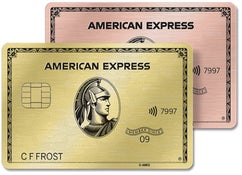
at American Express's secure site
Terms & restrictions apply. See rates & fees.
| 4X | Earn 4X Membership Rewards® points per dollar spent on purchases at restaurants worldwide, on up to $50,000 in purchases per calendar year, then 1X points for the rest of the year. |
| 4X | Earn 4X Membership Rewards® points per dollar spent at US supermarkets, on up to $25,000 in purchases per calendar year, then 1X points for the rest of the year. |
| 5X | Earn 5X Membership Rewards® points on prepaid hotel stays booked through AmexTravel.com or the Amex Travel App™. |
| 3X | Earn 3X Membership Rewards® points on flights booked through AmexTravel.com, the Amex Travel App™, or purchased directly from airlines. |
| 2X | Earn 2X Membership Rewards® points on prepaid car rentals booked through AmexTravel.com or the Amex Travel App™ and cruises booked and paid through AmexTravel.com. |
| 1X | Earn 1X Membership Rewards® point per dollar spent on all other eligible purchases. |
Pros
- Valuable dining and food-related credits
- Flexible rewards with airline and hotel transfer partners
- Multiple travel and purchase protections
- No foreign transaction fees
- Access to Amex Offers for additional savings (enrollment required)
Cons
- Not as useful for those living outside the U.S.
- Some may have trouble using Uber and other dining credits
- You may be eligible for as high as 100,000 Membership Rewards® Points after you spend $8,000 in eligible purchases on your new Card in your first 6 months of Card Membership. Welcome offers vary and you may not be eligible for an offer. Apply to know if you’re approved and find out your exact welcome offer amount – all with no credit score impact. If you’re approved and choose to accept the Card, your score may be impacted.
- Earn 4X Membership Rewards® points per dollar spent on purchases at restaurants worldwide, on up to $50,000 in purchases per calendar year, then 1X points for the rest of the year.
- Earn 4X Membership Rewards® points per dollar spent at US supermarkets, on up to $25,000 in purchases per calendar year, then 1X points for the rest of the year.
- Earn 5X Membership Rewards® points on prepaid hotel stays booked through AmexTravel.com or the Amex Travel App™.
- Earn 3X Membership Rewards® points on flights booked through AmexTravel.com, the Amex Travel App™, or purchased directly from airlines.
- Earn 2X Membership Rewards® points on prepaid car rentals booked through AmexTravel.com or the Amex Travel App™ and cruises booked and paid through AmexTravel.com.
- Earn 1X Membership Rewards® point per dollar spent on all other eligible purchases.
- Pay It® lets you tap in the American Express® App to quickly pay for small purchase amounts throughout the month and still earn rewards the way you usually do. Plan It® gives you the option to split up big purchases into equal monthly payments with a fixed fee. You’ll know upfront exactly how much you’ll pay.
- $120 Dining Credit: Earn up to a total of $10 in statement credits monthly when you pay with the Gold Card at Grubhub (including Seamless), Buffalo Wild Wings, Five Guys, The Cheesecake Factory, and Wonder. This can be an annual savings of up to $120. Enrollment required.
- $100 Resy Credit: Get up to $100 in statement credits each calendar year at over 10,000 qualifying U.S. Resy restaurants after you pay for eligible purchases with the American Express® Gold Card. That’s up to $50 in statement credits semi-annually. Enrollment required.
- $84 Dunkin' Credit: Earn up to $7 in monthly statement credits after you pay with the American Express® Gold Card at U.S. Dunkin’ locations. Enrollment required.
- $120 Uber Cash on Gold: Enjoy up to $120 in Uber Cash annually with your Gold Card. Just add your Card to your Uber account and you'll get $10 in Uber Cash each month to use on orders and rides in the U.S. when you select an Amex Card for your transaction.
- Enjoy complimentary Hertz Five Star® Status benefits like skipping the counter at select locations, adding an additional driver at no additional cost*, and vehicle upgrades**. Benefit enrollment and Hertz Gold+ registration are required. *Additional drivers must meet standard rental qualifications and must be a spouse or domestic partner to qualify as complimentary. Other additional drivers subject to fees. **Benefits are subject to availability and vary by location. Additional Hertz program Terms and Conditions including age restrictions apply.
- Book two nights or more with The Hotel Collection through AmexTravel.com or the Amex Travel App™ and receive a $100* credit towards eligible charges at over 1,400 upscale hotels worldwide. *Eligible charges vary by property.
- Book your travel through the Amex Travel App™ with added peace of mind – backed by American Express® service and support. Only for American Express® Card Members.
- Whenever you need us, we're here. Our Member Services team will ensure you are taken care of. From lost Card replacement to statement questions, we are available to help 24/7.
- No Foreign Transaction Fees.
- Annual Fee is $325.
- Terms Apply.