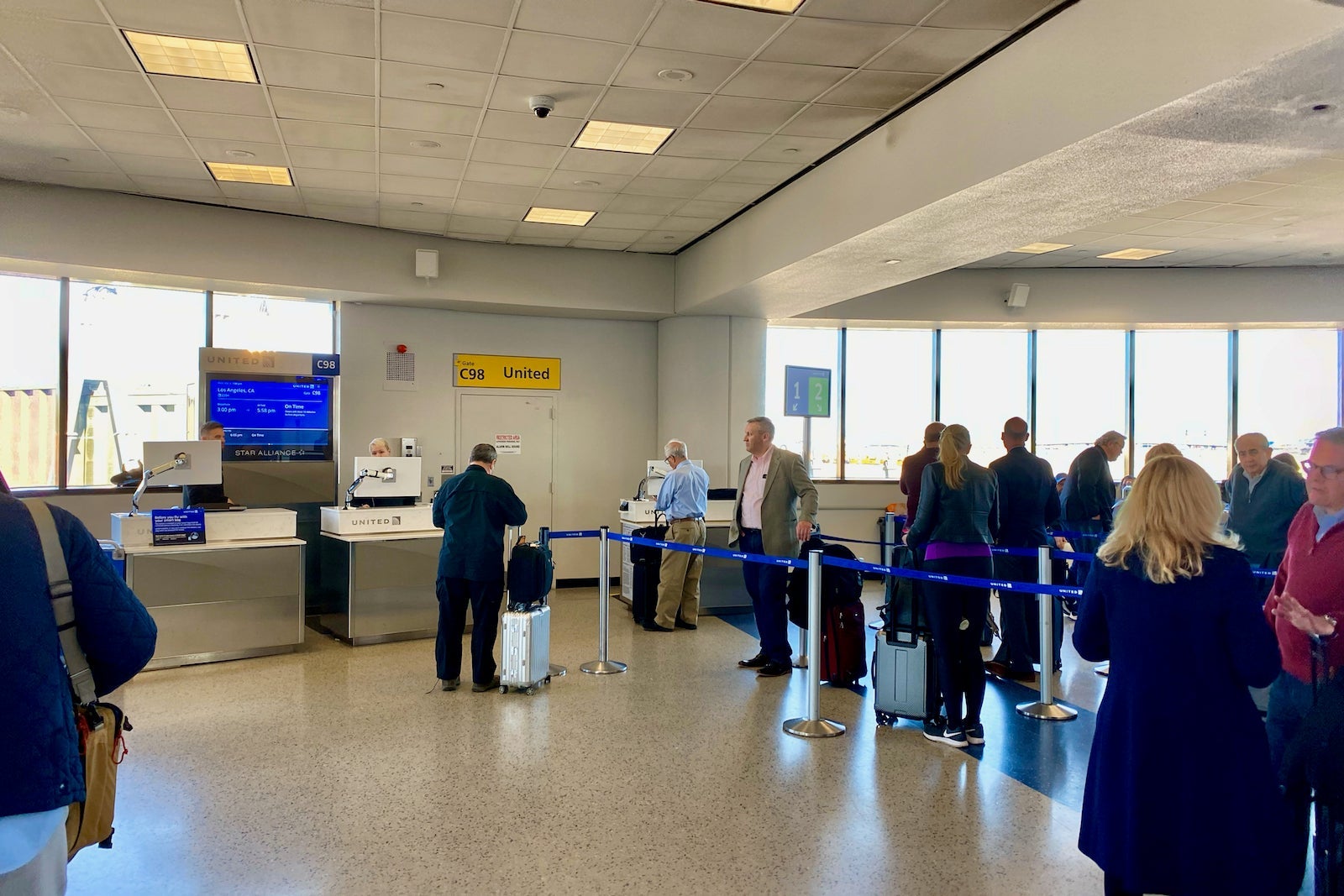

In addition to social distancing on the plane, carriers have closed most lounges and stopped serving most drinks and snacks once airborne.
One change that particularly resonates with me is the introduction of back-to-front boarding. Delta and United have (temporarily) adopted this policy, whereby passengers are asked to remain seated until their rows are called. United's even boarding business class after coach (Delta's premium passengers can board at their leisure).
As simple as back-to-front boarding may be, it's actually not the most efficient method. Airlines across the world have all adopted different models, looking for the fastest one; perhaps most interesting is Southwest's boarding process without assigned seats.
Though there's long been a ton of controversy around boarding, one thing's certain: I never want to be one of the first onboard — regardless of where I’m sitting. Read on for why.
For more travel tips and news, sign up for our daily newsletter
Makes it faster
I'm usually traveling solo, and the boarding process doesn't take me too long at all. After 450 lifetime flight segments, I've got it down to a science.
When I board at the beginning of the process, I usually find myself slowed down by those ahead of me. Though offering pre-boarding is actually a pretty efficient move, I'd personally prefer to not have to wait for a group of people ahead of me to take my seat.
That's why it pays to be one of the last ones on the plane (subject to the fact that there's overhead bin space left if I'm carrying a rollaboard).
Fewer people at the gate and on the jetway
By boarding towards the end, there's many fewer people clogging the gate area and jet bridge. As we recover from the coronavirus pandemic, odds are that people will want to maximize as much personal space as they can.
This is one of the biggest reasons that airlines are transitioning to a back-to-front system: to reduce how many times customers need to pass by one another.

But back-to-front boarding alone doesn't solve the issue of congestion in the gate area or jet bridge. Airlines are going to need to be proactive about metering the process too.
Nonetheless, by being the last on the plane, I can take matters into my own hands and reduce how many people I'm interacting with throughout the process.
Least amount of time on the plane
This one's simple. By boarding last, you're minimizing how much time you spend in the metal tube.
I love flying and all things aviation (follow my Instagram account for exhibit A). But that passion doesn't extend to the first 15 minutes of boarding when there's a cacophony of PA announcements about storing your bag underneath the seat in front of you.
Plus, if I'm trying to finish an article or wrap up a phone call, it's much harder to do that on the plane than in the lounge (even if I'm wearing my AirPods Pro).
By boarding towards the end, I don't need to abruptly interrupt my work, nor do I need to spend extra time on the plane. With airlines now offering real-time boarding push notifications, there's little reason for me to get to the gate until I see the alert come through.
Overhead bin space is better on new jets
This is the biggest drawback to being one of the last onboard — finding overhead bin space.
Before the coronavirus halted travel, I was getting much more comfortable traveling with just a backpack. In that case, I'd happily be the absolute last one on.

But even when traveling with a rollaboard, I'm not as worried as I used to be about overhead bin space. That's because we've seen many more airlines install new, larger overhead bins. Boeing calls these the Space Bins, which hold 50% more bags than the previous generation.
American recently started service with the Airbus A321neo. These jets have Airspace XL bins which offer 40% more storage than the predecessors. Plus, AA is planning to add these larger bins to its entire fleet of Airbus A321s.
As more and more planes feature the larger bins, I'll worry less and less about finding overhead space. Plus, once travel starts picking up again, it's going to take a while for demand to return to pre-coronavirus levels. That'll mean that planes won't be as full, and there should be much more bin space than before.
All bets are off when I'm reviewing a flight
You can forget about everything I said when I'm reviewing a flight. For one, choosing a seat on review flights is harder than it sounds.
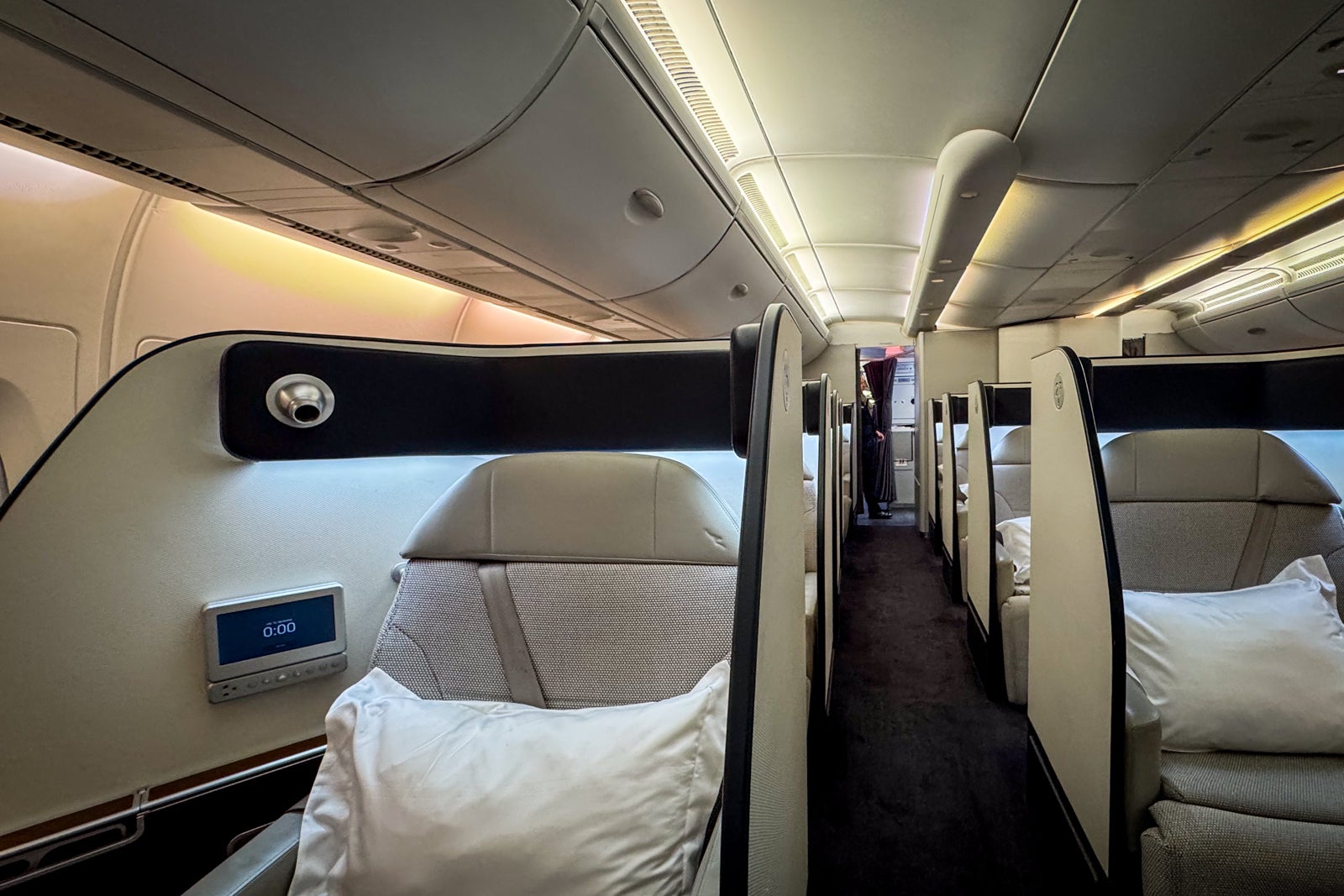
But when it comes time to boarding, I'm the first person in line. That's because I love to get as many clean cabin shots as possible before other passengers start flooding the cabin.
Take a look at the two pictures below. The first was taken when I was the first aboard, and the second was taken when I got on after all the pre-boarders.


Being first makes a world of a difference in the quality of my review pictures, and that's why I'll always get on the plane as early as possible for review flights.
Bottom line
Boarding is one of the most hectic parts of the flight experience.
In light of the coronavirus, we've seen many airlines introduce back-to-front boarding policies. Personally, I've long been a fan of being one of the last to board, regardless of where I'm seated. It minimizes how much time I spend on the plane and how many people I interact with in the jetway.
But that all changes if I'm reviewing the flight. That's the only time I will be lining up to board first.