8 sustainable travel tips from expert green travelers


Editor's Note
If you've recently taken a bucket-list trip or visited an iconic city, you know the need for sustainable tourism has never been more pressing.
Beloved destinations — including Bora Bora, the Maldives, Barcelona and Venice, Italy, among others — are facing existential challenges, either from climate change or sheer overcrowding.
However, it's one thing to recognize the importance of eco-friendly tourism; it's another to put principles into practice.
There's no doubt the travel industry has played a part in creating economic stability and driving positive growth in locations across the globe, but the downsides are clear. Overcrowding, environmental damage and a strain on resources are just a few ways an increase in tourism can have a harmful impact on a destination.
As a result, many locales are taking significant steps to reverse course in order to save their fragile ecosystems before it's too late. From bans on megaships and vacation rentals to strict visitor limitations, governments worldwide are taking drastic measures.
At TPG, we know travel is an essential part of life and overall a great experience — one we never want to give up. That has become even more true in recent years as we've all dealt with extended periods of time when we could not travel due to the coronavirus pandemic.
Related: Updated: A country-by-country guide to coronavirus reopenings
However, we should not (and cannot) let traveling be an occasion or excuse for us to disregard concerns for our planet. It's vital that we do our part to be more mindful about the decisions we make when we travel.

To help you minimize your impact on the planet when you travel, we've asked experts at TPG and Red Ventures sister sites Lonely Planet, Platea and Elsewhere, plus experts at the United Nations Environmental Program, to weigh in on what you can do to be an eco-conscious traveler. Here are eight strategies they suggest to make your next trip more sustainable.
[table-of-contents /]
Explore under-the-radar locations

Overtourism is one of the biggest threats facing the travel industry. About 80% of all travelers visit the same five to 10 spots in each country, according to data from the World Economic Forum.
During peak season, popular cities experience as much as a 70% population increase, resulting in strains on everything from infrastructure to the environment.
"A low-season visit can help offset the boom and bust cycle many destinations endure, and it'll give you a more solitary, intimate look at the place itself," shared Alexander Howard, managing editor at Lonely Planet.
To avoid adding to overtourism concerns, travelers can get creative when deciding where to go next.
"Skip Machu Picchu and opt for Choquequirao — these Incan ruins only draw 20 visitors per day," said Alexis Bowen, founder of sustainable travel startup Elsewhere and CEO at Lonely Planet.
Or, consider a trip to a smaller European destination instead of one on everyone's bucket list. Oftentimes, the experience will prove far more authentic and memorable than what you'd experience in tourism hot spots like Paris and London.
"Last month, I took a weekend trip to Procida, a small fishing island off the coast of Naples ... far from the bling of Italy's Amalfi Coast," Bowen said. "We were told about an 'agriturismo' [a sustainable farm] with incredible food on the neighboring island of Ischia, so we hopped on a ferry to check it out. ... When the food started coming, it was whatever Giuseppe [the owner] was cooking that day using ingredients from his farm. The food was simple but delicious ... and this moment was our definition of pure luxury."
Related: From theme parks to power plants, why Denmark is our sustainable destination of 2022
Choose every aspect of your itinerary wisely
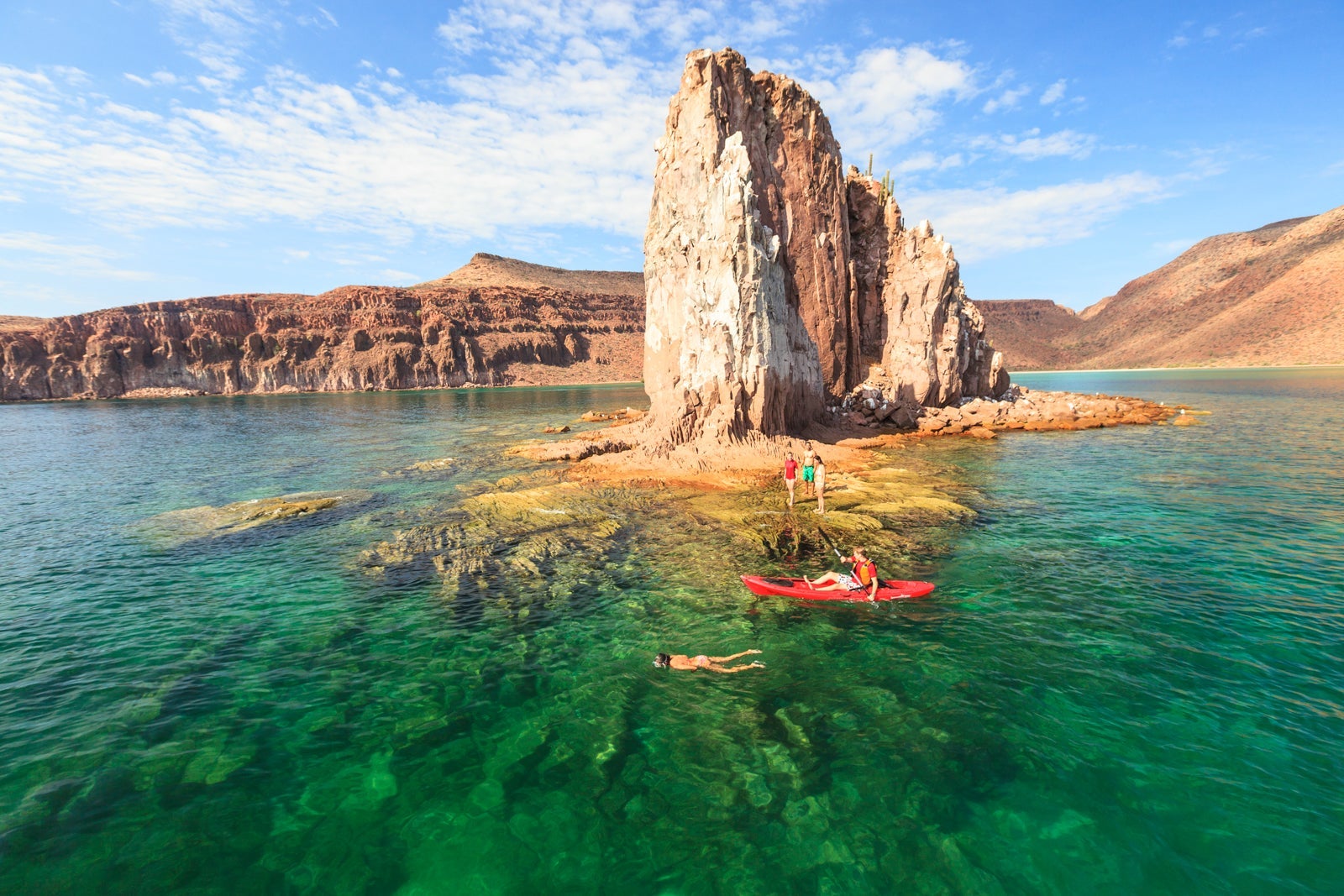
"Ethical travel is also about being mindful of what you consume on the road," said Sarah Reid, Lonely Planet writer and sustainable travel expert. "This includes everything from the food you eat to the activities you sign up for. Ideally, you should opt for experiences that have a low environmental footprint, such as kayaking instead of Jet Skiing, and have a positive impact on the local community."
Being eco-friendly doesn't mean you have to severely restrict what you do, though. Enlist the expertise of an adventure company that combines thrilling experiences with environmental preservation. Award-winning travel outfitter ROW Adventures, for example, offers an array of low-impact adventures worldwide, including sailing excursions in Croatia; kayaking outings in La Paz, Mexico; and hiking trips in Peru and Corsica, France.
Also consider destinations that foster ethical tourist consumption like Puerto Rico. By embracing sustainable farming techniques and highlighting local businesses and tour operators after Hurricane Maria's devastating impact on the island in 2017 exposed its over-reliance on mainland exports, Puerto Rico has emerged as a top spot for sustainability in the U.S.
Puerto Rico offers "so many ways to give back to the community" through sustainable businesses like bed-and-breakfast accommodations and shops, shared Adriana Serrano, brand manager for San Juan-based travel website Platea. You'll also find many farm-to-table options where locally sourced ingredients are on the menu, helping cut down on greenhouse gases while improving the overall quality of what you're eating.
Embrace slow travel

When Greta Thunberg stopped flying as part of her crusade against climate change in 2015, she triggered a surge of interest in train travel, as well as the adoption of a couple of catchy Swedish concepts: "tagskryt" (train-bragging) and "flygskam" (flight shame).
Sebastian Modak, Lonely Planet's editor-at-large, advises travelers to avoid thinking faster means better. "Slowing down can be better for the planet, and it will also allow you to really soak in every sensation and experience instead of rushing through a checklist," he said.
Train travel is essential to the art of slow travel. It allows you to connect with off-the-beaten-path towns and cities that you'd normally miss if you flew a direct route. Plus, it has a smaller carbon footprint than other modes of transportation.
"As part of the UN's sustainable travel agenda, we recommend all journeys of less than 600 kilometers (or 373 miles) be taken by train," United Nations Environmental Program officer Helena Rey de Assis told TPG.
But don't assume that traveling by train means you have to sacrifice on comfort.
"You can still travel in style and lower your impact," Rey de Assis said. "There have been massive rail investments in luxurious services, especially in Sweden, Italy and Austria."
By allotting a little more time for the journey, you'll discover more charm and character than what you may find in more common transit hubs, all while lessening your impact on the environment.
Reduce your carbon dioxide emissions

Of all the ways you can get from point A to point B, traveling by air is by far the most harmful to the planet.
The airline industry is responsible for roughly 3% of global industry emissions, according to the World Economic Forum. However, its convenience makes it a transportation option that won't fall out of favor any time soon. So, to reduce the environmental harm flights cause, experts are increasingly encouraging travelers to offset their carbon footprint.
Carbon offsetting involves donating money to environmental projects around the world to make up for your carbon output. But does paying to offset greenhouse gasses emitted during air travel merely enable people to continue choosing less sustainable options?
"There's some truth to that," said Katie Genter, a senior writer at TPG. "But if you're going to fly, offsetting your carbon emissions is better than doing nothing."
Know, though, that not every organization that says it offsets carbon emissions is created equal.
"You'll find many companies and organizations willing to take your money, but not all of these companies provide high-quality carbon offsets," Genter explained. "One of the easiest ways to donate ... is to choose a project listed on Green-e Climate or Climate Action Reserve, or donate directly to a project through Gold Standard."
You can also make strategic choices about routes, aircraft and airplane cabins that will lessen your impact. Since takeoffs and landings consume considerably more fuel than the rest of the journey, travel by the most direct route when possible. Remember, too, that traveling in premium cabins (like business or first class) will increase your carbon footprint.
Give back to the local community

Around 80% of low-income countries rely on tourism revenue, yet 90% of tourism dollars earned are pocketed by foreign-owned businesses, according to a Brookings Institute report.
As a result, a considerable amount of money coming from tourism does not end up going back into the local economy, which is essential to supporting local communities and ensuring their cultures, traditions and more can thrive for generations to come.
"Traveling responsibly and supporting the local economy means different things to different travelers," said Daniel Fahey, a Lonely Planet guidebook author and editor. "This might mean choosing a family-owned lodge instead of a chain hotel, dining in a restaurant that sources its produce locally or taking a paddle boarding trip with a local guide."
Wherever you travel, look for opportunities to make a difference through volunteer opportunities, wildlife rescue programs and beach cleanup events. Hands-on experiences in destinations across the globe (including Alaska, South Africa, Thailand and Bhutan) are easy to find through travel companies like Discover Corps, which specializes in grassroots, off-the-beaten-path travel.
For example, voluntourism trips in Costa Rica may include stays at high-end ecolodges and monitoring wildlife along key biological corridors in the rainforest.
Pick accommodations with good environmental credentials

You don't have to be a backpacker who camps every place they visit to be an eco-conscious traveler.
In recent years, there's been a spike in interest for quality eco-friendly lodging that marries environmental consciousness with style and comfort. In fact, 81% of travelers plan on looking for sustainable accommodations in the next year (up from 62% in 2016), according to Booking.com's 2021 Sustainable Travel Report.
TPG writer Lori Zaino is one of those travelers.
"I consider many things beyond just if the hotel recycles or has ditched single-use amenities," Zaino said. "Sustainable tourism is also about supporting the local community whenever possible, so whenever I can, I stay with Fairbnb, a vacation rental website that gives 50% of its proceeds back to a community project local to my destination. I like to support family-owned hotels, too, especially in places overrun with large hotels."
Related: The Brando: A sustainability leader in the hotel industry
Be a responsible wildlife tourist

Any time you are offered the chance to ride an animal, take a selfie with one or participate in any kind of animal "show," odds are the creature's welfare is not front and center.
TPG contributor Melanie Haiken advises travelers to "see wildlife in the wild or in highly rated sanctuaries that take only animals that can't be returned to the wild. While there are ethical private animal rescue facilities and preserves, there are also many (like the one exposed in the 'Tiger King' documentary) where animals are treated poorly or obtained by underhanded means. Many operations also stress the animals by not giving them enough space and privacy and allowing too much visitor contact. This goes for sea life, too — there is no dolphin that likes to be ridden!"
Several options are available if you wish to see wildlife in a thrilling yet humane way. Tour operator G Adventures works with World Animal Protection and the Jane Goodall Institute to design ethical wildlife-focused experiences for travelers. Additionally, there's small-group tour company Intrepid Travel, which is renowned for its commitment to sustainable travel, as evidenced by its decision in 2014 to remove elephant rides from its tours before other major international travel providers.
Eliminate single-use plastics

In many destinations, the sight of plastic bottles strewn across beaches, parks and waterways has become disturbingly common. Plastic waste is a major health hazard for living organisms, particularly marine life. Billions of tonnes of plastics made from 1950 to 2017 are discarded, and of that waste, roughly 75% ends up in landfills or ecosystems like rivers, forests and oceans, according to reporting by The Guardian.
"The pandemic has exacerbated problems with single-use plastics and disposable masks," Rey de Assis said. "With smaller island nations that don't have effective waste management systems, it becomes a plastic storm. In the Mediterranean Sea, 40% of waste can be attributed to tourism."
Following the sustainable trifecta (reduce, reuse and recycle) can dramatically help preserve the environment. Miniature shampoo, conditioner and lotion bottles are a major source of plastic waste and are especially problematic for small island nations.
Lonely Planet's senior news editor, Melissa Yeager, avoids using travel-size bottles whenever possible. "Reuse/refill previous containers or look around your house and repurpose things like contact lens cases or other small containers and fill them," she said.
Hotel groups, including Marriott and IHG, have already switched to single-use refillable toiletry bottles, and other brands look set to follow suit. Some destinations like Hawaii are even aiming to eliminate them completely.
Whenever possible, try to refill and bring along your own travel-size containers. If you must use small containers provided by the hotel, always save what's left for your next trip.
Related: What is the Malama Hawaii program — and why is it a model for the tourism industry?
Bottom line
As travelers and frequent flyers, we need to strike a balance between reducing our carbon footprint and supporting destinations that rely on tourism. Sustainability begins when you choose your destination and consider who is going to benefit from your tourism dollars.
By committing to being more mindful of how we travel and visiting places where fragile ecosystems are cared for and local communities are supported, we can all help preserve our beautiful planet.
TPG featured card

at Capital One's secure site
Terms & restrictions apply. See rates & fees.
| 5X miles | Earn 5X miles on hotels, vacation rentals and rental cars booked through Capital One Travel |
| 2X miles | Earn unlimited 2X miles on every purchase, every day |
Pros
- Stellar welcome offer of 75,000 miles after spending $4,000 on purchases in the first three months from account opening. Plus, a $250 Capital One Travel credit to use in your first cardholder year upon account opening.
- You'll earn 2 miles per dollar on every purchase, which means you won't have to worry about memorizing bonus categories
- Rewards are versatile and can be redeemed for a statement credit or transferred to Capital One’s transfer partners
Cons
- Highest bonus-earning categories only on travel booked via Capital One Travel
- LIMITED-TIME OFFER: Enjoy $250 to use on Capital One Travel in your first cardholder year, plus earn 75,000 bonus miles once you spend $4,000 on purchases within the first 3 months from account opening - that’s equal to $1,000 in travel
- Earn unlimited 2X miles on every purchase, every day
- Earn 5X miles on hotels, vacation rentals and rental cars booked through Capital One Travel
- Miles won't expire for the life of the account and there's no limit to how many you can earn
- Receive up to a $120 credit for Global Entry or TSA PreCheck®
- Use your miles to get reimbursed for any travel purchase—or redeem by booking a trip through Capital One Travel
- Enjoy a $50 experience credit and other premium benefits with every hotel and vacation rental booked from the Lifestyle Collection
- Transfer your miles to your choice of 15+ travel loyalty programs
- Top rated mobile app