TSA to pilot self-service security screening in Las Vegas


Editor's Note
Following TSA's rollout of self-service facial recognition technology at select airports this summer, the agency is piloting its first passenger self-service screening in January.
Next month, Harry Reid International Airport (LAS) in Las Vegas will try out the new self-service screening system.
It will allow TSA PreCheck passengers to pass through security checkpoints with "minimal to no assistance" from TSA, the agency says.
How the self-service screening option will work
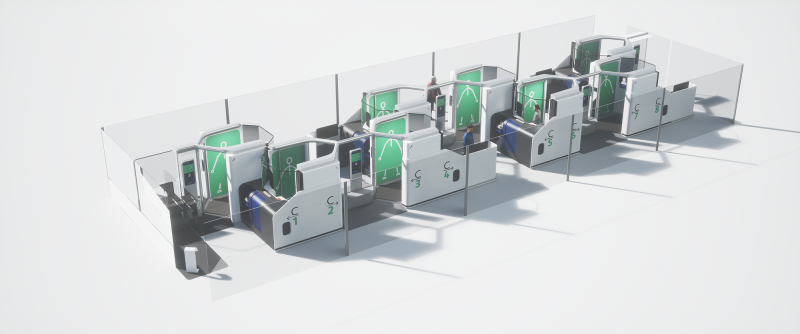
Inaugural efforts at LAS are a joint partnership between the Department of Homeland Security's Science and Technology Directorate's Screening at Speed Program and the Transportation Security Laboratory with TSA's Innovation Task Force.
"Like self-ordering kiosks at fast food and sit-down restaurants, self-service screening allows passengers in the Trusted Traveler Program to complete the security screening process on their own," Dr. John Fortune, a program manager, said in a statement. "The passenger self-service screening technology aims to keep travelers and Transportation Security Officers safer by minimizing person-to-person contact, reducing the number of bags [officers] have to pick up and move around and allowing passengers to proceed at their own pace."
From what we understand, pre-screened passengers will be able to use a kiosk similar to what you might find for Global Entry at some airports. Those with TSA PreCheck will be able to use a dedicated lane that could speed up security.
These individual screening consoles consist of a compact carry-on screening system and a flat panel passenger screening capability; it will notify a passenger after passing through if additional screening is required, per a news release announcing the initiative.
For now, the self-service screening prototype will only be available for travelers passing through LAS beginning in January.
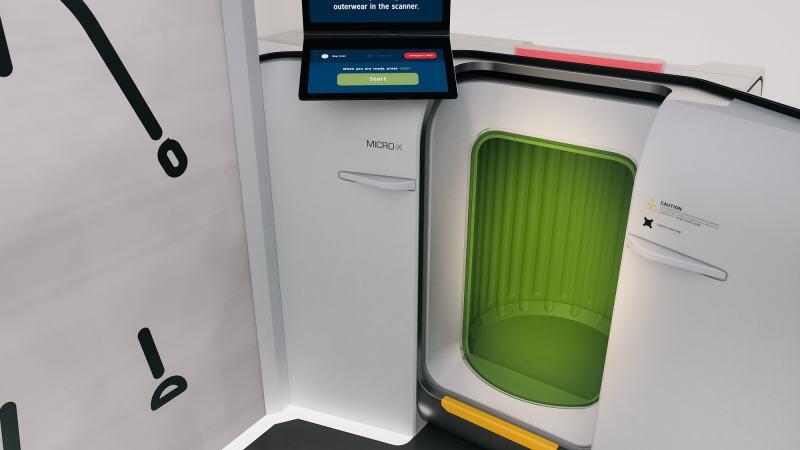
"The potential outcome from Screening at Speed is that passengers may not realize they have been screened at all," a TSA spokesperson said.

How the self-service ID process works
The Las Vegas trial builds on attempts to expedite the overall TSA security process for travelers through advanced technology.
This summer, TSA deployed technology at 16 domestic airports to allow passengers to scan their own driver's license or passport instead of handing over a boarding pass and ID. As of December, this service is now available at 25 airports. After passengers self-scan their ID, facial recognition technology matches the passenger to the ID instead of a human officer doing the visual comparison. However, a TSA officer is still there to double-check if the individual is eligible to fly that day.
TSA's process falls short of full biometric checks, which Delta Air Lines is piloting in Atlanta and Detroit under the name "Digital ID;" it will be available at Los Angeles International Airport (LAX) and LaGuardia Airport LaGuardia Airport (LGA) at some point, per an airline spokesperson. Digital ID is an alternative screening procedure that uses the passport information saved in each passenger's SkyMiles profile to match the photo taken at the checkpoint, which is also in the works.
These new machines are designed for a faster security process thanks to the facial recognition software and self-service component: Travelers insert their ID into the machine on their own and look at a camera for identity verification before proceeding through the security checkpoint as normal for verification by a TSA agent as a double-check.
The first two steps essentially replace the process of handing your ID and boarding pass to an agent to scan and check; it thereby eliminates some of the interaction with TSA agents before getting to the conveyer belt.
"The units reduce touchpoints and speed up the process," a TSA spokesperson told TPG. "Travelers insert their ID, look at the camera and if the ID is validated, the traveler then proceeds into the checkpoint. Even with TSA's use of these units, travelers still need to check in with their airline in advance and bring their boarding pass to their gate to show the airline representative before boarding their flight."
TSA first rolled out this new technology featuring facial recognition software to verify passengers' identities at Ronald Reagan Washington National Airport (DCA) in August 2020. Since then, they've implemented it at other airports, including the country's busiest, Hartsfield-Jackson Atlanta International Airport (ATL), and regional airports like Gulfport-Biloxi International Airport (GPT) and Jackson-Medgar Wiley Evers International Airport (JAN) in Mississippi.
Earlier this year, this new technology replaced all TSA security checkpoints at Baltimore/Washington International Thurgood Marshall Airport (BWI).
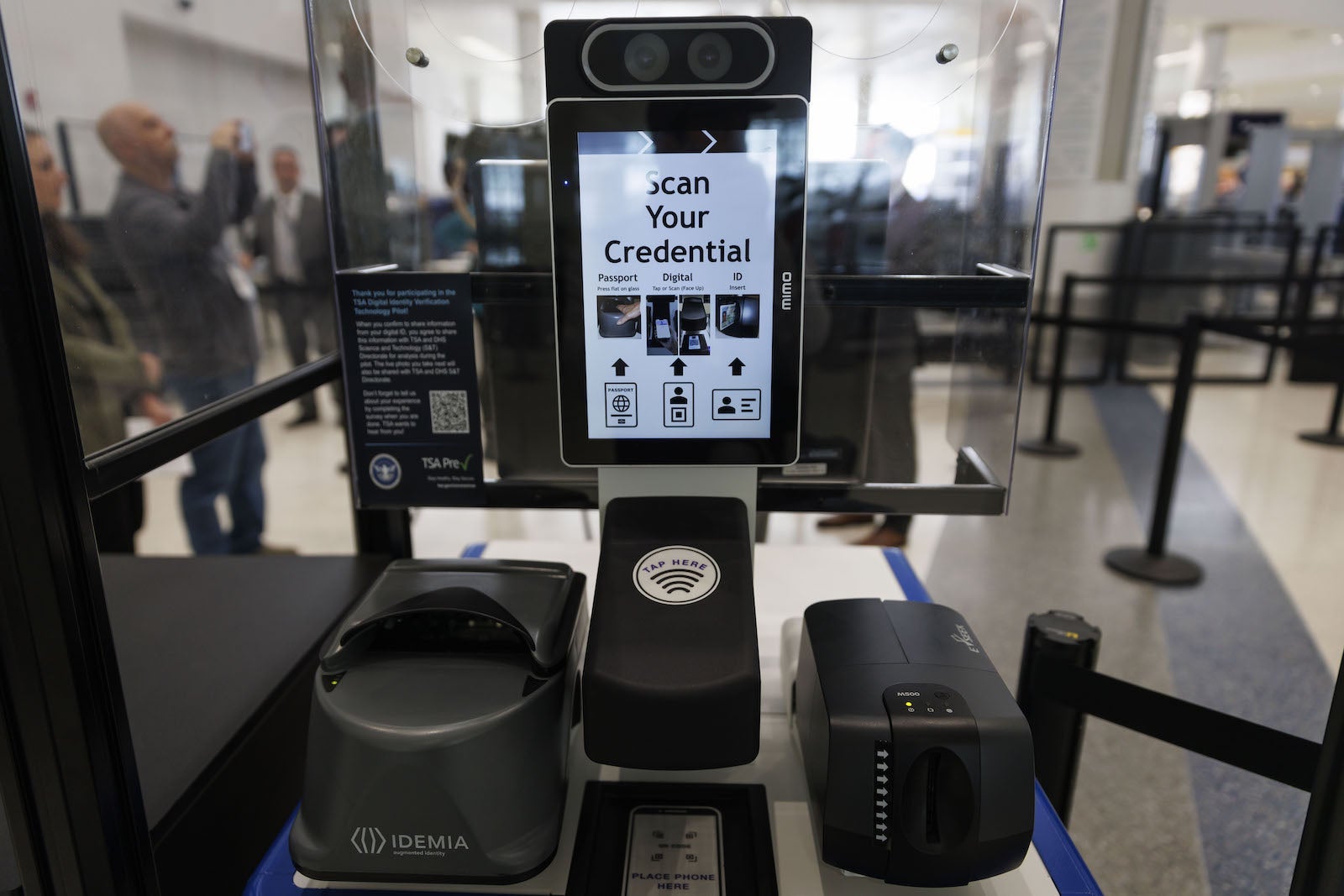
At participating airports, TSA's credential authentication technology units are equipped with cameras that match the traveler's face with their ID. If a passenger does not wish to have their photo taken, individuals can opt out by telling the officer at the Travel Document Checker podium. Doing so should not result in a delay, as the traveler can proceed through assisted TSA security as normal. Participation remains voluntary for travelers.
"Travelers who do not wish to participate in the facial recognition technology process may decline the optional photo in favor of an alternative identity verification process, which does not use facial recognition technology to verify their identity," according to TSA. "This action will not take longer, and passengers will not lose their place in line for security screening."
Though this new screening procedure could "modestly" speed up the identity verification process, it currently maintains the same output rates as older technology, roughly 200 passengers per hour.
"This technology is intended to enhance transportation security by strengthening identity verification. In the early phase of rolling it out, TSA has noted that it does so without any degradation in throughput rates," according to a TSA spokesperson. "In fact, as passengers and officers become familiar with the technology, it is expected to have a modest improvement on throughput rates."
For passengers potentially worried about security concerns related to the TSA storing their photos, the photos and ID photos are overwritten by the next passenger's scan and are not saved, as they are only used to match the photo on the ID being presented.
Additionally, TSA says that this technology enhances detection capabilities for identifying fraudulent documents at the security checkpoint.
"TSA is evaluating the use of biometric and digital identity solutions for identity verification," a TSA spokesperson told TPG. "Automated biometric technology can play an important role in increasing aviation security effectiveness, particularly at the airport checkpoint, by enhancing current manual identity verification procedures. Identity management is a central element to security screening. TSA is working to ensure that its biometric capabilities align with leading standards for identity assurance to strengthen vetting outcomes and identity verification."
Which airports have the self-service ID process?
As of December 2023, travelers can experience this self-service security screening procedure at the following airports:
- Dallas Fort Worth International Airport (DFW)
- Phoenix Sky Harbor International Airport (PHX)
- Denver International Airport (DEN)
- Salt Lake City International Airport (SLC)
- Norman Y. Mineta San Jose International Airport (SJC)
- Miami International Airport (MIA)
- Harry Reid International Airport (LAS)
- Los Angeles International Airport (LAX)
- Boston Logan International Airport (BOS)
- Detroit Metropolitan Wayne County Airport (DTW)
- Orlando International Airport (MCO)
- Hartsfield-Jackson Atlanta International Airport (ATL)
- Gulfport-Biloxi International Airport (GPT)
- Jackson-Medgar Wiley Evers International Airport (JAN)
- Baltimore/Washington International Thurgood Marshall Airport (BWI)
- Ronald Reagan Washington National Airport (DCA)
- Cincinnati/Northern Kentucky International Airport (CVG)
- Des Moines International Airport (DSM)
- Eastern Iowa Airport (CID)
- Honolulu Daniel K. Inouye International Airport (HNL)
- John Glenn Columbus International Airport (CMH)
- Louis Armstrong New Orleans International Airport (MSY)
- Luis Munoz Marin International Airport (SJU)
- Nashville International Airport (BNA)
- Phoenix Sky Harbor International Airport (PHX)
- Richmond International Airport (RIC)
- San Francisco International Airport (SFO)
- Will Rogers World Airport (OKC)
With roughly 200 units deployed, there's no guarantee that travelers at the above airports will be selected for these self-service portals.
"These units can be recognized by the giant vertical monitor on the passenger side of the kiosk — or Travel Document Checker podium," per TSA.
Bottom line
With traveler volume at U.S. airports expected to hit highs following scanning approximately 6.5 million passengers during the Thanksgiving period, Christmas will be the next test with this latest technology in terms of saving travelers time.
To maximize your chances of speeding through security, consider enrolling in both TSA PreCheck and Clear.
Related reading:
- TSA and Clear to launch single application for both programs
- TSA PreCheck just got cheaper, but remember that you can get it for free
- 12 key things to know about TSA PreCheck
- Are new TSA scanners slowing down the screening process for travelers?
- 7 ways to get free or discounted TSA PreCheck, Global Entry and Clear
- What to do if a boarding pass isn't marked TSA PreCheck
- Which airports and airlines use TSA PreCheck?
- Day in the life: What does it take to become a TSA officer?
TPG featured card
at American Express's secure site
Terms & restrictions apply. See rates & fees.
| 4X | Earn 4X Membership Rewards® points per dollar spent on purchases at restaurants worldwide, on up to $50,000 in purchases per calendar year, then 1X points for the rest of the year. |
| 4X | Earn 4X Membership Rewards® points per dollar spent at US supermarkets, on up to $25,000 in purchases per calendar year, then 1X points for the rest of the year. |
| 5X | Earn 5X Membership Rewards® points on prepaid hotel stays booked through AmexTravel.com or the Amex Travel App™. |
| 3X | Earn 3X Membership Rewards® points on flights booked through AmexTravel.com, the Amex Travel App™, or purchased directly from airlines. |
| 2X | Earn 2X Membership Rewards® points on prepaid car rentals booked through AmexTravel.com or the Amex Travel App™ and cruises booked and paid through AmexTravel.com. |
| 1X | Earn 1X Membership Rewards® point per dollar spent on all other eligible purchases. |
Pros
- Valuable dining and food-related credits
- Flexible rewards with airline and hotel transfer partners
- Multiple travel and purchase protections
- No foreign transaction fees
- Access to Amex Offers for additional savings (enrollment required)
Cons
- Not as useful for those living outside the U.S.
- Some may have trouble using Uber and other dining credits
- You may be eligible for as high as 100,000 Membership Rewards® Points after you spend $8,000 in eligible purchases on your new Card in your first 6 months of Card Membership. Welcome offers vary and you may not be eligible for an offer. Apply to know if you’re approved and find out your exact welcome offer amount – all with no credit score impact. If you’re approved and choose to accept the Card, your score may be impacted.
- Earn 4X Membership Rewards® points per dollar spent on purchases at restaurants worldwide, on up to $50,000 in purchases per calendar year, then 1X points for the rest of the year.
- Earn 4X Membership Rewards® points per dollar spent at US supermarkets, on up to $25,000 in purchases per calendar year, then 1X points for the rest of the year.
- Earn 5X Membership Rewards® points on prepaid hotel stays booked through AmexTravel.com or the Amex Travel App™.
- Earn 3X Membership Rewards® points on flights booked through AmexTravel.com, the Amex Travel App™, or purchased directly from airlines.
- Earn 2X Membership Rewards® points on prepaid car rentals booked through AmexTravel.com or the Amex Travel App™ and cruises booked and paid through AmexTravel.com.
- Earn 1X Membership Rewards® point per dollar spent on all other eligible purchases.
- Pay It® lets you tap in the American Express® App to quickly pay for small purchase amounts throughout the month and still earn rewards the way you usually do. Plan It® gives you the option to split up big purchases into equal monthly payments with a fixed fee. You’ll know upfront exactly how much you’ll pay.
- $120 Dining Credit: Earn up to a total of $10 in statement credits monthly when you pay with the Gold Card at Grubhub (including Seamless), Buffalo Wild Wings, Five Guys, The Cheesecake Factory, and Wonder. This can be an annual savings of up to $120. Enrollment required.
- $100 Resy Credit: Get up to $100 in statement credits each calendar year at over 10,000 qualifying U.S. Resy restaurants after you pay for eligible purchases with the American Express® Gold Card. That’s up to $50 in statement credits semi-annually. Enrollment required.
- $84 Dunkin' Credit: Earn up to $7 in monthly statement credits after you pay with the American Express® Gold Card at U.S. Dunkin’ locations. Enrollment required.
- $120 Uber Cash on Gold: Enjoy up to $120 in Uber Cash annually with your Gold Card. Just add your Card to your Uber account and you'll get $10 in Uber Cash each month to use on orders and rides in the U.S. when you select an Amex Card for your transaction.
- Enjoy complimentary Hertz Five Star® Status benefits like skipping the counter at select locations, adding an additional driver at no additional cost*, and vehicle upgrades**. Benefit enrollment and Hertz Gold+ registration are required. *Additional drivers must meet standard rental qualifications and must be a spouse or domestic partner to qualify as complimentary. Other additional drivers subject to fees. **Benefits are subject to availability and vary by location. Additional Hertz program Terms and Conditions including age restrictions apply.
- Book two nights or more with The Hotel Collection through AmexTravel.com or the Amex Travel App™ and receive a $100* credit towards eligible charges at over 1,400 upscale hotels worldwide. *Eligible charges vary by property.
- Book your travel through the Amex Travel App™ with added peace of mind – backed by American Express® service and support. Only for American Express® Card Members.
- Whenever you need us, we're here. Our Member Services team will ensure you are taken care of. From lost Card replacement to statement questions, we are available to help 24/7.
- No Foreign Transaction Fees.
- Annual Fee is $325.
- Terms Apply.