How to Tell Boeing 757s, 767s and 777s Apart

The Boeing 757, 767 and 777 are each key members of the medium-to-long haul fleets of airlines around the world. It is somewhat challenging to tell them apart—particularly when you add in the Airbus A330, which looks similar to each—but there are a few tell-tale differences.
For the latest travel news, deals and points and miles tips, sign up for our daily newsletter.
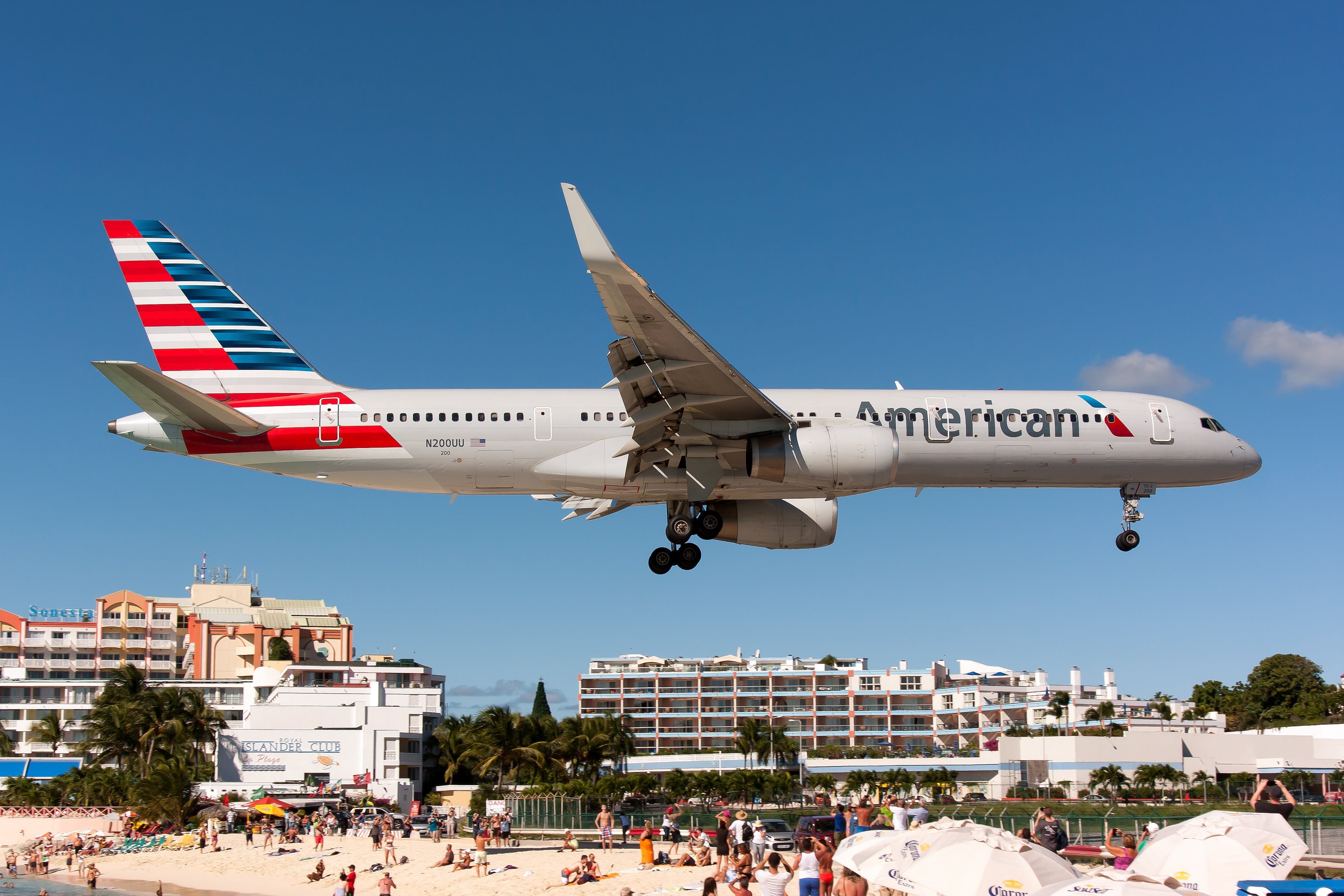
Two-Engine Behemoths
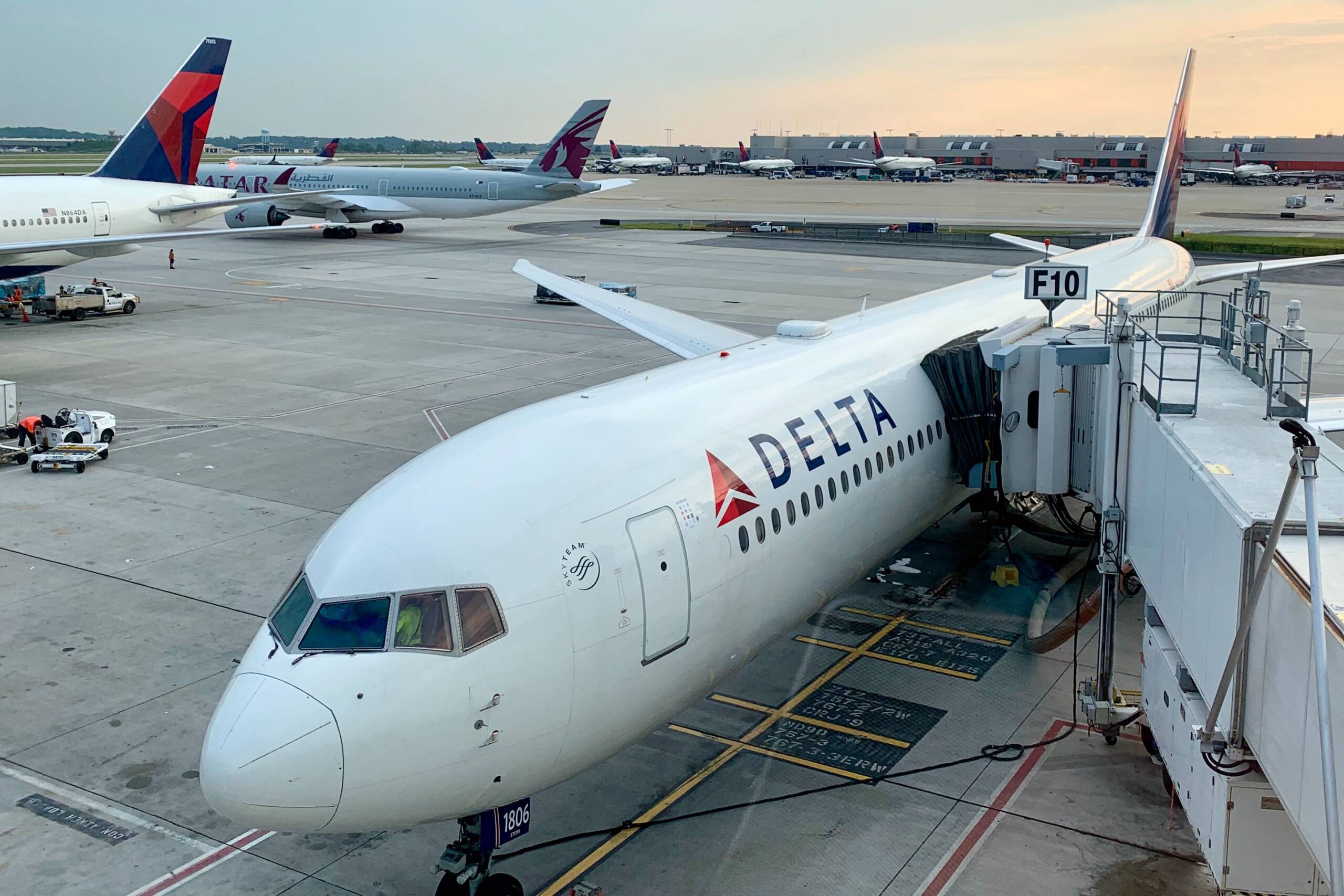
All of these aircraft are twin jets, i.e. with two engines. In the case of the Boeing 757 and the Boeing 767, those engines are of similar size. Not so for the Boeing 777. Those engines are huge; they are almost the diameter of a Boeing 737's fuselage, and the new Boeing 777X's General Electric engines are even wider than that. So, the first tell-tale feature you can spot is that the Boeing 777 engines are much larger and seem to droop from the wings, like a pair of heavy earrings.
Related: Beginner guide to plane spotting
Does it Have a Non-U.S. Livery?
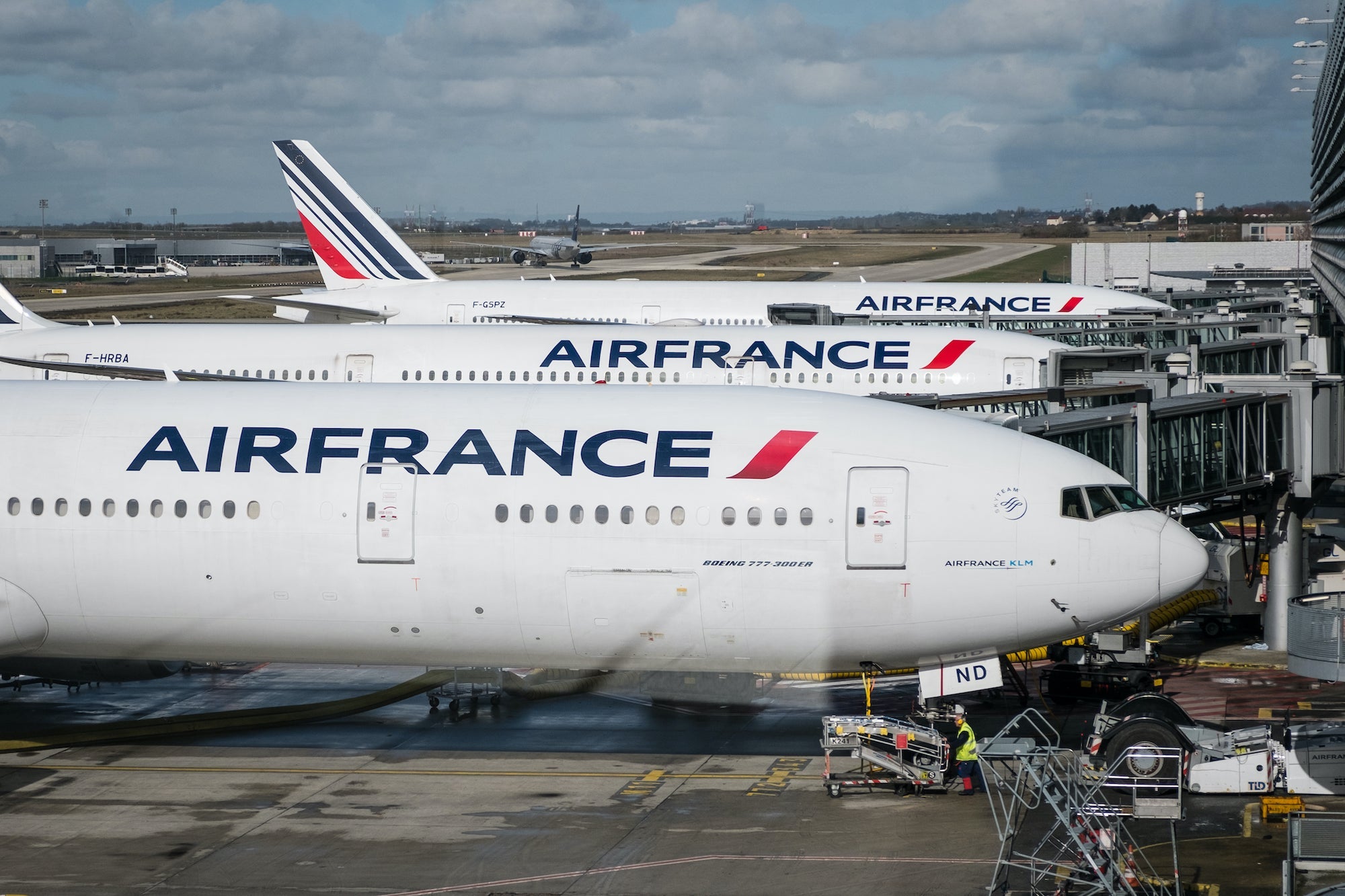
Chances are, if it's a humongous, two-engine airline with a foreign livery such as Cathay Pacific or Emirates, it's a Boeing 777. The Triple Seven has been the go-to wide-bodied aircraft for many of the world's carriers for the better part of 20 years. In contrast the Boeing 757 and 767 are designs from the late 1970s and '80s, and fewer and fewer will be seen in the wild in the coming years. The major operators of both the 757 and 767 are Delta and United; American Airlines retired theirs in 2020 during the coronavirus pandemic. JAL and ANA in Japan are among the largest foreign operators of the 767, while the 757 has largely disappeared from passenger service outside the U.S. (you can find sizeable fleets in Iceland and Germany, still.) Compare that to the ubiquitous Boeing 777; Air France alone operates 70 of the planes.
Related: How to compare commercial aircraft apart
Eliminate the Boeing 757
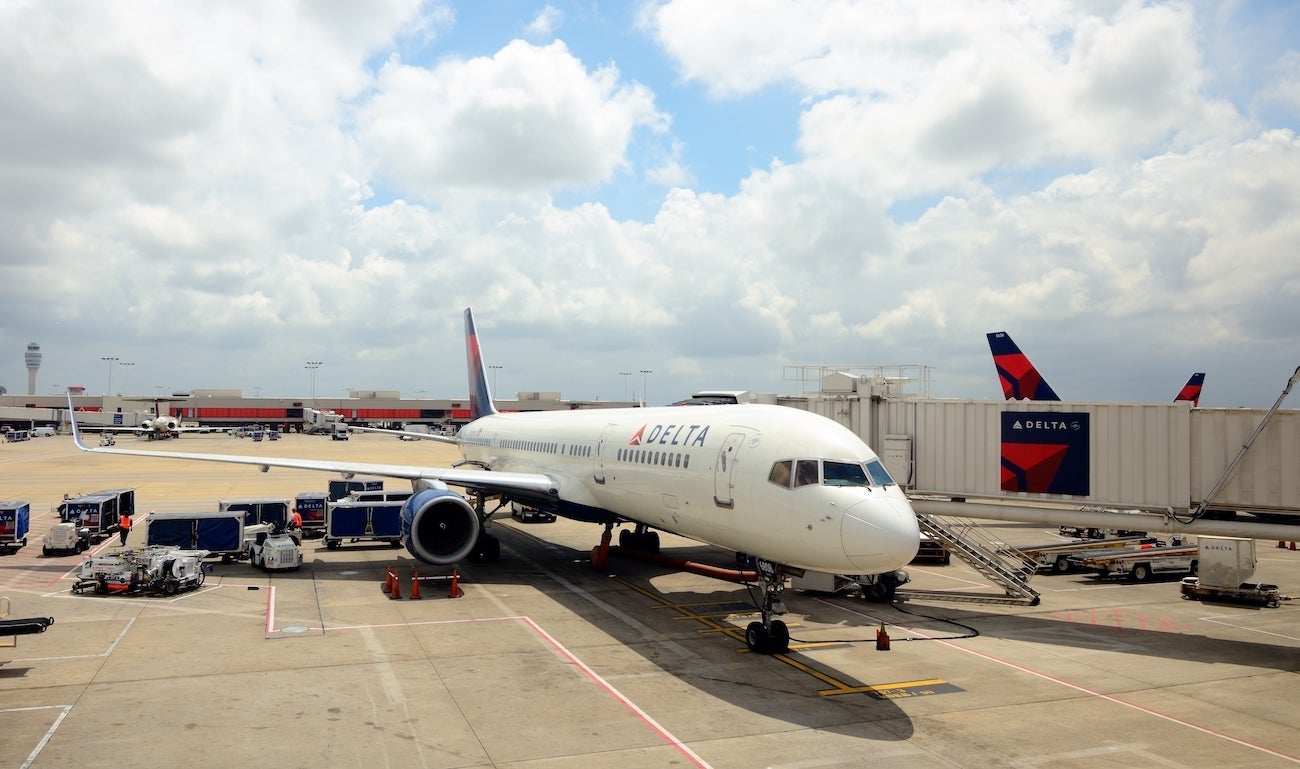
While that's not easy to spot from the outside, the Boeing 757 differs from the Boeing 767 and 777 in that it is a single-aisle, narrow-body aircraft, with 3-3 seating across in coach. In contrast, the Boeing 767 and 777 are wide-bodied aircraft with two aisles and thre rows of seats in coach (typically 2-3-2 on the 767 and 3-4-3 on the 777.) On the outside, the Boeing 757 is skinnier than the longer and fatter-looking Boeing 767. And there's a good reason for that: the 757 has a cabin that's 11 feet 6 inches wide, the 767 is 15 feet 6 inches, and the much larger 777 is around 19 feet 6 inches, depending on the model. That means the 757 is 42% skinnier. The Boeing 777 is the longest and heaviest of them all.
Spot the Boeing 777
Related: Boeing 777 turns 25
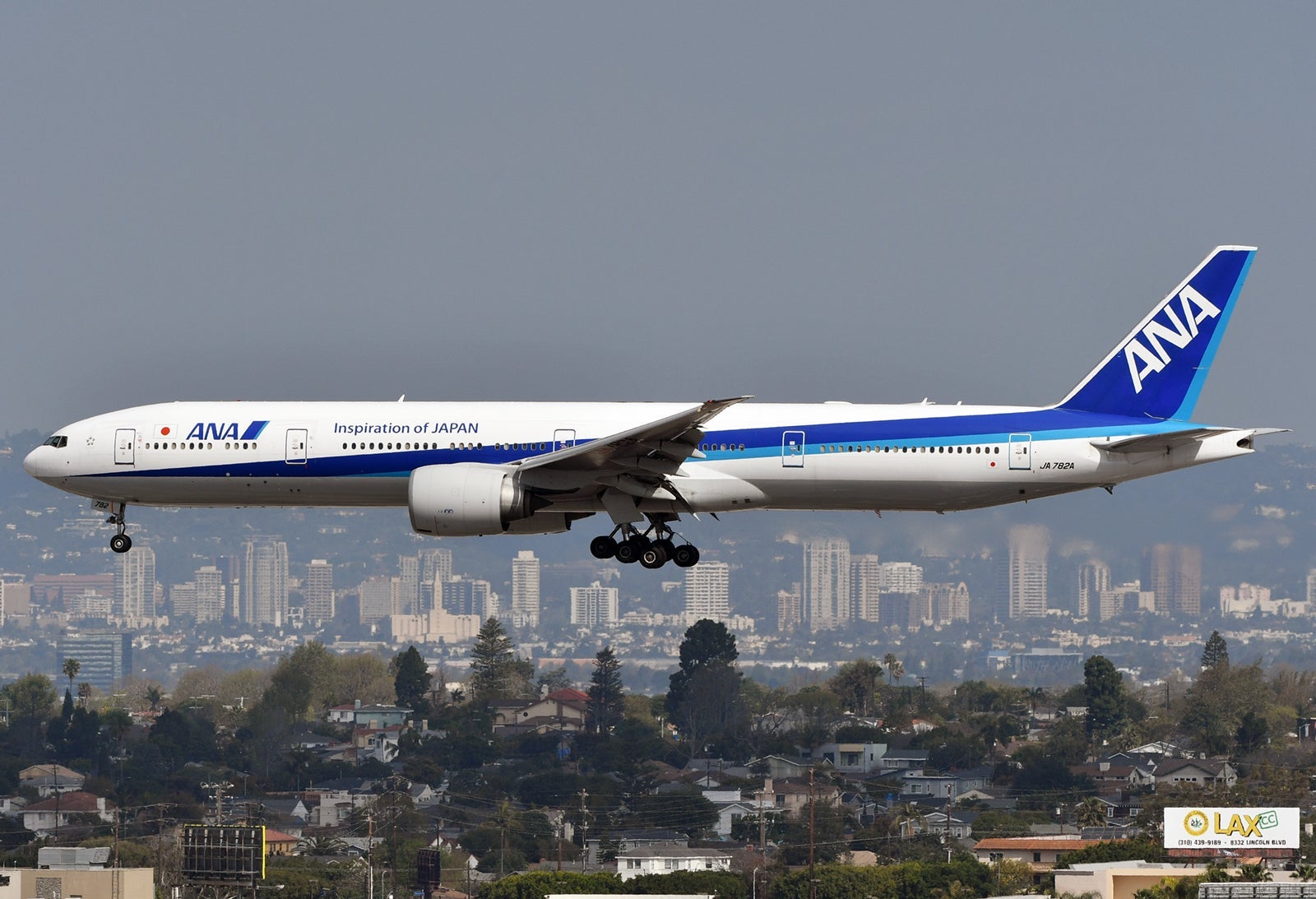
Length and size are not easy to spot, particularly at an airport where most everything on the ramp is huge. The easiest way to quickly determine whether you're looking at a 757, 767 or 777 is the tail cone, where the auxiliary engine known as APU sits at the rear of the aircraft. On the 777, the tail cone is chisel-shaped. No chisel? You can eliminate the Boeing 777.

Related: Delta says goodbye to the 777
Wheel Count: Does It Have Two Sets of Wheels per Bogie or Three?
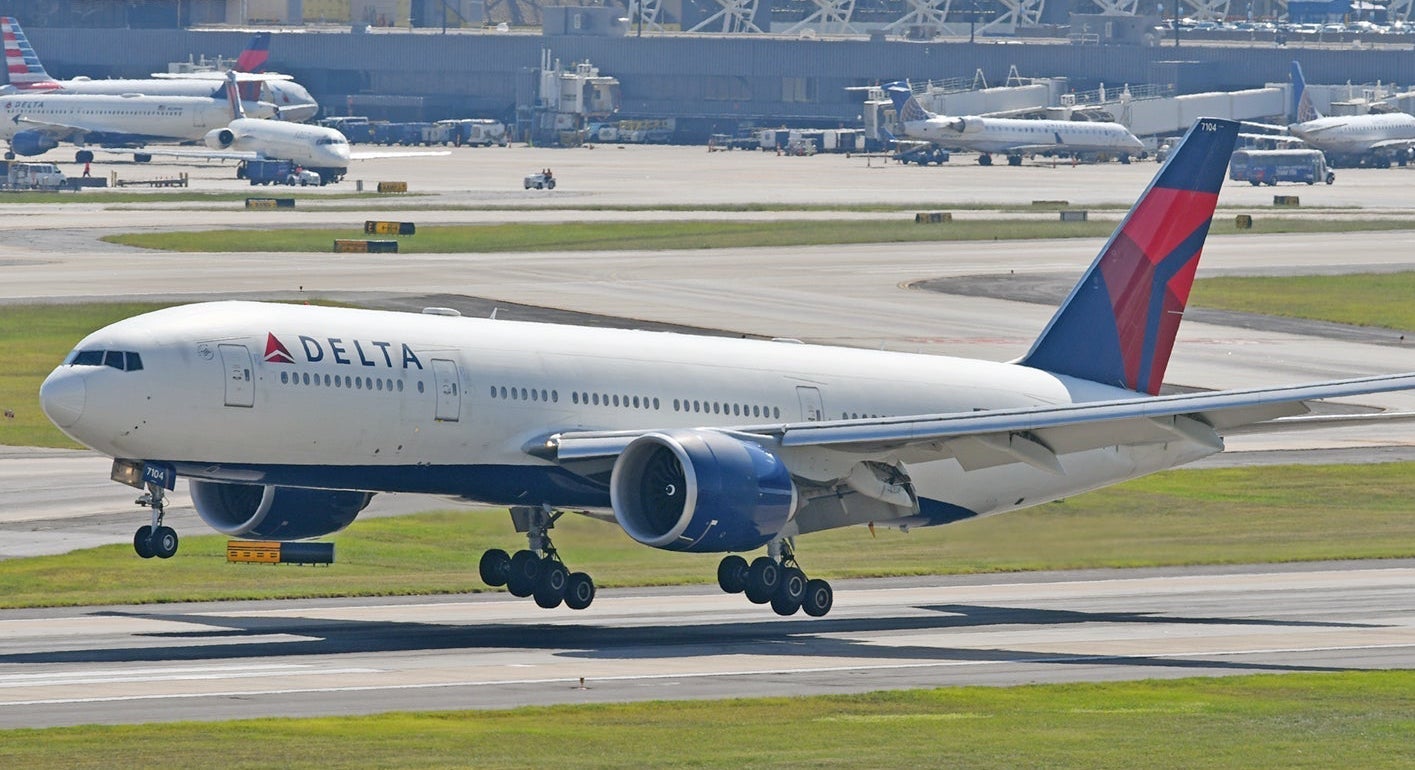
The Boeing 757, Boeing 767 and Boeing 777 all have two main landing-gear bogies—the structures under the wings with wheels attached. The Boeing 777 however, has three pairs of wheels on each bogie, while the 757 and 767 have two. The 777 above clearly shows the triple-wheel arrangement.
The Boeing 757: Look for the Skinny Moose with the Pointy Nose
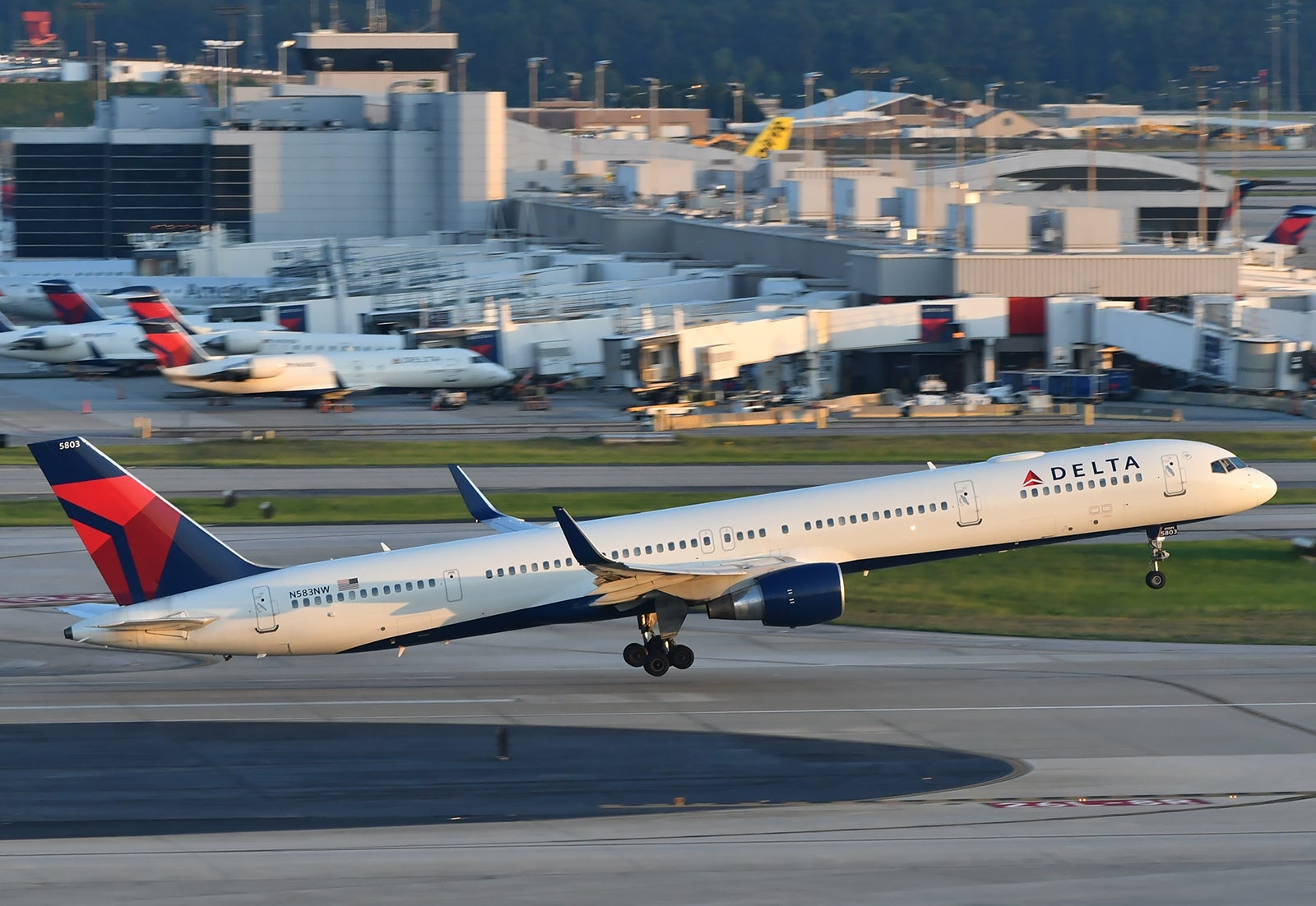
The Boeing 757 comes in two variants, the 200 and the 300. The 300 is the stretched version of the 200. An easy way to tell the difference is that the 300 has two emergency-exit doors over the wings and the 200 has none.
Between the 767 and the 757, the 757 has a pointier nose. The 767 is a touch more bulbous.
The 757 has an unusually high landing gear. It looks a bit like a moose; it is top-heavy with skinny legs. The reason? Boeing originally designed the gear to allow for stretch models of the 757 later down the line, so as to avoid tail strikes on takeoff with a longer fuselage. If you're spotting a 757 on landing, you might be able to tell that the nose landing gear is further back under the belly of the aircraft than the Boeing 767.
The Boeing 767 Variants
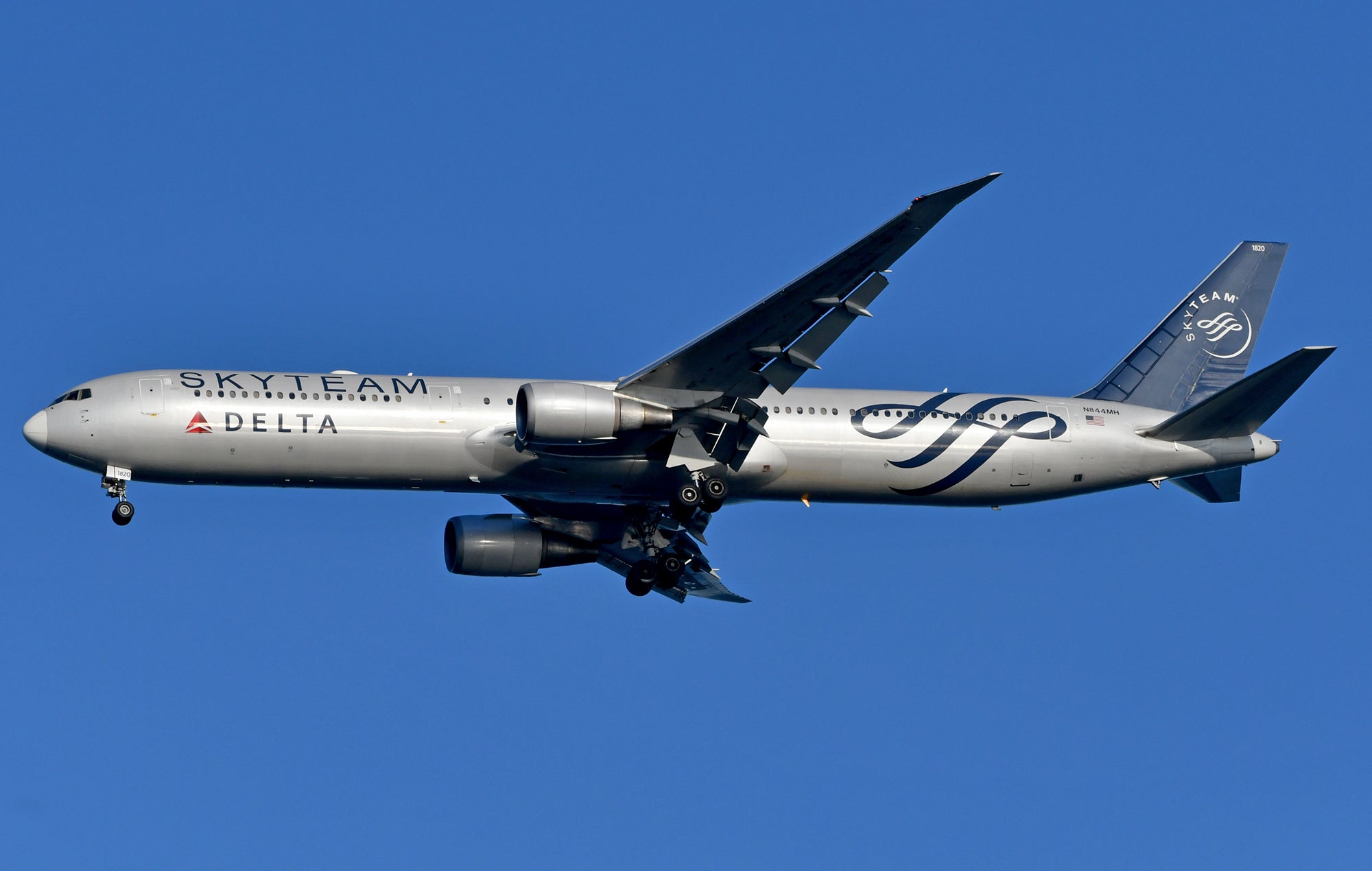
The Boeing 767 comes in the 200, 300, and 400 main variants, distinguished by length. The 300 and 400 are stretch models of the original aircraft, the 767-200 launched in 1982. To tell them apart, the only surefire way is looking at the exit doors. The 767-300 and 400 have emergency exit doors before the wing and after the wing. The Boeing 767-200 has one emergency exit above the wing. And if you can spot it, the 767-300 and 400 each come with a retractable tailskid that was added to protect the tail of these longer versions from damaging tail strikes on takeoff.
Another detail that only the 400 has: raked wingtips.
Related: Why airplanes sometimes tilt up
You'll also commonly see 767s referred to with the letters "ER" after the model number, as well; those refer to "extended range," and ER 767s have no external differences from the standard versions.
A Tough One: The Boeing 767-400 Versus the Boeing 777-200
Related: The path to becoming an airline captain
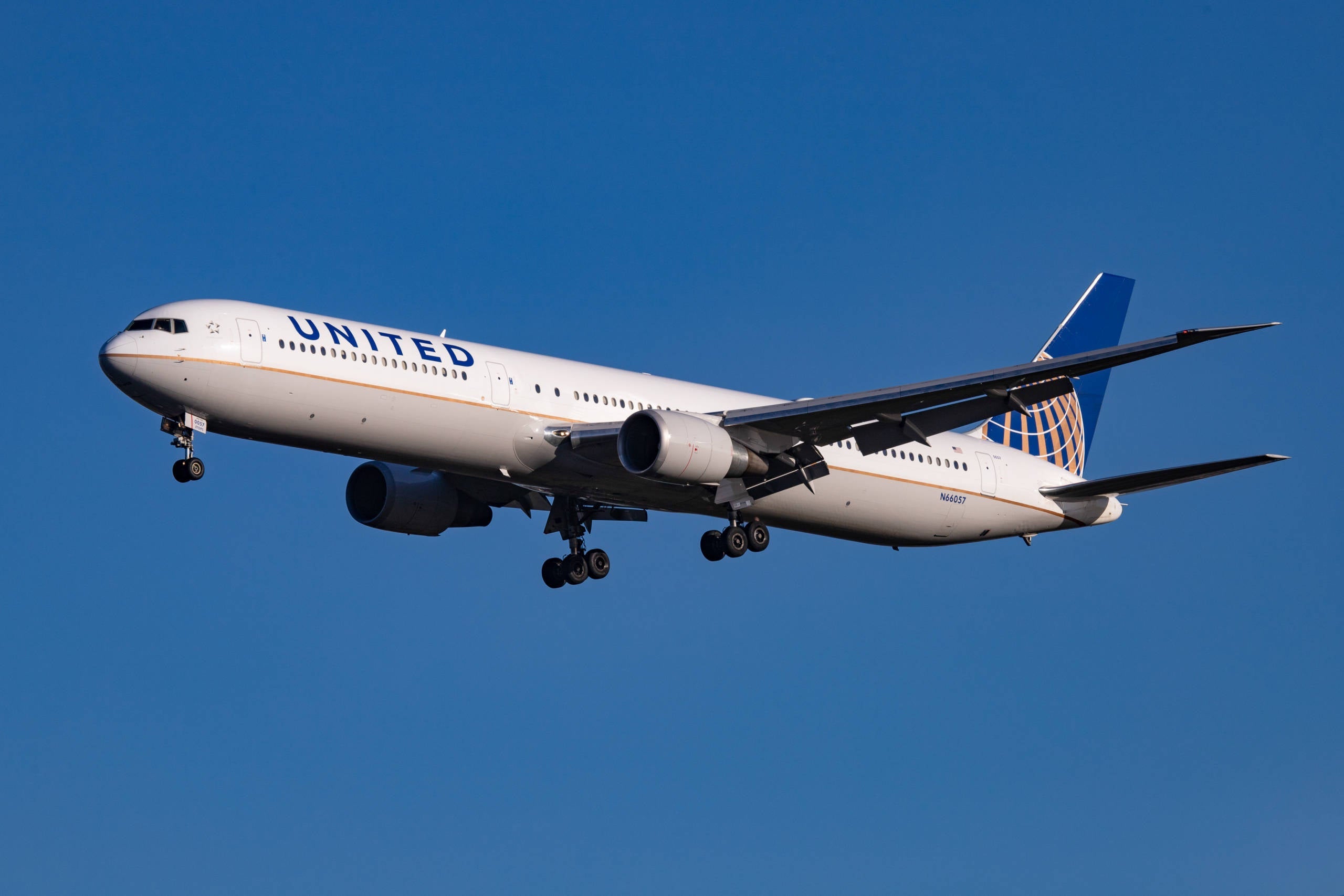
Each plane is roughly the same length: The Boeing 767-400 is 201 feet long, and the 777-200, the smallest Triple Seven, is 209 feet long. So, what's the easiest way to tell the difference? First is the tail cone. The 777 will have the chisel-like tail cone. Also, take a quick look at the engines. If they appear to be "small" it's likely a Boeing 767-400. And of course, the Boeing 777 has two sets of three wheels on its main landing gear, while all 767s have two sets of two.
Related: How landing gear works
The Boeing 777-300ER

The biggest difference between regular 777s and the 777-300ER, the biggest of the 777s currently in service, is that the latter features raked wingtips. They aren't as pronounced as the Boeing 787's, nor does the wing curve upwards so dramatically.
Related: What are airplane windows made of?
The 777-300ER is some 40 feet longer than the 777-200, but that is hard to spot in the air or on the ramp. The wings are your top clue.
Here's a table summing up the differences between 757s, 767s and 777s:
| Boeing 757 |
|
|---|---|
Boeing 767 |
|
Boeing 777 |
|
Related: All about winglets
Related: My 777 story in pictures
Related: My 11 craziest AvGeek moments
TPG featured card
at American Express's secure site
Terms & restrictions apply. See rates & fees.
| 4X | Earn 4X Membership Rewards® points per dollar spent on purchases at restaurants worldwide, on up to $50,000 in purchases per calendar year, then 1X points for the rest of the year. |
| 4X | Earn 4X Membership Rewards® points per dollar spent at US supermarkets, on up to $25,000 in purchases per calendar year, then 1X points for the rest of the year. |
| 5X | Earn 5X Membership Rewards® points on prepaid hotel stays booked through AmexTravel.com or the Amex Travel App™. |
| 3X | Earn 3X Membership Rewards® points on flights booked through AmexTravel.com, the Amex Travel App™, or purchased directly from airlines. |
| 2X | Earn 2X Membership Rewards® points on prepaid car rentals booked through AmexTravel.com or the Amex Travel App™ and cruises booked and paid through AmexTravel.com. |
| 1X | Earn 1X Membership Rewards® point per dollar spent on all other eligible purchases. |
Pros
- Valuable dining and food-related credits
- Flexible rewards with airline and hotel transfer partners
- Multiple travel and purchase protections
- No foreign transaction fees
- Access to Amex Offers for additional savings (enrollment required)
Cons
- Not as useful for those living outside the U.S.
- Some may have trouble using Uber and other dining credits
- You may be eligible for as high as 100,000 Membership Rewards® Points after you spend $8,000 in eligible purchases on your new Card in your first 6 months of Card Membership. Welcome offers vary and you may not be eligible for an offer. Apply to know if you’re approved and find out your exact welcome offer amount – all with no credit score impact. If you’re approved and choose to accept the Card, your score may be impacted.
- Earn 4X Membership Rewards® points per dollar spent on purchases at restaurants worldwide, on up to $50,000 in purchases per calendar year, then 1X points for the rest of the year.
- Earn 4X Membership Rewards® points per dollar spent at US supermarkets, on up to $25,000 in purchases per calendar year, then 1X points for the rest of the year.
- Earn 5X Membership Rewards® points on prepaid hotel stays booked through AmexTravel.com or the Amex Travel App™.
- Earn 3X Membership Rewards® points on flights booked through AmexTravel.com, the Amex Travel App™, or purchased directly from airlines.
- Earn 2X Membership Rewards® points on prepaid car rentals booked through AmexTravel.com or the Amex Travel App™ and cruises booked and paid through AmexTravel.com.
- Earn 1X Membership Rewards® point per dollar spent on all other eligible purchases.
- Pay It® lets you tap in the American Express® App to quickly pay for small purchase amounts throughout the month and still earn rewards the way you usually do. Plan It® gives you the option to split up big purchases into equal monthly payments with a fixed fee. You’ll know upfront exactly how much you’ll pay.
- $120 Dining Credit: Earn up to a total of $10 in statement credits monthly when you pay with the Gold Card at Grubhub (including Seamless), Buffalo Wild Wings, Five Guys, The Cheesecake Factory, and Wonder. This can be an annual savings of up to $120. Enrollment required.
- $100 Resy Credit: Get up to $100 in statement credits each calendar year at over 10,000 qualifying U.S. Resy restaurants after you pay for eligible purchases with the American Express® Gold Card. That’s up to $50 in statement credits semi-annually. Enrollment required.
- $84 Dunkin' Credit: Earn up to $7 in monthly statement credits after you pay with the American Express® Gold Card at U.S. Dunkin’ locations. Enrollment required.
- $120 Uber Cash on Gold: Enjoy up to $120 in Uber Cash annually with your Gold Card. Just add your Card to your Uber account and you'll get $10 in Uber Cash each month to use on orders and rides in the U.S. when you select an Amex Card for your transaction.
- Enjoy complimentary Hertz Five Star® Status benefits like skipping the counter at select locations, adding an additional driver at no additional cost*, and vehicle upgrades**. Benefit enrollment and Hertz Gold+ registration are required. *Additional drivers must meet standard rental qualifications and must be a spouse or domestic partner to qualify as complimentary. Other additional drivers subject to fees. **Benefits are subject to availability and vary by location. Additional Hertz program Terms and Conditions including age restrictions apply.
- Book two nights or more with The Hotel Collection through AmexTravel.com or the Amex Travel App™ and receive a $100* credit towards eligible charges at over 1,400 upscale hotels worldwide. *Eligible charges vary by property.
- Book your travel through the Amex Travel App™ with added peace of mind – backed by American Express® service and support. Only for American Express® Card Members.
- Whenever you need us, we're here. Our Member Services team will ensure you are taken care of. From lost Card replacement to statement questions, we are available to help 24/7.
- No Foreign Transaction Fees.
- Annual Fee is $325.
- Terms Apply.