No, cruise giant Carnival didn't just get a bailout. Here's what really happened

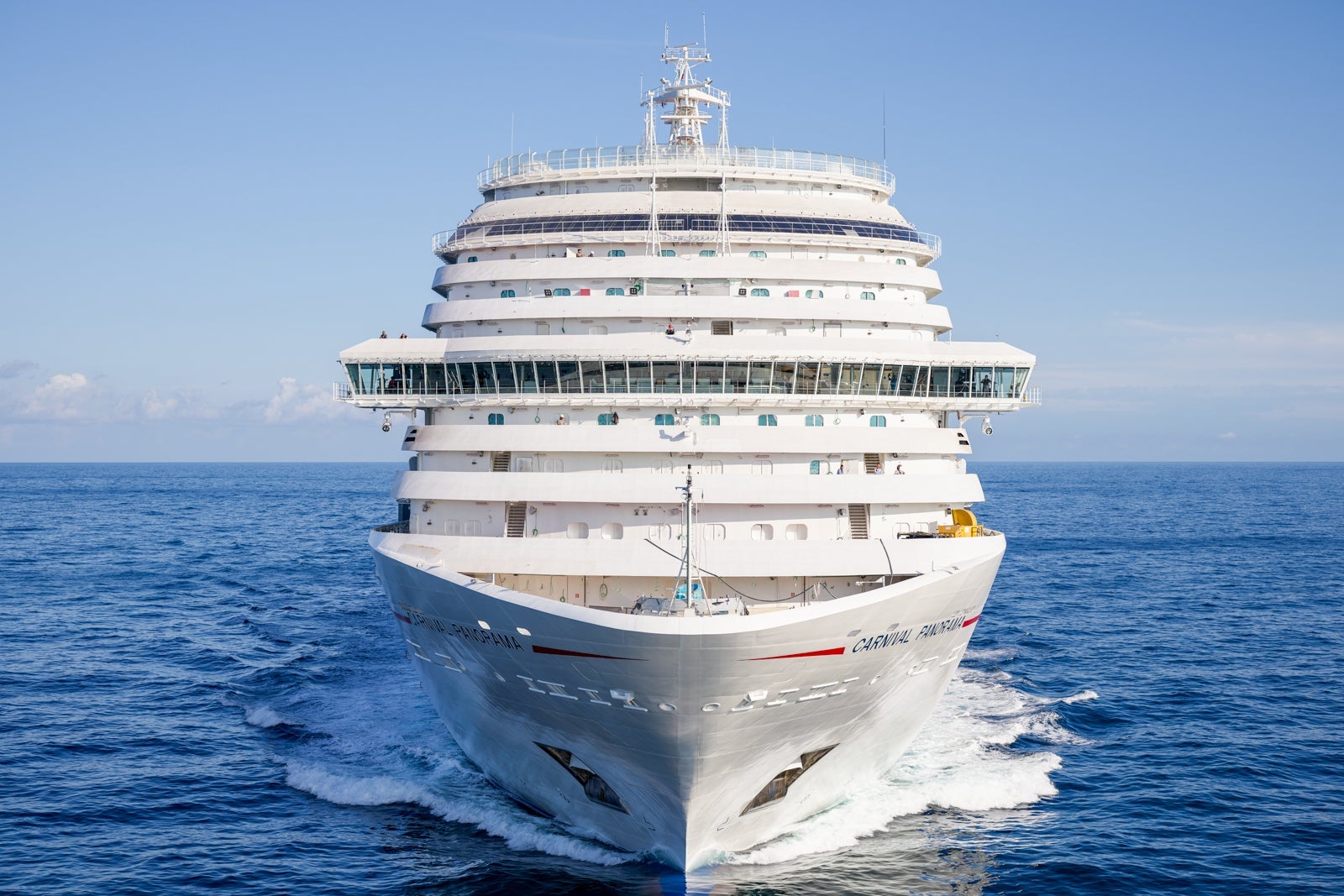
Did struggling cruise giant Carnival Corp. just get a bailout by the U.S. government? That was the story bouncing around the internet on Monday, and it sparked outrage.
"A disgrace," is how CNBC's Jim Cramer described the news in an on-air diatribe.
Vermont senator and recent presidential candidate Bernie Sanders took to Twitter to call out the unfairness. "How in the hell does Carnival, a cruise ship company that pays virtually no federal income taxes, receive a bailout, but the Postal Service, the most popular government agency in America, does not?," Sanders tweeted.
Both Cramer and Sanders were responding to a Wall Street Journal story published Monday under the headline, "How Fed Intervention Saved Carnival."
But neither seemed to grasp what the story actually said. Nor did a number of other media sites that quickly translated the headline into, as thestreet.com put it: "Carnival deemed too big to fail, rescued by the Fed."
What the Journal was trying to say in the story, perhaps in a clunky sort of way, was this: The moves the Federal Reserve made in March to unfreeze credit markets had the indirect effect of making it easier for Carnival Corp. and other struggling companies to raise money from private investors.
Related: 9 ways cruising will be different when it starts up again
For the record: Carnival Corp. didn't get a government bailout. The Federal Reserve didn't inject money into Carnival Corp., either via a loan or by buying into a do-or-die debt sale that the company made earlier this month.
In fact, the Federal Reserve in theory can't buy Carnival Corp. debt. Under the terms of the Federal Reserve's new Secondary Market Corporate Credit Facility (SMCCF), the emergency program it announced in March to inject liquidity into the bond market, the agency only can buy debt issued by investment-grade U.S. companies. Carnival Corp. is not a U.S. company.

In early April, Carnival Corp. saved itself -- at least for now -- by turning to private investors who were willing to hand over billions of dollars to the company in return for the promise of an exorbitantly large amount of interest. Specifically, the corporation sold $4 billion in senior secured notes due in 2023 that carry an 11.5% interest rate. The company also sold $1.75 billion in convertible notes due in 2023 that pay a lower 5.75% interest rate but can be converted into Carnival Corp. stock.
As Carnival Corp. noted earlier this month in a filing with the U.S. Securities and Exchange Commission, the notes were sold to institutional buyers (read: big investment firms).
The company also raised $625 million by selling additional common stock at a multiyear low price of $8 per share, a you-don't-want-to-do-this-unless-you-absolutely-have-to move that diluted the stakes of current shareholders of the company.
So, how did that private placement of debt and equity with professional investors on Wall Street get translated into a scandal about the government bailing out Carnival?
Related: The bizarre story of the last 8 cruise passengers still at sea
The Journal never used the word "bailout" in its story. But it did call what happened to Carnival a "rescue." That, combined with the headline, left an impression that there had been a government intervention to save Carnival Corp. As noted above, there wasn't. The "rescue" to which the Journal was referring came from private investors.
What is true is that Carnival Corp. had an easier time getting those private investors to give it money after the Federal Reserve began intervening in credit markets. Before the Federal Reserve announced the SMCCF program and other new programs to add liquidity to markets on March 23, Carnival was considering selling debt to a group of hedge funds at a much higher interest rate above 15%, the Journal noted.
The 11.5% interest rate that Carnival Corp. eventually was able to secure for the bulk of its debt sale still was sky high. But it was better than it would have been if the Federal Reserve hadn't intervened to calm markets.
This sort of dynamic was true for many companies that have been seeking additional funds through debt sales in recent weeks, as the Journal pointed out. After the Federal Reserve interceded, Ford Motor was able to sell $8 billion in high-interest-rate bonds, according to the Journal. Airbnb Inc. also raised money by selling new debt.
The Journal was citing Carnival Corp.'s debt sale as an example of a bigger trend. It could just as easily have made Ford or Airbnb the focus of its story.
Whether or not the buyers of Carnival Corp.'s newly issued debt and equity turn out to be winners remains to be seen.
Visit TPG's guide to all coronavirus news and updates
Carnival Corp. was raising the money because the coronavirus-caused shutdown of its operations since March had left it burning through cash at a rate of $1 billion per month, according to regulatory filings. It's unclear how soon that cash burn will end.
Carnival Corp. operates more than 100 ships marketed by such brands as Carnival Cruise Line, Princess Cruises and Holland America -- some of which may not resume sailing for months.
If Carnival Corp. survives the shutdown of the cruise industry, the financial firms that bought into the company's debt and equity sales could make fortunes. If the company collapses into bankruptcy, they may end up with huge losses.
But such risk is being borne not by the U.S. government, but by private investors.
Additional resources for cruisers during the coronavirus outbreak:
TPG featured card

at Capital One's secure site
Terms & restrictions apply. See rates & fees.
| 5X miles | Earn 5X miles on hotels, vacation rentals and rental cars booked through Capital One Travel |
| 2X miles | Earn unlimited 2X miles on every purchase, every day |
Pros
- Stellar welcome offer of 75,000 miles after spending $4,000 on purchases in the first three months from account opening. Plus, a $250 Capital One Travel credit to use in your first cardholder year upon account opening.
- You'll earn 2 miles per dollar on every purchase, which means you won't have to worry about memorizing bonus categories
- Rewards are versatile and can be redeemed for a statement credit or transferred to Capital One’s transfer partners
Cons
- Highest bonus-earning categories only on travel booked via Capital One Travel
- LIMITED-TIME OFFER: Enjoy $250 to use on Capital One Travel in your first cardholder year, plus earn 75,000 bonus miles once you spend $4,000 on purchases within the first 3 months from account opening - that’s equal to $1,000 in travel
- Earn unlimited 2X miles on every purchase, every day
- Earn 5X miles on hotels, vacation rentals and rental cars booked through Capital One Travel
- Miles won't expire for the life of the account and there's no limit to how many you can earn
- Receive up to a $120 credit for Global Entry or TSA PreCheck®
- Use your miles to get reimbursed for any travel purchase—or redeem by booking a trip through Capital One Travel
- Enjoy a $50 experience credit and other premium benefits with every hotel and vacation rental booked from the Lifestyle Collection
- Transfer your miles to your choice of 15+ travel loyalty programs
- Top rated mobile app