‘Many sleepless nights’: American exec discusses rebuilding route network after pandemic teardown

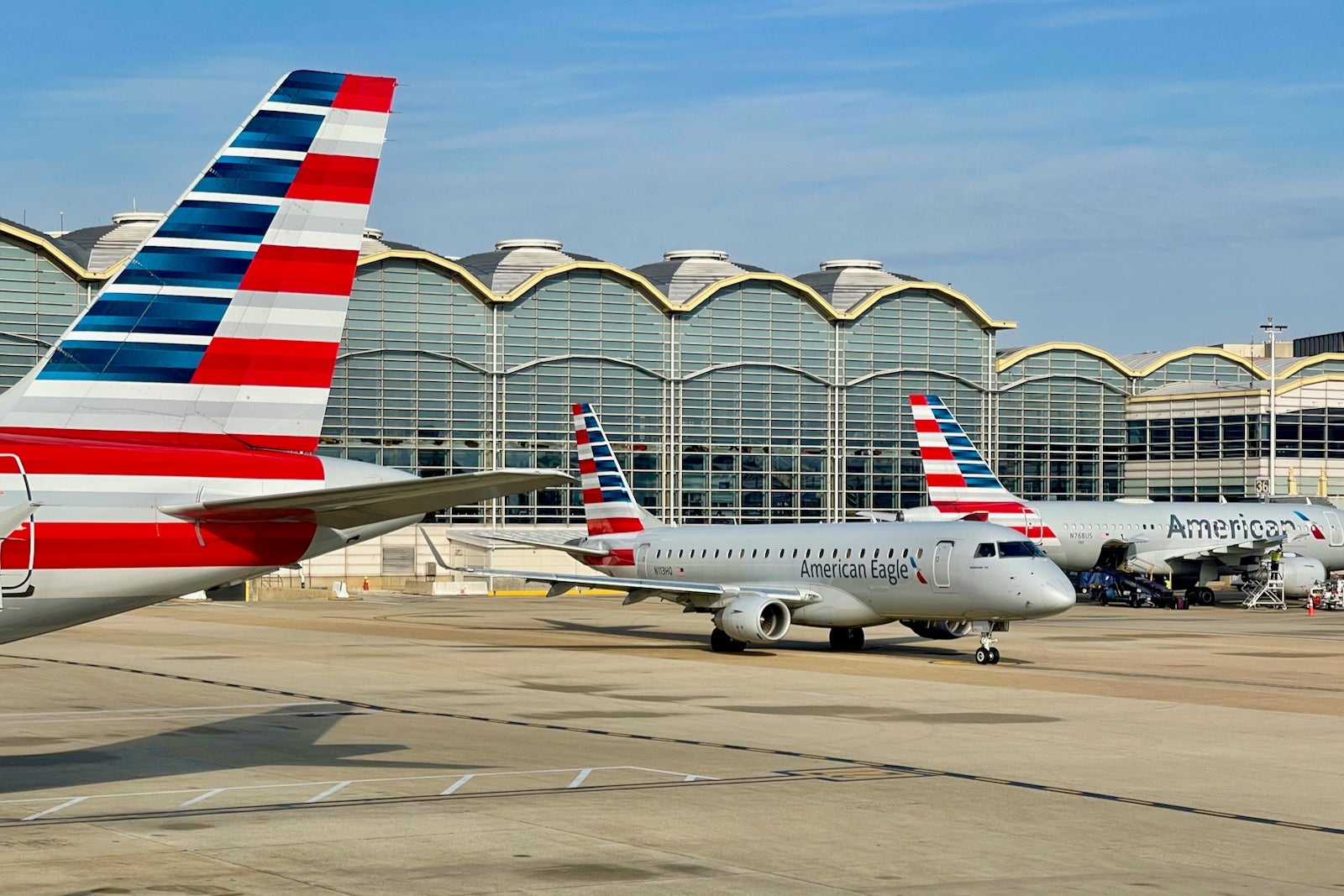
Imagine being a network planning veteran who started at a different airline days before the coronavirus would upend the entire industry.
Well, that's essentially what happened to Brian Znotins, who joined American Airlines as vice president of network planning in mid-January 2020, with more than 20 years of experience.
Within weeks of stepping foot in American's Fort Worth headquarters, he was tasked with significantly scaling back the route network for one of the world's largest airlines. Now, he's slowly redrawing the map — this time, with a whole new set of guiding principles.
I recently spoke to Znotins, or "Zed" as he's referred to internally, to hear more about his experience this past year. Here's what he had to say.
Want more airline-specific interviews? Sign up for TPG's free new biweekly Aviation newsletter!
Welcome (back) to the big leagues
Prior to joining American, Znotins was in charge of network planning for WestJet, a Canadian airline that originally began as a low-cost alternative to Air Canada, with service to roughly 100 destinations.
He helped the carrier transition to a hub-and-spoke model and launch the carrier's Boeing 787 Dreamliner routes. Then, one day, he got a call from Vasu Raja, American's chief revenue officer.

"Vasu gave me a call one day, and he has a lot of enthusiasm, and he sold me on coming to American... all the boxes got checked, American's got a great culture and a great office environment to be creative and to help continue building the airline," Znotins said.
Relocating to Texas would bring Znotins full circle. He spent more than 17 years of his life with United Airlines — more than eleven of them with pre-merger Continental based in Houston.

But what Znotins signed up for at American wasn't necessarily how things panned out.
It's crunch time
Every Monday afternoon, American Airlines has an officer meeting for executives to share what they're up to.
In Znotins' very first meeting, he shared an update on how he was cutting down China services in response to the COVID-19 crisis. Then, a few weeks later, he was providing updates on pulling down Italy flights. There was no time to waste — in the days and weeks ahead, he was squarely focused on cutting and rebuilding the network.
Znotins told TPG that "at the time we cut Italy service, we thought we'd use the airplanes to Hawaii. Everyone thought: 'What a great idea, everyone will be comfortable going to Hawaii during this time.'"
Of course, that didn't quite pan out either. Instead of shuffling routes, American (and its competitors) essentially went into hibernation. Planes were sent to the desert for long-term storage, and others were retired early. Routes and frequencies were slashed.
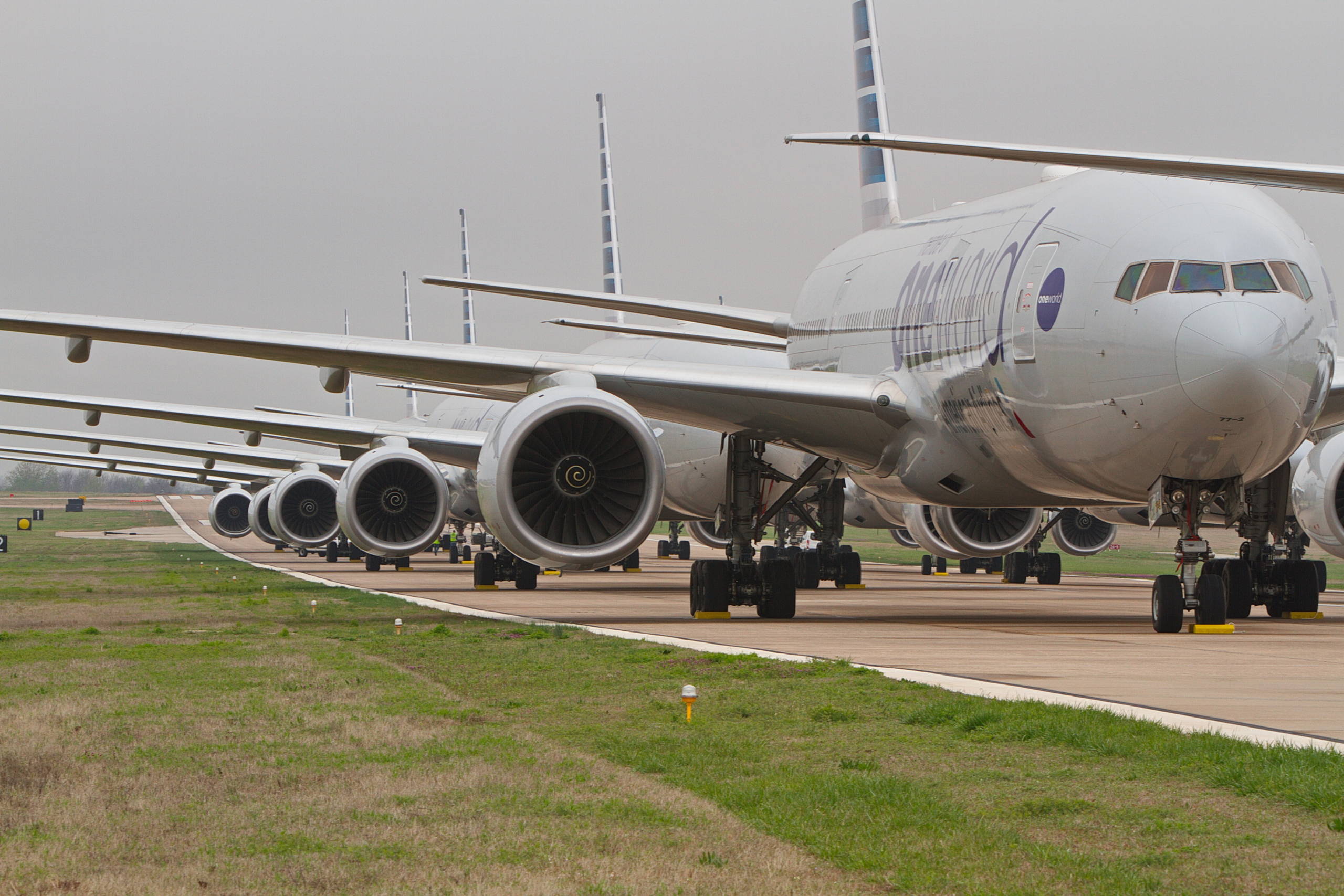
In May 2020, American operated 73% fewer flights compared to the year prior. Available seat miles, a product of the number of flights and capacity, were down by over 80%, per Cirium schedules.
"There were many sleepless nights," Znotins said, "even if I wasn't working, I would be lying awake wondering what we were going to do to adjust the network to respond to demand."
Out with the old, in with the new
Before the pandemic, adding a new route was complicated. It essentially required finding another route that you didn't want to fly to replace it with something new, according to Znotins.
But now, airline network planers like Znotins find themselves in a whole new world.
As American started rebuilding its network, it quickly recognized that historical data was useless. "We had new reports built to see what routes and spokes were building the fastest over the last three days," according to Znotins. "We then saw people booking flights to Key West, Jackson Hole, so we said let's put more flights to those places in next month's schedule."
It slowly became clear that leisure travelers are looking for outdoor-focused, socially distant vacations. That's why American (and its competitors) have been trying an assortment of point-to-point and leisure-oriented routes to capture that demand.
"American has shown that they were willing to put airplanes where the demand is... the airline as a whole adjusted its way of doing business to focus on the leisure traveler, recognizing that the leisure traveler was the king and queen of 2020 travel, and is the king and queen of travel in 2021, and will still be significant in 2022," Henry Harteveldt, a travel industry analyst and president of Atmosphere Research, said in an interview with TPG.
On Wednesday, AA revealed its schedule for summer 2021, which includes a major boost in flights to beaches, national parks and other outdoor attractions, including theme parks. The leisure market is recovering fastest, and that's the wave that airline network planners are currently riding.
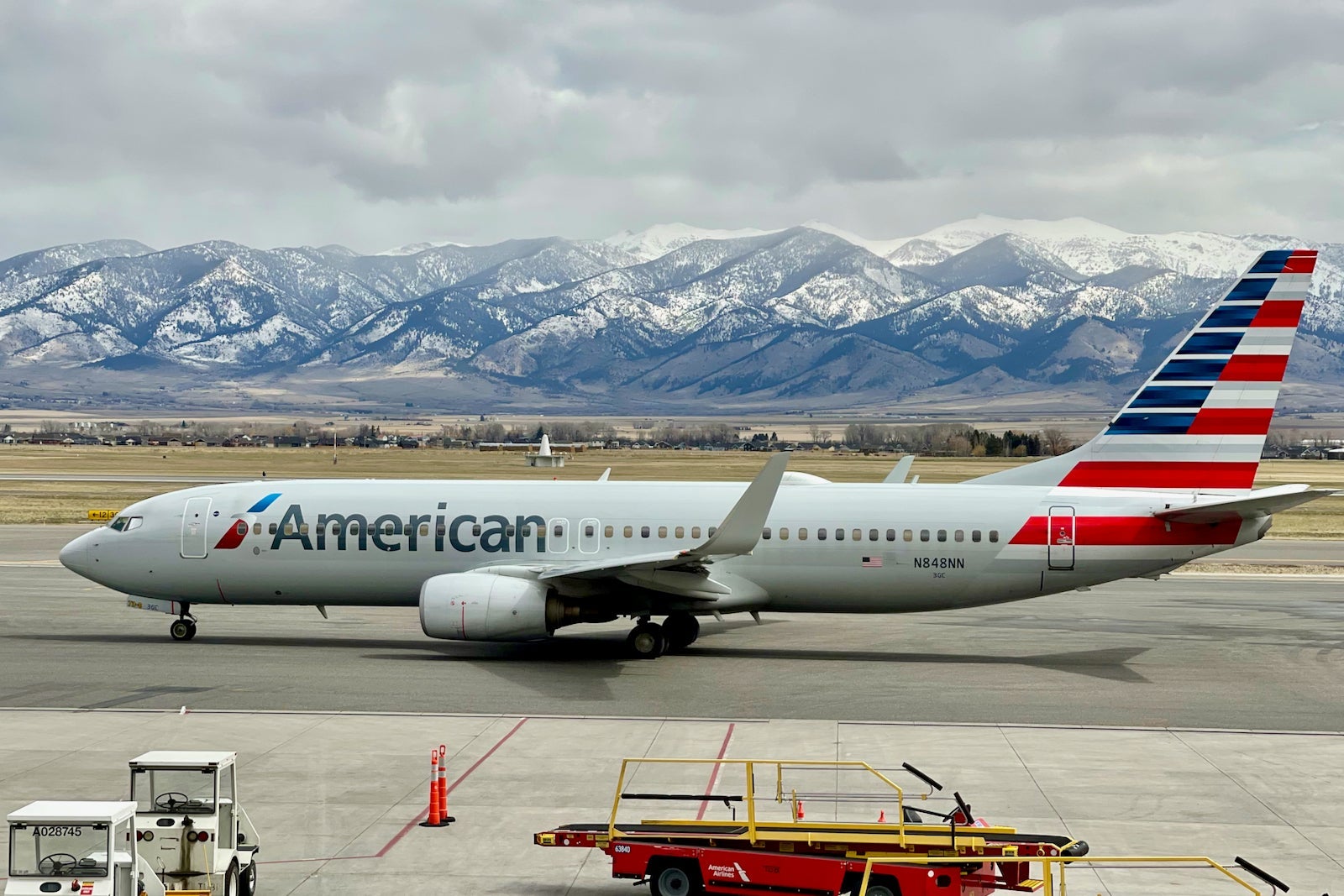
Internationally, things get trickier. Entry restrictions — not to mention testing and quarantine requirements —are constantly changing, impacting demand for flights. "We now have a reference manual, for lack of a better term, of what each country's arrival and departure restrictions are," Znotins said.
Much of the nuts and bolts of the scheduling falls to the network planning team, but it's Znotins who oversees the effort – and helps lead the charge. Sometimes, that means trying to keep morale high as his team worked to solve problems that – at the height of the pandemic – changed by the day.
"The biggest contribution I made on a given Saturday while the team was building a schedule was going to fetch pizza... The number of times they would build a schedule only to have it torn up a week later and have to rebuild it again... that can be very deflating," Znotins said.
Route planning during a pandemic
Nowadays, American isn't operating at full capacity. Znotins knows that the airline has spare planes, so the threshold for launching a route is much lower.
"The bar for flying an airplane versus parking it is very low, especially in a Payroll Support Program world where your pilots are paid for, your flight attendants are paid for, your mechanics are paid for. All you have to do is cover the cost of fuel, landing fees and a few other small variable items to make a flight work."
Indeed, that thinking is exactly how American ultimately launched service from Dallas/Fort Worth to Loreto, Mexico (LTO), in December 2020. (The service recently won the Cranky Network Awards for "sexiest new short-haul route," and Znotins appears in the acceptance speech sipping a Baja Blast.)
Jason Reisinger, managing director of global network planning and Znotin's right-hand man, originally suggested the Loreto idea. According to Znotins, Reisinger saw that bookings to Cabo San Lucas were up, so he suggested Loreto, a leisure spot on the Baja Peninsula.
American has plenty of spare regional jets lying around. "I know that putting a regional jet into a market like Loreto is going to be better than putting another frequency into Kansas City or another frequency into Omaha, where there's no VFR (visiting friends and relatives) traffic or no business traffic right now," Znotins said.
Ultimately, "we run things up the flag pole and see how they wave... And so we throw a flight out there, see how it books, and if it's not working well, then we'll make an adjustment in a future schedule to move that airplane elsewhere," Znotins said.
Harteveldt appreciates American's creativity during the pandemic. "I give Brian and his colleagues a lot of credit for having taken such a creative and flexible approach towards how they view the network," he told TPG.
Flexibility is here to stay
Of all the things that Znotins has learned throughout his first year at American, he says the biggest takeaway is the importance of flexibility.
The pandemic has caused American to "streamline things" and react more "nimbly."
For Znotins and the entire network planning team, he wants to take that flexibility into a post-COVID world. "We'll be able to react to demand changes faster, experiment a little more, and ultimately have a better cadence to the new demand environment," he concluded.
Harteveldt, for one, is looking forward to seeing how American's network evolves. "One of the things I am waiting to see is once business travel resumes, what does American do with its route network?" he concluded.
But after more than a year of cutting routes, figuring out how to rebuild the network for business travelers might be one problem Znotins and his team will be happy to solve.
TPG featured card

at American Express's secure site
Terms & restrictions apply. See rates & fees.
| 3X | Earn 3X Miles on Delta purchases. |
| 1X | Earn 1X Miles on all other eligible purchases. |
Pros
- Delta SkyClub access when flying Delta
- Annual companion ticket for travel on Delta (upon renewal)
- Ability to earn MQDs through spending
- Various statement credits for eligible purchases
Cons
- Steep annual fee of $650
- Other Delta cobranded cards offer superior earning categories
- Earn 100,000 Bonus Miles after you spend $6,000 or more in purchases with your new Card within the first 6 months of Card Membership and an additional 25,000 bonus miles after you make an additional $3,000 in purchases on the Card within your first 6 months, starting from the date that your account is opened. Offer Ends 04/01/2026.
- Delta SkyMiles® Reserve American Express Card Members receive 15 Visits per Medallion® Year to the Delta Sky Club® when flying Delta and can unlock an unlimited number of Visits after spending $75,000 in purchases on your Card in a calendar year. Plus, you’ll receive four One-Time Guest Passes each Medallion Year so you can share the experience with family and friends when traveling Delta together.
- Enjoy complimentary access to The Centurion® Lounge in the U.S. and select international locations (as set forth on the Centurion Lounge Website), Sidecar by The Centurion® Lounge in the U.S. (see the Centurion Lounge Website for more information on Sidecar by The Centurion® Lounge availability), and Escape Lounges when flying on a Delta flight booked with the Delta SkyMiles® Reserve American Express Card. § To access Sidecar by The Centurion® Lounge, Card Members must arrive within 90 minutes of their departing flight (including layovers). To access The Centurion® Lounge, Card Members must arrive within 3 hours of their departing flight. Effective July 8, 2026, during a layover, Card Members must arrive within 5 hours of the connecting flight.
- Receive $2,500 Medallion® Qualification Dollars with MQD Headstart each Medallion Qualification Year and earn $1 MQD for each $10 in purchases on your Delta SkyMiles® Reserve American Express Card with MQD Boost to get closer to Status next Medallion Year.
- Enjoy a Companion Certificate on a Delta First, Delta Comfort, or Delta Main round-trip flight to select destinations each year after renewal of your Card. The Companion Certificate requires payment of government-imposed taxes and fees of between $22 and $250 (for itineraries with up to four flight segments). Baggage charges and other restrictions apply. Delta Basic experiences are not eligible for this benefit.
- $240 Resy Credit: When you use your Delta SkyMiles® Reserve American Express Card for eligible purchases with U.S. Resy restaurants, you can earn up to $20 each month in statement credits. Enrollment required.
- $120 Rideshare Credit: Earn up to $10 back in statement credits each month after you use your Delta SkyMiles® Reserve American Express Card to pay for U.S. rideshare purchases with select providers. Enrollment required.
- Delta SkyMiles® Reserve American Express Card Members get 15% off when using miles to book Award Travel on Delta flights through delta.com and the Fly Delta app. Discount not applicable to partner-operated flights or to taxes and fees.
- With your Delta SkyMiles® Reserve American Express Card, receive upgrade priority over others with the same Medallion tier, product and fare experience purchased, and Million Miler milestone when you fly with Delta.
- Earn 3X Miles on Delta purchases and earn 1X Miles on all other eligible purchases.
- No Foreign Transaction Fees. Enjoy international travel without additional fees on purchases made abroad.
- $650 Annual Fee.
- Apply with confidence. Know if you're approved for a Card with no impact to your credit score. If you're approved and you choose to accept this Card, your credit score may be impacted.
- Terms Apply.
- See Rates & Fees