Spotlight on safety: How cruise lines are keeping passengers safe

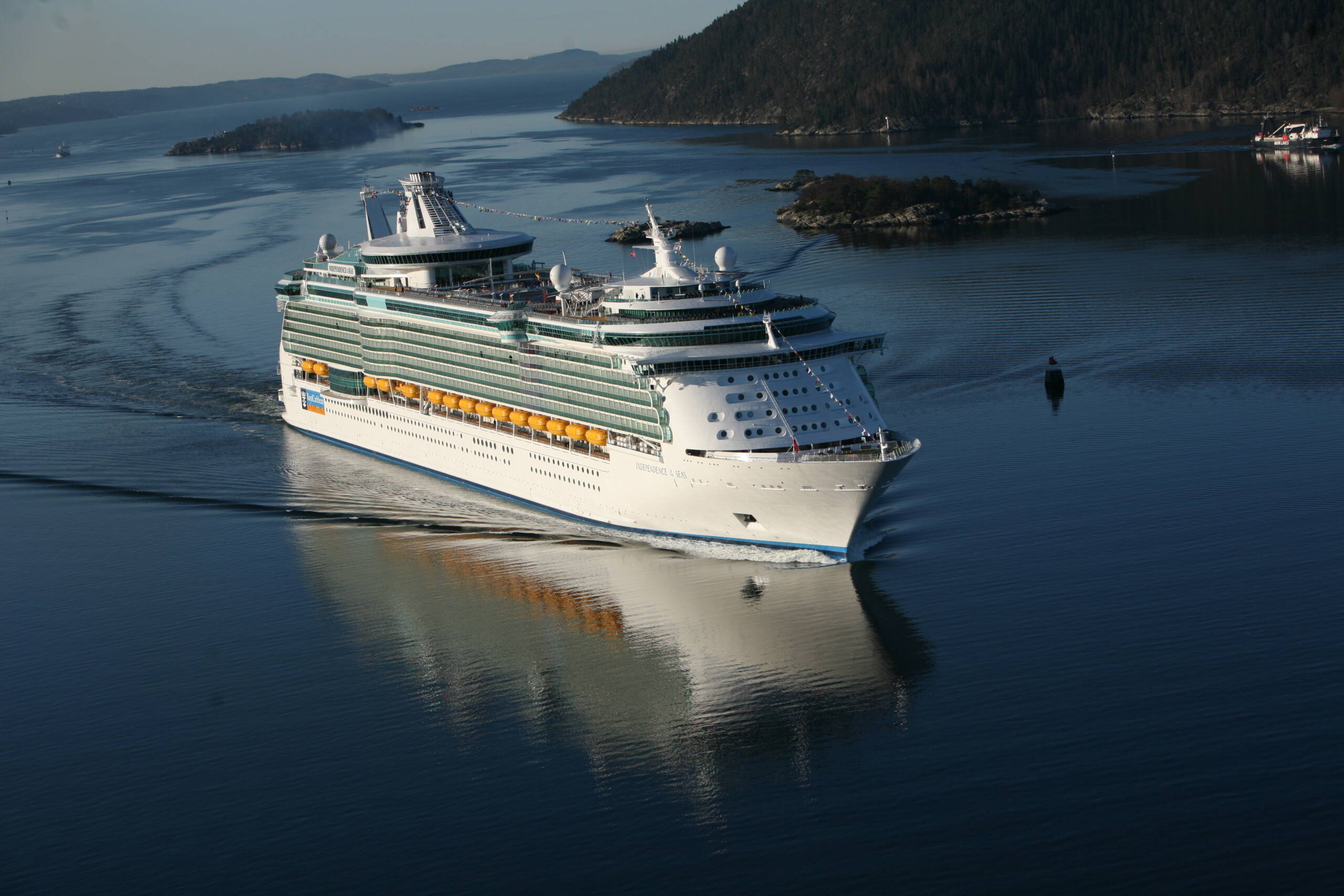

Could cruise ships be among the safest places to vacation in this new era of coronavirus?
That's the bold claim that some leaders of the cruise industry have been making in recent months as they lay out a road map to a return to service in many parts of the world.
"We really do believe that it is possible to make it so that you are safer on a cruise ship than you are on Main Street," Richard Fain, the CEO of Royal Caribbean Group, told Wall Street analysts in late October during a conference call to discuss third quarter earnings.
For more cruise news, reviews and tips, sign up for TPG's new cruise newsletter
Norwegian Cruise Line Holdings CEO Frank Del Rio said something similar in November during a conference call with analysts, noting that new health and safety protocols in the works at the company's brands will "allow us to provide one of the safest vacation alternatives anywhere."
It's a controversial idea, for sure — and one that many Americans seem unwilling to accept.
The idea that cruise ships could be a "bubble of safety" away from the coronavirus, as some cruise executives have put it, is no doubt counterintuitive to Americans who recall the way the illness rapidly swept through vessels early this year, sickening thousands of passengers and crew members and resulting in dozens of deaths.
But there's already some evidence that new safety measures developed by some of the industry's biggest players in recent months can allow cruise ships to operate safely even while COVID-19 remains in circulation in society.

Related: How to plan a cruise with points and miles
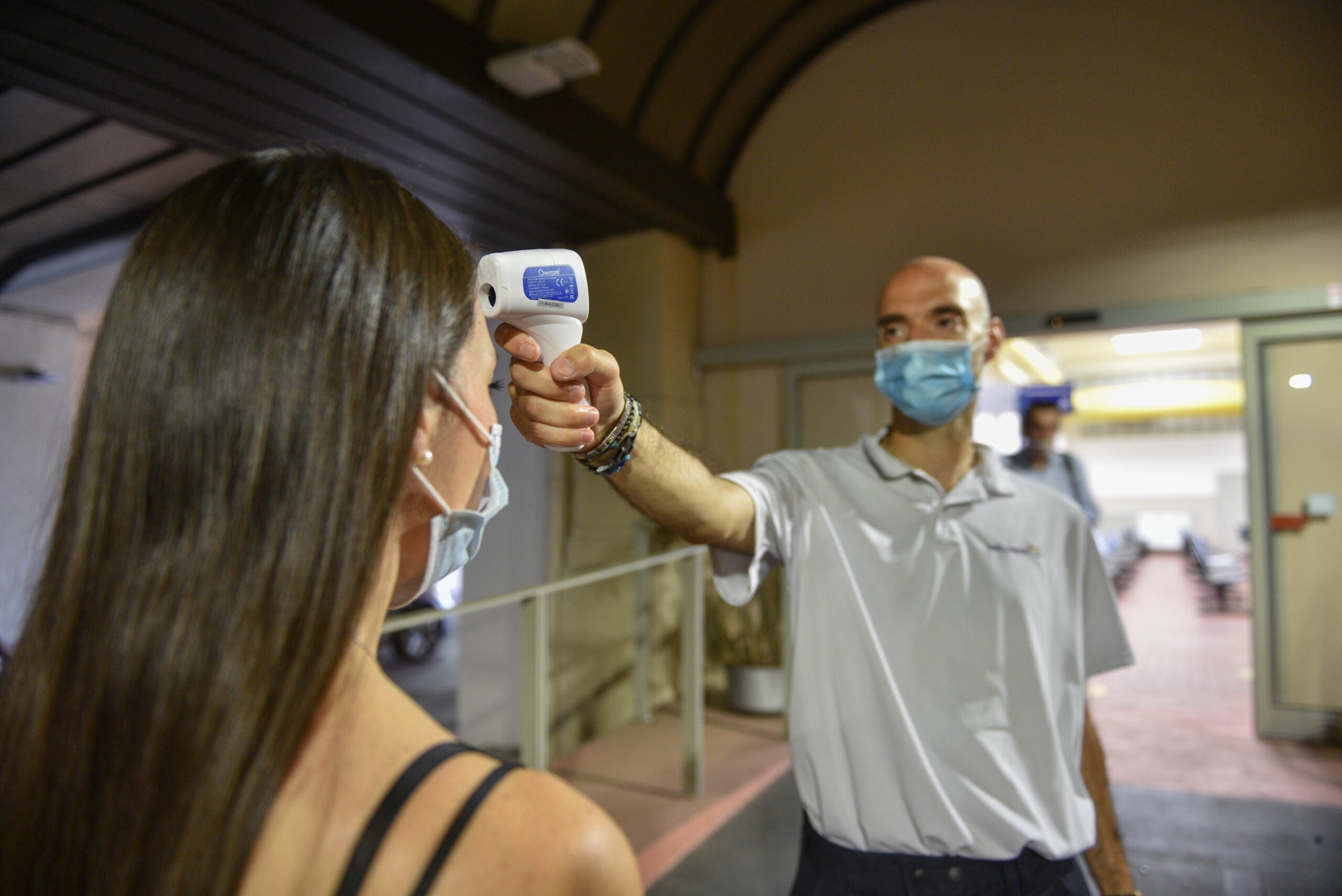
As Fain and Del Rio both pointed out during their respective conference calls, several cruise lines have restarted limited operations in Europe and a few other places around the world in recent months with the new safety measures and have experienced relatively few COVID-related incidents.
"The evidence in the start-ups in Europe have demonstrated that (it can work)," Fain said. "And when there have been instances, and there will be, because there are everywhere ... I think you've seen the response has worked."
Royal Caribbean Group is a part owner of two German cruise brands — TUI Cruises and Hapag-Lloyd Cruises — that restarted sailings over the summer in Europe. Both have operated for months with few COVID-related issues. The company also owns Royal Caribbean, the world's largest cruise line, which just resumed sailings out of Singapore. The ship experienced a COVID scare on one of its first sailings when a passenger tested positive for the illness. But it turned out to be a false positive.
Three more of Royal Caribbean Group's brands — Celebrity Cruises, Azamara and Silversea — have yet to restart operations. None of Norwegian Cruise Line Holdings three brands — Norwegian Cruise Line, Regent Seven Seas Cruises and Oceania Cruises — has resumed operations.
Today, as we near the end of Cruise Week as part of the 2020 TPG Awards, here's a look at what cruise lines are doing (or looking to do) as they plan for a full-fledged restart in the months to come.
Related: Shorter voyages, touring restrictions: Here's what cruising will be like when it returns
New protocols for safety
Royal Caribbean Group and Norwegian Cruise Line Holdings have been at the forefront of the cruise industry's efforts to develop new safety standards for ships. In July, the companies jointly created a Healthy Sail Panel of experts that spent three months developing a list of 74 recommendations for things cruise lines should do to make cruising safe in this new era of coronavirus.
The experts included former U.S. Food and Drug Administration commissioner Scott Gottlieb; former U.S. Department of Health and Human Services secretary and Utah governor Mike Leavitt; and former head of the U.S. Centers for Disease Control and Prevention (CDC) Julie Gerberding.
The two other big players in the cruise industry — Carnival Corp. and MSC Cruises — also have been developing new safety protocols for ships.
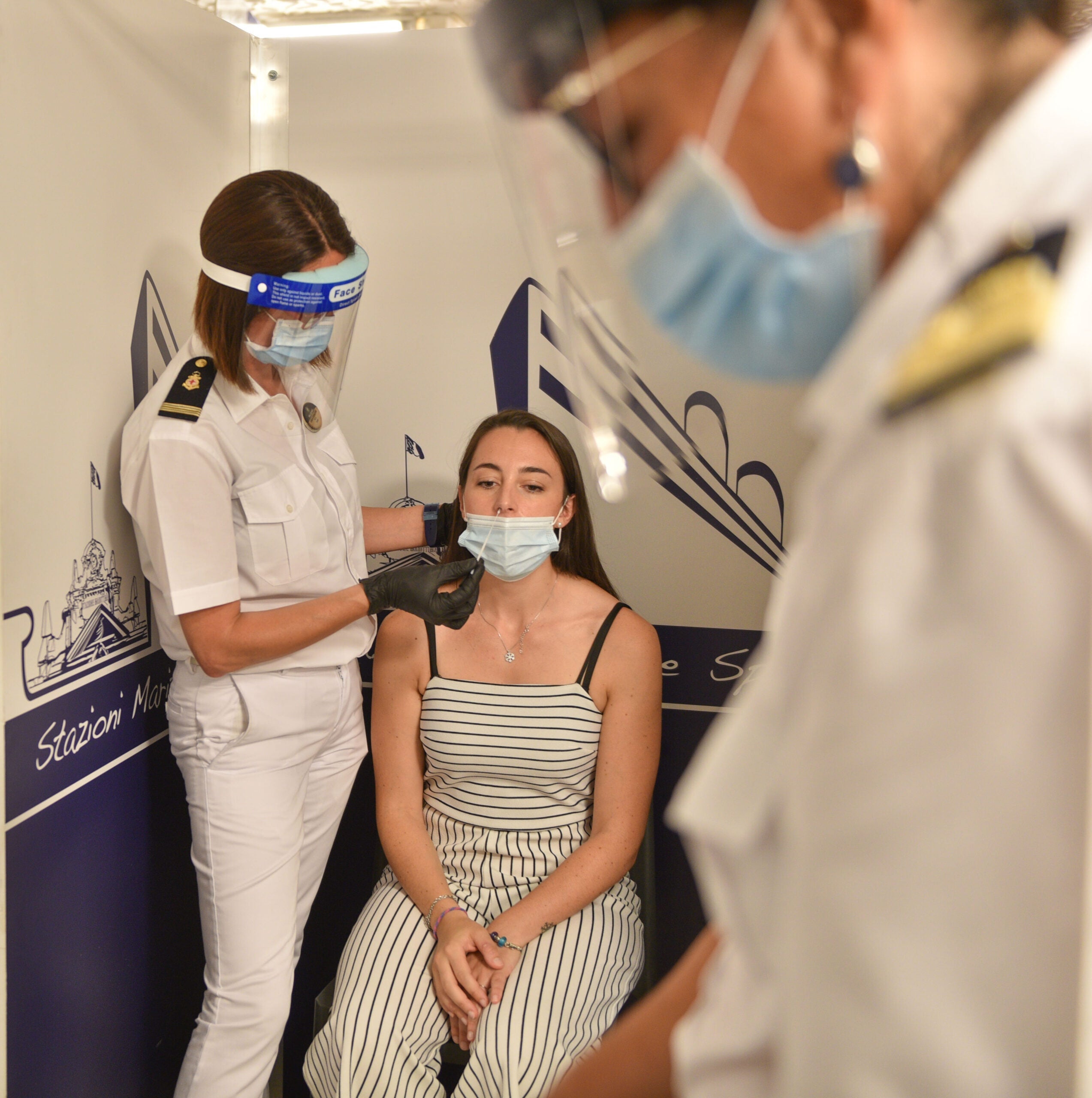
Among the new protocols that the companies have developed — and in some cases already have begun implementing — are two big changes in the way ships operate: A requirement that all passengers test negative for COVID-19 before boarding, and a rule that passengers only leave ships in ports when on a cruise-line organized shore tours.
Related: The best credit cards for booking cruises
In the latter case, the idea is to restrict passenger movements in ports to ensure they are not coming in close contact with anyone who could be carrying the virus. Tours are designed to "maintain the covid-free bubble" with touring that incorporates social distancing. Tour buses are frequently sanitized, and tour guides are regularly tested for COVID-19.
In some cases, lines are going even further by not offering any shore tours involving interaction with locals on their cruises at all. They're either running "cruises to nowhere" — cruises without port stops — or visiting only unpopulated areas where passengers can land for outdoorsy activities.
The lines and their health experts believe that pre-cruise testing should go a long way toward keeping coronavirus off ships. But they're also implementing a number of measures to help reduce the spread of COVID-19 if it does get on board. These measures include social distancing and mask-wearing requirements on ships as well as the modification of onboard facilities to offer additional space among guests. The number of passengers allowed into theaters has been reduced significantly on some of the ships that have resumed sailing, for instance.
Changes behind the scenes
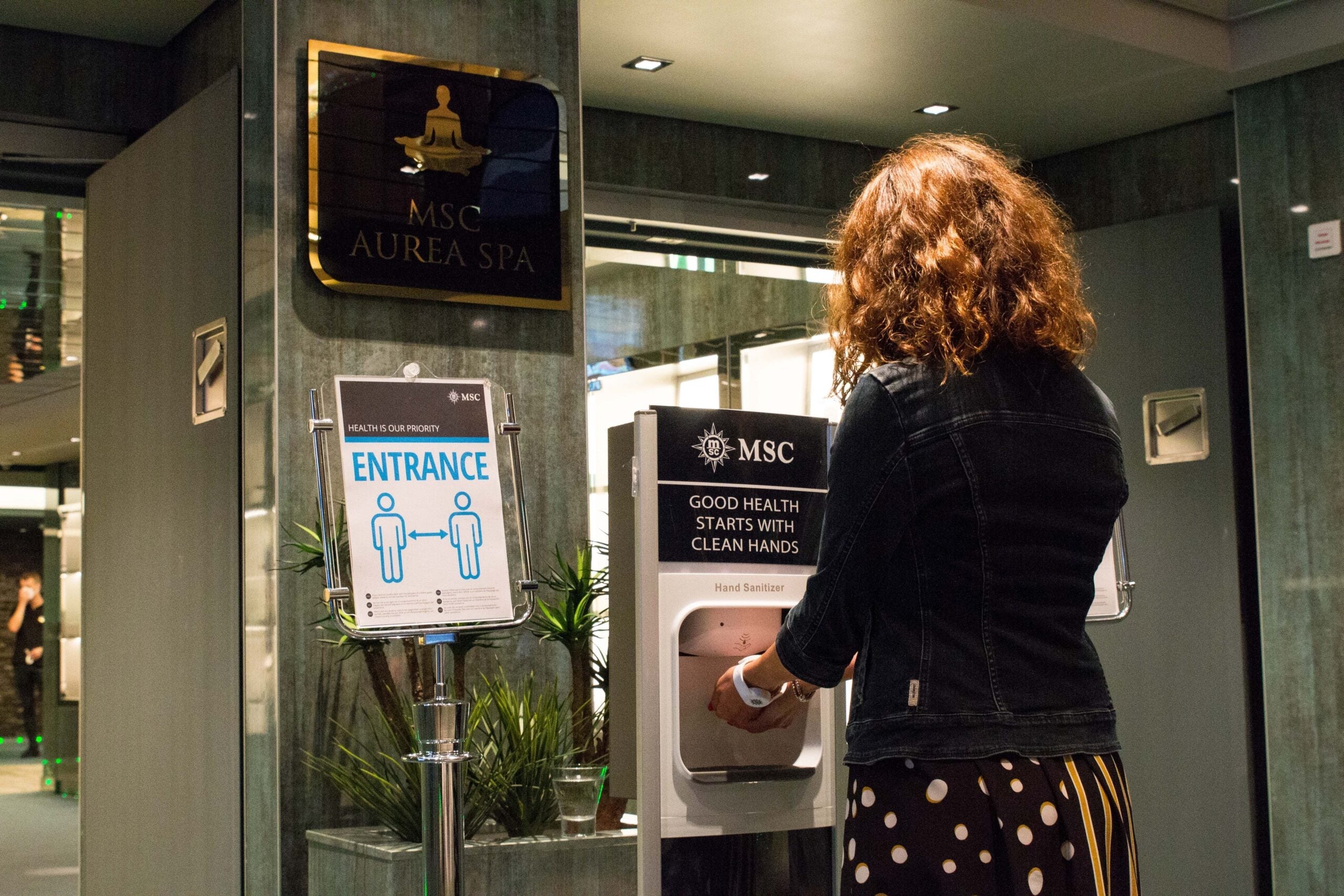
In addition to new requirements for passengers, cruise lines have been making a number of changes behind the scenes on ships to make them safer.
These include new testing and health monitoring regimens for crew on ships, more stringent cleaning regimens, and the upgrade and replacement of shipboard ventilation systems.
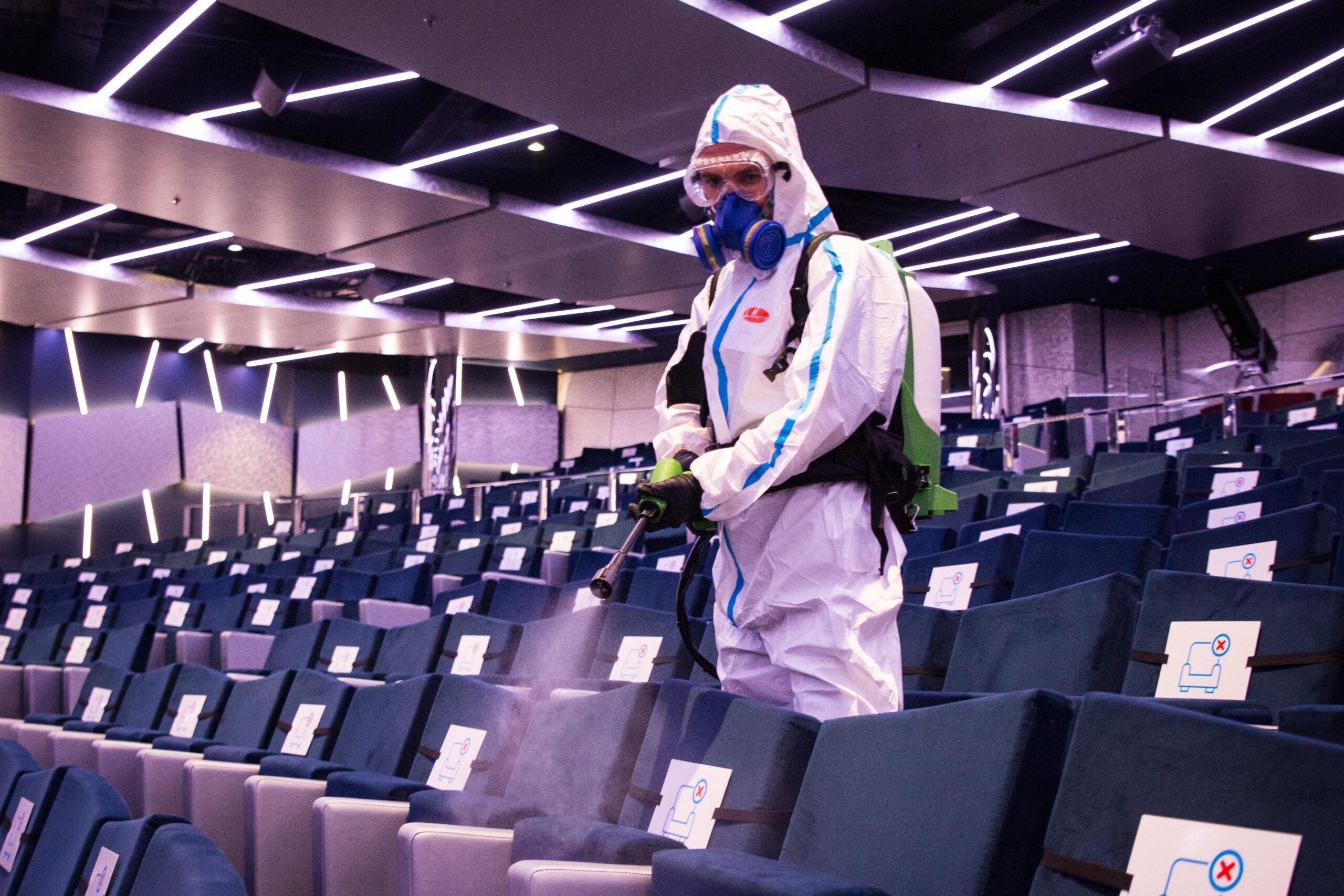
Some lines have been buying the same sort of ultrasonic foggers that hospitals use to sanitize shipboard rooms as well as a germ-killing UV light system.
As with the new social distancing and mask-wearing requirements, many of the behind-the-scenes changes that cruise lines are making are designed to stop the spread of COVID-19 should it find its way onto a ship.
response plan
Cruise lines also are developing detailed response plans for how to deal with an outbreak.
The response plans include the quick contact tracing of passengers on ships who show signs of a COVID-like illness or test positive for COVID-19, the quick isolation of such passengers, and a road map for quickly getting them off the ship and to shoreside medical facilities.
As part of these response plans, cruise lines are implementing such measures as increasing the ratio of medical staff to passengers on ships, increasing the capacity of onboard medical clinics to treat passengers who become seriously ill, and creating isolation areas for passengers and crew who test positive for COVID-19.
Related: Demand jumps for small ships in wake of pandemic
In addition, lines are establishing relationships with onshore medical institutions that can provide telemedicine consultations in the event of a serious COVID-19 case. They're also coming up with debarkation scenarios for passengers in the case of various levels of a COVID outbreak, and they're working out agreements with ports that their ships visit to allow safe passage for affected passengers in the case of an outbreak.
More changes could be coming.
Many of the above protocols are spelled out in a 66-page report issued by the Healthy Sail Panel created by Royal Caribbean Group and Norwegian Cruise Line Holdings as well as healthy sailing plans created in recent months by other cruise companies. But the industry still is in discussions with the U.S. Centers for Disease Control and Prevention (CDC) about additional safety measures for ships.
The CDC in October issued a roadmap for a return to cruising out of U.S. ports that is still being fleshed out. The agency has final say over health protocols for cruises out of U.S. ports.
One thing's for sure: You're first post-pandemic cruise is likely to be a bit different than your last one. But that's all in the name of safety on board.
Planning a cruise? Start with these stories:
- The 5 most desirable cabin locations on any cruise ship
- The 8 worst cabin locations on any cruise ship
- A quick guide to the most popular cruise lines
- 21 tips and tricks that will make your cruise go smoothly
- 15 ways cruisers waste money
- 12 best cruises for people who never want to grow up
- What to pack for your first cruise
TPG featured card

at Capital One's secure site
Terms & restrictions apply. See rates & fees.
| 5X miles | Earn 5X miles on hotels, vacation rentals and rental cars booked through Capital One Travel |
| 2X miles | Earn unlimited 2X miles on every purchase, every day |
Pros
- Stellar welcome offer of 75,000 miles after spending $4,000 on purchases in the first three months from account opening. Plus, a $250 Capital One Travel credit to use in your first cardholder year upon account opening.
- You'll earn 2 miles per dollar on every purchase, which means you won't have to worry about memorizing bonus categories
- Rewards are versatile and can be redeemed for a statement credit or transferred to Capital One’s transfer partners
Cons
- Highest bonus-earning categories only on travel booked via Capital One Travel
- LIMITED-TIME OFFER: Enjoy $250 to use on Capital One Travel in your first cardholder year, plus earn 75,000 bonus miles once you spend $4,000 on purchases within the first 3 months from account opening - that’s equal to $1,000 in travel
- Earn unlimited 2X miles on every purchase, every day
- Earn 5X miles on hotels, vacation rentals and rental cars booked through Capital One Travel
- Miles won't expire for the life of the account and there's no limit to how many you can earn
- Receive up to a $120 credit for Global Entry or TSA PreCheck®
- Use your miles to get reimbursed for any travel purchase—or redeem by booking a trip through Capital One Travel
- Enjoy a $50 experience credit and other premium benefits with every hotel and vacation rental booked from the Lifestyle Collection
- Transfer your miles to your choice of 15+ travel loyalty programs
- Top rated mobile app