CDC lifts no-sail order for cruise ships. But there's a catch

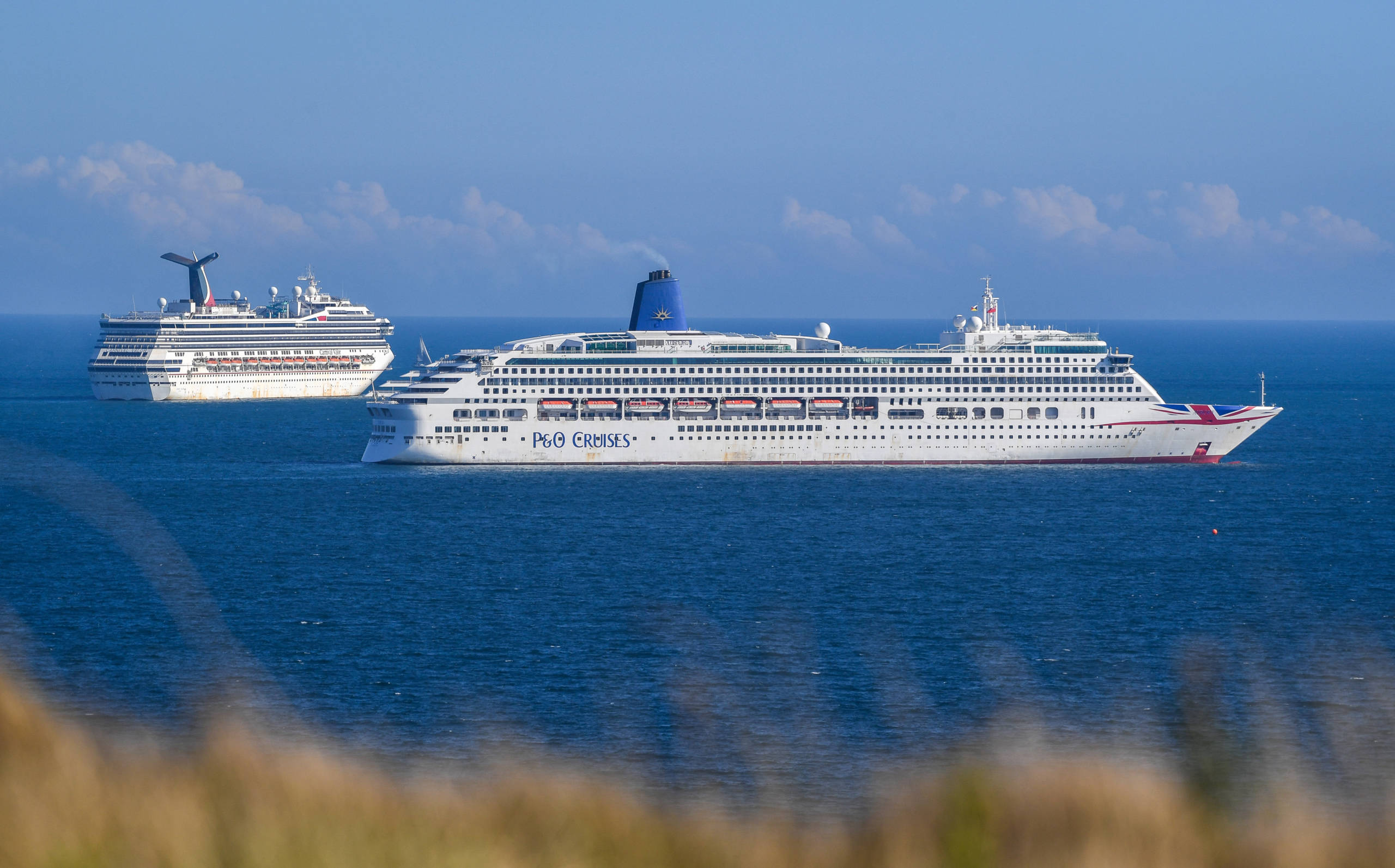
It's official: Cruise ships can start sailing again out of U.S. ports.
The U.S. Centers for Disease Control and Prevention (CDC) on Friday said it would not extend its "no-sail" order for cruise ships that operate in U.S. waters beyond the end of this month.
The order is scheduled to expire at midnight on Saturday.
For more cruise news, reviews and tips, sign up for TPG's new cruise newsletter
Still, cruise lines won't be able to restart cruising out of U.S. ports immediately. Indeed, it's still unclear just how soon U.S. cruising really can begin.
In place of the no-sail order, the CDC on Friday issued a new "framework for conditional sailing" order that creates a phased approach to resuming cruise ship passenger operations in U.S. waters.
The 40-page order, which was posted on the CDC website, suggested the CDC first wants to see that cruise lines have a plan in place for keeping their ship crews healthy and safe.
"CDC will ensure cruise ship operators have adequate health and safety protections for crew members while these cruise ship operators build the laboratory capacity needed to test future passengers," the agency said in the order.
Related: Rising COVID cases threatens budding restart of Europe cruising

After that, the agency will require lines to conduct "simulated voyages" to test the ability of cruise lines to mitigate COVID risk on ships.
In a third phase of the CDC's framework for a comeback of cruising, the agency will require certification for ships that meet specific requirements.
Only after that will lines be allowed to begin sailing with passengers.
The CDC suggested the resumption of cruising out of U.S. ports would happen gradually to mitigate COVID-19 risk among passengers, crew members and the U.S. communities that cruise ships visit. It suggested nothing was written in stone.
Related: The coronavirus crisis claims a sixth cruise line
"These phases are subject to change based on public health considerations and cruise ship operators' demonstrated ability to mitigate COVID-19 risk," the order said.
The CDC didn't offer an estimate for how long it might take lines to complete the various phases of the framework or say when the first sailings with passengers might take place. But it's clear that the expiration of the agency's no-sail order does not mean cruise ships necessarily can sail in November or even December.
All major cruise lines that operate in U.S. waters already have canceled sailings out of U.S. ports for November. Some lines already have canceled sailings well into December or even January.
There currently are no cruise ships sailing in North America, even in areas that have not been subject to the CDC no-sail order.
Only one small cruise operator, SeaDream Yacht Club, has announced plans to resume sailings in North America in November. The line's 112-passenger SeaDream I is scheduled to start a series of 22 voyages out of Barbados to St. Vincent and the Grenadines, and Grenada, on Nov. 7.
Related: Demand for cruises on small ships jumps in wake of COVID pandemic
The itinerary that SeaDream plans is not subject to CDC regulation because it does not involve travel in U.S. waters.
The order suggested that some cruise lines may be allowed to return to cruising more quickly than others, depending on how quickly they satisfy CDC requirements.
"This framework allows for individual cruise lines to progress through phases at variable paces," the order said. "This enables cruise lines successfully implementing public health measures to return to passenger operations more quickly while others by necessity may move more slowly."
The CDC order included many pages of requirements that cruise lines will have to meet before they can be awarded a Conditional Sailing Certificate.
The order also suggested that the epidemiologists at the CDC continue to see cruise ships as places that are inherently more likely to be hotspots for COVID-19 transmission than other settings.
"Current scientific evidence suggests that, absent mitigation measures of the type needed to prevent further transmission, cruise ships would continue to pose a greater risk of COVID-19 transmission than other settings," the order said.
The CDC has had a no-sail order for cruise ships in place since the COVID-19 outbreak was declared a pandemic in mid-March. There hasn't been a single cruise out of a U.S. port since then.
The cruise industry has spent the summer designing new COVID-related health and safety protocols to implement when cruising resumes.
A "healthy sail panel" of health experts created by Royal Caribbean Group and Norwegian Cruise Line Holdings in September released a 66-page report with 74 recommendations for things lines could do to bring back cruising safely. The recommendations include a call to implement a COVID-19 testing requirement for all passengers and crew, social distancing on ships and restrictions on passenger movements in ports.
The main trade group for the cruise industry, the Cruise Lines International Association (CLIA), in September also released guidelines for a healthy restart to cruising.
Related: Has MSC Cruises cracked the code to a safe return of cruising?
"Guided by the recommendations of leading experts in health and science, including the Healthy Sail Panel, our members are 100% committed to helping to protect the health of our guests, our crew and the communities we serve, and are prepared to implement multiple layers of protocols informed by the latest scientific and medical knowledge," CLIA said in a statement following the release of the CDC order. "We will continue to evolve our approach as circumstances evolve."
CLIA also noted the economic toll of the cruising shutdown in North America.
"We look forward to reviewing the order in greater detail and working with the CDC to advance a return to cruising from U.S. ports," CLIA said.
More than half a dozen major ocean cruise lines already have resumed sailings in Europe and a few other places around the world with new health and safety measures.
Additional resources for cruisers during the coronavirus outbreak:
TPG featured card
at American Express's secure site
Terms & restrictions apply. See rates & fees.
| 4X | Earn 4X Membership Rewards® points per dollar spent on purchases at restaurants worldwide, on up to $50,000 in purchases per calendar year, then 1X points for the rest of the year. |
| 4X | Earn 4X Membership Rewards® points per dollar spent at US supermarkets, on up to $25,000 in purchases per calendar year, then 1X points for the rest of the year. |
| 5X | Earn 5X Membership Rewards® points on prepaid hotel stays booked through AmexTravel.com or the Amex Travel App™. |
| 3X | Earn 3X Membership Rewards® points on flights booked through AmexTravel.com, the Amex Travel App™, or purchased directly from airlines. |
| 2X | Earn 2X Membership Rewards® points on prepaid car rentals booked through AmexTravel.com or the Amex Travel App™ and cruises booked and paid through AmexTravel.com. |
| 1X | Earn 1X Membership Rewards® point per dollar spent on all other eligible purchases. |
Pros
- Valuable dining and food-related credits
- Flexible rewards with airline and hotel transfer partners
- Multiple travel and purchase protections
- No foreign transaction fees
- Access to Amex Offers for additional savings (enrollment required)
Cons
- Not as useful for those living outside the U.S.
- Some may have trouble using Uber and other dining credits
- You may be eligible for as high as 100,000 Membership Rewards® Points after you spend $8,000 in eligible purchases on your new Card in your first 6 months of Card Membership. Welcome offers vary and you may not be eligible for an offer. Apply to know if you’re approved and find out your exact welcome offer amount – all with no credit score impact. If you’re approved and choose to accept the Card, your score may be impacted.
- Earn 4X Membership Rewards® points per dollar spent on purchases at restaurants worldwide, on up to $50,000 in purchases per calendar year, then 1X points for the rest of the year.
- Earn 4X Membership Rewards® points per dollar spent at US supermarkets, on up to $25,000 in purchases per calendar year, then 1X points for the rest of the year.
- Earn 5X Membership Rewards® points on prepaid hotel stays booked through AmexTravel.com or the Amex Travel App™.
- Earn 3X Membership Rewards® points on flights booked through AmexTravel.com, the Amex Travel App™, or purchased directly from airlines.
- Earn 2X Membership Rewards® points on prepaid car rentals booked through AmexTravel.com or the Amex Travel App™ and cruises booked and paid through AmexTravel.com.
- Earn 1X Membership Rewards® point per dollar spent on all other eligible purchases.
- Pay It® lets you tap in the American Express® App to quickly pay for small purchase amounts throughout the month and still earn rewards the way you usually do. Plan It® gives you the option to split up big purchases into equal monthly payments with a fixed fee. You’ll know upfront exactly how much you’ll pay.
- $120 Dining Credit: Earn up to a total of $10 in statement credits monthly when you pay with the Gold Card at Grubhub (including Seamless), Buffalo Wild Wings, Five Guys, The Cheesecake Factory, and Wonder. This can be an annual savings of up to $120. Enrollment required.
- $100 Resy Credit: Get up to $100 in statement credits each calendar year at over 10,000 qualifying U.S. Resy restaurants after you pay for eligible purchases with the American Express® Gold Card. That’s up to $50 in statement credits semi-annually. Enrollment required.
- $84 Dunkin' Credit: Earn up to $7 in monthly statement credits after you pay with the American Express® Gold Card at U.S. Dunkin’ locations. Enrollment required.
- $120 Uber Cash on Gold: Enjoy up to $120 in Uber Cash annually with your Gold Card. Just add your Card to your Uber account and you'll get $10 in Uber Cash each month to use on orders and rides in the U.S. when you select an Amex Card for your transaction.
- Enjoy complimentary Hertz Five Star® Status benefits like skipping the counter at select locations, adding an additional driver at no additional cost*, and vehicle upgrades**. Benefit enrollment and Hertz Gold+ registration are required. *Additional drivers must meet standard rental qualifications and must be a spouse or domestic partner to qualify as complimentary. Other additional drivers subject to fees. **Benefits are subject to availability and vary by location. Additional Hertz program Terms and Conditions including age restrictions apply.
- Book two nights or more with The Hotel Collection through AmexTravel.com or the Amex Travel App™ and receive a $100* credit towards eligible charges at over 1,400 upscale hotels worldwide. *Eligible charges vary by property.
- Book your travel through the Amex Travel App™ with added peace of mind – backed by American Express® service and support. Only for American Express® Card Members.
- Whenever you need us, we're here. Our Member Services team will ensure you are taken care of. From lost Card replacement to statement questions, we are available to help 24/7.
- No Foreign Transaction Fees.
- Annual Fee is $325.
- Terms Apply.