How to Avoid American Airlines' Worst Domestic Aircraft


Despite American Airlines and US Airways merging in 2013, AA's combined fleet remains frustratingly inconsistent. And that inconsistency is on full display when you look at AA's Airbus A321s — where there are lie-flat business class seats on some and no power, no entertainment and minimal-legroom recliner seats on others.
I rack up quite a few miles and flights on AA. From this experience and by learning from other travelers, I've picked up a few tricks and tips — which I've shared in various articles. But recently, I received a message from a TPG reader nicknamed "AmericanFlyer" that I figured I should address directly:
What is the best way to tell "good" business class seats on AA versus "bad" business class seats? I took a flight from JFK to SFO and it was full recline, upgraded for free via [Executive Platinum] status... awesome. However, on my red-eye home on that same trip (SFO to PHL) I found that business class (also upgraded) to have what I would consider standard seats with only a slightly better recline... major disappointment for a red eye! How can both of these cross country trips be considered business class?! How can others avoid this mistake?
My biggest tip to this reader and all other flyers of American Airlines: avoid US Airways. Now, let's go through how you can do this.
Connect Through AA Hubs
When I have the option, I'll always choose to connect in an LAA (legacy American Airlines) hub — such as Miami, Dallas/Fort Worth and Chicago O'Hare — instead of a LUS (legacy US Airways) hub such as Phoenix, Philadelphia and Charlotte.
In AmericanFlyer's case, the flight from the west coast to Philadelphia (PHL) was on the same miserable LUS A321 that The Points Guy railed about last year:
Meanwhile, the New York Kennedy (JFK) to San Francisco (SFO) flight he experienced is on an ultra-premium A321T. Besides short hops from Boston (BOS) to JFK, this aircraft type can only be found on American Airlines JFK-SFO and JFK-Los Angeles (LAX) routes and is one of the best upgrades AAdvantage elites can get without using a systemwide upgrade.
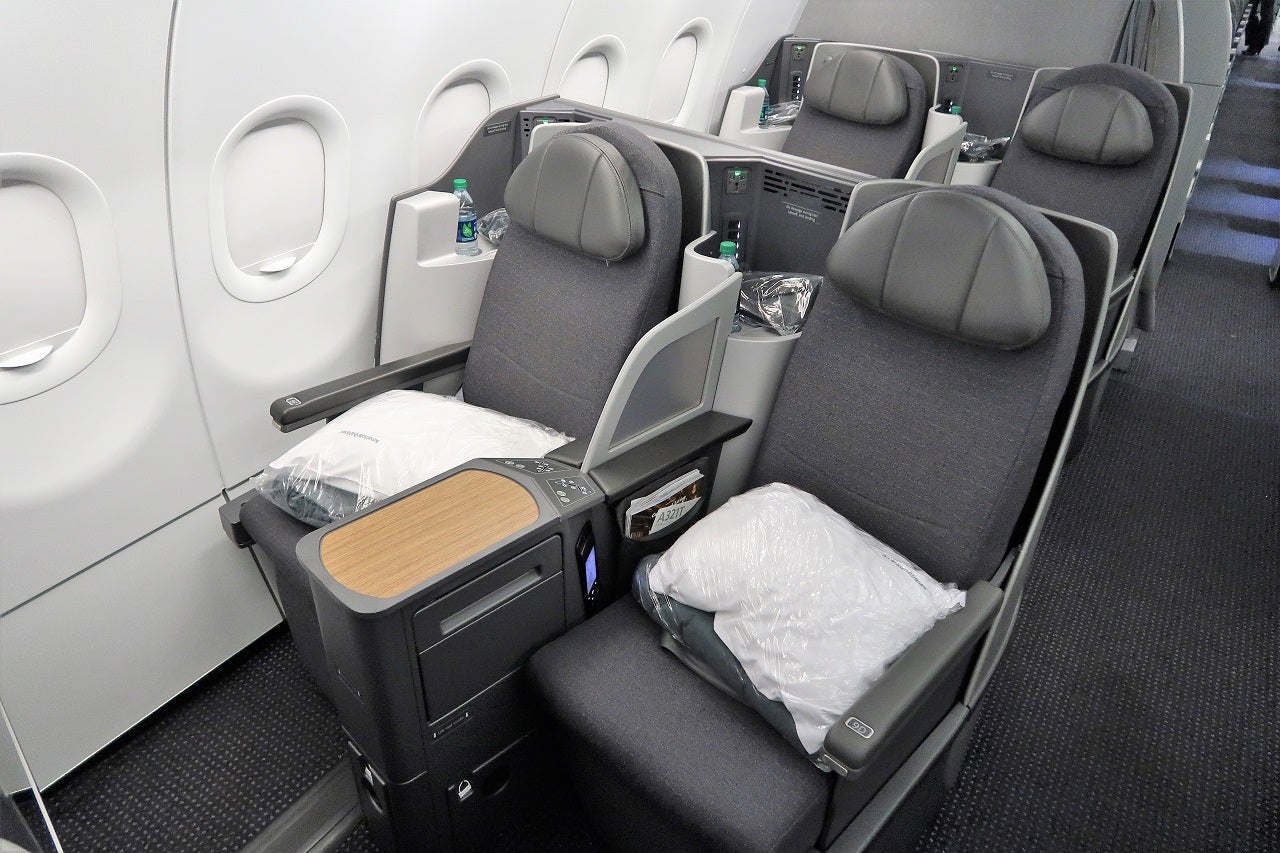
Due to the limited routes, the A321T is an outlier, but it's definitely worth experiencing for yourself if you're able to build it into your itinerary.
321 vs. 32B
However, the advice of avoiding US Airways hubs only works on some itineraries. Sometimes your itinerary can be between two hubs (e.g. Dallas to Phoenix) or on another route that sees a mixture of legacy AA and legacy US Air aircraft (e.g. San Francisco to Dallas). The key here is to book 32B — think book 32B — and avoid 321.
What's the difference? Well, here's how AA's website describes the two planes. American Airlines planes (LAA 32B) are Version 1 and US Airways planes (LUS 321) are Version 2:

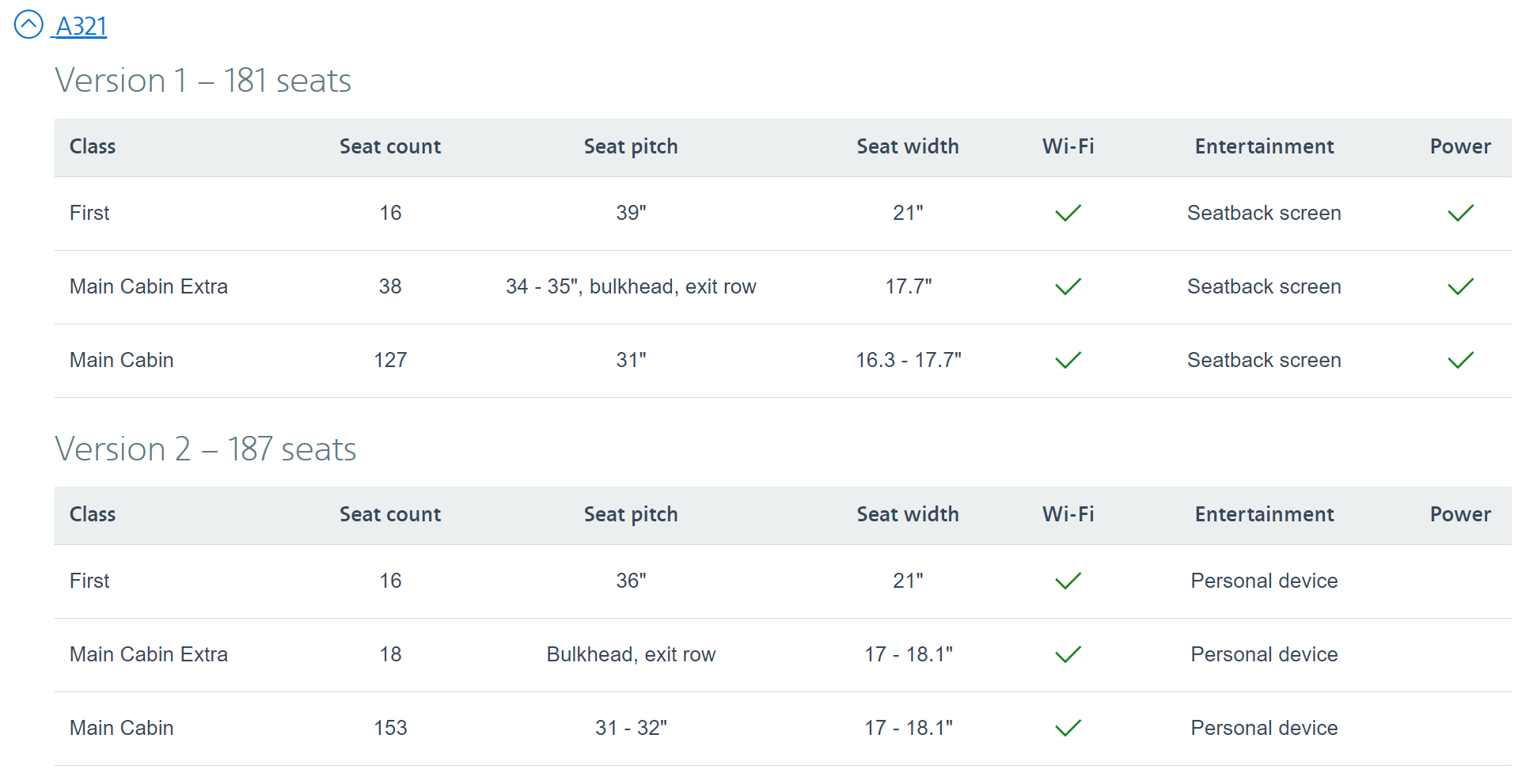
- LAA planes have power outlets. LUS planes do not.
- LAA planes have seatback entertainment screens. LUS planes do not.
- LAA planes have 3 more inches of pitch in first class.
- LAA planes have 20 more extra-legroom seats in economy (and free alcohol). The only Main Cabin Extra seating on the LUS planes are at bulkheads and exit rows.
How do you avoid the LUS aircraft? Let's take SFO-DFW as an example. American Airlines flies both types of A321s on this route. I've flown this route numerous times and have experienced the stark difference between aircraft for myself.
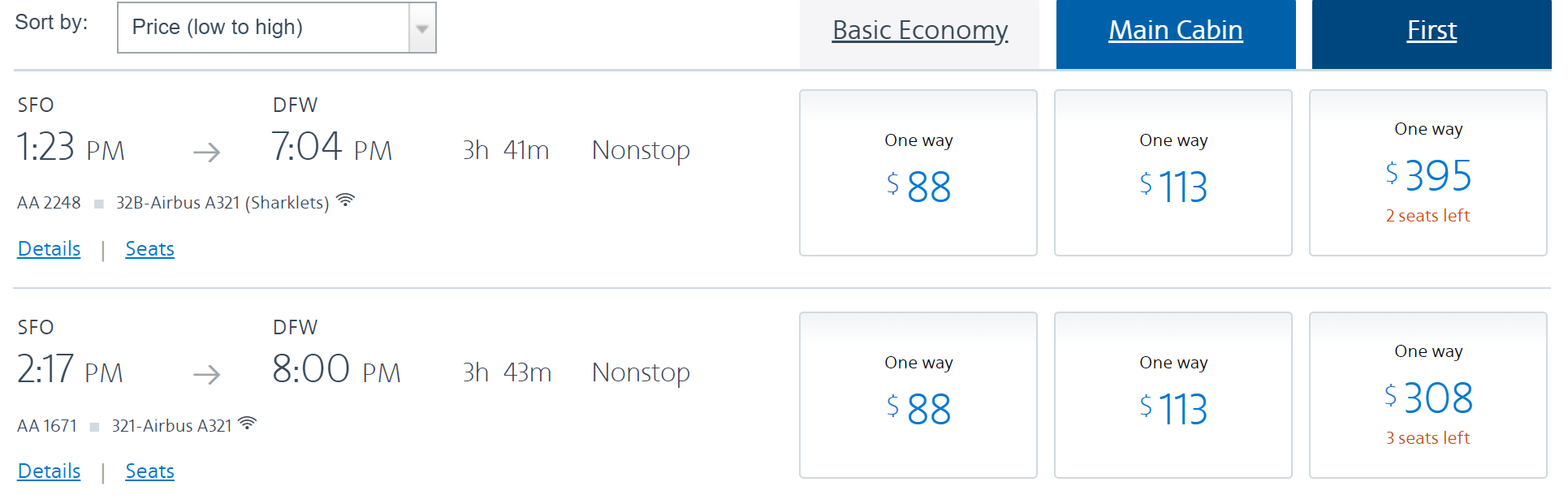
At first glance, these two flight options may seem rather similar in economy. They are the same price in both basic economy and Main Cabin and have similar departure, arrival and duration times. However, when you look closely, you'll see 32B for the 1:23pm departure and 321 for the 2:17pm departure. If you value in-flight power, extra-legroom seating and in-flight entertainment, you're going to want to opt for the earlier flight.
Instead of using AA.com, you can also find aircraft type on ExpertFlyer:
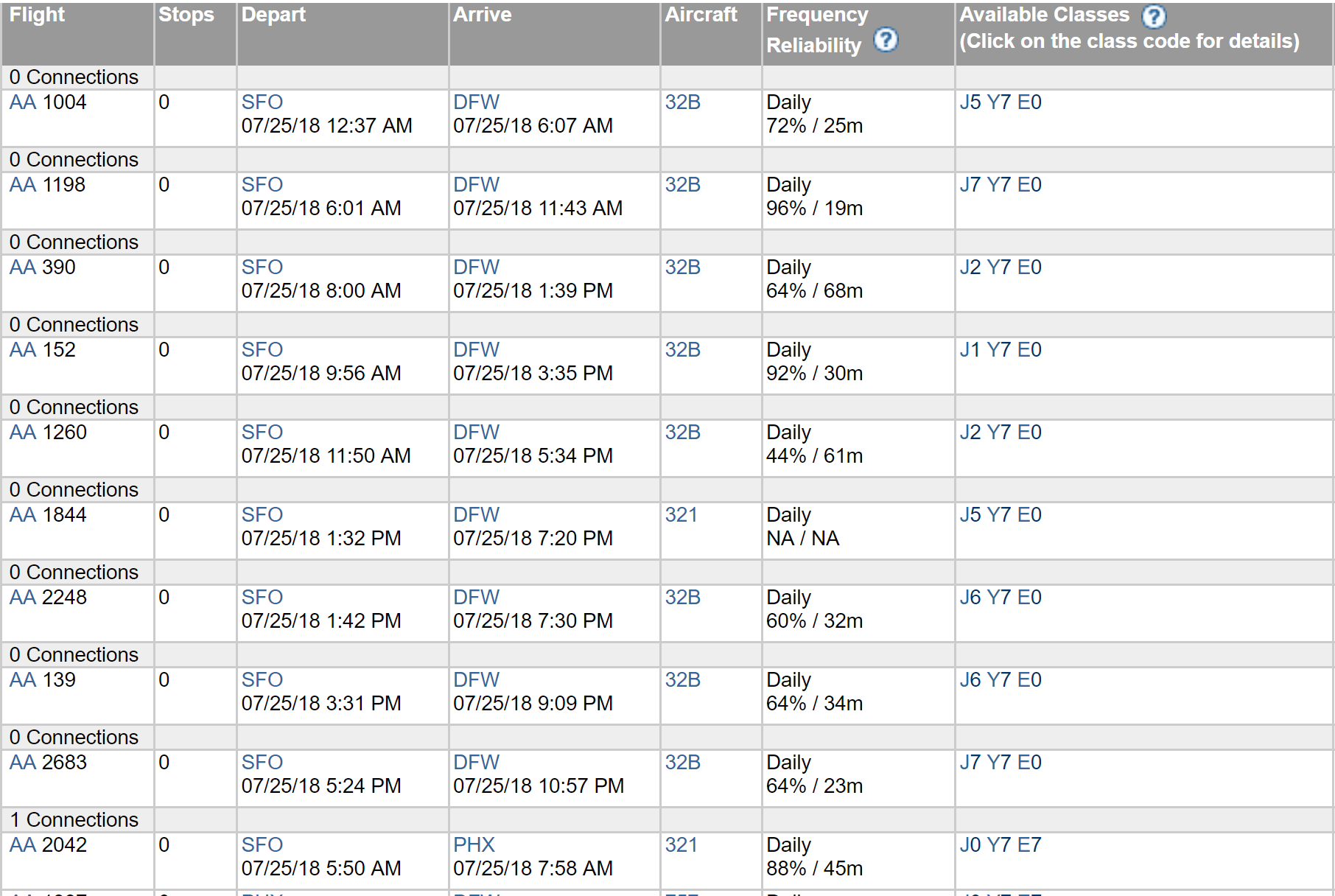
As I chronicled during a recent cross-country mileage run, I made sure to use my Executive Platinum elite status to get a free Same Day Flight Change from a 321 to a slightly-later 32B on this SFO-DFW route. That way, I could get extra-legroom seating and power after spending the day on LUS aircraft.
Avoid AA's "Going for Mediocre" Era Planes
Sometimes American Airlines will fly internationally-configured aircraft domestically. These aircraft are almost always better than the domestic fleet alternative — at least in the front cabin. However, if you've got the choice, you might want a domestic LAA aircraft rather than one of AA's Boeing 757 or 767 international aircraft.
Why's that? Well, before American Airlines management realized that having an awful product is a good way of losing passengers, it went through a cheap phase. And the 757 and 767 are legacies of that phase. While it installed lie-flat seats and power outlets in business class, AA passed on installing in-flight entertainment screens in any cabin. Instead, business class passengers are given a small tablet with limited entertainment options to use while at cruising altitude:
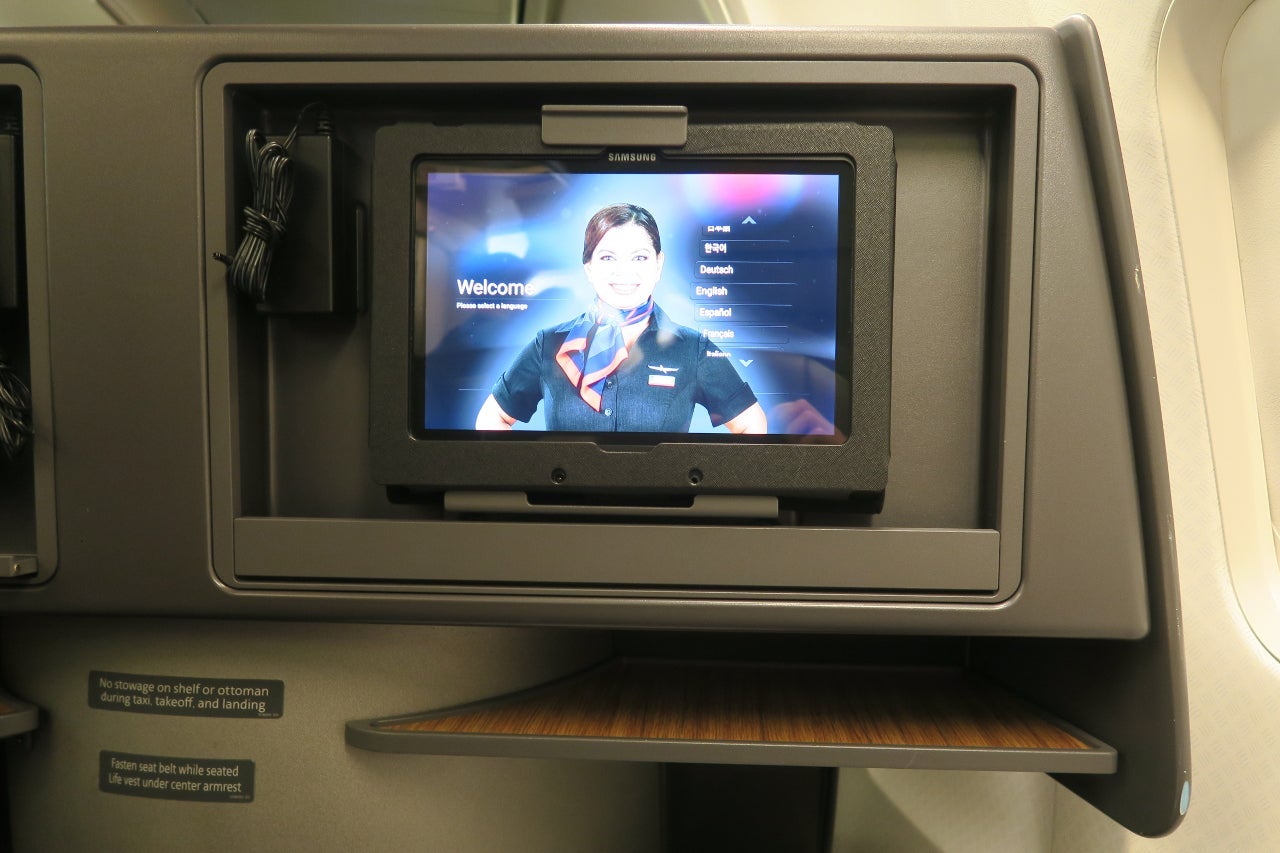
But, these tablets aren't typically handed out on domestic flights — leaving passengers in all cabins to BYOD (Bring Your Own Device) for entertainment.
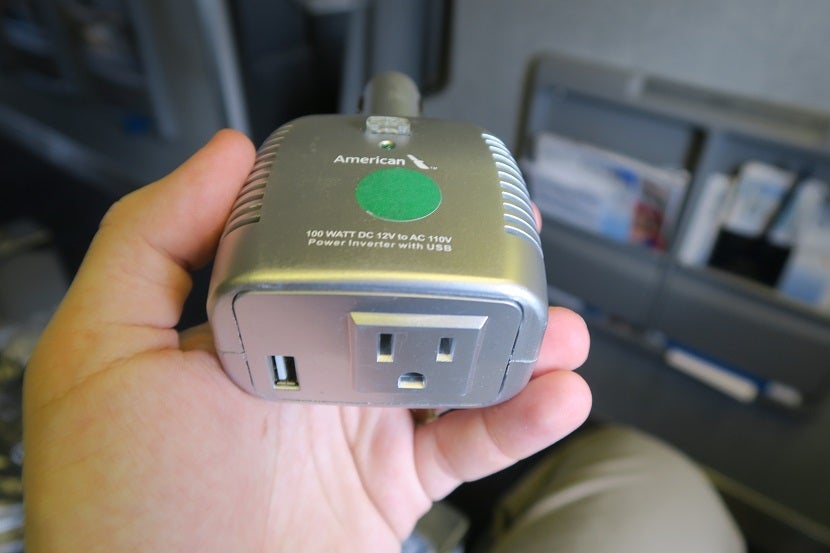
As far as power goes, the 757s only have universal power outlets in extra-legroom Main Cabin Extra and the 767s only have DC power plugs at some economy seats. If you're lucky, you can get one of the few converters on the plane:
Mercifully, American Airlines has heard enough customer complaints about its 767s that it's phasing the aircraft out of the fleet sooner than planned. Even with this, the 767s will still be in the fleet into 2021.
Bottom Line
The biggest tips I can give American Airlines flyers to upgrade their AA experience:
- Avoid US Airways hubs (Charlotte, Phoenix, Philadelphia)
- Book 32B instead of 321 aircraft
- Avoid AA's crummy 757 and 767 aircraft
TPG featured card

at American Express's secure site
Terms & restrictions apply. See rates & fees.
| 3X | Earn 3X Miles on Delta purchases. |
| 1X | Earn 1X Miles on all other eligible purchases. |
Pros
- Delta SkyClub access when flying Delta
- Annual companion ticket for travel on Delta (upon renewal)
- Ability to earn MQDs through spending
- Various statement credits for eligible purchases
Cons
- Steep annual fee of $650
- Other Delta cobranded cards offer superior earning categories
- Earn 100,000 Bonus Miles after you spend $6,000 or more in purchases with your new Card within the first 6 months of Card Membership and an additional 25,000 bonus miles after you make an additional $3,000 in purchases on the Card within your first 6 months, starting from the date that your account is opened. Offer Ends 04/01/2026.
- Delta SkyMiles® Reserve American Express Card Members receive 15 Visits per Medallion® Year to the Delta Sky Club® when flying Delta and can unlock an unlimited number of Visits after spending $75,000 in purchases on your Card in a calendar year. Plus, you’ll receive four One-Time Guest Passes each Medallion Year so you can share the experience with family and friends when traveling Delta together.
- Enjoy complimentary access to The Centurion® Lounge in the U.S. and select international locations (as set forth on the Centurion Lounge Website), Sidecar by The Centurion® Lounge in the U.S. (see the Centurion Lounge Website for more information on Sidecar by The Centurion® Lounge availability), and Escape Lounges when flying on a Delta flight booked with the Delta SkyMiles® Reserve American Express Card. § To access Sidecar by The Centurion® Lounge, Card Members must arrive within 90 minutes of their departing flight (including layovers). To access The Centurion® Lounge, Card Members must arrive within 3 hours of their departing flight. Effective July 8, 2026, during a layover, Card Members must arrive within 5 hours of the connecting flight.
- Receive $2,500 Medallion® Qualification Dollars with MQD Headstart each Medallion Qualification Year and earn $1 MQD for each $10 in purchases on your Delta SkyMiles® Reserve American Express Card with MQD Boost to get closer to Status next Medallion Year.
- Enjoy a Companion Certificate on a Delta First, Delta Comfort, or Delta Main round-trip flight to select destinations each year after renewal of your Card. The Companion Certificate requires payment of government-imposed taxes and fees of between $22 and $250 (for itineraries with up to four flight segments). Baggage charges and other restrictions apply. Delta Basic experiences are not eligible for this benefit.
- $240 Resy Credit: When you use your Delta SkyMiles® Reserve American Express Card for eligible purchases with U.S. Resy restaurants, you can earn up to $20 each month in statement credits. Enrollment required.
- $120 Rideshare Credit: Earn up to $10 back in statement credits each month after you use your Delta SkyMiles® Reserve American Express Card to pay for U.S. rideshare purchases with select providers. Enrollment required.
- Delta SkyMiles® Reserve American Express Card Members get 15% off when using miles to book Award Travel on Delta flights through delta.com and the Fly Delta app. Discount not applicable to partner-operated flights or to taxes and fees.
- With your Delta SkyMiles® Reserve American Express Card, receive upgrade priority over others with the same Medallion tier, product and fare experience purchased, and Million Miler milestone when you fly with Delta.
- Earn 3X Miles on Delta purchases and earn 1X Miles on all other eligible purchases.
- No Foreign Transaction Fees. Enjoy international travel without additional fees on purchases made abroad.
- $650 Annual Fee.
- Apply with confidence. Know if you're approved for a Card with no impact to your credit score. If you're approved and you choose to accept this Card, your credit score may be impacted.
- Terms Apply.
- See Rates & Fees