The Points Guy believes that credit cards can transform lives, helping you leverage everyday spending for cash back or travel experiences that might otherwise be out of reach. That's why we publish a variety of editorial content and card comparisons: to help you find a great card to turn your goals into reality.
Our site may earn compensation when a customer clicks on a link, when an application is approved, or when an account is opened with our partners, and this may impact how or where these products appear. While we don't cover all available credit cards, our editorial team creates and maintains all of the analysis of these cards, and our content is not influenced nor subject to review by any credit card company, bank or partner prior to (or after) publication. Please view our advertising policy and product review methodology for more information.
Advertiser disclosure
The Points Guy believes that credit cards can transform lives, helping you leverage everyday spending for cash back or travel experiences that might otherwise be out of reach. That's why we publish a variety of editorial content and card comparisons: to help you find a great card to turn your goals into reality.
Our site may earn compensation when a customer clicks on a link, when an application is approved, or when an account is opened with our partners, and this may impact how or where these products appear. While we don't cover all available credit cards, our editorial team creates and maintains all of the analysis of these cards, and our content is not influenced nor subject to review by any credit card company, bank or partner prior to (or after) publication. Please view our advertising policy and product review methodology for more information.
Credit Cards
17 Best Airline Credit Cards of November 2026
UpdatedOctober 16, 2026
At The Points Guy, our goal is to help you maximize your travel experiences while minimizing spending. While we do receive compensation through our credit card application links, ads and clearly indicated sponsored content, our editorial content, points valuations and card analyses are entirely our own. Learn more about our advertising policy and product review methodology.
Limited Time: Earn 75k bonus miles + $300 stays credit
Capital One Venture Rewards Credit Card
Intro offerEarn more than $1,000 in Travel Bonuses
Annual fee$95
You'll earn2-5 miles
Regular APR19.74% - 28.74% (Variable)
at Capital One's secure site. Terms & restrictions apply. See rates & fees.
The best airline credit card varies for each traveler, depending on where you live and how often you fly. Whether you're an airline loyalist or a casual traveler, any of the cards on our list below could help make your flights more rewarding and enjoyable.
Check out our curated selection and comprehensive guide on some of the best airline cards from our partners below.
Browse by card categories
Comparing the best airline credit cards
Which airline credit card is right for you?
Best credit card for someone loyal to one airline: United Quest Card
Who this is for
For travelers who are United Airlines loyalists, the United Quest℠ Card is a true standout. With a $350 annual fee, the United Quest is a mid-tier airline card that packs in valuable United-specific benefits and statement credits to help offset its cost.
Cardholders receive their first and second checked bags free for themselves and one companion (note you must use your Quest card to pay for your ticket to check bags for free, including taxes and fees paid for award tickets)
Earn at least 10 miles per dollar spent on standard fares (earn rate may be higher if you have status with United) and 4 miles per dollar spent on all other eligible United purchases
Get a 1,000 PQP boost automatically each year, and earn 1 PQP for every $20 spent (up to 18,000 PQPs annually)
Receive a 10,000-mile discount after each account anniversary
Enjoy expanded award availability and exclusive cardmember pricing on select United flight redemptions
Quick summary
The United Quest Card is a great option for United loyalists, offering a range of United-related perks. These include high mileage earning rates, PQP earnings, free checked bags and a mile discount on each account anniversary. The card also provides multiple useful statement credits, including a $200 annual TravelBank credit to help offset its $350 annual fee, making it worth carrying year after year.
Best credit card for travelers who fly multiple airlines: Chase Sapphire Reserve
Who this is for
For travelers who are an airline free agent (someone who doesn't stick to one carrier), the Chase Sapphire Reserve® rewards you regardless of how you fly. With a flexible travel credit, high earning rates and airport lounge access, the Sapphire Reserve is an excellent choice for travelers who want to earn bonus points and enjoy perks when flying with multiple airlines.
Why the Chase Sapphire Reserve is a good fit
The Sapphire Reserve comes with an annual $300 travel credit that can be applied toward bookings with any airline. The card also earns 4 points per dollar spent on flights booked directly and 8 points per dollar spent on flights purchased through the Chase Travel℠ portal. (Purchases that apply to the $300 travel credit do not earn points.) Those earning rates, combined with the value and flexibility of Chase Ultimate Rewards points, make the Sapphire Reserve one of the strongest options for travelers who regularly book flights with multiple airlines. Plus, cardholders receive extensive airport lounge access, regardless of the airline they’re flying.
Key benefits for travelers who fly multiple airlines:
Annual $300 travel credit that can be applied toward any airline
8 points per dollar spent on flights purchased through Chase Travel and 4 points per dollar spent on flights booked directly
Complimentary Chase Sapphire Lounge access for the primary cardholder and up to two guests
Priority Pass lounge access worldwide (excluding restaurants) for the primary cardholder and up to two guests
Access to more than 20 Air Canada Maple Leaf Lounges when flying a Star Alliance carrier
For travelers who refuse to be locked into one airline, the Sapphire Reserve covers all the bases. You’ll enjoy a travel credit that works anywhere, strong earning rates and lounge access across multiple networks. It's one of the strongest all-around travel cards for the true airline free agent.
Best credit card for frequent international flyers: Atmos Summit
Who this is for
For travelers who frequently travel internationally, the Atmos™ Rewards Summit Visa Infinite® credit card is an excellent choice. One of its standout features is earning 3 Atmos Rewards points per dollar on foreign transactions — a rare benefit among travel credit cards that rewards eligible purchases made outside the U.S.
Why the Atmos Summit is a good fit
The Atmos Summit’s rare 3 points per dollar earning rate on foreign transactions is the highlight for frequent international travelers. You’ll also earn 3 points per dollar spent on eligible dining, Alaska Airlines and Hawaiian Airlines purchases, which makes it easy to collect valuable Atmos Rewards points. The Atmos Summit also provides up to $120 in reimbursement for Global Entry or TSA PreCheck applications every four years, helping cardholders breeze through customs and immigration upon return.
Key benefits for frequent international flyers:
Earn an unlimited 3 points per dollar spent on all foreign transactions
Pay no foreign transaction fees
Receive up to $120 in Global Entry or TSA PreCheck statement credits every four years
Receive 8 Alaska lounge passes annually and 8 Wi-Fi passes annually (2 of each per quarter)
Frequent international travelers have a lot to look forward to with the Atmos Summit. It earns where other cards don’t, providing 3 points per dollar spent on every foreign transaction (without charging foreign transaction fees). Add in Global Entry coverage, lounge passes and the high value of Atmos Rewards points, and it’s a strong earner for those who often travel abroad.
How we rate cards
In order to rank the best airline credit cards, TPG editors considered several factors that deliver the greatest value to cardholders, whether you prefer budget-friendly flights or seek premium luxury accommodations at cruising altitude. To learn more about how TPG evaluates and chooses cards for our roundups, check out our methodology here.
Welcome bonus
The value of the points or miles new cardholders can earn.
Annual fee
The best airline credit cards range from options with zero annual fees to heftier fees that provide premium perks.
Earning rates
We chose cards that earn points or miles every time you tap to make a purchase.
Redemption options
The best airline credit cards feature redemption options to suit different types of travelers and their needs.
Added benefits
Different co-branded airlines each provide their own set of benefits and perks associated with the credit cards they issue.
Are you utilizing benefits such as free checked baggage, companion tickets, priority boarding and lounge access? Does your airline credit card help you earn elite status faster? Do the card’s bonus categories allow you to earn additional miles on purchases?
If you’re getting more value out of your airline credit card than it’s costing you each year for the annual fee, it makes sense to renew the card so you can continue reaping those rewards.
However, even if you’re convinced you’re not getting the full value out of the card, consider how long you’ve had the card before you cancel it. The longer you’ve had a credit card card, the more harm canceling it could do to your credit score, since age of accounts is one of the factors that go into determining your credit score.
You can also try calling your issuer to explain that you’re considering canceling your card. By doing so, you might be offered a retention offer such as earning bonus points for hitting a spending threshold, or have your annual fee waived, which will make the idea of renewing all the more enticing.
Who should get an airline credit card?
Just about every type of traveler can take advantage of an airline card, whether you’re a beginner to the points and miles game or a seasoned frequent flyer.
Most airline credit cards include benefits such as free checked bags, priority boarding and discounts on inflight purchases — and even casual travelers can get a lot out of those perks.
Airline credit cards of a more premium nature may also earn elite qualifying miles for those pursuing airline status and even offer lounge access in some cases. Those who need a little help achieving elite status, or want to enjoy elite status-like benefits while they work to hit a tier can benefit from an airline card and its perks.
When deciding if an airline card is right for you, it’s important to consider whether you’ll use the card and its benefits enough to offset the cost of its annual fee. Infrequent travelers may benefit most from a card with a low annual fee and fewer benefits, whereas those who are on the road more often might decide a premium card that costs more annually but offers luxury benefits is the right fit.
Do airline miles expire?
Unfortunately, your hard-earned airline miles can expire. Whether your miles will expire varies by airline, though.
The good news is that many of the top U.S. airlines (including Delta, JetBlue, Southwest and United) don’t have mileage or points expiration dates, which means you won’t lose any miles even after a stint of account inactivity.
American Airlines miles expire after 24 months of inactivity, and Alaska Airlines will lock your account after 24 months of inactivity (though you can call customer service to reactivate your Alaska account).
As a general rule, make sure you’re earning or redeeming miles with the airlines that do have expiration dates semiregularly, and you won’t have to worry about losing out on any miles or points earned. Pro tip: Cobranded airline spending counts as account activity for airlines like American Airlines with miles that do expire, so carrying an airline credit card can actually help you avoid the expiration of your airline miles.
How many miles do I earn with an airline credit card?
How many miles you earn with an airline credit card varies on the credit card. Typically, cards with higher annual fees offer higher earn rates but you should choose a card that best suits your budget and travel habits. Having an airline credit card can help you earn miles towards your next trip on spending you are already doing.
Earn 5X miles on hotels, vacation rentals and rental cars booked through Capital One Travel
2X miles
Earn unlimited 2X miles on every purchase, every day
Intro offer
Earn more than $1,000 in Travel Bonuses
Annual fee
$95
Regular APR
19.74% - 28.74% (Variable)
Recommended credit
Why we chose it
When it comes to simplicity and strong rewards, the Capital One Venture Rewards Credit Card is a solid choice for most travelers. You’ll earn 2x miles on every purchase with no bonus categories to memorize, making it an ideal card for those with busy lives. Read our full review of the Capital One Venture Rewards Credit Card.
Pros + cons
Pros
You'll earn 2 miles per dollar on every purchase, which means you won't have to worry about memorizing bonus categories
Rewards are versatile and can be redeemed for a statement credit or transferred to Capital One’s transfer partners
Cons
Highest bonus-earning categories only on travel booked via Capital One Travel
More details
LIMITED-TIME OFFER: Enjoy $300 to use on hotel and vacation rental bookings through Capital One Travel in your first cardholder year, plus earn 75,000 bonus miles once you spend $4,000 on purchases within the first 3 months from account opening – that’s more than $1,000 in travel value
Earn unlimited 2X miles on every purchase, every day
Earn 5X miles on hotels, vacation rentals and rental cars booked through Capital One Travel
Miles won't expire for the life of the account and there's no limit to how many you can earn
Receive up to a $120 credit for Global Entry or TSA PreCheck®
Use your miles to get reimbursed for any travel purchase—or redeem by booking a trip through Capital One Travel
Enjoy a $50 experience credit and other premium benefits with every hotel and vacation rental booked from the Lifestyle Collection
Transfer your miles to your choice of 15+ travel loyalty programs
Top rated mobile app
Why we chose it
When it comes to simplicity and strong rewards, the Capital One Venture Rewards Credit Card is a solid choice for most travelers. You’ll earn 2x miles on every purchase with no bonus categories to memorize, making it an ideal card for those with busy lives. Read our full review of the Capital One Venture Rewards Credit Card.
View more
Pros
You'll earn 2 miles per dollar on every purchase, which means you won't have to worry about memorizing bonus categories
Rewards are versatile and can be redeemed for a statement credit or transferred to Capital One’s transfer partners
Cons
Highest bonus-earning categories only on travel booked via Capital One Travel
LIMITED-TIME OFFER: Enjoy $300 to use on hotel and vacation rental bookings through Capital One Travel in your first cardholder year, plus earn 75,000 bonus miles once you spend $4,000 on purchases within the first 3 months from account opening – that’s more than $1,000 in travel value
Earn unlimited 2X miles on every purchase, every day
Earn 5X miles on hotels, vacation rentals and rental cars booked through Capital One Travel
Miles won't expire for the life of the account and there's no limit to how many you can earn
Receive up to a $120 credit for Global Entry or TSA PreCheck®
Use your miles to get reimbursed for any travel purchase—or redeem by booking a trip through Capital One Travel
Enjoy a $50 experience credit and other premium benefits with every hotel and vacation rental booked from the Lifestyle Collection
Why we chose it
When it comes to simplicity and strong rewards, the Capital One Venture Rewards Credit Card is a solid choice for most travelers. You’ll earn 2x miles on every purchase with no bonus categories to memorize, making it an ideal card for those with busy lives. Read our full review of the Capital One Venture Rewards Credit Card.
Pros + cons
Pros
You'll earn 2 miles per dollar on every purchase, which means you won't have to worry about memorizing bonus categories
Rewards are versatile and can be redeemed for a statement credit or transferred to Capital One’s transfer partners
Cons
Highest bonus-earning categories only on travel booked via Capital One Travel
More details
LIMITED-TIME OFFER: Enjoy $300 to use on hotel and vacation rental bookings through Capital One Travel in your first cardholder year, plus earn 75,000 bonus miles once you spend $4,000 on purchases within the first 3 months from account opening – that’s more than $1,000 in travel value
Earn unlimited 2X miles on every purchase, every day
Earn 5X miles on hotels, vacation rentals and rental cars booked through Capital One Travel
Miles won't expire for the life of the account and there's no limit to how many you can earn
Receive up to a $120 credit for Global Entry or TSA PreCheck®
Use your miles to get reimbursed for any travel purchase—or redeem by booking a trip through Capital One Travel
Enjoy a $50 experience credit and other premium benefits with every hotel and vacation rental booked from the Lifestyle Collection
Transfer your miles to your choice of 15+ travel loyalty programs
Top rated mobile app
Why we chose it
When it comes to simplicity and strong rewards, the Capital One Venture Rewards Credit Card is a solid choice for most travelers. You’ll earn 2x miles on every purchase with no bonus categories to memorize, making it an ideal card for those with busy lives. Read our full review of the Capital One Venture Rewards Credit Card.
Pros
You'll earn 2 miles per dollar on every purchase, which means you won't have to worry about memorizing bonus categories
Rewards are versatile and can be redeemed for a statement credit or transferred to Capital One’s transfer partners
Cons
Highest bonus-earning categories only on travel booked via Capital One Travel
LIMITED-TIME OFFER: Enjoy $300 to use on hotel and vacation rental bookings through Capital One Travel in your first cardholder year, plus earn 75,000 bonus miles once you spend $4,000 on purchases within the first 3 months from account opening – that’s more than $1,000 in travel value
Earn unlimited 2X miles on every purchase, every day
Earn 5X miles on hotels, vacation rentals and rental cars booked through Capital One Travel
Miles won't expire for the life of the account and there's no limit to how many you can earn
Receive up to a $120 credit for Global Entry or TSA PreCheck®
Use your miles to get reimbursed for any travel purchase—or redeem by booking a trip through Capital One Travel
Enjoy a $50 experience credit and other premium benefits with every hotel and vacation rental booked from the Lifestyle Collection
Transfer your miles to your choice of 15+ travel loyalty programs
Top rated mobile app
Limited Time: Earn 75k bonus miles + $300 stays credit
When it comes to simplicity and strong rewards, the Capital One Venture Rewards Credit Card is a solid choice for most travelers. You’ll earn 2x miles on every purchase with no bonus categories to memorize, making it an ideal card for those with busy lives. Read our full review of the Capital One Venture Rewards Credit Card.
Pros + cons
Pros
You'll earn 2 miles per dollar on every purchase, which means you won't have to worry about memorizing bonus categories
Rewards are versatile and can be redeemed for a statement credit or transferred to Capital One’s transfer partners
Cons
Highest bonus-earning categories only on travel booked via Capital One Travel
More details
LIMITED-TIME OFFER: Enjoy $300 to use on hotel and vacation rental bookings through Capital One Travel in your first cardholder year, plus earn 75,000 bonus miles once you spend $4,000 on purchases within the first 3 months from account opening – that’s more than $1,000 in travel value
Earn unlimited 2X miles on every purchase, every day
Earn 5X miles on hotels, vacation rentals and rental cars booked through Capital One Travel
Miles won't expire for the life of the account and there's no limit to how many you can earn
Receive up to a $120 credit for Global Entry or TSA PreCheck®
Use your miles to get reimbursed for any travel purchase—or redeem by booking a trip through Capital One Travel
Enjoy a $50 experience credit and other premium benefits with every hotel and vacation rental booked from the Lifestyle Collection
Offer Ends Soon
Best for occasional American Airlines flyers
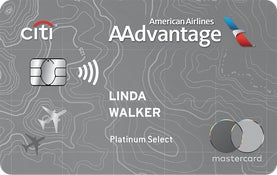
Citi® / AAdvantage® Platinum Select® World Elite Mastercard®
The Citi® / AAdvantage® Platinum Select® World Elite Mastercard® is a solid mid-tier card for American Airlines flyers who want useful travel perks without paying a premium annual fee. It offers a free first checked bag on eligible domestic American Airlines flights, priority boarding and bonus AAdvantage miles on eligible American Airlines purchases, dining and at gas stations. It can be especially valuable for travelers who can use the checked bag benefit and priority boarding without needing lounge access.
Pros + cons
Pros
Free first checked bag on eligible domestic American Airlines flights
Priority boarding
Bonus AAdvantage miles on eligible American Airlines purchases, dining and at gas stations
No foreign transaction fees
Inflight food and beverage savings
Cons
Weaker earning rates compared to some flexible rewards cards
No lounge access included
Free checked bag benefit is limited to eligible domestic American Airlines flights
Some benefits require significant spending to unlock
More details
For a limited time, earn 80,000 American Airlines AAdvantage® bonus miles after $3,500 in purchases within the first 4 months of account opening.
Earn 2 AAdvantage® miles for every $1 spent at gas stations and restaurants, and on eligible American Airlines purchases.
Earn 1 Loyalty Point for every 1 eligible AAdvantage® mile earned from purchases.
No Foreign Transaction Fees.
First checked bag is free on domestic American Airlines itineraries for you and up to four companions traveling with you on the same reservation.
Offer Ends Soon
Best for occasional American Airlines flyers
Citi® / AAdvantage® Platinum Select® World Elite Mastercard®
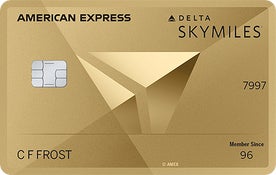
The Delta SkyMiles Gold Amex provides valuable elite-like benefits for causal Delta flyers including a first checked bag free on Delta flights worldwide, a second checked bag free on U.S. domestic Delta flights and priority boarding. It can easily justify getting and keeping this card. Read our full review of the Delta SkyMiles Gold American Express Card.
Pros + cons
Pros
First checked bag free on flights worldwide and second checked bag free on U.S. domestic flights
Priority boarding
15% discount on all award flights
20% back in the form of a statement credit on inflight purchases (not including Wi-Fi)
Cons
There are better Delta cards if you want lounge access or a boost to earn elite status
More details
Apply and find out your welcome offer: As High As 80,000 Bonus Miles + Earn a $250 Statement Credit after you spend $3,000 in purchases on your new Card within the first 6 months of Card Membership. You may not be eligible for the maximum welcome offer amount. Offer ends 11/04/2026.
Enjoy a $0 introductory annual fee for the first year, then $150.
Delta SkyMiles® Gold American Express Card Members get 15% off when using miles to book Award Travel on Delta flights through delta.com and the Fly Delta app. Discount not applicable to partner-operated flights or to taxes and fees.
$120 Rideshare Credit: With your $120 Rideshare Credit, earn up to $10 back in statement credits each month after your first Card renewal when you use your Delta SkyMiles® Gold American Express Card for U.S. rideshare purchases with select providers. Enrollment required.
Limited-Time Offer
Best for occasional Delta flyers
Delta SkyMiles® Gold American Express Card
TPG editor's rating
Limited-Time Offer
Best for Air France-KLM loyalists
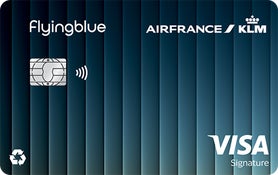
Air France KLM Visa Signature® credit card
TPG editor's rating3
TPG editor's rating
Why we chose it
The Air France KLM Visa Signature® credit card earns 3 miles per dollar spent on eligible Air France, KLM and SkyTeam airline purchases. It provides a status boost every account anniversary, with opportunities to earn additional boosts after reaching certain spending thresholds, plus 5,000 bonus anniversary miles after spending $50 in an account year. These benefits make it a solid choice for travelers who fly with Air France-KLM or other SkyTeam airlines.
Pros + cons
Pros
Earn bonus rewards on Air France, KLM and SkyTeam airline purchases
Receive status boosts each account anniversary and after hitting certain spending thresholds
Receive 5,000 bonus miles each account anniversary after spending $50 in an account year
No foreign transaction fees
Cons
Annual fee may be tough to justify if you don’t frequently fly with Air France-KLM
Does not earn flexible rewards
Only one other bonus category outside of Air France, KLM and SkyTeam purchases
More details
Limited Time Online Offer! Earn 70,000 Bonus Miles + 100 Experience Points (XP) after you make $3,000 or more in purchases within the first 90 days of your account opening.
Low $89 annual fee and no foreign transaction fees.
Earn 3 Miles for every $1 spent on eligible Air France, KLM Royal Dutch Airlines and SkyTeam member airline purchases. Earn 3 Miles for every $1 spent on eligible dining purchases. And, earn 1.5 Miles for every $1 spent on all other purchases.
5,000 Miles every year on your account anniversary after you spend $50 or more on purchases within the anniversary year.
Redeem Miles toward flights with any SkyTeam member airline to over 1,000 destinations worldwide.
The Chase Sapphire Preferred® Card remains one of the easiest travel rewards cards to recommend because it has elevated rewards across everyday spending categories, valuable travel protections, useful statement credits and an approachable annual fee. Whether you're new to points and miles or already maximizing transfer partners, it offers a rare combination of flexibility and long-term value for both beginners and experienced travelers alike.
Pros + cons
Pros
Earn elevated rewards in popular categories, including travel, dining, gas, EV charging and vacation home stays
Premium travel protection benefits include trip cancellation/interruption insurance, primary car rental insurance and lost luggage insurance
Versatile airline and hotel transfer partners
Features up to $100 in annual hotel credits through Chase Travel℠
Cons
Has an annual fee
No airport lounge access
Transfers to Hyatt at a lower rate than other Sapphire cards
More details
Earn 75,000 bonus points after you spend $5,000 on purchases in the first 3 months from account opening.
Enjoy benefits such as 5x on travel purchased through Chase Travel℠, 3x on dining, 3x on vacation homes at top brands, 3x on gas & EV charging, 3x on top streaming services and online groceries (excluding Walmart, Target, and wholesale clubs), 2x on all other travel purchases, 1x on all other purchases.
Earn up to $100 in statement credits each account anniversary year for hotel stays through Chase Travel℠.
Count on Trip Cancellation/Interruption Insurance, Auto Rental Coverage, Emergency Evacuation and Transportation, and more.
Get a year of complimentary Apple TV when activated by December 31, 2026 - a value of $180.
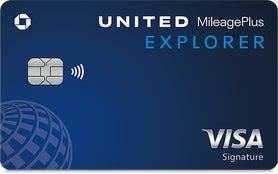
Between a TSA PreCheck/Global Entry fee credit, two annual lounge visits and a free checked bag, the United Explorer card is packed with perks that will enhance your trips for even occasional United flyers. Read our full review of the United Explorer card.
Pros + cons
Pros
First checked bag free for the cardholder and a companion
Priority boarding
25% off eligible inflight purchases
Up to $120 credit every four years for Global Entry/TSA PreCheck
No foreign transaction fees
Cons
Other United cards have higher earning rates on some purchases
You might get more use from a transferable points card instead of a cobranded United card
More details
Earn up to 80,000 bonus miles
$0 introductory annual fee for the first year, then $150
9x total miles on eligible United flights and 3x miles on all other eligible United® purchases.
2x miles on dining and hotel stays when booked with the hotel. 1x mile on all other purchases.
Free first checked bag - a savings of up to $200 per roundtrip. Terms Apply. Plus, Group 2 priority boarding on United® flights.
2 United Club one-time passes per year - over a $100 value
Over $500 in partner credits each year
Save 10% or more when booking flights with miles. Premier members save even more.
Limited-Time Offer
Best for occasional United flyers
United℠ Explorer Card
TPG editor's rating
Best for Premium travel perks and digital entertainment
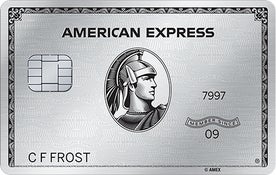
The American Express Platinum Card® has a high annual fee but remains one of the best cards on the market for those who prioritize premium travel experiences. A combination of updated and new statement credits makes the refreshed Amex Platinum an ideal card for frequent travelers and digital entertainment enthusiasts alike.
Pros + cons
Pros
No foreign transaction fees
Up to $600 hotel credit (disbursed as up to $300 in statement credits semiannually)
Up to $300 digital entertainment credit (disbursed as up to $25 in statement credits per month; enrollment required)
Earns transferable Membership Rewards points
Cons
$895 annual fee
More details
You may be eligible for as high as 175,000 Membership Rewards® points after you spend $12,000 in eligible purchases on your new Card in your first 6 months of Card Membership. Welcome offers vary and you may not be eligible for an offer. Apply to know if you’re approved and find out your exact welcome offer amount – all with no credit score impact. If you’re approved and choose to accept the Card, your score may be impacted.
Get more for your travels with 5X Membership Rewards® points on all flights and prepaid hotel bookings through American Express Travel®, including Fine Hotels + Resorts® and The Hotel Collection bookings. You earn 5X points on flights purchased directly from airlines or through American Express Travel® on up to $500,000 on these purchases per calendar year.
With over 1,550 airport lounges - more than any other credit card company on the market* - enjoy the benefits of the Global Lounge Collection, over $850 of annual value, with access to Centurion Lounges, 10 Delta Sky Club visits (subject to visit limitations) when flying on an eligible Delta flight, Priority Pass™ membership (enrollment required), and other select partner lounges. *As of 01/2026
Best for Premium travel perks and digital entertainment
American Express Platinum Card®
TPG editor's rating
Offer Ends Soon
Best for American Airlines lounge access
Citi® / AAdvantage® Executive World Legend Mastercard®
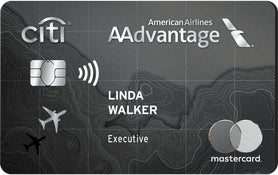
The Citi / AAdvantage Executive World Legend Mastercard is the only credit card that includes an American Airlines Admirals Club membership, making it a compelling option for frequent AA flyers. Beyond lounge access, the primary cardmember can receive up to $500 in annual American Airlines Vacations credits, complimentary Omni Hotels & Resorts Champion Status and up to $100 in annual credits for eligible inflight and Admirals Club purchases. The card also offers priority airport benefits, a first checked bag free on eligible domestic itineraries and other travel perks. (Partner offer)
Pros + cons
Pros
Admirals Club membership
Annual American Airlines Vacations credit
Complimentary Avis President’s Club Status and Omni Hotels & Resorts Champion Status
Earn bonus Loyalty Points toward AAdvantage elite status
Free checked bag and priority airport benefits on eligible American Airlines itineraries
Annual credits for eligible inflight and Admirals Club purchases
Cons
Has a large annual fee
Statement credits may be difficult to maximize if you don't regularly use the eligible services
Authorized user fee
More details
For a limited time, earn 125,000 American Airlines AAdvantage® bonus miles after $15,000 in purchases in the first 5 months of account opening.
The only card with Admirals Club® membership. Membership includes access for you and up to two guests or immediate family members traveling with you.
Global Entry® or TSA PreCheck® application fee credit of up to $120 every 4 years.
Earn a 10,000 Loyalty Point bonus after reaching 50,000, 90,000, 165,000 and 240,000 Loyalty Points in the same status qualification year.
Offer Ends Soon
Best for American Airlines lounge access
Citi® / AAdvantage® Executive World Legend Mastercard®
The Atmos™ Rewards Ascent Visa Signature® credit card is a solid choice for budget-conscious Alaska and Hawaiian Airlines flyers who want to minimize the cost of holding a cobranded airline card.
Pros + cons
Pros
Free checked bag on Alaska and Hawaiian flights
Priority boarding on Alaska and Hawaiian (for main cardholder and up to 6 guests on the same reservation when you pay for flights with this card)
No foreign transaction fees
Cons
$95 annual fee
Companion Fare requires annual spending to earn
More details
Limited-time online offer – 50,000 bonus points.
Get 50,000 bonus points and a $99 Companion Fare (plus taxes and fees from $23) with this offer. To qualify, spend $1,500 or more on purchases within the first 90 days of opening your account.
Get a $99 Companion Fare (plus taxes and fees from $23) each account anniversary after you spend $6,000 or more on purchases within the prior anniversary year. Valid on all Alaska Airlines and Hawaiian Airlines flights within North America booked on AlaskaAir.com.
Earn unlimited 3 points for every $1 spent on eligible Alaska Airlines and Hawaiian Airlines purchases. Earn unlimited 2 points for every $1 spent on eligible gas, EV charging station, cable, streaming services and local transit (including ride share) purchases. And earn unlimited 1 point per $1 spent on all other purchases. Points don’t expire on active accounts.
The Delta SkyMiles Reserve American Express Card is the premier choice for Delta loyalists who value an accelerated path to elite status, Delta Sky Clubs lounge access, an annual companion certificate and strong earning rates on Delta purchases. Read our review of the Delta SkyMiles Reserve card.
Reserve Card Members receive 15 Visits per year to the Delta Sky Club; to earn an unlimited number of Visits each year, the total eligible purchases on the Card must equal $75,000 or more, and each calendar year thereafter.
Pros + cons
Pros
Delta SkyClub access when flying Delta
Annual companion ticket for travel on Delta (upon renewal)
Ability to earn MQDs through spending
Various statement credits for eligible purchases
Cons
Steep annual fee of $650
Other Delta cobranded cards offer superior earning categories
More details
Earn two round‑trip Delta Comfort Flight Certificates valid for travel to the U.S. 48, Puerto Rico, or the U.S. Virgin Islands, along with 50,000 Bonus Miles after you spend $10,000 in purchases on your new Card in the first 6 months. A 21+ day advance purchase is required. Taxes and fees up to $80 per person apply. Terms and other restrictions apply. Offer ends 11/4/2026.
Delta SkyMiles® Reserve American Express Card Members receive 15 Visits each Medallion® Year to the Delta Sky Club® when flying Delta and can unlock Unlimited Delta Sky Club Access after spending $75,000 in purchases on your Card during a calendar year. Reserve Card Members can also enjoy complimentary access to The Centurion® Lounge and Escape Lounges when you book your Delta flight with your Delta SkyMiles® Reserve American Express Card.
Receive $2,500 Medallion® Qualification Dollars with MQD Headstart each Medallion Qualification Year and earn $1 MQD for each $10 in purchases on your Delta SkyMiles® Reserve American Express Card with MQD Boost to get closer to Status next Medallion Year.
If you can maximize the $300 credit toward Capital One Travel, the Venture X’s annual fee effectively comes down to $95. Add in a 10,000-mile bonus every account anniversary (worth $185, according to TPG valuations) and lounge access, and the card may become the strongest option out there for a lot of travelers. Read our full review of the Capital One Venture X Rewards Credit Card.
Pros + cons
Pros
$300 in annual credits toward bookings made through Capital One Travel
10,000 bonus miles each account anniversary
Cons
If you don’t travel frequently, this might not be the best card for you
More details
Earn 75,000 bonus miles when you spend $4,000 on purchases in the first 3 months from account opening, equal to $750 in travel
Receive a $300 annual credit for bookings through Capital One Travel, where you'll get Capital One's best prices on thousands of trip options
Get 10,000 bonus miles (equal to $100 towards travel) every year, starting on your first anniversary
Earn unlimited 10X miles on hotels and rental cars booked through Capital One Travel and 5X miles on flights and vacation rentals booked through Capital One Travel
Earn unlimited 2X miles on all other purchases
Enjoy access to 1,300+ lounges worldwide, including Capital One Lounge and Landing locations and participating Priority Pass™ lounges, after enrollment
The United Quest Card is a solid, middle-of-the-road option for frequent United flyers. The $350 annual fee is more than cut in half if you can take advantage of the annual $200 United travel credit, and there’s a long list of benefits from checked baggage benefits to a strong earning rate on United and everyday purchases. Read our full review of the United Quest Card.
Pros + cons
Pros
Earn 4 miles per dollar spent on eligible United purchases and 2 miles per dollar spent on a variety of other categories
Get a first and second checked bag free for the cardholder and a companion
Priority boarding on United- and United Express-operated flights
25% off eligible inflight purchases
Cons
Day-of-travel perks limited to United and some partner flights
Other United cards have higher earning rates on some purchases
You might get more use from transferable points instead of United miles
More details
Earn up to 90,000 bonus miles after qualifying activities and 500 PQP after first purchase
10x total miles on eligible United flights and 4x miles on all other eligible United® purchases
2x miles on dining, select streaming services, and all other travel
1x mile on all other purchases
Get a jump start on earning Premier status with 1,000 Card Bonus PQP each year, awarded within 8 weeks of February 1, starting in the calendar year following your account open date.
Free first and second checked bags--a savings of up to $440 per roundtrip (terms apply)
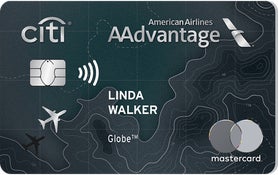
The Citi AAdvantage Globe Mastercard is a mid-tier travel card designed for American Airlines flyers. It stands out for its combination of travel perks and value, offering Four Admirals Club Globe passes each calendar year (worth over $300), one annual American Airlines Companion Certificate after card renewal and up to $100 in statement credits on inflight purchases made on qualifying American Airlines flights each calendar year.
Cardholders also enjoy preferred Group 5 boarding on American Airlines flights, up to $240 in annual Turo credits (up to $30 in statement credits for each eligible completed trip on Turo) and access to Citi Entertainment presales and experiences, making it a well-rounded option for travelers who want premium perks without the premium price tag.
The card also stands out for its Flight Streak bonus, rewarding cardmembers with 5,000 points after every four qualifying American Airlines flights for up to 15,000 additional points each status-qualifying year. This is the only card currently available that offers this feature.
Pros + cons
Pros
Four Admirals Club Globe passes per calendar year (each valid for 24 hours)
One American Airlines Companion Certificate each year after card renewal
Free first checked bag (on qualifying domestic American Airlines itineraries) for the primary cardmember and up to eight companions on the same reservation
Flight Streak bonus rewards cardmembers with 5,000 points after every four qualifying American Airlines flights for up to 15,000 additional points each status-qualifying year
Up to $120 in Global Entry or TSA PreCheck fee credits every four years (issued as statement credits every four years, as reimbursement for the application fee)
Up to $100 Annual Splurge Credit each calendar year (choice of two eligible categories)
Cons
Complimentary lounge access is limited to four passes per year
$350 annual fee
More details
Earn 60,000 American Airlines AAdvantage® bonus miles after $4,000 in purchases in the first 3 months of account opening.
Best for mid-tier American Airlines rewards
Citi® / AAdvantage® Globe™ Mastercard®
TPG editor's rating
Limited-Time Offer
Best for A premium card with flexible perks for frequent Oneworld flyers
The Atmos™ Rewards Summit Visa Infinite® credit card features a great welcome bonus and valuable travel perks, making it a premium contender among similar cobranded airline cards in its class.
Pros + cons
Pros
8 Alaska lounge passes annually and 8 Wi-Fi passed annually (2 passes per quarter)
Fast track to elite status thanks to 10,000 status points annually plus earning 1 status point for every two dollars spent on purchases
Up to $120 TSA PreCheck/Global Entry credit every four years
No foreign transaction fees
Cons
$395 annual fee
More details
Limited-time online offer – 70,000 bonus points.
Get 70,000 bonus points and a 25,000-point Global Companion Award with this offer. To qualify, spend $3,000 or more on purchases within the first 90 days of opening your account.
Each account anniversary, get a 25,000-point Global Companion Award for a travel companion on the same itinerary, when booking travel using your Atmos™ Rewards points.
Additionally, receive a 100,000-point Global Companion Award annually after spending $60,000 or more on purchases each anniversary year.
Receive 8 Alaska Lounge passes and 8 Wi-Fi passes every year (2 of each per calendar quarter).
Earn unlimited 3 points for every $1 spent on eligible dining, foreign transaction, Alaska Airlines and Hawaiian Airlines purchases and unlimited 1 point for every $1 spent on all other purchases. Plus, earn a 10% rewards bonus on all points earned from card purchases if you have an eligible Bank of America® account.
Limited-Time Offer
Best for A premium card with flexible perks for frequent Oneworld flyers
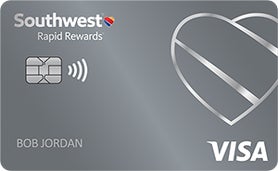
With core travel perks like free checked bags, Group 5 boarding and a modest annual fee, the Rapid Rewards Plus Card is a budget-friendly entry point into Southwest’s rewards program. It offers solid value for occasional travelers who want to earn points and start building toward Companion Pass status. Read our full review of the Southwest Rapid Rewards Plus Credit Card.
Pros + cons
Pros
Complimentary first checked bag for the cardmember and up to eight additional passengers on the same reservation
Standard seat selection within 48 hours prior to departure, when available
Earn 2 points per dollar spent at gas stations and grocery stores (on the first $5,000 in combined purchases per anniversary year)
3,000 complimentary Southwest points annually, on each cardmember anniversary
One 10% promo code each year at your cardmember anniversary (excluding Basic fare)
No foreign transaction fees
Cons
Flight redemption limited to U.S., Caribbean and Central American destinations
More details
Earn 50,000 bonus points after spending $1,000 on purchases in the first 3 months from account opening.
3,000 anniversary points each year.
Earn 2 points per $1 spent on Southwest Airlines® purchases
Earn 2 points for every $1 you spend at gas stations and grocery stores on the first $5,000 in combined purchases per anniversary year
Cardmembers and up to 8 additional passengers in the same reservation can check their first bag at no additional cost.
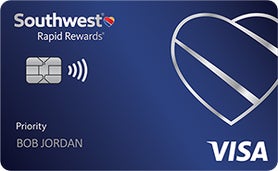
While other airlines’ top credit cards have annual fees toppling over $500 per year, the Southwest Rapid Rewards Priority Card comes with just a $229 annual per year. If Southwest is your airline of choice, you’ll receive a number of perks every year, like 7,500 points on your cardmember anniversary. Additionally, for every $5,000 spent on this card, you’ll earn 2,500 Tier Qualifying Points, fast-tracking your way to A-List Status. Read our full review of the Southwest Rapid Rewards Priority Card.
Pros + cons
Pros
Complimentary first checked bag for the cardmember and up to eight additional passengers on the same reservation
Preferred seat selection at booking, when available
Unlimited upgrades to Extra Legroom seating within 48 hours of departure when available
7,500 complimentary Southwest points annually, on each cardmember anniversary
25% discount on inflight purchases
Ability to earn A-List status faster by spending on this card
Cons
$229 annual fee
More details
Earn 60,000 bonus points after spending $2,000 on purchases in the first 3 months from account opening.
7,500 anniversary points each year.
Earn 4 points per $1 spent on Southwest Airlines® purchases, including flights, inflight, and Southwest gift cards.
Earn 2 points for every $1 you spend at gas stations and restaurants
First checked bag free for Cardmembers and up to 8 additional passengers in the same reservation.
Best for frequent Southwest flyers
Southwest Rapid Rewards® Priority Credit Card
TPG editor's rating
Best Offer Ever
Best for Air Canada loyalists
Chase Air Canada Aeroplan® Credit Card
TPG editor's rating
Credit card
Best for
Intro offer
Earning rate
Annual fee
Apply
Limited Time: Earn 75k bonus miles + $300 stays credit
Transfer your miles to your choice of 15+ travel loyalty programs
Top rated mobile app
Transfer your miles to your choice of 15+ travel loyalty programs
Top rated mobile app
Personalize your card search
Enter your preferences and spending habits, and we'll match you with your top card options.
3
at Citi's secure site. Terms & restrictions apply. See rates & fees.
Rewards rate
Rewards rate
Rate
Category
2X
Earn 2 AAdvantage® miles for every $1 spent at gas stations and restaurants, and on eligible American Airlines purchases
Intro offer
Earn 80,000 American Airlines AAdvantage® bonus miles
Annual fee
$99, waived for first 12 months
Regular APR
19.74% - 29.74% (Variable)
Recommended credit
670-850
Excellent, Good
Enjoy preferred boarding on American Airlines flights.
Why we chose it
The Citi® / AAdvantage® Platinum Select® World Elite Mastercard® is a solid mid-tier card for American Airlines flyers who want useful travel perks without paying a premium annual fee. It offers a free first checked bag on eligible domestic American Airlines flights, priority boarding and bonus AAdvantage miles on eligible American Airlines purchases, dining and at gas stations. It can be especially valuable for travelers who can use the checked bag benefit and priority boarding without needing lounge access.
View more
Pros
Free first checked bag on eligible domestic American Airlines flights
Priority boarding
Bonus AAdvantage miles on eligible American Airlines purchases, dining and at gas stations
No foreign transaction fees
Inflight food and beverage savings
Cons
Weaker earning rates compared to some flexible rewards cards
No lounge access included
Free checked bag benefit is limited to eligible domestic American Airlines flights
Some benefits require significant spending to unlock
For a limited time, earn 80,000 American Airlines AAdvantage® bonus miles after $3,500 in purchases within the first 4 months of account opening.
Earn 2 AAdvantage® miles for every $1 spent at gas stations and restaurants, and on eligible American Airlines purchases.
Earn 1 Loyalty Point for every 1 eligible AAdvantage® mile earned from purchases.
No Foreign Transaction Fees.
First checked bag is free on domestic American Airlines itineraries for you and up to four companions traveling with you on the same reservation.
Enjoy preferred boarding on American Airlines flights.
Why we chose it
The Citi® / AAdvantage® Platinum Select® World Elite Mastercard® is a solid mid-tier card for American Airlines flyers who want useful travel perks without paying a premium annual fee. It offers a free first checked bag on eligible domestic American Airlines flights, priority boarding and bonus AAdvantage miles on eligible American Airlines purchases, dining and at gas stations. It can be especially valuable for travelers who can use the checked bag benefit and priority boarding without needing lounge access.
Pros + cons
Pros
Free first checked bag on eligible domestic American Airlines flights
Priority boarding
Bonus AAdvantage miles on eligible American Airlines purchases, dining and at gas stations
No foreign transaction fees
Inflight food and beverage savings
Cons
Weaker earning rates compared to some flexible rewards cards
No lounge access included
Free checked bag benefit is limited to eligible domestic American Airlines flights
Some benefits require significant spending to unlock
More details
For a limited time, earn 80,000 American Airlines AAdvantage® bonus miles after $3,500 in purchases within the first 4 months of account opening.
Earn 2 AAdvantage® miles for every $1 spent at gas stations and restaurants, and on eligible American Airlines purchases.
Earn 1 Loyalty Point for every 1 eligible AAdvantage® mile earned from purchases.
No Foreign Transaction Fees.
First checked bag is free on domestic American Airlines itineraries for you and up to four companions traveling with you on the same reservation.
Enjoy preferred boarding on American Airlines flights.
Why we chose it
The Citi® / AAdvantage® Platinum Select® World Elite Mastercard® is a solid mid-tier card for American Airlines flyers who want useful travel perks without paying a premium annual fee. It offers a free first checked bag on eligible domestic American Airlines flights, priority boarding and bonus AAdvantage miles on eligible American Airlines purchases, dining and at gas stations. It can be especially valuable for travelers who can use the checked bag benefit and priority boarding without needing lounge access.
Pros
Free first checked bag on eligible domestic American Airlines flights
Priority boarding
Bonus AAdvantage miles on eligible American Airlines purchases, dining and at gas stations
No foreign transaction fees
Inflight food and beverage savings
Cons
Weaker earning rates compared to some flexible rewards cards
No lounge access included
Free checked bag benefit is limited to eligible domestic American Airlines flights
Some benefits require significant spending to unlock
For a limited time, earn 80,000 American Airlines AAdvantage® bonus miles after $3,500 in purchases within the first 4 months of account opening.
Earn 2 AAdvantage® miles for every $1 spent at gas stations and restaurants, and on eligible American Airlines purchases.
Earn 1 Loyalty Point for every 1 eligible AAdvantage® mile earned from purchases.
No Foreign Transaction Fees.
First checked bag is free on domestic American Airlines itineraries for you and up to four companions traveling with you on the same reservation.
Enjoy preferred boarding on American Airlines flights.
at Citi's secure site. Terms & restrictions apply. See rates & fees.
Intro offer
Earn 80,000 American Airlines AAdvantage® bonus miles
Annual fee
$99, waived for first 12 months
Regular APR
19.74% - 29.74% (Variable)
Recommended credit
670-850
Excellent, Good
Why we chose it
The Citi® / AAdvantage® Platinum Select® World Elite Mastercard® is a solid mid-tier card for American Airlines flyers who want useful travel perks without paying a premium annual fee. It offers a free first checked bag on eligible domestic American Airlines flights, priority boarding and bonus AAdvantage miles on eligible American Airlines purchases, dining and at gas stations. It can be especially valuable for travelers who can use the checked bag benefit and priority boarding without needing lounge access.
Pros + cons
Pros
Free first checked bag on eligible domestic American Airlines flights
Priority boarding
Bonus AAdvantage miles on eligible American Airlines purchases, dining and at gas stations
No foreign transaction fees
Inflight food and beverage savings
Cons
Weaker earning rates compared to some flexible rewards cards
No lounge access included
Free checked bag benefit is limited to eligible domestic American Airlines flights
Some benefits require significant spending to unlock
More details
For a limited time, earn 80,000 American Airlines AAdvantage® bonus miles after $3,500 in purchases within the first 4 months of account opening.
Earn 2 AAdvantage® miles for every $1 spent at gas stations and restaurants, and on eligible American Airlines purchases.
Earn 1 Loyalty Point for every 1 eligible AAdvantage® mile earned from purchases.
No Foreign Transaction Fees.
First checked bag is free on domestic American Airlines itineraries for you and up to four companions traveling with you on the same reservation.
Enjoy preferred boarding on American Airlines flights.
4
at American Express's secure site. Terms & restrictions apply. See rates & fees.
Rewards rate
Rewards rate
Rate
Category
2X
Earn 2X miles on Delta Purchases, restaurants, and U.S. supermarkets.
1X
Earn 1X miles on all other eligible purchases.
Intro offer
As High As 80K Miles + $250 Statement Credit
Annual fee
$0 introductory annual fee for the first year, then $150.
Regular APR
19.74%-28.74% Variable
Recommended credit
Excellent to Good
$200 Delta Flight Credit: After you spend $10,000 in purchases on your Card in a calendar year, you can receive a $200 Delta Flight Credit to use toward future travel.
When you use your Delta SkyMiles® Gold American Express Card, you can earn: 2X miles on Delta Purchases, 2X miles at restaurants, 2X miles at U.S. supermarkets, 1X miles on all other eligible purchases. Every mile you earn brings you closer to the places you want to go. Turn them into your next trip, use them for seat upgrades, and more.
Check your first bag for free on Delta flights worldwide and get your second bag free when flying domestically.
$100 Delta Stays Credit: Get up to $100 back per year as a statement credit after using your Delta SkyMiles® Gold American Express Card to book prepaid hotels or vacation rentals through Delta Stays on delta.com.
Receive Zone 5 Priority Boarding on Delta flights; board early, stow your carry-on bag and settle in sooner.
Want even more flexibility? Take up to $50 off the cost of your flight for every 5,000 miles you redeem with Pay with Miles when you book on delta.com.
Receive a 20% savings in the form of a statement credit on eligible Delta in-flight purchases after using your Card.
No Foreign Transaction Fees. Enjoy international travel without additional fees on purchases made abroad.
Send money, split purchases, and focus on the moments that matter – with Send & Split®. Powered by Venmo and PayPal. Enrollment Required. Terms apply.
The Delta SkyMiles Gold Amex provides valuable elite-like benefits for causal Delta flyers including a first checked bag free on Delta flights worldwide, a second checked bag free on U.S. domestic Delta flights and priority boarding. It can easily justify getting and keeping this card. Read our full review of the Delta SkyMiles Gold American Express Card.
View more
Pros
First checked bag free on flights worldwide and second checked bag free on U.S. domestic flights
Priority boarding
15% discount on all award flights
20% back in the form of a statement credit on inflight purchases (not including Wi-Fi)
Cons
There are better Delta cards if you want lounge access or a boost to earn elite status
Apply and find out your welcome offer: As High As 80,000 Bonus Miles + Earn a $250 Statement Credit after you spend $3,000 in purchases on your new Card within the first 6 months of Card Membership. You may not be eligible for the maximum welcome offer amount. Offer ends 11/04/2026.
Enjoy a $0 introductory annual fee for the first year, then $150.
Delta SkyMiles® Gold American Express Card Members get 15% off when using miles to book Award Travel on Delta flights through delta.com and the Fly Delta app. Discount not applicable to partner-operated flights or to taxes and fees.
$120 Rideshare Credit: With your $120 Rideshare Credit, earn up to $10 back in statement credits each month after your first Card renewal when you use your Delta SkyMiles® Gold American Express Card for U.S. rideshare purchases with select providers. Enrollment required.
$200 Delta Flight Credit: After you spend $10,000 in purchases on your Card in a calendar year, you can receive a $200 Delta Flight Credit to use toward future travel.
When you use your Delta SkyMiles® Gold American Express Card, you can earn: 2X miles on Delta Purchases, 2X miles at restaurants, 2X miles at U.S. supermarkets, 1X miles on all other eligible purchases. Every mile you earn brings you closer to the places you want to go. Turn them into your next trip, use them for seat upgrades, and more.
Check your first bag for free on Delta flights worldwide and get your second bag free when flying domestically.
$100 Delta Stays Credit: Get up to $100 back per year as a statement credit after using your Delta SkyMiles® Gold American Express Card to book prepaid hotels or vacation rentals through Delta Stays on delta.com.
Receive Zone 5 Priority Boarding on Delta flights; board early, stow your carry-on bag and settle in sooner.
Want even more flexibility? Take up to $50 off the cost of your flight for every 5,000 miles you redeem with Pay with Miles when you book on delta.com.
Receive a 20% savings in the form of a statement credit on eligible Delta in-flight purchases after using your Card.
No Foreign Transaction Fees. Enjoy international travel without additional fees on purchases made abroad.
Send money, split purchases, and focus on the moments that matter – with Send & Split®. Powered by Venmo and PayPal. Enrollment Required. Terms apply.
The Delta SkyMiles Gold Amex provides valuable elite-like benefits for causal Delta flyers including a first checked bag free on Delta flights worldwide, a second checked bag free on U.S. domestic Delta flights and priority boarding. It can easily justify getting and keeping this card. Read our full review of the Delta SkyMiles Gold American Express Card.
Pros + cons
Pros
First checked bag free on flights worldwide and second checked bag free on U.S. domestic flights
Priority boarding
15% discount on all award flights
20% back in the form of a statement credit on inflight purchases (not including Wi-Fi)
Cons
There are better Delta cards if you want lounge access or a boost to earn elite status
More details
Apply and find out your welcome offer: As High As 80,000 Bonus Miles + Earn a $250 Statement Credit after you spend $3,000 in purchases on your new Card within the first 6 months of Card Membership. You may not be eligible for the maximum welcome offer amount. Offer ends 11/04/2026.
Enjoy a $0 introductory annual fee for the first year, then $150.
Delta SkyMiles® Gold American Express Card Members get 15% off when using miles to book Award Travel on Delta flights through delta.com and the Fly Delta app. Discount not applicable to partner-operated flights or to taxes and fees.
$120 Rideshare Credit: With your $120 Rideshare Credit, earn up to $10 back in statement credits each month after your first Card renewal when you use your Delta SkyMiles® Gold American Express Card for U.S. rideshare purchases with select providers. Enrollment required.
$200 Delta Flight Credit: After you spend $10,000 in purchases on your Card in a calendar year, you can receive a $200 Delta Flight Credit to use toward future travel.
When you use your Delta SkyMiles® Gold American Express Card, you can earn: 2X miles on Delta Purchases, 2X miles at restaurants, 2X miles at U.S. supermarkets, 1X miles on all other eligible purchases. Every mile you earn brings you closer to the places you want to go. Turn them into your next trip, use them for seat upgrades, and more.
Check your first bag for free on Delta flights worldwide and get your second bag free when flying domestically.
$100 Delta Stays Credit: Get up to $100 back per year as a statement credit after using your Delta SkyMiles® Gold American Express Card to book prepaid hotels or vacation rentals through Delta Stays on delta.com.
Receive Zone 5 Priority Boarding on Delta flights; board early, stow your carry-on bag and settle in sooner.
Want even more flexibility? Take up to $50 off the cost of your flight for every 5,000 miles you redeem with Pay with Miles when you book on delta.com.
Receive a 20% savings in the form of a statement credit on eligible Delta in-flight purchases after using your Card.
No Foreign Transaction Fees. Enjoy international travel without additional fees on purchases made abroad.
Send money, split purchases, and focus on the moments that matter – with Send & Split®. Powered by Venmo and PayPal. Enrollment Required. Terms apply.
The Delta SkyMiles Gold Amex provides valuable elite-like benefits for causal Delta flyers including a first checked bag free on Delta flights worldwide, a second checked bag free on U.S. domestic Delta flights and priority boarding. It can easily justify getting and keeping this card. Read our full review of the Delta SkyMiles Gold American Express Card.
Pros
First checked bag free on flights worldwide and second checked bag free on U.S. domestic flights
Priority boarding
15% discount on all award flights
20% back in the form of a statement credit on inflight purchases (not including Wi-Fi)
Cons
There are better Delta cards if you want lounge access or a boost to earn elite status
Apply and find out your welcome offer: As High As 80,000 Bonus Miles + Earn a $250 Statement Credit after you spend $3,000 in purchases on your new Card within the first 6 months of Card Membership. You may not be eligible for the maximum welcome offer amount. Offer ends 11/04/2026.
Enjoy a $0 introductory annual fee for the first year, then $150.
Delta SkyMiles® Gold American Express Card Members get 15% off when using miles to book Award Travel on Delta flights through delta.com and the Fly Delta app. Discount not applicable to partner-operated flights or to taxes and fees.
$120 Rideshare Credit: With your $120 Rideshare Credit, earn up to $10 back in statement credits each month after your first Card renewal when you use your Delta SkyMiles® Gold American Express Card for U.S. rideshare purchases with select providers. Enrollment required.
$200 Delta Flight Credit: After you spend $10,000 in purchases on your Card in a calendar year, you can receive a $200 Delta Flight Credit to use toward future travel.
When you use your Delta SkyMiles® Gold American Express Card, you can earn: 2X miles on Delta Purchases, 2X miles at restaurants, 2X miles at U.S. supermarkets, 1X miles on all other eligible purchases. Every mile you earn brings you closer to the places you want to go. Turn them into your next trip, use them for seat upgrades, and more.
Check your first bag for free on Delta flights worldwide and get your second bag free when flying domestically.
$100 Delta Stays Credit: Get up to $100 back per year as a statement credit after using your Delta SkyMiles® Gold American Express Card to book prepaid hotels or vacation rentals through Delta Stays on delta.com.
Receive Zone 5 Priority Boarding on Delta flights; board early, stow your carry-on bag and settle in sooner.
Want even more flexibility? Take up to $50 off the cost of your flight for every 5,000 miles you redeem with Pay with Miles when you book on delta.com.
Receive a 20% savings in the form of a statement credit on eligible Delta in-flight purchases after using your Card.
No Foreign Transaction Fees. Enjoy international travel without additional fees on purchases made abroad.
Send money, split purchases, and focus on the moments that matter – with Send & Split®. Powered by Venmo and PayPal. Enrollment Required. Terms apply.
at American Express's secure site. Terms & restrictions apply. See rates & fees.
Intro offer
As High As 80K Miles + $250 Statement Credit
Annual fee
$0 introductory annual fee for the first year, then $150.
Regular APR
19.74%-28.74% Variable
Recommended credit
Excellent to Good
Why we chose it
The Delta SkyMiles Gold Amex provides valuable elite-like benefits for causal Delta flyers including a first checked bag free on Delta flights worldwide, a second checked bag free on U.S. domestic Delta flights and priority boarding. It can easily justify getting and keeping this card. Read our full review of the Delta SkyMiles Gold American Express Card.
Pros + cons
Pros
First checked bag free on flights worldwide and second checked bag free on U.S. domestic flights
Priority boarding
15% discount on all award flights
20% back in the form of a statement credit on inflight purchases (not including Wi-Fi)
Cons
There are better Delta cards if you want lounge access or a boost to earn elite status
More details
Apply and find out your welcome offer: As High As 80,000 Bonus Miles + Earn a $250 Statement Credit after you spend $3,000 in purchases on your new Card within the first 6 months of Card Membership. You may not be eligible for the maximum welcome offer amount. Offer ends 11/04/2026.
Enjoy a $0 introductory annual fee for the first year, then $150.
Delta SkyMiles® Gold American Express Card Members get 15% off when using miles to book Award Travel on Delta flights through delta.com and the Fly Delta app. Discount not applicable to partner-operated flights or to taxes and fees.
$120 Rideshare Credit: With your $120 Rideshare Credit, earn up to $10 back in statement credits each month after your first Card renewal when you use your Delta SkyMiles® Gold American Express Card for U.S. rideshare purchases with select providers. Enrollment required.
$200 Delta Flight Credit: After you spend $10,000 in purchases on your Card in a calendar year, you can receive a $200 Delta Flight Credit to use toward future travel.
When you use your Delta SkyMiles® Gold American Express Card, you can earn: 2X miles on Delta Purchases, 2X miles at restaurants, 2X miles at U.S. supermarkets, 1X miles on all other eligible purchases. Every mile you earn brings you closer to the places you want to go. Turn them into your next trip, use them for seat upgrades, and more.
Check your first bag for free on Delta flights worldwide and get your second bag free when flying domestically.
$100 Delta Stays Credit: Get up to $100 back per year as a statement credit after using your Delta SkyMiles® Gold American Express Card to book prepaid hotels or vacation rentals through Delta Stays on delta.com.
Receive Zone 5 Priority Boarding on Delta flights; board early, stow your carry-on bag and settle in sooner.
Want even more flexibility? Take up to $50 off the cost of your flight for every 5,000 miles you redeem with Pay with Miles when you book on delta.com.
Receive a 20% savings in the form of a statement credit on eligible Delta in-flight purchases after using your Card.
No Foreign Transaction Fees. Enjoy international travel without additional fees on purchases made abroad.
Send money, split purchases, and focus on the moments that matter – with Send & Split®. Powered by Venmo and PayPal. Enrollment Required. Terms apply.
19.74% - 27.74% Variable APR on purchases and balance transfers
Recommended credit
670-850
Excellent/Good
Receive 20 XP every year on your account anniversary. Earn an additional 80 XP (totaling 100 XP) on the account anniversary after you spend $15,000 or more on purchases within the anniversary year. Plus, earn an additional 60 XP (totaling 160 XP) on the account anniversary after you spend $25,000 or more on purchases within the anniversary year.
This offer may not be available elsewhere if you leave this page. You can take advantage of this offer when you apply now.
Why we chose it
The Air France KLM Visa Signature® credit card earns 3 miles per dollar spent on eligible Air France, KLM and SkyTeam airline purchases. It provides a status boost every account anniversary, with opportunities to earn additional boosts after reaching certain spending thresholds, plus 5,000 bonus anniversary miles after spending $50 in an account year. These benefits make it a solid choice for travelers who fly with Air France-KLM or other SkyTeam airlines.
View more
Pros
Earn bonus rewards on Air France, KLM and SkyTeam airline purchases
Receive status boosts each account anniversary and after hitting certain spending thresholds
Receive 5,000 bonus miles each account anniversary after spending $50 in an account year
No foreign transaction fees
Cons
Annual fee may be tough to justify if you don’t frequently fly with Air France-KLM
Does not earn flexible rewards
Only one other bonus category outside of Air France, KLM and SkyTeam purchases
Limited Time Online Offer! Earn 70,000 Bonus Miles + 100 Experience Points (XP) after you make $3,000 or more in purchases within the first 90 days of your account opening.
Low $89 annual fee and no foreign transaction fees.
Earn 3 Miles for every $1 spent on eligible Air France, KLM Royal Dutch Airlines and SkyTeam member airline purchases. Earn 3 Miles for every $1 spent on eligible dining purchases. And, earn 1.5 Miles for every $1 spent on all other purchases.
5,000 Miles every year on your account anniversary after you spend $50 or more on purchases within the anniversary year.
Redeem Miles toward flights with any SkyTeam member airline to over 1,000 destinations worldwide.
Receive 20 XP every year on your account anniversary. Earn an additional 80 XP (totaling 100 XP) on the account anniversary after you spend $15,000 or more on purchases within the anniversary year. Plus, earn an additional 60 XP (totaling 160 XP) on the account anniversary after you spend $25,000 or more on purchases within the anniversary year.
This offer may not be available elsewhere if you leave this page. You can take advantage of this offer when you apply now.
Why we chose it
The Air France KLM Visa Signature® credit card earns 3 miles per dollar spent on eligible Air France, KLM and SkyTeam airline purchases. It provides a status boost every account anniversary, with opportunities to earn additional boosts after reaching certain spending thresholds, plus 5,000 bonus anniversary miles after spending $50 in an account year. These benefits make it a solid choice for travelers who fly with Air France-KLM or other SkyTeam airlines.
Pros + cons
Pros
Earn bonus rewards on Air France, KLM and SkyTeam airline purchases
Receive status boosts each account anniversary and after hitting certain spending thresholds
Receive 5,000 bonus miles each account anniversary after spending $50 in an account year
No foreign transaction fees
Cons
Annual fee may be tough to justify if you don’t frequently fly with Air France-KLM
Does not earn flexible rewards
Only one other bonus category outside of Air France, KLM and SkyTeam purchases
More details
Limited Time Online Offer! Earn 70,000 Bonus Miles + 100 Experience Points (XP) after you make $3,000 or more in purchases within the first 90 days of your account opening.
Low $89 annual fee and no foreign transaction fees.
Earn 3 Miles for every $1 spent on eligible Air France, KLM Royal Dutch Airlines and SkyTeam member airline purchases. Earn 3 Miles for every $1 spent on eligible dining purchases. And, earn 1.5 Miles for every $1 spent on all other purchases.
5,000 Miles every year on your account anniversary after you spend $50 or more on purchases within the anniversary year.
Redeem Miles toward flights with any SkyTeam member airline to over 1,000 destinations worldwide.
Receive 20 XP every year on your account anniversary. Earn an additional 80 XP (totaling 100 XP) on the account anniversary after you spend $15,000 or more on purchases within the anniversary year. Plus, earn an additional 60 XP (totaling 160 XP) on the account anniversary after you spend $25,000 or more on purchases within the anniversary year.
This offer may not be available elsewhere if you leave this page. You can take advantage of this offer when you apply now.
Why we chose it
The Air France KLM Visa Signature® credit card earns 3 miles per dollar spent on eligible Air France, KLM and SkyTeam airline purchases. It provides a status boost every account anniversary, with opportunities to earn additional boosts after reaching certain spending thresholds, plus 5,000 bonus anniversary miles after spending $50 in an account year. These benefits make it a solid choice for travelers who fly with Air France-KLM or other SkyTeam airlines.
Pros
Earn bonus rewards on Air France, KLM and SkyTeam airline purchases
Receive status boosts each account anniversary and after hitting certain spending thresholds
Receive 5,000 bonus miles each account anniversary after spending $50 in an account year
No foreign transaction fees
Cons
Annual fee may be tough to justify if you don’t frequently fly with Air France-KLM
Does not earn flexible rewards
Only one other bonus category outside of Air France, KLM and SkyTeam purchases
Limited Time Online Offer! Earn 70,000 Bonus Miles + 100 Experience Points (XP) after you make $3,000 or more in purchases within the first 90 days of your account opening.
Low $89 annual fee and no foreign transaction fees.
Earn 3 Miles for every $1 spent on eligible Air France, KLM Royal Dutch Airlines and SkyTeam member airline purchases. Earn 3 Miles for every $1 spent on eligible dining purchases. And, earn 1.5 Miles for every $1 spent on all other purchases.
5,000 Miles every year on your account anniversary after you spend $50 or more on purchases within the anniversary year.
Redeem Miles toward flights with any SkyTeam member airline to over 1,000 destinations worldwide.
Receive 20 XP every year on your account anniversary. Earn an additional 80 XP (totaling 100 XP) on the account anniversary after you spend $15,000 or more on purchases within the anniversary year. Plus, earn an additional 60 XP (totaling 160 XP) on the account anniversary after you spend $25,000 or more on purchases within the anniversary year.
This offer may not be available elsewhere if you leave this page. You can take advantage of this offer when you apply now.
19.74% - 27.74% Variable APR on purchases and balance transfers
Recommended credit
670-850
Excellent/Good
Why we chose it
The Air France KLM Visa Signature® credit card earns 3 miles per dollar spent on eligible Air France, KLM and SkyTeam airline purchases. It provides a status boost every account anniversary, with opportunities to earn additional boosts after reaching certain spending thresholds, plus 5,000 bonus anniversary miles after spending $50 in an account year. These benefits make it a solid choice for travelers who fly with Air France-KLM or other SkyTeam airlines.
Pros + cons
Pros
Earn bonus rewards on Air France, KLM and SkyTeam airline purchases
Receive status boosts each account anniversary and after hitting certain spending thresholds
Receive 5,000 bonus miles each account anniversary after spending $50 in an account year
No foreign transaction fees
Cons
Annual fee may be tough to justify if you don’t frequently fly with Air France-KLM
Does not earn flexible rewards
Only one other bonus category outside of Air France, KLM and SkyTeam purchases
More details
Limited Time Online Offer! Earn 70,000 Bonus Miles + 100 Experience Points (XP) after you make $3,000 or more in purchases within the first 90 days of your account opening.
Low $89 annual fee and no foreign transaction fees.
Earn 3 Miles for every $1 spent on eligible Air France, KLM Royal Dutch Airlines and SkyTeam member airline purchases. Earn 3 Miles for every $1 spent on eligible dining purchases. And, earn 1.5 Miles for every $1 spent on all other purchases.
5,000 Miles every year on your account anniversary after you spend $50 or more on purchases within the anniversary year.
Redeem Miles toward flights with any SkyTeam member airline to over 1,000 destinations worldwide.
Receive 20 XP every year on your account anniversary. Earn an additional 80 XP (totaling 100 XP) on the account anniversary after you spend $15,000 or more on purchases within the anniversary year. Plus, earn an additional 60 XP (totaling 160 XP) on the account anniversary after you spend $25,000 or more on purchases within the anniversary year.
This offer may not be available elsewhere if you leave this page. You can take advantage of this offer when you apply now.
4.5
at Chase's secure site. Terms & restrictions apply. See rates & fees.
Rewards rate
Rewards rate
Rate
Category
5x
Earn 5x on travel purchased through Chase Travel℠.
3x
Earn 3x on dining, vacation homes at top brands, gas & EV charging, top streaming services and online groceries (excluding Walmart, Target, and wholesale clubs).
2x
Earn 2x on all other travel purchases.
1x
Earn 1x on all other purchases.
Intro offer
75,000 bonus points.
Annual fee
$95
Regular APR
19.49% - 27.74% Variable
Recommended credit
670-850
Excellent/Good
Complimentary DashPass membership, a $120 value for 12 months. Enjoy $0 delivery fees and reduced service fees on eligible DoorDash orders, plus exclusive Chase savings on grocery, everyday essentials, and more. Activate by 12/31/29.
Receive one statement credit of up to $120 every four years as reimbursement for the application fee charged to your card for a Global Entry, TSA Precheck® or NEXUS application.
Transfer points to leading airline and hotel loyalty programs.
Member FDIC
Why we chose it
The Chase Sapphire Preferred® Card remains one of the easiest travel rewards cards to recommend because it has elevated rewards across everyday spending categories, valuable travel protections, useful statement credits and an approachable annual fee. Whether you're new to points and miles or already maximizing transfer partners, it offers a rare combination of flexibility and long-term value for both beginners and experienced travelers alike.
View more
Pros
Earn elevated rewards in popular categories, including travel, dining, gas, EV charging and vacation home stays
Premium travel protection benefits include trip cancellation/interruption insurance, primary car rental insurance and lost luggage insurance
Versatile airline and hotel transfer partners
Features up to $100 in annual hotel credits through Chase Travel℠
Cons
Has an annual fee
No airport lounge access
Transfers to Hyatt at a lower rate than other Sapphire cards
Earn 75,000 bonus points after you spend $5,000 on purchases in the first 3 months from account opening.
Enjoy benefits such as 5x on travel purchased through Chase Travel℠, 3x on dining, 3x on vacation homes at top brands, 3x on gas & EV charging, 3x on top streaming services and online groceries (excluding Walmart, Target, and wholesale clubs), 2x on all other travel purchases, 1x on all other purchases.
Earn up to $100 in statement credits each account anniversary year for hotel stays through Chase Travel℠.
Count on Trip Cancellation/Interruption Insurance, Auto Rental Coverage, Emergency Evacuation and Transportation, and more.
Get a year of complimentary Apple TV when activated by December 31, 2026 - a value of $180.
Complimentary DashPass membership, a $120 value for 12 months. Enjoy $0 delivery fees and reduced service fees on eligible DoorDash orders, plus exclusive Chase savings on grocery, everyday essentials, and more. Activate by 12/31/29.
Receive one statement credit of up to $120 every four years as reimbursement for the application fee charged to your card for a Global Entry, TSA Precheck® or NEXUS application.
Transfer points to leading airline and hotel loyalty programs.
Member FDIC
Why we chose it
The Chase Sapphire Preferred® Card remains one of the easiest travel rewards cards to recommend because it has elevated rewards across everyday spending categories, valuable travel protections, useful statement credits and an approachable annual fee. Whether you're new to points and miles or already maximizing transfer partners, it offers a rare combination of flexibility and long-term value for both beginners and experienced travelers alike.
Pros + cons
Pros
Earn elevated rewards in popular categories, including travel, dining, gas, EV charging and vacation home stays
Premium travel protection benefits include trip cancellation/interruption insurance, primary car rental insurance and lost luggage insurance
Versatile airline and hotel transfer partners
Features up to $100 in annual hotel credits through Chase Travel℠
Cons
Has an annual fee
No airport lounge access
Transfers to Hyatt at a lower rate than other Sapphire cards
More details
Earn 75,000 bonus points after you spend $5,000 on purchases in the first 3 months from account opening.
Enjoy benefits such as 5x on travel purchased through Chase Travel℠, 3x on dining, 3x on vacation homes at top brands, 3x on gas & EV charging, 3x on top streaming services and online groceries (excluding Walmart, Target, and wholesale clubs), 2x on all other travel purchases, 1x on all other purchases.
Earn up to $100 in statement credits each account anniversary year for hotel stays through Chase Travel℠.
Count on Trip Cancellation/Interruption Insurance, Auto Rental Coverage, Emergency Evacuation and Transportation, and more.
Get a year of complimentary Apple TV when activated by December 31, 2026 - a value of $180.
Complimentary DashPass membership, a $120 value for 12 months. Enjoy $0 delivery fees and reduced service fees on eligible DoorDash orders, plus exclusive Chase savings on grocery, everyday essentials, and more. Activate by 12/31/29.
Receive one statement credit of up to $120 every four years as reimbursement for the application fee charged to your card for a Global Entry, TSA Precheck® or NEXUS application.
Transfer points to leading airline and hotel loyalty programs.
Member FDIC
Why we chose it
The Chase Sapphire Preferred® Card remains one of the easiest travel rewards cards to recommend because it has elevated rewards across everyday spending categories, valuable travel protections, useful statement credits and an approachable annual fee. Whether you're new to points and miles or already maximizing transfer partners, it offers a rare combination of flexibility and long-term value for both beginners and experienced travelers alike.
Pros
Earn elevated rewards in popular categories, including travel, dining, gas, EV charging and vacation home stays
Premium travel protection benefits include trip cancellation/interruption insurance, primary car rental insurance and lost luggage insurance
Versatile airline and hotel transfer partners
Features up to $100 in annual hotel credits through Chase Travel℠
Cons
Has an annual fee
No airport lounge access
Transfers to Hyatt at a lower rate than other Sapphire cards
Earn 75,000 bonus points after you spend $5,000 on purchases in the first 3 months from account opening.
Enjoy benefits such as 5x on travel purchased through Chase Travel℠, 3x on dining, 3x on vacation homes at top brands, 3x on gas & EV charging, 3x on top streaming services and online groceries (excluding Walmart, Target, and wholesale clubs), 2x on all other travel purchases, 1x on all other purchases.
Earn up to $100 in statement credits each account anniversary year for hotel stays through Chase Travel℠.
Count on Trip Cancellation/Interruption Insurance, Auto Rental Coverage, Emergency Evacuation and Transportation, and more.
Get a year of complimentary Apple TV when activated by December 31, 2026 - a value of $180.
Complimentary DashPass membership, a $120 value for 12 months. Enjoy $0 delivery fees and reduced service fees on eligible DoorDash orders, plus exclusive Chase savings on grocery, everyday essentials, and more. Activate by 12/31/29.
Receive one statement credit of up to $120 every four years as reimbursement for the application fee charged to your card for a Global Entry, TSA Precheck® or NEXUS application.
Transfer points to leading airline and hotel loyalty programs.
at Chase's secure site. Terms & restrictions apply. See rates & fees.
Intro offer
75,000 bonus points.
Annual fee
$95
Regular APR
19.49% - 27.74% Variable
Recommended credit
670-850
Excellent/Good
Why we chose it
The Chase Sapphire Preferred® Card remains one of the easiest travel rewards cards to recommend because it has elevated rewards across everyday spending categories, valuable travel protections, useful statement credits and an approachable annual fee. Whether you're new to points and miles or already maximizing transfer partners, it offers a rare combination of flexibility and long-term value for both beginners and experienced travelers alike.
Pros + cons
Pros
Earn elevated rewards in popular categories, including travel, dining, gas, EV charging and vacation home stays
Premium travel protection benefits include trip cancellation/interruption insurance, primary car rental insurance and lost luggage insurance
Versatile airline and hotel transfer partners
Features up to $100 in annual hotel credits through Chase Travel℠
Cons
Has an annual fee
No airport lounge access
Transfers to Hyatt at a lower rate than other Sapphire cards
More details
Earn 75,000 bonus points after you spend $5,000 on purchases in the first 3 months from account opening.
Enjoy benefits such as 5x on travel purchased through Chase Travel℠, 3x on dining, 3x on vacation homes at top brands, 3x on gas & EV charging, 3x on top streaming services and online groceries (excluding Walmart, Target, and wholesale clubs), 2x on all other travel purchases, 1x on all other purchases.
Earn up to $100 in statement credits each account anniversary year for hotel stays through Chase Travel℠.
Count on Trip Cancellation/Interruption Insurance, Auto Rental Coverage, Emergency Evacuation and Transportation, and more.
Get a year of complimentary Apple TV when activated by December 31, 2026 - a value of $180.
Complimentary DashPass membership, a $120 value for 12 months. Enjoy $0 delivery fees and reduced service fees on eligible DoorDash orders, plus exclusive Chase savings on grocery, everyday essentials, and more. Activate by 12/31/29.
Receive one statement credit of up to $120 every four years as reimbursement for the application fee charged to your card for a Global Entry, TSA Precheck® or NEXUS application.
Transfer points to leading airline and hotel loyalty programs.
Member FDIC
4
at Chase's secure site. Terms & restrictions apply. See rates & fees.
Rewards rate
Rewards rate
Rate
Category
9x
Earn 9x total miles on eligible United flights.
3x
Earn 3x miles on all other eligible United® purchases.
2x
Earn 2x miles on dining, and hotel stays when booked with the hotel.
1x
Earn 1x mile on all other purchases.
Intro offer
Earn up to 80,000 miles
Annual fee
$0 Intro Annual fee for the First Year, then $150
Regular APR
19.99% - 28.49% Variable
Recommended credit
Good Credit, Excellent Credit
Member FDIC
Why we chose it
Between a TSA PreCheck/Global Entry fee credit, two annual lounge visits and a free checked bag, the United Explorer card is packed with perks that will enhance your trips for even occasional United flyers. Read our full review of the United Explorer card.
View more
Pros
First checked bag free for the cardholder and a companion
Priority boarding
25% off eligible inflight purchases
Up to $120 credit every four years for Global Entry/TSA PreCheck
No foreign transaction fees
Cons
Other United cards have higher earning rates on some purchases
You might get more use from a transferable points card instead of a cobranded United card
Earn up to 80,000 bonus miles
$0 introductory annual fee for the first year, then $150
9x total miles on eligible United flights and 3x miles on all other eligible United® purchases.
2x miles on dining and hotel stays when booked with the hotel. 1x mile on all other purchases.
Free first checked bag - a savings of up to $200 per roundtrip. Terms Apply. Plus, Group 2 priority boarding on United® flights.
2 United Club one-time passes per year - over a $100 value
Over $500 in partner credits each year
Save 10% or more when booking flights with miles. Premier members save even more.
Member FDIC
Why we chose it
Between a TSA PreCheck/Global Entry fee credit, two annual lounge visits and a free checked bag, the United Explorer card is packed with perks that will enhance your trips for even occasional United flyers. Read our full review of the United Explorer card.
Pros + cons
Pros
First checked bag free for the cardholder and a companion
Priority boarding
25% off eligible inflight purchases
Up to $120 credit every four years for Global Entry/TSA PreCheck
No foreign transaction fees
Cons
Other United cards have higher earning rates on some purchases
You might get more use from a transferable points card instead of a cobranded United card
More details
Earn up to 80,000 bonus miles
$0 introductory annual fee for the first year, then $150
9x total miles on eligible United flights and 3x miles on all other eligible United® purchases.
2x miles on dining and hotel stays when booked with the hotel. 1x mile on all other purchases.
Free first checked bag - a savings of up to $200 per roundtrip. Terms Apply. Plus, Group 2 priority boarding on United® flights.
2 United Club one-time passes per year - over a $100 value
Over $500 in partner credits each year
Save 10% or more when booking flights with miles. Premier members save even more.
Member FDIC
Why we chose it
Between a TSA PreCheck/Global Entry fee credit, two annual lounge visits and a free checked bag, the United Explorer card is packed with perks that will enhance your trips for even occasional United flyers. Read our full review of the United Explorer card.
Pros
First checked bag free for the cardholder and a companion
Priority boarding
25% off eligible inflight purchases
Up to $120 credit every four years for Global Entry/TSA PreCheck
No foreign transaction fees
Cons
Other United cards have higher earning rates on some purchases
You might get more use from a transferable points card instead of a cobranded United card
Earn up to 80,000 bonus miles
$0 introductory annual fee for the first year, then $150
9x total miles on eligible United flights and 3x miles on all other eligible United® purchases.
2x miles on dining and hotel stays when booked with the hotel. 1x mile on all other purchases.
Free first checked bag - a savings of up to $200 per roundtrip. Terms Apply. Plus, Group 2 priority boarding on United® flights.
2 United Club one-time passes per year - over a $100 value
Over $500 in partner credits each year
Save 10% or more when booking flights with miles. Premier members save even more.
at Chase's secure site. Terms & restrictions apply. See rates & fees.
Intro offer
Earn up to 80,000 miles
Annual fee
$0 Intro Annual fee for the First Year, then $150
Regular APR
19.99% - 28.49% Variable
Recommended credit
Good Credit, Excellent Credit
Why we chose it
Between a TSA PreCheck/Global Entry fee credit, two annual lounge visits and a free checked bag, the United Explorer card is packed with perks that will enhance your trips for even occasional United flyers. Read our full review of the United Explorer card.
Pros + cons
Pros
First checked bag free for the cardholder and a companion
Priority boarding
25% off eligible inflight purchases
Up to $120 credit every four years for Global Entry/TSA PreCheck
No foreign transaction fees
Cons
Other United cards have higher earning rates on some purchases
You might get more use from a transferable points card instead of a cobranded United card
More details
Earn up to 80,000 bonus miles
$0 introductory annual fee for the first year, then $150
9x total miles on eligible United flights and 3x miles on all other eligible United® purchases.
2x miles on dining and hotel stays when booked with the hotel. 1x mile on all other purchases.
Free first checked bag - a savings of up to $200 per roundtrip. Terms Apply. Plus, Group 2 priority boarding on United® flights.
2 United Club one-time passes per year - over a $100 value
Over $500 in partner credits each year
Save 10% or more when booking flights with miles. Premier members save even more.
Member FDIC
4.5
at American Express's secure site. Terms & restrictions apply. See rates & fees.
Rewards rate
Rewards rate
Rate
Category
5X
Earn 5X points on flights purchased directly from airlines or through American Express Travel® on up to $500,000 on these purchases per calendar year.
Intro offer
As High As 175,000 points. Find Out Your Offer.
Annual fee
$895
Regular APR
See Pay Over Time APR
Recommended credit
Good to Excellent
$200 Uber Cash + $120 Uber One Credit: With the Platinum Card® you can receive $15 in Uber Cash each month plus a bonus $20 in December when you add your Platinum Card® to your Uber account to use on rides and orders in the U.S when you select an Amex Card for your transaction. Plus, when you use the Platinum Card® to pay for an auto-renewing Uber One membership, you can get up to $120 in statement credits each calendar year. Terms apply.
$300 Digital Entertainment Credit: Experience the latest shows, news and recipes. Get up to $25 in statement credits each month when you use your Platinum Card® for eligible purchases on Disney+, a Disney+ bundle, ESPN streaming services, Hulu, The New York Times, Paramount+, Peacock, The Wall Street Journal, YouTube Premium, and YouTube TV when you purchase directly from one or more of the providers. Enrollment required.
$600 Hotel Credit: Get up to $300 in statement credits semi-annually on prepaid Fine Hotels + Resorts® or The Hotel Collection* bookings through American Express Travel® using the Platinum Card®. *The Hotel Collection requires a minimum two-night stay.
$400 Resy Credit + Platinum Nights™ by Resy: Get up to $100 in statement credits each quarter when you use the Platinum Card® to pay for eligible purchases with Resy, including dining purchases at over 10,000 qualifying U.S. Resy restaurants. Enrollment required. As a Platinum Card® Member you have special access to reservations on select nights at participating sought after Resy restaurants in select cities through Platinum Nights™ by Resy. Simply add your Platinum Card® to your Resy profile to book your reservation.
$219 CLEAR+ Credit: CLEAR+ helps get you to your gate faster by using your face to verify you are you at 55+ airports nationwide. You can cover the cost of a CLEAR+ Membership* with up to $219 in statement credits per calendar year after you pay for CLEAR+ with your Platinum Card®. *Excluding any applicable taxes and fees. Subject to auto-renewal.
$200 Airline Fee Credit: Select one qualifying airline and then receive up to $200 in statement credits per calendar year when incidental fees, such as checked bags and in-flight refreshments, are charged by the airline to the Platinum Card® Account. American Express relies on airlines to submit the correct information on airline transactions to identify incidental fee purchases. If you do not see a credit for a qualifying incidental purchase on your eligible Card after 8 weeks, simply call the number on the back of your Card. Qualifying airlines are subject to change. See terms & conditions for more details.
Start your vacation sooner and keep it going longer. When you book Fine Hotels + Resorts® through American Express Travel®, enjoy noon check-in, when available, and guaranteed 4PM late check-out.
$300 lululemon Credit: Enjoy up to $75 in statement credits each quarter when you use the Platinum Card® for eligible purchases at U.S. lululemon retail stores (excluding outlets) and lululemon.com. That’s up to $300 in statement credits each calendar year. Enrollment required.
$155 Walmart+ Credit: Get up to a $12.95* statement credit back each month after you pay for a monthly Walmart+ membership (subject to auto-renewal) with your Platinum Card®. *Up to $12.95 plus applicable taxes on one membership fee.
Whenever you need us, we're here. Our Member Services team will ensure you are taken care of. From lost Card replacement to statement questions, we are available to help 24/7.
The American Express Platinum Card® has a high annual fee but remains one of the best cards on the market for those who prioritize premium travel experiences. A combination of updated and new statement credits makes the refreshed Amex Platinum an ideal card for frequent travelers and digital entertainment enthusiasts alike.
View more
Pros
No foreign transaction fees
Up to $600 hotel credit (disbursed as up to $300 in statement credits semiannually)
Up to $300 digital entertainment credit (disbursed as up to $25 in statement credits per month; enrollment required)
Earns transferable Membership Rewards points
Cons
$895 annual fee
You may be eligible for as high as 175,000 Membership Rewards® points after you spend $12,000 in eligible purchases on your new Card in your first 6 months of Card Membership. Welcome offers vary and you may not be eligible for an offer. Apply to know if you’re approved and find out your exact welcome offer amount – all with no credit score impact. If you’re approved and choose to accept the Card, your score may be impacted.
Get more for your travels with 5X Membership Rewards® points on all flights and prepaid hotel bookings through American Express Travel®, including Fine Hotels + Resorts® and The Hotel Collection bookings. You earn 5X points on flights purchased directly from airlines or through American Express Travel® on up to $500,000 on these purchases per calendar year.
With over 1,550 airport lounges - more than any other credit card company on the market* - enjoy the benefits of the Global Lounge Collection, over $850 of annual value, with access to Centurion Lounges, 10 Delta Sky Club visits (subject to visit limitations) when flying on an eligible Delta flight, Priority Pass™ membership (enrollment required), and other select partner lounges. *As of 01/2026
$200 Uber Cash + $120 Uber One Credit: With the Platinum Card® you can receive $15 in Uber Cash each month plus a bonus $20 in December when you add your Platinum Card® to your Uber account to use on rides and orders in the U.S when you select an Amex Card for your transaction. Plus, when you use the Platinum Card® to pay for an auto-renewing Uber One membership, you can get up to $120 in statement credits each calendar year. Terms apply.
$300 Digital Entertainment Credit: Experience the latest shows, news and recipes. Get up to $25 in statement credits each month when you use your Platinum Card® for eligible purchases on Disney+, a Disney+ bundle, ESPN streaming services, Hulu, The New York Times, Paramount+, Peacock, The Wall Street Journal, YouTube Premium, and YouTube TV when you purchase directly from one or more of the providers. Enrollment required.
$600 Hotel Credit: Get up to $300 in statement credits semi-annually on prepaid Fine Hotels + Resorts® or The Hotel Collection* bookings through American Express Travel® using the Platinum Card®. *The Hotel Collection requires a minimum two-night stay.
$400 Resy Credit + Platinum Nights™ by Resy: Get up to $100 in statement credits each quarter when you use the Platinum Card® to pay for eligible purchases with Resy, including dining purchases at over 10,000 qualifying U.S. Resy restaurants. Enrollment required. As a Platinum Card® Member you have special access to reservations on select nights at participating sought after Resy restaurants in select cities through Platinum Nights™ by Resy. Simply add your Platinum Card® to your Resy profile to book your reservation.
$219 CLEAR+ Credit: CLEAR+ helps get you to your gate faster by using your face to verify you are you at 55+ airports nationwide. You can cover the cost of a CLEAR+ Membership* with up to $219 in statement credits per calendar year after you pay for CLEAR+ with your Platinum Card®. *Excluding any applicable taxes and fees. Subject to auto-renewal.
$200 Airline Fee Credit: Select one qualifying airline and then receive up to $200 in statement credits per calendar year when incidental fees, such as checked bags and in-flight refreshments, are charged by the airline to the Platinum Card® Account. American Express relies on airlines to submit the correct information on airline transactions to identify incidental fee purchases. If you do not see a credit for a qualifying incidental purchase on your eligible Card after 8 weeks, simply call the number on the back of your Card. Qualifying airlines are subject to change. See terms & conditions for more details.
Start your vacation sooner and keep it going longer. When you book Fine Hotels + Resorts® through American Express Travel®, enjoy noon check-in, when available, and guaranteed 4PM late check-out.
$300 lululemon Credit: Enjoy up to $75 in statement credits each quarter when you use the Platinum Card® for eligible purchases at U.S. lululemon retail stores (excluding outlets) and lululemon.com. That’s up to $300 in statement credits each calendar year. Enrollment required.
$155 Walmart+ Credit: Get up to a $12.95* statement credit back each month after you pay for a monthly Walmart+ membership (subject to auto-renewal) with your Platinum Card®. *Up to $12.95 plus applicable taxes on one membership fee.
Whenever you need us, we're here. Our Member Services team will ensure you are taken care of. From lost Card replacement to statement questions, we are available to help 24/7.
The American Express Platinum Card® has a high annual fee but remains one of the best cards on the market for those who prioritize premium travel experiences. A combination of updated and new statement credits makes the refreshed Amex Platinum an ideal card for frequent travelers and digital entertainment enthusiasts alike.
Pros + cons
Pros
No foreign transaction fees
Up to $600 hotel credit (disbursed as up to $300 in statement credits semiannually)
Up to $300 digital entertainment credit (disbursed as up to $25 in statement credits per month; enrollment required)
Earns transferable Membership Rewards points
Cons
$895 annual fee
More details
You may be eligible for as high as 175,000 Membership Rewards® points after you spend $12,000 in eligible purchases on your new Card in your first 6 months of Card Membership. Welcome offers vary and you may not be eligible for an offer. Apply to know if you’re approved and find out your exact welcome offer amount – all with no credit score impact. If you’re approved and choose to accept the Card, your score may be impacted.
Get more for your travels with 5X Membership Rewards® points on all flights and prepaid hotel bookings through American Express Travel®, including Fine Hotels + Resorts® and The Hotel Collection bookings. You earn 5X points on flights purchased directly from airlines or through American Express Travel® on up to $500,000 on these purchases per calendar year.
With over 1,550 airport lounges - more than any other credit card company on the market* - enjoy the benefits of the Global Lounge Collection, over $850 of annual value, with access to Centurion Lounges, 10 Delta Sky Club visits (subject to visit limitations) when flying on an eligible Delta flight, Priority Pass™ membership (enrollment required), and other select partner lounges. *As of 01/2026
$200 Uber Cash + $120 Uber One Credit: With the Platinum Card® you can receive $15 in Uber Cash each month plus a bonus $20 in December when you add your Platinum Card® to your Uber account to use on rides and orders in the U.S when you select an Amex Card for your transaction. Plus, when you use the Platinum Card® to pay for an auto-renewing Uber One membership, you can get up to $120 in statement credits each calendar year. Terms apply.
$300 Digital Entertainment Credit: Experience the latest shows, news and recipes. Get up to $25 in statement credits each month when you use your Platinum Card® for eligible purchases on Disney+, a Disney+ bundle, ESPN streaming services, Hulu, The New York Times, Paramount+, Peacock, The Wall Street Journal, YouTube Premium, and YouTube TV when you purchase directly from one or more of the providers. Enrollment required.
$600 Hotel Credit: Get up to $300 in statement credits semi-annually on prepaid Fine Hotels + Resorts® or The Hotel Collection* bookings through American Express Travel® using the Platinum Card®. *The Hotel Collection requires a minimum two-night stay.
$400 Resy Credit + Platinum Nights™ by Resy: Get up to $100 in statement credits each quarter when you use the Platinum Card® to pay for eligible purchases with Resy, including dining purchases at over 10,000 qualifying U.S. Resy restaurants. Enrollment required. As a Platinum Card® Member you have special access to reservations on select nights at participating sought after Resy restaurants in select cities through Platinum Nights™ by Resy. Simply add your Platinum Card® to your Resy profile to book your reservation.
$219 CLEAR+ Credit: CLEAR+ helps get you to your gate faster by using your face to verify you are you at 55+ airports nationwide. You can cover the cost of a CLEAR+ Membership* with up to $219 in statement credits per calendar year after you pay for CLEAR+ with your Platinum Card®. *Excluding any applicable taxes and fees. Subject to auto-renewal.
$200 Airline Fee Credit: Select one qualifying airline and then receive up to $200 in statement credits per calendar year when incidental fees, such as checked bags and in-flight refreshments, are charged by the airline to the Platinum Card® Account. American Express relies on airlines to submit the correct information on airline transactions to identify incidental fee purchases. If you do not see a credit for a qualifying incidental purchase on your eligible Card after 8 weeks, simply call the number on the back of your Card. Qualifying airlines are subject to change. See terms & conditions for more details.
Start your vacation sooner and keep it going longer. When you book Fine Hotels + Resorts® through American Express Travel®, enjoy noon check-in, when available, and guaranteed 4PM late check-out.
$300 lululemon Credit: Enjoy up to $75 in statement credits each quarter when you use the Platinum Card® for eligible purchases at U.S. lululemon retail stores (excluding outlets) and lululemon.com. That’s up to $300 in statement credits each calendar year. Enrollment required.
$155 Walmart+ Credit: Get up to a $12.95* statement credit back each month after you pay for a monthly Walmart+ membership (subject to auto-renewal) with your Platinum Card®. *Up to $12.95 plus applicable taxes on one membership fee.
Whenever you need us, we're here. Our Member Services team will ensure you are taken care of. From lost Card replacement to statement questions, we are available to help 24/7.
The American Express Platinum Card® has a high annual fee but remains one of the best cards on the market for those who prioritize premium travel experiences. A combination of updated and new statement credits makes the refreshed Amex Platinum an ideal card for frequent travelers and digital entertainment enthusiasts alike.
Pros
No foreign transaction fees
Up to $600 hotel credit (disbursed as up to $300 in statement credits semiannually)
Up to $300 digital entertainment credit (disbursed as up to $25 in statement credits per month; enrollment required)
Earns transferable Membership Rewards points
Cons
$895 annual fee
You may be eligible for as high as 175,000 Membership Rewards® points after you spend $12,000 in eligible purchases on your new Card in your first 6 months of Card Membership. Welcome offers vary and you may not be eligible for an offer. Apply to know if you’re approved and find out your exact welcome offer amount – all with no credit score impact. If you’re approved and choose to accept the Card, your score may be impacted.
Get more for your travels with 5X Membership Rewards® points on all flights and prepaid hotel bookings through American Express Travel®, including Fine Hotels + Resorts® and The Hotel Collection bookings. You earn 5X points on flights purchased directly from airlines or through American Express Travel® on up to $500,000 on these purchases per calendar year.
With over 1,550 airport lounges - more than any other credit card company on the market* - enjoy the benefits of the Global Lounge Collection, over $850 of annual value, with access to Centurion Lounges, 10 Delta Sky Club visits (subject to visit limitations) when flying on an eligible Delta flight, Priority Pass™ membership (enrollment required), and other select partner lounges. *As of 01/2026
$200 Uber Cash + $120 Uber One Credit: With the Platinum Card® you can receive $15 in Uber Cash each month plus a bonus $20 in December when you add your Platinum Card® to your Uber account to use on rides and orders in the U.S when you select an Amex Card for your transaction. Plus, when you use the Platinum Card® to pay for an auto-renewing Uber One membership, you can get up to $120 in statement credits each calendar year. Terms apply.
$300 Digital Entertainment Credit: Experience the latest shows, news and recipes. Get up to $25 in statement credits each month when you use your Platinum Card® for eligible purchases on Disney+, a Disney+ bundle, ESPN streaming services, Hulu, The New York Times, Paramount+, Peacock, The Wall Street Journal, YouTube Premium, and YouTube TV when you purchase directly from one or more of the providers. Enrollment required.
$600 Hotel Credit: Get up to $300 in statement credits semi-annually on prepaid Fine Hotels + Resorts® or The Hotel Collection* bookings through American Express Travel® using the Platinum Card®. *The Hotel Collection requires a minimum two-night stay.
$400 Resy Credit + Platinum Nights™ by Resy: Get up to $100 in statement credits each quarter when you use the Platinum Card® to pay for eligible purchases with Resy, including dining purchases at over 10,000 qualifying U.S. Resy restaurants. Enrollment required. As a Platinum Card® Member you have special access to reservations on select nights at participating sought after Resy restaurants in select cities through Platinum Nights™ by Resy. Simply add your Platinum Card® to your Resy profile to book your reservation.
$219 CLEAR+ Credit: CLEAR+ helps get you to your gate faster by using your face to verify you are you at 55+ airports nationwide. You can cover the cost of a CLEAR+ Membership* with up to $219 in statement credits per calendar year after you pay for CLEAR+ with your Platinum Card®. *Excluding any applicable taxes and fees. Subject to auto-renewal.
$200 Airline Fee Credit: Select one qualifying airline and then receive up to $200 in statement credits per calendar year when incidental fees, such as checked bags and in-flight refreshments, are charged by the airline to the Platinum Card® Account. American Express relies on airlines to submit the correct information on airline transactions to identify incidental fee purchases. If you do not see a credit for a qualifying incidental purchase on your eligible Card after 8 weeks, simply call the number on the back of your Card. Qualifying airlines are subject to change. See terms & conditions for more details.
Start your vacation sooner and keep it going longer. When you book Fine Hotels + Resorts® through American Express Travel®, enjoy noon check-in, when available, and guaranteed 4PM late check-out.
$300 lululemon Credit: Enjoy up to $75 in statement credits each quarter when you use the Platinum Card® for eligible purchases at U.S. lululemon retail stores (excluding outlets) and lululemon.com. That’s up to $300 in statement credits each calendar year. Enrollment required.
$155 Walmart+ Credit: Get up to a $12.95* statement credit back each month after you pay for a monthly Walmart+ membership (subject to auto-renewal) with your Platinum Card®. *Up to $12.95 plus applicable taxes on one membership fee.
Whenever you need us, we're here. Our Member Services team will ensure you are taken care of. From lost Card replacement to statement questions, we are available to help 24/7.
at American Express's secure site. Terms & restrictions apply. See rates & fees.
Intro offer
As High As 175,000 points. Find Out Your Offer.
Annual fee
$895
Regular APR
See Pay Over Time APR
Recommended credit
Good to Excellent
Why we chose it
The American Express Platinum Card® has a high annual fee but remains one of the best cards on the market for those who prioritize premium travel experiences. A combination of updated and new statement credits makes the refreshed Amex Platinum an ideal card for frequent travelers and digital entertainment enthusiasts alike.
Pros + cons
Pros
No foreign transaction fees
Up to $600 hotel credit (disbursed as up to $300 in statement credits semiannually)
Up to $300 digital entertainment credit (disbursed as up to $25 in statement credits per month; enrollment required)
Earns transferable Membership Rewards points
Cons
$895 annual fee
More details
You may be eligible for as high as 175,000 Membership Rewards® points after you spend $12,000 in eligible purchases on your new Card in your first 6 months of Card Membership. Welcome offers vary and you may not be eligible for an offer. Apply to know if you’re approved and find out your exact welcome offer amount – all with no credit score impact. If you’re approved and choose to accept the Card, your score may be impacted.
Get more for your travels with 5X Membership Rewards® points on all flights and prepaid hotel bookings through American Express Travel®, including Fine Hotels + Resorts® and The Hotel Collection bookings. You earn 5X points on flights purchased directly from airlines or through American Express Travel® on up to $500,000 on these purchases per calendar year.
With over 1,550 airport lounges - more than any other credit card company on the market* - enjoy the benefits of the Global Lounge Collection, over $850 of annual value, with access to Centurion Lounges, 10 Delta Sky Club visits (subject to visit limitations) when flying on an eligible Delta flight, Priority Pass™ membership (enrollment required), and other select partner lounges. *As of 01/2026
$200 Uber Cash + $120 Uber One Credit: With the Platinum Card® you can receive $15 in Uber Cash each month plus a bonus $20 in December when you add your Platinum Card® to your Uber account to use on rides and orders in the U.S when you select an Amex Card for your transaction. Plus, when you use the Platinum Card® to pay for an auto-renewing Uber One membership, you can get up to $120 in statement credits each calendar year. Terms apply.
$300 Digital Entertainment Credit: Experience the latest shows, news and recipes. Get up to $25 in statement credits each month when you use your Platinum Card® for eligible purchases on Disney+, a Disney+ bundle, ESPN streaming services, Hulu, The New York Times, Paramount+, Peacock, The Wall Street Journal, YouTube Premium, and YouTube TV when you purchase directly from one or more of the providers. Enrollment required.
$600 Hotel Credit: Get up to $300 in statement credits semi-annually on prepaid Fine Hotels + Resorts® or The Hotel Collection* bookings through American Express Travel® using the Platinum Card®. *The Hotel Collection requires a minimum two-night stay.
$400 Resy Credit + Platinum Nights™ by Resy: Get up to $100 in statement credits each quarter when you use the Platinum Card® to pay for eligible purchases with Resy, including dining purchases at over 10,000 qualifying U.S. Resy restaurants. Enrollment required. As a Platinum Card® Member you have special access to reservations on select nights at participating sought after Resy restaurants in select cities through Platinum Nights™ by Resy. Simply add your Platinum Card® to your Resy profile to book your reservation.
$219 CLEAR+ Credit: CLEAR+ helps get you to your gate faster by using your face to verify you are you at 55+ airports nationwide. You can cover the cost of a CLEAR+ Membership* with up to $219 in statement credits per calendar year after you pay for CLEAR+ with your Platinum Card®. *Excluding any applicable taxes and fees. Subject to auto-renewal.
$200 Airline Fee Credit: Select one qualifying airline and then receive up to $200 in statement credits per calendar year when incidental fees, such as checked bags and in-flight refreshments, are charged by the airline to the Platinum Card® Account. American Express relies on airlines to submit the correct information on airline transactions to identify incidental fee purchases. If you do not see a credit for a qualifying incidental purchase on your eligible Card after 8 weeks, simply call the number on the back of your Card. Qualifying airlines are subject to change. See terms & conditions for more details.
Start your vacation sooner and keep it going longer. When you book Fine Hotels + Resorts® through American Express Travel®, enjoy noon check-in, when available, and guaranteed 4PM late check-out.
$300 lululemon Credit: Enjoy up to $75 in statement credits each quarter when you use the Platinum Card® for eligible purchases at U.S. lululemon retail stores (excluding outlets) and lululemon.com. That’s up to $300 in statement credits each calendar year. Enrollment required.
$155 Walmart+ Credit: Get up to a $12.95* statement credit back each month after you pay for a monthly Walmart+ membership (subject to auto-renewal) with your Platinum Card®. *Up to $12.95 plus applicable taxes on one membership fee.
Whenever you need us, we're here. Our Member Services team will ensure you are taken care of. From lost Card replacement to statement questions, we are available to help 24/7.
at Citi's secure site. Terms & restrictions apply. See rates & fees.
Rewards rate
Rewards rate
Rate
Category
4X
Earn 4x AAdvantage® miles for every $1 spent on eligible American Airlines purchases.
1X
1 AAdvantage® miles for every $1 spent on other purchases
Intro offer
For a limited time, earn 125,000 American Airlines AAdvantage® bonus miles
Annual fee
$695
Regular APR
19.74% - 29.74% (Variable)
Recommended credit
670-850
Excellent, Good
First checked bag is free on domestic American Airlines itineraries for you and up to 8 companions traveling with you on the same reservation.
Why we chose it
The Citi / AAdvantage Executive World Legend Mastercard is the only credit card that includes an American Airlines Admirals Club membership, making it a compelling option for frequent AA flyers. Beyond lounge access, the primary cardmember can receive up to $500 in annual American Airlines Vacations credits, complimentary Omni Hotels & Resorts Champion Status and up to $100 in annual credits for eligible inflight and Admirals Club purchases. The card also offers priority airport benefits, a first checked bag free on eligible domestic itineraries and other travel perks. (Partner offer)
View more
Pros
Admirals Club membership
Annual American Airlines Vacations credit
Complimentary Avis President’s Club Status and Omni Hotels & Resorts Champion Status
Earn bonus Loyalty Points toward AAdvantage elite status
Free checked bag and priority airport benefits on eligible American Airlines itineraries
Annual credits for eligible inflight and Admirals Club purchases
Cons
Has a large annual fee
Statement credits may be difficult to maximize if you don't regularly use the eligible services
Authorized user fee
For a limited time, earn 125,000 American Airlines AAdvantage® bonus miles after $15,000 in purchases in the first 5 months of account opening.
The only card with Admirals Club® membership. Membership includes access for you and up to two guests or immediate family members traveling with you.
Global Entry® or TSA PreCheck® application fee credit of up to $120 every 4 years.
Earn a 10,000 Loyalty Point bonus after reaching 50,000, 90,000, 165,000 and 240,000 Loyalty Points in the same status qualification year.
First checked bag is free on domestic American Airlines itineraries for you and up to 8 companions traveling with you on the same reservation.
Why we chose it
The Citi / AAdvantage Executive World Legend Mastercard is the only credit card that includes an American Airlines Admirals Club membership, making it a compelling option for frequent AA flyers. Beyond lounge access, the primary cardmember can receive up to $500 in annual American Airlines Vacations credits, complimentary Omni Hotels & Resorts Champion Status and up to $100 in annual credits for eligible inflight and Admirals Club purchases. The card also offers priority airport benefits, a first checked bag free on eligible domestic itineraries and other travel perks. (Partner offer)
Pros + cons
Pros
Admirals Club membership
Annual American Airlines Vacations credit
Complimentary Avis President’s Club Status and Omni Hotels & Resorts Champion Status
Earn bonus Loyalty Points toward AAdvantage elite status
Free checked bag and priority airport benefits on eligible American Airlines itineraries
Annual credits for eligible inflight and Admirals Club purchases
Cons
Has a large annual fee
Statement credits may be difficult to maximize if you don't regularly use the eligible services
Authorized user fee
More details
For a limited time, earn 125,000 American Airlines AAdvantage® bonus miles after $15,000 in purchases in the first 5 months of account opening.
The only card with Admirals Club® membership. Membership includes access for you and up to two guests or immediate family members traveling with you.
Global Entry® or TSA PreCheck® application fee credit of up to $120 every 4 years.
Earn a 10,000 Loyalty Point bonus after reaching 50,000, 90,000, 165,000 and 240,000 Loyalty Points in the same status qualification year.
First checked bag is free on domestic American Airlines itineraries for you and up to 8 companions traveling with you on the same reservation.
Why we chose it
The Citi / AAdvantage Executive World Legend Mastercard is the only credit card that includes an American Airlines Admirals Club membership, making it a compelling option for frequent AA flyers. Beyond lounge access, the primary cardmember can receive up to $500 in annual American Airlines Vacations credits, complimentary Omni Hotels & Resorts Champion Status and up to $100 in annual credits for eligible inflight and Admirals Club purchases. The card also offers priority airport benefits, a first checked bag free on eligible domestic itineraries and other travel perks. (Partner offer)
Pros
Admirals Club membership
Annual American Airlines Vacations credit
Complimentary Avis President’s Club Status and Omni Hotels & Resorts Champion Status
Earn bonus Loyalty Points toward AAdvantage elite status
Free checked bag and priority airport benefits on eligible American Airlines itineraries
Annual credits for eligible inflight and Admirals Club purchases
Cons
Has a large annual fee
Statement credits may be difficult to maximize if you don't regularly use the eligible services
Authorized user fee
For a limited time, earn 125,000 American Airlines AAdvantage® bonus miles after $15,000 in purchases in the first 5 months of account opening.
The only card with Admirals Club® membership. Membership includes access for you and up to two guests or immediate family members traveling with you.
Global Entry® or TSA PreCheck® application fee credit of up to $120 every 4 years.
Earn a 10,000 Loyalty Point bonus after reaching 50,000, 90,000, 165,000 and 240,000 Loyalty Points in the same status qualification year.
First checked bag is free on domestic American Airlines itineraries for you and up to 8 companions traveling with you on the same reservation.
at Citi's secure site. Terms & restrictions apply. See rates & fees.
Intro offer
For a limited time, earn 125,000 American Airlines AAdvantage® bonus miles
Annual fee
$695
Regular APR
19.74% - 29.74% (Variable)
Recommended credit
670-850
Excellent, Good
Why we chose it
The Citi / AAdvantage Executive World Legend Mastercard is the only credit card that includes an American Airlines Admirals Club membership, making it a compelling option for frequent AA flyers. Beyond lounge access, the primary cardmember can receive up to $500 in annual American Airlines Vacations credits, complimentary Omni Hotels & Resorts Champion Status and up to $100 in annual credits for eligible inflight and Admirals Club purchases. The card also offers priority airport benefits, a first checked bag free on eligible domestic itineraries and other travel perks. (Partner offer)
Pros + cons
Pros
Admirals Club membership
Annual American Airlines Vacations credit
Complimentary Avis President’s Club Status and Omni Hotels & Resorts Champion Status
Earn bonus Loyalty Points toward AAdvantage elite status
Free checked bag and priority airport benefits on eligible American Airlines itineraries
Annual credits for eligible inflight and Admirals Club purchases
Cons
Has a large annual fee
Statement credits may be difficult to maximize if you don't regularly use the eligible services
Authorized user fee
More details
For a limited time, earn 125,000 American Airlines AAdvantage® bonus miles after $15,000 in purchases in the first 5 months of account opening.
The only card with Admirals Club® membership. Membership includes access for you and up to two guests or immediate family members traveling with you.
Global Entry® or TSA PreCheck® application fee credit of up to $120 every 4 years.
Earn a 10,000 Loyalty Point bonus after reaching 50,000, 90,000, 165,000 and 240,000 Loyalty Points in the same status qualification year.
First checked bag is free on domestic American Airlines itineraries for you and up to 8 companions traveling with you on the same reservation.
4
at Bank of America's secure site.
Rewards rate
Rewards rate
Rate
Category
3 points
Earn unlimited 3 points for every $1 spent on eligible Alaska Airlines and Hawaiian Airlines purchases.
2 points
Earn unlimited 2 points for every $1 spent on eligible gas, EV charging station, cable, streaming services and local transit (including ride share) purchases.
1 point
Earn unlimited 1 point per $1 spent on all other purchases.
19.74% - 27.74% Variable APR on purchases and balance transfers
Recommended credit
670-850
Excellent/Good
Earn a 10% rewards bonus on all points earned from card purchases if you have an eligible Bank of America® account.
Save up to $90 per person round-trip with a free checked bag and preferred boarding for you and up to six guests on the same reservation when you pay for your flight with your card.
Earn and redeem across 1,000+ destinations worldwide with oneworld® Alliance member airlines and 30+ global air partners.
Plus, no foreign transaction fees and a low $95 annual fee.
This offer may not be available elsewhere if you leave this page. You can take advantage of this offer when you apply now.
Why we chose it
The Atmos™ Rewards Ascent Visa Signature® credit card is a solid choice for budget-conscious Alaska and Hawaiian Airlines flyers who want to minimize the cost of holding a cobranded airline card.
View more
Pros
Free checked bag on Alaska and Hawaiian flights
Priority boarding on Alaska and Hawaiian (for main cardholder and up to 6 guests on the same reservation when you pay for flights with this card)
No foreign transaction fees
Cons
$95 annual fee
Companion Fare requires annual spending to earn
Limited-time online offer – 50,000 bonus points.
Get 50,000 bonus points and a $99 Companion Fare (plus taxes and fees from $23) with this offer. To qualify, spend $1,500 or more on purchases within the first 90 days of opening your account.
Get a $99 Companion Fare (plus taxes and fees from $23) each account anniversary after you spend $6,000 or more on purchases within the prior anniversary year. Valid on all Alaska Airlines and Hawaiian Airlines flights within North America booked on AlaskaAir.com.
Earn unlimited 3 points for every $1 spent on eligible Alaska Airlines and Hawaiian Airlines purchases. Earn unlimited 2 points for every $1 spent on eligible gas, EV charging station, cable, streaming services and local transit (including ride share) purchases. And earn unlimited 1 point per $1 spent on all other purchases. Points don’t expire on active accounts.
Earn a 10% rewards bonus on all points earned from card purchases if you have an eligible Bank of America® account.
Save up to $90 per person round-trip with a free checked bag and preferred boarding for you and up to six guests on the same reservation when you pay for your flight with your card.
Earn and redeem across 1,000+ destinations worldwide with oneworld® Alliance member airlines and 30+ global air partners.
Plus, no foreign transaction fees and a low $95 annual fee.
This offer may not be available elsewhere if you leave this page. You can take advantage of this offer when you apply now.
Why we chose it
The Atmos™ Rewards Ascent Visa Signature® credit card is a solid choice for budget-conscious Alaska and Hawaiian Airlines flyers who want to minimize the cost of holding a cobranded airline card.
Pros + cons
Pros
Free checked bag on Alaska and Hawaiian flights
Priority boarding on Alaska and Hawaiian (for main cardholder and up to 6 guests on the same reservation when you pay for flights with this card)
No foreign transaction fees
Cons
$95 annual fee
Companion Fare requires annual spending to earn
More details
Limited-time online offer – 50,000 bonus points.
Get 50,000 bonus points and a $99 Companion Fare (plus taxes and fees from $23) with this offer. To qualify, spend $1,500 or more on purchases within the first 90 days of opening your account.
Get a $99 Companion Fare (plus taxes and fees from $23) each account anniversary after you spend $6,000 or more on purchases within the prior anniversary year. Valid on all Alaska Airlines and Hawaiian Airlines flights within North America booked on AlaskaAir.com.
Earn unlimited 3 points for every $1 spent on eligible Alaska Airlines and Hawaiian Airlines purchases. Earn unlimited 2 points for every $1 spent on eligible gas, EV charging station, cable, streaming services and local transit (including ride share) purchases. And earn unlimited 1 point per $1 spent on all other purchases. Points don’t expire on active accounts.
Earn a 10% rewards bonus on all points earned from card purchases if you have an eligible Bank of America® account.
Save up to $90 per person round-trip with a free checked bag and preferred boarding for you and up to six guests on the same reservation when you pay for your flight with your card.
Earn and redeem across 1,000+ destinations worldwide with oneworld® Alliance member airlines and 30+ global air partners.
Plus, no foreign transaction fees and a low $95 annual fee.
This offer may not be available elsewhere if you leave this page. You can take advantage of this offer when you apply now.
Why we chose it
The Atmos™ Rewards Ascent Visa Signature® credit card is a solid choice for budget-conscious Alaska and Hawaiian Airlines flyers who want to minimize the cost of holding a cobranded airline card.
Pros
Free checked bag on Alaska and Hawaiian flights
Priority boarding on Alaska and Hawaiian (for main cardholder and up to 6 guests on the same reservation when you pay for flights with this card)
No foreign transaction fees
Cons
$95 annual fee
Companion Fare requires annual spending to earn
Limited-time online offer – 50,000 bonus points.
Get 50,000 bonus points and a $99 Companion Fare (plus taxes and fees from $23) with this offer. To qualify, spend $1,500 or more on purchases within the first 90 days of opening your account.
Get a $99 Companion Fare (plus taxes and fees from $23) each account anniversary after you spend $6,000 or more on purchases within the prior anniversary year. Valid on all Alaska Airlines and Hawaiian Airlines flights within North America booked on AlaskaAir.com.
Earn unlimited 3 points for every $1 spent on eligible Alaska Airlines and Hawaiian Airlines purchases. Earn unlimited 2 points for every $1 spent on eligible gas, EV charging station, cable, streaming services and local transit (including ride share) purchases. And earn unlimited 1 point per $1 spent on all other purchases. Points don’t expire on active accounts.
Earn a 10% rewards bonus on all points earned from card purchases if you have an eligible Bank of America® account.
Save up to $90 per person round-trip with a free checked bag and preferred boarding for you and up to six guests on the same reservation when you pay for your flight with your card.
Earn and redeem across 1,000+ destinations worldwide with oneworld® Alliance member airlines and 30+ global air partners.
Plus, no foreign transaction fees and a low $95 annual fee.
This offer may not be available elsewhere if you leave this page. You can take advantage of this offer when you apply now.
19.74% - 27.74% Variable APR on purchases and balance transfers
Recommended credit
670-850
Excellent/Good
Why we chose it
The Atmos™ Rewards Ascent Visa Signature® credit card is a solid choice for budget-conscious Alaska and Hawaiian Airlines flyers who want to minimize the cost of holding a cobranded airline card.
Pros + cons
Pros
Free checked bag on Alaska and Hawaiian flights
Priority boarding on Alaska and Hawaiian (for main cardholder and up to 6 guests on the same reservation when you pay for flights with this card)
No foreign transaction fees
Cons
$95 annual fee
Companion Fare requires annual spending to earn
More details
Limited-time online offer – 50,000 bonus points.
Get 50,000 bonus points and a $99 Companion Fare (plus taxes and fees from $23) with this offer. To qualify, spend $1,500 or more on purchases within the first 90 days of opening your account.
Get a $99 Companion Fare (plus taxes and fees from $23) each account anniversary after you spend $6,000 or more on purchases within the prior anniversary year. Valid on all Alaska Airlines and Hawaiian Airlines flights within North America booked on AlaskaAir.com.
Earn unlimited 3 points for every $1 spent on eligible Alaska Airlines and Hawaiian Airlines purchases. Earn unlimited 2 points for every $1 spent on eligible gas, EV charging station, cable, streaming services and local transit (including ride share) purchases. And earn unlimited 1 point per $1 spent on all other purchases. Points don’t expire on active accounts.
Earn a 10% rewards bonus on all points earned from card purchases if you have an eligible Bank of America® account.
Save up to $90 per person round-trip with a free checked bag and preferred boarding for you and up to six guests on the same reservation when you pay for your flight with your card.
Earn and redeem across 1,000+ destinations worldwide with oneworld® Alliance member airlines and 30+ global air partners.
Plus, no foreign transaction fees and a low $95 annual fee.
This offer may not be available elsewhere if you leave this page. You can take advantage of this offer when you apply now.
3.5
at American Express's secure site. Terms & restrictions apply. See rates & fees.
Rewards rate
Rewards rate
Rate
Category
3X
Earn 3X Miles on Delta purchases.
1X
Earn 1X Miles on all other eligible purchases.
Intro offer
Earn 2 Delta Comfort Flight Certificates + 50K Miles
Annual fee
$650
Regular APR
19.74%-28.74% Variable
Recommended credit
Excellent to Good
Enjoy a Companion Certificate on a Delta First, Delta Comfort, or Delta Main domestic, Caribbean, or Central American round-trip flight each year after renewal of your Card. The Companion Certificate requires payment of government-imposed taxes and fees of between $22 and $250 (for itineraries with up to four flight segments). Baggage charges and other restrictions apply. Delta Basic experiences are not eligible for this benefit.
$240 Resy Credit: Get up to $20 in statement credits each month at over 10,000 qualifying U.S. Resy restaurants after you pay with your enrolled Delta SkyMiles® Reserve American Express Card for eligible purchases.
Global Dining Access by Resy gives you special access to sought-after U.S. Resy restaurants when you add your Delta SkyMiles® Reserve American Express Card to your Resy profile. Access to exclusive reservations, premium dining experiences, Priority Notify, and more, all from Resy.com or the Resy app.
$120 Rideshare Credit: With your $120 Rideshare Credit, earn up to $10 back in statement credits each month after you use your Delta SkyMiles® Reserve American Express Card for U.S. rideshare purchases with select providers. Enrollment Required.
Check your first bag for free on Delta flights worldwide and get a second bag free when flying domestically.
Delta SkyMiles® Reserve American Express Card Members get 15% off when using miles to book Award Travel on Delta flights through delta.com and the Fly Delta app. Discount not applicable to partner-operated flights or to taxes and fees.
With your Delta SkyMiles® Reserve American Express Card, receive upgrade priority over others with the same Medallion tier, product and fare experience purchased, and Million Miler milestone when you fly with Delta.
No Foreign Transaction Fees. Enjoy international travel without additional fees on purchases made abroad.
The Delta SkyMiles Reserve American Express Card is the premier choice for Delta loyalists who value an accelerated path to elite status, Delta Sky Clubs lounge access, an annual companion certificate and strong earning rates on Delta purchases. Read our review of the Delta SkyMiles Reserve card.
Reserve Card Members receive 15 Visits per year to the Delta Sky Club; to earn an unlimited number of Visits each year, the total eligible purchases on the Card must equal $75,000 or more, and each calendar year thereafter.
View more
Pros
Delta SkyClub access when flying Delta
Annual companion ticket for travel on Delta (upon renewal)
Ability to earn MQDs through spending
Various statement credits for eligible purchases
Cons
Steep annual fee of $650
Other Delta cobranded cards offer superior earning categories
Earn two round‑trip Delta Comfort Flight Certificates valid for travel to the U.S. 48, Puerto Rico, or the U.S. Virgin Islands, along with 50,000 Bonus Miles after you spend $10,000 in purchases on your new Card in the first 6 months. A 21+ day advance purchase is required. Taxes and fees up to $80 per person apply. Terms and other restrictions apply. Offer ends 11/4/2026.
Delta SkyMiles® Reserve American Express Card Members receive 15 Visits each Medallion® Year to the Delta Sky Club® when flying Delta and can unlock Unlimited Delta Sky Club Access after spending $75,000 in purchases on your Card during a calendar year. Reserve Card Members can also enjoy complimentary access to The Centurion® Lounge and Escape Lounges when you book your Delta flight with your Delta SkyMiles® Reserve American Express Card.
Receive $2,500 Medallion® Qualification Dollars with MQD Headstart each Medallion Qualification Year and earn $1 MQD for each $10 in purchases on your Delta SkyMiles® Reserve American Express Card with MQD Boost to get closer to Status next Medallion Year.
Enjoy a Companion Certificate on a Delta First, Delta Comfort, or Delta Main domestic, Caribbean, or Central American round-trip flight each year after renewal of your Card. The Companion Certificate requires payment of government-imposed taxes and fees of between $22 and $250 (for itineraries with up to four flight segments). Baggage charges and other restrictions apply. Delta Basic experiences are not eligible for this benefit.
$240 Resy Credit: Get up to $20 in statement credits each month at over 10,000 qualifying U.S. Resy restaurants after you pay with your enrolled Delta SkyMiles® Reserve American Express Card for eligible purchases.
Global Dining Access by Resy gives you special access to sought-after U.S. Resy restaurants when you add your Delta SkyMiles® Reserve American Express Card to your Resy profile. Access to exclusive reservations, premium dining experiences, Priority Notify, and more, all from Resy.com or the Resy app.
$120 Rideshare Credit: With your $120 Rideshare Credit, earn up to $10 back in statement credits each month after you use your Delta SkyMiles® Reserve American Express Card for U.S. rideshare purchases with select providers. Enrollment Required.
Check your first bag for free on Delta flights worldwide and get a second bag free when flying domestically.
Delta SkyMiles® Reserve American Express Card Members get 15% off when using miles to book Award Travel on Delta flights through delta.com and the Fly Delta app. Discount not applicable to partner-operated flights or to taxes and fees.
With your Delta SkyMiles® Reserve American Express Card, receive upgrade priority over others with the same Medallion tier, product and fare experience purchased, and Million Miler milestone when you fly with Delta.
No Foreign Transaction Fees. Enjoy international travel without additional fees on purchases made abroad.
The Delta SkyMiles Reserve American Express Card is the premier choice for Delta loyalists who value an accelerated path to elite status, Delta Sky Clubs lounge access, an annual companion certificate and strong earning rates on Delta purchases. Read our review of the Delta SkyMiles Reserve card.
Reserve Card Members receive 15 Visits per year to the Delta Sky Club; to earn an unlimited number of Visits each year, the total eligible purchases on the Card must equal $75,000 or more, and each calendar year thereafter.
Pros + cons
Pros
Delta SkyClub access when flying Delta
Annual companion ticket for travel on Delta (upon renewal)
Ability to earn MQDs through spending
Various statement credits for eligible purchases
Cons
Steep annual fee of $650
Other Delta cobranded cards offer superior earning categories
More details
Earn two round‑trip Delta Comfort Flight Certificates valid for travel to the U.S. 48, Puerto Rico, or the U.S. Virgin Islands, along with 50,000 Bonus Miles after you spend $10,000 in purchases on your new Card in the first 6 months. A 21+ day advance purchase is required. Taxes and fees up to $80 per person apply. Terms and other restrictions apply. Offer ends 11/4/2026.
Delta SkyMiles® Reserve American Express Card Members receive 15 Visits each Medallion® Year to the Delta Sky Club® when flying Delta and can unlock Unlimited Delta Sky Club Access after spending $75,000 in purchases on your Card during a calendar year. Reserve Card Members can also enjoy complimentary access to The Centurion® Lounge and Escape Lounges when you book your Delta flight with your Delta SkyMiles® Reserve American Express Card.
Receive $2,500 Medallion® Qualification Dollars with MQD Headstart each Medallion Qualification Year and earn $1 MQD for each $10 in purchases on your Delta SkyMiles® Reserve American Express Card with MQD Boost to get closer to Status next Medallion Year.
Enjoy a Companion Certificate on a Delta First, Delta Comfort, or Delta Main domestic, Caribbean, or Central American round-trip flight each year after renewal of your Card. The Companion Certificate requires payment of government-imposed taxes and fees of between $22 and $250 (for itineraries with up to four flight segments). Baggage charges and other restrictions apply. Delta Basic experiences are not eligible for this benefit.
$240 Resy Credit: Get up to $20 in statement credits each month at over 10,000 qualifying U.S. Resy restaurants after you pay with your enrolled Delta SkyMiles® Reserve American Express Card for eligible purchases.
Global Dining Access by Resy gives you special access to sought-after U.S. Resy restaurants when you add your Delta SkyMiles® Reserve American Express Card to your Resy profile. Access to exclusive reservations, premium dining experiences, Priority Notify, and more, all from Resy.com or the Resy app.
$120 Rideshare Credit: With your $120 Rideshare Credit, earn up to $10 back in statement credits each month after you use your Delta SkyMiles® Reserve American Express Card for U.S. rideshare purchases with select providers. Enrollment Required.
Check your first bag for free on Delta flights worldwide and get a second bag free when flying domestically.
Delta SkyMiles® Reserve American Express Card Members get 15% off when using miles to book Award Travel on Delta flights through delta.com and the Fly Delta app. Discount not applicable to partner-operated flights or to taxes and fees.
With your Delta SkyMiles® Reserve American Express Card, receive upgrade priority over others with the same Medallion tier, product and fare experience purchased, and Million Miler milestone when you fly with Delta.
No Foreign Transaction Fees. Enjoy international travel without additional fees on purchases made abroad.
The Delta SkyMiles Reserve American Express Card is the premier choice for Delta loyalists who value an accelerated path to elite status, Delta Sky Clubs lounge access, an annual companion certificate and strong earning rates on Delta purchases. Read our review of the Delta SkyMiles Reserve card.
Reserve Card Members receive 15 Visits per year to the Delta Sky Club; to earn an unlimited number of Visits each year, the total eligible purchases on the Card must equal $75,000 or more, and each calendar year thereafter.
Pros
Delta SkyClub access when flying Delta
Annual companion ticket for travel on Delta (upon renewal)
Ability to earn MQDs through spending
Various statement credits for eligible purchases
Cons
Steep annual fee of $650
Other Delta cobranded cards offer superior earning categories
Earn two round‑trip Delta Comfort Flight Certificates valid for travel to the U.S. 48, Puerto Rico, or the U.S. Virgin Islands, along with 50,000 Bonus Miles after you spend $10,000 in purchases on your new Card in the first 6 months. A 21+ day advance purchase is required. Taxes and fees up to $80 per person apply. Terms and other restrictions apply. Offer ends 11/4/2026.
Delta SkyMiles® Reserve American Express Card Members receive 15 Visits each Medallion® Year to the Delta Sky Club® when flying Delta and can unlock Unlimited Delta Sky Club Access after spending $75,000 in purchases on your Card during a calendar year. Reserve Card Members can also enjoy complimentary access to The Centurion® Lounge and Escape Lounges when you book your Delta flight with your Delta SkyMiles® Reserve American Express Card.
Receive $2,500 Medallion® Qualification Dollars with MQD Headstart each Medallion Qualification Year and earn $1 MQD for each $10 in purchases on your Delta SkyMiles® Reserve American Express Card with MQD Boost to get closer to Status next Medallion Year.
Enjoy a Companion Certificate on a Delta First, Delta Comfort, or Delta Main domestic, Caribbean, or Central American round-trip flight each year after renewal of your Card. The Companion Certificate requires payment of government-imposed taxes and fees of between $22 and $250 (for itineraries with up to four flight segments). Baggage charges and other restrictions apply. Delta Basic experiences are not eligible for this benefit.
$240 Resy Credit: Get up to $20 in statement credits each month at over 10,000 qualifying U.S. Resy restaurants after you pay with your enrolled Delta SkyMiles® Reserve American Express Card for eligible purchases.
Global Dining Access by Resy gives you special access to sought-after U.S. Resy restaurants when you add your Delta SkyMiles® Reserve American Express Card to your Resy profile. Access to exclusive reservations, premium dining experiences, Priority Notify, and more, all from Resy.com or the Resy app.
$120 Rideshare Credit: With your $120 Rideshare Credit, earn up to $10 back in statement credits each month after you use your Delta SkyMiles® Reserve American Express Card for U.S. rideshare purchases with select providers. Enrollment Required.
Check your first bag for free on Delta flights worldwide and get a second bag free when flying domestically.
Delta SkyMiles® Reserve American Express Card Members get 15% off when using miles to book Award Travel on Delta flights through delta.com and the Fly Delta app. Discount not applicable to partner-operated flights or to taxes and fees.
With your Delta SkyMiles® Reserve American Express Card, receive upgrade priority over others with the same Medallion tier, product and fare experience purchased, and Million Miler milestone when you fly with Delta.
No Foreign Transaction Fees. Enjoy international travel without additional fees on purchases made abroad.
at American Express's secure site. Terms & restrictions apply. See rates & fees.
Intro offer
Earn 2 Delta Comfort Flight Certificates + 50K Miles
Annual fee
$650
Regular APR
19.74%-28.74% Variable
Recommended credit
Excellent to Good
Why we chose it
The Delta SkyMiles Reserve American Express Card is the premier choice for Delta loyalists who value an accelerated path to elite status, Delta Sky Clubs lounge access, an annual companion certificate and strong earning rates on Delta purchases. Read our review of the Delta SkyMiles Reserve card.
Reserve Card Members receive 15 Visits per year to the Delta Sky Club; to earn an unlimited number of Visits each year, the total eligible purchases on the Card must equal $75,000 or more, and each calendar year thereafter.
Pros + cons
Pros
Delta SkyClub access when flying Delta
Annual companion ticket for travel on Delta (upon renewal)
Ability to earn MQDs through spending
Various statement credits for eligible purchases
Cons
Steep annual fee of $650
Other Delta cobranded cards offer superior earning categories
More details
Earn two round‑trip Delta Comfort Flight Certificates valid for travel to the U.S. 48, Puerto Rico, or the U.S. Virgin Islands, along with 50,000 Bonus Miles after you spend $10,000 in purchases on your new Card in the first 6 months. A 21+ day advance purchase is required. Taxes and fees up to $80 per person apply. Terms and other restrictions apply. Offer ends 11/4/2026.
Delta SkyMiles® Reserve American Express Card Members receive 15 Visits each Medallion® Year to the Delta Sky Club® when flying Delta and can unlock Unlimited Delta Sky Club Access after spending $75,000 in purchases on your Card during a calendar year. Reserve Card Members can also enjoy complimentary access to The Centurion® Lounge and Escape Lounges when you book your Delta flight with your Delta SkyMiles® Reserve American Express Card.
Receive $2,500 Medallion® Qualification Dollars with MQD Headstart each Medallion Qualification Year and earn $1 MQD for each $10 in purchases on your Delta SkyMiles® Reserve American Express Card with MQD Boost to get closer to Status next Medallion Year.
Enjoy a Companion Certificate on a Delta First, Delta Comfort, or Delta Main domestic, Caribbean, or Central American round-trip flight each year after renewal of your Card. The Companion Certificate requires payment of government-imposed taxes and fees of between $22 and $250 (for itineraries with up to four flight segments). Baggage charges and other restrictions apply. Delta Basic experiences are not eligible for this benefit.
$240 Resy Credit: Get up to $20 in statement credits each month at over 10,000 qualifying U.S. Resy restaurants after you pay with your enrolled Delta SkyMiles® Reserve American Express Card for eligible purchases.
Global Dining Access by Resy gives you special access to sought-after U.S. Resy restaurants when you add your Delta SkyMiles® Reserve American Express Card to your Resy profile. Access to exclusive reservations, premium dining experiences, Priority Notify, and more, all from Resy.com or the Resy app.
$120 Rideshare Credit: With your $120 Rideshare Credit, earn up to $10 back in statement credits each month after you use your Delta SkyMiles® Reserve American Express Card for U.S. rideshare purchases with select providers. Enrollment Required.
Check your first bag for free on Delta flights worldwide and get a second bag free when flying domestically.
Delta SkyMiles® Reserve American Express Card Members get 15% off when using miles to book Award Travel on Delta flights through delta.com and the Fly Delta app. Discount not applicable to partner-operated flights or to taxes and fees.
With your Delta SkyMiles® Reserve American Express Card, receive upgrade priority over others with the same Medallion tier, product and fare experience purchased, and Million Miler milestone when you fly with Delta.
No Foreign Transaction Fees. Enjoy international travel without additional fees on purchases made abroad.
at Capital One's secure site. Terms & restrictions apply. See rates & fees.
Rewards rate
Rewards rate
Rate
Category
10 Miles
10 Miles per dollar on hotels and rental cars booked through Capital One Travel
5 Miles
5 Miles per dollar on flights and vacation rentals booked through Capital One Travel
2 Miles
2 Miles per dollar on every purchase, every day
Intro offer
Earn 75,000 bonus miles
Annual fee
$395
Regular APR
19.74% - 28.74% (Variable)
Recommended credit
740-850
Excellent
Use your Venture X miles to easily cover travel expenses, including flights, hotels, rental cars and more—you can even transfer your miles to your choice of 15+ travel loyalty programs
Enjoy a $100 experience credit and other premium benefits with every hotel and vacation rental booked from the Premier Collection
Receive up to a $120 credit for Global Entry or TSA PreCheck®
Top rated mobile app
Why we chose it
If you can maximize the $300 credit toward Capital One Travel, the Venture X’s annual fee effectively comes down to $95. Add in a 10,000-mile bonus every account anniversary (worth $185, according to TPG valuations) and lounge access, and the card may become the strongest option out there for a lot of travelers. Read our full review of the Capital One Venture X Rewards Credit Card.
View more
Pros
$300 in annual credits toward bookings made through Capital One Travel
10,000 bonus miles each account anniversary
Cons
If you don’t travel frequently, this might not be the best card for you
Earn 75,000 bonus miles when you spend $4,000 on purchases in the first 3 months from account opening, equal to $750 in travel
Receive a $300 annual credit for bookings through Capital One Travel, where you'll get Capital One's best prices on thousands of trip options
Get 10,000 bonus miles (equal to $100 towards travel) every year, starting on your first anniversary
Earn unlimited 10X miles on hotels and rental cars booked through Capital One Travel and 5X miles on flights and vacation rentals booked through Capital One Travel
Earn unlimited 2X miles on all other purchases
Enjoy access to 1,300+ lounges worldwide, including Capital One Lounge and Landing locations and participating Priority Pass™ lounges, after enrollment
Use your Venture X miles to easily cover travel expenses, including flights, hotels, rental cars and more—you can even transfer your miles to your choice of 15+ travel loyalty programs
Enjoy a $100 experience credit and other premium benefits with every hotel and vacation rental booked from the Premier Collection
Receive up to a $120 credit for Global Entry or TSA PreCheck®
Top rated mobile app
Why we chose it
If you can maximize the $300 credit toward Capital One Travel, the Venture X’s annual fee effectively comes down to $95. Add in a 10,000-mile bonus every account anniversary (worth $185, according to TPG valuations) and lounge access, and the card may become the strongest option out there for a lot of travelers. Read our full review of the Capital One Venture X Rewards Credit Card.
Pros + cons
Pros
$300 in annual credits toward bookings made through Capital One Travel
10,000 bonus miles each account anniversary
Cons
If you don’t travel frequently, this might not be the best card for you
More details
Earn 75,000 bonus miles when you spend $4,000 on purchases in the first 3 months from account opening, equal to $750 in travel
Receive a $300 annual credit for bookings through Capital One Travel, where you'll get Capital One's best prices on thousands of trip options
Get 10,000 bonus miles (equal to $100 towards travel) every year, starting on your first anniversary
Earn unlimited 10X miles on hotels and rental cars booked through Capital One Travel and 5X miles on flights and vacation rentals booked through Capital One Travel
Earn unlimited 2X miles on all other purchases
Enjoy access to 1,300+ lounges worldwide, including Capital One Lounge and Landing locations and participating Priority Pass™ lounges, after enrollment
Use your Venture X miles to easily cover travel expenses, including flights, hotels, rental cars and more—you can even transfer your miles to your choice of 15+ travel loyalty programs
Enjoy a $100 experience credit and other premium benefits with every hotel and vacation rental booked from the Premier Collection
Receive up to a $120 credit for Global Entry or TSA PreCheck®
Top rated mobile app
Why we chose it
If you can maximize the $300 credit toward Capital One Travel, the Venture X’s annual fee effectively comes down to $95. Add in a 10,000-mile bonus every account anniversary (worth $185, according to TPG valuations) and lounge access, and the card may become the strongest option out there for a lot of travelers. Read our full review of the Capital One Venture X Rewards Credit Card.
Pros
$300 in annual credits toward bookings made through Capital One Travel
10,000 bonus miles each account anniversary
Cons
If you don’t travel frequently, this might not be the best card for you
Earn 75,000 bonus miles when you spend $4,000 on purchases in the first 3 months from account opening, equal to $750 in travel
Receive a $300 annual credit for bookings through Capital One Travel, where you'll get Capital One's best prices on thousands of trip options
Get 10,000 bonus miles (equal to $100 towards travel) every year, starting on your first anniversary
Earn unlimited 10X miles on hotels and rental cars booked through Capital One Travel and 5X miles on flights and vacation rentals booked through Capital One Travel
Earn unlimited 2X miles on all other purchases
Enjoy access to 1,300+ lounges worldwide, including Capital One Lounge and Landing locations and participating Priority Pass™ lounges, after enrollment
Use your Venture X miles to easily cover travel expenses, including flights, hotels, rental cars and more—you can even transfer your miles to your choice of 15+ travel loyalty programs
Enjoy a $100 experience credit and other premium benefits with every hotel and vacation rental booked from the Premier Collection
Receive up to a $120 credit for Global Entry or TSA PreCheck®
at Capital One's secure site. Terms & restrictions apply. See rates & fees.
Intro offer
Earn 75,000 bonus miles
Annual fee
$395
Regular APR
19.74% - 28.74% (Variable)
Recommended credit
740-850
Excellent
Why we chose it
If you can maximize the $300 credit toward Capital One Travel, the Venture X’s annual fee effectively comes down to $95. Add in a 10,000-mile bonus every account anniversary (worth $185, according to TPG valuations) and lounge access, and the card may become the strongest option out there for a lot of travelers. Read our full review of the Capital One Venture X Rewards Credit Card.
Pros + cons
Pros
$300 in annual credits toward bookings made through Capital One Travel
10,000 bonus miles each account anniversary
Cons
If you don’t travel frequently, this might not be the best card for you
More details
Earn 75,000 bonus miles when you spend $4,000 on purchases in the first 3 months from account opening, equal to $750 in travel
Receive a $300 annual credit for bookings through Capital One Travel, where you'll get Capital One's best prices on thousands of trip options
Get 10,000 bonus miles (equal to $100 towards travel) every year, starting on your first anniversary
Earn unlimited 10X miles on hotels and rental cars booked through Capital One Travel and 5X miles on flights and vacation rentals booked through Capital One Travel
Earn unlimited 2X miles on all other purchases
Enjoy access to 1,300+ lounges worldwide, including Capital One Lounge and Landing locations and participating Priority Pass™ lounges, after enrollment
Use your Venture X miles to easily cover travel expenses, including flights, hotels, rental cars and more—you can even transfer your miles to your choice of 15+ travel loyalty programs
Enjoy a $100 experience credit and other premium benefits with every hotel and vacation rental booked from the Premier Collection
Receive up to a $120 credit for Global Entry or TSA PreCheck®
Top rated mobile app
4
at Chase's secure site. Terms & restrictions apply. See rates & fees.
Rewards rate
Rewards rate
Rate
Category
10x
Earn 10x total miles on eligible United flights.
4x
Earn 4x miles on all other eligible United® purchases.
2x
Earn 2x miles on dining, select streaming services & all other travel.
1x
Earn 1x mile on all other purchases. Plus, receive a $200 United® travel credit and 10,000-mile award flight discount on each account anniversary, as well as earn up to 18,000 Premier qualifying points.
Intro offer
Earn up to 90,000 miles
Annual fee
$350
Regular APR
19.99% - 28.49% Variable
Recommended credit
670-850
Excellent, Good
Receive a $200 United® travel credit and 10,000-mile award flight discount on each account anniversary
Save 10% or more when booking flights with miles. Premier members save even more.
Member FDIC
Why we chose it
The United Quest Card is a solid, middle-of-the-road option for frequent United flyers. The $350 annual fee is more than cut in half if you can take advantage of the annual $200 United travel credit, and there’s a long list of benefits from checked baggage benefits to a strong earning rate on United and everyday purchases. Read our full review of the United Quest Card.
View more
Pros
Earn 4 miles per dollar spent on eligible United purchases and 2 miles per dollar spent on a variety of other categories
Get a first and second checked bag free for the cardholder and a companion
Priority boarding on United- and United Express-operated flights
25% off eligible inflight purchases
Cons
Day-of-travel perks limited to United and some partner flights
Other United cards have higher earning rates on some purchases
You might get more use from transferable points instead of United miles
Earn up to 90,000 bonus miles after qualifying activities and 500 PQP after first purchase
10x total miles on eligible United flights and 4x miles on all other eligible United® purchases
2x miles on dining, select streaming services, and all other travel
1x mile on all other purchases
Get a jump start on earning Premier status with 1,000 Card Bonus PQP each year, awarded within 8 weeks of February 1, starting in the calendar year following your account open date.
Free first and second checked bags--a savings of up to $440 per roundtrip (terms apply)
Receive a $200 United® travel credit and 10,000-mile award flight discount on each account anniversary
Save 10% or more when booking flights with miles. Premier members save even more.
Member FDIC
Why we chose it
The United Quest Card is a solid, middle-of-the-road option for frequent United flyers. The $350 annual fee is more than cut in half if you can take advantage of the annual $200 United travel credit, and there’s a long list of benefits from checked baggage benefits to a strong earning rate on United and everyday purchases. Read our full review of the United Quest Card.
Pros + cons
Pros
Earn 4 miles per dollar spent on eligible United purchases and 2 miles per dollar spent on a variety of other categories
Get a first and second checked bag free for the cardholder and a companion
Priority boarding on United- and United Express-operated flights
25% off eligible inflight purchases
Cons
Day-of-travel perks limited to United and some partner flights
Other United cards have higher earning rates on some purchases
You might get more use from transferable points instead of United miles
More details
Earn up to 90,000 bonus miles after qualifying activities and 500 PQP after first purchase
10x total miles on eligible United flights and 4x miles on all other eligible United® purchases
2x miles on dining, select streaming services, and all other travel
1x mile on all other purchases
Get a jump start on earning Premier status with 1,000 Card Bonus PQP each year, awarded within 8 weeks of February 1, starting in the calendar year following your account open date.
Free first and second checked bags--a savings of up to $440 per roundtrip (terms apply)
Receive a $200 United® travel credit and 10,000-mile award flight discount on each account anniversary
Save 10% or more when booking flights with miles. Premier members save even more.
Member FDIC
Why we chose it
The United Quest Card is a solid, middle-of-the-road option for frequent United flyers. The $350 annual fee is more than cut in half if you can take advantage of the annual $200 United travel credit, and there’s a long list of benefits from checked baggage benefits to a strong earning rate on United and everyday purchases. Read our full review of the United Quest Card.
Pros
Earn 4 miles per dollar spent on eligible United purchases and 2 miles per dollar spent on a variety of other categories
Get a first and second checked bag free for the cardholder and a companion
Priority boarding on United- and United Express-operated flights
25% off eligible inflight purchases
Cons
Day-of-travel perks limited to United and some partner flights
Other United cards have higher earning rates on some purchases
You might get more use from transferable points instead of United miles
Earn up to 90,000 bonus miles after qualifying activities and 500 PQP after first purchase
10x total miles on eligible United flights and 4x miles on all other eligible United® purchases
2x miles on dining, select streaming services, and all other travel
1x mile on all other purchases
Get a jump start on earning Premier status with 1,000 Card Bonus PQP each year, awarded within 8 weeks of February 1, starting in the calendar year following your account open date.
Free first and second checked bags--a savings of up to $440 per roundtrip (terms apply)
Receive a $200 United® travel credit and 10,000-mile award flight discount on each account anniversary
Save 10% or more when booking flights with miles. Premier members save even more.
at Chase's secure site. Terms & restrictions apply. See rates & fees.
Intro offer
Earn up to 90,000 miles
Annual fee
$350
Regular APR
19.99% - 28.49% Variable
Recommended credit
670-850
Excellent, Good
Why we chose it
The United Quest Card is a solid, middle-of-the-road option for frequent United flyers. The $350 annual fee is more than cut in half if you can take advantage of the annual $200 United travel credit, and there’s a long list of benefits from checked baggage benefits to a strong earning rate on United and everyday purchases. Read our full review of the United Quest Card.
Pros + cons
Pros
Earn 4 miles per dollar spent on eligible United purchases and 2 miles per dollar spent on a variety of other categories
Get a first and second checked bag free for the cardholder and a companion
Priority boarding on United- and United Express-operated flights
25% off eligible inflight purchases
Cons
Day-of-travel perks limited to United and some partner flights
Other United cards have higher earning rates on some purchases
You might get more use from transferable points instead of United miles
More details
Earn up to 90,000 bonus miles after qualifying activities and 500 PQP after first purchase
10x total miles on eligible United flights and 4x miles on all other eligible United® purchases
2x miles on dining, select streaming services, and all other travel
1x mile on all other purchases
Get a jump start on earning Premier status with 1,000 Card Bonus PQP each year, awarded within 8 weeks of February 1, starting in the calendar year following your account open date.
Free first and second checked bags--a savings of up to $440 per roundtrip (terms apply)
Receive a $200 United® travel credit and 10,000-mile award flight discount on each account anniversary
Save 10% or more when booking flights with miles. Premier members save even more.
Member FDIC
3
at Citi's secure site. Terms & restrictions apply. See rates & fees.
Rewards rate
Rewards rate
Rate
Category
6X
Earn 6 AAdvantage® miles for every $1 spent on eligible hotels booked through aadvantagehotels.com.
3X
Earn 3 AAdvantage® miles for every $1 spent on eligible American Airlines purchases.
2X
Earn 2 AAdvantage® miles for every $1 spent at restaurants, including takeout and delivery.
1X
Earn 1 AAdvantage® miles for every $1 spent on all other purchases.
Intro offer
Earn 60,000 American Airlines AAdvantage® bonus miles
Annual fee
$350
Regular APR
19.74% - 29.74% (Variable)
Recommended credit
Good, Excellent Credit
American Airlines AAdvantage® bonus miles are not available if you have received AAdvantage® bonus miles for a new AAdvantage® Globe™ account in the past 48 months or if you converted another Citi credit card account on which you earned a new account bonus in the last 48 months into a AAdvantage® Globe™ account.
Every calendar year, receive four Admirals Club® Globe™ Passes.
Global Entry® or TSA PreCheck® application fee credit of up to $120 every 4 years.
Earn 6 AAdvantage® miles for every $1 spent on eligible hotels booked through aadvantagehotels.com.
Earn 3 AAdvantage® miles for every $1 spent on eligible American Airlines purchases.
Earn 2 AAdvantage® miles for every $1 spent at restaurants, including takeout and delivery.
Earn 1 AAdvantage® miles for every $1 spent on all other purchases.
Why we chose it
The Citi AAdvantage Globe Mastercard is a mid-tier travel card designed for American Airlines flyers. It stands out for its combination of travel perks and value, offering Four Admirals Club Globe passes each calendar year (worth over $300), one annual American Airlines Companion Certificate after card renewal and up to $100 in statement credits on inflight purchases made on qualifying American Airlines flights each calendar year.
Cardholders also enjoy preferred Group 5 boarding on American Airlines flights, up to $240 in annual Turo credits (up to $30 in statement credits for each eligible completed trip on Turo) and access to Citi Entertainment presales and experiences, making it a well-rounded option for travelers who want premium perks without the premium price tag.
The card also stands out for its Flight Streak bonus, rewarding cardmembers with 5,000 points after every four qualifying American Airlines flights for up to 15,000 additional points each status-qualifying year. This is the only card currently available that offers this feature.
View more
Pros
Four Admirals Club Globe passes per calendar year (each valid for 24 hours)
One American Airlines Companion Certificate each year after card renewal
Free first checked bag (on qualifying domestic American Airlines itineraries) for the primary cardmember and up to eight companions on the same reservation
Flight Streak bonus rewards cardmembers with 5,000 points after every four qualifying American Airlines flights for up to 15,000 additional points each status-qualifying year
Up to $120 in Global Entry or TSA PreCheck fee credits every four years (issued as statement credits every four years, as reimbursement for the application fee)
Up to $100 Annual Splurge Credit each calendar year (choice of two eligible categories)
Cons
Complimentary lounge access is limited to four passes per year
$350 annual fee
Earn 60,000 American Airlines AAdvantage® bonus miles after $4,000 in purchases in the first 3 months of account opening.
American Airlines AAdvantage® bonus miles are not available if you have received AAdvantage® bonus miles for a new AAdvantage® Globe™ account in the past 48 months or if you converted another Citi credit card account on which you earned a new account bonus in the last 48 months into a AAdvantage® Globe™ account.
Every calendar year, receive four Admirals Club® Globe™ Passes.
Global Entry® or TSA PreCheck® application fee credit of up to $120 every 4 years.
Earn 6 AAdvantage® miles for every $1 spent on eligible hotels booked through aadvantagehotels.com.
Earn 3 AAdvantage® miles for every $1 spent on eligible American Airlines purchases.
Earn 2 AAdvantage® miles for every $1 spent at restaurants, including takeout and delivery.
Earn 1 AAdvantage® miles for every $1 spent on all other purchases.
Why we chose it
The Citi AAdvantage Globe Mastercard is a mid-tier travel card designed for American Airlines flyers. It stands out for its combination of travel perks and value, offering Four Admirals Club Globe passes each calendar year (worth over $300), one annual American Airlines Companion Certificate after card renewal and up to $100 in statement credits on inflight purchases made on qualifying American Airlines flights each calendar year.
Cardholders also enjoy preferred Group 5 boarding on American Airlines flights, up to $240 in annual Turo credits (up to $30 in statement credits for each eligible completed trip on Turo) and access to Citi Entertainment presales and experiences, making it a well-rounded option for travelers who want premium perks without the premium price tag.
The card also stands out for its Flight Streak bonus, rewarding cardmembers with 5,000 points after every four qualifying American Airlines flights for up to 15,000 additional points each status-qualifying year. This is the only card currently available that offers this feature.
Pros + cons
Pros
Four Admirals Club Globe passes per calendar year (each valid for 24 hours)
One American Airlines Companion Certificate each year after card renewal
Free first checked bag (on qualifying domestic American Airlines itineraries) for the primary cardmember and up to eight companions on the same reservation
Flight Streak bonus rewards cardmembers with 5,000 points after every four qualifying American Airlines flights for up to 15,000 additional points each status-qualifying year
Up to $120 in Global Entry or TSA PreCheck fee credits every four years (issued as statement credits every four years, as reimbursement for the application fee)
Up to $100 Annual Splurge Credit each calendar year (choice of two eligible categories)
Cons
Complimentary lounge access is limited to four passes per year
$350 annual fee
More details
Earn 60,000 American Airlines AAdvantage® bonus miles after $4,000 in purchases in the first 3 months of account opening.
American Airlines AAdvantage® bonus miles are not available if you have received AAdvantage® bonus miles for a new AAdvantage® Globe™ account in the past 48 months or if you converted another Citi credit card account on which you earned a new account bonus in the last 48 months into a AAdvantage® Globe™ account.
Every calendar year, receive four Admirals Club® Globe™ Passes.
Global Entry® or TSA PreCheck® application fee credit of up to $120 every 4 years.
Earn 6 AAdvantage® miles for every $1 spent on eligible hotels booked through aadvantagehotels.com.
Earn 3 AAdvantage® miles for every $1 spent on eligible American Airlines purchases.
Earn 2 AAdvantage® miles for every $1 spent at restaurants, including takeout and delivery.
Earn 1 AAdvantage® miles for every $1 spent on all other purchases.
Why we chose it
The Citi AAdvantage Globe Mastercard is a mid-tier travel card designed for American Airlines flyers. It stands out for its combination of travel perks and value, offering Four Admirals Club Globe passes each calendar year (worth over $300), one annual American Airlines Companion Certificate after card renewal and up to $100 in statement credits on inflight purchases made on qualifying American Airlines flights each calendar year.
Cardholders also enjoy preferred Group 5 boarding on American Airlines flights, up to $240 in annual Turo credits (up to $30 in statement credits for each eligible completed trip on Turo) and access to Citi Entertainment presales and experiences, making it a well-rounded option for travelers who want premium perks without the premium price tag.
The card also stands out for its Flight Streak bonus, rewarding cardmembers with 5,000 points after every four qualifying American Airlines flights for up to 15,000 additional points each status-qualifying year. This is the only card currently available that offers this feature.
Pros
Four Admirals Club Globe passes per calendar year (each valid for 24 hours)
One American Airlines Companion Certificate each year after card renewal
Free first checked bag (on qualifying domestic American Airlines itineraries) for the primary cardmember and up to eight companions on the same reservation
Flight Streak bonus rewards cardmembers with 5,000 points after every four qualifying American Airlines flights for up to 15,000 additional points each status-qualifying year
Up to $120 in Global Entry or TSA PreCheck fee credits every four years (issued as statement credits every four years, as reimbursement for the application fee)
Up to $100 Annual Splurge Credit each calendar year (choice of two eligible categories)
Cons
Complimentary lounge access is limited to four passes per year
$350 annual fee
Earn 60,000 American Airlines AAdvantage® bonus miles after $4,000 in purchases in the first 3 months of account opening.
American Airlines AAdvantage® bonus miles are not available if you have received AAdvantage® bonus miles for a new AAdvantage® Globe™ account in the past 48 months or if you converted another Citi credit card account on which you earned a new account bonus in the last 48 months into a AAdvantage® Globe™ account.
Every calendar year, receive four Admirals Club® Globe™ Passes.
Global Entry® or TSA PreCheck® application fee credit of up to $120 every 4 years.
Earn 6 AAdvantage® miles for every $1 spent on eligible hotels booked through aadvantagehotels.com.
Earn 3 AAdvantage® miles for every $1 spent on eligible American Airlines purchases.
Earn 2 AAdvantage® miles for every $1 spent at restaurants, including takeout and delivery.
Earn 1 AAdvantage® miles for every $1 spent on all other purchases.
at Citi's secure site. Terms & restrictions apply. See rates & fees.
Intro offer
Earn 60,000 American Airlines AAdvantage® bonus miles
Annual fee
$350
Regular APR
19.74% - 29.74% (Variable)
Recommended credit
Good, Excellent Credit
Why we chose it
The Citi AAdvantage Globe Mastercard is a mid-tier travel card designed for American Airlines flyers. It stands out for its combination of travel perks and value, offering Four Admirals Club Globe passes each calendar year (worth over $300), one annual American Airlines Companion Certificate after card renewal and up to $100 in statement credits on inflight purchases made on qualifying American Airlines flights each calendar year.
Cardholders also enjoy preferred Group 5 boarding on American Airlines flights, up to $240 in annual Turo credits (up to $30 in statement credits for each eligible completed trip on Turo) and access to Citi Entertainment presales and experiences, making it a well-rounded option for travelers who want premium perks without the premium price tag.
The card also stands out for its Flight Streak bonus, rewarding cardmembers with 5,000 points after every four qualifying American Airlines flights for up to 15,000 additional points each status-qualifying year. This is the only card currently available that offers this feature.
Pros + cons
Pros
Four Admirals Club Globe passes per calendar year (each valid for 24 hours)
One American Airlines Companion Certificate each year after card renewal
Free first checked bag (on qualifying domestic American Airlines itineraries) for the primary cardmember and up to eight companions on the same reservation
Flight Streak bonus rewards cardmembers with 5,000 points after every four qualifying American Airlines flights for up to 15,000 additional points each status-qualifying year
Up to $120 in Global Entry or TSA PreCheck fee credits every four years (issued as statement credits every four years, as reimbursement for the application fee)
Up to $100 Annual Splurge Credit each calendar year (choice of two eligible categories)
Cons
Complimentary lounge access is limited to four passes per year
$350 annual fee
More details
Earn 60,000 American Airlines AAdvantage® bonus miles after $4,000 in purchases in the first 3 months of account opening.
American Airlines AAdvantage® bonus miles are not available if you have received AAdvantage® bonus miles for a new AAdvantage® Globe™ account in the past 48 months or if you converted another Citi credit card account on which you earned a new account bonus in the last 48 months into a AAdvantage® Globe™ account.
Every calendar year, receive four Admirals Club® Globe™ Passes.
Global Entry® or TSA PreCheck® application fee credit of up to $120 every 4 years.
Earn 6 AAdvantage® miles for every $1 spent on eligible hotels booked through aadvantagehotels.com.
Earn 3 AAdvantage® miles for every $1 spent on eligible American Airlines purchases.
Earn 2 AAdvantage® miles for every $1 spent at restaurants, including takeout and delivery.
Earn 1 AAdvantage® miles for every $1 spent on all other purchases.
4
at Bank of America's secure site.
Rewards rate
Rewards rate
Rate
Category
3 points
Earn unlimited 3 points for every $1 spent on eligible dining, foreign transaction, Alaska Airlines and Hawaiian Airlines purchases.
1 point
Earn unlimited 1 point per $1 spent on all other purchases.
Intro offer
Limited-time online offer – 70,000 bonus points
Annual fee
$395
Regular APR
19.74% - 27.74% Variable APR on purchases and balance transfers
Recommended credit
670-850
Excellent/Good
Get 10,000 status points every year on your account anniversary and earn 1 status point for every $2 spent on purchases.
Save up to $90 per person round-trip with a free checked bag and preferred boarding for you and up to six guests on the same reservation when you pay for your flight with your card.
Receive an airport security statement credit up to $120 every four years in connection with the TSA PreCheck® or Global Entry trusted traveler programs.
Receive a $50 voucher for Alaska Airlines flight cancellations or departure delays of 2 hours+.
Plus, no foreign transaction fees and a competitive $395 annual fee.
This offer may not be available elsewhere if you leave this page. You can take advantage of this offer when you apply now.
Why we chose it
The Atmos™ Rewards Summit Visa Infinite® credit card features a great welcome bonus and valuable travel perks, making it a premium contender among similar cobranded airline cards in its class.
View more
Pros
8 Alaska lounge passes annually and 8 Wi-Fi passed annually (2 passes per quarter)
Fast track to elite status thanks to 10,000 status points annually plus earning 1 status point for every two dollars spent on purchases
Up to $120 TSA PreCheck/Global Entry credit every four years
No foreign transaction fees
Cons
$395 annual fee
Limited-time online offer – 70,000 bonus points.
Get 70,000 bonus points and a 25,000-point Global Companion Award with this offer. To qualify, spend $3,000 or more on purchases within the first 90 days of opening your account.
Each account anniversary, get a 25,000-point Global Companion Award for a travel companion on the same itinerary, when booking travel using your Atmos™ Rewards points.
Additionally, receive a 100,000-point Global Companion Award annually after spending $60,000 or more on purchases each anniversary year.
Receive 8 Alaska Lounge passes and 8 Wi-Fi passes every year (2 of each per calendar quarter).
Earn unlimited 3 points for every $1 spent on eligible dining, foreign transaction, Alaska Airlines and Hawaiian Airlines purchases and unlimited 1 point for every $1 spent on all other purchases. Plus, earn a 10% rewards bonus on all points earned from card purchases if you have an eligible Bank of America® account.
Get 10,000 status points every year on your account anniversary and earn 1 status point for every $2 spent on purchases.
Save up to $90 per person round-trip with a free checked bag and preferred boarding for you and up to six guests on the same reservation when you pay for your flight with your card.
Receive an airport security statement credit up to $120 every four years in connection with the TSA PreCheck® or Global Entry trusted traveler programs.
Receive a $50 voucher for Alaska Airlines flight cancellations or departure delays of 2 hours+.
Plus, no foreign transaction fees and a competitive $395 annual fee.
This offer may not be available elsewhere if you leave this page. You can take advantage of this offer when you apply now.
Why we chose it
The Atmos™ Rewards Summit Visa Infinite® credit card features a great welcome bonus and valuable travel perks, making it a premium contender among similar cobranded airline cards in its class.
Pros + cons
Pros
8 Alaska lounge passes annually and 8 Wi-Fi passed annually (2 passes per quarter)
Fast track to elite status thanks to 10,000 status points annually plus earning 1 status point for every two dollars spent on purchases
Up to $120 TSA PreCheck/Global Entry credit every four years
No foreign transaction fees
Cons
$395 annual fee
More details
Limited-time online offer – 70,000 bonus points.
Get 70,000 bonus points and a 25,000-point Global Companion Award with this offer. To qualify, spend $3,000 or more on purchases within the first 90 days of opening your account.
Each account anniversary, get a 25,000-point Global Companion Award for a travel companion on the same itinerary, when booking travel using your Atmos™ Rewards points.
Additionally, receive a 100,000-point Global Companion Award annually after spending $60,000 or more on purchases each anniversary year.
Receive 8 Alaska Lounge passes and 8 Wi-Fi passes every year (2 of each per calendar quarter).
Earn unlimited 3 points for every $1 spent on eligible dining, foreign transaction, Alaska Airlines and Hawaiian Airlines purchases and unlimited 1 point for every $1 spent on all other purchases. Plus, earn a 10% rewards bonus on all points earned from card purchases if you have an eligible Bank of America® account.
Get 10,000 status points every year on your account anniversary and earn 1 status point for every $2 spent on purchases.
Save up to $90 per person round-trip with a free checked bag and preferred boarding for you and up to six guests on the same reservation when you pay for your flight with your card.
Receive an airport security statement credit up to $120 every four years in connection with the TSA PreCheck® or Global Entry trusted traveler programs.
Receive a $50 voucher for Alaska Airlines flight cancellations or departure delays of 2 hours+.
Plus, no foreign transaction fees and a competitive $395 annual fee.
This offer may not be available elsewhere if you leave this page. You can take advantage of this offer when you apply now.
Why we chose it
The Atmos™ Rewards Summit Visa Infinite® credit card features a great welcome bonus and valuable travel perks, making it a premium contender among similar cobranded airline cards in its class.
Pros
8 Alaska lounge passes annually and 8 Wi-Fi passed annually (2 passes per quarter)
Fast track to elite status thanks to 10,000 status points annually plus earning 1 status point for every two dollars spent on purchases
Up to $120 TSA PreCheck/Global Entry credit every four years
No foreign transaction fees
Cons
$395 annual fee
Limited-time online offer – 70,000 bonus points.
Get 70,000 bonus points and a 25,000-point Global Companion Award with this offer. To qualify, spend $3,000 or more on purchases within the first 90 days of opening your account.
Each account anniversary, get a 25,000-point Global Companion Award for a travel companion on the same itinerary, when booking travel using your Atmos™ Rewards points.
Additionally, receive a 100,000-point Global Companion Award annually after spending $60,000 or more on purchases each anniversary year.
Receive 8 Alaska Lounge passes and 8 Wi-Fi passes every year (2 of each per calendar quarter).
Earn unlimited 3 points for every $1 spent on eligible dining, foreign transaction, Alaska Airlines and Hawaiian Airlines purchases and unlimited 1 point for every $1 spent on all other purchases. Plus, earn a 10% rewards bonus on all points earned from card purchases if you have an eligible Bank of America® account.
Get 10,000 status points every year on your account anniversary and earn 1 status point for every $2 spent on purchases.
Save up to $90 per person round-trip with a free checked bag and preferred boarding for you and up to six guests on the same reservation when you pay for your flight with your card.
Receive an airport security statement credit up to $120 every four years in connection with the TSA PreCheck® or Global Entry trusted traveler programs.
Receive a $50 voucher for Alaska Airlines flight cancellations or departure delays of 2 hours+.
Plus, no foreign transaction fees and a competitive $395 annual fee.
This offer may not be available elsewhere if you leave this page. You can take advantage of this offer when you apply now.
19.74% - 27.74% Variable APR on purchases and balance transfers
Recommended credit
670-850
Excellent/Good
Why we chose it
The Atmos™ Rewards Summit Visa Infinite® credit card features a great welcome bonus and valuable travel perks, making it a premium contender among similar cobranded airline cards in its class.
Pros + cons
Pros
8 Alaska lounge passes annually and 8 Wi-Fi passed annually (2 passes per quarter)
Fast track to elite status thanks to 10,000 status points annually plus earning 1 status point for every two dollars spent on purchases
Up to $120 TSA PreCheck/Global Entry credit every four years
No foreign transaction fees
Cons
$395 annual fee
More details
Limited-time online offer – 70,000 bonus points.
Get 70,000 bonus points and a 25,000-point Global Companion Award with this offer. To qualify, spend $3,000 or more on purchases within the first 90 days of opening your account.
Each account anniversary, get a 25,000-point Global Companion Award for a travel companion on the same itinerary, when booking travel using your Atmos™ Rewards points.
Additionally, receive a 100,000-point Global Companion Award annually after spending $60,000 or more on purchases each anniversary year.
Receive 8 Alaska Lounge passes and 8 Wi-Fi passes every year (2 of each per calendar quarter).
Earn unlimited 3 points for every $1 spent on eligible dining, foreign transaction, Alaska Airlines and Hawaiian Airlines purchases and unlimited 1 point for every $1 spent on all other purchases. Plus, earn a 10% rewards bonus on all points earned from card purchases if you have an eligible Bank of America® account.
Get 10,000 status points every year on your account anniversary and earn 1 status point for every $2 spent on purchases.
Save up to $90 per person round-trip with a free checked bag and preferred boarding for you and up to six guests on the same reservation when you pay for your flight with your card.
Receive an airport security statement credit up to $120 every four years in connection with the TSA PreCheck® or Global Entry trusted traveler programs.
Receive a $50 voucher for Alaska Airlines flight cancellations or departure delays of 2 hours+.
Plus, no foreign transaction fees and a competitive $395 annual fee.
This offer may not be available elsewhere if you leave this page. You can take advantage of this offer when you apply now.
3
at Chase's secure site. Terms & restrictions apply. See rates & fees.
Rewards rate
Rewards rate
Rate
Category
2X
Earn 2X points on Southwest Airlines® purchases.
2X
Earn 2X points at Gas stations and Grocery stores on first $5,000 in combined purchases per year.
1X
Earn 1X points on all other purchases.
Intro offer
Earn 50,000 points
Annual fee
$99
Regular APR
19.49% - 27.99% Variable
Recommended credit
Good Credit, Excellent Credit
Select a Standard seat within 48 hours prior to departure, when available.
Earn 1 point for every $1 spent on all other purchases.
No foreign transaction fees.
Member FDIC
Why we chose it
With core travel perks like free checked bags, Group 5 boarding and a modest annual fee, the Rapid Rewards Plus Card is a budget-friendly entry point into Southwest’s rewards program. It offers solid value for occasional travelers who want to earn points and start building toward Companion Pass status. Read our full review of the Southwest Rapid Rewards Plus Credit Card.
View more
Pros
Complimentary first checked bag for the cardmember and up to eight additional passengers on the same reservation
Standard seat selection within 48 hours prior to departure, when available
Earn 2 points per dollar spent at gas stations and grocery stores (on the first $5,000 in combined purchases per anniversary year)
3,000 complimentary Southwest points annually, on each cardmember anniversary
One 10% promo code each year at your cardmember anniversary (excluding Basic fare)
No foreign transaction fees
Cons
Flight redemption limited to U.S., Caribbean and Central American destinations
Earn 50,000 bonus points after spending $1,000 on purchases in the first 3 months from account opening.
3,000 anniversary points each year.
Earn 2 points per $1 spent on Southwest Airlines® purchases
Earn 2 points for every $1 you spend at gas stations and grocery stores on the first $5,000 in combined purchases per anniversary year
Cardmembers and up to 8 additional passengers in the same reservation can check their first bag at no additional cost.
Select a Standard seat within 48 hours prior to departure, when available.
Earn 1 point for every $1 spent on all other purchases.
No foreign transaction fees.
Member FDIC
Why we chose it
With core travel perks like free checked bags, Group 5 boarding and a modest annual fee, the Rapid Rewards Plus Card is a budget-friendly entry point into Southwest’s rewards program. It offers solid value for occasional travelers who want to earn points and start building toward Companion Pass status. Read our full review of the Southwest Rapid Rewards Plus Credit Card.
Pros + cons
Pros
Complimentary first checked bag for the cardmember and up to eight additional passengers on the same reservation
Standard seat selection within 48 hours prior to departure, when available
Earn 2 points per dollar spent at gas stations and grocery stores (on the first $5,000 in combined purchases per anniversary year)
3,000 complimentary Southwest points annually, on each cardmember anniversary
One 10% promo code each year at your cardmember anniversary (excluding Basic fare)
No foreign transaction fees
Cons
Flight redemption limited to U.S., Caribbean and Central American destinations
More details
Earn 50,000 bonus points after spending $1,000 on purchases in the first 3 months from account opening.
3,000 anniversary points each year.
Earn 2 points per $1 spent on Southwest Airlines® purchases
Earn 2 points for every $1 you spend at gas stations and grocery stores on the first $5,000 in combined purchases per anniversary year
Cardmembers and up to 8 additional passengers in the same reservation can check their first bag at no additional cost.
Select a Standard seat within 48 hours prior to departure, when available.
Earn 1 point for every $1 spent on all other purchases.
No foreign transaction fees.
Member FDIC
Why we chose it
With core travel perks like free checked bags, Group 5 boarding and a modest annual fee, the Rapid Rewards Plus Card is a budget-friendly entry point into Southwest’s rewards program. It offers solid value for occasional travelers who want to earn points and start building toward Companion Pass status. Read our full review of the Southwest Rapid Rewards Plus Credit Card.
Pros
Complimentary first checked bag for the cardmember and up to eight additional passengers on the same reservation
Standard seat selection within 48 hours prior to departure, when available
Earn 2 points per dollar spent at gas stations and grocery stores (on the first $5,000 in combined purchases per anniversary year)
3,000 complimentary Southwest points annually, on each cardmember anniversary
One 10% promo code each year at your cardmember anniversary (excluding Basic fare)
No foreign transaction fees
Cons
Flight redemption limited to U.S., Caribbean and Central American destinations
Earn 50,000 bonus points after spending $1,000 on purchases in the first 3 months from account opening.
3,000 anniversary points each year.
Earn 2 points per $1 spent on Southwest Airlines® purchases
Earn 2 points for every $1 you spend at gas stations and grocery stores on the first $5,000 in combined purchases per anniversary year
Cardmembers and up to 8 additional passengers in the same reservation can check their first bag at no additional cost.
Select a Standard seat within 48 hours prior to departure, when available.
Earn 1 point for every $1 spent on all other purchases.
at Chase's secure site. Terms & restrictions apply. See rates & fees.
Intro offer
Earn 50,000 points
Annual fee
$99
Regular APR
19.49% - 27.99% Variable
Recommended credit
Good Credit, Excellent Credit
Why we chose it
With core travel perks like free checked bags, Group 5 boarding and a modest annual fee, the Rapid Rewards Plus Card is a budget-friendly entry point into Southwest’s rewards program. It offers solid value for occasional travelers who want to earn points and start building toward Companion Pass status. Read our full review of the Southwest Rapid Rewards Plus Credit Card.
Pros + cons
Pros
Complimentary first checked bag for the cardmember and up to eight additional passengers on the same reservation
Standard seat selection within 48 hours prior to departure, when available
Earn 2 points per dollar spent at gas stations and grocery stores (on the first $5,000 in combined purchases per anniversary year)
3,000 complimentary Southwest points annually, on each cardmember anniversary
One 10% promo code each year at your cardmember anniversary (excluding Basic fare)
No foreign transaction fees
Cons
Flight redemption limited to U.S., Caribbean and Central American destinations
More details
Earn 50,000 bonus points after spending $1,000 on purchases in the first 3 months from account opening.
3,000 anniversary points each year.
Earn 2 points per $1 spent on Southwest Airlines® purchases
Earn 2 points for every $1 you spend at gas stations and grocery stores on the first $5,000 in combined purchases per anniversary year
Cardmembers and up to 8 additional passengers in the same reservation can check their first bag at no additional cost.
Select a Standard seat within 48 hours prior to departure, when available.
Earn 1 point for every $1 spent on all other purchases.
No foreign transaction fees.
Member FDIC
3.5
at Chase's secure site. Terms & restrictions apply. See rates & fees.
Rewards rate
Rewards rate
Rate
Category
4X
Earn 4X points on Southwest Airlines® purchases.
2X
Earn 2X points at gas stations and restaurants.
1X
Earn 1X points on all other purchases.
Intro offer
Earn 60,000 points
Annual fee
$229
Regular APR
19.49% - 27.99% Variable
Recommended credit
Good Credit, Excellent Credit
Select a Preferred seat at booking, at no additional charge, when available.
Cardmembers and up to 8 passengers in the same reservation will board with Group 5 giving them earlier access to overhead bins.
No foreign transaction fees.
Member FDIC
Why we chose it
While other airlines’ top credit cards have annual fees toppling over $500 per year, the Southwest Rapid Rewards Priority Card comes with just a $229 annual per year. If Southwest is your airline of choice, you’ll receive a number of perks every year, like 7,500 points on your cardmember anniversary. Additionally, for every $5,000 spent on this card, you’ll earn 2,500 Tier Qualifying Points, fast-tracking your way to A-List Status. Read our full review of the Southwest Rapid Rewards Priority Card.
View more
Pros
Complimentary first checked bag for the cardmember and up to eight additional passengers on the same reservation
Preferred seat selection at booking, when available
Unlimited upgrades to Extra Legroom seating within 48 hours of departure when available
7,500 complimentary Southwest points annually, on each cardmember anniversary
25% discount on inflight purchases
Ability to earn A-List status faster by spending on this card
Cons
$229 annual fee
Earn 60,000 bonus points after spending $2,000 on purchases in the first 3 months from account opening.
7,500 anniversary points each year.
Earn 4 points per $1 spent on Southwest Airlines® purchases, including flights, inflight, and Southwest gift cards.
Earn 2 points for every $1 you spend at gas stations and restaurants
First checked bag free for Cardmembers and up to 8 additional passengers in the same reservation.
Select a Preferred seat at booking, at no additional charge, when available.
Cardmembers and up to 8 passengers in the same reservation will board with Group 5 giving them earlier access to overhead bins.
No foreign transaction fees.
Member FDIC
Why we chose it
While other airlines’ top credit cards have annual fees toppling over $500 per year, the Southwest Rapid Rewards Priority Card comes with just a $229 annual per year. If Southwest is your airline of choice, you’ll receive a number of perks every year, like 7,500 points on your cardmember anniversary. Additionally, for every $5,000 spent on this card, you’ll earn 2,500 Tier Qualifying Points, fast-tracking your way to A-List Status. Read our full review of the Southwest Rapid Rewards Priority Card.
Pros + cons
Pros
Complimentary first checked bag for the cardmember and up to eight additional passengers on the same reservation
Preferred seat selection at booking, when available
Unlimited upgrades to Extra Legroom seating within 48 hours of departure when available
7,500 complimentary Southwest points annually, on each cardmember anniversary
25% discount on inflight purchases
Ability to earn A-List status faster by spending on this card
Cons
$229 annual fee
More details
Earn 60,000 bonus points after spending $2,000 on purchases in the first 3 months from account opening.
7,500 anniversary points each year.
Earn 4 points per $1 spent on Southwest Airlines® purchases, including flights, inflight, and Southwest gift cards.
Earn 2 points for every $1 you spend at gas stations and restaurants
First checked bag free for Cardmembers and up to 8 additional passengers in the same reservation.
Select a Preferred seat at booking, at no additional charge, when available.
Cardmembers and up to 8 passengers in the same reservation will board with Group 5 giving them earlier access to overhead bins.
No foreign transaction fees.
Member FDIC
Why we chose it
While other airlines’ top credit cards have annual fees toppling over $500 per year, the Southwest Rapid Rewards Priority Card comes with just a $229 annual per year. If Southwest is your airline of choice, you’ll receive a number of perks every year, like 7,500 points on your cardmember anniversary. Additionally, for every $5,000 spent on this card, you’ll earn 2,500 Tier Qualifying Points, fast-tracking your way to A-List Status. Read our full review of the Southwest Rapid Rewards Priority Card.
Pros
Complimentary first checked bag for the cardmember and up to eight additional passengers on the same reservation
Preferred seat selection at booking, when available
Unlimited upgrades to Extra Legroom seating within 48 hours of departure when available
7,500 complimentary Southwest points annually, on each cardmember anniversary
25% discount on inflight purchases
Ability to earn A-List status faster by spending on this card
Cons
$229 annual fee
Earn 60,000 bonus points after spending $2,000 on purchases in the first 3 months from account opening.
7,500 anniversary points each year.
Earn 4 points per $1 spent on Southwest Airlines® purchases, including flights, inflight, and Southwest gift cards.
Earn 2 points for every $1 you spend at gas stations and restaurants
First checked bag free for Cardmembers and up to 8 additional passengers in the same reservation.
Select a Preferred seat at booking, at no additional charge, when available.
Cardmembers and up to 8 passengers in the same reservation will board with Group 5 giving them earlier access to overhead bins.
at Chase's secure site. Terms & restrictions apply. See rates & fees.
Intro offer
Earn 60,000 points
Annual fee
$229
Regular APR
19.49% - 27.99% Variable
Recommended credit
Good Credit, Excellent Credit
Why we chose it
While other airlines’ top credit cards have annual fees toppling over $500 per year, the Southwest Rapid Rewards Priority Card comes with just a $229 annual per year. If Southwest is your airline of choice, you’ll receive a number of perks every year, like 7,500 points on your cardmember anniversary. Additionally, for every $5,000 spent on this card, you’ll earn 2,500 Tier Qualifying Points, fast-tracking your way to A-List Status. Read our full review of the Southwest Rapid Rewards Priority Card.
Pros + cons
Pros
Complimentary first checked bag for the cardmember and up to eight additional passengers on the same reservation
Preferred seat selection at booking, when available
Unlimited upgrades to Extra Legroom seating within 48 hours of departure when available
7,500 complimentary Southwest points annually, on each cardmember anniversary
25% discount on inflight purchases
Ability to earn A-List status faster by spending on this card
Cons
$229 annual fee
More details
Earn 60,000 bonus points after spending $2,000 on purchases in the first 3 months from account opening.
7,500 anniversary points each year.
Earn 4 points per $1 spent on Southwest Airlines® purchases, including flights, inflight, and Southwest gift cards.
Earn 2 points for every $1 you spend at gas stations and restaurants
First checked bag free for Cardmembers and up to 8 additional passengers in the same reservation.
Select a Preferred seat at booking, at no additional charge, when available.
Cardmembers and up to 8 passengers in the same reservation will board with Group 5 giving them earlier access to overhead bins.
Earn up to 5X total points for each dollar spent on Air Canada.
3X
Earn 3X points on travel purchases.
2X
Earn 2X points for each dollar spent at grocery stores, on dining at restaurants, and at gas stations.
1X
Earn 1X point for each dollar spent on all other purchases.
Intro offer
Earn up to 115,000 points
Annual fee
$195
Regular APR
19.99% - 28.49% Variable
Why we chose it
The Chase Air Canada Aeroplan® Credit Card is a strong choice for frequent Air Canada flyers thanks to valuable airline-specific perks, including automatic Aeroplan 25K Status, 15% savings on eligible Air Canada award flights booked with Aeroplan points and free first checked bags for the cardholder and up to eight companions on the same reservation.
Pros + cons
Pros
Automatic 25K Status with no spending requirement
15% savings on eligible Air Canada award flights booked with Aeroplan points
Up to $100 in annual Air Canada statement credits
Free checked bags for you and up to eight other passengers on the same reservation
Global Entry/TSA PreCheck credit
Multiple bonus earning categories
Cons
Has an annual fee
Subject to Chase's 5/24 rule
Best value is concentrated among frequent Air Canada flyers
More details
Earn up to 115,000 bonus points
Earn 75,000 bonus points after you spend $4,000 on purchases in the first 3 months your account is open. Plus, 40,000 bonus points after you spend $20,000 in the first 12 months.
$195 Annual Fee
Enjoy automatic 25K Aeroplan Status with benefits such as Priority Check-In, Priority Boarding (Zone 2), Additional Baggage Allowance, Star Alliance Recognition and eUpgrade Credits.
Earn up to 5X total points for each dollar spent on Air Canada. Earn 3X points on travel purchases.
Earn 2X points for each dollar spent at grocery stores, on dining at restaurants, and at gas stations. Earn 1X point for each dollar spent on all other purchases.
Up to $100 in Air Canada statement credits (delivered as up to two $50 credits semi-annually).
Save 15% on eligible Air Canada flight redemptions as a cardmember.
Member FDIC
Why we chose it
The Chase Air Canada Aeroplan® Credit Card is a strong choice for frequent Air Canada flyers thanks to valuable airline-specific perks, including automatic Aeroplan 25K Status, 15% savings on eligible Air Canada award flights booked with Aeroplan points and free first checked bags for the cardholder and up to eight companions on the same reservation.
View more
Pros
Automatic 25K Status with no spending requirement
15% savings on eligible Air Canada award flights booked with Aeroplan points
Up to $100 in annual Air Canada statement credits
Free checked bags for you and up to eight other passengers on the same reservation
Global Entry/TSA PreCheck credit
Multiple bonus earning categories
Cons
Has an annual fee
Subject to Chase's 5/24 rule
Best value is concentrated among frequent Air Canada flyers
Earn up to 115,000 bonus points
Earn 75,000 bonus points after you spend $4,000 on purchases in the first 3 months your account is open. Plus, 40,000 bonus points after you spend $20,000 in the first 12 months.
$195 Annual Fee
Enjoy automatic 25K Aeroplan Status with benefits such as Priority Check-In, Priority Boarding (Zone 2), Additional Baggage Allowance, Star Alliance Recognition and eUpgrade Credits.
Earn up to 5X total points for each dollar spent on Air Canada. Earn 3X points on travel purchases.
Earn 2X points for each dollar spent at grocery stores, on dining at restaurants, and at gas stations. Earn 1X point for each dollar spent on all other purchases.
Why we chose it
The Chase Air Canada Aeroplan® Credit Card is a strong choice for frequent Air Canada flyers thanks to valuable airline-specific perks, including automatic Aeroplan 25K Status, 15% savings on eligible Air Canada award flights booked with Aeroplan points and free first checked bags for the cardholder and up to eight companions on the same reservation.
Pros + cons
Pros
Automatic 25K Status with no spending requirement
15% savings on eligible Air Canada award flights booked with Aeroplan points
Up to $100 in annual Air Canada statement credits
Free checked bags for you and up to eight other passengers on the same reservation
Global Entry/TSA PreCheck credit
Multiple bonus earning categories
Cons
Has an annual fee
Subject to Chase's 5/24 rule
Best value is concentrated among frequent Air Canada flyers
More details
Earn up to 115,000 bonus points
Earn 75,000 bonus points after you spend $4,000 on purchases in the first 3 months your account is open. Plus, 40,000 bonus points after you spend $20,000 in the first 12 months.
$195 Annual Fee
Enjoy automatic 25K Aeroplan Status with benefits such as Priority Check-In, Priority Boarding (Zone 2), Additional Baggage Allowance, Star Alliance Recognition and eUpgrade Credits.
Earn up to 5X total points for each dollar spent on Air Canada. Earn 3X points on travel purchases.
Earn 2X points for each dollar spent at grocery stores, on dining at restaurants, and at gas stations. Earn 1X point for each dollar spent on all other purchases.
Up to $100 in Air Canada statement credits (delivered as up to two $50 credits semi-annually).
Save 15% on eligible Air Canada flight redemptions as a cardmember.
Member FDIC
Why we chose it
The Chase Air Canada Aeroplan® Credit Card is a strong choice for frequent Air Canada flyers thanks to valuable airline-specific perks, including automatic Aeroplan 25K Status, 15% savings on eligible Air Canada award flights booked with Aeroplan points and free first checked bags for the cardholder and up to eight companions on the same reservation.
Pros
Automatic 25K Status with no spending requirement
15% savings on eligible Air Canada award flights booked with Aeroplan points
Up to $100 in annual Air Canada statement credits
Free checked bags for you and up to eight other passengers on the same reservation
Global Entry/TSA PreCheck credit
Multiple bonus earning categories
Cons
Has an annual fee
Subject to Chase's 5/24 rule
Best value is concentrated among frequent Air Canada flyers
Earn up to 115,000 bonus points
Earn 75,000 bonus points after you spend $4,000 on purchases in the first 3 months your account is open. Plus, 40,000 bonus points after you spend $20,000 in the first 12 months.
$195 Annual Fee
Enjoy automatic 25K Aeroplan Status with benefits such as Priority Check-In, Priority Boarding (Zone 2), Additional Baggage Allowance, Star Alliance Recognition and eUpgrade Credits.
Earn up to 5X total points for each dollar spent on Air Canada. Earn 3X points on travel purchases.
Earn 2X points for each dollar spent at grocery stores, on dining at restaurants, and at gas stations. Earn 1X point for each dollar spent on all other purchases.
Up to $100 in Air Canada statement credits (delivered as up to two $50 credits semi-annually).
Save 15% on eligible Air Canada flight redemptions as a cardmember.
The Chase Air Canada Aeroplan® Credit Card is a strong choice for frequent Air Canada flyers thanks to valuable airline-specific perks, including automatic Aeroplan 25K Status, 15% savings on eligible Air Canada award flights booked with Aeroplan points and free first checked bags for the cardholder and up to eight companions on the same reservation.
Pros + cons
Pros
Automatic 25K Status with no spending requirement
15% savings on eligible Air Canada award flights booked with Aeroplan points
Up to $100 in annual Air Canada statement credits
Free checked bags for you and up to eight other passengers on the same reservation
Global Entry/TSA PreCheck credit
Multiple bonus earning categories
Cons
Has an annual fee
Subject to Chase's 5/24 rule
Best value is concentrated among frequent Air Canada flyers
More details
Earn up to 115,000 bonus points
Earn 75,000 bonus points after you spend $4,000 on purchases in the first 3 months your account is open. Plus, 40,000 bonus points after you spend $20,000 in the first 12 months.
$195 Annual Fee
Enjoy automatic 25K Aeroplan Status with benefits such as Priority Check-In, Priority Boarding (Zone 2), Additional Baggage Allowance, Star Alliance Recognition and eUpgrade Credits.
Earn up to 5X total points for each dollar spent on Air Canada. Earn 3X points on travel purchases.
Earn 2X points for each dollar spent at grocery stores, on dining at restaurants, and at gas stations. Earn 1X point for each dollar spent on all other purchases.
Madison Blancaflor is the managing editor for TPG's content operations team. She focuses on helping TPG's broader editorial team bring news, features and advice to readers. She has nearly six years of experience covering the credit cards and travel industries.
Nick Ewen is TPG's editor-in-chief and helps readers leverage credit cards (he has more than 25 of them) and loyalty programs to travel more for less. He's been at TPG for over 11 years.
Compliance manager Stanley Sanford has years of compliance experience in the credit card industry dating back to 2017. He's reviewed content for several reputable sites, including CreditCards.com, Bankrate, CNET. and even thepointsguy.com before leading the compliance team for The Points Guy full time in early 2022.
Recommended credit
670-850
Excellent/Good Credit
Up to $100 in Air Canada statement credits (delivered as up to two $50 credits semi-annually).
Save 15% on eligible Air Canada flight redemptions as a cardmember.
Member FDIC
Up to $100 in Air Canada statement credits (delivered as up to two $50 credits semi-annually).
Save 15% on eligible Air Canada flight redemptions as a cardmember.