JetBlue-Spirit antitrust trial wraps with all outcomes on the table; focus turns to Alaska-Hawaiian merger

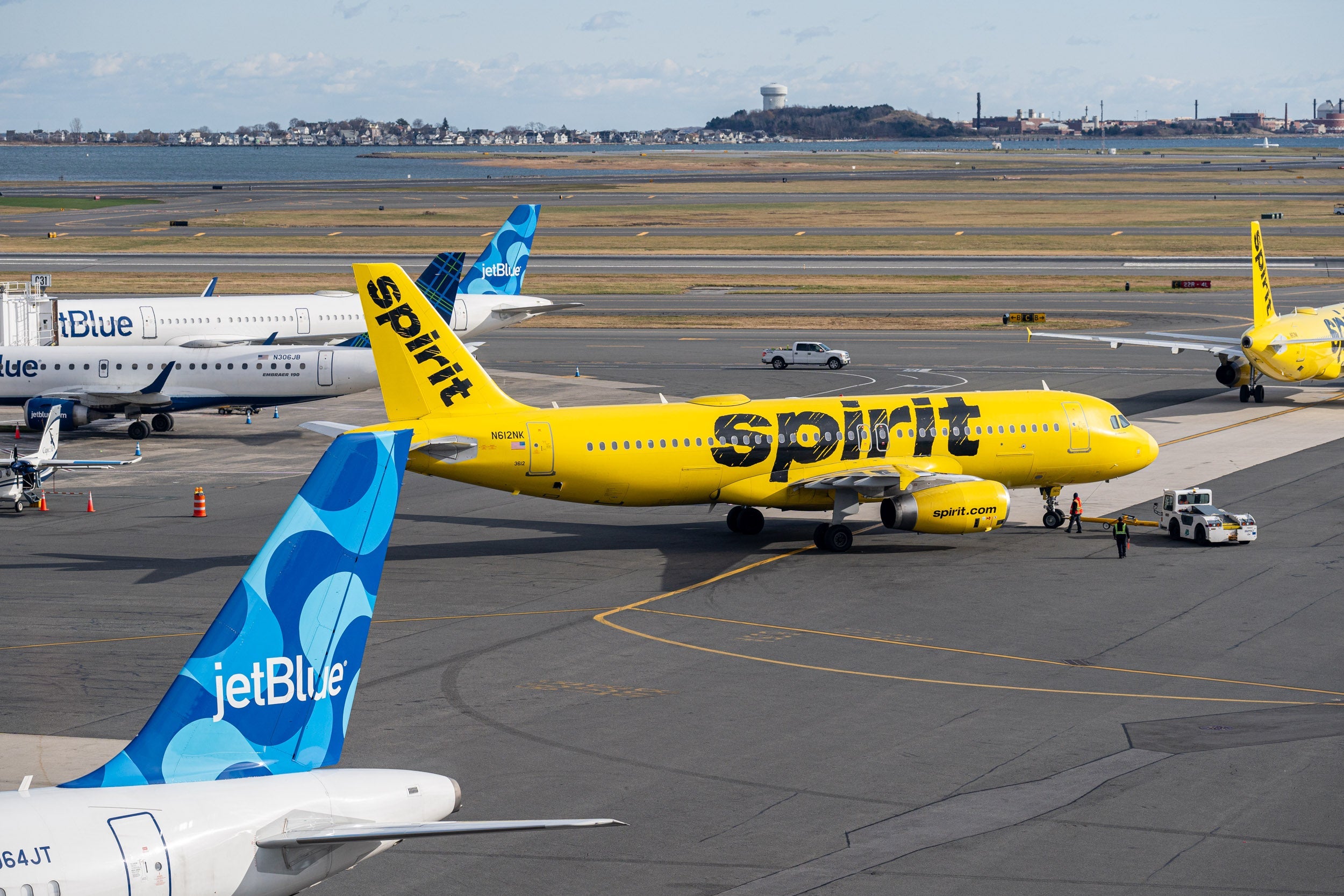
The antitrust trial between JetBlue and Spirit finished on Tuesday, with closing arguments from the Department of Justice and lawyers for the airlines marking the end of a monthlong trial that will decide the future of the two airlines — and potentially impact the broader U.S. airline market.
Closing arguments from both teams largely followed the same narratives that were laid out starting with opening arguments on Oct. 31. The DOJ has argued that the merger will hurt the most price-sensitive consumers, with Spirit's elimination from the market on some routes causing prices to rise.
Lawyers for JetBlue, on the other hand, have said that by absorbing Spirit, it could double its size and compete more effectively with the four major U.S. airlines — American Airlines, Delta Air Lines, Southwest Airlines and United Airlines — that together control about 80% of the U.S. air travel market.
The ultimate question at the heart of the trial boiled down to whether the risk of raising the lowest fares on some routes through Spirit's exit would be worth the potential to lower the average airfare across the broader market by putting more pressure on the major carriers.
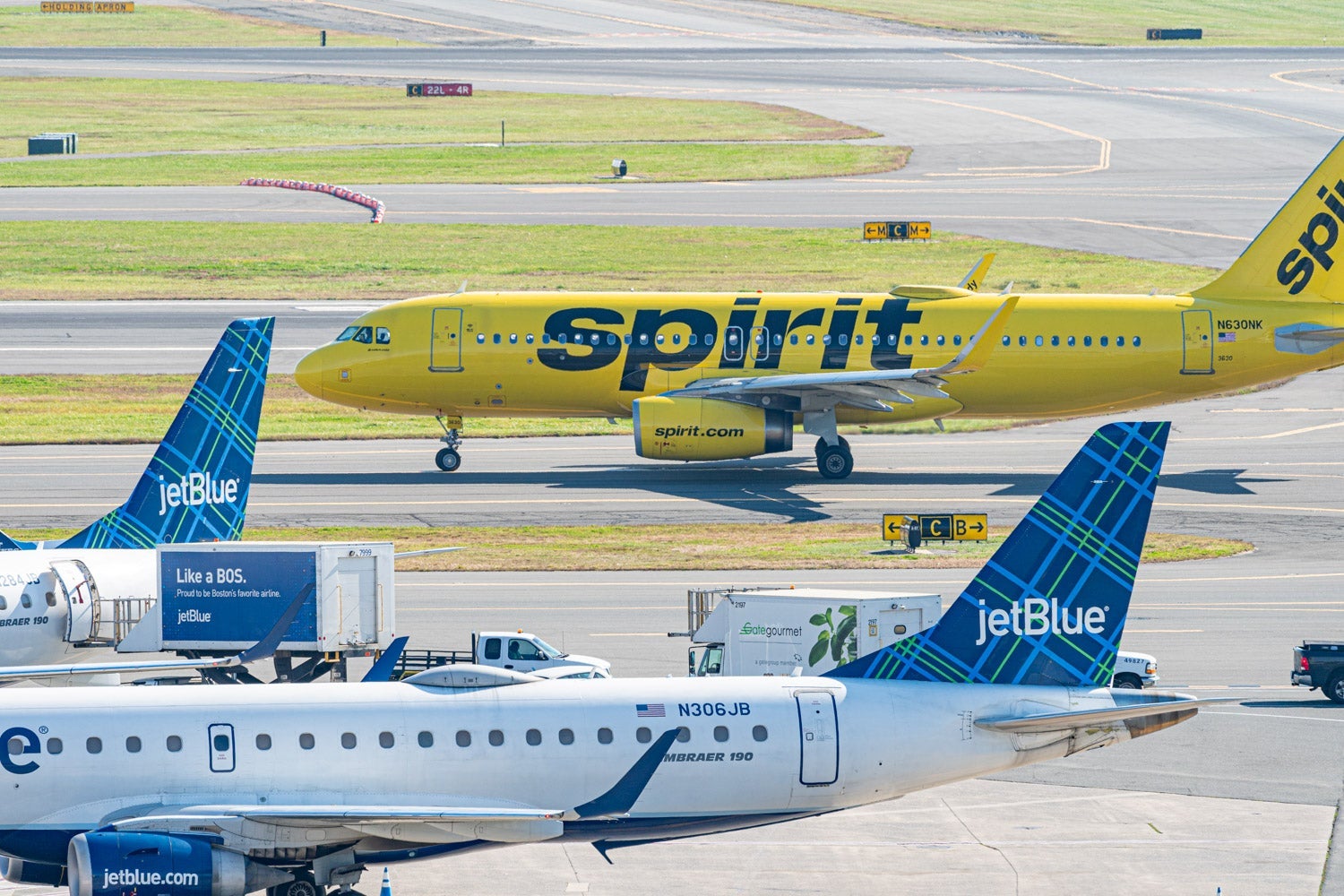
JetBlue and Spirit have argued that if Spirit were to no longer exist, other ultra-low-cost carriers — such as Frontier, Allegiant, Avelo and Breeze, among others — would fill the void. The airlines plan to divest some of Spirit's holdings in certain markets (like Boston, New York and Fort Lauderdale), giving gates and slots to other ULCCs to preserve competition.
Related: Spirit saw Northeast Alliance as biggest threat to JetBlue merger, testimony reveals
The DOJ, however, has argued that despite testimony from officials at some of those other ULCCs, it's unlikely that they would seek to cover the former Spirit routes at least in the next few years, given differences in business models. For instance, Allegiant primarily flies on routes where there is no other nonstop competition, while Spirit will compete directly with legacy airlines on popular routes like New York to Miami.
There were repeated references on Tuesday to a JetBlue analysis that found the airline commanded a 30% premium on fares compared to Spirit. The DOJ has said that this is evidence JetBlue plans to raise fares; JetBlue officials have said that it was a hypothetical analysis when planning how to value Spirit for its bid, which did not reflect real-world conditions.
Throughout the closing arguments and during the rest of the trial, Judge William G. Young asked clarifying questions of attorneys for both sides. However, he cautioned that some of his queries were hypothetical and should not be taken as a suggestion of how he would rule.

During the arguments on Tuesday, Young asked both sides whether they thought it would be appropriate to rule in a way that would conditionally allow the merger, contingent on the airlines meeting several requirements, such as further divestitures.
Ryan Shores, an attorney for JetBlue, said that if the judge saw that as a viable path forward, it would be a satisfactory solution. Justice Department lawyer Edward Duffy said that a total injunction was the only way to prevent consumer harm. When the judge asked whether that would be too restrictive and if that would block a potential future merger if the market changed, Duffy replied that any future deal would be a different case.
"We're not going to get anywhere if you win, I enjoin this merger, and Spirit goes belly up," Young said, citing testimony that claimed that the financial difficulties Spirit has faced in recent quarters amount to an existential threat to the airline.
The government sued in March to stop the merger that the two airlines agreed to in 2022 after JetBlue made an unsolicited bid, blocking a similar effort by Frontier to acquire Spirit.
While the DOJ has challenged previous mergers between airlines, many of those were settled. A series of bankruptcies and industry consolidations that led to the current dynamic with four major U.S. airlines — many of which were ultimately allowed by the DOJ — has created a playing field where smaller entrants must merge to survive and prosper, Shores said.
"The simple fact and economic reality is that scale matters in this industry," Shores said. "Where we sit today, it's very difficult for small airlines to compete."
Shores raised the pending merger of Alaska Airlines and Hawaiian Airlines, just announced on Sunday, as another example of this dynamic.
The DOJ won a similar antitrust case earlier this year against JetBlue's Northeast Alliance with American Airlines. That case involved one of the four major U.S. airlines and occurred while the Spirit merger was on the table.
Related: JetBlue once planned to buy Alaska Airlines, court testimony reveals
Attorneys for JetBlue cited some arguments made by the DOJ during that previous trial, in which the government argued that JetBlue was a unique and powerful competitor.
"In total, competition between JetBlue and the legacy airlines has saved travelers billions of dollars," one of the statements read.
"High quality of service allowed it to compete effectively against legacy airlines in ways other LCCs/ULCCs could not," read another. "For more than 2 decades, JetBlue served as legacy airlines' foil in the northeastern US."
The big question now is when a decision will be issued by Young — there is no jury for the trial. Young, who was first appointed to the federal bench by then-President Ronald Reagan in 1984, had previously signaled that a ruling was possible before the end of the year. However, it was unclear whether he still saw that timeline as viable.
The $3.8 billion acquisition would see JetBlue pay $33.50 per share of Spirit, which has drawn notable interest from investors. Spirit's stock closed Tuesday at $13.67, down for the day but up from a one-year low of $8.78 in November.
Related reading:
- When is the best time to book flights for the cheapest airfare?
- The best airline credit cards
- What exactly are airline miles, anyway?
- 6 real-life strategies you can use when your flight is canceled or delayed
- Maximize your airfare: The best credit cards for booking flights
- The best credit cards to reach elite status
TPG featured card
at American Express's secure site
Terms & restrictions apply. See rates & fees.
| 4X | Earn 4X Membership Rewards® points per dollar spent on purchases at restaurants worldwide, on up to $50,000 in purchases per calendar year, then 1X points for the rest of the year. |
| 4X | Earn 4X Membership Rewards® points per dollar spent at US supermarkets, on up to $25,000 in purchases per calendar year, then 1X points for the rest of the year. |
| 5X | Earn 5X Membership Rewards® points on prepaid hotel stays booked through AmexTravel.com or the Amex Travel App™. |
| 3X | Earn 3X Membership Rewards® points on flights booked through AmexTravel.com, the Amex Travel App™, or purchased directly from airlines. |
| 2X | Earn 2X Membership Rewards® points on prepaid car rentals booked through AmexTravel.com or the Amex Travel App™ and cruises booked and paid through AmexTravel.com. |
| 1X | Earn 1X Membership Rewards® point per dollar spent on all other eligible purchases. |
Pros
- Valuable dining and food-related credits
- Flexible rewards with airline and hotel transfer partners
- Multiple travel and purchase protections
- No foreign transaction fees
- Access to Amex Offers for additional savings (enrollment required)
Cons
- Not as useful for those living outside the U.S.
- Some may have trouble using Uber and other dining credits
- You may be eligible for as high as 100,000 Membership Rewards® Points after you spend $8,000 in eligible purchases on your new Card in your first 6 months of Card Membership. Welcome offers vary and you may not be eligible for an offer. Apply to know if you’re approved and find out your exact welcome offer amount – all with no credit score impact. If you’re approved and choose to accept the Card, your score may be impacted.
- Earn 4X Membership Rewards® points per dollar spent on purchases at restaurants worldwide, on up to $50,000 in purchases per calendar year, then 1X points for the rest of the year.
- Earn 4X Membership Rewards® points per dollar spent at US supermarkets, on up to $25,000 in purchases per calendar year, then 1X points for the rest of the year.
- Earn 5X Membership Rewards® points on prepaid hotel stays booked through AmexTravel.com or the Amex Travel App™.
- Earn 3X Membership Rewards® points on flights booked through AmexTravel.com, the Amex Travel App™, or purchased directly from airlines.
- Earn 2X Membership Rewards® points on prepaid car rentals booked through AmexTravel.com or the Amex Travel App™ and cruises booked and paid through AmexTravel.com.
- Earn 1X Membership Rewards® point per dollar spent on all other eligible purchases.
- Pay It® lets you tap in the American Express® App to quickly pay for small purchase amounts throughout the month and still earn rewards the way you usually do. Plan It® gives you the option to split up big purchases into equal monthly payments with a fixed fee. You’ll know upfront exactly how much you’ll pay.
- $120 Dining Credit: Earn up to a total of $10 in statement credits monthly when you pay with the Gold Card at Grubhub (including Seamless), Buffalo Wild Wings, Five Guys, The Cheesecake Factory, and Wonder. This can be an annual savings of up to $120. Enrollment required.
- $100 Resy Credit: Get up to $100 in statement credits each calendar year at over 10,000 qualifying U.S. Resy restaurants after you pay for eligible purchases with the American Express® Gold Card. That’s up to $50 in statement credits semi-annually. Enrollment required.
- $84 Dunkin' Credit: Earn up to $7 in monthly statement credits after you pay with the American Express® Gold Card at U.S. Dunkin’ locations. Enrollment required.
- $120 Uber Cash on Gold: Enjoy up to $120 in Uber Cash annually with your Gold Card. Just add your Card to your Uber account and you'll get $10 in Uber Cash each month to use on orders and rides in the U.S. when you select an Amex Card for your transaction.
- Enjoy complimentary Hertz Five Star® Status benefits like skipping the counter at select locations, adding an additional driver at no additional cost*, and vehicle upgrades**. Benefit enrollment and Hertz Gold+ registration are required. *Additional drivers must meet standard rental qualifications and must be a spouse or domestic partner to qualify as complimentary. Other additional drivers subject to fees. **Benefits are subject to availability and vary by location. Additional Hertz program Terms and Conditions including age restrictions apply.
- Book two nights or more with The Hotel Collection through AmexTravel.com or the Amex Travel App™ and receive a $100* credit towards eligible charges at over 1,400 upscale hotels worldwide. *Eligible charges vary by property.
- Book your travel through the Amex Travel App™ with added peace of mind – backed by American Express® service and support. Only for American Express® Card Members.
- Whenever you need us, we're here. Our Member Services team will ensure you are taken care of. From lost Card replacement to statement questions, we are available to help 24/7.
- No Foreign Transaction Fees.
- Annual Fee is $325.
- Terms Apply.