Spirit saw Northeast Alliance as biggest threat to JetBlue merger, testimony reveals

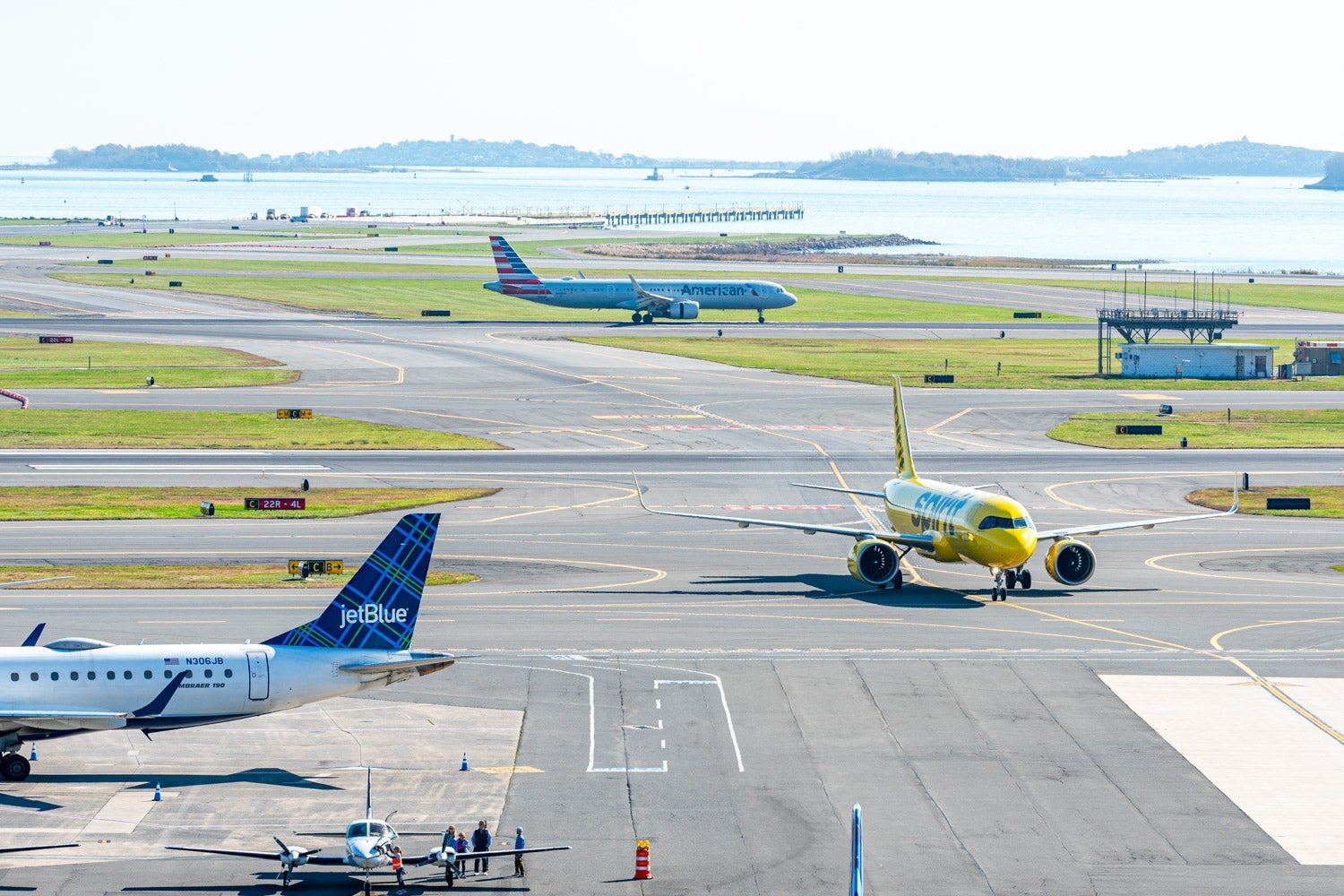
New details are coming to light surrounding Spirit Airlines' initial resistance to a merger offer from JetBlue Airways — and what led the ultra-low-cost carrier to change its mind and sign on with the New York-based JetBlue.
During an antitrust trial that began this week in Federal District Court in Boston, Spirit CEO Ted Christie testified about how and why the merger agreement came to pass.
Although Spirit had initially agreed to merge with ULCC competitor Frontier Airways, JetBlue made a compelling and unsolicited offer involving significantly more cash.
However, Spirit's board wasn't interested.
The board saw JetBlue's Northeast Alliance partnership with American Airlines as a major regulatory risk, one likely to kill any merger agreement that it might reach with JetBlue.
Even so, the board recognized that with some modifications, JetBlue's offer could trump Frontier's — a "superior proposal." This meant that under the terms of the existing agreement with Frontier, the board could begin engaging with JetBlue.
Spirit's board demanded a "come hell or high water clause," as Christie described it, before agreeing to consider JetBlue's offer.
Such a clause, according to Christie, would entail JetBlue agreeing to do virtually anything in its power to achieve regulatory approval for the Spirit deal, including abandoning the NEA if it appeared that both the alliance with American and the merger with Spirit could not both be approved by regulators.
JetBlue did not initially agree, prompting Spirit to urge shareholders to approve Frontier and reject JetBlue.

Although there were several rounds of counter-offers, two events convinced Spirit's board to move forward with JetBlue.
First, a shareholder vote appeared to be going against the Frontier merger. The board halted the vote before it was completed, anticipating the negative result.
Second, JetBlue submitted a final offer that included "an express obligation to litigate and to divest assets of JetBlue and Spirit up to a material adverse effect on the combined JetBlue-Spirit, with a limited carveout to this divestiture option for actions that would be reasonably likely to materially and adversely affect the anticipated benefits under JetBlue's Northeast Alliance."
In other words, JetBlue would commit to doing nearly anything necessary to meet regulatory thresholds for the merger, up to the point of doing anything that would actively hurt the combined airline.
Spirit's board took this to mean that JetBlue had "significant latitude to offer very significant divestitures" and accepted.
JetBlue abandoned the NEA after a judge ruled earlier this year that it was anti-competitive, following a similar trial last fall. While American Airlines chose to appeal the mechanics of the ruling, JetBlue initiated the alliance's termination, saying at the time that it would focus its attention on the Spirit merger.
JetBlue additionally included a $470 million reverse termination fee in the event of the merger not going through. It agreed to surrender Spirit's slots and gates in New York, Boston and Fort Lauderdale.
Spirit was interested in merger opportunities in 2016
Although the competing merger offers happened in early 2022, Christie testified that merging with another airline has long been considered Spirit's best opportunity to grow large enough to compete with the legacy airlines.
Between November 2016 and August 2018, Spirit and Frontier had periodically discussed the possibility of merging to become the fifth-largest airline in the U.S. as a super-sized ULCC, Christie testified. The two airlines saw the potential of forming a potent challenger to the four major domestic carriers — American Airlines, Delta Air Lines, United Airlines and Southwest Airlines — that control roughly 80% of the U.S. market.
The pre-pandemic talks between Spirit and Frontier eventually broke down over price disagreements, Christie testified, but Spirit was nevertheless interested in merging to be more competitive. Christie's team and Spirit's board of directors looked into several other airlines at the time — such as Allegiant, Sun Country Airways and several carriers in Latin America, including Viva Colombia — in addition to Jetblue.
The pandemic put a pause on merger exploration, Christie said. Given financial headwinds and supply chain constraints, it made a potential merger appealing as an existential measure as much as a competitive one.
The trial is expected to continue through much of November, so be sure to check back for the latest from TPG.
Related reading:
- When is the best time to book flights for the cheapest airfare?
- The best airline credit cards
- What exactly are airline miles, anyway?
- 6 real-life strategies you can use when your flight is canceled or delayed
- Maximize your airfare: The best credit cards for booking flights
- The best credit cards to reach elite status
- What are points and miles worth? TPG's monthly valuations
TPG featured card
at American Express's secure site
Terms & restrictions apply. See rates & fees.
| 4X | Earn 4X Membership Rewards® points per dollar spent on purchases at restaurants worldwide, on up to $50,000 in purchases per calendar year, then 1X points for the rest of the year. |
| 4X | Earn 4X Membership Rewards® points per dollar spent at US supermarkets, on up to $25,000 in purchases per calendar year, then 1X points for the rest of the year. |
| 5X | Earn 5X Membership Rewards® points on prepaid hotel stays booked through AmexTravel.com or the Amex Travel App™. |
| 3X | Earn 3X Membership Rewards® points on flights booked through AmexTravel.com, the Amex Travel App™, or purchased directly from airlines. |
| 2X | Earn 2X Membership Rewards® points on prepaid car rentals booked through AmexTravel.com or the Amex Travel App™ and cruises booked and paid through AmexTravel.com. |
| 1X | Earn 1X Membership Rewards® point per dollar spent on all other eligible purchases. |
Pros
- Valuable dining and food-related credits
- Flexible rewards with airline and hotel transfer partners
- Multiple travel and purchase protections
- No foreign transaction fees
- Access to Amex Offers for additional savings (enrollment required)
Cons
- Not as useful for those living outside the U.S.
- Some may have trouble using Uber and other dining credits
- You may be eligible for as high as 100,000 Membership Rewards® Points after you spend $8,000 in eligible purchases on your new Card in your first 6 months of Card Membership. Welcome offers vary and you may not be eligible for an offer. Apply to know if you’re approved and find out your exact welcome offer amount – all with no credit score impact. If you’re approved and choose to accept the Card, your score may be impacted.
- Earn 4X Membership Rewards® points per dollar spent on purchases at restaurants worldwide, on up to $50,000 in purchases per calendar year, then 1X points for the rest of the year.
- Earn 4X Membership Rewards® points per dollar spent at US supermarkets, on up to $25,000 in purchases per calendar year, then 1X points for the rest of the year.
- Earn 5X Membership Rewards® points on prepaid hotel stays booked through AmexTravel.com or the Amex Travel App™.
- Earn 3X Membership Rewards® points on flights booked through AmexTravel.com, the Amex Travel App™, or purchased directly from airlines.
- Earn 2X Membership Rewards® points on prepaid car rentals booked through AmexTravel.com or the Amex Travel App™ and cruises booked and paid through AmexTravel.com.
- Earn 1X Membership Rewards® point per dollar spent on all other eligible purchases.
- Pay It® lets you tap in the American Express® App to quickly pay for small purchase amounts throughout the month and still earn rewards the way you usually do. Plan It® gives you the option to split up big purchases into equal monthly payments with a fixed fee. You’ll know upfront exactly how much you’ll pay.
- $120 Dining Credit: Earn up to a total of $10 in statement credits monthly when you pay with the Gold Card at Grubhub (including Seamless), Buffalo Wild Wings, Five Guys, The Cheesecake Factory, and Wonder. This can be an annual savings of up to $120. Enrollment required.
- $100 Resy Credit: Get up to $100 in statement credits each calendar year at over 10,000 qualifying U.S. Resy restaurants after you pay for eligible purchases with the American Express® Gold Card. That’s up to $50 in statement credits semi-annually. Enrollment required.
- $84 Dunkin' Credit: Earn up to $7 in monthly statement credits after you pay with the American Express® Gold Card at U.S. Dunkin’ locations. Enrollment required.
- $120 Uber Cash on Gold: Enjoy up to $120 in Uber Cash annually with your Gold Card. Just add your Card to your Uber account and you'll get $10 in Uber Cash each month to use on orders and rides in the U.S. when you select an Amex Card for your transaction.
- Enjoy complimentary Hertz Five Star® Status benefits like skipping the counter at select locations, adding an additional driver at no additional cost*, and vehicle upgrades**. Benefit enrollment and Hertz Gold+ registration are required. *Additional drivers must meet standard rental qualifications and must be a spouse or domestic partner to qualify as complimentary. Other additional drivers subject to fees. **Benefits are subject to availability and vary by location. Additional Hertz program Terms and Conditions including age restrictions apply.
- Book two nights or more with The Hotel Collection through AmexTravel.com or the Amex Travel App™ and receive a $100* credit towards eligible charges at over 1,400 upscale hotels worldwide. *Eligible charges vary by property.
- Book your travel through the Amex Travel App™ with added peace of mind – backed by American Express® service and support. Only for American Express® Card Members.
- Whenever you need us, we're here. Our Member Services team will ensure you are taken care of. From lost Card replacement to statement questions, we are available to help 24/7.
- No Foreign Transaction Fees.
- Annual Fee is $325.
- Terms Apply.