How much are the Boeing 737 MAX cancellations impacting travelers? Not much.

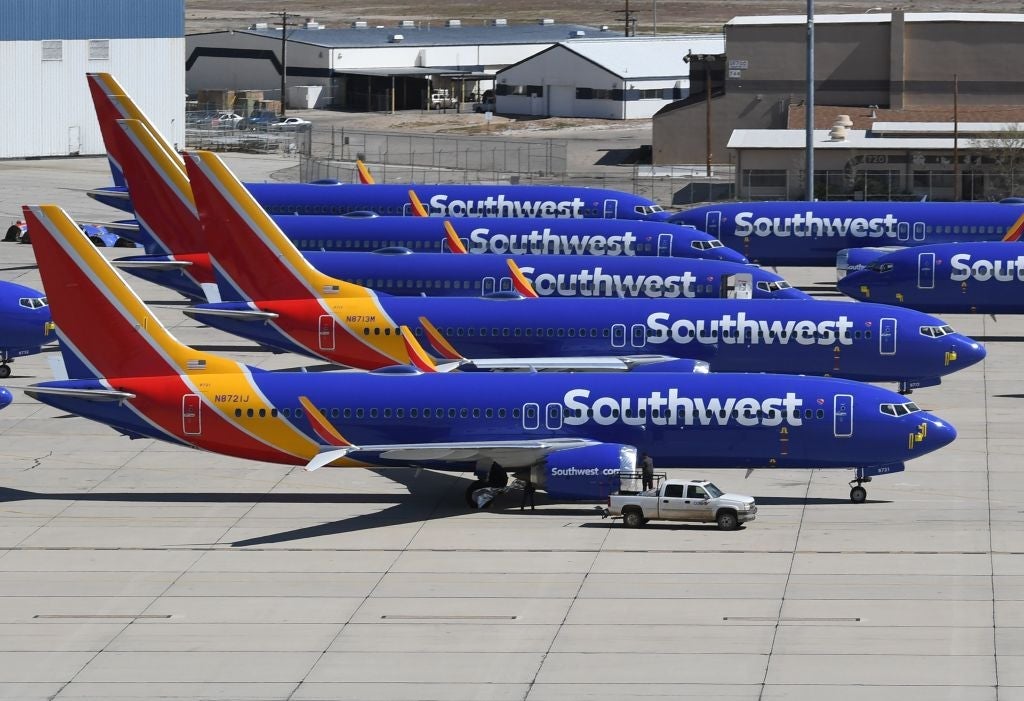
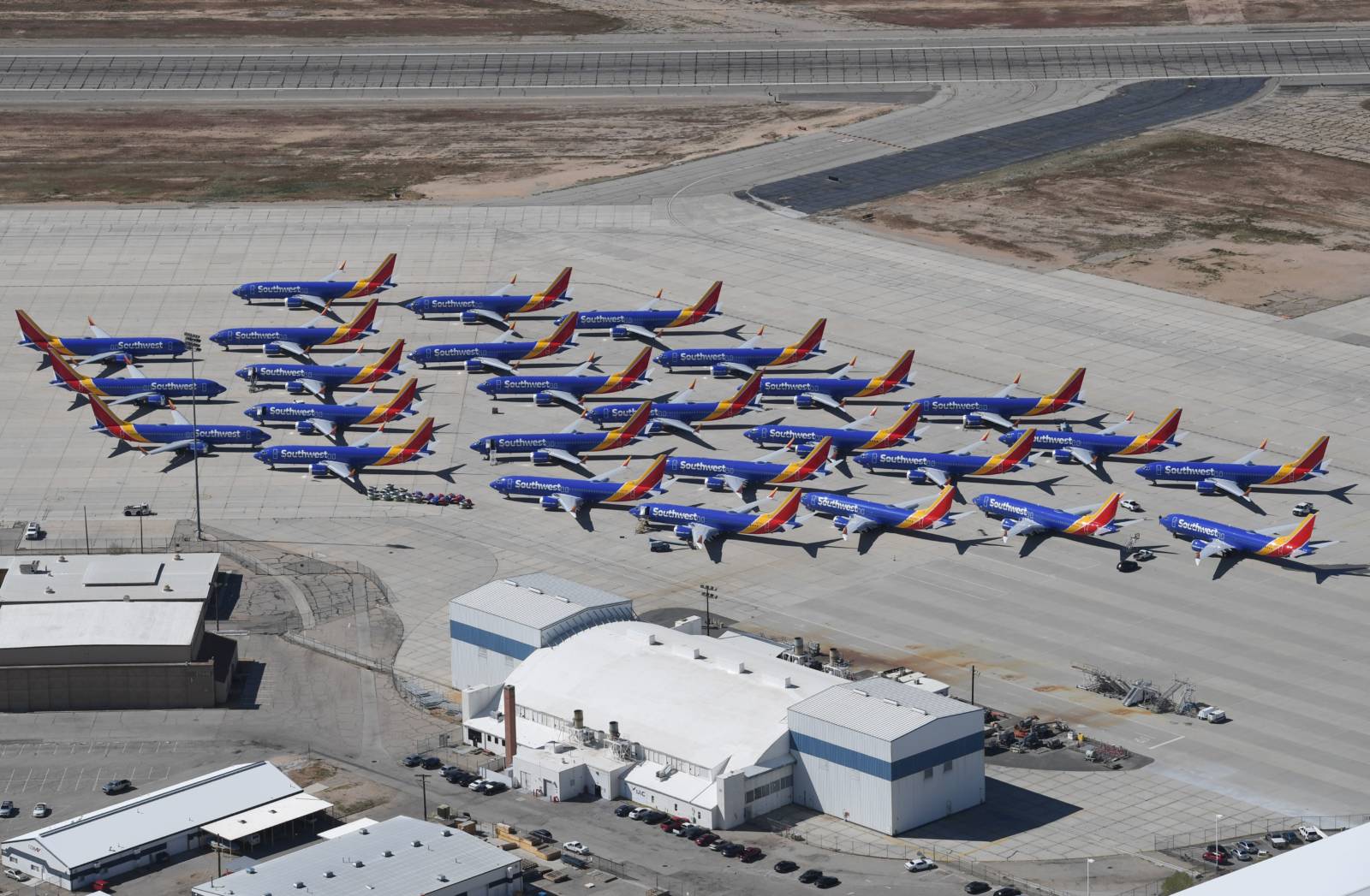
U.S. airlines have removed the Boeing 737 MAX from their schedules through December at the earliest, detailing daily flight cancellations in the hundreds ahead of the busy Christmas and New Year's holiday travel season.
American Airlines has removed its 24 737 MAX 8s through Dec. 3, resulting in roughly 140 daily flight cancellations during that time. Southwest Airlines has removed its 34 737 MAX 8s through Jan. 5, with more than 200 daily cancellations. And United Airlines has removed its 14 737 MAX 9s through Dec. 19, creating what it says are up 96 daily cancellations during the period.
But how much do these cancellations really impact passengers? Not as much as you might think.

Fares will likely creep up the longer that the MAX stays out of service, so flyers will notice that. But, from an operations standpoint, the impact has been muted.
Yes, some markets have been exited or suspended due to the MAX. American has temporarily dropped service between Dallas/Fort Worth (DFW) and Oakland (OAK), Southwest will exit Newark and has suspended at least 13 routes, and United dropped flights between Chicago O'Hare (ORD) and Leon/Guanajuato (BJX) in Mexico.
However, all of these routes — as well as other frequency reductions — were pulled from schedules more than 90 days before departure, or before the vast majority of people normally even purchase their tickets. Generally, less than one fifth of seats are sold more than three months prior to a flight, according to an estimate from one big airline.
Related: Southwest Airlines is ending all flights from Newark Liberty due to the MAX
"It's a minimal impact from the passenger standpoint," Raymond James airline analyst Savanthi Syth told TPG. "It's the 'lack of' that is much more difficult to notice."
Most passengers probably do not even realize they were affected by a MAX cancellation. As with any routine schedule change, airlines are only notifying passengers —for example — that a flight months away may now be at 2 p.m. instead of noon, usually without further explanation.

The flight cancellation numbers provided by airlines are, to a degree, only theoretical. The numbers are what schedule planners forecast each carrier could have flown with the MAX at this point if the planes were still in the air.
Or, as Cowen analyst Helane Becker put it, the MAX flights were only "tentatively in the schedule" and are being removed before the impact to customers and crews is significant.
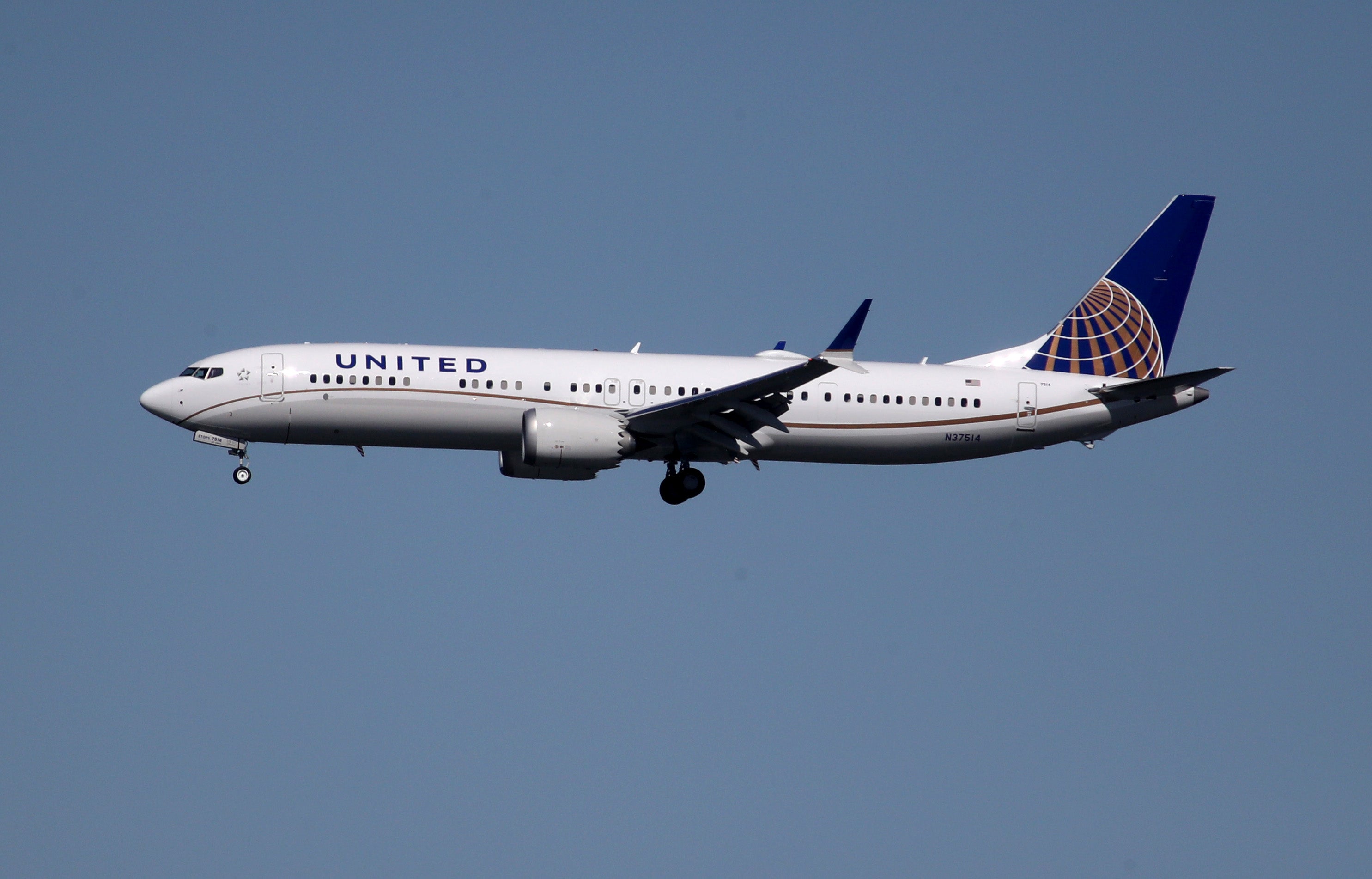
American, Southwest and United have already dialed back their annual growth plans for 2019 to account for the grounding. American has halved its growth target, to up 1.5% year-over-year, Southwest has cut nearly eight percentage points from its expansion target and will likely shrink roughly 3% year-over-year, and United has slimmed its expectations by up to two points to a 3-4% year-over-year capacity increase.
This guidance is already baked into schedules through December, if not the end of the year. Passengers are likely to face few unexpected disruptions.
But while passengers are no longer stuck at airports due to the grounding, strong demand and full flights will mean high fares and few available alternatives in the event of a non-MAX related trip disruption.
"I think pricing is going to stay strong through the holidays at least," said Becker.
Stronger pricing is good for airlines — though for passengers, it means they're likely to pay more to fly for as long as the crimp in demand remains.
But despite stronger pricing power, airlines must also contend with the cost of storing parked MAX aircraft, as well as continuing crew training and doing preventative maintenance on their fleets.
Return to service bump?
The elephant in the room with the MAX is how American, Southwest and United will reintroduce the aircraft once it is re-certified. Analysts and investors have already raised concerns over this, fearing a sudden jump in capacity could push fares down and take a bite out of profit margins.
"Our main priority will be to bring the MAX back into service in a very controlled and organized way, and ramp up in a way that we think is prudent," said Tammy Romo, chief financial officer of Southwest, at a Cowen investor conference on Wednesday.
Romo was responding to questions on the concerns of a capacity bump when the Boeing narrow-bodies return to the skies. Southwest executives have previously said that they anticipate it taking roughly two months to get its 737 MAX 8s flying again once the U.S. Federal Aviation Administration re-certifies the jet.
American will also take a measured approach to returning the MAX to service. Robert Isom, president of the Fort Worth, Texas-based carrier, said at the same conference that the airline will be "metering" its 24 737 MAX 8s back into service once the FAA gives the go-ahead.
Isom said the airline has yet to begin planning for the introduction of its scheduled MAX deliveries. When the grounding occurred, American was scheduled to take another six 737 MAX 8s by year-end and 10 more in 2020.
Analysts are still unsure about the return-to-service plans. Unknown variables include what carriers will do with the aircraft they have held onto to offset the loss of the MAX. For example, Southwest has postponed the retirement of seven 737-700s, and American has paused its "Project Oasis" cabin retrofit program to its 737-800s.
"It will be messy," said Syth, on the MAX's return to U.S. skies.
Featured by Mark Ralston/Getty Images.
Related: Snapshot: A Look at American Airlines by the Numbers
Related: Snapshot: A Look at United Airlines by the Numbers
Related: Snapshot: A Look at Southwest Airlines by the Numbers
TPG featured card
at American Express's secure site
Terms & restrictions apply. See rates & fees.
| 4X | Earn 4X Membership Rewards® points per dollar spent on purchases at restaurants worldwide, on up to $50,000 in purchases per calendar year, then 1X points for the rest of the year. |
| 4X | Earn 4X Membership Rewards® points per dollar spent at US supermarkets, on up to $25,000 in purchases per calendar year, then 1X points for the rest of the year. |
| 5X | Earn 5X Membership Rewards® points on prepaid hotel stays booked through AmexTravel.com or the Amex Travel App™. |
| 3X | Earn 3X Membership Rewards® points on flights booked through AmexTravel.com, the Amex Travel App™, or purchased directly from airlines. |
| 2X | Earn 2X Membership Rewards® points on prepaid car rentals booked through AmexTravel.com or the Amex Travel App™ and cruises booked and paid through AmexTravel.com. |
| 1X | Earn 1X Membership Rewards® point per dollar spent on all other eligible purchases. |
Pros
- Valuable dining and food-related credits
- Flexible rewards with airline and hotel transfer partners
- Multiple travel and purchase protections
- No foreign transaction fees
- Access to Amex Offers for additional savings (enrollment required)
Cons
- Not as useful for those living outside the U.S.
- Some may have trouble using Uber and other dining credits
- You may be eligible for as high as 100,000 Membership Rewards® Points after you spend $8,000 in eligible purchases on your new Card in your first 6 months of Card Membership. Welcome offers vary and you may not be eligible for an offer. Apply to know if you’re approved and find out your exact welcome offer amount – all with no credit score impact. If you’re approved and choose to accept the Card, your score may be impacted.
- Earn 4X Membership Rewards® points per dollar spent on purchases at restaurants worldwide, on up to $50,000 in purchases per calendar year, then 1X points for the rest of the year.
- Earn 4X Membership Rewards® points per dollar spent at US supermarkets, on up to $25,000 in purchases per calendar year, then 1X points for the rest of the year.
- Earn 5X Membership Rewards® points on prepaid hotel stays booked through AmexTravel.com or the Amex Travel App™.
- Earn 3X Membership Rewards® points on flights booked through AmexTravel.com, the Amex Travel App™, or purchased directly from airlines.
- Earn 2X Membership Rewards® points on prepaid car rentals booked through AmexTravel.com or the Amex Travel App™ and cruises booked and paid through AmexTravel.com.
- Earn 1X Membership Rewards® point per dollar spent on all other eligible purchases.
- Pay It® lets you tap in the American Express® App to quickly pay for small purchase amounts throughout the month and still earn rewards the way you usually do. Plan It® gives you the option to split up big purchases into equal monthly payments with a fixed fee. You’ll know upfront exactly how much you’ll pay.
- $120 Dining Credit: Earn up to a total of $10 in statement credits monthly when you pay with the Gold Card at Grubhub (including Seamless), Buffalo Wild Wings, Five Guys, The Cheesecake Factory, and Wonder. This can be an annual savings of up to $120. Enrollment required.
- $100 Resy Credit: Get up to $100 in statement credits each calendar year at over 10,000 qualifying U.S. Resy restaurants after you pay for eligible purchases with the American Express® Gold Card. That’s up to $50 in statement credits semi-annually. Enrollment required.
- $84 Dunkin' Credit: Earn up to $7 in monthly statement credits after you pay with the American Express® Gold Card at U.S. Dunkin’ locations. Enrollment required.
- $120 Uber Cash on Gold: Enjoy up to $120 in Uber Cash annually with your Gold Card. Just add your Card to your Uber account and you'll get $10 in Uber Cash each month to use on orders and rides in the U.S. when you select an Amex Card for your transaction.
- Enjoy complimentary Hertz Five Star® Status benefits like skipping the counter at select locations, adding an additional driver at no additional cost*, and vehicle upgrades**. Benefit enrollment and Hertz Gold+ registration are required. *Additional drivers must meet standard rental qualifications and must be a spouse or domestic partner to qualify as complimentary. Other additional drivers subject to fees. **Benefits are subject to availability and vary by location. Additional Hertz program Terms and Conditions including age restrictions apply.
- Book two nights or more with The Hotel Collection through AmexTravel.com or the Amex Travel App™ and receive a $100* credit towards eligible charges at over 1,400 upscale hotels worldwide. *Eligible charges vary by property.
- Book your travel through the Amex Travel App™ with added peace of mind – backed by American Express® service and support. Only for American Express® Card Members.
- Whenever you need us, we're here. Our Member Services team will ensure you are taken care of. From lost Card replacement to statement questions, we are available to help 24/7.
- No Foreign Transaction Fees.
- Annual Fee is $325.
- Terms Apply.