High cases and lockdowns in Europe could foreshadow grim winter travel season


Europe is once again at the center of the COVID-19 pandemic.
It shouldn't be this way.
Nearly 60% of Europeans are fully vaccinated, according to data from The New York Times. Still, we're seeing a worrying trend of rising positive cases across the continent. According to the World Health Organization, almost 2 million cases of COVID-19 and 27,000 deaths were reported in Europe in early November, the most in a single week.
The WHO sounded a dire warning earlier this month that Europe was back at the pandemic's epicenter, despite the widespread availability of COVID-19 vaccines and loosening travel restrictions. It's important to note that the virus is not only spreading in Eastern European countries with low vaccination rates but also in Western Europe, one of the most vaccinated regions on the planet.
Unfortunately, the high cases come just as we're approaching the busy winter holiday travel season. While things in Europe aren't looking great right now, could it be a sign of another wave to come? Here's what you need to know.
Parts of Europe return to lockdown and reinstate restrictions

We're getting off to a bad start as winter approaches.
As we reported earlier this week, several countries have already enforced new restrictions due to the spread of the virus.
Austria announced a nationwide lockdown for anyone unvaccinated and older than 12. Germany says it's headed for a "really terrible Christmas" if it can't get its COVID-19 cases under control, according to a director at the Robert Koch Institute.
But the strictest restriction on movement and travel may be from the Netherlands. That country is on a partial lockdown, which is expected to be in place for the next three weeks — just before Christmas. As a result, bars and restaurants in cities like Amsterdam will have to close by 8 p.m. each day. If you were planning to travel there for the holidays, this new restriction may affect your visit.

There are concerns that Europe could return to peak pandemic restrictions for travelers. This uptick in cases and new round of rules come so close to the busy travel season that it could be an indicator of a grim winter ahead, especially for those with Europe travel plans.
Could Europe's COVID-19 cases affect holiday travel?

It seemed like travel was finally starting to get back to normal. Much of Europe reopened for American travelers last summer, and vaccinated foreigners, including Europeans, can finally travel to the U.S.
But the threat of COVID-19 still looms.
It's unclear exactly what impact, if any, this COVID-19 wave we see in Europe will have on travel. While we haven't seen any indication that new restrictions would apply to Americans, we also haven't seen a pullback yet in flight demand as airlines work to restore the ever-important travel corridor between the U.S. and Europe that was all but shut due to the pandemic.
But if we've learned anything during the pandemic, it's to expect the unexpected.
Some European countries have hinted that restrictions could return for unvaccinated travelers and potentially others. England has been perhaps the most vocal about the potential impact this surge could have on travel. A member of Parliament, Oliver Dowden, said the country wouldn't rule out COVID-19 testing and quarantine for flights coming from Europe. The government reported more than 300,000 positive cases in the past seven days, a 15% increase from the previous week.
"We haven't ruled it out and, of course, if the situation changes dramatically, we would have to review that again," Dowden said.
If you're looking for any indication of whether or not to worry, pay attention to what the airlines are saying. In an interview with CNBC earlier this month, Emirates Airline CEO Tim Clark noted his concern about the situation in Europe but also pointed out that the airline had already started to turn a profit.
"I see a fourth wave coming through, and we have all sorts of concerns about what may happen," Clark said on Nov. 14. Clark added that his airline was prepared to get through it, saying, "we're very good at working around problems, and we'll just do what we have to do."
It's important to note, though, that airline executives have said throughout the pandemic that recovery patterns remain at the risk of severe new outbreaks that are hard to predict.
So far, it appears your travel plans are safe — at least, for now. But as this situation evolves, travelers should pay close attention to case patterns in Europe and be prepared to act if things get worse.
How to safeguard your Europe trip
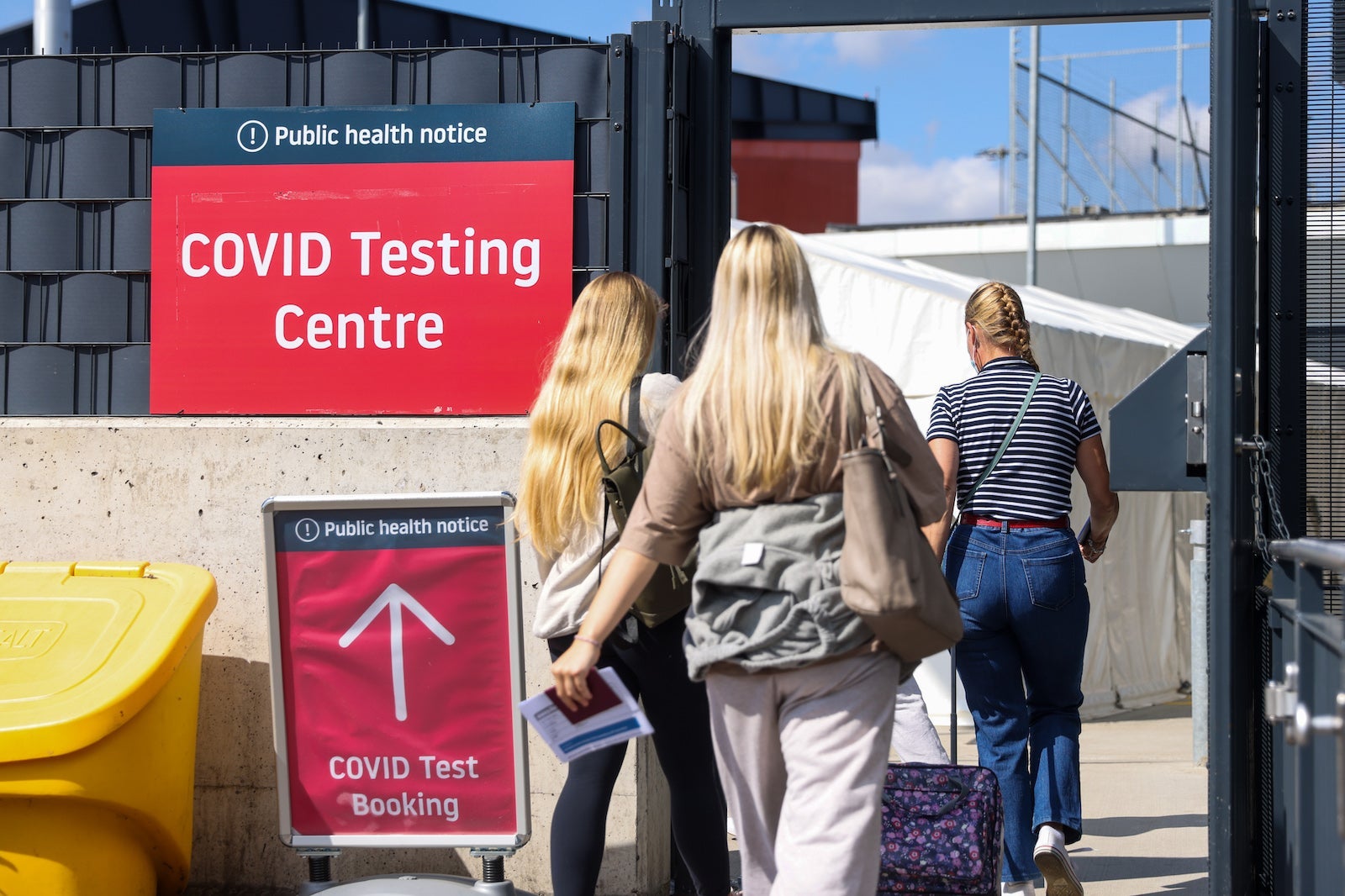
If you do still plan to travel to Europe, there are several ways to safeguard your trip just in case things in the region deteriorate further.
First, make sure you purchase the right kind of travel insurance. You'll need to find an insurance plan that specifically covers COVID-19-related disruptions — not all plans do. This holds true whether your plan is included with your credit card or was purchased from a third-party provider. Make sure to carefully review the policy details, and use a marketplace such as Squaremouth to compare plans.
Testing and vaccination requirements can change at a moment's notice — even as you're sitting on a plane jetting off to Europe for a vacation. It's essential to keep up with local COVID-19 trends at your destination, which you can do by monitoring U.S. Embassy updates or local media.
Don't forget to check your airline and hotel's change and cancellation policies, too, to ensure your travel bookings are eligible for refunds.
Bottom line
It's too early to tell if the surge in COVID-19 cases throughout Europe will disrupt winter travel this year, but right now, things aren't looking great.
Some countries are already implementing new restrictions on the ground, which could eventually affect travel policies if infection rates don't improve soon. Right now, if you are planning to visit Europe, you'll want to keep a close eye on the COVID-19 situation there.
TPG featured card

at American Express's secure site
Terms & restrictions apply. See rates & fees.
| 4X | Earn 4X Membership Rewards® points per dollar spent on purchases at restaurants worldwide, on up to $50,000 in purchases per calendar year, then 1X points for the rest of the year. |
| 4X | Earn 4X Membership Rewards® points per dollar spent at US supermarkets, on up to $25,000 in purchases per calendar year, then 1X points for the rest of the year. |
| 5X | Earn 5X Membership Rewards® points on prepaid hotel stays booked through AmexTravel.com or the Amex Travel App™. |
| 3X | Earn 3X Membership Rewards® points on flights booked through AmexTravel.com, the Amex Travel App™, or purchased directly from airlines. |
| 2X | Earn 2X Membership Rewards® points on prepaid car rentals booked through AmexTravel.com or the Amex Travel App™ and cruises booked and paid through AmexTravel.com. |
| 1X | Earn 1X Membership Rewards® point per dollar spent on all other eligible purchases. |
Pros
- Valuable dining and food-related credits
- Flexible rewards with airline and hotel transfer partners
- Multiple travel and purchase protections
- No foreign transaction fees
- Access to Amex Offers for additional savings (enrollment required)
Cons
- Not as useful for those living outside the U.S.
- Some may have trouble using Uber and other dining credits
- You may be eligible for as high as 100,000 Membership Rewards® Points after you spend $8,000 in eligible purchases on your new Card in your first 6 months of Card Membership. Welcome offers vary and you may not be eligible for an offer. Apply to know if you’re approved and find out your exact welcome offer amount – all with no credit score impact. If you’re approved and choose to accept the Card, your score may be impacted.
- Earn 4X Membership Rewards® points per dollar spent on purchases at restaurants worldwide, on up to $50,000 in purchases per calendar year, then 1X points for the rest of the year.
- Earn 4X Membership Rewards® points per dollar spent at US supermarkets, on up to $25,000 in purchases per calendar year, then 1X points for the rest of the year.
- Earn 5X Membership Rewards® points on prepaid hotel stays booked through AmexTravel.com or the Amex Travel App™.
- Earn 3X Membership Rewards® points on flights booked through AmexTravel.com, the Amex Travel App™, or purchased directly from airlines.
- Earn 2X Membership Rewards® points on prepaid car rentals booked through AmexTravel.com or the Amex Travel App™ and cruises booked and paid through AmexTravel.com.
- Earn 1X Membership Rewards® point per dollar spent on all other eligible purchases.
- Pay It® lets you tap in the American Express® App to quickly pay for small purchase amounts throughout the month and still earn rewards the way you usually do. Plan It® gives you the option to split up big purchases into equal monthly payments with a fixed fee. You’ll know upfront exactly how much you’ll pay.
- $120 Dining Credit: Earn up to a total of $10 in statement credits monthly when you pay with the Gold Card at Grubhub (including Seamless), Buffalo Wild Wings, Five Guys, The Cheesecake Factory, and Wonder. This can be an annual savings of up to $120. Enrollment required.
- $100 Resy Credit: Get up to $100 in statement credits each calendar year at over 10,000 qualifying U.S. Resy restaurants after you pay for eligible purchases with the American Express® Gold Card. That’s up to $50 in statement credits semi-annually. Enrollment required.
- $84 Dunkin' Credit: Earn up to $7 in monthly statement credits after you pay with the American Express® Gold Card at U.S. Dunkin’ locations. Enrollment required.
- $120 Uber Cash on Gold: Enjoy up to $120 in Uber Cash annually with your Gold Card. Just add your Card to your Uber account and you'll get $10 in Uber Cash each month to use on orders and rides in the U.S. when you select an Amex Card for your transaction.
- Enjoy complimentary Hertz Five Star® Status benefits like skipping the counter at select locations, adding an additional driver at no additional cost*, and vehicle upgrades**. Benefit enrollment and Hertz Gold+ registration are required. *Additional drivers must meet standard rental qualifications and must be a spouse or domestic partner to qualify as complimentary. Other additional drivers subject to fees. **Benefits are subject to availability and vary by location. Additional Hertz program Terms and Conditions including age restrictions apply.
- Book two nights or more with The Hotel Collection through AmexTravel.com or the Amex Travel App™ and receive a $100* credit towards eligible charges at over 1,400 upscale hotels worldwide. *Eligible charges vary by property.
- Book your travel through the Amex Travel App™ with added peace of mind – backed by American Express® service and support. Only for American Express® Card Members.
- Whenever you need us, we're here. Our Member Services team will ensure you are taken care of. From lost Card replacement to statement questions, we are available to help 24/7.
- No Foreign Transaction Fees.
- Annual Fee is $325.
- Terms Apply.