Bolts were missing on the Boeing 737 MAX in last month's Alaska Airlines accident, NTSB finds

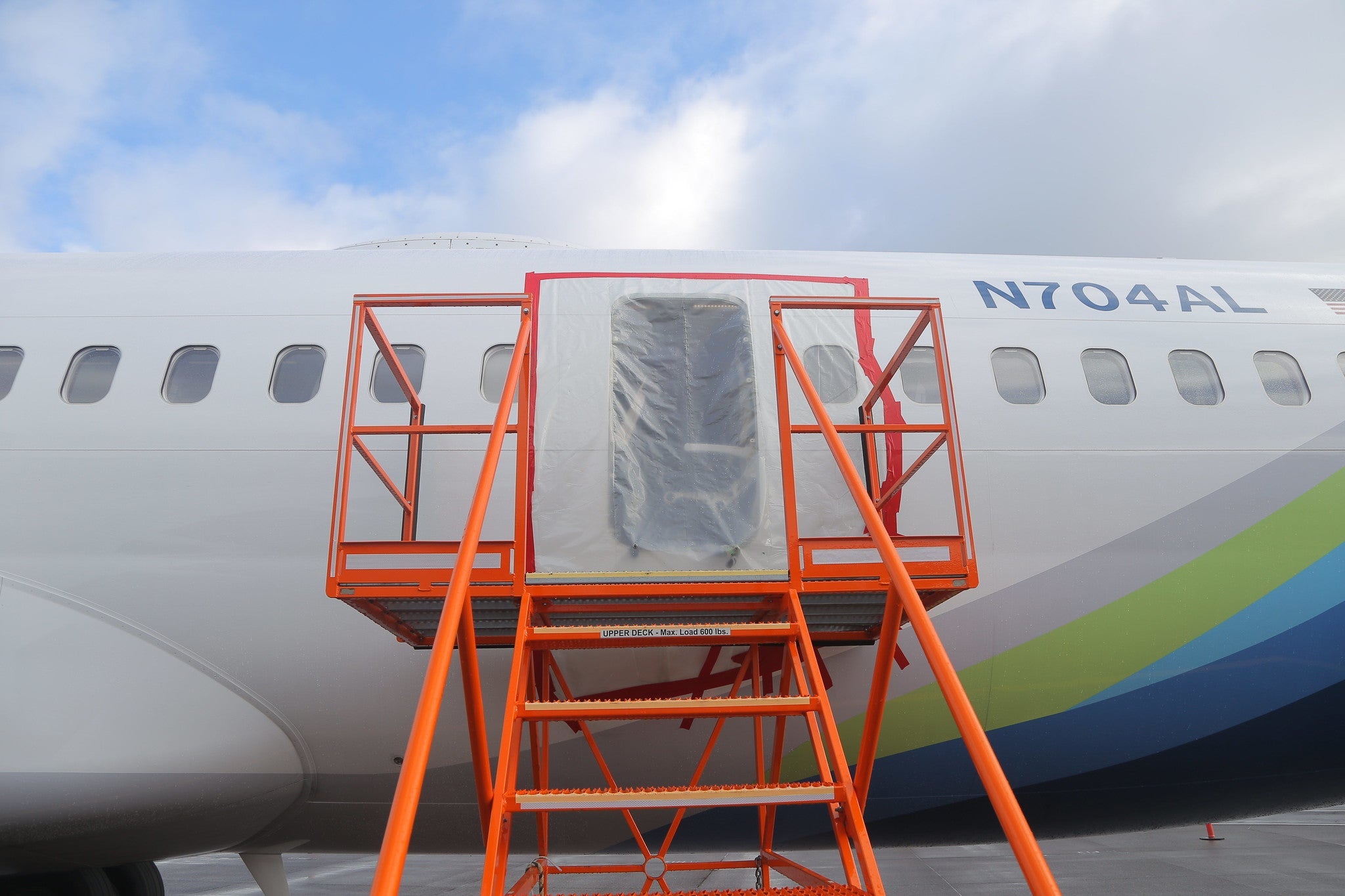
Four bolts that secure a piece of the fuselage on certain Boeing planes were missing on the Alaska Airlines jet that suffered a midair decompression during a flight last month, the National Transportation Safety Board confirmed Tuesday.
In a preliminary report for its investigation into the accident, the NTSB confirmed that the four bolts, which secure a "door plug" on the fuselage of some 737 MAX 9 aircraft, were not present on the newly delivered jet.
The bolts appeared to have been removed by Boeing during the plane's final assembly process, according to earlier reports, and had not been replaced. The door plug is initially installed by Spirit AeroSystems, a Wichita, Kansas-based company that builds the fuselage for some Boeing jets before shipping them by rail to the plane-maker's 737 assembly plant in Renton, Washington.
The fuselage of the plane that experienced the accident was delivered to Boeing with certain defects, the NTSB said, which required Boeing to remove the door plug in order to fix the issue.
A metallurgic analysis of the recovered door plug suggested the bolts were missing, and photos from Boeing following repair of the fuselage defects appeared to show the door plug had been replaced without the four bolts, the NTSB report said.
The plug fell away from the plane as it departed Portland International Airport (PDX) in Oregon and climbed through about 16,000 feet. The pressurized cabin rapidly decompressed, causing the flight deck door to open and pilots' headsets to be pulled off, phones to be pulled from passengers' hands and emergency oxygen masks to fall from the ceiling.
Related: Investigators search for missing door plug from Alaska Airlines 737 MAX accident
The window and middle seat next to the door plug — seats 26A and 26B — were not occupied.
The 737 MAX 9 and the older generation 737-900 both feature a spot behind the wing for an extra emergency exit, which is required on models of the aircraft with certain higher-density seating configurations. Airlines that put fewer seats on the aircraft, such as United Airlines and Alaska Airlines, can instead choose to install a "plug" in its place. The plug is lighter weight than a functioning or locked emergency exit would be and allows the inside of the plane to appear seamless.

Other subtypes of the 737, including the shorter 737 MAX 8 and older 737-800, do not have the space for that additional emergency exit.
Following the accident, Alaska grounded its 737 MAX 9 fleet. Shortly after, the Federal Aviation Administration ordered all MAX 9 jets that had a door plug to be grounded — 171 of the 215 delivered aircraft of that type.
Alaska Airlines has 65 of the type in service, while United Airlines, the other major U.S. carrier with the MAX 9, has 79.
Those jets began returning to service the last week of January, following inspections by airlines and approval from the FAA.

Both Alaska and United said they had found loose bolts on numerous door plugs during the inspections.
About 94% of all 737 MAX 9 aircraft had been inspected and returned to service as of Monday, the FAA said in a briefing to the media. Thousands of flights had been canceled during the groundings.
More fallout for Boeing
The accident was the latest high-profile incident involving the 737 MAX family of aircraft, and the biggest crisis for Boeing since 2020.
Since the accident, Boeing has scrambled to find and plug holes in its quality control and manufacturing processes, while working overtime to reassure airline customers and passengers that it would prevent a similar incident from happening again.
"We caused the problem," Boeing CEO Dave Calhoun said during the plane-maker's fourth-quarter earnings call last week. "And we understand that."
Calhoun conceded that customers were frustrated and that the accident would affect Boeing's reputation and production ability for the near-term.
"We will work to earn their confidence," Calhoun said. "There is no message, no slogan, that will accomplish that."
"It's all about real, demonstrated action and absolute transparency every step of the way," he added.
The FAA has taken a firm stand since the accident, promising more oversight of Boeing and blocking the plane-maker from increasing its production rate for the time being.
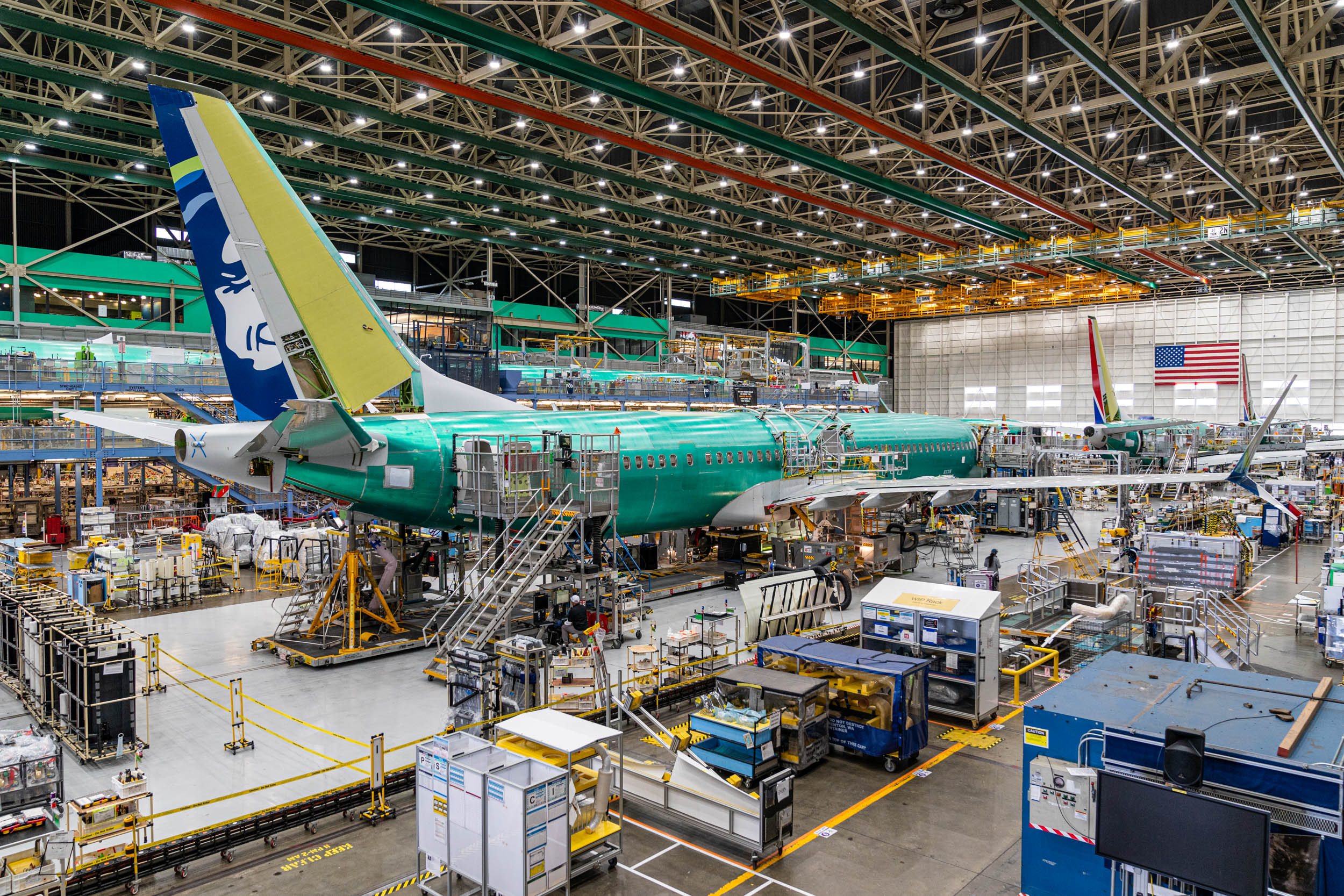
The company currently assembles 38 jets monthly at its Renton facility. The FAA did not say how long the restriction would last.
The 737 MAX jets would undergo a "nose to tail, wingtip to wingtip inspection," Deputy FAA Associate Administrator for Aviation Safety Jodi Baker told reporters Monday. "And as we get findings out of that inspection, we anticipate that will drive our reimagined oversight."
The episode harked back to the nearly two-year global grounding of the 737 MAX type, which was implemented in April 2019 following the second of two fatal crashes involving the relatively new aircraft type.
Investigators attributed the crashes to a flight control system that was designed to pitch the aircraft down in some situations to compensate for the fact that the MAX has larger engines than the previous model of 737, the Next Generation, or NG.
Explainer: What to know about the Boeing 737 MAX 9 and the MAX series
The system, Maneuvering Characteristics Augmentation System, was found to rely on a single "angle-of-attack" sensor, which feeds information about the aircraft's pitch to the pilots and flight control computer. Without a backup sensor or other monitoring systems in place, if that sensor became damaged, investigators found that the plane could erroneously pitch down and cause the pilots to lose control.
Since the episodes, Boeing has found itself under a spotlight for its safety practices and records. Other potential manufacturing defects in various plane types — including the MAX — have been found since the grounding.
Related reading:
TPG featured card

at Capital One's secure site
Terms & restrictions apply. See rates & fees.
| 5X miles | Earn 5X miles on hotels, vacation rentals and rental cars booked through Capital One Travel |
| 2X miles | Earn unlimited 2X miles on every purchase, every day |
Pros
- Stellar welcome offer of 75,000 miles after spending $4,000 on purchases in the first three months from account opening. Plus, a $250 Capital One Travel credit to use in your first cardholder year upon account opening.
- You'll earn 2 miles per dollar on every purchase, which means you won't have to worry about memorizing bonus categories
- Rewards are versatile and can be redeemed for a statement credit or transferred to Capital One’s transfer partners
Cons
- Highest bonus-earning categories only on travel booked via Capital One Travel
- LIMITED-TIME OFFER: Enjoy $250 to use on Capital One Travel in your first cardholder year, plus earn 75,000 bonus miles once you spend $4,000 on purchases within the first 3 months from account opening - that’s equal to $1,000 in travel
- Earn unlimited 2X miles on every purchase, every day
- Earn 5X miles on hotels, vacation rentals and rental cars booked through Capital One Travel
- Miles won't expire for the life of the account and there's no limit to how many you can earn
- Receive up to a $120 credit for Global Entry or TSA PreCheck®
- Use your miles to get reimbursed for any travel purchase—or redeem by booking a trip through Capital One Travel
- Enjoy a $50 experience credit and other premium benefits with every hotel and vacation rental booked from the Lifestyle Collection
- Transfer your miles to your choice of 15+ travel loyalty programs
- Top rated mobile app