
"We own it," CEO Dave Calhoun said during an appearance on CNBC ahead of the plane-maker's first-quarter earnings call. "I want everybody on every airplane to know that Boeing owns it."
"We caused the problem," he said during the earnings call. "And we understand that."
"Boeing is accountable for what happened," he said during the call. "This simply must not happen on an airplane that leaves one of our factories."
Calhoun conceded that customers were frustrated with Boeing, as were regulators, and said that he understood and accepted that discontent.
"We will work to earn their confidence," Calhoun said. "There is no message, no slogan, that will accomplish that."
"It's all about real, demonstrated action and absolute transparency every step of the way," he added.
More: How to tell if you’re booking on a Boeing 737 MAX
During the CNBC appearance and the call, Calhoun allowed that Boeing was addressing its manufacturing and quality control processes both in-house and at suppliers. He declined, however, to address the specific cause of the Alaska Airlines incident, pointing to the pending initial findings of the National Transportation Safety Board's investigation into the episode.
Reports have suggested, however, that Boeing workers removed the door plug at some point after the company received the fuselage, which is manufactured by Spirit AeroSystems, a separate company that was spun off from Boeing in 2005, before reinstalling it. The four bolts that secured the plug were reportedly not replaced.
In recent days, customers have begun to question Boeing's ability to meet production and delivery goals as it works to mitigate the latest crisis facing the 737 MAX family.
United Airlines CEO Scott Kirby met with Airbus after saying that the airline was no longer factoring the yet uncertified 737 MAX 10 in its network plans, although Ryanair CEO Michael O'Leary said that his airline would take any planes United decides to turn away.
"I think the MAX 9 grounding is probably the straw that broke the camel's back for us," Kirby said last week on CNBC.
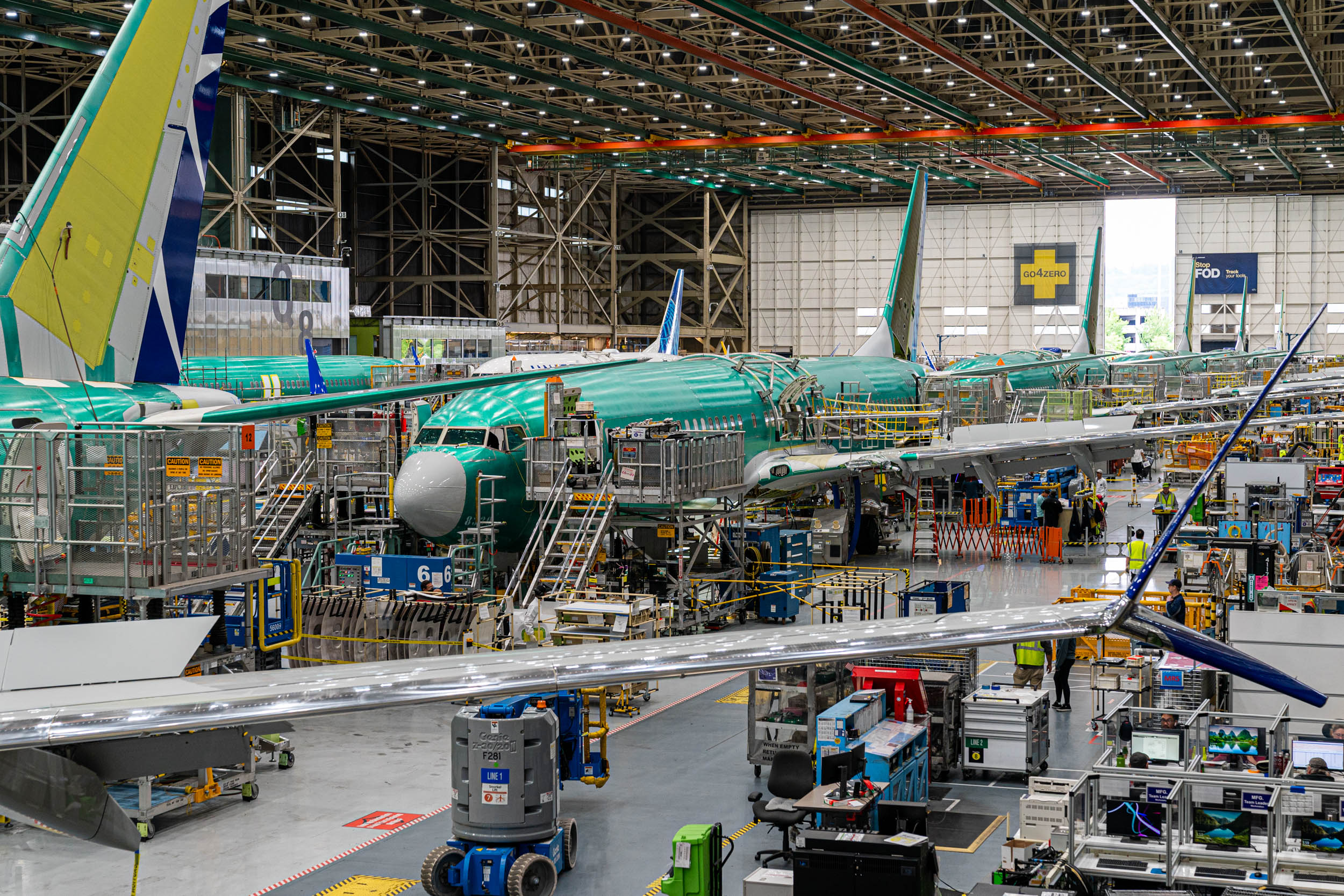
Boeing last week held a "quality stand-down" at its plant in Renton, Washington, where it assembles the 737 MAX jets, to focus on quality control. The plane-maker said that it is revamping its quality control procedures, adding additional inspection points at its own facilities and requiring them at component suppliers, and agreed to additional oversight by the Federal Aviation Administration.
The FAA said last week that it would restrict Boeing from increasing its production rate on the 737 MAX assembly line above the current level of 38 per month until it proves that better quality controls are in place.
"I know that these moments that impact delivery schedules can frustrate our customers and our investors," Calhoun said. "But quality and safety must come above all else, and our customers and investors know that and are in there with us."
Boeing did not issue financial guidance for this year, in order to relieve pressure on workers and focus on quality, Calhoun said during the earnings call.
"Now is not the time for that," he said. "We will simply focus on every next airplane and ensuring that we meet all the standards that we have, all the standards that our regulator has, and that our customers demand."
Boeing on Monday withdrew its request for an exemption from a particular required safety standard on the 737 MAX 7 and MAX 10, which are awaiting certification, saying that it would engineer a fix instead.
The company delivered 157 airplanes during the fourth quarter, and 528 throughout the year, Boeing said Wednesday.