Alaska joining Oneworld brings hotly contested Seattle hub to the limelight

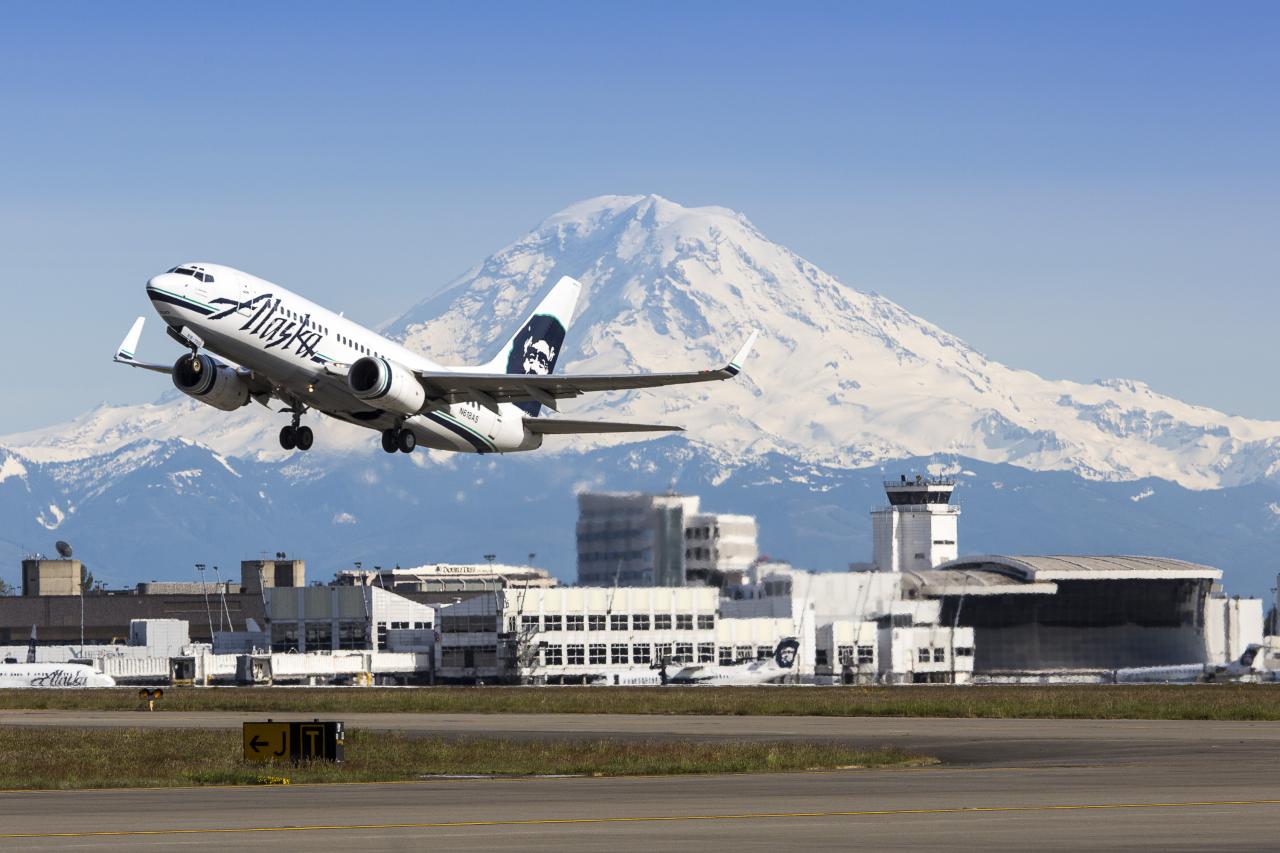
Today's the day — as of March 31, Alaska Airlines is officially a member of the Oneworld alliance.
Joining one of the big 3 airline alliances brings a host of changes for frequent flyers, regarding upgrades, lounge access and earning and redeeming Mileage Plan miles.
But it also shines a (global) spotlight on Alaska's largest hub, Seattle (SEA). What once began as a regional gateway for the airline has since become one of the most hotly contested airfields in the country.
Alaska keeps growing Seattle
Over the past ten years leading up to the pandemic, Alaska has been steadily growing in Seattle. The number of flights operated from the carrier's gateway in the Pacific Northwest has grown every year.
In fact, Alaska's available seat miles from Seattle — a measure of a plane's available seats and distance flown — was up by over 10% at the end of 2019 compared to 2018 — and nearly 33% more than at the outset of the decade in 2010.
Seattle was the hub out of which Alaska flew its inaugural Hawaii service, which began under former CEO Bill Ayer and picked up pace following the collapse of Aloha Airlines in 2008.
In the early 2010s, Seattle was an Alaska Airlines stronghold. In addition to the new Hawaii service and regional flights to Alaska, the carrier's nationwide expansion largely focused on routes to and from Seattle, as well as other points on the West Coast after acquiring Virgin America in 2016.
But in the mid-2010s, Delta started growing its international presence in Seattle, leading to a "turf war" that ultimately fueled more growth for Alaska from the Emerald City.
Delta rains on the parade
Alaska and Delta had a strong relationship in the early 2010s that included a robust codeshare and frequent flyer alliance. Delta began flying widebodies from Seattle to Asia, on the premise that hometown partner Alaska could help fill those planes with connecting passengers from its own flights.

By the middle of the decade, however, the partnership frayed as Delta moved instead to build its own hub in Seattle, ultimately competing head-to-head with Alaska on many of its most lucrative domestic routes.
News about the partners-turned-rivals spurred headlines about the carriers becoming "frenemies," and eventually they ended their partnership altogether in 2017 amid an escalating battle for Seattle — and one that may now be expanding into Alaska.
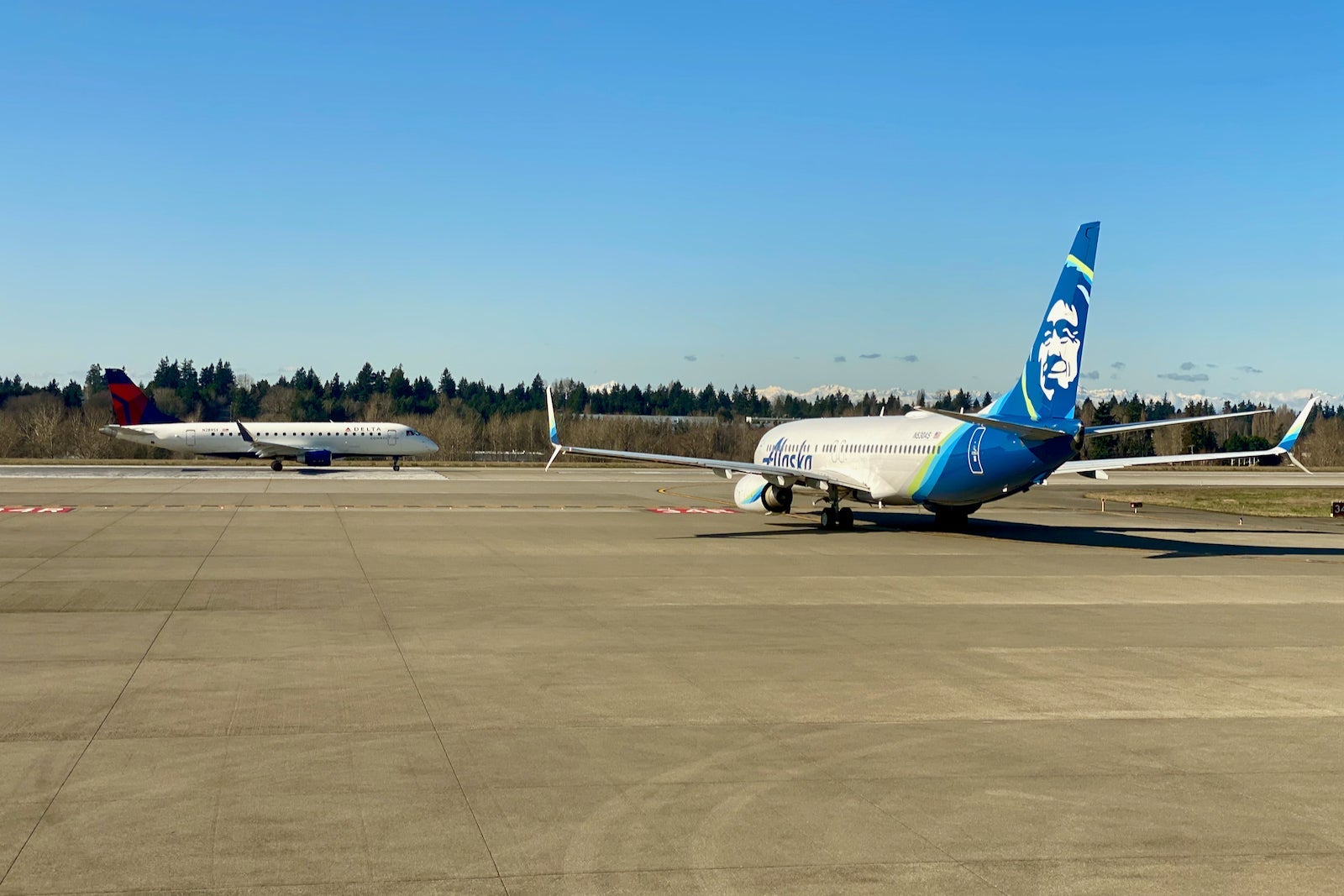
"I think it was a big deal. I mean, we were good partners for a long time," Brad Tilden, Alaska's outgoing CEO said in an exclusive interview with TPG. "We defended ourselves and grew market share when a major competitor came into our hub and tried to steal share from us."
Alaska responded by doubling down on its Seattle hub and rethinking everything from its credit card perks to its marketing and onboard service. This included an expanded national footprint with more flights to the East Coast and Midwest.
More about Alaska: From battling 'frenemy' Delta to Oneworld to Virgin America, outgoing Alaska Air CEO leaves his mark
Oneworld friends join the party
The move away from Delta also set the stage for Alaska to move closer to American Airlines and the Oneworld alliance, culminating in Alaska becoming a full-fledged member of the alliance.
In the years leading up to the pandemic, American Airlines teamed up with Alaska to further grow Seattle. The former announced three new flagship long-haul routes from the city — to London Heathrow (LHR), Shanghai (PVG) and Bangalore (BLR).
The plan is for American to fly the long-haul routes and Alaska to provide the regional feed. As part of the news, the two carriers unveiled a host of codeshares, as well as reciprocal frequent flyer benefits.
But American isn't the only Oneworld member to grow Seattle. Cathay Pacific, Japan Airlines and Qatar have been busy there too.
Cathay Pacific recently cut a slew of U.S. routes. Noticeably missing from the list is Seattle, which is slated to resume when demand recovers. Japan Airlines, which flies from Tokyo-Narita (NRT), could consider upgauging its Seattle service as the city grows in stature within the Oneworld alliance. Or, as demand recovers, it could even look at adding a second flight from the more-convenient Haneda (HND) airport to bolster its Seattle position with the help of Alaska's added domestic feed.
In addition to American's transatlantic ambitions, Qatar Airways recently launched new SEA service from Doha (DOH). As part of the move, Qatar launched its own frequent flyer partnership with Alaska, though both are now officially Oneworld partners as well.
Once it's all said and done, Seattle will effectively become a mini-Oneworld hub. It won't beat Dallas-Fort Worth, nor will it trump Los Angeles, but with Alaska joining the alliance — and some airline partners joining the party, too — Seattle will earn a spot on the global stage.
TPG featured card

at Capital One's secure site
Terms & restrictions apply. See rates & fees.
| 5X miles | Earn 5X miles on hotels, vacation rentals and rental cars booked through Capital One Travel |
| 2X miles | Earn unlimited 2X miles on every purchase, every day |
Pros
- Stellar welcome offer of 75,000 miles after spending $4,000 on purchases in the first three months from account opening. Plus, a $250 Capital One Travel credit to use in your first cardholder year upon account opening.
- You'll earn 2 miles per dollar on every purchase, which means you won't have to worry about memorizing bonus categories
- Rewards are versatile and can be redeemed for a statement credit or transferred to Capital One’s transfer partners
Cons
- Highest bonus-earning categories only on travel booked via Capital One Travel
- LIMITED-TIME OFFER: Enjoy $250 to use on Capital One Travel in your first cardholder year, plus earn 75,000 bonus miles once you spend $4,000 on purchases within the first 3 months from account opening - that’s equal to $1,000 in travel
- Earn unlimited 2X miles on every purchase, every day
- Earn 5X miles on hotels, vacation rentals and rental cars booked through Capital One Travel
- Miles won't expire for the life of the account and there's no limit to how many you can earn
- Receive up to a $120 credit for Global Entry or TSA PreCheck®
- Use your miles to get reimbursed for any travel purchase—or redeem by booking a trip through Capital One Travel
- Enjoy a $50 experience credit and other premium benefits with every hotel and vacation rental booked from the Lifestyle Collection
- Transfer your miles to your choice of 15+ travel loyalty programs
- Top rated mobile app