Future or fantasy? Touchless lavs, pandemic-fighting seat dividers and other airplane cabin designs

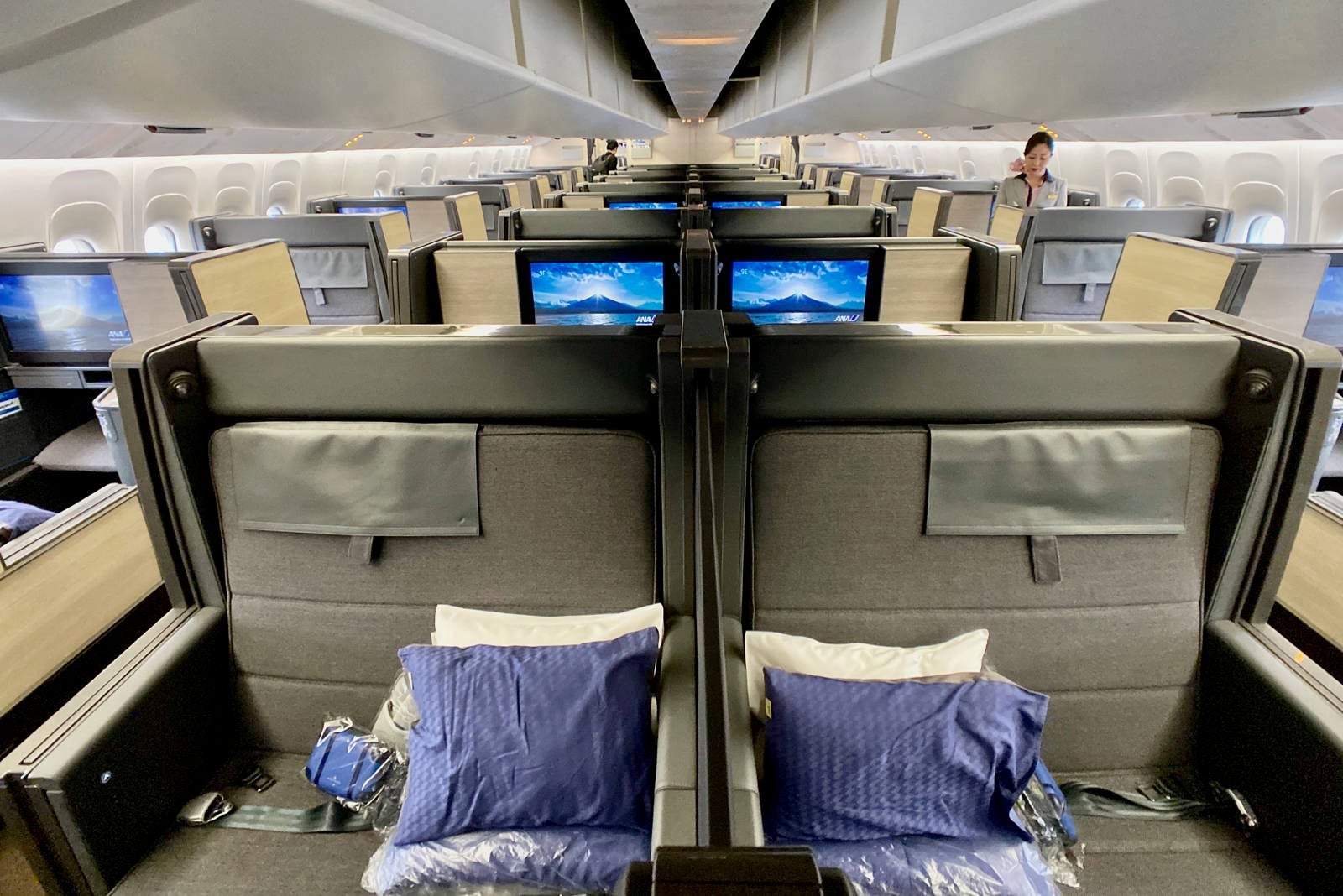
Due to the coronavirus, the end-to-end travel experience will look a lot different for quite some time.
Airlines have doubled down on safety enhancements, such as modified boarding procedures, mask requirements and seat blocking. Plus, in an effort to convince flyers that it's once again safe to take to the skies, cleaning procedures have been upgraded and many service touchpoints have been eliminated.
Aside from installing plexiglass around check-in counters and gate podiums, airlines haven't really modified the "hard product" to reduce the spread of pathogens.
But if the Japanese flag carrier All Nippon Airways (ANA) has its way, that's about to change.
Sign up for the free daily TPG newsletter for more airline news
ANA recently introduced a new method of entering the airplane lavatory in mid-June. Instead of sliding a doorknob with your hand, the new concept features a lever that allows you to open the door with your elbow.
Then, you push the door open with your elbow, instead of turning a lever or doorknob. This new touchless prototype designed by JAMCO is already on display for flyers at one of the carrier's lounges at Tokyo's Haneda Airport (HND).
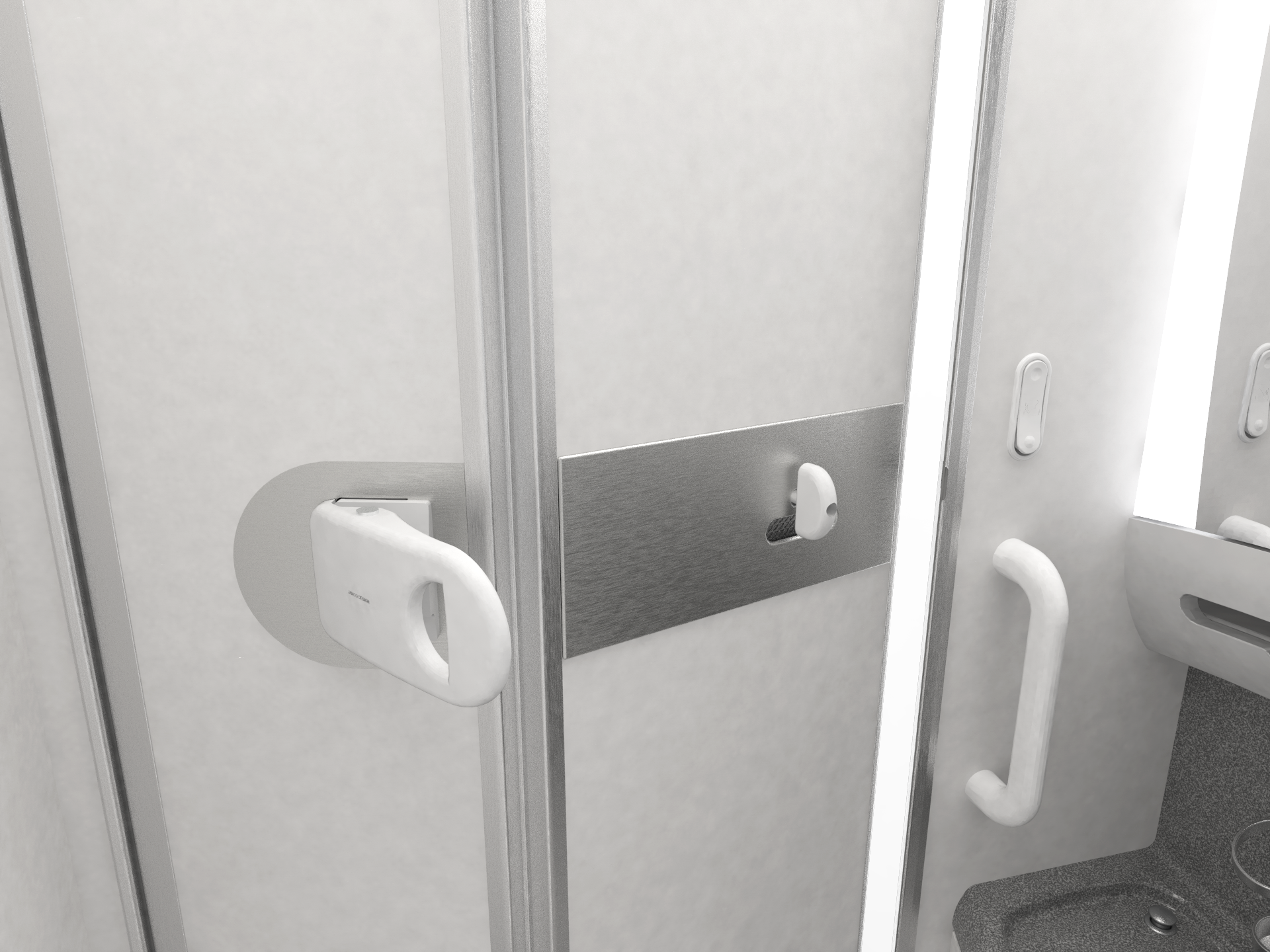
The airline is soliciting user feedback for this new design before deciding whether to introduce this small-but-mighty innovation fleetwide. For now, ANA states it's in the "development stage" for the prototype.
Even if ANA decides to go ahead with the project, it'll likely be one of the few carriers to make the investment in a touchless elbow-use doorknob. These decisions are costly, and flyers can easily just use a paper towel or apply extra hand sanitizer with the existing lavatory doorknobs.

Plus, if you're flying on some of the newest jets like the Boeing 787 Dreamliner, chances are that most of the lavatory functions like flushing and sink water dispensers are already touchless.
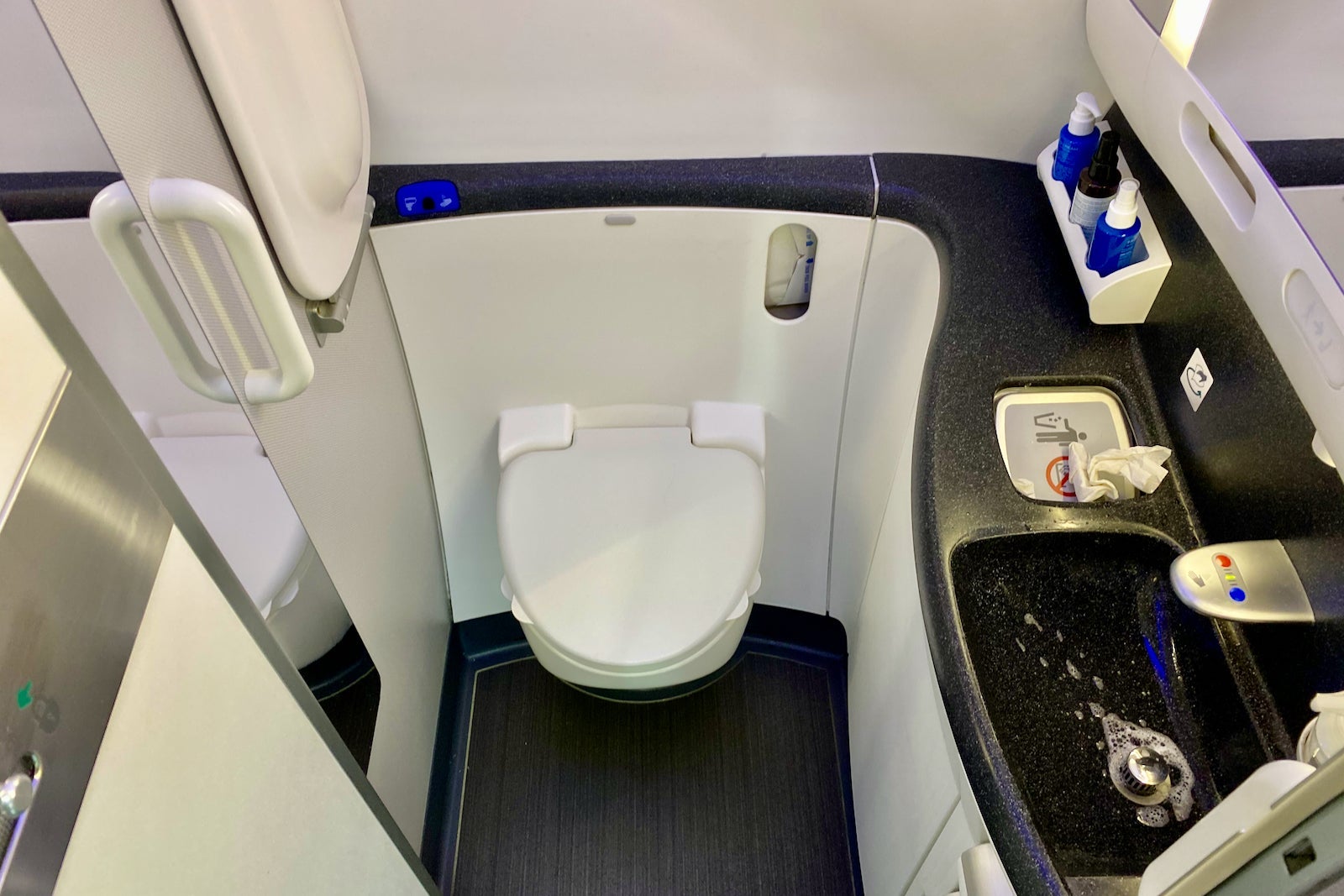
ANA's move to introduce a completely touchless lavatory is part of a much larger trend.
Enterprising airline cabin designers are always mocking up the latest cabin and seat concepts. Over the past few months, that energy has been spent on designs that prevent the spread of pathogens.
And while these mockups make for catchy headlines and viral social media posts, the reality is that few — if any — are going to happen. Aircraft seat manufacturers are constantly rolling out new designs, some practical and others more outlandish concept pieces unlikely to be seriously considered by airlines.
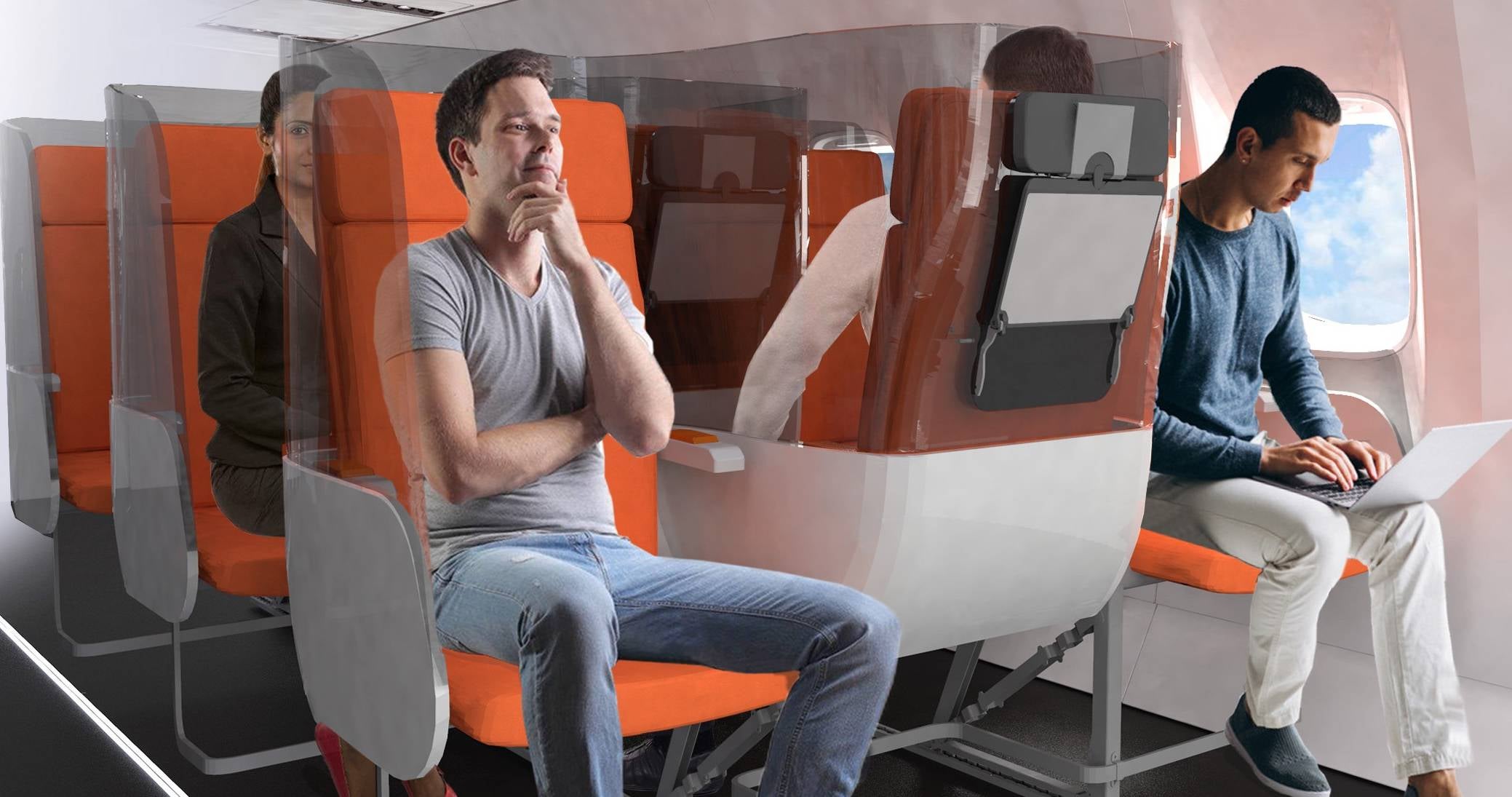
Recently, Italian firm Aviointeriors unveiled the "Janus" seat. The concept features forward-facing window and aisle seats with rear-facing middle seats. The middle seats are flanked by a wraparound clear shield that separates them from their two neighboring seats.
Related: The hidden costs of saying goodbye to the middle seat
Aviointeriors also introduced a simpler design called "Glassafe," which is a more typical three-abreast coach-class layout that features a transparent shield separating the upper torsos and heads of the passengers.
Priestman Goode, another desinger, also gained traction recently with its own new seat concept. The firm promised it, promising its "Pure Skies" seats would help "alleviate passenger anxiety about hygiene during boarding," among other things.
https://www.instagram.com/p/CDMpqU7pQFW/
Such plans from designers may look good on paper, but you'll likely never get a chance to experience them firsthand.
For one, retrofitting a fleet with new seats is an incredibly costly undertaking. Aside from taking planes out of service for weeks at a time, seats themselves are also expensive. With the pandemic taking a toll on airlines' bottom line, there's little, if any, discretionary spending available to invest in new cabins. In addition, gaining regulatory approval for the new seats could take months if not longer.
Related: New airplane seats for the coronavirus era?
Look no further than United Airlines. The Chicago-based carrier has indefinitely halted its Polaris and Premium Plus retrofit program due to the pandemic. Like other airlines, UA needs to focus on maintaining enough cash to cover fixed costs like staff, aircraft rent and debt payments. Delta has also paused its multi-year program installing Delta One suites on its long-haul wide-body aircraft.
While they may look good on your social media feed, these concept plans will likely never make it past an airline boardroom. And even if ANA goes ahead with installing the touchless lavatory doorknob, don't expect to see it pop up in lavatories across the sky.
Additional reporting by Ben Mutzabaugh.
TPG featured card
at American Express's secure site
Terms & restrictions apply. See rates & fees.
| 4X | Earn 4X Membership Rewards® points per dollar spent on purchases at restaurants worldwide, on up to $50,000 in purchases per calendar year, then 1X points for the rest of the year. |
| 4X | Earn 4X Membership Rewards® points per dollar spent at US supermarkets, on up to $25,000 in purchases per calendar year, then 1X points for the rest of the year. |
| 5X | New! Earn 5X Membership Rewards® points on prepaid hotel stays booked through AmexTravel.com or the Amex Travel App. |
| 3X | Earn 3X Membership Rewards® points on flights booked through AmexTravel.com, the Amex Travel App, or purchased directly from airlines. |
| 2X | Earn 2X Membership Rewards® points on prepaid car rentals booked through AmexTravel.com or the Amex Travel App and cruises booked and paid through AmexTravel.com. |
| 1X | Earn 1X Membership Rewards® point per dollar spent on all other eligible purchases. |
Pros
- Valuable dining and food-related credits
- Flexible rewards with airline and hotel transfer partners
- Multiple travel and purchase protections
- No foreign transaction fees
- Access to Amex Offers for additional savings (enrollment required)
Cons
- Not as useful for those living outside the U.S.
- Some may have trouble using Uber and other dining credits
- You may be eligible for as high as 100,000 Membership Rewards® Points after you spend $8,000 in eligible purchases on your new Card in your first 6 months of Card Membership. Welcome offers vary and you may not be eligible for an offer. Apply to know if you’re approved and find out your exact welcome offer amount – all with no credit score impact. If you’re approved and choose to accept the Card, your score may be impacted.
- Earn 4X Membership Rewards® points per dollar spent on purchases at restaurants worldwide, on up to $50,000 in purchases per calendar year, then 1X points for the rest of the year.
- Earn 4X Membership Rewards® points per dollar spent at US supermarkets, on up to $25,000 in purchases per calendar year, then 1X points for the rest of the year.
- New! Earn 5X Membership Rewards® points on prepaid hotel stays booked through AmexTravel.com or the Amex Travel App.
- Earn 3X Membership Rewards® points on flights booked through AmexTravel.com, the Amex Travel App, or purchased directly from airlines.
- Earn 2X Membership Rewards® points on prepaid car rentals booked through AmexTravel.com or the Amex Travel App and cruises booked and paid through AmexTravel.com.
- Earn 1X Membership Rewards® point per dollar spent on all other eligible purchases.
- Pay It® lets you tap in the American Express® App to quickly pay for small purchase amounts throughout the month and still earn rewards the way you usually do. Plan It® gives you the option to split up big purchases into equal monthly payments with a fixed fee. You’ll know upfront exactly how much you’ll pay.
- Updated! $120 Dining Credit: Earn up to a total of $10 in statement credits monthly when you pay with the Gold Card at Grubhub (including Seamless), Buffalo Wild Wings, Five Guys, The Cheesecake Factory, and Wonder. This can be an annual savings of up to $120. Enrollment required.
- $100 Resy Credit: Get up to $100 in statement credits each calendar year at over 10,000 qualifying U.S. Resy restaurants after you pay for eligible purchases with the American Express® Gold Card. That’s up to $50 in statement credits semi-annually. Enrollment required.
- $84 Dunkin' Credit: Earn up to $7 in monthly statement credits after you pay with the American Express® Gold Card at U.S. Dunkin’ locations. Enrollment required.
- $120 Uber Cash on Gold: Enjoy up to $120 in Uber Cash annually with your Gold Card. Just add your Card to your Uber account and you'll get $10 in Uber Cash each month to use on orders and rides in the U.S. when you select an Amex Card for your transaction.
- New! As an American Express® Gold Card Member, you can enjoy complimentary Hertz Five Star® Status. Enjoy benefits like skipping the counter at select locations, adding an additional driver at no additional cost*, and vehicle upgrades**. Benefit enrollment and Hertz Gold+ registration are required. *Additional drivers must meet standard rental qualifications and must be a spouse or domestic partner to qualify as complimentary. Other additional drivers subject to fees. **Benefits are subject to availability and vary by location. Additional Hertz program Terms and Conditions including age restrictions apply.
- Take advantage of a $100 credit towards eligible charges* at over 1,300 upscale hotels worldwide when you book The Hotel Collection through AmexTravel.com or the Amex Travel App **. *Eligible charges vary by property. **The Hotel Collection requires a two-night minimum stay.
- Book your travel through the Amex Travel App with added peace of mind – backed by American Express® service and support. Only for American Express® Card Members.
- Whenever you need us, we're here. Our Member Services team will ensure you are taken care of. From lost Card replacement to statement questions, we are available to help 24/7.
- No Foreign Transaction Fees.
- Annual Fee is $325.
- Terms Apply.