Houston, am I too old for this? What it's like to attend Adult Space Camp


What did you want to be when you grew up?
For many kids — at least in the decades before TikTok influencer and bitcoin investor became viable career paths — the answers were pretty straightforward: doctor, lawyer, teacher, firefighter.
Or, if you were really reaching for the stars: astronaut.
I've always been fascinated with outer space, but I knew from a pretty young age I didn't have the math or science aptitude to cut it as a real-life space pioneer. (In fact-checking this story, my mother confirmed there was a time in which I wanted to be a veterinarian-ballerina because I also seem to lack some degree of practicality you no doubt need to fly a space shuttle.)
Still, I nurtured a casual love for the cosmos, devouring documentaries about NASA's Voyager mission and articles about developments in space tourism. As much as I love flying around Earth in the stratosphere, getting older hasn't diminished my dreams of bursting through the exosphere and venturing around the solar system and to galaxies beyond.
In fact, it's only made the possibility seem more likely.
Unfortunately, we're still a long way from weekend getaways to the moon or interstellar space cruises. So, to satisfy my appetite for outer space adventures, I decided to do the next best thing: Fly to the U.S. Space and Rocket Center in Huntsville, Alabama, to attend Space Camp.
All systems go
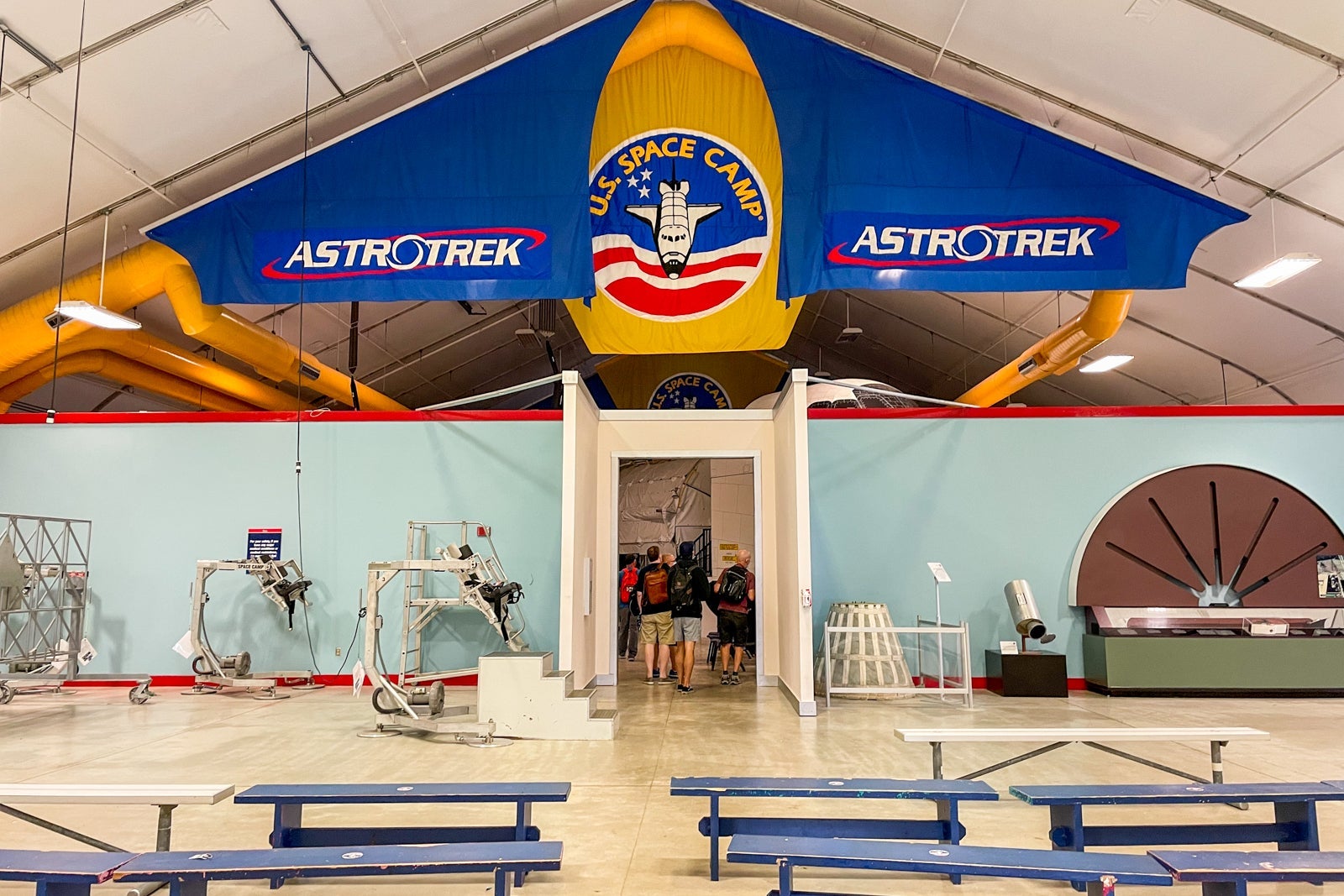
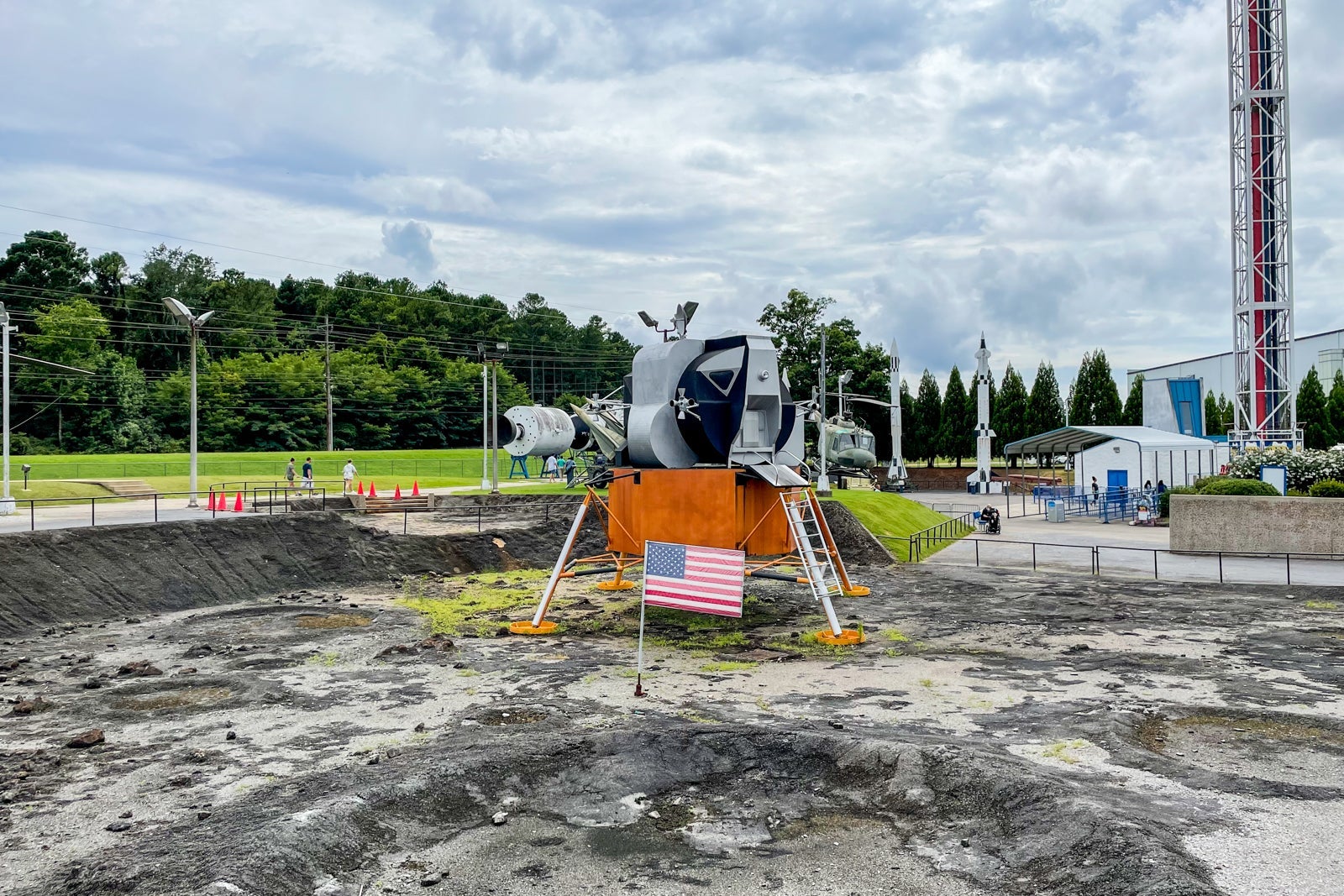
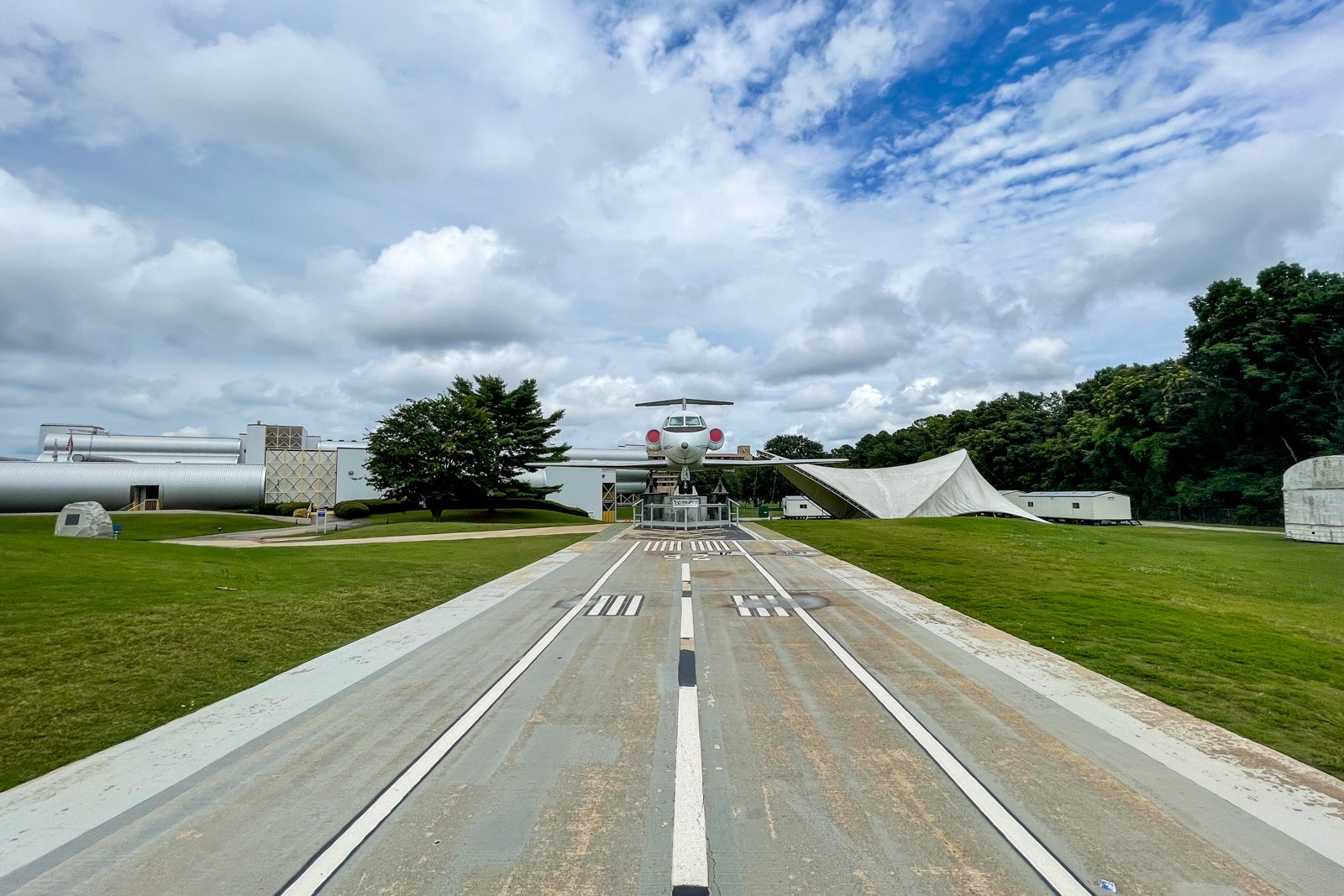
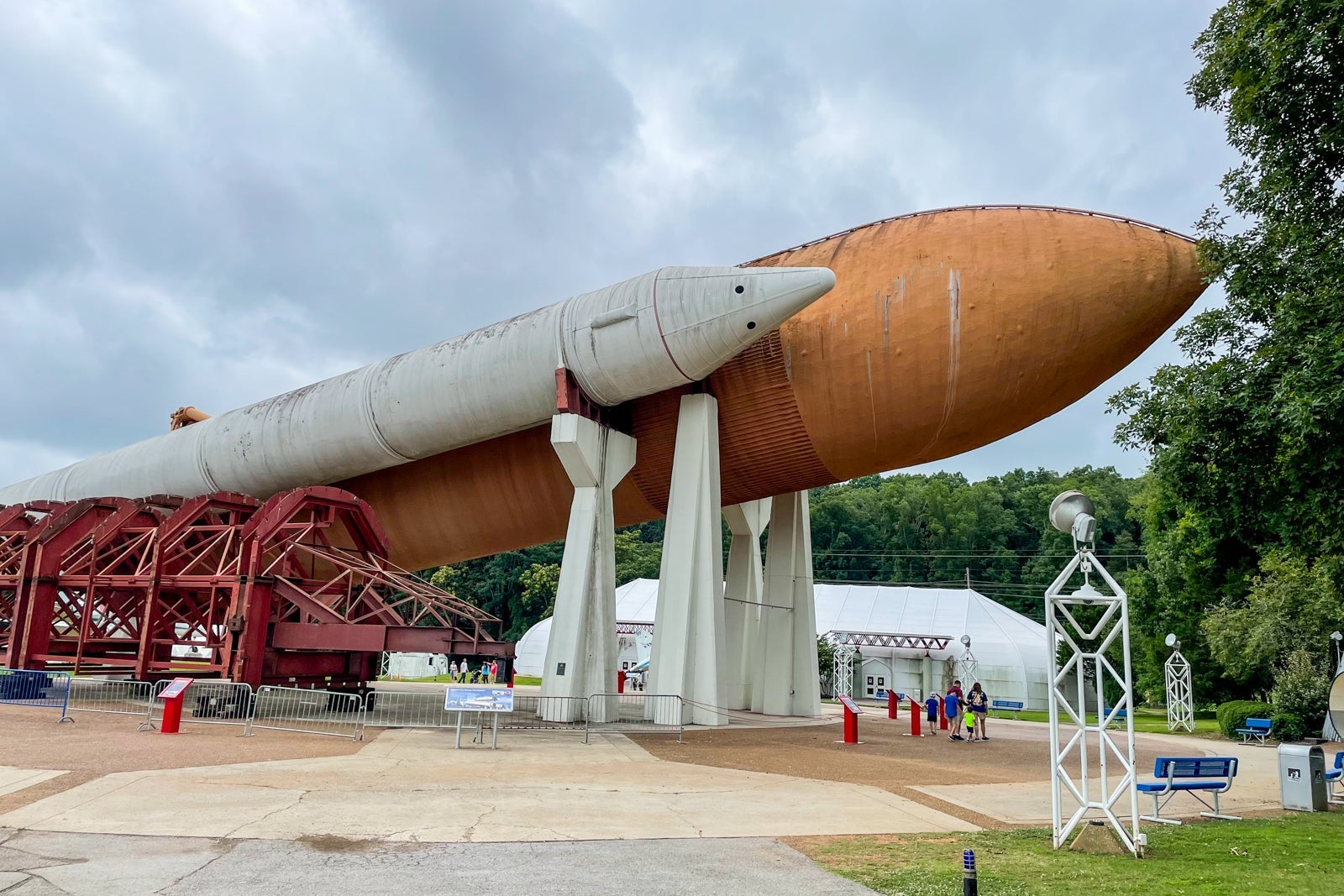
Space Camp has been the premier destination for kids who love science, space and aviation since it launched in 1982. Located at the U.S. Space and Rocket Center in the so-called Rocket City (home to the Saturn V moon rocket and the Apollo 16 command module), Space Camp participants get access to facilities including the planetarium and the center's many exhibits — plus activities such as the multi-axis trainer, diving in the underwater astronaut trainer and flight simulator.
And space enthusiasts don't have to worry about being too old for Space Camp since there are programs for grownups now, too.

Patricia Ammons, the senior director of communications at the U.S. Space and Rocket Center, says adult Space Camp has been around for years, with programming for educators before that.
During a recent phone call, Ammons told me the adult program attracts people who are "hardcore" into space and "love everything about space" (guilty) and "a lot of people ... who grew up desperately wanting to go to Space Camp ... and now that they're [adults] in charge of their own money and time [are] going to finally get to realize that dream."
She also says the program attracts "adventure travelers" who are looking for a "new and different" experience.
The demand for this type of programming is clearly there: By the time I decided to book a two-day, Give Me Space! Adult Astronaut Training, "expedition" this summer, all the weekends were full. I joined every waitlist and held my breath until a spot opened up for Expedition 42. The program cost $199 for two days, and I was able to get a discounted rate at the adjacent Huntsville Marriott at the Space and Rocket Center. (Upcoming two-day programs are currently $299.)
The program I attended was an abbreviated two-day version. There's also a three-day Adult Space Academy program that includes overnight accommodations in the on-site "habitats" where young space campers normally stay (think: bunk beds and communal showers).
This more robust and — for grownups who really wanted to go to Space Camp as kids — somewhat more authentic experience starts at $549 per person.
The Huntsville Marriott may not have been completely out of this world, but I appreciated both the convenience of the property and not having to bunk or bathe alongside strangers. Plus, unlike stays at the habitat, I was able to earn Bonvoy points for my contributions to space exploration.
When I arrived at Space Camp this summer, I honestly had no idea what to expect. There weren't a ton of details online about the daily activities. On Saturday morning, as I left my hotel room to report for duty at the Davidson Center for Space Exploration, the door next to mine opened almost simultaneously.
Brian Fredo, 46, was also a grownup wearing a backpack on a weekend morning, and he immediately identified me as a fellow astronaut in training.
"This was a childhood dream of mine, to go to Space Camp," Fredo would tell me later in an email. "Unfortunately, I didn't have the opportunity to go when I was younger."
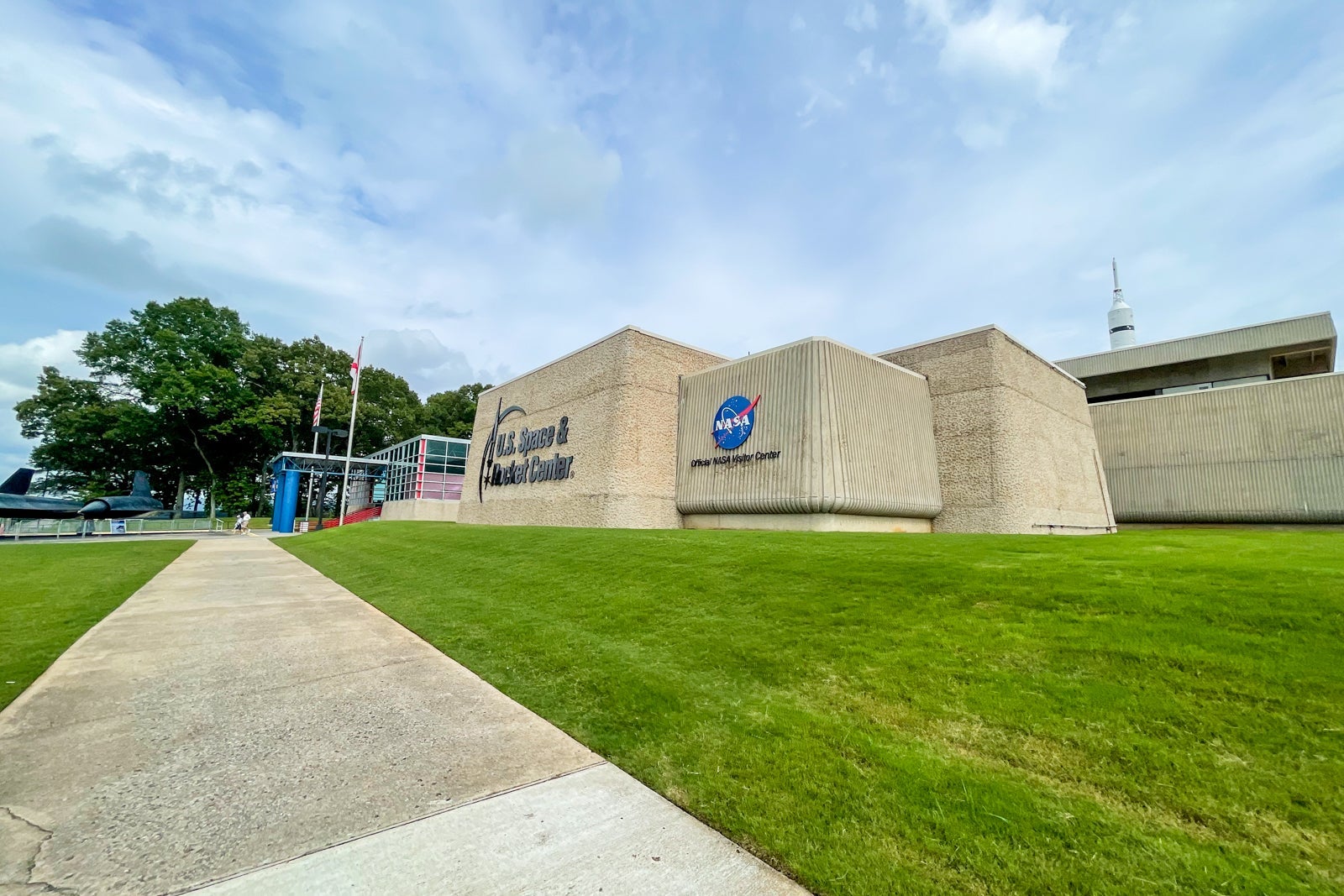
Fredo, from Atlanta, had received the trip to Alabama for Adult Astronaut Training as a Christmas gift from his wife. His son and daughter had both attended Space Camp the summer prior.
We walked across the property together to check in for Space Camp, and I received my custom flight suit, which I preordered for $105 and was absolutely worth every single dollar (never again will I have to fret about what to wear to a Halloween party). We joined our fellow campers in the National Geographic Theater where we were divided into two "teams" and met our crew trainers — er, camp counselors (some of whom were decades younger than many of the adult campers).
Learning to navigate space (camp)
Ammons was right in that there is no one kind of person who attends adult astronaut training. There were couples, groups of friends who had traveled there together and solo travelers such as myself. There were parents and grandparents. Men and women. A father and his older son.
But it was clear almost immediately that we had all outgrown the self-conscious "too cool for school" attitude that keeps so many children and young adults from being eager participants. I immediately pulled on my flight suit, eliciting comments of envy from my fellow campers who hadn't ordered one ahead of time.
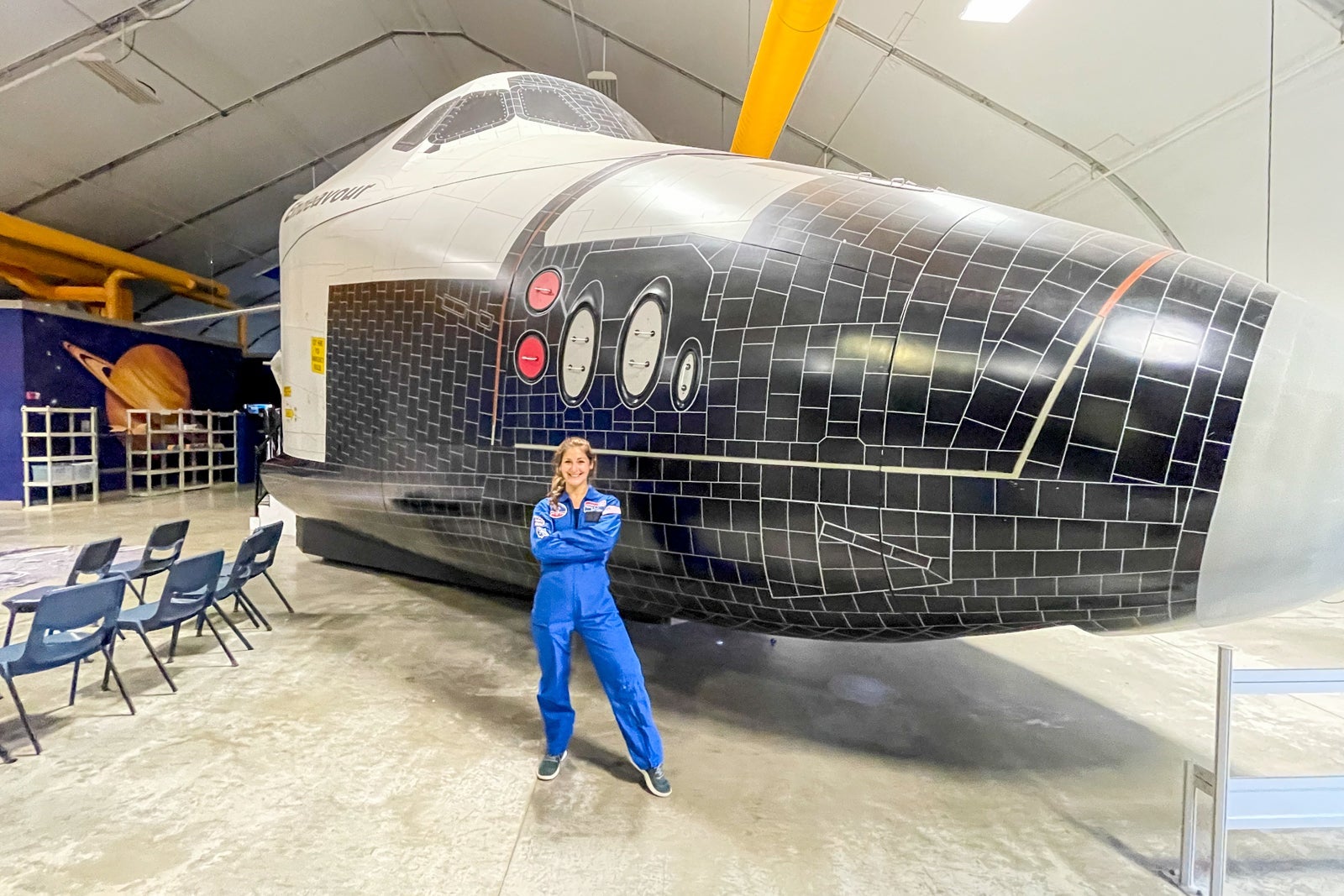
"Adults … who are going to come to a program like this are ready to jump in," Ammons said. With kids, she explained, you sometimes have to reassure them it's OK to let go and have fun.
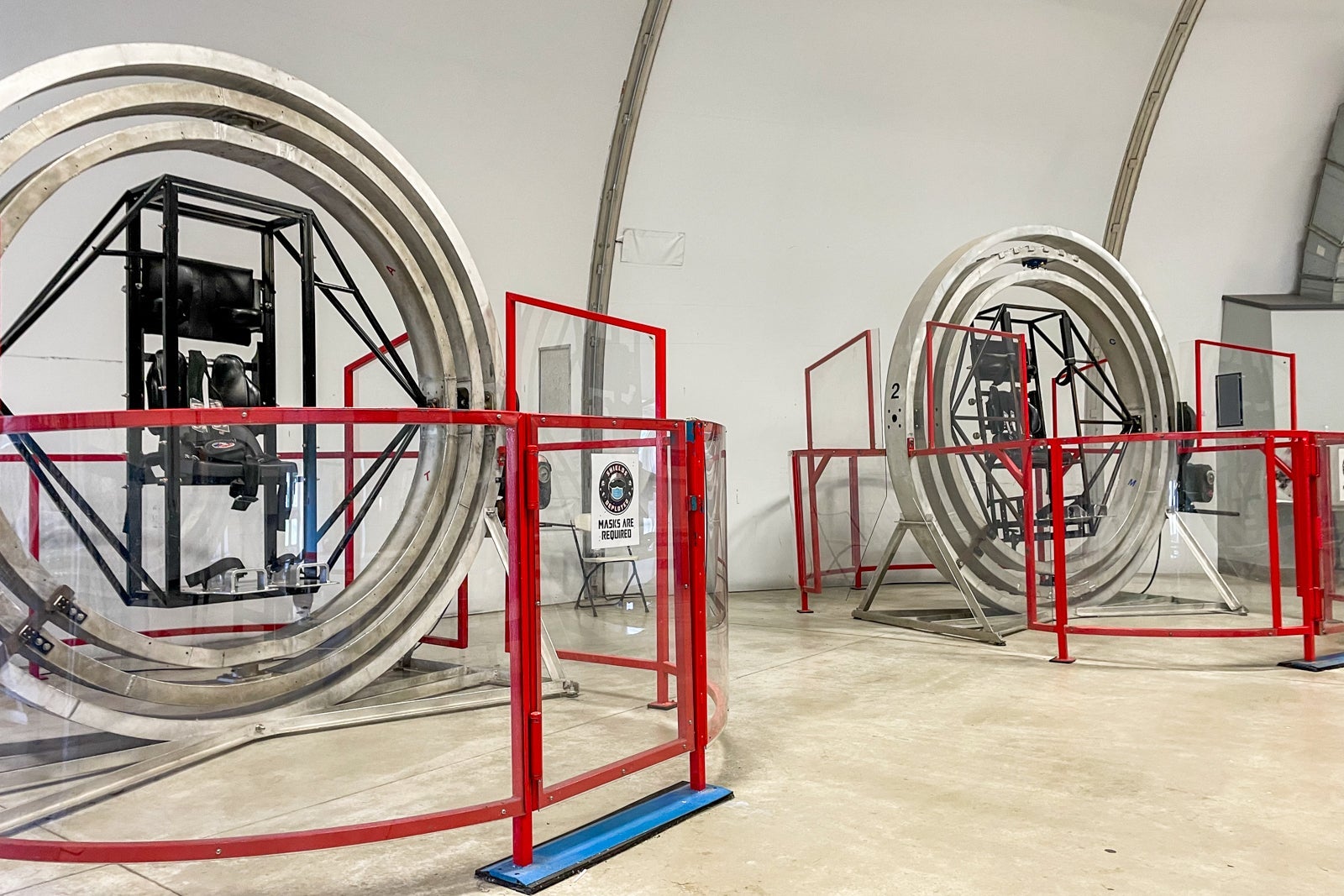
In fact, we were all too eager to hop immediately into the multi-axis trainer, which is designed to simulate a "tumble spin" through space without gravity just like the Gemini VIII. A few of us worried out loud about the breakfasts and coffee we'd consumed beforehand, but our counselor assured us she'd never seen a kid get sick.
(She then walked back that statement, saying she was pretty new to the job so maybe she just hadn't seen it yet. But research at a later date confirmed that these machines don't simulate the kind of movement that causes motion sickness, and therefore nausea isn't a real concern. Still: Drink your morning coffee with caution.)
After our first Space Camp thrill, we participated in a series of team-building ice breakers that are, like so much of the experience, taken directly from the Space Camp programming designed for kids.
You'd think it would all be too childish, and too easy. But our counselors waited patiently while we deliberated on puzzles that, we were assured, "the kids also struggled with."
Our self-esteem may have suffered, but we had a great deal of fun solving a version of the frog-jumping game that involved a handful of very befuddled grownups moving carpeted arrows on the ground.
"You have to be a little bit of a nerd at heart to truly enjoy the experience," Fredo said, agreeing that it helped to be part of a group of "fellow campers" who were similarly "outgoing" and "goofy."
Basically, you can't take yourself too seriously if you're over the age of 18 and decide to don a bright blue jumpsuit and play pretend at Space Camp for the weekend.
Just like a group of oversized children, we used games of rock, paper, scissors to determine who would get the best, most interactive jobs during our group mission. We all assumed roles aboard the space shuttle, at the International Space Station and at Mission Control. Some of the counselors clearly missed the pop culture references in our hilarious banter as we prepared for takeoff ("Roger, Roger," and "What's our vector, Victor?").
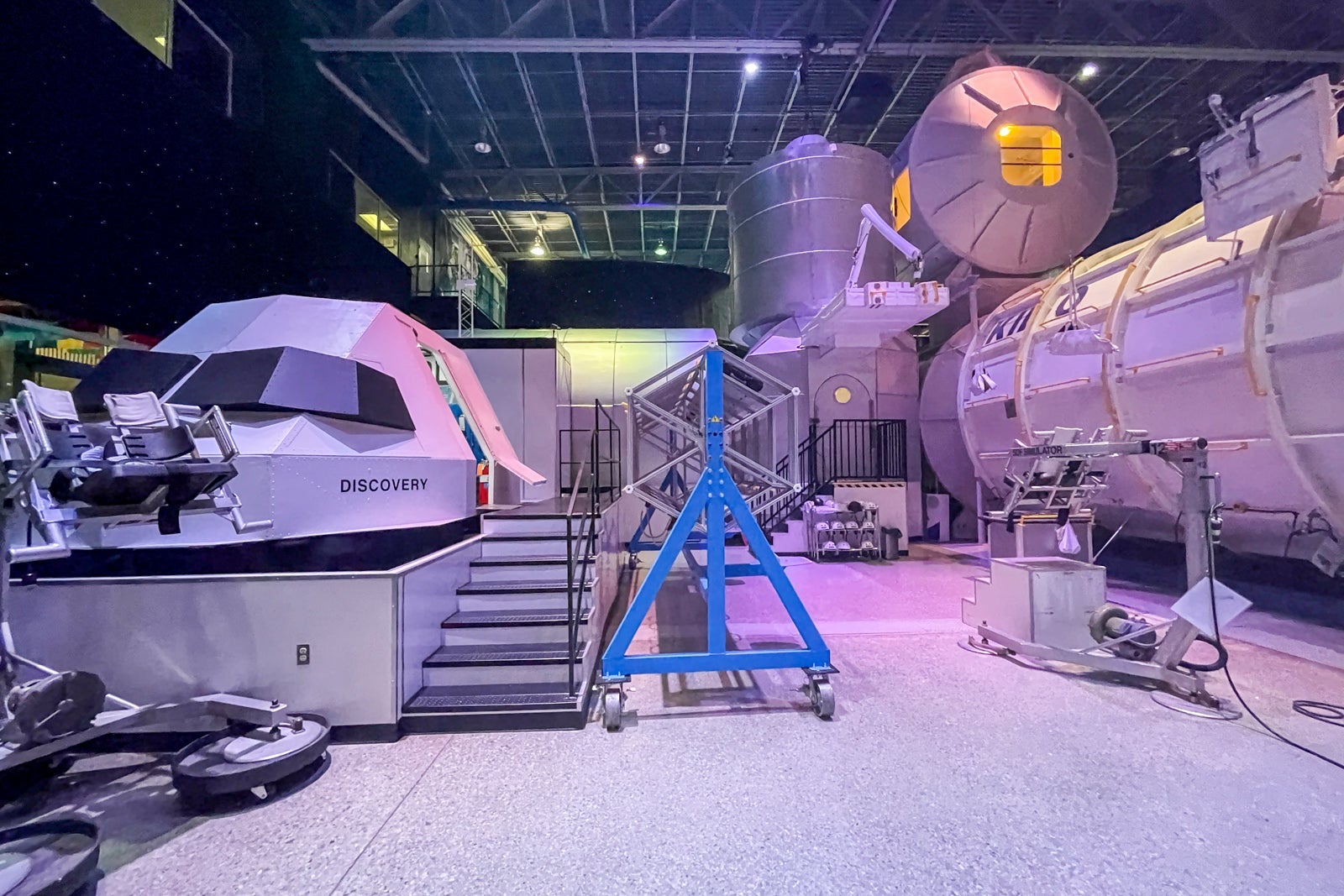
As the mission specialist, I had the privilege of assisting with takeoff maneuvers in the flight deck of the model space shuttle and then heading over to the International Space Station, where I conducted tasks and experiments.
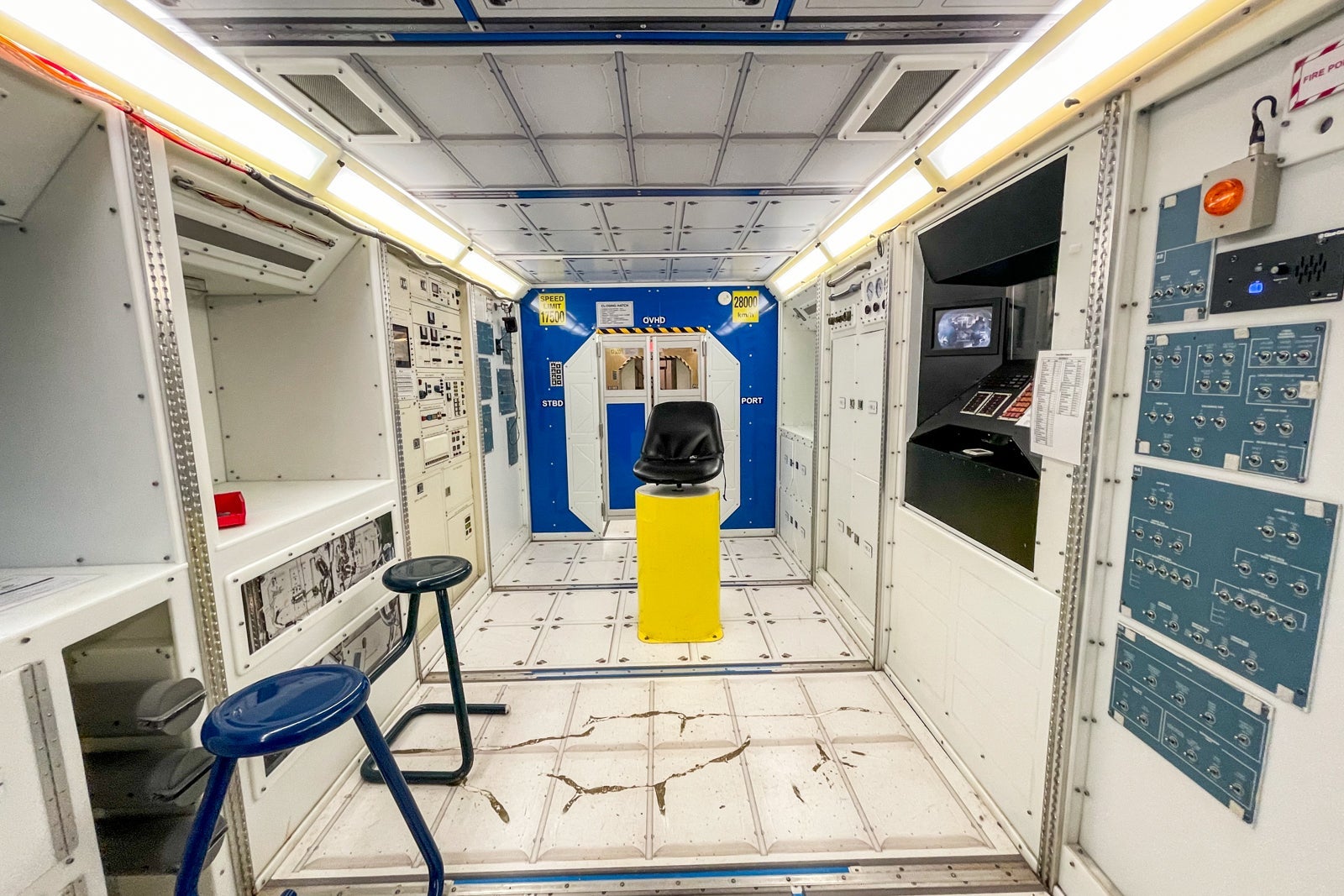
The entire mission was a reminder of why I never pursued science professionally, despite my love of space: I'm absolutely terrible at math and science, and I can't for the life of me follow directions.
My teammates on the ISS swiftly executed their experiments, while I created a miniature meltdown attempting to conjure artificial snow in a beaker. There is a reason, I remembered, why you're supposed to read the instructions in their entirety before mixing chemicals.
Our counselors were at once amused and horrified when the entire mission ended in a disastrous crash landing.
Throughout the weekend, we saw a show at the planetarium that took us on a live, guided voyage through our solar system, and attended a private presentation on the history of the space program, with such artifacts as space suit-boot prototypes and astronaut food trays. We toured aircraft and got a glimpse of activities participants in other programs would experience.

On our last day, we tested our engineering (and listening) skills by designing an ablative heat shield to keep a raw egg from being blasted into oblivion by a blow torch, simulating the thermal protective tiles used to protect spacecraft as they return to Earth.
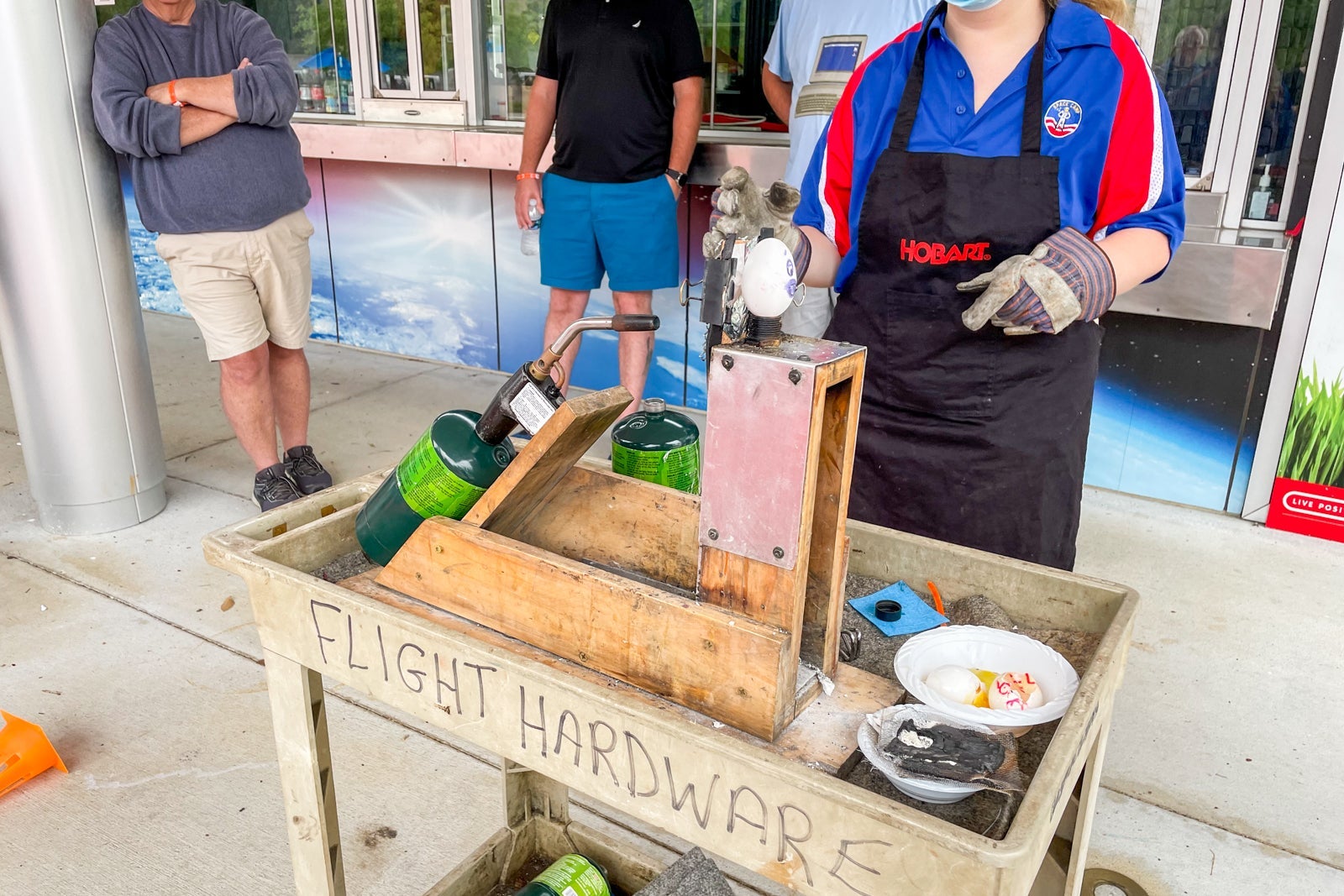
From a table full of supplies, we had to select the right materials within our imaginary budget and arrange them in the correct order to protect our egg cadet. My team opted for a mix of spackle, aluminum, cork, steel wool and a steel mesh, but failed the assignment: Our egg took a beating and was sun-burnt and partially hard-boiled.
The whole mission was futile, of course, since the eggs had to be cracked open to check for internal cooking either way.
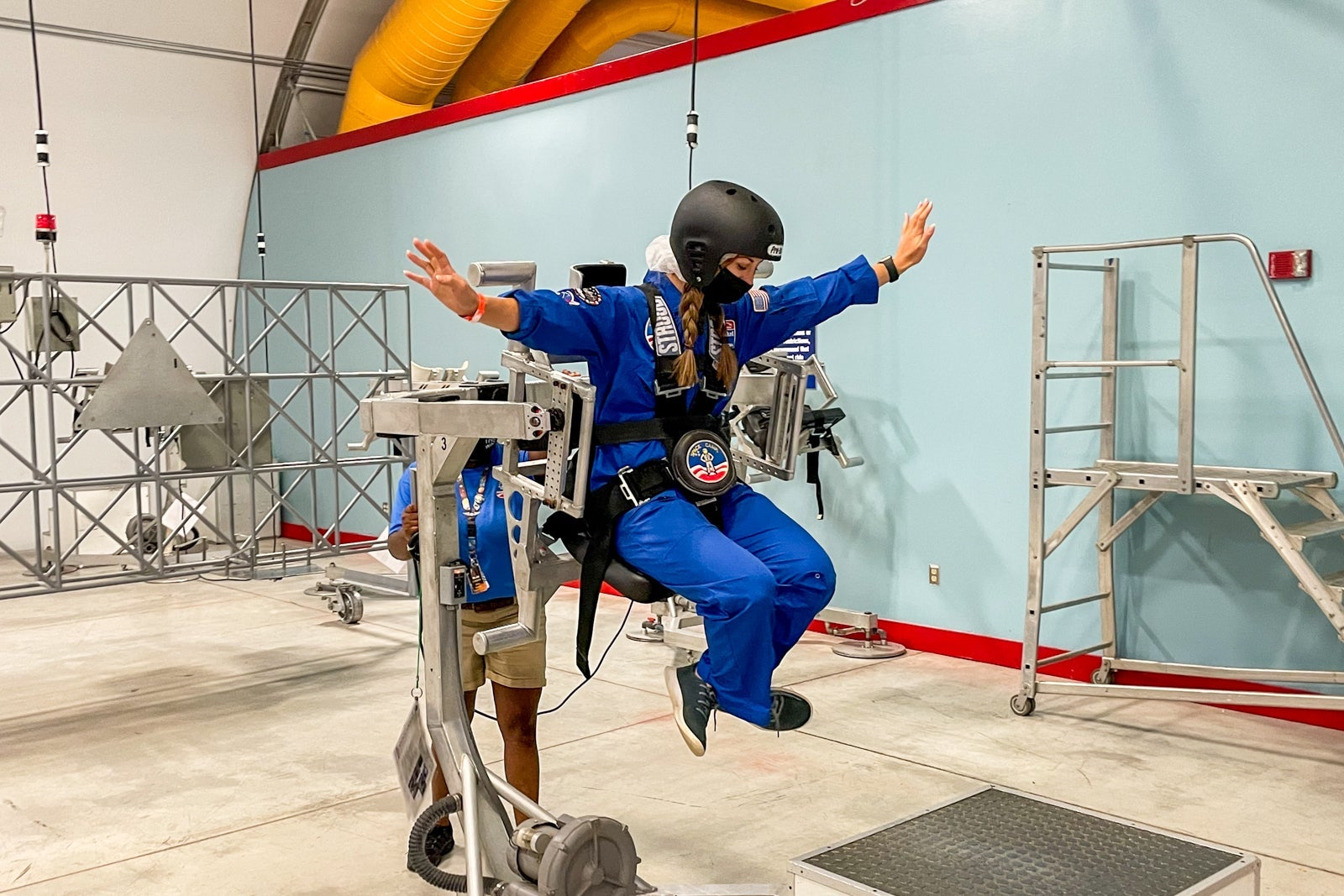
We also were strapped into a harness that simulated the sensation of walking and hopping across the surface of the moon, where you'd only have one-sixth the gravity to weigh you down. Finally, we took turns trying out the 5DF (five degrees of freedom) chair that allows you to maneuver forward and backward, to move from side to side, and to roll, pitch and yaw.
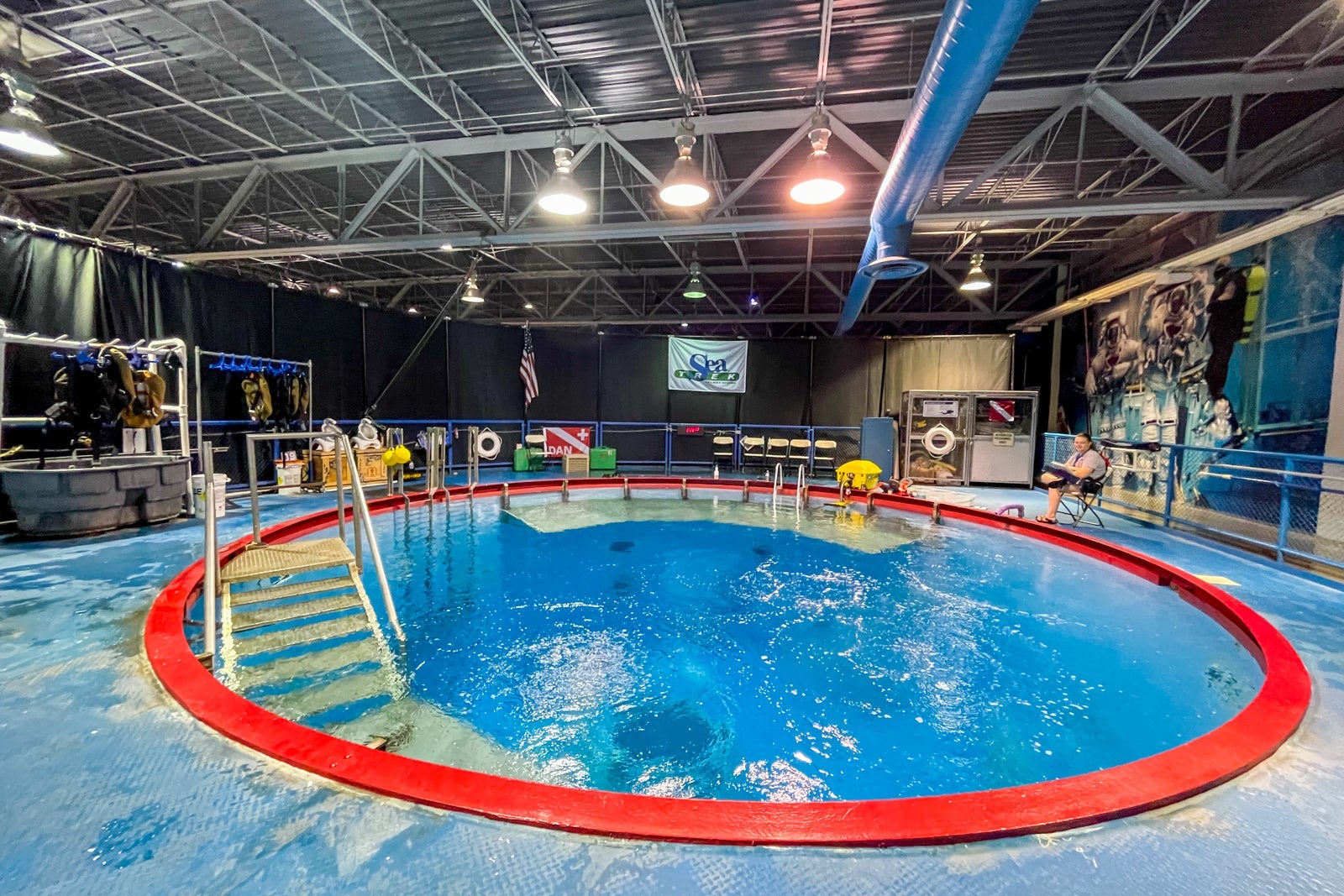
Longer and more expensive programs, such as the five-night Adult Advanced Space Academy, will include neutral buoyancy experiences in the Underwater Astronaut Trainer, but anyone visiting the U.S. Space and Rocket Center can buy tickets for these activities, too.
Many of us were interested in the scuba diving experience ($150 per person) and sea trek ($79 per person), the latter of which has participants wearing a specialized diving helmet. But for astronauts in training who prefer to stay dry, there's also a virtual-reality snorkeling experience ($35 per person).
A number of us attempted to get tickets, but found the experiences were sold out. So, plan far in advance if you're attending Space Camp during the summer along with actual children on school break.
After our first day of Space Camp, I joined Fredo and a few other adult astronauts in training for drinks at Campus No. 805, a former middle school that has been reborn as an entertainment venue just down the road from the U.S. Space and Rocket Center. It's complete with multiple bars, restaurants, breweries and such activities as axe throwing and arcade games.
Alcohol may be prohibited on the ISS, but after a day of very important space duties, playing a round of pinball while drinking a pint of adult apple juice (hard cider) seemed like the only reasonable way to conclude the evening.
We are all, it turns out, just a bunch of kids at heart.
The future of space travel
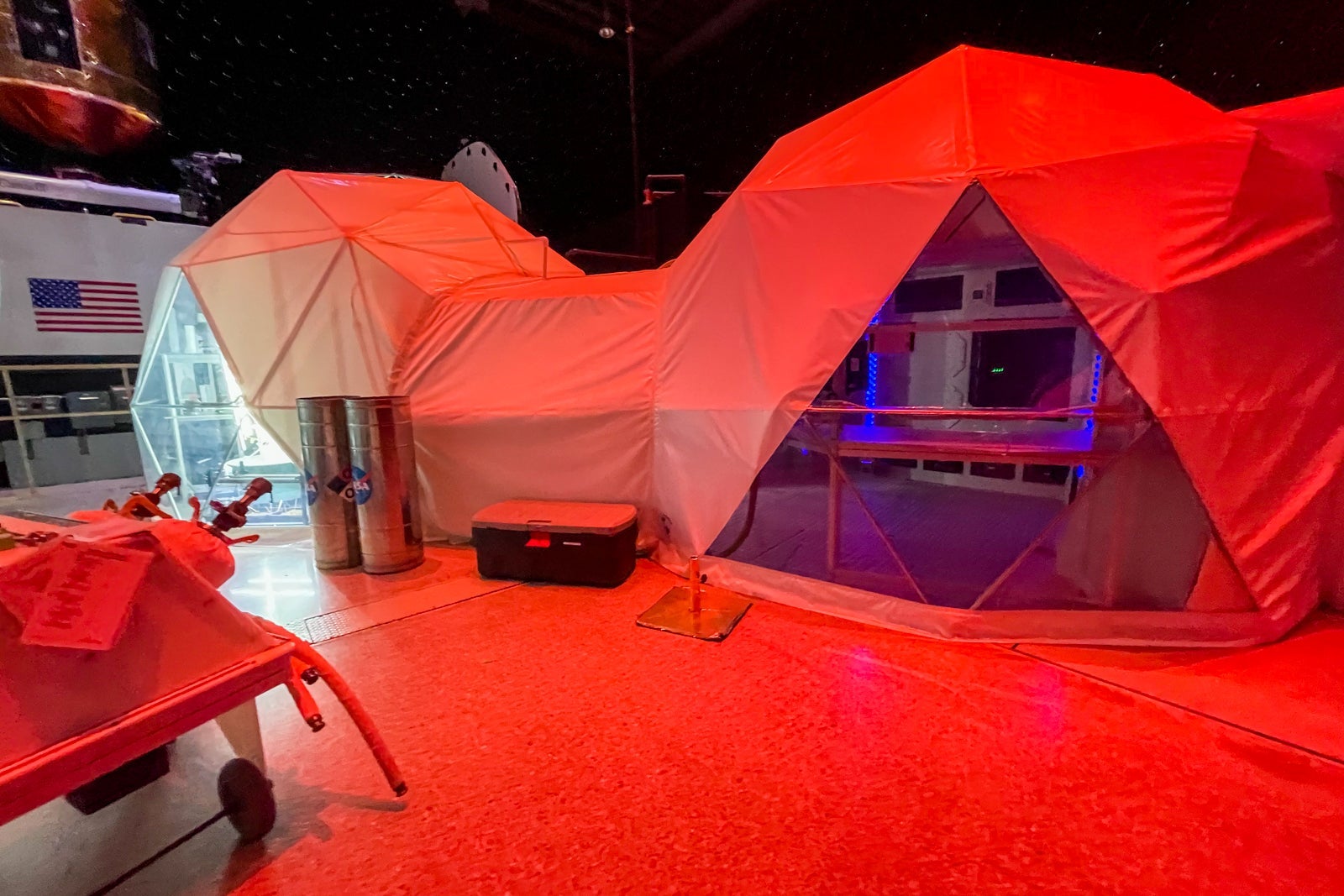
As much as Space Camp is about having experiences that simulate what astronauts do today, it's also a very forward-looking facility, with reminders everywhere of just how much remains unknown, and how much of the universe we have left to explore.
Some Space Camp attendees, for example, will perform simulated missions to Mars Base Camp, which is awash in a transportive red glow and complete with a hydroponic garden.
At Space Camp, many of us talked about how eager we'd be to board a commercial flight to space, to reach that final frontier, even if only for a few moments.
For some people, after all, that's already a reality.
In July, just days after I attended Adult Astronaut Training, the space company Blue Origin (owned by Amazon founder Jeff Bezos), launched four people into suborbital space aboard the New Shephard rocket — including Bezos and Mary "Wally" Funk, who is famous for being the first female Federal Aviation Administration inspector and first female National Transportation Safety Board air safety investigator. Funk is also a two-time Adult Space Academy graduate.
Earlier that same month, Sir Richard Branson and a crew of five earned their astronaut wings after flying the Virgin Galactic Unity more than 50 miles above the Earth. Virgin Galactic plans to one day sell commercial passenger space flights for $250,000 per seat.
During my call with Ammons, our conversation also turned toward the future.
The commercial space industry, Ammons said, is "opening up these windows of opportunity for you and me [and] people who don't have the Ph.D.," but still have a fascination with space.
Perhaps, one day, I'll board a commercial space flight to experience extraterrestrial travel for real. But, for now, traveling to Space Camp is a much more realistic (and affordable) endeavor.
TPG featured card
at American Express's secure site
Terms & restrictions apply. See rates & fees.
| 4X | Earn 4X Membership Rewards® points per dollar spent on purchases at restaurants worldwide, on up to $50,000 in purchases per calendar year, then 1X points for the rest of the year. |
| 4X | Earn 4X Membership Rewards® points per dollar spent at US supermarkets, on up to $25,000 in purchases per calendar year, then 1X points for the rest of the year. |
| 5X | Earn 5X Membership Rewards® points on prepaid hotel stays booked through AmexTravel.com or the Amex Travel App™. |
| 3X | Earn 3X Membership Rewards® points on flights booked through AmexTravel.com, the Amex Travel App™, or purchased directly from airlines. |
| 2X | Earn 2X Membership Rewards® points on prepaid car rentals booked through AmexTravel.com or the Amex Travel App™ and cruises booked and paid through AmexTravel.com. |
| 1X | Earn 1X Membership Rewards® point per dollar spent on all other eligible purchases. |
Pros
- Valuable dining and food-related credits
- Flexible rewards with airline and hotel transfer partners
- Multiple travel and purchase protections
- No foreign transaction fees
- Access to Amex Offers for additional savings (enrollment required)
Cons
- Not as useful for those living outside the U.S.
- Some may have trouble using Uber and other dining credits
- You may be eligible for as high as 100,000 Membership Rewards® Points after you spend $8,000 in eligible purchases on your new Card in your first 6 months of Card Membership. Welcome offers vary and you may not be eligible for an offer. Apply to know if you’re approved and find out your exact welcome offer amount – all with no credit score impact. If you’re approved and choose to accept the Card, your score may be impacted.
- Earn 4X Membership Rewards® points per dollar spent on purchases at restaurants worldwide, on up to $50,000 in purchases per calendar year, then 1X points for the rest of the year.
- Earn 4X Membership Rewards® points per dollar spent at US supermarkets, on up to $25,000 in purchases per calendar year, then 1X points for the rest of the year.
- Earn 5X Membership Rewards® points on prepaid hotel stays booked through AmexTravel.com or the Amex Travel App™.
- Earn 3X Membership Rewards® points on flights booked through AmexTravel.com, the Amex Travel App™, or purchased directly from airlines.
- Earn 2X Membership Rewards® points on prepaid car rentals booked through AmexTravel.com or the Amex Travel App™ and cruises booked and paid through AmexTravel.com.
- Earn 1X Membership Rewards® point per dollar spent on all other eligible purchases.
- Pay It® lets you tap in the American Express® App to quickly pay for small purchase amounts throughout the month and still earn rewards the way you usually do. Plan It® gives you the option to split up big purchases into equal monthly payments with a fixed fee. You’ll know upfront exactly how much you’ll pay.
- $120 Dining Credit: Earn up to a total of $10 in statement credits monthly when you pay with the Gold Card at Grubhub (including Seamless), Buffalo Wild Wings, Five Guys, The Cheesecake Factory, and Wonder. This can be an annual savings of up to $120. Enrollment required.
- $100 Resy Credit: Get up to $100 in statement credits each calendar year at over 10,000 qualifying U.S. Resy restaurants after you pay for eligible purchases with the American Express® Gold Card. That’s up to $50 in statement credits semi-annually. Enrollment required.
- $84 Dunkin' Credit: Earn up to $7 in monthly statement credits after you pay with the American Express® Gold Card at U.S. Dunkin’ locations. Enrollment required.
- $120 Uber Cash on Gold: Enjoy up to $120 in Uber Cash annually with your Gold Card. Just add your Card to your Uber account and you'll get $10 in Uber Cash each month to use on orders and rides in the U.S. when you select an Amex Card for your transaction.
- Enjoy complimentary Hertz Five Star® Status benefits like skipping the counter at select locations, adding an additional driver at no additional cost*, and vehicle upgrades**. Benefit enrollment and Hertz Gold+ registration are required. *Additional drivers must meet standard rental qualifications and must be a spouse or domestic partner to qualify as complimentary. Other additional drivers subject to fees. **Benefits are subject to availability and vary by location. Additional Hertz program Terms and Conditions including age restrictions apply.
- Book two nights or more with The Hotel Collection through AmexTravel.com or the Amex Travel App™ and receive a $100* credit towards eligible charges at over 1,400 upscale hotels worldwide. *Eligible charges vary by property.
- Book your travel through the Amex Travel App™ with added peace of mind – backed by American Express® service and support. Only for American Express® Card Members.
- Whenever you need us, we're here. Our Member Services team will ensure you are taken care of. From lost Card replacement to statement questions, we are available to help 24/7.
- No Foreign Transaction Fees.
- Annual Fee is $325.
- Terms Apply.