The Points Guy believes that credit cards can transform lives, helping you leverage everyday spending for cash back or travel experiences that might otherwise be out of reach. That's why we publish a variety of editorial content and card comparisons: to help you find a great card to turn your goals into reality.
Our site may earn compensation when a customer clicks on a link, when an application is approved, or when an account is opened with our partners, and this may impact how or where these products appear. While we don't cover all available credit cards, our editorial team creates and maintains all of the analysis of these cards, and our content is not influenced nor subject to review by any credit card company, bank or partner prior to (or after) publication. Please view our advertising policy and product review methodology for more information.
Advertiser disclosure
The Points Guy believes that credit cards can transform lives, helping you leverage everyday spending for cash back or travel experiences that might otherwise be out of reach. That's why we publish a variety of editorial content and card comparisons: to help you find a great card to turn your goals into reality.
Our site may earn compensation when a customer clicks on a link, when an application is approved, or when an account is opened with our partners, and this may impact how or where these products appear. While we don't cover all available credit cards, our editorial team creates and maintains all of the analysis of these cards, and our content is not influenced nor subject to review by any credit card company, bank or partner prior to (or after) publication. Please view our advertising policy and product review methodology for more information.
Guides
11 mistakes people make when taking a cross-country Amtrak
Katie Genter is a digital nomad who has traveled full time since June 2017. She writes and edits stories about points and miles, and loyalty programs, often letting her personal experiences color these stories.
September 8, 2019 • 13 min read
The cards we feature here are from partners who compensate us when you are approved through our site, and this may impact how or where these products appear. We don't cover all available credit cards, but our analysis, reviews, and opinions are entirely from our editorial team. Terms apply to the offers listed on this page. Please view our advertising policy and product review methodology for more information.Editorial disclaimer: Opinions expressed here are the author's alone, not those of any bank, credit card issuer, airline or hotel chain, and have not been reviewed, approved or otherwise endorsed by any of these entities.
Comments
By commenting, you agree to our Community Guidelines to help create a positive space for conversation. The responses below are not provided or commissioned by the bank advertiser, our partners, or The Points Guy (“TPG”). They have not been reviewed, approved, or otherwise endorsed by any of these parties. All responses are submitted by individual contributors, and neither the bank advertiser, our partners, nor TPG are responsible for ensuring that all posts and/or questions are answered.
Related stories
Quick summary
The article outlines common mistakes travelers make on cross-country Amtrak journeys and offers practical tips to avoid them.
Key advice includes choosing the right route and class of service, preparing for variable amenities and meal options, and packing appropriately for comfort and entertainment.
Travelers are encouraged to research scenic routes, understand sleeper car benefits, and bring snacks, layers and offline entertainment.
The guide also highlights the importance of social interaction and using a payment method that provides travel protections for added peace of mind.
What to consider
Some routes offer more scenic experiences and specific train types (Viewliner vs. Superliner) affect comfort and amenities.
Meals are included for sleeper car passengers on most routes, but not all; coach travelers pay separately and may need reservations for the dining car.
Checked baggage is available at no extra cost, but space in cabins and seats is limited, so packing efficiently is advised.
What you'll miss from the article
A detailed breakdown of scenic Amtrak routes, sleeper car options and insider strategies to maximize comfort and enjoyment on long-distance train travel.
Generated by AI with support from our editorial team.
Update: Some offers mentioned below are no longer available. View the current offers here.
All aboard! For the entire month of September at The Points Guy, we'll be exploring the world of train travel with reviews, features, deals and tips for maximizing your trip by rail.
You'll find many different types of people on Amtrak trains, from oil workers commuting to remote areas for work to families traveling to visit relatives to high school and college students with a lot more time than money. Of course, you'll also likely meet travelers from both the US and abroad who are traveling the train's entire multiday route more as an experience than as a form of transportation.
My husband, JT, and I certainly fell into the "traveling for the experience" category when we decided to book travel on the Empire Builder Train 28 from Portland, Oregon, to Chicago during Amtrak's buy one, get one roomette sale last fall. We both enjoyed the 45-hour train ride — but it can be a long ride if you're not prepared or have incorrect expectations.
Regardless of why you're traveling, here are 11 mistakes people make when taking a cross-country Amtrak as well as how to avoid making these mistakes yourself.
Choosing the Wrong Route
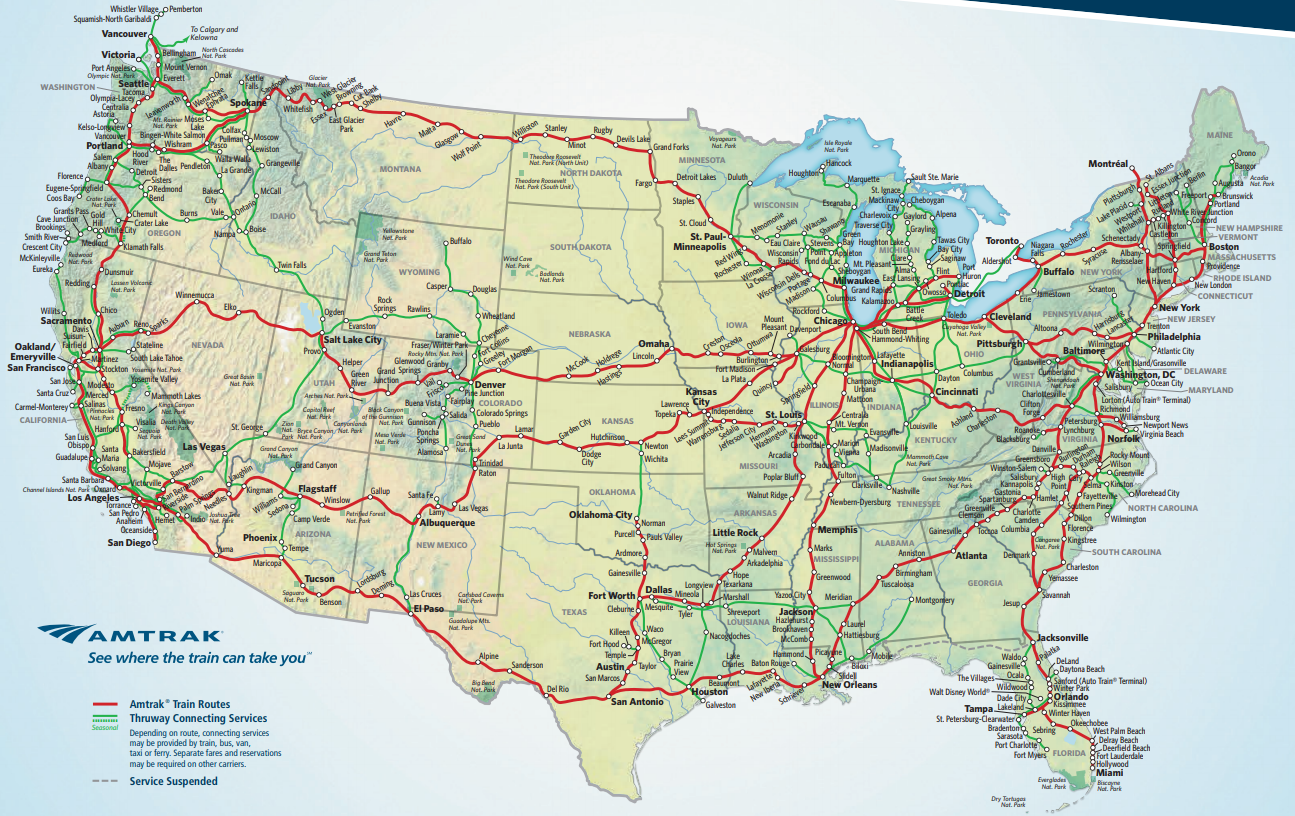
Amtrak travels to over 500 destinations in 46 states on 33 train routes, some of which reach into Canada. Not all of these routes are cross-country routes though, and some travel much farther than others.
The current Amtrak national route map, courtesy of Amtrak.
If you live near an Amtrak station or have a particular destination in mind, this may determine the route you take. But, if you're mainly traveling for the experience and scenery, you'll probably want to consider one of the following multiday scenic routes:
Route
Starting and Ending Cities
Time
Highlights
California Zephyr
Chicago — Oakland
51 hours
One of the most beautiful train trips in North America
Travels through the heart of the Rockies and snow-capped Sierra Nevadas, as well as through the plains of Nebraska to Denver
Sunset Limited
New Orleans — Los Angeles
48 hours
Amtrak's southernmost route
Travels past Bayou Country, the Mexican border, southwestern deserts and California mountains
Travels through the North Dakota plains, across the spectacular Gassman Coulee Trestle, through Big Sky country in Montana and past Glacier National Park
Southwest Chief
Chicago — Los Angeles
40+ hours
Grandeur of the American West
Travels past wheat fields and ranches, missions and pueblos, mountains and deserts and through canyon passages only a few feet wider than the train itself
Coast Starlight
Seattle — Los Angeles
35 hours
West Coast train adventure
Passes by dramatic snow-covered peaks of the Cascade Range and Mount Shasta, lush forests, fertile valleys and long stretches of Pacific Ocean shoreline
Texas Eagle
Chicago — San Antonio
32 hours
Heart Land of America
Winds through the Land of Lincoln, across the Mississippi River and through the Ozarks to Little Rock and the piney woods of East Texas
Before booking, take a look at the route schedule in your direction of travel. Scan the stop names and check that you're scheduled to reach any stops or scenic areas that you want to see during the day. After all, you don't want to sleep through the most scenic part of the trip!
And, if you're looking to book accommodation in the sleeper car, know there are two types of Amtrak long-distance trains: Viewliner and Superliner. Single-level Viewliner trains are usually on long-distance routes to/from New York City, while two-level Superliner trains are usually on other long-distance routes. Viewliner and Superliner trains offer many of the same amenities, but some passengers believe the roomette on the Viewliner is more comfortable due to a more spacious upper bunk that has its own window.
Booking the Wrong Class
If you decide to take a long-distance Amtrak train, you have an important decision that will impact your comfort during the journey: whether or not to book accommodations in the sleeper car. And, if you decide to book a sleeper car accommodation, you'll need to decide between a roomette, bedroom, bedroom suite and family bedroom. Some of these rooms even include a toilet and/or shower, so consider your options carefully if having your own shower or toilet is important to you.
A bedroom on the Superliner is ideal for two passengers but can hold up to three. There's an in-room toilet and shower.
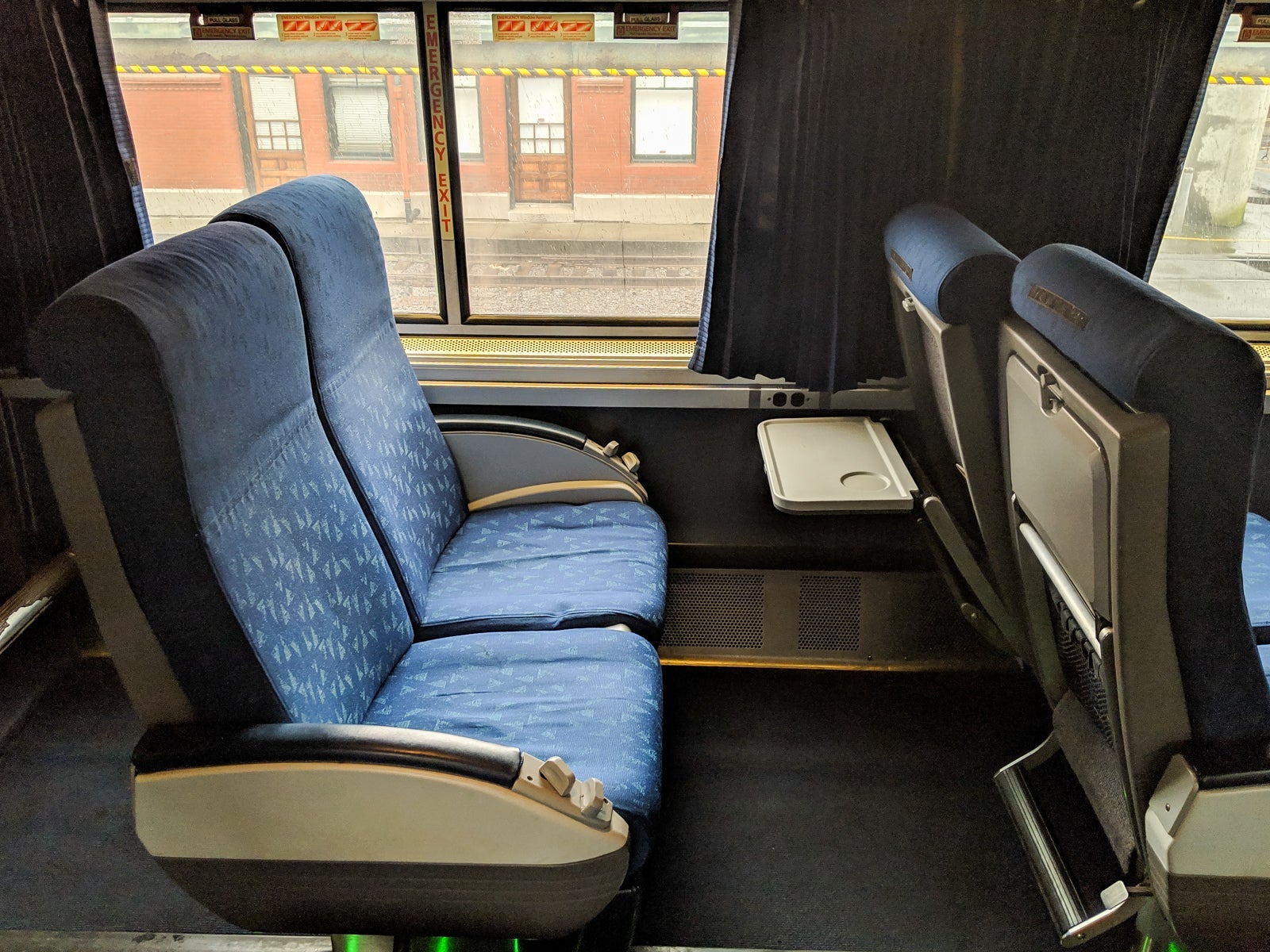
Coach seats are relatively spacious and recline substantially. But, coach passengers don't have access to a shower and only have access to general-use toilets — so be aware of this if you opt to travel in coach. If you're traveling in coach overnight, you'll want to bring your own blanket, pillow, ear plugs, eye mask, toiletries and body wipes.
Coach seats on the Empire Builder were worn, but provided plenty of space.
Overlooking Meals
Passengers in the sleeper car have meals included, except on Silver Star trains between New York City and Miami. So, if you're debating whether to buy-up to the sleeping car accommodation, be sure to account for your meals being included if you do so. Plus, sleeper car passengers often don't need reservations for the dining car — and when reservations are required, the sleeping car attendant will organize the reservations for you.
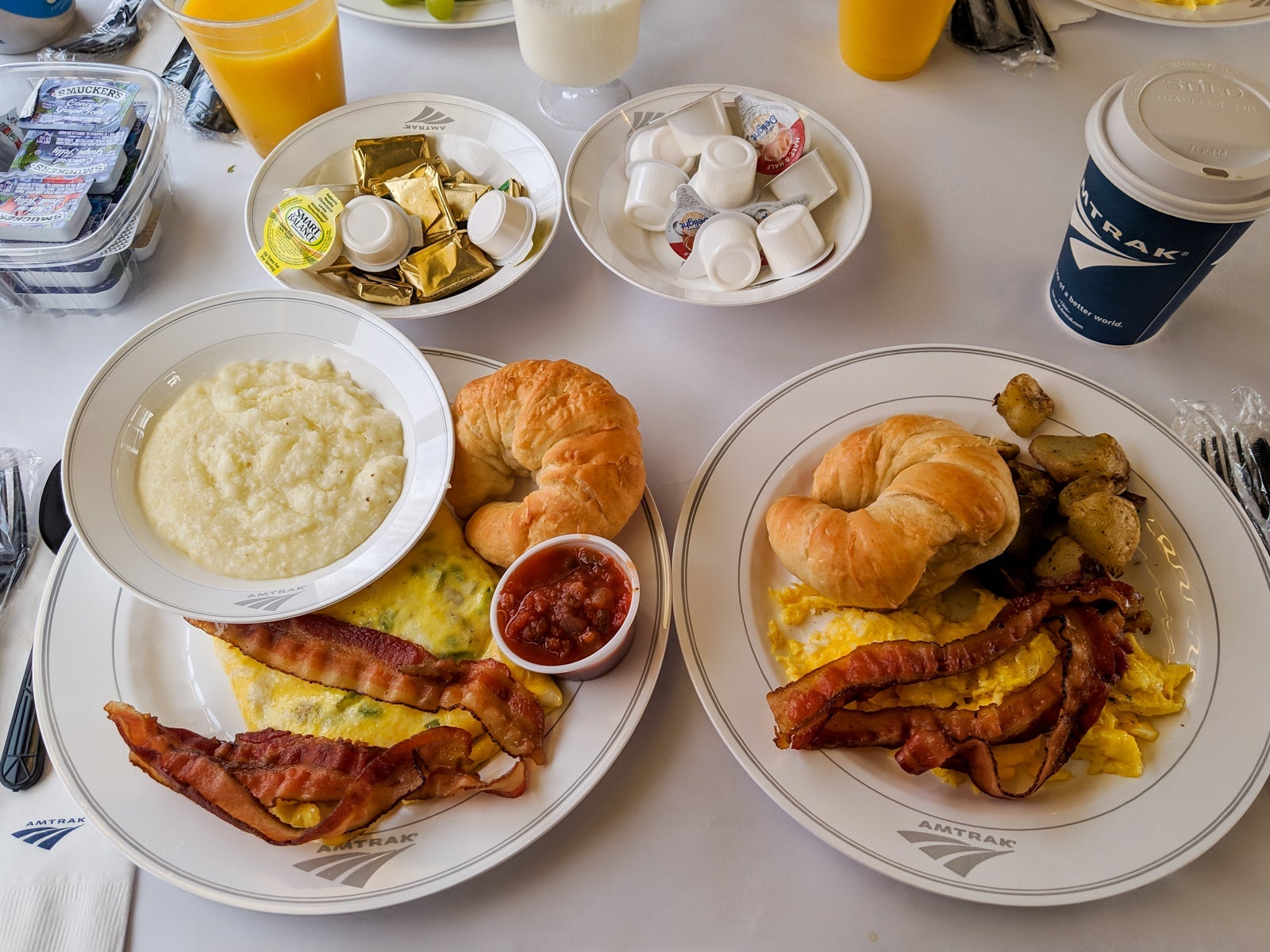
During my time on the Empire Builder, breakfast was by far the best meal.
If you aren't traveling in the sleeper car, you'll need to pay for your own meals in the dining car or at the cafe. Although prices in the dining car may seem high to some travelers — and can certainly add up for a family on an extended trip — eating in the dining car is an experience that you'll want to do at least once.
If you're sitting in coach and want to eat in the dining car, be sure to inquire whether reservations are required for certain meals and make the necessary reservations as soon as possible. Amtrak has sample dining car and cafe car menus with prices on their website for each route.
A sample Amtrak dining car menu.
Regardless of your class of service, you'll want to heed announcements regarding dining car service. The speaker in the sleeper car wasn't functional during most of our Empire Builder journey, so we almost missed meal service a few times — even though we arrived well within the time we'd been told the dining car would be open.
Not Bringing Snacks and Drinks
Even if you plan to eat in the dining car for every meal, you'll want to bring a few of your favorite snacks for between meals. Although Amtrak can accommodate some diets with prior notice, you may want to bring more substantial food on board if you have restrictions on what you can eat or simply don't want to eat in the dining car for every meal. You're welcome to eat food that you bring on board at your seat, in your private sleeping car accommodations or on the upper level of Superliner sightseer lounges.
Experienced Amtrak riders know that you can bring alcohol for private consumption on board the train. However, Amtrak regulations say you aren't allowed to consume your own alcohol in public areas. So, the best place to consume your alcohol is in your own sleeping car accommodation — although my brother-in-law frequently travels between Birmingham and New Orleans on the Crescent and has never had issues discretely drinking his own stash of alcohol at his coach-class seat.
If you don't bring your own snacks and drinks, you'll need to purchase them on board. (Photo by Summer Hull / The Points Guy)
Not Bringing Layers
Amtrak trains can vary in temperature, so it's best to dress in layers. Many passengers on long-haul routes bring comfortable clothing such as a sweatshirt and athletic pants to change into on board. Not only is this more comfortable, it also means you can change back into relatively clean clothing shortly before departing from the train.
Expecting to be Connected
Many long-distance Amtrak trains still don't feature Wi-Fi — and even on routes that sometimes offer Wi-Fi, I wouldn't recommend relying on it since it will only be available in regions that have cellular coverage. And, cellular networks often won't have coverage in remote areas. So, don't expect to be connected through Wi-Fi or cellular networks for much of your cross-country route.
Power is available at each seat and in each sleeping cabin via a 120v electric outlet.
Power outlets are available at each seat on long distance Amtrak trains. (Photo by Summer Hull / The Points Guy)
Not Using the Observation Car
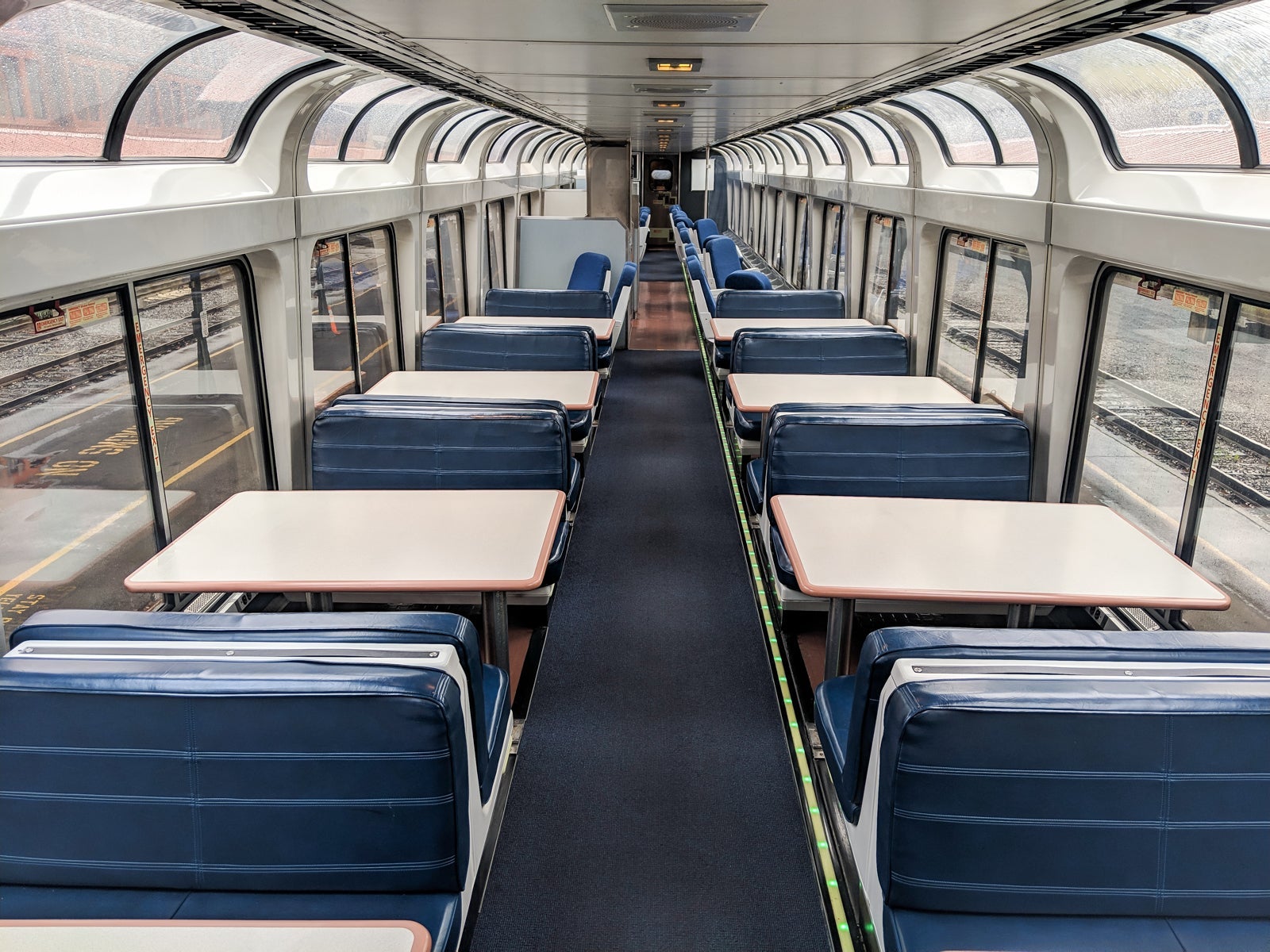
Seven of Amtrak’s most scenic routes have observation cars with floor to ceiling windows. Beside providing excellent views, these first-come, first-served cars provide a nice break from your sleeping cabin or seat. The following routes currently offer observation cars:
The observation car is a great place to enjoy each route's best scenery. So, either do your research ahead of time or chat with train staff once you board to determine what times of each day you want to focus on enjoying the scenery from the observation car.
The observation car is bright, and a great place to enjoy the views.
Not Bringing Off-Line Entertainment
Although you'll definitely want to enjoy the views, and may want to bring binoculars, looking at the scenery can get monotonous. Plus, there's not much to see after dark. So, it's generally a good idea to bring offline entertainment such as books, cards, music, videos, games and podcasts as well as headphones — especially if you're traveling with children. I personally enjoyed listening to podcasts while looking out the window.
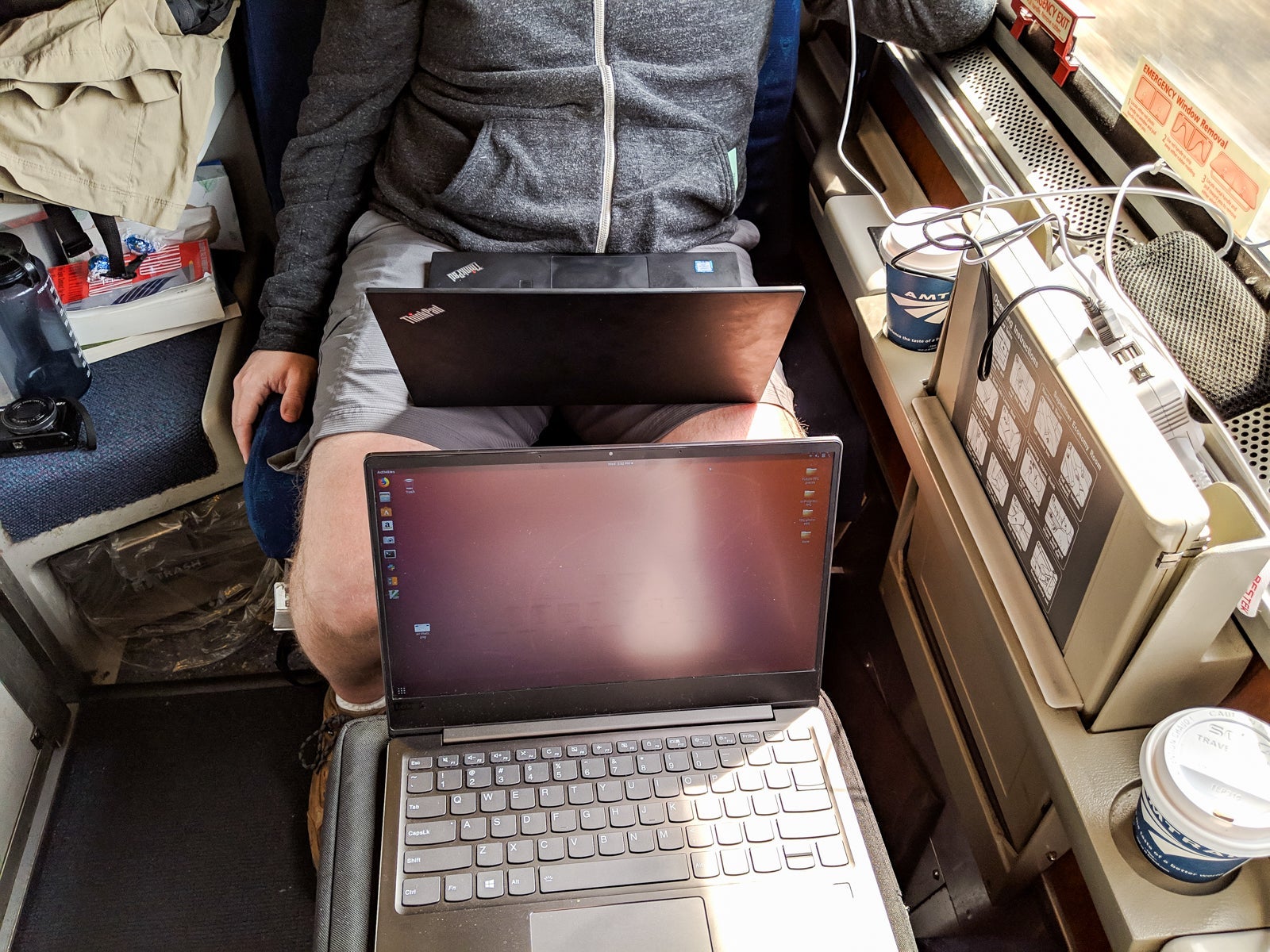
Download some offline entertainment on your cellphone or laptop before boarding.
Bringing Luggage Aboard
Passengers may bring up to two personal items and two carry-on items on board. The personal items should be no larger than 14 x 11 x 7 inches each and weigh no more than 25 pounds, while the carry-on items should be no larger than 28 x 22 x 14 inches and weigh no more than 50 pounds.
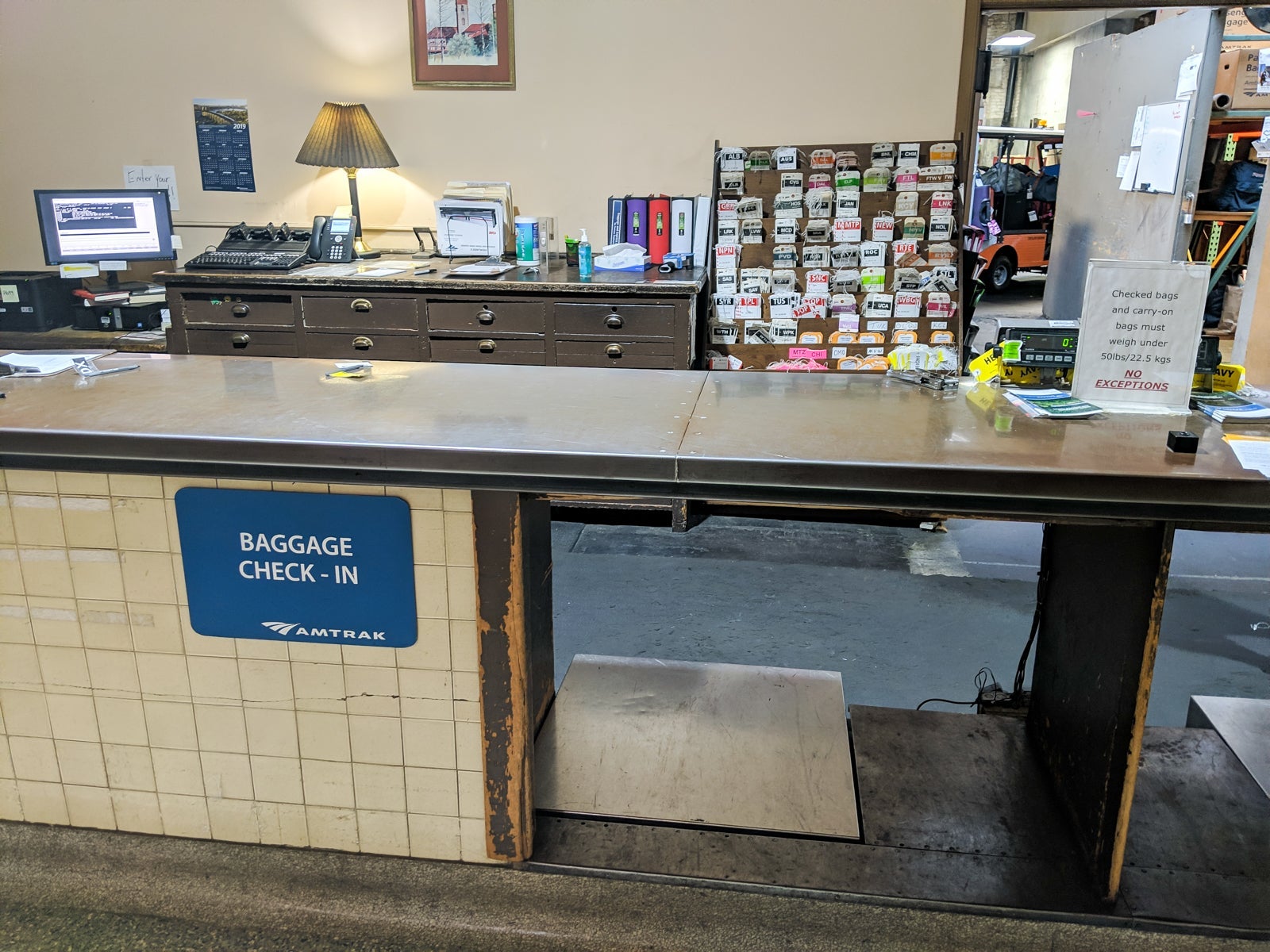
However, this doesn't mean you want to bring that much luggage on board! Luckily, Amtrak also lets you check two bags that each weight up to 50 pounds and are no larger than 75 linear inches for no additional cost. Checking items you won't need on board the train can be a great idea since space in your sleeping cabin or near your seat may be tight.
If you check your baggage before boarding, you don't have to keep track of it or worry about storing it appropriately during your journey.
Keeping to Yourself
Part of the experience of riding Amtrak cross-country is meeting the other passengers and staff. Everyone I met had a story and a different reason for being on Amtrak. You may be seated with other people at a four-person dining car table if you aren't traveling in a group of four, so this can be a great opportunity to chat with others. And, the observation car is usually filled with couples, families and solo travelers that are open to discussion.
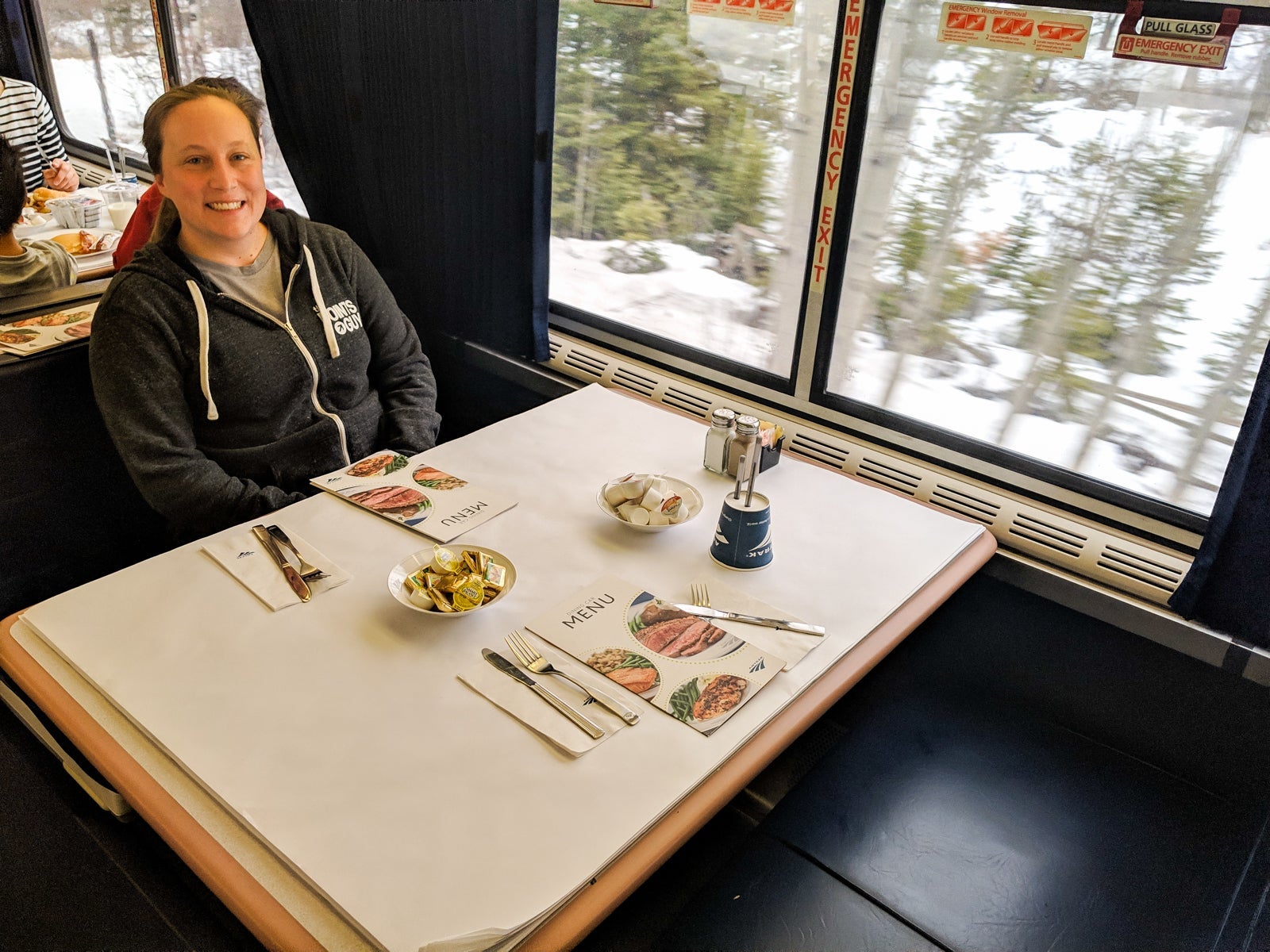
No one joined us for this meal, but the dining car is a great place to chat with other travelers. (Photo by JT Genter / The Points Guy)
Note that food and beverage purchases on board will likely code as dining, not travel. For example, wine I purchased in the dining car coded as dining on the Chase Sapphire Reserve. If you have a co-branded Amtrak card, you'll want to use it to get up to 20% back on food or beverages purchases on board. Otherwise, you'll want to use your go-to dining credit card for purchases in the dining car or cafe.
Bottom Line
Taking a cross-country Amtrak train is a bucket-list trip for many travelers. And, regardless of the travel class and route you choose, you'll likely enjoy your trip if you have reasonable expectations and don't make any of the mistakes described in this guide. I certainly enjoyed my two-night trip last spring on the Empire Builder and look forward to booking another Amtrak journey next time there's a sleeper car promotion that's simply too good to pass up.
Comments
By commenting, you agree to our Community Guidelines to help create a positive space for conversation. The responses below are not provided or commissioned by the bank advertiser, our partners, or The Points Guy (“TPG”). They have not been reviewed, approved, or otherwise endorsed by any of these parties. All responses are submitted by individual contributors, and neither the bank advertiser, our partners, nor TPG are responsible for ensuring that all posts and/or questions are answered.