The Points Guy believes that credit cards can transform lives, helping you leverage everyday spending for cash back or travel experiences that might otherwise be out of reach. That's why we publish a variety of editorial content and card comparisons: to help you find a great card to turn your goals into reality.
Our site may earn compensation when a customer clicks on a link, when an application is approved, or when an account is opened with our partners, and this may impact how or where these products appear. While we don't cover all available credit cards, our editorial team creates and maintains all of the analysis of these cards, and our content is not influenced nor subject to review by any credit card company, bank or partner prior to (or after) publication. Please view our advertising policy and product review methodology for more information.
Advertiser disclosure
The Points Guy believes that credit cards can transform lives, helping you leverage everyday spending for cash back or travel experiences that might otherwise be out of reach. That's why we publish a variety of editorial content and card comparisons: to help you find a great card to turn your goals into reality.
Our site may earn compensation when a customer clicks on a link, when an application is approved, or when an account is opened with our partners, and this may impact how or where these products appear. While we don't cover all available credit cards, our editorial team creates and maintains all of the analysis of these cards, and our content is not influenced nor subject to review by any credit card company, bank or partner prior to (or after) publication. Please view our advertising policy and product review methodology for more information.
Guides
You can do both: 3 strategies I used to perfect my credit score and still earn points
Ethan's been a frequent flier for as long as he can remember, from studying abroad in Paris to moving to Shanghai after graduating college, where he served as TPG's eyes and ears for all things travel in the Asia-Pacific region. If you asked him where he wants to travel next he'd quote Anthony Bourdain and tell you "anytime I'm eating spicy noodles in a bowl, I'm happy."
January 11, 2022 • 8 min read
The cards we feature here are from partners who compensate us when you are approved through our site, and this may impact how or where these products appear. We don't cover all available credit cards, but our analysis, reviews, and opinions are entirely from our editorial team. Terms apply to the offers listed on this page. Please view our advertising policy and product review methodology for more information.Editorial disclaimer: Opinions expressed here are the author's alone, not those of any bank, credit card issuer, airline or hotel chain, and have not been reviewed, approved or otherwise endorsed by any of these entities.
Comments
By commenting, you agree to our Community Guidelines to help create a positive space for conversation. The responses below are not provided or commissioned by the bank advertiser, our partners, or The Points Guy (“TPG”). They have not been reviewed, approved, or otherwise endorsed by any of these parties. All responses are submitted by individual contributors, and neither the bank advertiser, our partners, nor TPG are responsible for ensuring that all posts and/or questions are answered.
Related stories
Quick summary
Building credit early can help secure better travel rewards and financial opportunities later.
Being added as an authorized user on a trusted person's longstanding card can significantly boost your credit history.
Maintaining cards with no ongoing fees can help lengthen your credit history and support your score over time.
Starting with cards that are easier to be approved for is key to avoiding early rejections and setbacks.
What to consider
Authorized user status allows you to benefit from another person's credit history without needing to use the card.
Keeping no-fee cards open, even with minimal use, helps maintain a strong average age of accounts.
Applying for premium cards too soon may lead to rejections, so it's best to build credit with accessible options first.
What you'll miss from the article
Personal strategies and lessons learned for establishing a strong credit foundation while maximizing points and miles potential.
Generated by AI with support from our editorial team.
Update: Some offers mentioned below are no longer available. View the current offers here.
When I first started my points and miles journey, I was a 20-year-old college sophomore who’d never held a credit card in my name before. I had big dreams of fancy first-class suites and luxury hotels, but I was also playing the long game.
While I was primarily interested in racking up as many points and miles as humanly possible, I also wanted to build a sustainable credit score that would benefit me later in life when I needed a mortgage or car loan. Here are the decisions I made that helped me out long term, even after those early welcome bonuses had come and gone.
Being added as an authorized user on my dad’s credit card
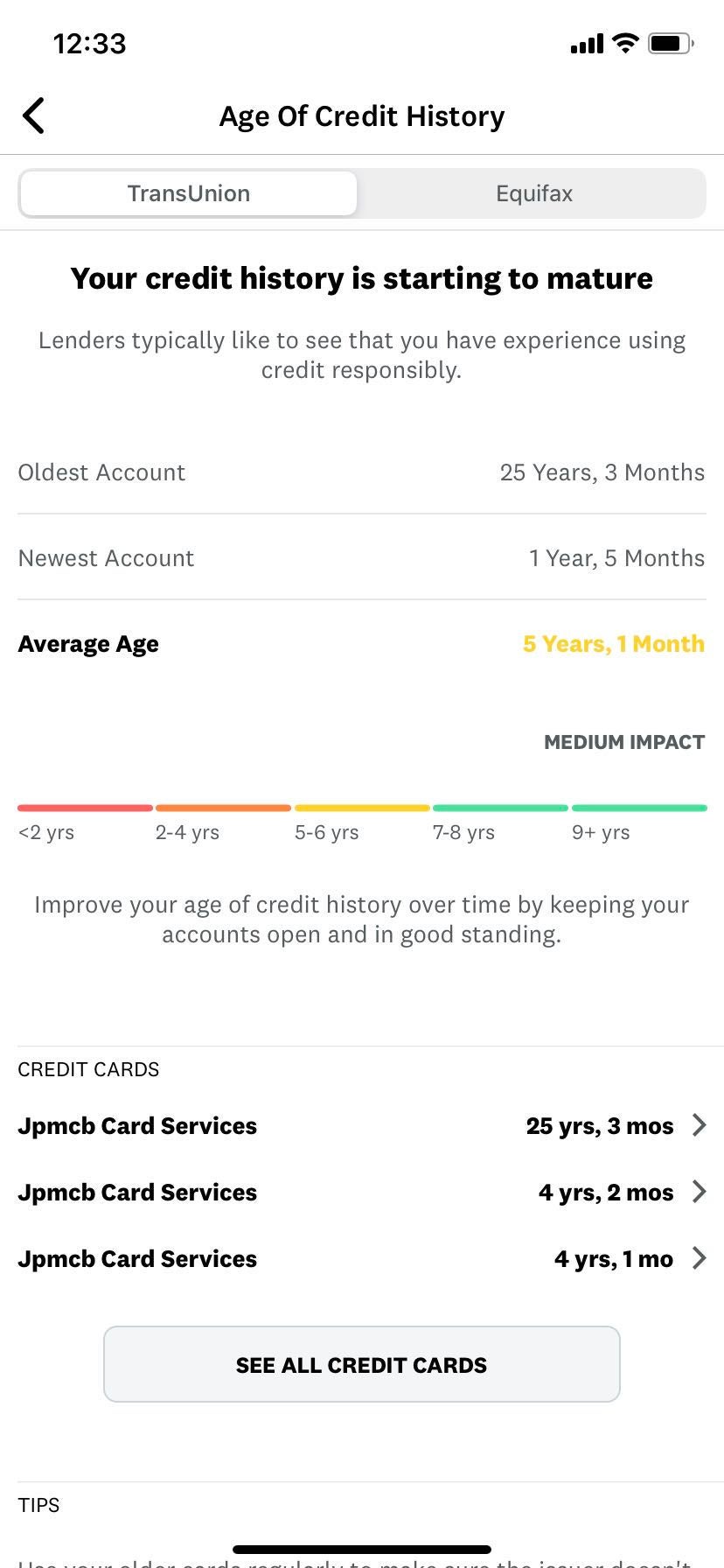
Before I left for college, my dad added me as an authorized user on his more-than-20-year-old United Explorer Card so that I’d have it in case of emergencies. I put it in the back of my (mostly empty) wallet, not thinking much of it, and sort of forgot about it until my sophomore year, when I went to apply for my first credit card. I went to go check my credit score, not even sure if I’d have one at this stage of my life, and was shocked to see that Credit Karma was showing 20-plus years of on-time payments for me and a score in the 740s.
(Screenshot courtesy of Credit Karma)
This was how I learned the massive advantage that comes with being added as an authorized user — you essentially get to “borrow” the credit history of whoever adds you. Here I was, not old enough to legally drink, with a very good credit history that stretched back all the way to the year I was born!
Using this springboard, I was able to get approved for several amazing travel rewards cards in my first year, including the Chase Sapphire Preferred Card and the American Express® Business Gold Card. Instead of using my early applications to try and build credit with starter cards, which generally come with lower bonuses and fewer perks, I was able to start off with some heavy hitters.
Nowadays, a lot of people are nervous about this approach, especially since it requires asking their parents (or any older individual they trust who has good credit) to add them to their credit cards. However, doing so helps boost your average age of accounts, which goes a long way toward building credit. That's why it's important to ask the person in your life who has had their card open the longest.
Many people are worried that adding someone as an authorized user is risky because they can rack up charges and leave you on the hook, but there’s an easy way around that: Just don’t give them the card. In order for your credit score to benefit, the authorized user account simply has to be open. You never need to spend anything on the card, and you don’t even need to have it in your possession for this to work. So parents, add your children as authorized users to help boost their credit, and either set a limit on what can be spent on that card or simply put it in a sock drawer or rip it up.
Picking cards with no annual fee that I could keep open forever
When you’re just starting out with your first credit card(s), one of the biggest weaknesses on your credit report is likely to be your low average age of accounts (or length of credit history). This category counts for roughly 15% of your credit score, and if your age of accounts is too low, you might get automatically rejected for a number of cards. In fact, my first two rejections ever, for the Citi Prestige® Card and the old Chase Ritz Carlton Card, were both because my average age of accounts had dipped below one year during my first big application spree.
The information for the Citi Prestige Card has been collected independently by The Points Guy. The card details on this page have not been reviewed or provided by the card issuer. The factors that make up your FICO score. (Image courtesy of FICO)
Having your parents add you as an authorized user can help you circumvent this for your early applications, but it’s important that you work actively to build a strong credit history yourself. One of the best ways to do this is by opening no-annual-fee cards that you can (and should) keep open forever, even if you don’t use them very often. Just make sure you put a small charge on them every nine to 12 months to avoid having the account closed for inactivity.
There are a lot of cards in my wallet that I plan to keep open for a long time, but the only ones that I know with 100% certainty I’ll keep open forever are the ones that don’t charge an annual fee. Benefits change, loyalty programs get devalued and your favorite card right now might be obsolete in five years. By including a few no-annual-fee cards in your early applications, you can hedge against this and build a sustainable credit score.
It just so happens that two of my favorite cards, for beginners and points pros alike, don’t carry annual fees. I’m talking about the Chase Freedom and Chase Freedom Unlimited (the Chase Freedom is no longer open to new applicants), which are technically billed as cash-back cards but can earn Ultimate Rewards points if you also hold a Chase Sapphire Preferred Card, a Chase Sapphire Reserve or an Ink Business Preferred Credit Card. The Freedom Unlimited earns 1.5% cash back/1.5 points per dollar spent on purchases with no caps or limits, while the Freedom earns 5 points per dollar spent in rotating quarterly categories on your first $1,500 in purchases. These were two of the first cards I applied for thanks to Chase’s 5/24 rule, and they’ve continued to age well on my credit report and help boost my score.
The information for the Chase Freedom card has been collected independently by The Points Guy. The card details on this page have not been reviewed or provided by the card issuer. (Photo by John Gribben for The Points Guy)
Starting with cards that were easier to get approved for
The early days of building credit history are like a game of Chutes and Ladders. Your score inches up ever so slowly, but any mistakes you make can set you back quite a ways. This is why it’s very important not to overreach and to focus on cards that you have a good chance of getting approved for.
Getting rejected for a credit card doesn’t actively hurt your score (you just get a new inquiry but no additional negative mark), but if your credit report has a lot of recent inquiries and a low number of total accounts or short length of credit history, banks may read between the lines and decide not to approve you the next time you apply.
What I mean by all of this is that even if you believe firmly in the value proposition of The Platinum Card® from American Express or the Chase Sapphire Reserve, that probably shouldn’t be the first card you ever apply for. There are plenty of great starter cards that are easier to get approved for, allowing you to earn points and build credit without dealing with the confusing sting of rejection early on.
I was approved for the first seven cards in a row I applied for. It wasn’t until I overreached and started applying for premium cards such as the Citi Prestige and Ritz Carlton Rewards cards that I ran into trouble. I learned a lot from those rejections and patiently waited until I had a full year of credit history with Chase specifically before applying for the Chase Sapphire Reserve shortly after it launched.
Bottom line
Your first couple of credit card applications are incredibly important, as they lay the foundation for how your points and miles strategy will shape up in the years to come. If you pick the right cards, you can earn hundreds of thousands of points and miles all while building a sustainable credit score that will reward you for decades to come.
Photo by Rafa Elias/Getty Images.
Comments
By commenting, you agree to our Community Guidelines to help create a positive space for conversation. The responses below are not provided or commissioned by the bank advertiser, our partners, or The Points Guy (“TPG”). They have not been reviewed, approved, or otherwise endorsed by any of these parties. All responses are submitted by individual contributors, and neither the bank advertiser, our partners, nor TPG are responsible for ensuring that all posts and/or questions are answered.