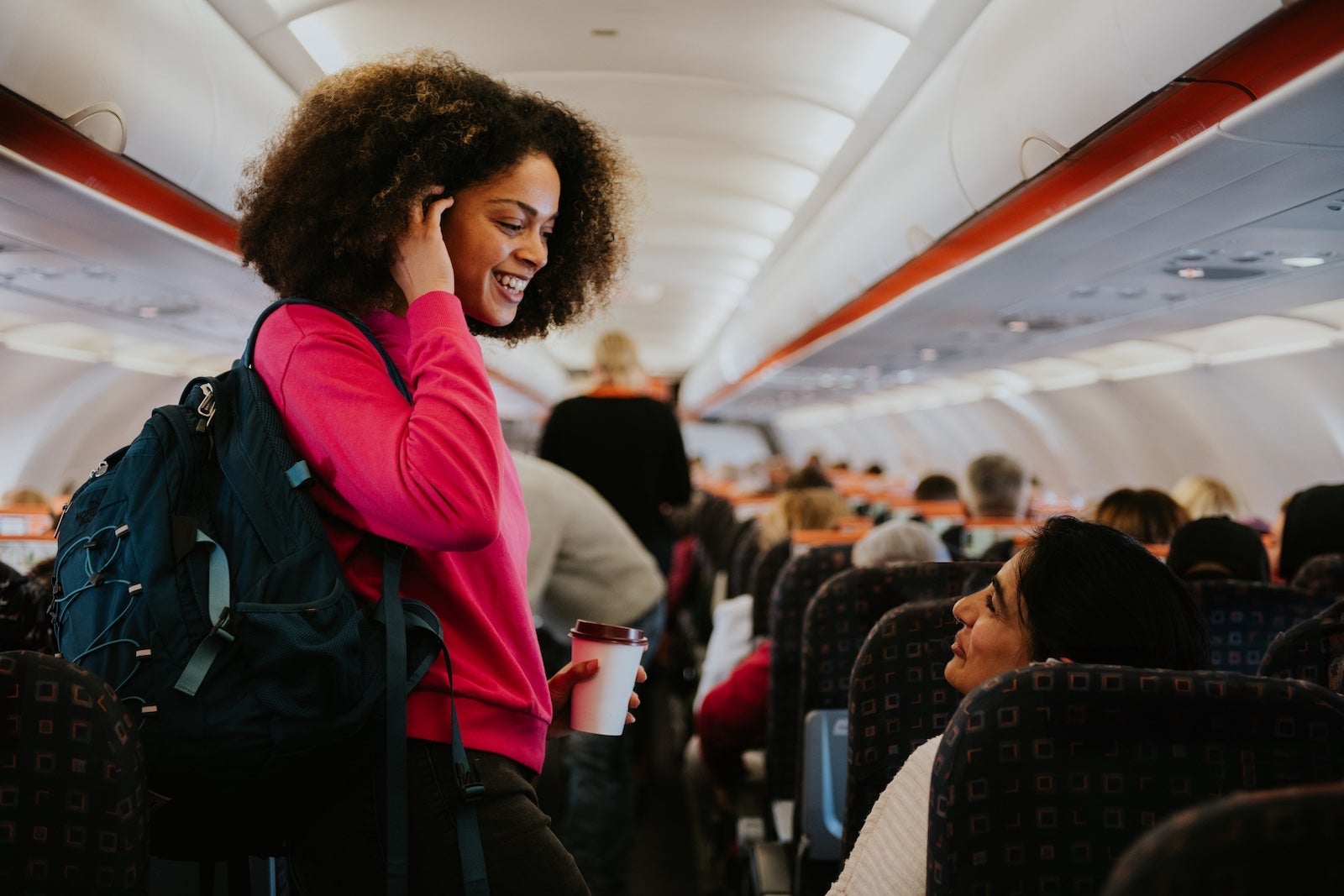
A carry-on bag is a piece of luggage small enough to be brought into an aircraft’s cabin and stored in the overhead bin during a flight. Most major U.S. airlines allow one carry-on plus one personal item per passenger at no extra charge on standard fare classes, though allowances vary by airline and ticket type. The standard size limit at most domestic U.S. carriers is 22 x 14 x 9 inches, including wheels and handles, which fits standard rolling suitcases and larger backpacks.
TL;DR / Key takeaways
- A carry-on fits in the overhead bin. A personal item is the smaller bag that slides under the seat in front of you. Most airlines allow one of each per traveler.
- Standard domestic size limit: 22 x 14 x 9 inches (including wheels and handles) at most major U.S. carriers, measured exterior.
- Carry-on bags are free on most standard fares. Ultra-low-cost carriers like Breeze and Frontier charge separately for overhead bin access, so check before you book.
- Enforcement is tighter in 2026. Airlines, including United, have deployed automated bag scanners at many gates. A bag that cleared security for years can still get flagged at the gate.
- Pack your valuables, medications and electronics in your carry-on. Items that cannot be replaced if a checked bag is lost or delayed belong with you in the cabin.
Carry-on size rules by airline
Every airline sets its own carry-on policy, and the differences matter more now that enforcement at the gate has sharpened. Most major U.S. carriers have converged on a 22 x 14 x 9-inch limit for the overhead bin bag, but there are meaningful exceptions.
Southwest allows a generously larger 24 x 16 x 10 inches, while ultra-low-cost carriers like Frontier treat that overhead space as a paid upgrade rather than a standard inclusion.
Two important details apply across the board. First, airlines measure total exterior dimensions, meaning wheels, handles, telescoping pulls and any protruding pockets all count toward your total. Second, fare class matters. United, for example, restricts most domestic basic economy passengers to one personal item only. On Frontier, a full-size carry-on requires paying a carry-on fee, unless you purchase a business fare. Checking your airline’s current policy before packing is the single most reliable way to avoid a surprise at the gate. Learn more about carry-on baggage policies for major airlines.
| Airline | Carry-on max (L x W x H) | Personal item max | Basic economy carry-on? |
|---|---|---|---|
| American Airlines | 22 x 14 x 9 in. | 18 x 14 x 8 in. | Yes |
| Delta Air Lines | 22 x 14 x 9 in.* | Fits under seat | Yes |
| United Airlines | 22 x 14 x 9 in. | 9 x 10 x 17 in. | No (most domestic routes) |
| Southwest Airlines | 24 x 16 x 10 in. | Fits under seat | Yes |
| Alaska Airlines | 22 x 14 x 9 in. | Fits under seat | Yes |
| JetBlue | 22 x 14 x 9 in. | 17 x 13 x 8 | Yes |
| Frontier Airlines | 24 x 16 x 10 in. | 18 x 14 x 8 in. (free) | Carry-on fee applies |
*Delta combines all three dimensions; combined length + width + height must be under 45 inches. Sizes include wheels and handles. Check each airline’s website before travel as policies are subject to change.
What you can and can’t pack in a carry-on
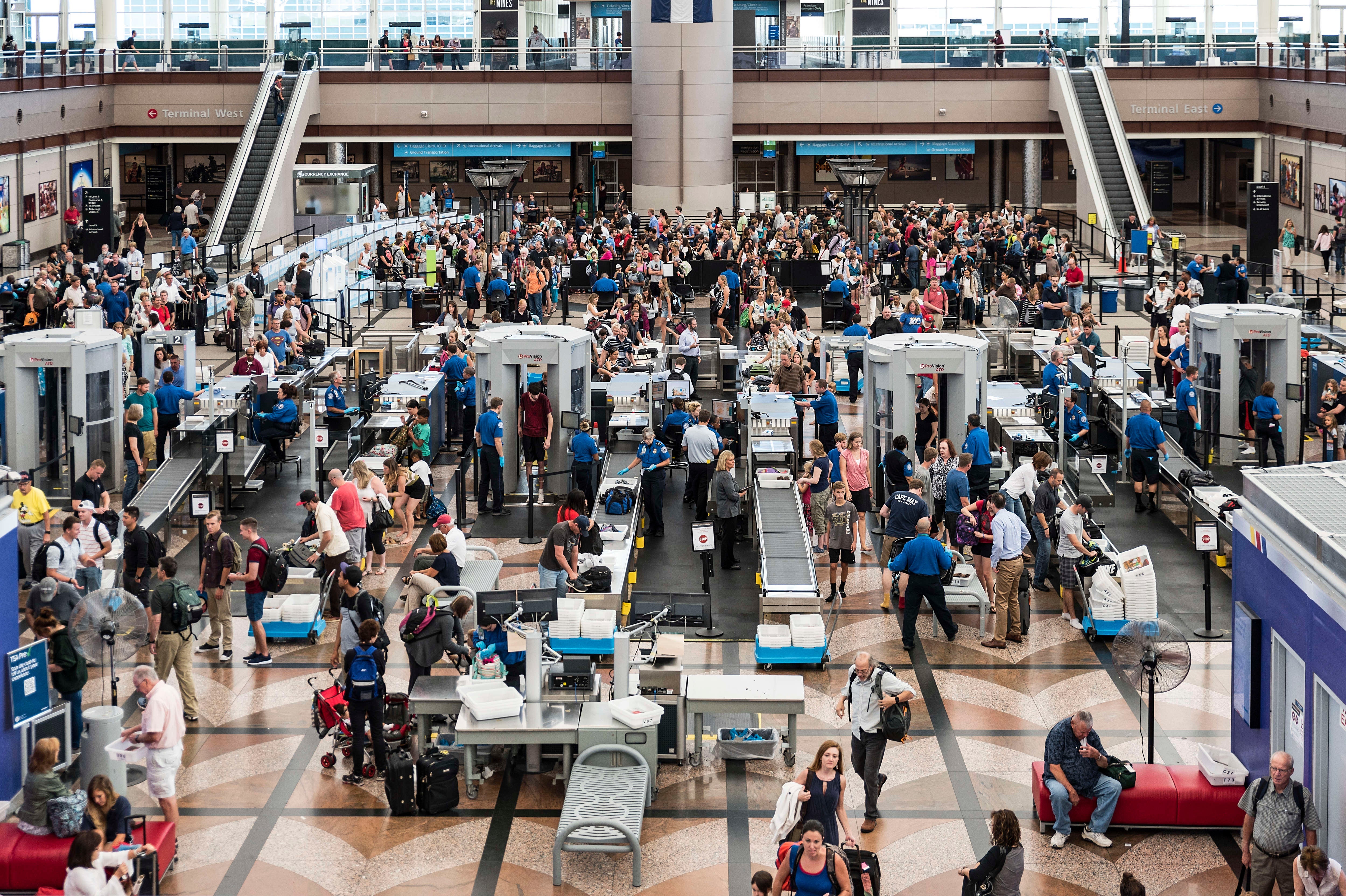
The TSA sets the baseline rules for what is and is not permitted in the cabin. Most carry-on restrictions fall into two categories: items that are prohibited entirely (certain weapons, flammables and oversized lithium batteries) and items that are allowed only under specific conditions. Knowing the rules in advance keeps the security line moving and protects you from having your valuables confiscated.
The TSA’s 3-1-1 liquids rule covers the most common point of confusion. Liquids, gels, aerosols, creams and pastes must be in containers of 3.4 ounces (100 milliliters) or smaller, all fitting into one clear, quart-size plastic bag, with one bag allowed per passenger. Exceptions exist for medications, baby formula and breast milk, which are permitted in larger quantities and do not need to go in the quart bag.
Keep these in your carry-on:
- Valuables: jewelry, cash, passports and important documents
- Electronics: laptops, tablets, cameras and spare lithium-ion batteries (power banks must stay in the cabin and cannot be checked)
- Medications and medical devices
- Anything irreplaceable if a checked bag were lost
Do not pack these in your carry-on:
- Liquids in containers over 3.4 oz (with the exceptions noted above)
- Sharp objects such as knives, box cutters and scissors with blades over 4 inches
- Flammable items, including lighter fluid, spray paint and aerosols not exempt under TSA rules
- Firearms (these may be transported in checked baggage following strict TSA and airline protocols)
Carry-on vs. checked bag: when each makes sense
Choosing between a carry-on and a checked bag is rarely a one-size-fits-all decision. The right call depends on your trip length, what you’re packing, your airline, the fare class you booked and whether you have status or a cobranded airline credit card that covers bag fees.
Traveling carry-on only saves you time on both ends of the trip: no queue at check-in, no wait at baggage claim, no risk of lost or delayed luggage. It is the preferred approach for short business trips, weekend getaways and any itinerary with a tight connection. The trade-off is overhead bin space, which fills from front to back on most aircraft. Passengers boarding in the last groups on a full flight can find themselves forced to gate-check a bag anyway, particularly on regional jets with smaller bins. Boarding earlier, by choosing a fare class that includes priority boarding or by holding elite status, is the most reliable way to protect your bin space.
RELATED: How to avoid gate-checking a bag
Checking a bag makes sense for longer trips, family travel with kids’ gear, or any time you need items that cannot go in the cabin (such as larger liquids or sporting equipment). Most major U.S. airlines charge for the first checked bag on standard economy fares. Travelers with qualifying elite status or a cobranded airline credit card may receive one or more free checked bags, which changes the calculus considerably. On ultra-low-cost carriers, where both carry-on and checked bag fees apply, building the bag fee into your fare comparison is important when booking.