The logistical problems with grounding aircraft and pilots


The current situation caused by the ongoing coronavirus crisis is unprecedented for everyone — including commercial aviation. Around the world, airlines are scrambling to do what they can to save their businesses. To save as much money as possible, thousands of flights are being canceled.
READ MORE: TPG's hub page for coronavirus coverage
This makes sense when aircraft would only be carrying a handful of people, but what happens to the aircraft and pilots when they're not flying?
Parking aircraft
Where to put them?
The first conundrum airlines need to solve when parking up aircraft is where to put them. Not only do they have to think about the current situation, but they'll also be thinking about the end game. How can they get aircraft up and flying again when needed and as quickly as possible?
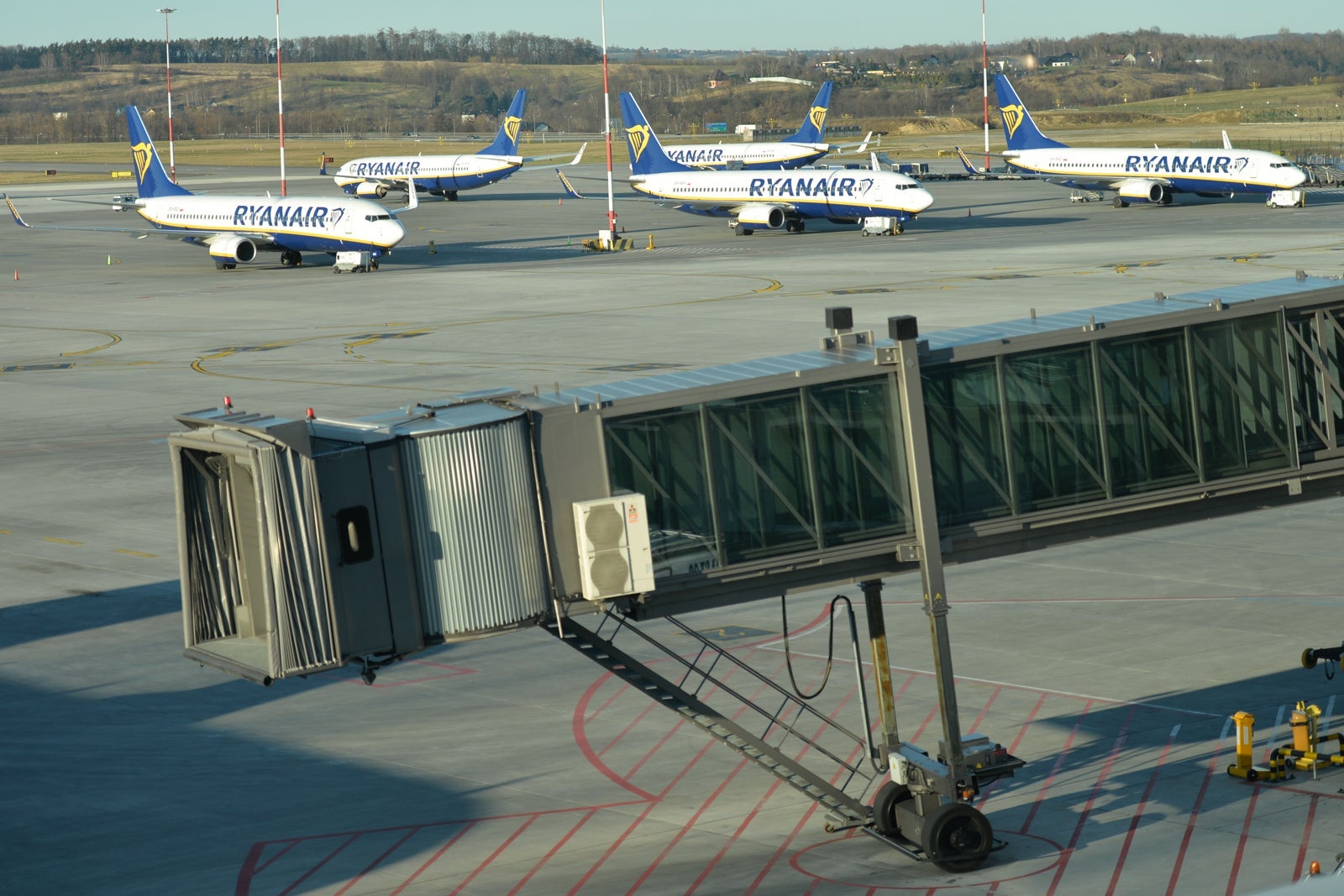
For the world's larger airlines, there may not be enough gates at their hub airports for all their aircraft to park up at the same time. They rely on a large proportion of the fleet to be airborne at any one time. This is why you'll often find yourself waiting for a gate if your flight arrives early. It's often a case of one out, one in. As a result, alternative solutions need to be devised.
Related: Where is British Airways parking its planes during the coronavirus outbreak?
The first option would be to park aircraft at the maintenance area if the airline has one. The only problem with this is that it could mean that standard maintenance could be disrupted. Once space here has been used up, the airline will look to other parts of the airport such as a specialist cargo area or military area.
The airport authorities will want to keep the airfield working as smoothly as possible, so if all parking spaces are used up, airlines might be asked to park aircraft at a different airport entirely. This causes a significant logistical problem to the airline, as not only will a parking spot need to be sourced, the pilots needed to fly the aircraft there will have to be brought back somehow. This is also less than ideal if the aircraft is needed at short notice.
If all options have been exhausted, drastic measures have to be taken. For example, very much like after the events on Sept. 11, 2001 with hundreds of aircraft needing to land immediately at airfields with limited parking space, taxiways and even runways were used to park aircraft up.

How to keep them safe?
Parking the aircraft is one thing, how to keep it safe for when it next needs to fly is another thing. Aircraft will often spend the night on the ground at an airport gate, ready for its flight the next morning. However, this is normally only for a matter of hours. What happens when they need to be parked up for days? Or even months? Think of the international grounding of the Boeing 737 MAX aircraft.
Even though aircraft are built to withstand the most brutal of weather conditions, they also need constant care and attention. This regular maintenance is part of everyday airline operation but if the aircraft is being parked up for a while, it needs to be protected from the elements.
Pitot tubes on the outside of the aircraft are key to informing the pilots a range of information such as speed and temperature. These are covered up to stop potential damage from blowing debris and to prevent foreign object from getting lodged inside.
Windows are covered with reflective protectors to keep the sun off and protective tape is used to cover up other sensors and probes. Lubricant is applied to pretty much all moving parts to stop them from seizing up. Depending on how long the aircraft is planned to be stored for, engineers will run the engines once a week to keep them free of moisture.
It's a fine balance between doing enough to keep the aircraft protected for the long term and not doing too much to enable the aircraft to become airworthy again as quickly as possible.
Pilot recency
With aircraft stored away, what happens to the pilots? They can't exactly work from home but, unlike the aircraft, could be called to come and fly at any moment.
Like with any skill, if you don't keep practicing it, your levels start to drop off. Be it speaking a language, playing a musical instrument or hitting a tennis ball. It's the same with flying an aircraft.
The longer you go between flights, the rustier your skills become. Being out of practice is fine when it comes to playing the guitar, not so much when you're in charge of 300 lives. As a result, there are certain criteria pilots must meet when it comes to staying current on their aircraft. Even those who fly light aircraft for fun will be familiar with staying in recency.
For pilots flying a commercial airliner, like the 787 Dreamliner that I fly, the recency limits are divided into the duties you perform over a certain period of time. The rules are defined by the agency that governs a country but for the most part, they are fairly similar all over the world. They state that a pilot shall not operate an aircraft carrying passengers unless they have carried out at least three takeoffs, approaches and landings in the previous 90 days.
If these criteria have not been met, the 90-day limit can be extended to 120 days if the pilot flies with what's known as a Type Rating Instructor or Examiner — a TRI, or TRE. Within the industry, these pilots are known as Training Captains, although some airlines do have First Officers who also perform training duties.
However, as the "3 in 90" requirement still applies so the only way this could be achieved would be if the flight was a specialist training flight. Not the most economical way of getting a pilot back in recency.
A better way of doing this is in a flight simulator.
Flight simulators
The flight simulators recreate how the aircraft handles so accurately that pilots will often go directly from simulator training to flying the aircraft with passengers on board. When taxiing the aircraft to the runway, you feel the bumps of the lights on the taxiway. As you start the takeoff run, you get pushed back in your seat. And when you land less than smoothly, you certainly feel it.
Related: Watch what it's like to 'fly' an A330 full-motion flight simulator
In the space of an hour, a pilot can conduct the three takeoffs and landings required in order to maintain their recency. Far quicker and less expensive than taking an aircraft up for a flight. However, this kind of usage for simulators is a minority. They are mainly used to test and train pilots every six months.
Every six months, all airline pilots spend two days in a flight simulator having their skills checked and practicing normal and non-normal situations that could occur in the aircraft. It's an integral part of making sure that you're kept safe whilst in our hands-on board.
Related: Practice makes perfect: How pilots train for every situation
Your pilots are on board to fly you to your destination as easily and comfortably as possible. However, things do sometimes go wrong and this is why most of our training is geared toward dealing with these non-normal situations. We never know which routine flight may require us to call on all our skill and experience. Just ask the crew of US Airways Flight 1549, which landed on the Hudson River in New York.
With that in mind, our simulator sessions every six months are designed to make sure that our operating standards are up to scratch and to practice non-normal situations should they ever occur on a flight. Practice makes perfect.
How does a simulator session run?
When arriving for the simulator check, quite often you will only meet the people you're training with for the first time. This may seem odd, but it's realistic to life on the job. You have to be able to turn up to work and perform as a perfect team with people you may never have met. In an ideal world, the session will be run as a 'natural crew' — one Captain and one First Officer. However, this isn't always possible.
On most long-haul fleets, there will be more First Officers than Captains. As a result, many checks will be run with two First Officers. This may seem odd but you never know when a non-normal situation could occur in the aircraft. It could be when the Captain is on their rest and it's the two First Officers at the controls.
Inside the simulator, the instructor is able to position the aircraft anywhere in the world and set any kind of weather conditions they like. Day or night. Once the crew are happy with their set up and where the aircraft is, it's time for the fun to begin.
The instructor will 'unfreeze' the sim and from that moment on, the crew treat everything as if it were a real flight until the instructor says otherwise. Through the control panel at the instructor's station, they are able to activate any scenario that may occur in the aircraft. This could include an engine failing to start, an anti-icing system failing or even a vehicle entering the runway on takeoff.
Once airborne, you know the real fun is still to come. One of the engines may catch fire, maybe there's an air conditioning fault to troubleshoot. All fairly straight forward, but only if you deal with them slowly and methodically as a crew. Teamwork is key.
Even though most simulator sessions are four hours long, time does go very quickly. Therefore, the less time that can be wasted, the better. A well-designed simulator session will run as if it were a normal flight. However, some scenarios are a little difficult to incorporate into that chronology. A rejected takeoff being one of them.
Once the crew have demonstrated their skill in dealing with one of these events, with the press of a single button, the instructor can reposition the aircraft back to the start of the runway. This is far quicker than the crew taxiing off the runway and back to the threshold again. This repositioning feature also allows the instructor to quickly rerun a situation, should the crew need to practice it again.
Getting things up and running again
The pilots
So we've seen that simulators are a great way to train pilots and keep them in recency, but having a large number of pilots grounded for a long period of time presents a problem.
An airline's training department will plan its annual training on the number of six monthly checks pilots will need, whilst also keeping some spare capacity for new entrant pilots, recency sessions and more. If all of a sudden several hundred pilots require recency sessions, there may not be enough capacity in the system for everything to go ahead.
How airlines manage this is entirely up to them. If the flying program has been reduced, they could ensure that they roster pilots to fly just enough so that they maintain the '3 in 90' requirement. This, in effect, means doing just one flight a month.
At the same time, they could ensure that all six monthly checks continue to run as normal, meaning that no pilot will ever be out of check.
The aircraft
Bringing the aircraft up to airworthiness could take some considerable time, depending on how deep the storage was. Set procedures must be followed to ensure that the aircraft is safe to fly and these could take days or even weeks.
Bottom line
This is an incredibly tough time for airlines and particularly for all those who work for them. Thousands of flights are being canceled with fleets being grounded around the world. At the same time, the pilots have to wait at home, reading their manuals, staying current in anticipation of the day when they get to fly again.
TPG featured card

at Capital One's secure site
Terms & restrictions apply. See rates & fees.
| 5X miles | Earn 5X miles on hotels, vacation rentals and rental cars booked through Capital One Travel |
| 2X miles | Earn unlimited 2X miles on every purchase, every day |
Pros
- Stellar welcome offer of 75,000 miles after spending $4,000 on purchases in the first three months from account opening. Plus, a $250 Capital One Travel credit to use in your first cardholder year upon account opening.
- You'll earn 2 miles per dollar on every purchase, which means you won't have to worry about memorizing bonus categories
- Rewards are versatile and can be redeemed for a statement credit or transferred to Capital One’s transfer partners
Cons
- Highest bonus-earning categories only on travel booked via Capital One Travel
- LIMITED-TIME OFFER: Enjoy $250 to use on Capital One Travel in your first cardholder year, plus earn 75,000 bonus miles once you spend $4,000 on purchases within the first 3 months from account opening - that’s equal to $1,000 in travel
- Earn unlimited 2X miles on every purchase, every day
- Earn 5X miles on hotels, vacation rentals and rental cars booked through Capital One Travel
- Miles won't expire for the life of the account and there's no limit to how many you can earn
- Receive up to a $120 credit for Global Entry or TSA PreCheck®
- Use your miles to get reimbursed for any travel purchase—or redeem by booking a trip through Capital One Travel
- Enjoy a $50 experience credit and other premium benefits with every hotel and vacation rental booked from the Lifestyle Collection
- Transfer your miles to your choice of 15+ travel loyalty programs
- Top rated mobile app