How to avoid and treat travelers' diarrhea

Eating is a fun way to explore a place and culture, but it poses the risk of spending part of a trip doubled over after eating or drinking something contaminated by bacteria, viruses or parasites. Most people are exposed to some amount of contaminated foods, but travel often exposes us to new ones or higher doses that can defeat the immunity we have already built up. And it's not a rare occurrence — 30% to 70% of travelers come down with what's known as travelers' diarrhea, according to the Centers for Disease Control and Prevention.
What's worse is that a bout of diarrhea might not be the end of it. One in 10 cases of traveler's diarrhea develop into irritable bowel syndrome, a gastrointestinal disorder, according to Dr. Mark Pimentel, the executive director of the medically associated science and technology program at Cedars-Sinai in Los Angeles. An estimated 1 in 6 people in the United States experience IBS, with symptoms varying from constipation to nausea and ranging from mild to severe. It's a long-term condition with no known cure.
Much of the risk depends on where and when you travel, but Pimentel said some general precautions can keep most stomachs healthy and happy.
Mind the water
Contaminated water is a major source of bacteria that can sicken even the healthiest individuals. It's common in developing countries — you can check the CDC website to see if a particular destination has safe drinking water. If not, rely on bottled water for drinking and brushing your teeth. If you want to avoid plastic, there are reuseable water bottles with filtration built in that remove bacteria and viruses. While out and about, beware of ice cubes and drinks like smoothies that may have water or ice as a hidden ingredient.
Occasionally, restaurants refill water bottles locally and put new caps on. If that looks to be the case, order sparkling water, which can't be easily refilled. The carbonation is also acidic enough to kill bacteria. And there is always the option to skip water entirely and stick with soda, beer or wine, which Pimentel said are safe bets.
Related: How you can safely drink the tap water anywhere in the world
Avoid raw fruits and veggies
If you're in a place where water is an issue, fresh fruits and vegetables have to be chosen with care. If you are craving fruit, pick something you can peel so you remove the part that was washed with water. Fresh salads, while usually healthy, are filled with vegetables that get doused in local water. Consider this tip as a doctor's note to pick a greasier (and cooked) option.
Choose your street food wisely
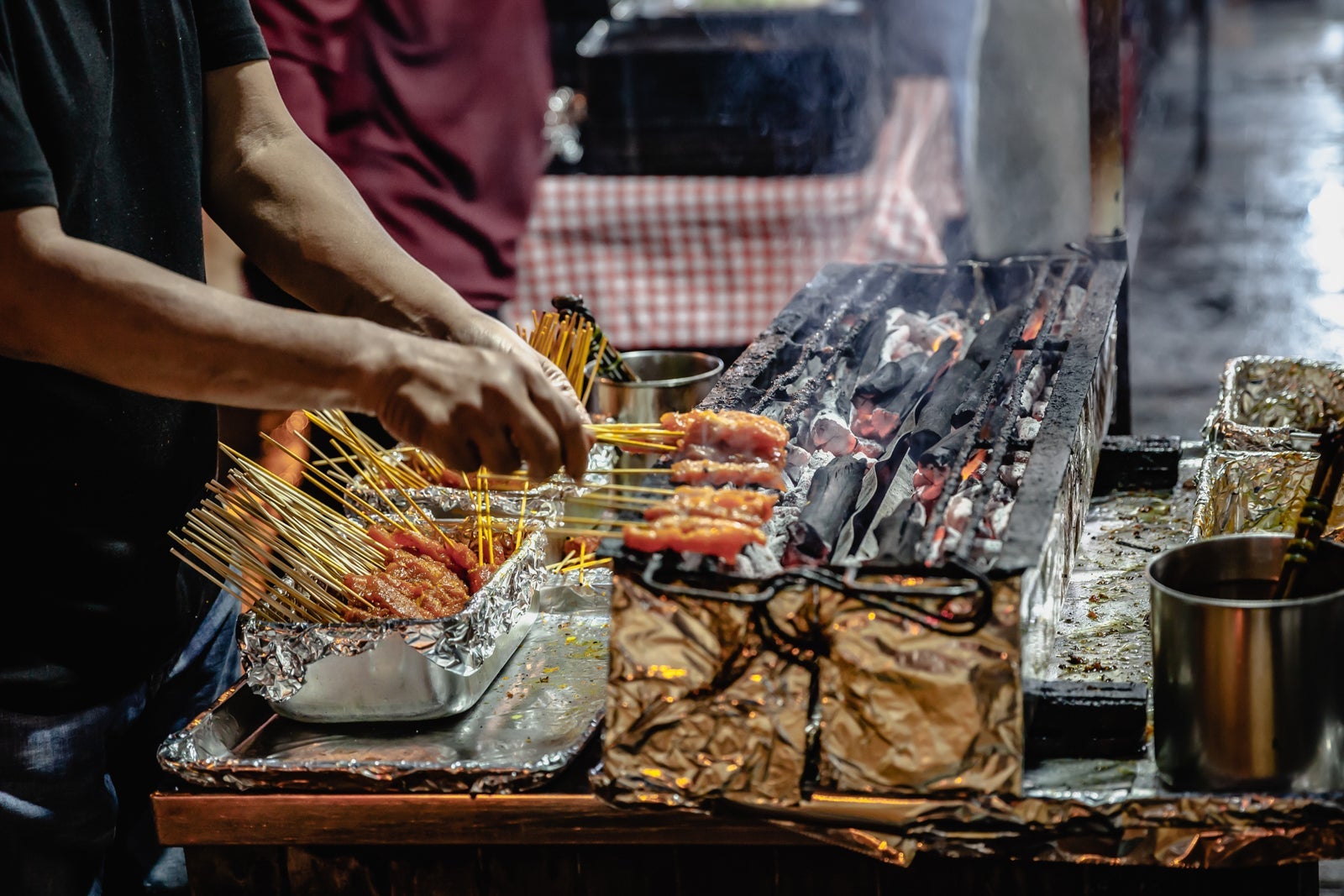
For destinations like Mumbai and Bangkok with a rich street food culture, it's a shame to miss out on delicious regional eats. One tip from the late and great Anthony Bourdain is to follow the locals. Spots that rely on repeat customers instead of one-off tourists are places that need to keep people healthy.
Related: The cheapest Michelin-starred meals around the world

Pimentel also suggests looking for food that is extremely hot and well cooked. If you can, get the food right off the burner when it's hottest. And skip the garnishes, like herbs or fruits and veggies, which for the aforementioned reasons could be the Achilles' heel of an otherwise safe meal.
Start your caution on the plane
Being kind to your belly starts on the way to your destination if you're flying. The pressurization on a plane lets the gas in your gut build up and it can take hours to dissipate. If you want to get off the plane ready to travel and eat comfortably, skip foods that will make you gassy, like beans and processed carbs. Carbonated drinks like soda can also cause the gas to build up and should be avoided. Instead, stick with lean meats, nuts and vegetables such as lettuce, tomatoes, zucchini and avocados.
Related: It's not just you: Why everyone gets gassy and bloated on airplanes
Travel with supplies
Taking care of traveler's diarrhea early can help prevent IBS from developing, according to Pimentel. Before traveling, sensitive people should consult with a doctor who might prescribe antibiotics, like rifaximin and ciprofloxacin. The International Society of Travel Medicine has a list of travel clinics where people can search for a local option.
But it's not a bad idea for everyone to stock up on charcoal tablets, which can calm your digestive system and reduce gas, as well as something with bismuth in it like Pepto Bismol, which provides relief along with its antibacterial properties. One thing that doesn't work? Probiotics. They can cause bloating and distension, making you feel much worse.
Related: Rx for jail? What to know before taking your meds abroad
If it does happen, keep calm and hydrated
Despite best efforts, travelers can still pick up a bug. In that unfortunate event, it's important to stay hydrated, and for comfort, it's probably best to stick close to a bathroom. Many issues clear up after a day, but if it lasts more than a few days or there is blood in the stool, see a doctor.
Bottom line
Getting traveler's diarrhea is no fun, but there are steps you can take to avoid it. Depending on where you go, consider sticking with bottled water, skipping uncooked veggies and fruits, and when it comes to street foods, pick the hottest food available at the busiest stalls. If you are at a higher risk of getting sick, make sure to consult a doctor before going abroad. And if all else fails, take some time off and stay hydrated (with bottled water).
TPG featured card
at American Express's secure site
Terms & restrictions apply. See rates & fees.
| 4X | Earn 4X Membership Rewards® points per dollar spent on purchases at restaurants worldwide, on up to $50,000 in purchases per calendar year, then 1X points for the rest of the year. |
| 4X | Earn 4X Membership Rewards® points per dollar spent at US supermarkets, on up to $25,000 in purchases per calendar year, then 1X points for the rest of the year. |
| 5X | Earn 5X Membership Rewards® points on prepaid hotel stays booked through AmexTravel.com or the Amex Travel App™. |
| 3X | Earn 3X Membership Rewards® points on flights booked through AmexTravel.com, the Amex Travel App™, or purchased directly from airlines. |
| 2X | Earn 2X Membership Rewards® points on prepaid car rentals booked through AmexTravel.com or the Amex Travel App™ and cruises booked and paid through AmexTravel.com. |
| 1X | Earn 1X Membership Rewards® point per dollar spent on all other eligible purchases. |
Pros
- Valuable dining and food-related credits
- Flexible rewards with airline and hotel transfer partners
- Multiple travel and purchase protections
- No foreign transaction fees
- Access to Amex Offers for additional savings (enrollment required)
Cons
- Not as useful for those living outside the U.S.
- Some may have trouble using Uber and other dining credits
- You may be eligible for as high as 100,000 Membership Rewards® Points after you spend $8,000 in eligible purchases on your new Card in your first 6 months of Card Membership. Welcome offers vary and you may not be eligible for an offer. Apply to know if you’re approved and find out your exact welcome offer amount – all with no credit score impact. If you’re approved and choose to accept the Card, your score may be impacted.
- Earn 4X Membership Rewards® points per dollar spent on purchases at restaurants worldwide, on up to $50,000 in purchases per calendar year, then 1X points for the rest of the year.
- Earn 4X Membership Rewards® points per dollar spent at US supermarkets, on up to $25,000 in purchases per calendar year, then 1X points for the rest of the year.
- Earn 5X Membership Rewards® points on prepaid hotel stays booked through AmexTravel.com or the Amex Travel App™.
- Earn 3X Membership Rewards® points on flights booked through AmexTravel.com, the Amex Travel App™, or purchased directly from airlines.
- Earn 2X Membership Rewards® points on prepaid car rentals booked through AmexTravel.com or the Amex Travel App™ and cruises booked and paid through AmexTravel.com.
- Earn 1X Membership Rewards® point per dollar spent on all other eligible purchases.
- Pay It® lets you tap in the American Express® App to quickly pay for small purchase amounts throughout the month and still earn rewards the way you usually do. Plan It® gives you the option to split up big purchases into equal monthly payments with a fixed fee. You’ll know upfront exactly how much you’ll pay.
- $120 Dining Credit: Earn up to a total of $10 in statement credits monthly when you pay with the Gold Card at Grubhub (including Seamless), Buffalo Wild Wings, Five Guys, The Cheesecake Factory, and Wonder. This can be an annual savings of up to $120. Enrollment required.
- $100 Resy Credit: Get up to $100 in statement credits each calendar year at over 10,000 qualifying U.S. Resy restaurants after you pay for eligible purchases with the American Express® Gold Card. That’s up to $50 in statement credits semi-annually. Enrollment required.
- $84 Dunkin' Credit: Earn up to $7 in monthly statement credits after you pay with the American Express® Gold Card at U.S. Dunkin’ locations. Enrollment required.
- $120 Uber Cash on Gold: Enjoy up to $120 in Uber Cash annually with your Gold Card. Just add your Card to your Uber account and you'll get $10 in Uber Cash each month to use on orders and rides in the U.S. when you select an Amex Card for your transaction.
- Enjoy complimentary Hertz Five Star® Status benefits like skipping the counter at select locations, adding an additional driver at no additional cost*, and vehicle upgrades**. Benefit enrollment and Hertz Gold+ registration are required. *Additional drivers must meet standard rental qualifications and must be a spouse or domestic partner to qualify as complimentary. Other additional drivers subject to fees. **Benefits are subject to availability and vary by location. Additional Hertz program Terms and Conditions including age restrictions apply.
- Book two nights or more with The Hotel Collection through AmexTravel.com or the Amex Travel App™ and receive a $100* credit towards eligible charges at over 1,400 upscale hotels worldwide. *Eligible charges vary by property.
- Book your travel through the Amex Travel App™ with added peace of mind – backed by American Express® service and support. Only for American Express® Card Members.
- Whenever you need us, we're here. Our Member Services team will ensure you are taken care of. From lost Card replacement to statement questions, we are available to help 24/7.
- No Foreign Transaction Fees.
- Annual Fee is $325.
- Terms Apply.