Upgrading to United’s best lie-flat on the transcon for just 10 PlusPoints and $199

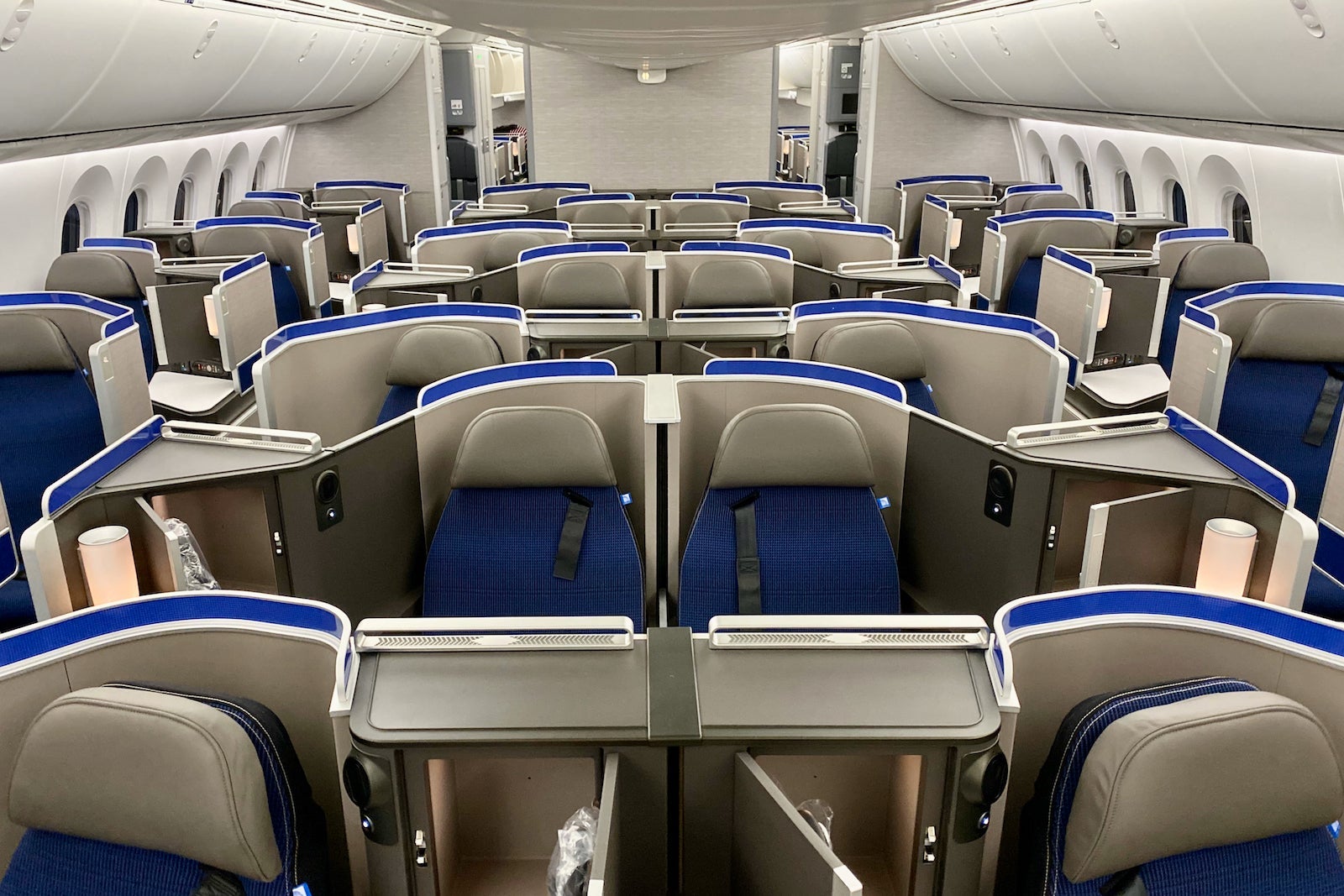
Editor's note: While many flights with lie-flat seats on transcon U.S. routes have been suspended due to the coronavirus pandemic, United has begun reintroducing its top class, Polaris, on those routes.
Finding a business-class award seat on one of United's premium transcontinental flights between Newark or Boston and San Francisco or Los Angeles isn't easy. The biz cabin on these flights is almost always full of travelers with deep pockets and flexible expense accounts. Sure, there are some seats here or there, especially on the off-peak flights early in the morning or late at night, but this pattern generally holds.
How can a TPG reader score one of the lie-flat business-class seats, especially if award seats aren't happening? That's when it's time to look at upgrade space. And it's easier -- and sometimes cheaper -- to find those upgrades on one United aircraft than on the others.
Related: How to upgrade United flights
United uses a mix of Boeing 757, 777 and 787-10 Dreamliners on these transcontinental routes. The first two planes only offer a biz and coach cabin, but the Dreamliner offers a Premium Plus cabin. And booking a seat in the premium economy cabin is the key to unlocking these easy and cheap upgrades to the lie-flat seats.
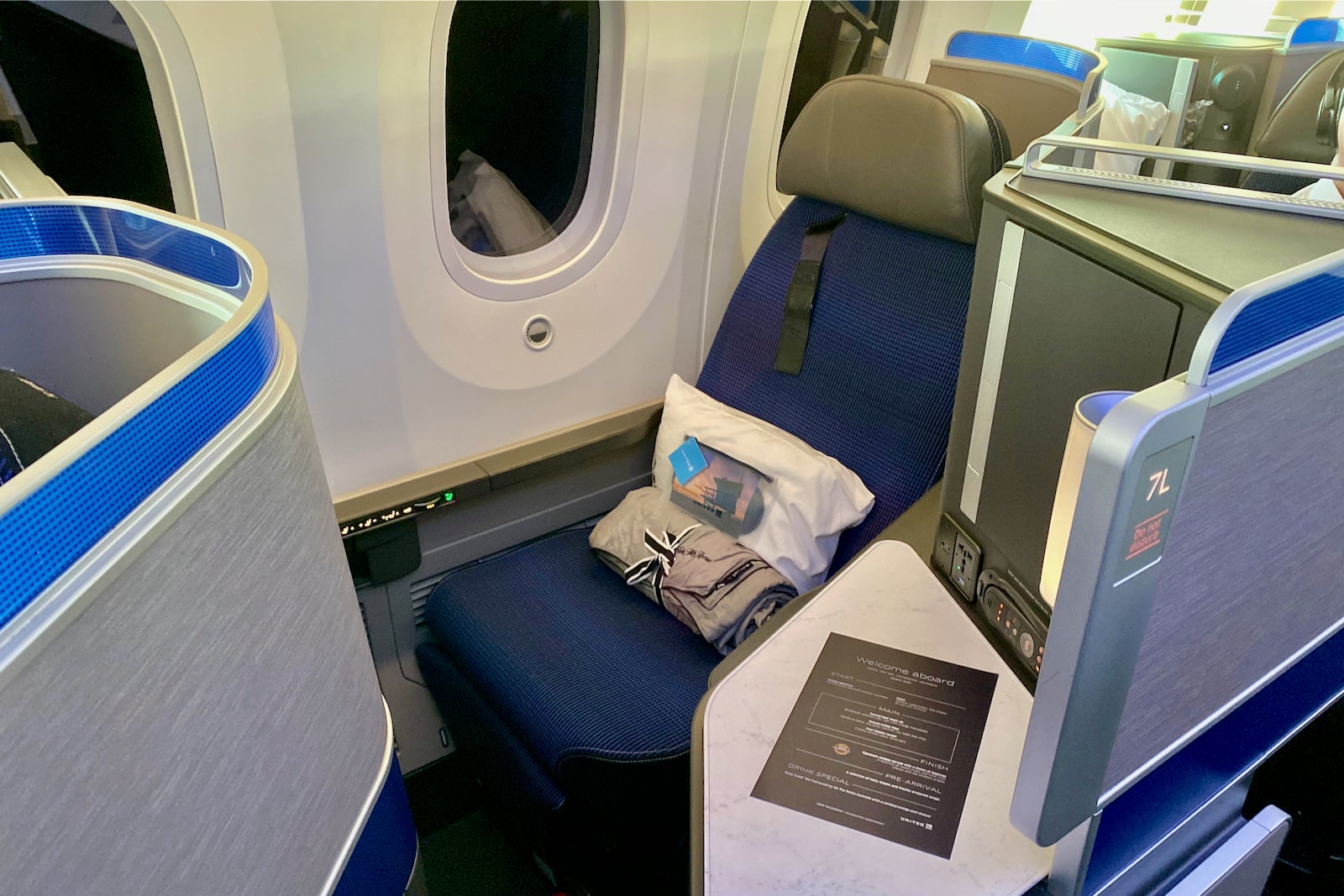
As a United Premier Platinum or 1K member, you'll receive 40 and 280 PlusPoints each year, respectively. You can use those points in a number of ways, but at just 10 PlusPoints, the cheapest upgrade you'll find is from Premium Plus to business on a short-haul flight. If you were to upgrade from coach to business, it'd cost 20 PlusPoints.
Not only does the upgrade cost fewer PlusPoints if you're already booked in Premium Plus, but your odds at scoring the lie-flat upgrade are much higher. That's because United prioritizes upgrades from premium economy to biz as higher on the upgrade list than those looking to confirm biz seats from economy, regardless of status (assuming that you're clearing at the gate).
This means that there could be a Global Services (GS) member seated in coach wait-listed for a biz upgrade, but a flyer without status booked in Premium Plus would be higher on the list — and more likely to clear — than the Global Services member.
That's exactly what happened to me on a recent flight from Newark to Los Angeles. There were plenty of GS and other 1K passengers on my flight, so my wait-listed upgrade from coach to biz had almost no shot at clearing. But then, I noticed that the buy-up to Premium Plus wasn't all that expensive at $199. So, I quickly purchased the premium economy upgrade and noticed that my name shot up to the top of the upgrade list.

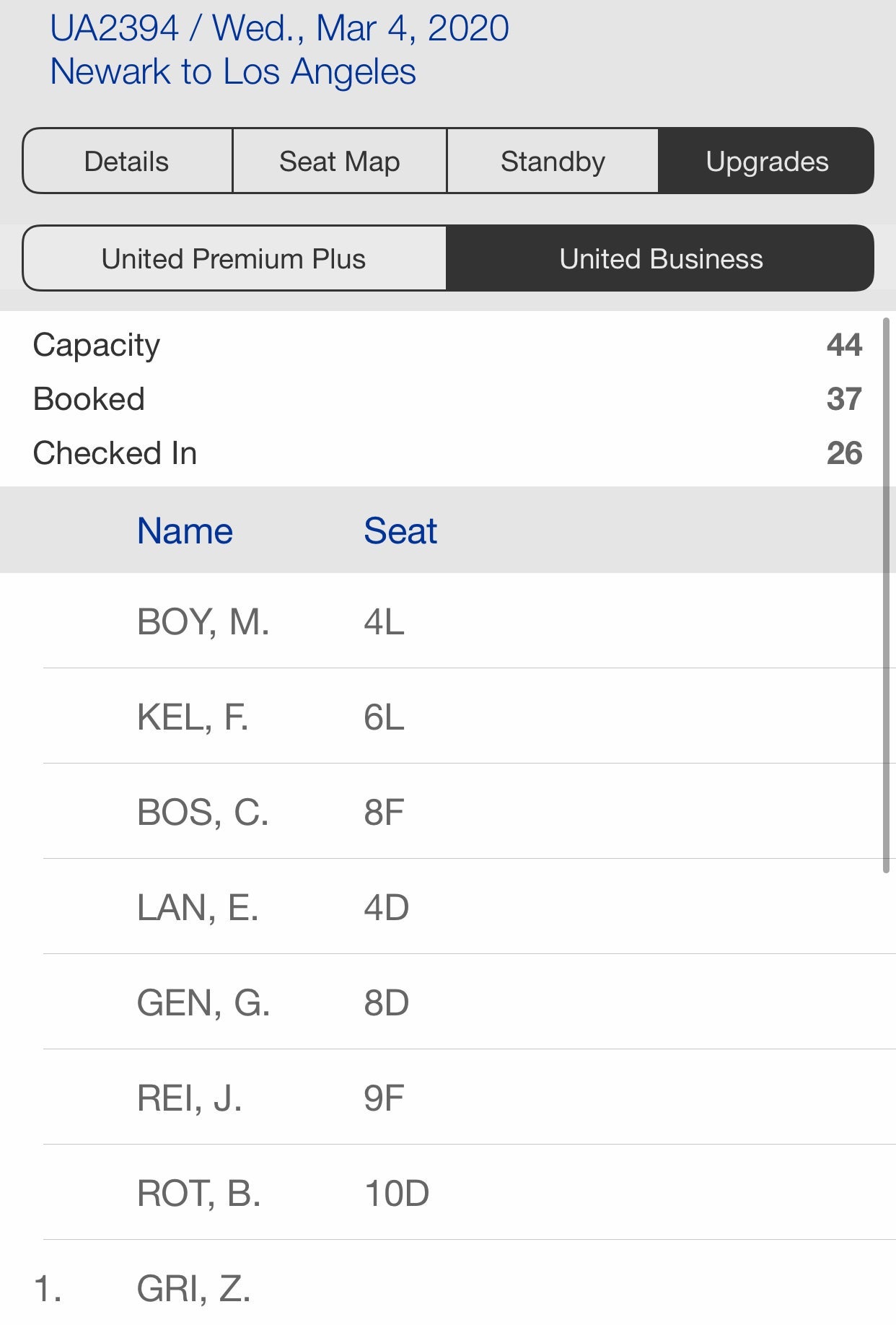
Within minutes of requesting the Premium Plus to biz upgrade, I received an email confirming that my upgrade cleared, well ahead of some of the other GS and 1K members on the flight.
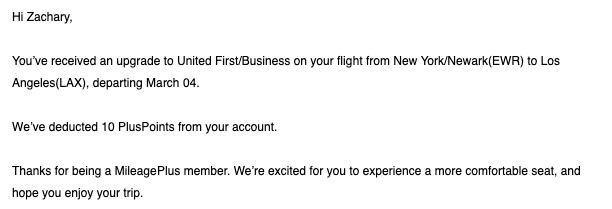
This strategy of buying Premium Plus to confirm an easy upgrade to biz isn't always cheaper. If you've purchased your coach ticket well in advance, there's a high likelihood that the upgrade to Premium Plus will cost hundreds of dollars. In that case, it's probably worth chancing the upgrade, or not bothering at all.
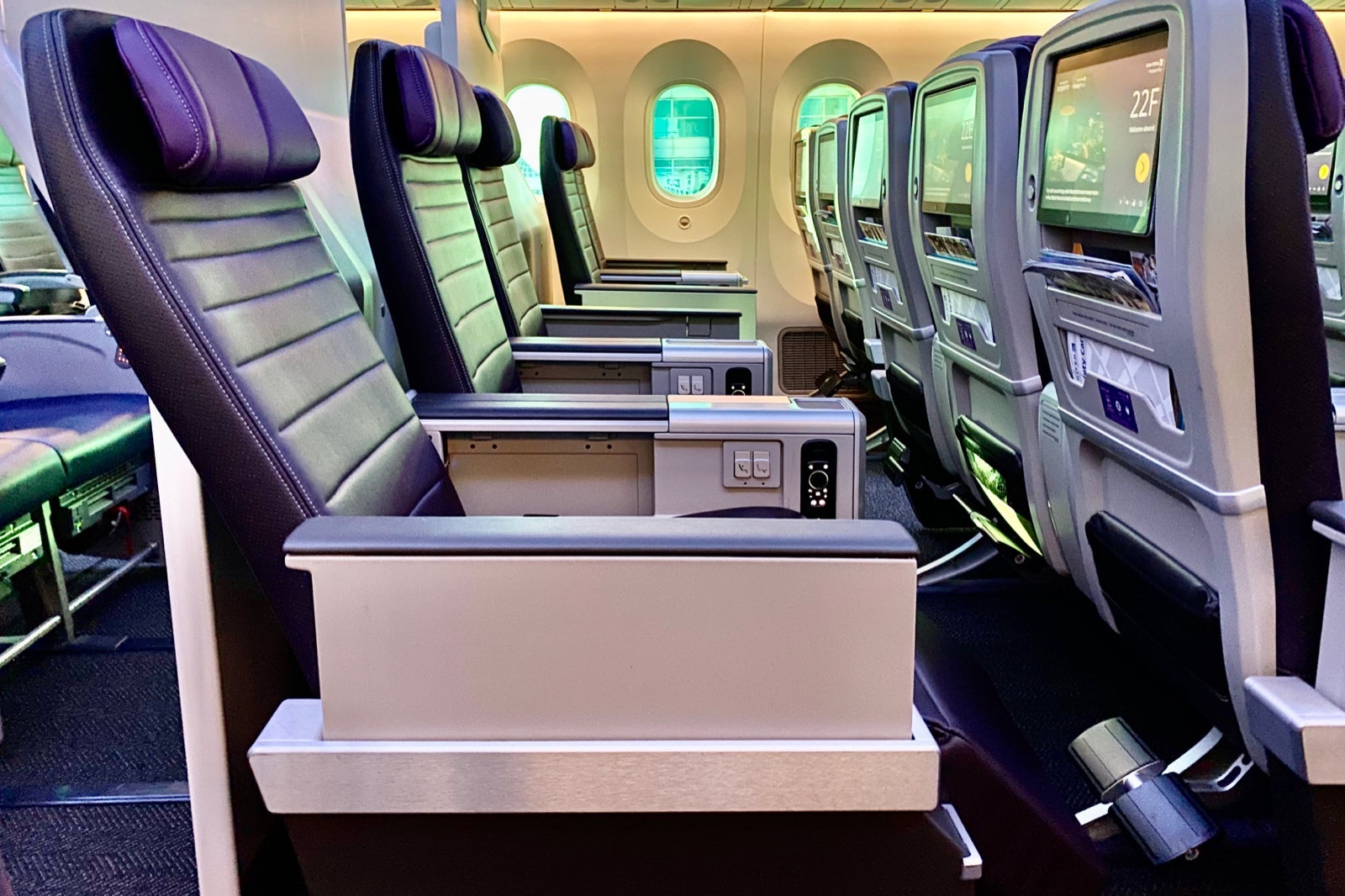
But if your coach fare was quite high — which is likely if you're buying last-minute tickets — or you notice a cheap Premium Plus buy-up, you'll want to jump on it to greatly improve your chances at a biz upgrade.
This same logic even applies to those who don't have PlusPoints (though you could always ask a generous friend with top-tier elite status for a donation). United's MileagePlus Upgrade Awards to the lie-flat seats are also cheaper if you're already confirmed in premium economy.
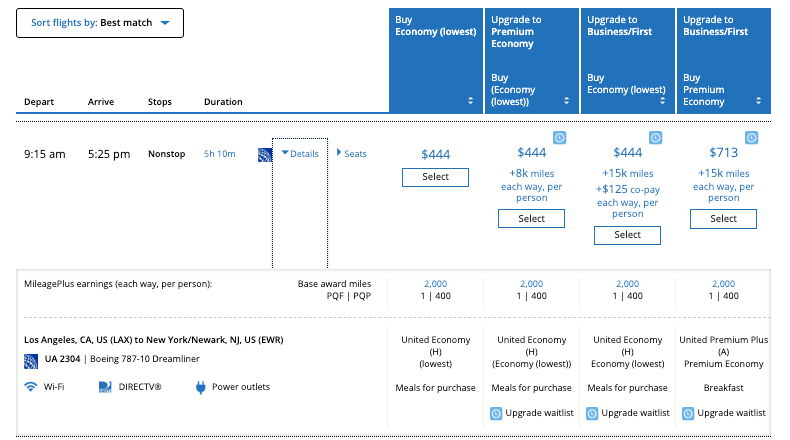
In the example above, buying a premium economy seat would cost $269 more than coach, but you'd be saving the $125 upgrade co-pay and end up much higher on the upgrade list. And, if your upgrade didn't clear, you'd still be seated in Premium Plus, which is much more comfortable than coach for the five-hour-plus flight.
Overall, buying a Premium Plus ticket can be a great strategy for scoring easy business-class upgrades. That's what I used for a recent cross-country flight, so stay tuned for the full review to see if it was worth it.
All photos by the author.
TPG featured card
at American Express's secure site
Terms & restrictions apply. See rates & fees.
| 4X | Earn 4X Membership Rewards® points per dollar spent on purchases at restaurants worldwide, on up to $50,000 in purchases per calendar year, then 1X points for the rest of the year. |
| 4X | Earn 4X Membership Rewards® points per dollar spent at US supermarkets, on up to $25,000 in purchases per calendar year, then 1X points for the rest of the year. |
| 5X | Earn 5X Membership Rewards® points on prepaid hotel stays booked through AmexTravel.com or the Amex Travel App™. |
| 3X | Earn 3X Membership Rewards® points on flights booked through AmexTravel.com, the Amex Travel App™, or purchased directly from airlines. |
| 2X | Earn 2X Membership Rewards® points on prepaid car rentals booked through AmexTravel.com or the Amex Travel App™ and cruises booked and paid through AmexTravel.com. |
| 1X | Earn 1X Membership Rewards® point per dollar spent on all other eligible purchases. |
Pros
- Valuable dining and food-related credits
- Flexible rewards with airline and hotel transfer partners
- Multiple travel and purchase protections
- No foreign transaction fees
- Access to Amex Offers for additional savings (enrollment required)
Cons
- Not as useful for those living outside the U.S.
- Some may have trouble using Uber and other dining credits
- You may be eligible for as high as 100,000 Membership Rewards® Points after you spend $8,000 in eligible purchases on your new Card in your first 6 months of Card Membership. Welcome offers vary and you may not be eligible for an offer. Apply to know if you’re approved and find out your exact welcome offer amount – all with no credit score impact. If you’re approved and choose to accept the Card, your score may be impacted.
- Earn 4X Membership Rewards® points per dollar spent on purchases at restaurants worldwide, on up to $50,000 in purchases per calendar year, then 1X points for the rest of the year.
- Earn 4X Membership Rewards® points per dollar spent at US supermarkets, on up to $25,000 in purchases per calendar year, then 1X points for the rest of the year.
- Earn 5X Membership Rewards® points on prepaid hotel stays booked through AmexTravel.com or the Amex Travel App™.
- Earn 3X Membership Rewards® points on flights booked through AmexTravel.com, the Amex Travel App™, or purchased directly from airlines.
- Earn 2X Membership Rewards® points on prepaid car rentals booked through AmexTravel.com or the Amex Travel App™ and cruises booked and paid through AmexTravel.com.
- Earn 1X Membership Rewards® point per dollar spent on all other eligible purchases.
- Pay It® lets you tap in the American Express® App to quickly pay for small purchase amounts throughout the month and still earn rewards the way you usually do. Plan It® gives you the option to split up big purchases into equal monthly payments with a fixed fee. You’ll know upfront exactly how much you’ll pay.
- $120 Dining Credit: Earn up to a total of $10 in statement credits monthly when you pay with the Gold Card at Grubhub (including Seamless), Buffalo Wild Wings, Five Guys, The Cheesecake Factory, and Wonder. This can be an annual savings of up to $120. Enrollment required.
- $100 Resy Credit: Get up to $100 in statement credits each calendar year at over 10,000 qualifying U.S. Resy restaurants after you pay for eligible purchases with the American Express® Gold Card. That’s up to $50 in statement credits semi-annually. Enrollment required.
- $84 Dunkin' Credit: Earn up to $7 in monthly statement credits after you pay with the American Express® Gold Card at U.S. Dunkin’ locations. Enrollment required.
- $120 Uber Cash on Gold: Enjoy up to $120 in Uber Cash annually with your Gold Card. Just add your Card to your Uber account and you'll get $10 in Uber Cash each month to use on orders and rides in the U.S. when you select an Amex Card for your transaction.
- Enjoy complimentary Hertz Five Star® Status benefits like skipping the counter at select locations, adding an additional driver at no additional cost*, and vehicle upgrades**. Benefit enrollment and Hertz Gold+ registration are required. *Additional drivers must meet standard rental qualifications and must be a spouse or domestic partner to qualify as complimentary. Other additional drivers subject to fees. **Benefits are subject to availability and vary by location. Additional Hertz program Terms and Conditions including age restrictions apply.
- Book two nights or more with The Hotel Collection through AmexTravel.com or the Amex Travel App™ and receive a $100* credit towards eligible charges at over 1,400 upscale hotels worldwide. *Eligible charges vary by property.
- Book your travel through the Amex Travel App™ with added peace of mind – backed by American Express® service and support. Only for American Express® Card Members.
- Whenever you need us, we're here. Our Member Services team will ensure you are taken care of. From lost Card replacement to statement questions, we are available to help 24/7.
- No Foreign Transaction Fees.
- Annual Fee is $325.
- Terms Apply.