New ruling means some credit card rewards may occasionally be taxable — but don't panic


Correction 2/25/21: This article has been updated to reflect that Visa gift card purchases are considered products by the court, while prepaid debit card reloads and money order purchases are not.
This month, the U.S. Tax Court ruled that — in some cases — credit card rewards can be subject to taxation by the Internal Revenue Service (IRS).
But don't panic — this ruling likely doesn't affect you.
The Konstantin Anikeev and Nadezhda Anikeev v. Commissioner of Internal Revenue docket (PDF link) showed that the husband-and-wife combo spent over $6 million on their American Express Blue Cash Credit Card between 2013 and 2014. Nearly all of these purchases were for Visa gift cards, money orders or prepaid debit card reloads. These were later used to pay their American Express bill.
This now-discontinued American Express card earned 5% cash back on purchases at grocery stores, gas stations and pharmacies after spending $6,500 in a single calendar year. Before this kicked in, the card earned 1% cash back on these purchase categories. These rewards were issued in the form of Rewards Dollars that could be redeemed for gift cards and statement credits.
According to the docket, the couple redeemed $36,200 in Reward Dollars from the card as statement credits in 2013 and $277,275 in 2014. This wasn't reported as income on the couple's joint tax return, and the IRS later issued a notice of deficiency that added these earnings as "other income," hence becoming taxable.
Here, I'll give you a look at why some of this activity was considered taxable in this case. I'll also discuss why this ruling most likely has no effect on your credit card rewards. Of course, this article is purely my interpretation of the ruling and you should consult a tax professional to discuss your situation.
Why the Anikeev's were taxed on credit card rewards
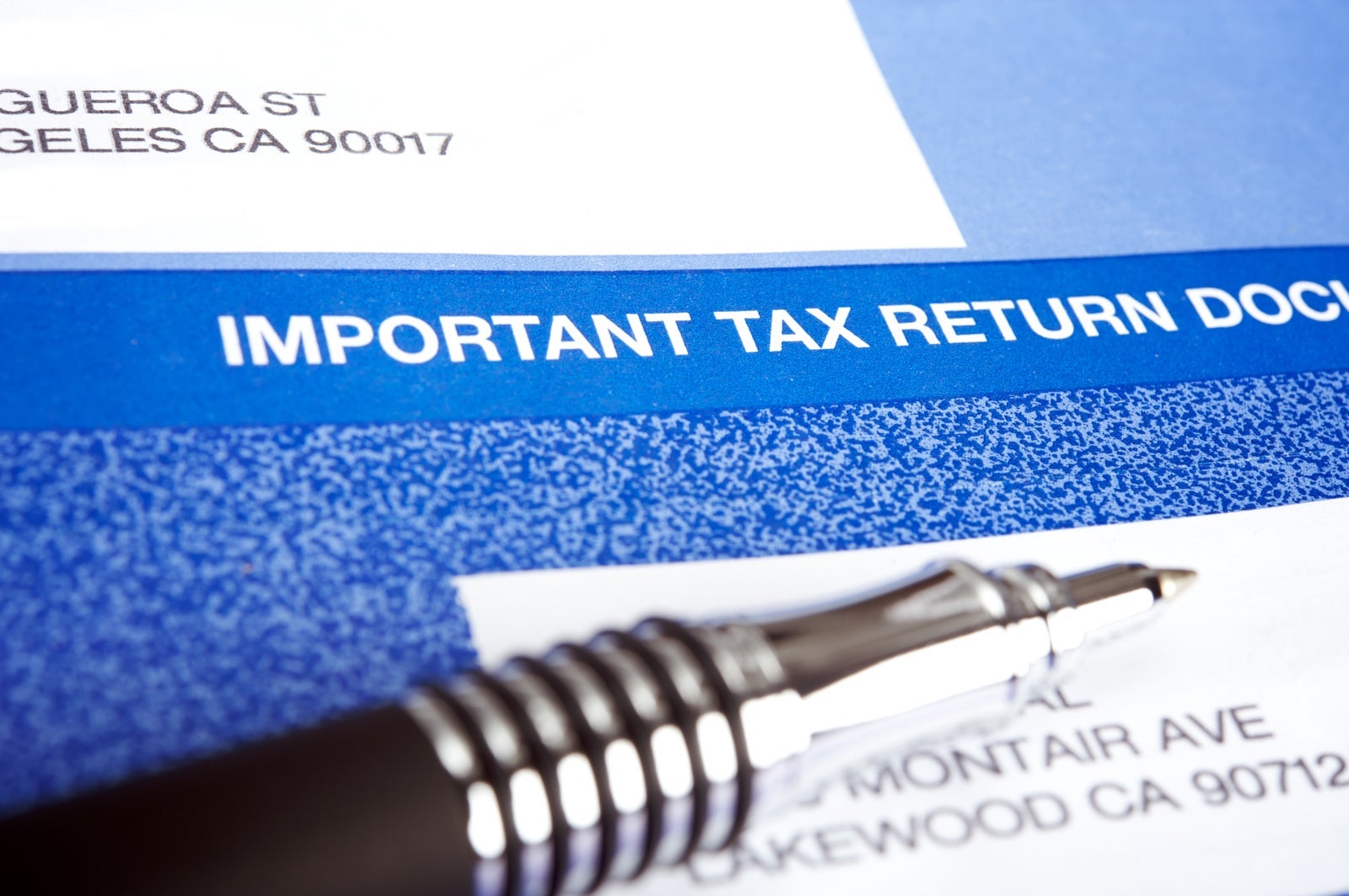
The IRS has had a longstanding policy on not taxing credit card points — so why is Anikeev's situation different?
Simply put, the Tax Court said that the couple earned these Rewards Dollars by buying cash equivalents, not a product or service. In turn, this made some of their rewards eligible for taxation.

According to the docket, the IRS notes that when a payment is made by a seller to a customer, it's generally seen as a "price adjustment to the basis of the property."
This is commonly referred to as the "rebate rule." In the hearing, the court said this rule "states that a purchase incentive such as credit card rewards or points is not treated as income but as a reduction of the purchase price of what is purchased with the rewards or points."
In other words: rewards usually aren't taxable because the purchased property's cost is simply adjusted. If you purchase a $500 computer with a cash back credit card that earns 2% cashback on all purchases, the IRS sees this as your card giving you a 2% coupon. This would adjust the price of your purchase to $490, hence you not being assessed another $10 in taxable income.
Note: This is likely why bonuses for opening bank accounts and American Express referral bonuses for referring friends are taxable, but not the points or cash back earned on your everyday spending and credit card welcome bonuses. Points and cashback earned on spending are seen as a price adjustment from spending. On the other hand, bank account bonuses and referrals are seen as income from the issuing company.
The Anikeev's defense used this in an attempt to defend the couple from paying this tax:
"The manner of purchase of something, however, does not constitute an accession of wealth. Applying I.R.C. § 61, the rewards points would be taxable when received, not based on how the gift cards were later used. What Mr. Anikeev later used the gift cards (which are a product, given that they have a Universal Product Code) to purchase should not matter."
On the one hand, the court did agree that Visa gift cards are considered "products":
"However, petitioners' direct purchases of money orders and reloads of cash into the debit cards using the American Express cards presents a different question from the purchase of Visa gift cards. The Visa gift cards have product characteristics. They provide a consumer service embodied in a simple plastic card for convenience."
But at the same time, the court argued that — in the case of the debit card reloads and money orders — the Anikeev's didn't purchase property or even a service. Instead, the couple purchased "cash equivalents" which the Tax Court said cannot be seen as a rebate on a standard purchase.
"The Visa gift cards are not redeemable for cash, but the money orders purchased with the American Express cards and the infusion of cash into the reloadable debit cards are difficult to reconcile with the IRS credit card reward policy. No product or service is obtained in these uses of the American Express cards other than cash transfers. The money orders are not properly treated as a product subject to a price adjustment because they were eligible for deposit into petitioners' bank account from acquisition. Similarly, the cash infusions to the reloadable debit cards were not product purchases."
In the ruling, the court stated that — in most cases — this practice would've likely been ignored. It was instead picked up by the IRS because of the couple's success in "manipulating" the rewards program using cash equivalents, so the longstanding IRS rules on not taxing credit card points don't apply.
"This case rests squarely in the legal chasm between the basic principle to broadly define income and respondent's own policy. Petitioners' aggressive efforts to generate Reward Dollars have created a dilemma for respondent which is largely the result of the vagueness of IRS credit card reward policy. Petitioners clearly acquired economic benefits by cleverly and relentlessly manipulating the Rewards Program. Their actions never offended American Express and had Mr. Anikeev not been so successful in his efforts he likely would have been ignored by [*14] the IRS. However, the scale of his success in acquiring rewards makes this case an extreme test of the longstanding nontaxability of credit card reward programs. To avoid offending his own longstanding policy respondent seeks to apply the cash equivalence concept. As we will explain herein we do not find it is a good fit."
Judging by this ruling, the taxation line can be crossed when someone buys massive amounts of cash equivalents in order to generate wealth. In this case, buying money orders and funding prepaid debit cards with a credit card for cash back, and then immediately paying their credit card bill.
Related: Complete guide to paying taxes on credit card rewards
Normal "cash equivalent" purchases likely won't be taxed, but may not earn rewards
So, what does this mean for you? Will you be required to pay taxes on points earned when you send a Venmo payment to a friend and pay with your credit card?
The short answer is, likely, no.
As discussed, the IRS upheld its stance on not reporting credit card rewards as income multiple times in the hearing. The thing that seemingly made the Anikeev's case different is the couple purchasing a mass amount of cash equivalents (money orders, debit card reloads) in order to generate profit. A single Venmo transfer to a friend is unlikely to sound the same alarms at the IRS.
That said, many credit card issuers don't reward points for purchases of cash equivalents.
American Express changed its rules on gift card purchases for some cards in 2019, stating that these transactions no longer earn rewards. Other ineligible transactions include peer-to-peer payments and reloading prepaid cards.
Likewise, Chase is changing its policy on purchasing cash equivalents starting this April. The bank will soon start treating certain purchases of cash equivalents as cash advances, which are subject to other fees and don't earn rewards. Some of these purchases include buying cryptocurrency and sending peer-to-peer money transfers, amongst others "cash-like transactions".
Related: 4 credit card mistakes to avoid
Could these rules change in the future?
Again, the good news for you is that you likely won't be subject to paying taxes on your credit card rewards earned through everyday spending. From the looks of it, this still includes both points earned on purchases and welcome bonuses that require an amount of spending to trigger the bonus. As discussed, these are considered rebates on purchases of goods and services.
Rewards-earning credit cards are extremely widespread around the U.S. and world, and taxing awards would be difficult. Plus, the average person likely doesn't make enough income in rewards for it to be worthwhile for the IRS to tax them on it.
But who knows, maybe the status quo is wishful thinking on my part.
At the end of the docket, the court made it clear it's hoping for some sort of reform in the future. After all, this case is unique to one specific circumstance, so we could see some type of law passed that adds guidance around credit card rewards and profiting off of buying cash equivalents with a credit card.
Here's an excerpt from the end of the docket:
"We note that the above holdings are not based upon the application of the cash equivalence doctrine but rather the incompatibility of the direct money order purchases and the debit card reloads with the IRS policy excluding credit card rewards for product and service purchases from income. These holdings are based on the unique circumstances of this case. We hope that respondent polices the IRS policy in the future in regulations or public pronouncements rather than relying on piecemeal litigation."
Only time will tell what further policies can bring, but I wouldn't be too concerned about being taxed on rewards earned with everyday spending at this point in time.
Related: You can earn 1,000 bonus Rapid Rewards points just for doing your taxes
Bottom line
Based on what we know, the Anikeev family was profiting off the buying and selling of a cash equivalent and hence were held liable for paying taxes on the profits earned by purchasing money orders and prepaid debit card reloads. However, the Visa gift card purchases were still considered "products" in the eyes of the IRS, and are not taxable.
Thankfully, this is unlikely to affect the average rewards credit cardholder. If you use your card to buy products and services, your points, miles and cash back aren't taxable for the time being. Just make sure to withhold for referral and bank account bonuses.
Feature photo by Natee Meepian/EyeEm/Getty Images
TPG featured card

at Capital One's secure site
Terms & restrictions apply. See rates & fees.
| 5X miles | Earn 5X miles on hotels, vacation rentals and rental cars booked through Capital One Travel |
| 2X miles | Earn unlimited 2X miles on every purchase, every day |
Pros
- Stellar welcome offer of 75,000 miles after spending $4,000 on purchases in the first three months from account opening. Plus, a $250 Capital One Travel credit to use in your first cardholder year upon account opening.
- You'll earn 2 miles per dollar on every purchase, which means you won't have to worry about memorizing bonus categories
- Rewards are versatile and can be redeemed for a statement credit or transferred to Capital One’s transfer partners
Cons
- Highest bonus-earning categories only on travel booked via Capital One Travel
- LIMITED-TIME OFFER: Enjoy $250 to use on Capital One Travel in your first cardholder year, plus earn 75,000 bonus miles once you spend $4,000 on purchases within the first 3 months from account opening - that’s equal to $1,000 in travel
- Earn unlimited 2X miles on every purchase, every day
- Earn 5X miles on hotels, vacation rentals and rental cars booked through Capital One Travel
- Miles won't expire for the life of the account and there's no limit to how many you can earn
- Receive up to a $120 credit for Global Entry or TSA PreCheck®
- Use your miles to get reimbursed for any travel purchase—or redeem by booking a trip through Capital One Travel
- Enjoy a $50 experience credit and other premium benefits with every hotel and vacation rental booked from the Lifestyle Collection
- Transfer your miles to your choice of 15+ travel loyalty programs
- Top rated mobile app