The Points Guy believes that credit cards can transform lives, helping you leverage everyday spending for cash back or travel experiences that might otherwise be out of reach. That's why we publish a variety of editorial content and card comparisons: to help you find a great card to turn your goals into reality.
Our site may earn compensation when a customer clicks on a link, when an application is approved, or when an account is opened with our partners, and this may impact how or where these products appear. While we don't cover all available credit cards, our editorial team creates and maintains all of the analysis of these cards, and our content is not influenced nor subject to review by any credit card company, bank or partner prior to (or after) publication. Please view our advertising policy and product review methodology for more information.
Advertiser disclosure
The Points Guy believes that credit cards can transform lives, helping you leverage everyday spending for cash back or travel experiences that might otherwise be out of reach. That's why we publish a variety of editorial content and card comparisons: to help you find a great card to turn your goals into reality.
Our site may earn compensation when a customer clicks on a link, when an application is approved, or when an account is opened with our partners, and this may impact how or where these products appear. While we don't cover all available credit cards, our editorial team creates and maintains all of the analysis of these cards, and our content is not influenced nor subject to review by any credit card company, bank or partner prior to (or after) publication. Please view our advertising policy and product review methodology for more information.
Credit card writer Danyal Ahmed is an avid traveler, averaging about 100,000 aeronautical miles per year. He regularly applies that knowledge and his expertise in credit cards to his role as a credit card writer at TPG.
Carissa is freelance writer and points and miles expert.
also contributed to this story
October 17, 2024 • 8 min read
The cards we feature here are from partners who compensate us when you are approved through our site, and this may impact how or where these products appear. We don't cover all available credit cards, but our analysis, reviews, and opinions are entirely from our editorial team. Terms apply to the offers listed on this page. Please view our advertising policy and product review methodology for more information.Editorial disclaimer: Opinions expressed here are the author's alone, not those of any bank, credit card issuer, airline or hotel chain, and have not been reviewed, approved or otherwise endorsed by any of these entities.
Comments
By commenting, you agree to our Community Guidelines to help create a positive space for conversation. The responses below are not provided or commissioned by the bank advertiser, our partners, or The Points Guy (“TPG”). They have not been reviewed, approved, or otherwise endorsed by any of these parties. All responses are submitted by individual contributors, and neither the bank advertiser, our partners, nor TPG are responsible for ensuring that all posts and/or questions are answered.
Related stories
Quick summary
Venmo is a mobile-focused peer-to-peer payment app that allows users to send and receive money quickly, with an optional social feed displaying transactions.
Users can link bank accounts, debit or credit cards, and add funds via direct deposit, check or transfers, with most transfers incurring no fee except for credit card use.
Venmo offers a rewards program through its debit and credit cards, providing cash back at select merchants and in top spending categories.
The platform uses encryption and privacy controls to help protect user data and transactions.
What to consider
A 3% fee applies when sending money with a credit card through Venmo, and some issuers may treat these as cash advances, leading to additional fees and no rewards.
Venmo is limited to U.S. users and allows a maximum of two accounts per person under specific conditions, with distinct rules for business accounts.
Transaction and spending limits apply, and Venmo does not support international transfers unlike some competitors.
What you'll miss from the article
A detailed comparison of Venmo and PayPal, including fee structures, transaction limits and ideal use cases for each platform.
Generated by AI with support from our editorial team.
Update: Some offers mentioned below are no longer available. View the current offers here.
Raise your hand if you’re always the one whipping out your Chase Sapphire Reserve® (see rates and fees) and insisting on paying for all of your friends’ meals at dinner. It’s not that you’re rich — you just enjoy earning 3 bonus points per dollar spent on dining and know your friends will pay you back later.
This is where Venmo, a money transfer app, enters the chat.
The service allows you and other Venmo users to send each other money quickly and easily and is one of the most widely used mobile payment apps on the market.
If you're unfamiliar with Venmo — or you've heard of it and want to learn more before signing up — you're in the right place. Read on to discover how Venmo works, what fees it charges (depending on the transaction), how long transfer times take and more so you can navigate the system with ease.
What is Venmo?
As mentioned above, Venmo is a money transfer service, otherwise known as a peer-to-peer (P2P) payment system. Originally operated by Braintree, PayPal purchased the company in 2013 and currently remains under PayPal's ownership.
VENMO
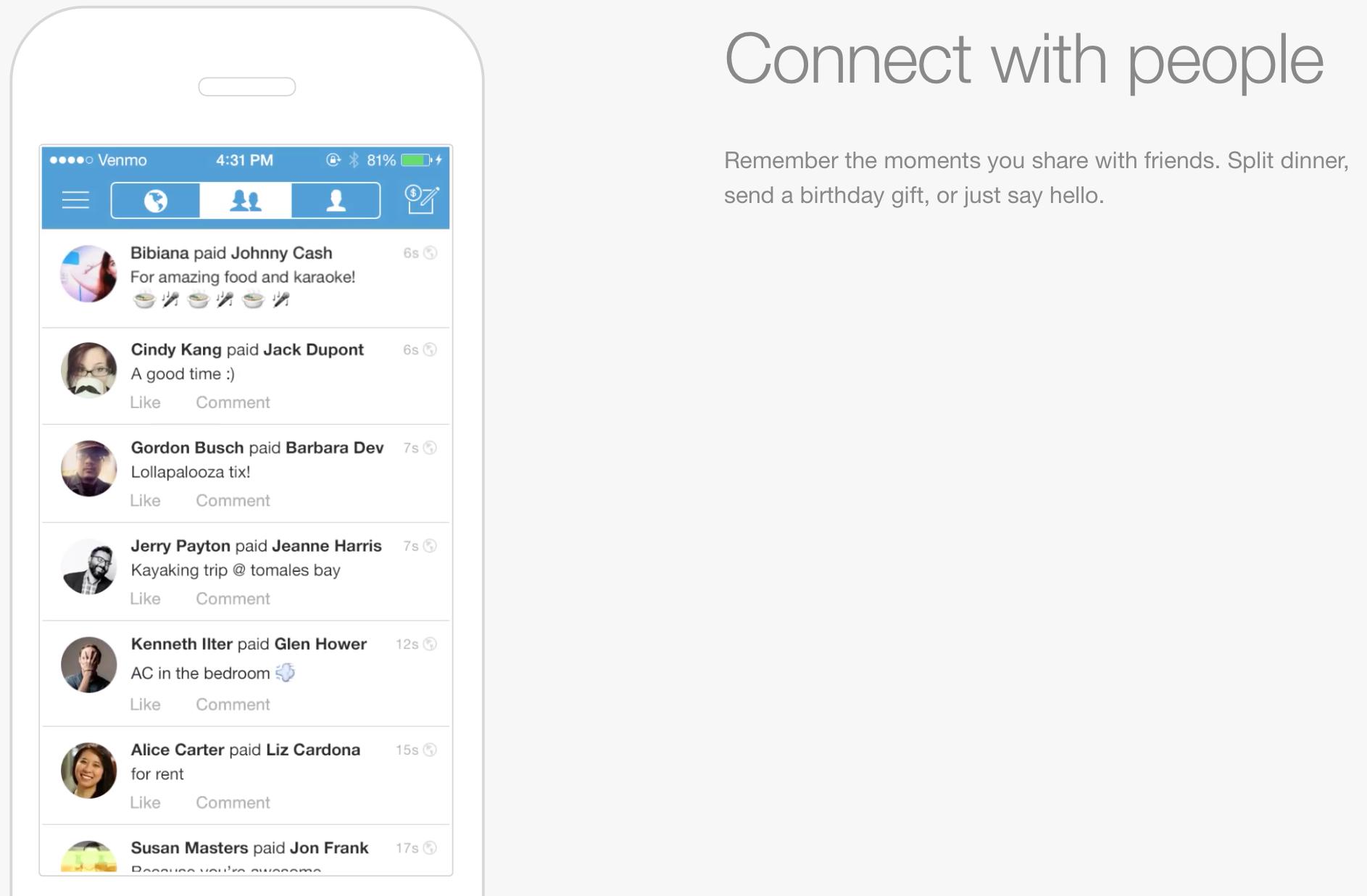
The main features that differentiate Venmo from other services are its mobile-first design (it does not have a web feature) and a social media-esque news feed that publicly shows transactions you make (though you can opt to make transactions private). This means people you are connected to can see transactions and comment or react to them.
How does Venmo work?
Venmo works by linking your bank account, debit or credit cards to a Venmo account. After your information is saved to your account, you can send money to contacts and some businesses. You don’t need to maintain a balance in your account, either. You can simply send money in a transaction, and it will debit your linked cards accordingly.
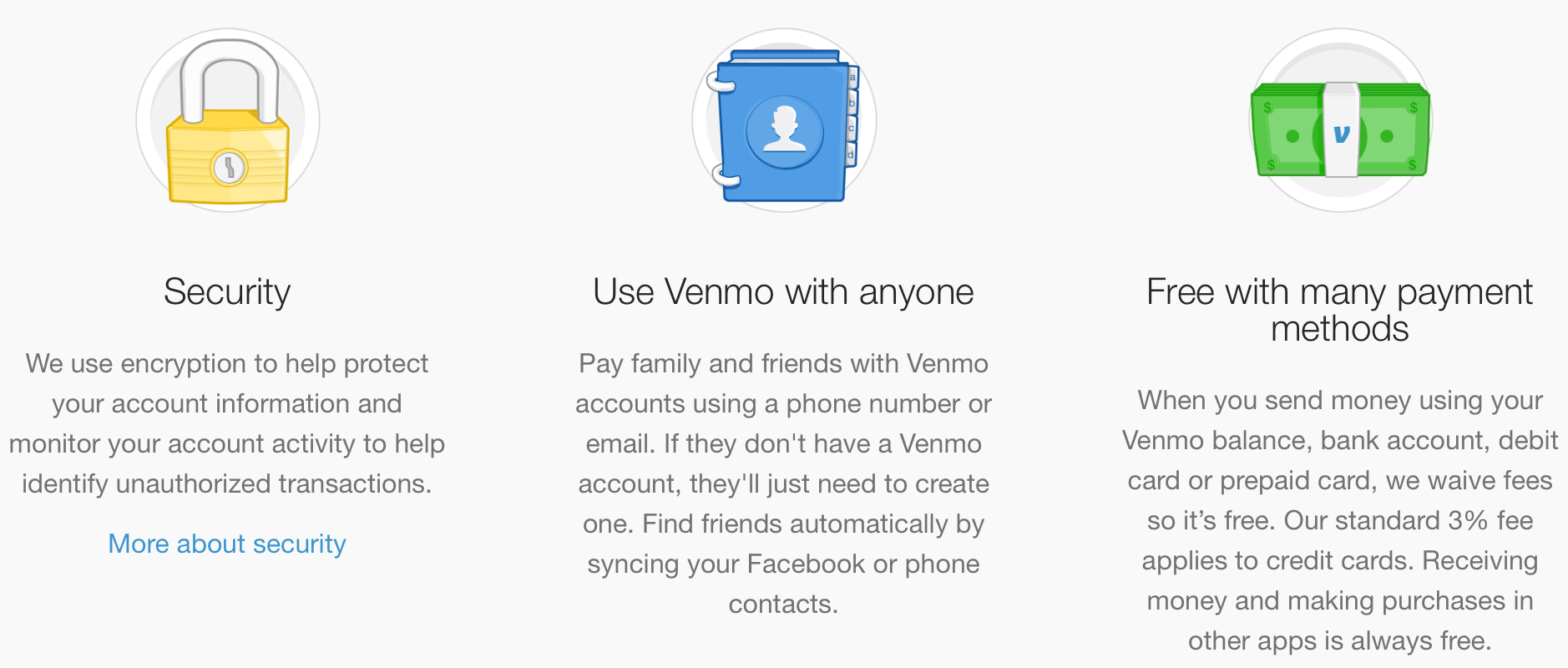
It’s worth noting that you can send money from your bank account, balance (if you have one), or debit card for free. For credit cards, there is a standard 3% fee per transaction.
VENMO
Once you’ve received the money, you’ll need to send a request to transfer the funds directly to your bank account and from there, you can make withdrawals or transfer those funds to other accounts as needed. To help reduce the chances of users getting scammed, Venmo uses encryption for all your transactions to keep your money safe. Remember to double-check that when you send funds, you're sending them to the correct account/phone number.
Can I have several Venmo accounts?
Venmo has a limit of two accounts per person with certain conditions. The two Venmo accounts must be opened with a unique set of contact details — so, a different email address and phone number for each account.
JLCO-JULIA AMARAL/GETTY IMAGES
To have another Venmo account, you must either have a joint bank account or debit card with another Venmo user or own a business, in which case you open a Venmo Business account. However, you can only have one Venmo business account for your business.
How to add money to Venmo?
In addition to linking debit and credit cards to Venmo, you can also add money to your Venmo account. Money can be added to your Venmo account using a debit card, check, or direct deposit.
XANDERST/SHUTTERSTOCK
For example, you can have your paychecks deposited into your Venmo account or top off your account at your leisure with a specific amount transferred from your debit card or bank account. The benefit of adding money to your Venmo account is that you only use your preloaded balance and reduce the risk of charging up your debit card or, worse, overdrafting when paying directly with a debit card for transactions.
Does Venmo charge a fee?
When using a credit card through Venmo, though, as mentioned before, you will incur a 3% fee whenever you do so. If you’re trying to meet a sign-up bonus or other spend, this may work, but otherwise, it’s probably not worth it to use a credit card.
PEKIC/GETTY IMAGES
It's important to note that issuers may charge a fee when using Venmo for P2P transactions. For example, in 2021, Chase updated its definition of cash-like transactions to include P2P payments. Therefore, when making Venmo payments using Chase credit cards such as the Chase Sapphire Reserve, Chase Sapphire Preferred® Card (see rates and fees), or the Chase Freedom Unlimited® (see rates and fees), these transactions will be treated as cash advances that are subject to transaction fees, higher interest rates, and no rewards.
Additionally, cash advance limits on credit cards are substantially lower than your regular credit line and accrue interest from the first day the transaction occurs.
It’s worth doing a small transaction to simply test it out first, in order to see whether the purchase codes as a cash advance with your particular credit card.
How do you get Venmo rewards?
There are several different ways to earn Venmo rewards. The first is via the Venmo debit card, which is a Mastercard. You can use it just like a regular debit card, and Venmo will give you cash back at certain retailers.
You'll find that some common retailers such as Target, Sephora, Chevron and Sam’s Club offer cash back rewards when you use your Venmo card for purchases. With rates as high as 5% cash back, this isn't the worst way to maximize your spending, but there are some better options that earn even more on specific purchases worth checking out.
THE POINTS GUY
Then there's the Venmo Credit Card, which also earns Venmo rewards. Cardholders can earn rewards across eight categories, including travel, dining, gas, groceries, entertainment and more.
You automatically earn 3% cash back in your top spend category, 2% in the next top spend category and 1% on all other eligible purchases. There is no limit on how much cash back you can earn, and the card has no annual fee.
The information for the Venmo debit card and Venmo Credit Card has been collected independently by The Points Guy. The card details on this page have not been reviewed or provided by the card issuer.
Is Venmo safe?
Venmo prides itself on its secure network and protection of customer data. As mentioned above, each transaction within the app is encrypted, so information about your financial institution or linked cards is secure regardless of using Venmo to pay friends or retailers.
HINTERHAUS PRODUCTIONS/GETTY IMAGES
You can secure the Venmo app by setting not just a password but also a biometric or PIN-based code for your account. You are also in control of your privacy settings, meaning you can choose whether or not others see your transactions and activities.
Venmo vs. PayPal
Venmo and PayPal are both P2P payment tools that allow users to send and receive money. Although PayPal owns Venmo, each operates independently, and both have pros and cons.
RAFAEL HENRIQUE/SOPA IMAGES/LIGHTROCKET/GETTY IMAGES
For starters, Venmo and PayPal vary in the fees they charge users. With Venmo, you can send money with a linked bank account or debit card for no fee, while using a credit card will incur a 3% fee.
Paypal only offers no-fee transactions when sending money from a linked bank account or PayPal. Otherwise, debit or credit card transactions get charged a 2.90% fee plus a fixed fee based on the currency being used. With PayPal, you can also send money internationally to someone else's PayPal account for a 5% fee plus a variable fee.
Venmo and PayPal also have differing transaction limits. Venmo allows a spending limit of $7,000 (for verified accounts), which includes Venmo debit card and merchant payments and $60,000 weekly for P2P payments. PayPal has fewer limits but does require that single transactions do not exceed $60,000 and, in some cases, limits these transactions to $10,000.
Overall, Venmo is only for the U.S. market, whereas PayPal is available in more than 190 countries and supports 25 currencies.
Bottom line
Venmo is an easy-to-use service that caters to mobile users. It’s free for most transactions involving money transfers, though you will incur fees when using a credit card and are subject to additional fees if your issuer codes P2P payments as cash-like transactions.
It has a simple rewards program that offers cash back for those who participate and does its part to keep your information secure. All in all, it’s a good option for just about anybody.
Comments
By commenting, you agree to our Community Guidelines to help create a positive space for conversation. The responses below are not provided or commissioned by the bank advertiser, our partners, or The Points Guy (“TPG”). They have not been reviewed, approved, or otherwise endorsed by any of these parties. All responses are submitted by individual contributors, and neither the bank advertiser, our partners, nor TPG are responsible for ensuring that all posts and/or questions are answered.