Credit utilization ratio: What it is and how it affects your credit score
Editor's Note
When it comes to personal finance (including how to get the best credit cards), your credit score plays a large role. Creditors use it as a barometer for your trustworthiness as a borrower.
One of the main factors in determining your score is credit utilization, a term not everyone is familiar with. Let’s look at your credit utilization ratio and how you can maintain a low ratio to improve your credit score.
Related: What is a good credit score?
What is credit utilization?
The term “credit utilization ratio” describes the relationship between your balances and total available credit across revolving accounts (such as credit cards). It’s the percentage of your credit limits that you are using, as reported by the three credit bureaus. Credit utilization is sometimes known as your “balance-to-limit ratio” as well as your “debt-to-credit ratio” — but can also appear as “amounts owed.”
You can calculate your credit utilization with this simple formula:
- Total outstanding credit card balances ÷ total credit limits = credit utilization ratio.
Note that this will get you a number between zero and one — often multiplied by 100 to be expressed as a percentage.

Remember, though, that should include all of your revolving credit accounts. So, if you have four credit cards, you’ll want to add up your balances and the total credit limits across all cards.

For example, let’s say you have a combined credit limit of $12,000 across two different cards, and your credit report shows an account balance of $6,000 spread across those two cards. In this case, your credit utilization ratio is 50% ($6,000 ÷ $12,000 = 0.5 X 100 = 50%). In other words, you’re using 50% of the credit limit on your account.
You can also calculate your per-card ratio using the same formula but using that particular card’s balance and credit limit. While your individual cards' credit ratios are important, the most crucial ratio is the ratio of your overall balances to the total credit you have at your disposal.
Related: How to improve your credit score
How important is credit utilization?
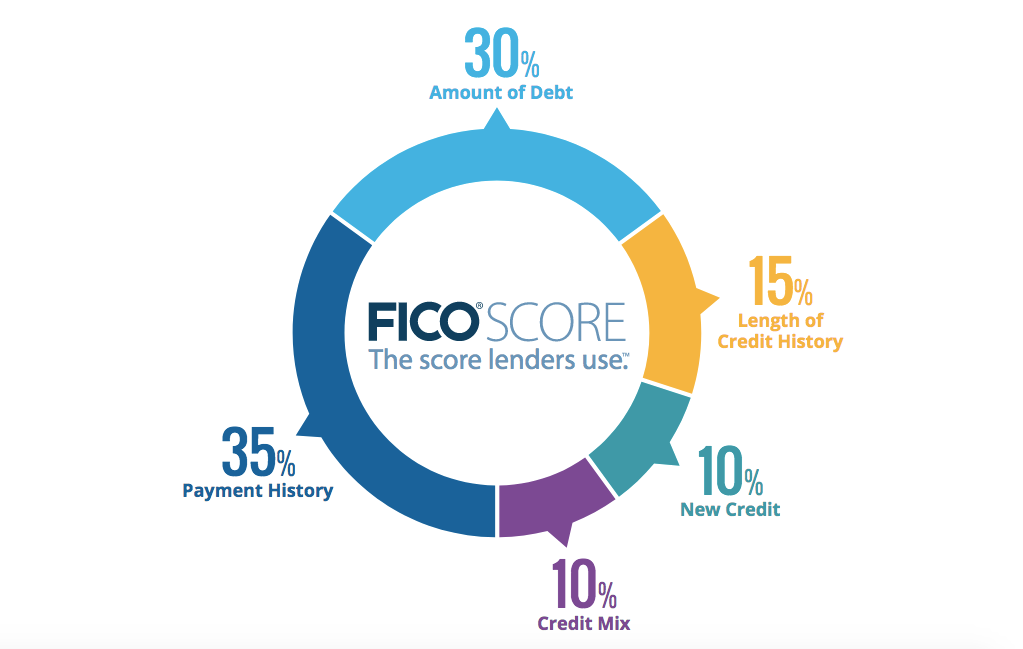
Credit utilization is one of the more important factors determining your credit score. Depending on which scoring model is used, it could make up as much as 30% of your score (as it does with your FICO score). The only other factor with that much weight is your payment history.
Why does it matter so much?
Well, from a creditor’s perspective, it can show whether or not you are doing a good job of managing your credit cards and whether or not you are overspending. If you consistently pay off your balances and do not REACH your full credit limit, that tells creditors (like card issuers) that you are a low-risk customer.
The lower your risk, the more likely you’ll be approved for a card and any additional credit needs, such as a mortgage and auto loans. In addition, higher scores may unlock better terms from lenders (like a lower mortgage interest rate), so paying close attention to your utilization can save you real money.
What is a good credit utilization ratio?
Credit scoring models reward you when you keep your credit card utilization rate low. If you’re looking for a way to boost your credit scores, paying down your credit card balances (and therefore lowering your utilization ratio) is often one of the most effective ways to accomplish that goal.

Generally speaking, you should keep your total credit utilization ratio below 30%. This is another reason we recommend paying off your balances in full each month. It’s the best way to avoid interest payments and helps keep your credit utilization ratio as low as possible.
If your credit card balance is higher than usual, the sooner you pay down those balances — even if it is before your monthly statement closes — the better off you’ll be regarding your credit utilization ratio.
Related: Holiday spending hangover: Tips to get you back on track
Why canceling a card could hurt your utilization ratio
When you cancel a credit card, you’re potentially hurting your score in two ways. First, you reduce the average length of accounts, especially if you’ve had the card for a long time. Second, you’re potentially increasing your credit utilization ratio.

Let’s say you close a credit card with a $0 balance and a $15,000 credit limit but still have two other credit cards:
- Card No. 1 has a $3,000 balance and a $10,000 credit limit
- Card No. 2 has a $3,000 balance and a $10,000 credit limit
With all three cards, your credit utilization ratio is 17.14% ($6,000 ÷ $35,000). However, if you cancel that card, the denominator of that equation (your total available credit) decreases significantly. Meanwhile, the numerator (your total outstanding balance) remains the same.
Canceling that card with the $15,000 limit will increase your aggregate utilization ratio to 30%.
Because of that, your credit scores may drop, even though your credit card debt is the same amount as before.
Related: How canceling a credit card affects your FICO score

Ultimately, the extent to which a credit card closure hurts your credit score largely depends on how many other accounts you have open and how much you use them. The available credit on the canceled card can also affect this equation. However, removing at least some of your available lines of credit will almost always result in a credit score drop.
To avoid decreasing your overall credit limit — and thus increasing your credit utilization ratio — you have a few options when you want to cancel a card.
First off, you can shift credit from one credit card to another. This only works if you have multiple credit cards within the same bank. Let’s say you have a $10,000 credit limit with a Chase personal card, but you also have a few other Chase personal credit cards in your wallet. Before canceling the card, you can call Chase to transfer your credit limit from the card you want to cancel to another card — or cards — in your account.
This will keep your credit tied to your account, thus not affecting your credit utilization score. Once the credit is relocated from one account to another — sometimes taking up to 24 hours — you can cancel the card.

Remember, though, that each bank has a different set of rules. Typically, there is a minimum amount of credit that you’ll need to keep tied to the card — typically between $1,000 to $5,000, depending on the bank — so you are still losing some credit, but not a significant amount. Additionally, shifting credit doesn’t require a hard credit pull unless the new card’s limit exceeds a preset number with the bank.
Another way to not lose your card’s credit is to request a downgrade from your issuer to a different product that doesn’t charge an annual fee. This will keep your credit with the new card and have zero impact on your credit utilization score. However, downgrading a card could exclude you from applying for a new card in the future and getting a welcome offer on that particular card.
And if the particular card you want to close is a no-annual-fee credit card, you can keep it open and tucked away in your sock drawer. It doesn’t hurt to keep it open, but it requires you to keep an eye on the account to ensure no fraudulent activity. We also recommend making at least a few purchases yearly to avoid the issuer proactively closing your account due to inactivity.
Related: Should I cancel my credit cards if I don’t use them anymore?
Applying for a new credit card
If you want to cancel a card while applying for a new one, the best practice is to apply for the new one before canceling the old one. Your existing credit line will still be factored into your score, and your utilization ratio will remain low while your application is being considered.
Of course, new applications also impact your credit score. Be sure to consider the situation from multiple angles before deciding.
Related: How to apply for a credit card
Bottom line
Although it is easy to forget about your credit score when deciding to apply for a new card with an enticing welcome bonus, it is incredibly important to keep in mind — especially your credit utilization ratio.
Since debt makes up the bulk of your score, your credit utilization should always be considered when canceling and applying for new credit cards.
Having a low credit utilization ratio will only help your credit score, which can lead to more favorable credit card, loan and mortgage applications in the future.
TPG featured card
Rewards
| 4X | Earn 4X Membership Rewards® points per dollar spent on purchases at restaurants worldwide, on up to $50,000 in purchases per calendar year, then 1X points for the rest of the year. |
| 4X | Earn 4X Membership Rewards® points per dollar spent at US supermarkets, on up to $25,000 in purchases per calendar year, then 1X points for the rest of the year. |
| 3X | Earn 3X Membership Rewards® points per dollar spent on flights booked directly with airlines or on AmexTravel.com. |
| 2X | Earn 2X Membership Rewards® points per dollar spent on prepaid hotels and other eligible purchases booked on AmexTravel.com. |
| 1X | Earn 1X Membership Rewards® point per dollar spent on all other eligible purchases. |
Intro offer
Annual Fee
Recommended Credit
Why We Chose It
There’s a lot to love about the Amex Gold. It’s a fan favorite thanks to its fantastic bonus-earning rates at restaurants worldwide and at U.S. supermarkets. If you’re hitting the skies soon, you’ll also earn bonus Membership Rewards points on travel. Paired with up to $120 in Uber Cash annually (for U.S. Uber rides or Uber Eats orders, card must be added to Uber app and you can redeem with any Amex card), up to $120 in annual dining statement credits to be used with eligible partners, an up to $84 Dunkin’ credit each year at U.S. Dunkin Donuts and an up to $100 Resy credit annually, there’s no reason that foodies shouldn’t add the Amex Gold to their wallet. These benefits alone are worth more than $400, which offsets the $325 annual fee on the Amex Gold card. Enrollment is required for select benefits. (Partner offer)Pros
- 4 points per dollar spent on dining at restaurants worldwide and U.S. supermarkets (on the first $50,000 in purchases per calendar year; then 1 point per dollar spent thereafter and $25,000 in purchases per calendar year; then 1 point per dollar spent thereafter, respectively)
- 3 points per dollar spent on flights booked directly with the airline or with amextravel.com
- Packed with credits foodies will enjoy
- Solid welcome bonus
Cons
- Not as useful for those living outside the U.S.
- Some may have trouble using Uber and other dining credits
- You may be eligible for as high as 100,000 Membership Rewards® Points after you spend $6,000 in eligible purchases on your new Card in your first 6 months of Card Membership. Welcome offers vary and you may not be eligible for an offer. Apply to know if you’re approved and find out your exact welcome offer amount – all with no credit score impact. If you’re approved and choose to accept the Card, your score may be impacted.
- Earn 4X Membership Rewards® points per dollar spent on purchases at restaurants worldwide, on up to $50,000 in purchases per calendar year, then 1X points for the rest of the year.
- Earn 4X Membership Rewards® points per dollar spent at US supermarkets, on up to $25,000 in purchases per calendar year, then 1X points for the rest of the year.
- Earn 3X Membership Rewards® points per dollar spent on flights booked directly with airlines or on AmexTravel.com.
- Earn 2X Membership Rewards® points per dollar spent on prepaid hotels and other eligible purchases booked on AmexTravel.com.
- Earn 1X Membership Rewards® point per dollar spent on all other eligible purchases.
- $120 Uber Cash on Gold: Add your Gold Card to your Uber account and get $10 in Uber Cash each month to use on orders and rides in the U.S. when you select an American Express Card for your transaction. That’s up to $120 Uber Cash annually. Plus, after using your Uber Cash, use your Card to earn 4X Membership Rewards® points for Uber Eats purchases made with restaurants or U.S. supermarkets. Point caps and terms apply.
- $84 Dunkin' Credit: With the $84 Dunkin' Credit, you can earn up to $7 in monthly statement credits after you enroll and pay with the American Express® Gold Card at U.S. Dunkin' locations. Enrollment is required to receive this benefit.
- $100 Resy Credit: Get up to $100 in statement credits each calendar year after you pay with the American Express® Gold Card to dine at U.S. Resy restaurants or make other eligible Resy purchases. That's up to $50 in statement credits semi-annually. Enrollment required.
- $120 Dining Credit: Satisfy your cravings, sweet or savory, with the $120 Dining Credit. Earn up to $10 in statement credits monthly when you pay with the American Express® Gold Card at Grubhub, The Cheesecake Factory, Goldbelly, Wine.com, and Five Guys. Enrollment required.
- Explore over 1,000 upscale hotels worldwide with The Hotel Collection and receive a $100 credit towards eligible charges* with every booking of two nights or more through AmexTravel.com. *Eligible charges vary by property.
- No Foreign Transaction Fees.
- Annual Fee is $325.
- Terms Apply.
Rewards Rate
| 4X | Earn 4X Membership Rewards® points per dollar spent on purchases at restaurants worldwide, on up to $50,000 in purchases per calendar year, then 1X points for the rest of the year. |
| 4X | Earn 4X Membership Rewards® points per dollar spent at US supermarkets, on up to $25,000 in purchases per calendar year, then 1X points for the rest of the year. |
| 3X | Earn 3X Membership Rewards® points per dollar spent on flights booked directly with airlines or on AmexTravel.com. |
| 2X | Earn 2X Membership Rewards® points per dollar spent on prepaid hotels and other eligible purchases booked on AmexTravel.com. |
| 1X | Earn 1X Membership Rewards® point per dollar spent on all other eligible purchases. |
Intro Offer
You may be eligible for as high as 100,000 Membership Rewards® Points after spending $6,000 in eligible purchases on your new Card in your first 6 months of Membership. Welcome offers vary and you may not be eligible for an offer.As High As 100,000 points. Find Out Your Offer.Annual Fee
$325Recommended Credit
Credit ranges are a variation of FICO® Score 8, one of many types of credit scores lenders may use when considering your credit card application.Excellent to Good
Why We Chose It
There’s a lot to love about the Amex Gold. It’s a fan favorite thanks to its fantastic bonus-earning rates at restaurants worldwide and at U.S. supermarkets. If you’re hitting the skies soon, you’ll also earn bonus Membership Rewards points on travel. Paired with up to $120 in Uber Cash annually (for U.S. Uber rides or Uber Eats orders, card must be added to Uber app and you can redeem with any Amex card), up to $120 in annual dining statement credits to be used with eligible partners, an up to $84 Dunkin’ credit each year at U.S. Dunkin Donuts and an up to $100 Resy credit annually, there’s no reason that foodies shouldn’t add the Amex Gold to their wallet. These benefits alone are worth more than $400, which offsets the $325 annual fee on the Amex Gold card. Enrollment is required for select benefits. (Partner offer)Pros
- 4 points per dollar spent on dining at restaurants worldwide and U.S. supermarkets (on the first $50,000 in purchases per calendar year; then 1 point per dollar spent thereafter and $25,000 in purchases per calendar year; then 1 point per dollar spent thereafter, respectively)
- 3 points per dollar spent on flights booked directly with the airline or with amextravel.com
- Packed with credits foodies will enjoy
- Solid welcome bonus
Cons
- Not as useful for those living outside the U.S.
- Some may have trouble using Uber and other dining credits
- You may be eligible for as high as 100,000 Membership Rewards® Points after you spend $6,000 in eligible purchases on your new Card in your first 6 months of Card Membership. Welcome offers vary and you may not be eligible for an offer. Apply to know if you’re approved and find out your exact welcome offer amount – all with no credit score impact. If you’re approved and choose to accept the Card, your score may be impacted.
- Earn 4X Membership Rewards® points per dollar spent on purchases at restaurants worldwide, on up to $50,000 in purchases per calendar year, then 1X points for the rest of the year.
- Earn 4X Membership Rewards® points per dollar spent at US supermarkets, on up to $25,000 in purchases per calendar year, then 1X points for the rest of the year.
- Earn 3X Membership Rewards® points per dollar spent on flights booked directly with airlines or on AmexTravel.com.
- Earn 2X Membership Rewards® points per dollar spent on prepaid hotels and other eligible purchases booked on AmexTravel.com.
- Earn 1X Membership Rewards® point per dollar spent on all other eligible purchases.
- $120 Uber Cash on Gold: Add your Gold Card to your Uber account and get $10 in Uber Cash each month to use on orders and rides in the U.S. when you select an American Express Card for your transaction. That’s up to $120 Uber Cash annually. Plus, after using your Uber Cash, use your Card to earn 4X Membership Rewards® points for Uber Eats purchases made with restaurants or U.S. supermarkets. Point caps and terms apply.
- $84 Dunkin' Credit: With the $84 Dunkin' Credit, you can earn up to $7 in monthly statement credits after you enroll and pay with the American Express® Gold Card at U.S. Dunkin' locations. Enrollment is required to receive this benefit.
- $100 Resy Credit: Get up to $100 in statement credits each calendar year after you pay with the American Express® Gold Card to dine at U.S. Resy restaurants or make other eligible Resy purchases. That's up to $50 in statement credits semi-annually. Enrollment required.
- $120 Dining Credit: Satisfy your cravings, sweet or savory, with the $120 Dining Credit. Earn up to $10 in statement credits monthly when you pay with the American Express® Gold Card at Grubhub, The Cheesecake Factory, Goldbelly, Wine.com, and Five Guys. Enrollment required.
- Explore over 1,000 upscale hotels worldwide with The Hotel Collection and receive a $100 credit towards eligible charges* with every booking of two nights or more through AmexTravel.com. *Eligible charges vary by property.
- No Foreign Transaction Fees.
- Annual Fee is $325.
- Terms Apply.