Will your credit card reimburse you for Spirit Airlines tickets?


Editor's Note
Spirit Airlines ceased operations in the early morning of May 2 and is the largest U.S. carrier to do so in quite some time.
Understandably, many questions are swirling among travelers who had booked flights with the airline.
While there won't be cut-and-dried answers to every situation at this point, here are some things to know if you had tickets to fly Spirit Airlines and are hoping for some kind of protection or reimbursement for that purchase.
Will Spirit Airlines reimburse you for your tickets if they cease operations?
Typically, when an airline ceases operations, the likelihood of individual travelers receiving a refund from that airline is low.
However, Spirit Airlines may be the exception here. As of May 2, its website has been updated to state:
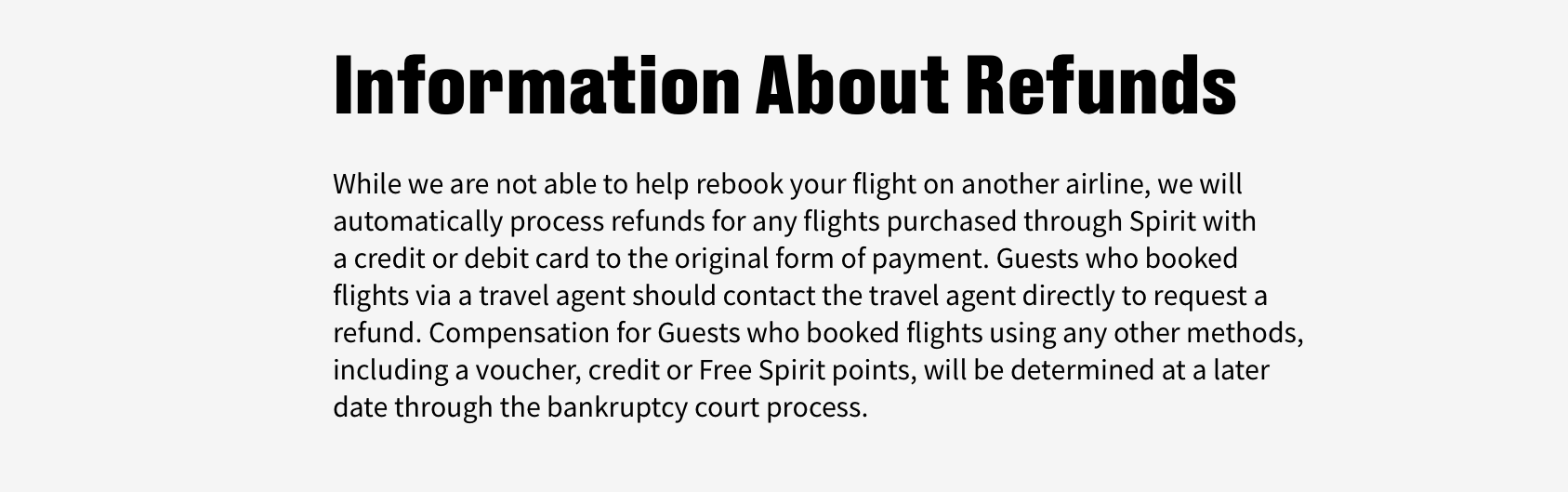
"While we are not able to help rebook your flight on another airline, we will automatically process refunds for any flights purchased through Spirit with a credit or debit card to the original form of payment. Guests who booked flights via a travel agent should contact the travel agent directly to request a refund. Compensation for Guests who booked flights using any other methods, including a voucher, credit or Free Spirit points, will be determined at a later date through the bankruptcy court process."
Will your credit card refund you if Spirit Airlines stops flying?
If the airline is unable to process a refund for you, your credit card might seem like a fallback, but the protections may not work exactly as you might expect in this scenario.
Why typical credit card travel protections won't apply
At TPG, we talk a lot about built-in travel protections when you use certain credit cards to purchase your airfare and how your credit card's built-in benefits will sometimes reimburse you for expenses the airlines won't in the event of long delays and even cancellations.
Unfortunately, that type of trip protection is unlikely to help, as these benefits typically exclude situations where an airline stops flying altogether.
But fortunately, it doesn't mean your credit card can't help at all.
When a chargeback could help you get your money back
If Spirit, or any other airline, were to shut down and cancel your flight without issuing a refund, your credit card may still offer a path to getting your money back.
That's because most credit cards offer consumer purchase protections under the Fair Credit Billing Act that allow you to dispute charges for goods or services that were never delivered, which would potentially apply if an airline ceases operations and cannot provide your scheduled flight.
To take advantage of these protections, you typically need to act quickly — often within 60 days of the statement on which the charge appears.
While your credit card can assist with charges made outside that timeframe, that's not guaranteed. Once you file a dispute with your credit card company, the credit card issuer must acknowledge your claim and investigate it.
During that time, you generally won't be required to pay the disputed amount, and it cannot negatively impact your credit score while the investigation is ongoing.
"This is likely your best recourse … but there's no guarantee the refund will be made," Henry Harteveldt, president and travel industry analyst at Atmosphere Research Group, warned TPG in a prior interview.
How to file a dispute (and what you'll need)
The Department of Transportation shares that in the event of a chargeback claim in scenarios like this, you should be prepared to provide your credit card company with:
- Your account number
- Copy of the airline ticket, itinerary, or receipt
- If the transportation was partially used, identify the used and unused segments
- State that your airline is in bankruptcy and ceased all operations, you did not receive the service that you charged to your card, and you are requesting a credit pursuant to the Fair Credit Billing Act.
This means you'll want to screenshot your ticket information and any flight cancellation information as it's posted. And since there is no guarantee of how long a shuttered airline will keep individual flight information available on its website, we would recommend doing that all in short order.
Often, you can start this process in your credit card account next to the individual charges by clicking "dispute this charge" or "problem with this purchase".
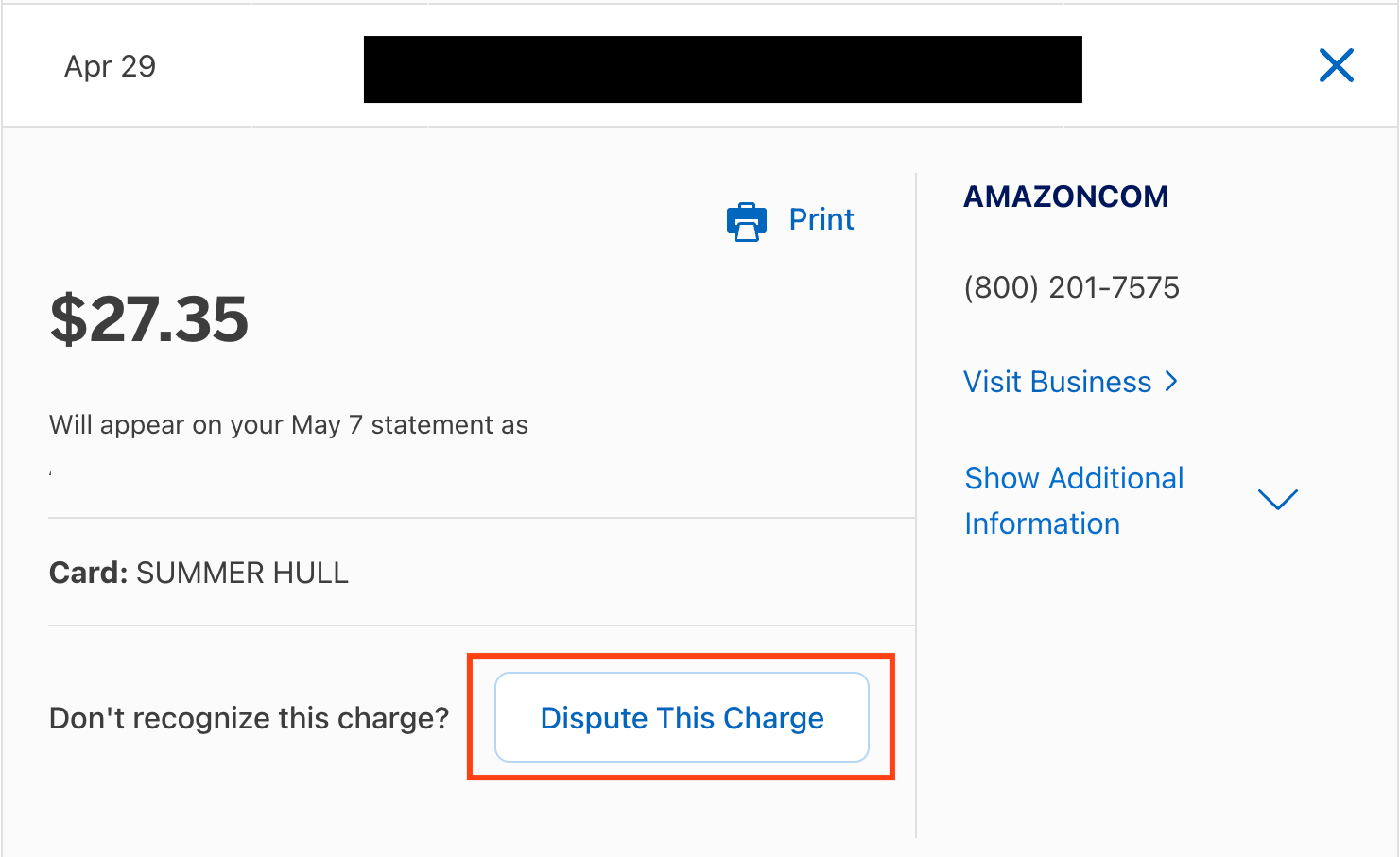
You'll then be prompted through a series of choices and questions to start the process.
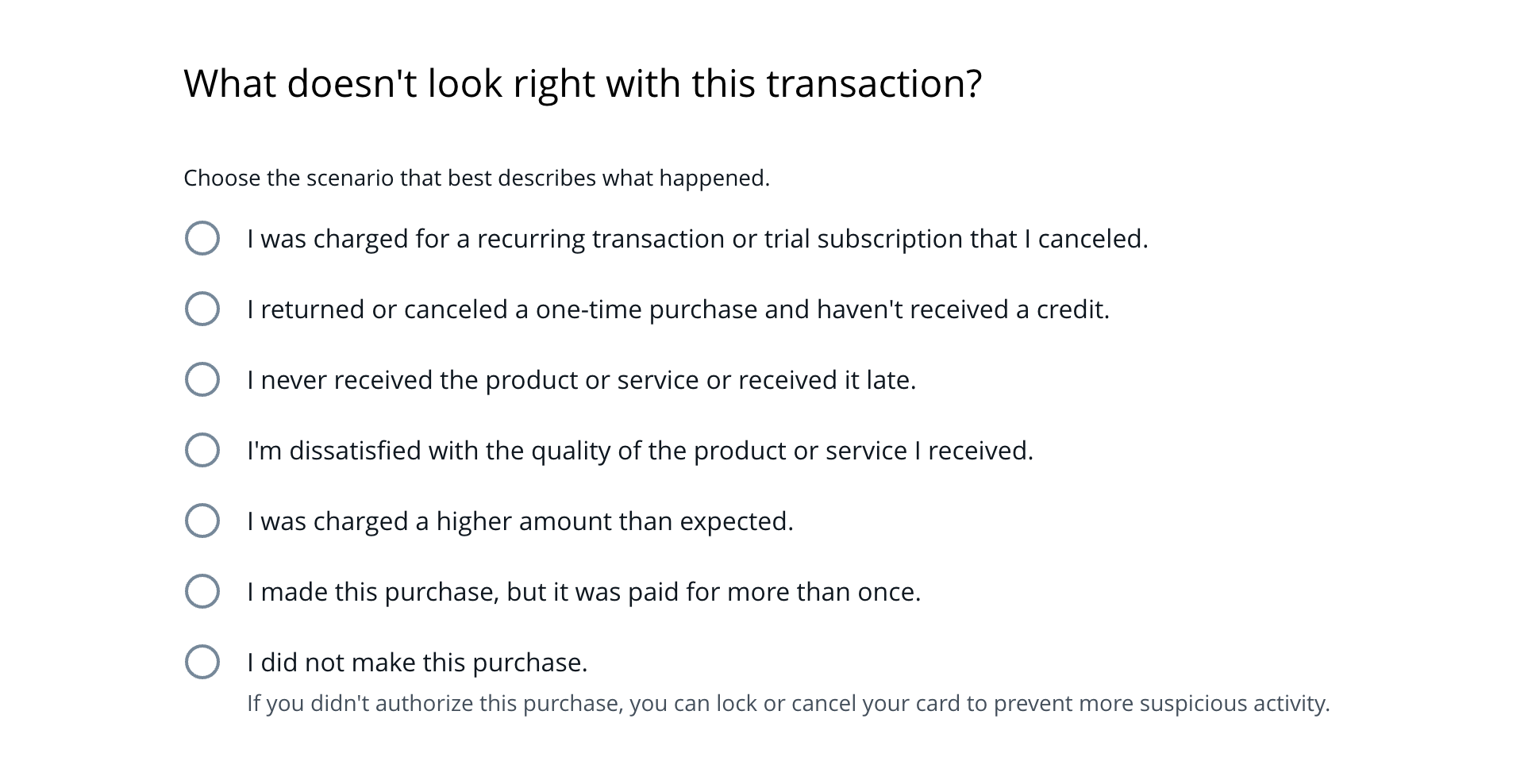
Ultimately, the credit card issuer decides whether your claim qualifies, and outcomes can vary.
It's also worth noting that these protections are stronger when you pay with a credit card. Debit card protections can differ by issuer and may not offer the same dispute rights if the airline fails to deliver your flight.
Filing a claim through bankruptcy proceedings is another option, but it's generally a long shot. Passengers are typically considered unsecured creditors and may recover only a small fraction of what they're owed, if anything.
Will your credit card cover new flights if Spirit cancels yours?
In most cases, no — your credit card is unlikely to cover the cost of booking a new flight if an airline ceases operations.
While some premium credit cards offer trip interruption or cancellation coverage, those benefits typically exclude situations in which an airline ceases operations altogether.
Usually, when an airline shuts down, you likely need to book a new ticket out of pocket, and last-minute fares could be more expensive than the ones you originally purchased. That said, some airlines, such as American Airlines, have already announced that they have placed a cap on Main Cabin fares on routes shared by American Airlines and Spirit.
And after Spirit grounded all flights on Saturday morning, several airlines raced to offer backup options and rescue fares to stranded passengers and employees.
Of course, having your own plan B in the form of an emergency stash of points and miles is also wise.
Bottom line
With Spirit Airlines now ceasing operations, the credit card you used can help you recover the cost of your ticket if the airline refund does not go through, but only if you act quickly and follow the dispute (chargeback) process.
Even then, reimbursement is not guaranteed. You should be ready to provide documentation and make alternate travel plans at your own expense. Paying with a credit card, having a backup plan and moving quickly can make a meaningful difference in how much you recover.
For now, your first step is to request a refund directly through Spirit's website if it hasn't been processed automatically. If that effort is unsuccessful, your next option is to file a chargeback with your credit card issuer.
Related: Spirit's bright yellow planes are grounded for good — a sad ending for the storied budget carrier