More than half of global airlines could 'die' without aid, says IATA

International Air Transport Association (IATA) director general Alexandre de Juniac painted a grim picture of the novel coronavirus pandemic, saying more than half of air carriers globally could "die" without immediate government aid.
"We clearly need massive action very quickly, urgently," he told reporters on Tuesday. De Juniac repeated his push for governments around the world to provide airlines with more than $200 billion in aid to bridge the crisis.
The cash crunch from the crisis is the biggest risk to airlines. Revenues have fallen to near zero for most carriers. But fixed costs, like airplane rents and employee payroll, remain on the books, rapidly depleting liquidity — or cash — reserves. Most airline collapses occur when their cash and access to credit runs out.
Get Coronavirus travel updates. Stay on top of industry impacts, flight cancellations, and more.
By "die," de Juniac referred to a likely wave of both airline collapses and mergers.
Airlines in Europe, where consolidation is years behind the U.S. and travel restrictions are limiting flows across what are normally some the world's most porous of borders, are the most at risk, said IATA chief economist Brian Pearce on Tuesday.
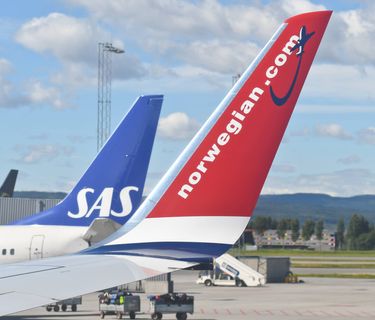
Norwegian Air is repeatedly at the top of most Wall Street analysts' lists of airlines to watch. The Oslo-based carrier has slashed schedules by more than 85% and laid off the majority of its workforce to try and get through the crisis, which has seen demand for air travel plummet as governments' have closed borders and people are staying home to slow the spread of COVID-19.
However, in a glimmer of hope for the discounter, Norwegian said Tuesday that it had secured an initial cash infusion of 300 million Norwegian kroner ($27 million) from the government.
Related: Airlines face 'critical' threat from coronavirus-related cash crunch

Norwegian is far from alone. The CEO of International Airlines Group (IAG) subsidiary British Airways has talked about the carrier's "survival" in communiqué with staff. And the Lufthansa Group — which includes Austrian Airlines, Brussels Airlines, Eurowings, Lufthansa and Swiss International Air Lines — has grounded more than 90% of its fleet in response to the crisis.
Ryanair, by far the most successful and largest European low-cost carrier, said on Twitter Tuesday that it will suspend "most of our flights" from March 24.
"There is a very large number of airlines, hundreds, that are more or less breaking even or producing losses," said Pearce when asked more about how many carriers are at risk.
Related: Coronavirus crisis raises questions about the survival of already-struggling airlines
Under IATA's latest estimate, global aviation revenues are expected to fall by over $250 billion in 2020. This is more than double the organization's previous estimate of a $113 billion loss.
"This is a tremendous revenue shock," said Peace.
U.S. airlines have asked the government for at least $50 billion in aid to bridge them through the crisis. According to the latest reports on the negotiations, the package could include $25 billion in grants to passenger carriers for employee salaries, plus another $25 billion in loans to cover other fixed costs.
Related: US airlines seek at least $50 billion in aid to combat coronavirus crisis
Any aid deal is expected to include limits on executive salaries, as well as investor returns like dividends and share buybacks.
The talks have not progressed fast enough for at least two airlines. Regional affiliates Compass Airlines and Trans States Airlines will both shut their doors in April citing the unexpectedly rapid drawdown in capacity by their partners, American Airlines and United Airlines respectively. The move, however, may bolster other regional carriers by removing some excess capacity from the industry, reported The Air Current on Monday.
"For the weakest airlines of our industry it will not solve the structural problems... but for the moment we are focused on injecting cash for everyone, and then we will deal with the weakest," de Juniac said about the aid being sought.
IATA aims to bring airlines through the immediate crisis, and then let the market be the sorting hat of sorts during what is expected to be a slow, U-shaped recovery after.
TPG featured card

at American Express's secure site
Terms & restrictions apply. See rates & fees.
| 4X | Earn 4X Membership Rewards® points per dollar spent on purchases at restaurants worldwide, on up to $50,000 in purchases per calendar year, then 1X points for the rest of the year. |
| 4X | Earn 4X Membership Rewards® points per dollar spent at US supermarkets, on up to $25,000 in purchases per calendar year, then 1X points for the rest of the year. |
| 5X | Earn 5X Membership Rewards® points on prepaid hotel stays booked through AmexTravel.com or the Amex Travel App™. |
| 3X | Earn 3X Membership Rewards® points on flights booked through AmexTravel.com, the Amex Travel App™, or purchased directly from airlines. |
| 2X | Earn 2X Membership Rewards® points on prepaid car rentals booked through AmexTravel.com or the Amex Travel App™ and cruises booked and paid through AmexTravel.com. |
| 1X | Earn 1X Membership Rewards® point per dollar spent on all other eligible purchases. |
Pros
- Valuable dining and food-related credits
- Flexible rewards with airline and hotel transfer partners
- Multiple travel and purchase protections
- No foreign transaction fees
- Access to Amex Offers for additional savings (enrollment required)
Cons
- Not as useful for those living outside the U.S.
- Some may have trouble using Uber and other dining credits
- You may be eligible for as high as 100,000 Membership Rewards® Points after you spend $8,000 in eligible purchases on your new Card in your first 6 months of Card Membership. Welcome offers vary and you may not be eligible for an offer. Apply to know if you’re approved and find out your exact welcome offer amount – all with no credit score impact. If you’re approved and choose to accept the Card, your score may be impacted.
- Earn 4X Membership Rewards® points per dollar spent on purchases at restaurants worldwide, on up to $50,000 in purchases per calendar year, then 1X points for the rest of the year.
- Earn 4X Membership Rewards® points per dollar spent at US supermarkets, on up to $25,000 in purchases per calendar year, then 1X points for the rest of the year.
- Earn 5X Membership Rewards® points on prepaid hotel stays booked through AmexTravel.com or the Amex Travel App™.
- Earn 3X Membership Rewards® points on flights booked through AmexTravel.com, the Amex Travel App™, or purchased directly from airlines.
- Earn 2X Membership Rewards® points on prepaid car rentals booked through AmexTravel.com or the Amex Travel App™ and cruises booked and paid through AmexTravel.com.
- Earn 1X Membership Rewards® point per dollar spent on all other eligible purchases.
- Pay It® lets you tap in the American Express® App to quickly pay for small purchase amounts throughout the month and still earn rewards the way you usually do. Plan It® gives you the option to split up big purchases into equal monthly payments with a fixed fee. You’ll know upfront exactly how much you’ll pay.
- $120 Dining Credit: Earn up to a total of $10 in statement credits monthly when you pay with the Gold Card at Grubhub (including Seamless), Buffalo Wild Wings, Five Guys, The Cheesecake Factory, and Wonder. This can be an annual savings of up to $120. Enrollment required.
- $100 Resy Credit: Get up to $100 in statement credits each calendar year at over 10,000 qualifying U.S. Resy restaurants after you pay for eligible purchases with the American Express® Gold Card. That’s up to $50 in statement credits semi-annually. Enrollment required.
- $84 Dunkin' Credit: Earn up to $7 in monthly statement credits after you pay with the American Express® Gold Card at U.S. Dunkin’ locations. Enrollment required.
- $120 Uber Cash on Gold: Enjoy up to $120 in Uber Cash annually with your Gold Card. Just add your Card to your Uber account and you'll get $10 in Uber Cash each month to use on orders and rides in the U.S. when you select an Amex Card for your transaction.
- Enjoy complimentary Hertz Five Star® Status benefits like skipping the counter at select locations, adding an additional driver at no additional cost*, and vehicle upgrades**. Benefit enrollment and Hertz Gold+ registration are required. *Additional drivers must meet standard rental qualifications and must be a spouse or domestic partner to qualify as complimentary. Other additional drivers subject to fees. **Benefits are subject to availability and vary by location. Additional Hertz program Terms and Conditions including age restrictions apply.
- Book two nights or more with The Hotel Collection through AmexTravel.com or the Amex Travel App™ and receive a $100* credit towards eligible charges at over 1,400 upscale hotels worldwide. *Eligible charges vary by property.
- Book your travel through the Amex Travel App™ with added peace of mind – backed by American Express® service and support. Only for American Express® Card Members.
- Whenever you need us, we're here. Our Member Services team will ensure you are taken care of. From lost Card replacement to statement questions, we are available to help 24/7.
- No Foreign Transaction Fees.
- Annual Fee is $325.
- Terms Apply.