5 things to know about traveling after recovering from COVID-19


Many Americans, including myself, are still hesitant to travel abroad.
The volume of airline passengers on international flights is 38% below 2019 levels (compared to 23% for domestic flights) and there are 23% fewer international flights operating, according to a report from Airlines for America examining member passenger airlines (Alaska, American, Delta, Hawaiian, JetBlue, Southwest, United and branded codeshare partners) data for January.
There's of course the risk of testing positive for COVID-19 abroad and having to quarantine in a foreign country, but the problem may actually only evolve once you return to American soil (or wherever your home is) since you can continue testing positive for up to three months after infection, according to the U.S. Centers for Disease Control and Prevention.
This week's column examines this very issue as we discuss what you need to know about traveling after recovering from COVID-19 to satisfy various countries' entry requirements related to proof of a negative test or recent proof of recovery. We talked to an infectious disease epidemiologist at the University of California, San Francisco for answers to your big questions.
1. Why would I still test positive on a PCR test after recovering from COVID-19?
"PCR tests can detect viral particles that are no longer replicating (e.g., the person is no longer infectious but still has detectable viral particles in their nose), so you can have these residual particles that are still detectable by RT-PCR well after you've recovered from the infection," explained Dr. Catherine Oldenburg from UCSF, who noted that PCR tests specifically can remain positive for a few weeks after infection.
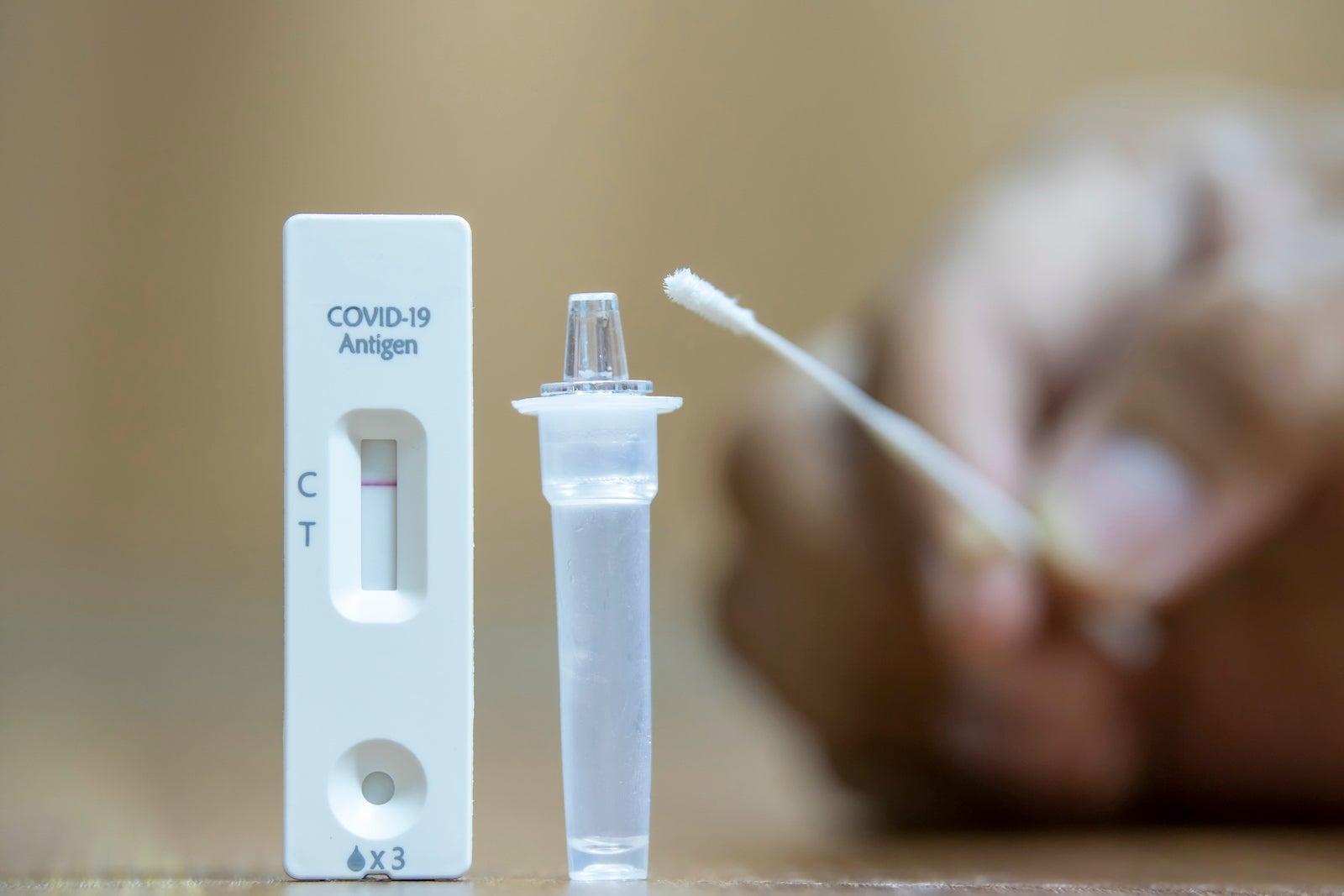
2. If I test positive on a PCR test, should I assume an antigen test will automatically net a positive result too?
"This would most likely be the case, but there is always the chance of a false-negative test with any test," said Oldenburg. "In general, a PCR test will become positive prior to the antigen test, and then the antigen test will become negative before the PCR test."
3. Alternatively, if I test negative on a rapid test, does that mean I don't have COVID-19?
"Antigen tests are very good at detecting cases that are infectious at a specific point in time," according to Oldenburg, who says that a negative rapid test could mean one of four outcomes:
- That you are not yet infectious (for example, you are very early into your infection).
- That you you are recovering (no longer infectious).
- It could be a false negative (if you're concerned about this, you could take a second rapid test, ideally from another manufacturer).
- It could be negative.
"It's important to remember that any test gives you information about your status on the day the test was taken, but can't tell you what your status will be tomorrow," Oldenburg adds.
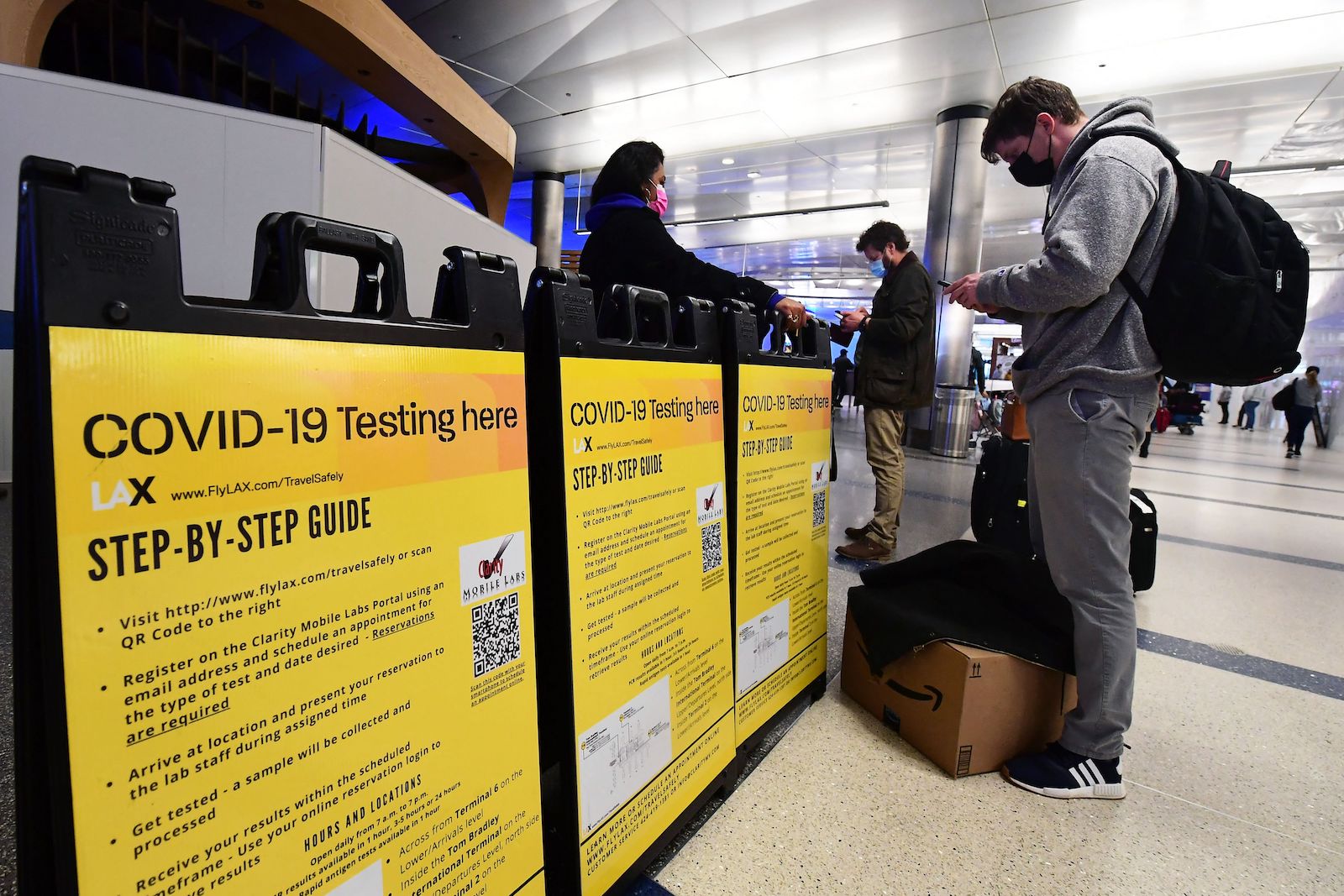
4. How should travelers approach this? Is it easier to travel to countries, such as the US, that accept proof of recovery from COVID-19 in lieu of an arrival test?
"If I were traveling shortly after recovery, I would bring a doctor's note, a negative PCR test and rapid tests, as well as my proof of vaccination and booster," the UCSF associate professor said. "I have seen some confusion on the part of gate agents and other authorities when looking at PCR test results that say 'NAAT' (nucleic acid amplification test) instead of 'RT-PCR,' as well as confusion as to whether LAMP (loop-mediated isothermal amplification) is an acceptable substitute for a PCR test."

5. What counts as proof of recovery?
Note that proof of recovery and other entry requirements vary by country based on local law.
For example, the CDC says that travelers with a positive viral test taken within 90 days of travel and who meet the criteria to travel may use those test results along with a signed letter from a licensed health care provider or a public health official clearing them for travel according to the CDC's travel guidance.
"The positive test result and letter together are referred to as documentation of recovery," the CDC says. The doctor's note must contain a traveler's name and date of birth with corresponding matching information on your passport or other travel documents.
"The letter must be signed and dated on official letterhead that contains the name, address, and phone number of the healthcare provider or public health official who signed the letter," per the CDC. "If you have recovered from COVID-19 but are not able to obtain documentation of recovery that fulfills the [above] requirements, you will need to show a negative COVID-19 viral test result from a sample taken no more than 1 day before your flight to the U.S. departs."
If you've recovered within the past three months, you can expect to meet similar requirements in Argentina, Canada, Germany and Ireland.
It's a different story in other places though, such as the U.K.
"Proof of recovery from prior COVID-19 infection cannot be used as evidence of your COVID-19 status when entering England," according to guidelines outlined by the U.K. government, which currently requires fully vaccinated visitors to take a COVID-19 test upon arrival until Feb. 11.
Bottom line
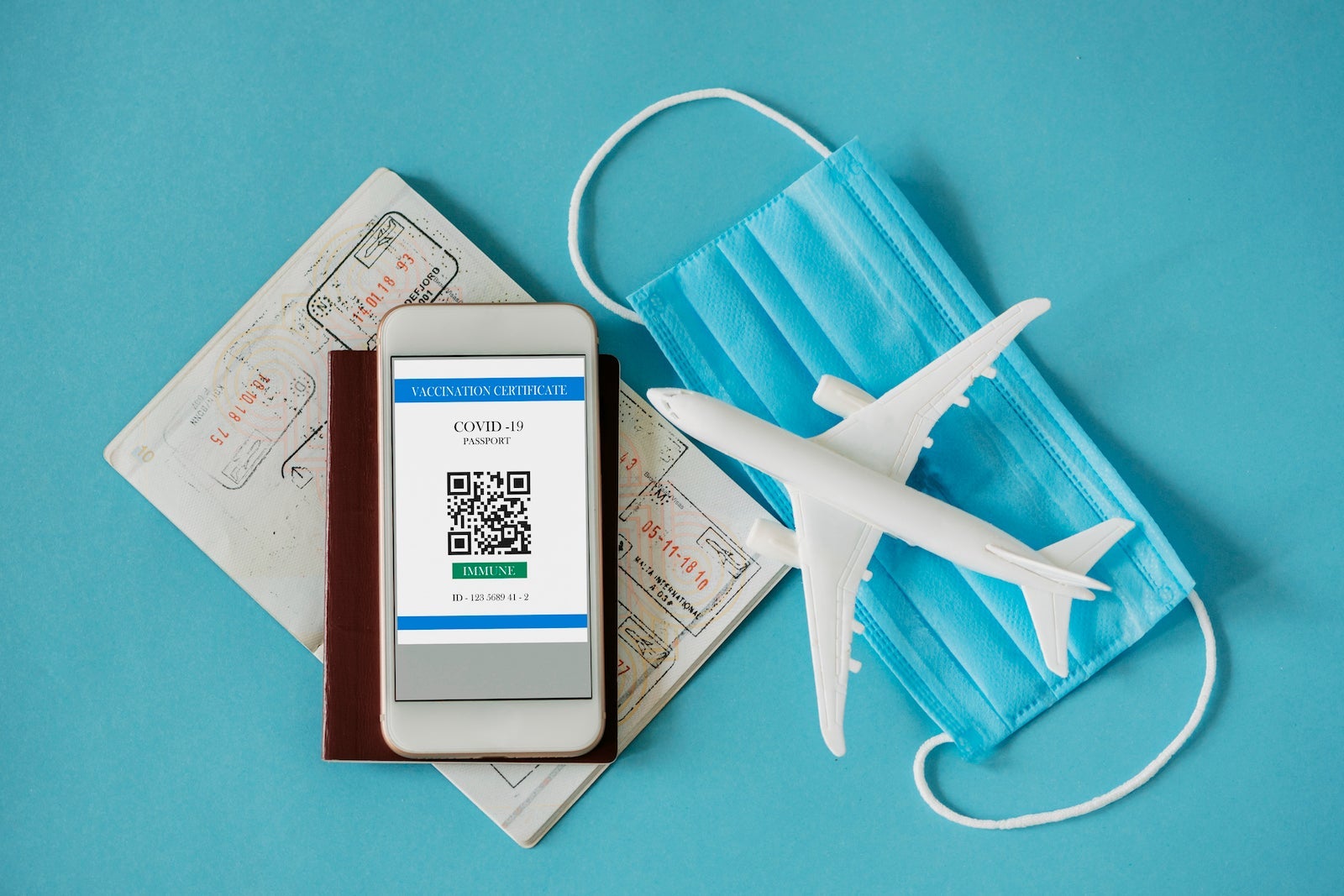
"In my own experience with international travel during the pandemic, country guidelines can change and it's better to be overprepared than underprepared," said Oldenberg.
For what it's worth, I couldn't agree more. Be sure to review country entry requirements carefully and as close as possible to your departure date to ensure they have not changed at the last minute.
Have a question for next week? Email me at caroline.tanner@thepointsguy.com or tips@thepointsguy.com.
TPG featured card

at American Express's secure site
Terms & restrictions apply. See rates & fees.
| 4X | Earn 4X Membership Rewards® points per dollar spent on purchases at restaurants worldwide, on up to $50,000 in purchases per calendar year, then 1X points for the rest of the year. |
| 4X | Earn 4X Membership Rewards® points per dollar spent at US supermarkets, on up to $25,000 in purchases per calendar year, then 1X points for the rest of the year. |
| 5X | Earn 5X Membership Rewards® points on prepaid hotel stays booked through AmexTravel.com or the Amex Travel App™. |
| 3X | Earn 3X Membership Rewards® points on flights booked through AmexTravel.com, the Amex Travel App™, or purchased directly from airlines. |
| 2X | Earn 2X Membership Rewards® points on prepaid car rentals booked through AmexTravel.com or the Amex Travel App™ and cruises booked and paid through AmexTravel.com. |
| 1X | Earn 1X Membership Rewards® point per dollar spent on all other eligible purchases. |
Pros
- Valuable dining and food-related credits
- Flexible rewards with airline and hotel transfer partners
- Multiple travel and purchase protections
- No foreign transaction fees
- Access to Amex Offers for additional savings (enrollment required)
Cons
- Not as useful for those living outside the U.S.
- Some may have trouble using Uber and other dining credits
- You may be eligible for as high as 100,000 Membership Rewards® Points after you spend $8,000 in eligible purchases on your new Card in your first 6 months of Card Membership. Welcome offers vary and you may not be eligible for an offer. Apply to know if you’re approved and find out your exact welcome offer amount – all with no credit score impact. If you’re approved and choose to accept the Card, your score may be impacted.
- Earn 4X Membership Rewards® points per dollar spent on purchases at restaurants worldwide, on up to $50,000 in purchases per calendar year, then 1X points for the rest of the year.
- Earn 4X Membership Rewards® points per dollar spent at US supermarkets, on up to $25,000 in purchases per calendar year, then 1X points for the rest of the year.
- Earn 5X Membership Rewards® points on prepaid hotel stays booked through AmexTravel.com or the Amex Travel App™.
- Earn 3X Membership Rewards® points on flights booked through AmexTravel.com, the Amex Travel App™, or purchased directly from airlines.
- Earn 2X Membership Rewards® points on prepaid car rentals booked through AmexTravel.com or the Amex Travel App™ and cruises booked and paid through AmexTravel.com.
- Earn 1X Membership Rewards® point per dollar spent on all other eligible purchases.
- Pay It® lets you tap in the American Express® App to quickly pay for small purchase amounts throughout the month and still earn rewards the way you usually do. Plan It® gives you the option to split up big purchases into equal monthly payments with a fixed fee. You’ll know upfront exactly how much you’ll pay.
- $120 Dining Credit: Earn up to a total of $10 in statement credits monthly when you pay with the Gold Card at Grubhub (including Seamless), Buffalo Wild Wings, Five Guys, The Cheesecake Factory, and Wonder. This can be an annual savings of up to $120. Enrollment required.
- $100 Resy Credit: Get up to $100 in statement credits each calendar year at over 10,000 qualifying U.S. Resy restaurants after you pay for eligible purchases with the American Express® Gold Card. That’s up to $50 in statement credits semi-annually. Enrollment required.
- $84 Dunkin' Credit: Earn up to $7 in monthly statement credits after you pay with the American Express® Gold Card at U.S. Dunkin’ locations. Enrollment required.
- $120 Uber Cash on Gold: Enjoy up to $120 in Uber Cash annually with your Gold Card. Just add your Card to your Uber account and you'll get $10 in Uber Cash each month to use on orders and rides in the U.S. when you select an Amex Card for your transaction.
- Enjoy complimentary Hertz Five Star® Status benefits like skipping the counter at select locations, adding an additional driver at no additional cost*, and vehicle upgrades**. Benefit enrollment and Hertz Gold+ registration are required. *Additional drivers must meet standard rental qualifications and must be a spouse or domestic partner to qualify as complimentary. Other additional drivers subject to fees. **Benefits are subject to availability and vary by location. Additional Hertz program Terms and Conditions including age restrictions apply.
- Book two nights or more with The Hotel Collection through AmexTravel.com or the Amex Travel App™ and receive a $100* credit towards eligible charges at over 1,400 upscale hotels worldwide. *Eligible charges vary by property.
- Book your travel through the Amex Travel App™ with added peace of mind – backed by American Express® service and support. Only for American Express® Card Members.
- Whenever you need us, we're here. Our Member Services team will ensure you are taken care of. From lost Card replacement to statement questions, we are available to help 24/7.
- No Foreign Transaction Fees.
- Annual Fee is $325.
- Terms Apply.