How the Shutdown Will Continue to Affect Travel

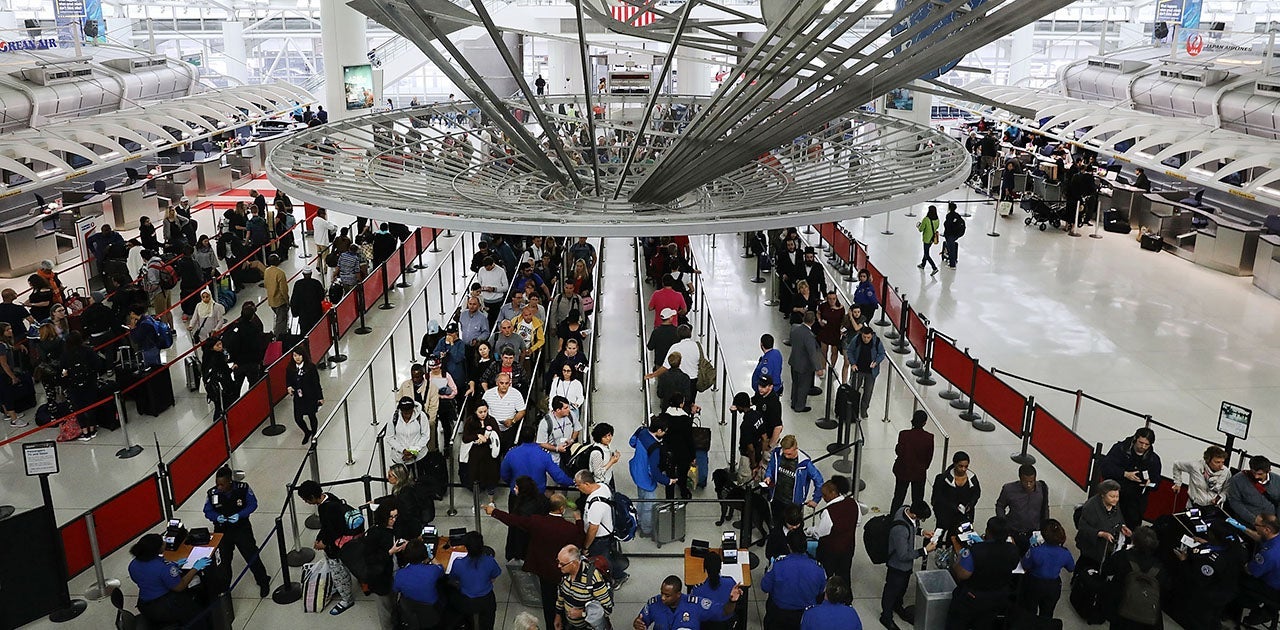
A deal has been reached to end the US government shutdown, at least for the next three weeks. Friday's air traffic control issues at LaGuardia, which led to widespread delays all across the Northeast and as far away as Atlanta, showed how quickly the US aviation system can fall apart when it's understaffed. The issues sparked what seemed to be a quick deal to reopen the government only hours after the FAA issued an LGA groundstop.
While the temporary three-week timeframe is long enough to hopefully allow a smooth Super Bowl travel week, how soon should we expect to see things return to normal for ATC, TSA and the FAA?
A spokesperson for the FAA tells TPG via email that, "The FAA remains focused on maintaining the safety of our National Airspace System. We are grateful for our many dedicated professionals and their service throughout the lapse of funding. Over the coming days and weeks, the agency will assess immediate post-shutdown needs, prioritize those needs, and deploy the appropriate resources to address those needs." While the FAA works to clear its backlog of items, some much anticipated events will still be delayed.
Delta's inaugural flight of the A220 will still be delayed. Delta is currently hoping that the first flight of its much anticipated new aircraft will now take place on Feb. 7. The flight was originally set to get airborne on Jan. 31.
Flight operations from Paine Field have been pushed back even further by Alaska Airlines. They are now looking at commercial flights starting on March 4. Alaska had originally scheduled commercial operations to begin Feb. 11.
Even Southwest's Hawaii service will most likely still be delayed. The airline's CEO referred to the shutdown as "maddening" on an earnings call earlier this week. The company said that once the FAA is back to work it could take anywhere from six weeks to two months to finalize the certification for Hawaii flights. The airline had originally planned to have tickets on sale some time next week and planes operating flights as soon as February. Now, it looks like those flights wouldn't be departing until sometime in late March or April at the earliest.

For the TSA and ATC the end of the shutdown should have a more immediate effect for travelers. Issues with staffing that led to Friday's meltdown should no longer be a problem. That's assuming those long delayed paychecks go out to employees quickly. It's worth noting that during the shutdown, TSA did manage for the most part to keep security checkpoints open and screening times reasonable, although there were sporadic issues in the system. The use of the National Deployment Force — a group of agents sent to assist during peak demand — allowed TSA for the most part to keep things moving smoothly for travelers, even while up to 10% of its workforce was absent.
One blip on the radar, however, seems to be at George Bush Intercontinental Airport (IAH). In a statement released yesterday, officials at IAH said that the Terminal B TSA checkpoint will remain closed until further notice. Flights are operating out of Terminal B as normal, but travelers will have to access airside via another security checkpoint.
Outside of aviation, other federally funded institutions will be coming back as well. The Smithsonian, which has reportedly lost $1 million per week during the shutdown, will reopen at its normal hours on Jan. 29. The National Park Service — which has seen significant issues during the shutdown — issued the following statement (although the NPS website currently still displays a shutdown notice on the home page):
"Visitors should contact individual parks or visit park websites for their opening schedules and the latest information on accessibility and visitor services. Some parks which have been closed throughout the lapse in appropriations may not reopen immediately, but we will work to open all parks as quickly as possible."
It remains to be seen if the reopening of the US government will last beyond the current three-week window. We will be keeping an eye on the situation in the coming days and weeks.
This post has been updated as of 11:15am on 01/26/19.
TPG featured card
at American Express's secure site
Terms & restrictions apply. See rates & fees.
| 4X | Earn 4X Membership Rewards® points per dollar spent on purchases at restaurants worldwide, on up to $50,000 in purchases per calendar year, then 1X points for the rest of the year. |
| 4X | Earn 4X Membership Rewards® points per dollar spent at US supermarkets, on up to $25,000 in purchases per calendar year, then 1X points for the rest of the year. |
| 5X | Earn 5X Membership Rewards® points on prepaid hotel stays booked through AmexTravel.com or the Amex Travel App™. |
| 3X | Earn 3X Membership Rewards® points on flights booked through AmexTravel.com, the Amex Travel App™, or purchased directly from airlines. |
| 2X | Earn 2X Membership Rewards® points on prepaid car rentals booked through AmexTravel.com or the Amex Travel App™ and cruises booked and paid through AmexTravel.com. |
| 1X | Earn 1X Membership Rewards® point per dollar spent on all other eligible purchases. |
Pros
- Valuable dining and food-related credits
- Flexible rewards with airline and hotel transfer partners
- Multiple travel and purchase protections
- No foreign transaction fees
- Access to Amex Offers for additional savings (enrollment required)
Cons
- Not as useful for those living outside the U.S.
- Some may have trouble using Uber and other dining credits
- You may be eligible for as high as 100,000 Membership Rewards® Points after you spend $8,000 in eligible purchases on your new Card in your first 6 months of Card Membership. Welcome offers vary and you may not be eligible for an offer. Apply to know if you’re approved and find out your exact welcome offer amount – all with no credit score impact. If you’re approved and choose to accept the Card, your score may be impacted.
- Earn 4X Membership Rewards® points per dollar spent on purchases at restaurants worldwide, on up to $50,000 in purchases per calendar year, then 1X points for the rest of the year.
- Earn 4X Membership Rewards® points per dollar spent at US supermarkets, on up to $25,000 in purchases per calendar year, then 1X points for the rest of the year.
- Earn 5X Membership Rewards® points on prepaid hotel stays booked through AmexTravel.com or the Amex Travel App™.
- Earn 3X Membership Rewards® points on flights booked through AmexTravel.com, the Amex Travel App™, or purchased directly from airlines.
- Earn 2X Membership Rewards® points on prepaid car rentals booked through AmexTravel.com or the Amex Travel App™ and cruises booked and paid through AmexTravel.com.
- Earn 1X Membership Rewards® point per dollar spent on all other eligible purchases.
- Pay It® lets you tap in the American Express® App to quickly pay for small purchase amounts throughout the month and still earn rewards the way you usually do. Plan It® gives you the option to split up big purchases into equal monthly payments with a fixed fee. You’ll know upfront exactly how much you’ll pay.
- $120 Dining Credit: Earn up to a total of $10 in statement credits monthly when you pay with the Gold Card at Grubhub (including Seamless), Buffalo Wild Wings, Five Guys, The Cheesecake Factory, and Wonder. This can be an annual savings of up to $120. Enrollment required.
- $100 Resy Credit: Get up to $100 in statement credits each calendar year at over 10,000 qualifying U.S. Resy restaurants after you pay for eligible purchases with the American Express® Gold Card. That’s up to $50 in statement credits semi-annually. Enrollment required.
- $84 Dunkin' Credit: Earn up to $7 in monthly statement credits after you pay with the American Express® Gold Card at U.S. Dunkin’ locations. Enrollment required.
- $120 Uber Cash on Gold: Enjoy up to $120 in Uber Cash annually with your Gold Card. Just add your Card to your Uber account and you'll get $10 in Uber Cash each month to use on orders and rides in the U.S. when you select an Amex Card for your transaction.
- Enjoy complimentary Hertz Five Star® Status benefits like skipping the counter at select locations, adding an additional driver at no additional cost*, and vehicle upgrades**. Benefit enrollment and Hertz Gold+ registration are required. *Additional drivers must meet standard rental qualifications and must be a spouse or domestic partner to qualify as complimentary. Other additional drivers subject to fees. **Benefits are subject to availability and vary by location. Additional Hertz program Terms and Conditions including age restrictions apply.
- Book two nights or more with The Hotel Collection through AmexTravel.com or the Amex Travel App™ and receive a $100* credit towards eligible charges at over 1,400 upscale hotels worldwide. *Eligible charges vary by property.
- Book your travel through the Amex Travel App™ with added peace of mind – backed by American Express® service and support. Only for American Express® Card Members.
- Whenever you need us, we're here. Our Member Services team will ensure you are taken care of. From lost Card replacement to statement questions, we are available to help 24/7.
- No Foreign Transaction Fees.
- Annual Fee is $325.
- Terms Apply.