The fight for flights: How airports attract new airlines and new routes

Kevin Schorr is a professional matchmaker, but his clients aren't expecting chocolates or roses. They're hoping for flights to New York, London, Paris or Amsterdam.
As a vice president at the consulting firm Campbell-Hill Aviation Group, Schorr is hired by airports across the United States to help them court air carriers to provide new domestic and international routes.
In most cases, luring a flight is far from a spontaneous romance.
"You could sort of liken it to dating which leads up to marriage," said Schorr. "We're dating with airlines and nurturing the relationship for a long time. Sometimes it can be five to 10 years before new air service happens."
For more TPG news delivered each morning to your inbox, sign up for our daily newsletter.
Schorr has worked with close to 60 airports, big and small, to secure flights. It involves everything from route forecasting to economic analysis, with the goal of showcasing the best attributes of a city and its airport.
"We help develop the business case for new air service and then work together with the airports and community stakeholders to pursue new service directly with the airline network-planning departments," he said.
One city where Schorr and local leaders worked together is Austin, Texas. In recent years, Austin-Bergstrom International Airport has seen the addition of nonstop flights to London-Heathrow on British Airways, London-Gatwick on Norwegian and Frankfurt on Lufthansa. Later this year, Austin will see the debut of nonstop service to Paris-Charles De Gaulle on Norwegian and Amsterdam on KLM.
"We're pitching all the time, year-round, because the airlines are making decisions short, medium and some long-term," said Jamy Kazanoff, assistant director, Austin-Bergstrom International Airport.

Kazanoff is constantly working the phones, sending emails, visiting airline headquarters and attending air service development conferences to make bids tailored to each carrier.
For example, when working to attract Lufthansa's route to Frankfurt, Kazanoff focused on the business-travel market. On the other hand, conversations with low-cost carriers focused on disrupting high-fare or monopoly routes. "Different carriers have different business models and Austin fits in the puzzle different ways," she said.

An airport may have a wish list of cities and service it would like to offer, but airlines make hard-headed decisions based on what's good for their business.
"In a vast majority of the cases, route profitability (driven by demand first and airport costs second) is the sole factor, but this could be in terms of point-to-point profitability or profitability on a whole-trip basis," said Savanthi Syth, a managing director and global airlines analyst at Raymond James and Associates.
Although data may drive decisions, airport leaders can help convince airline planners of the benefits of adding a route. Airports often depend on their local and regional chambers of commerce, economic development agencies, business leaders and corporations to help make the case with a carrier's sales team.
"So it's not just the numbers anymore," said Justin Meyer, deputy director of aviation, markets and air service development at Kansas City International Airport.
"It's really using the numbers to frame the story that helps an airline understand that the opportunity is a profitable one and how it fits into their network," Meyer said. For example, an airport might highlight "a business in town that is interested in making a commitment to that route," he said.
Airports can also offer waivers for a limited period of time for things such as landing fees and ticket-counter fees to help make a deal more attractive.
Related reading: Stroopwafels, socks and koalas: How airports wooed airlines at the World Routes conference
Expansion isn't arbitrary. It has to make sense for each particular carrier, Meyer said. For example, United Airlines typically offers international service only from its major hubs, while other carriers, such as Delta, have established flights to Paris from Indianapolis and Raleigh-Durham (a "focus city" for Delta).
Like many mid-sized airports, Kansas City has been expanding, most recently adding new service to Charleston, South Carolina on Southwest Airlines.
But in smaller communities, attracting flights can be more challenging.
"The markets that have performed the worst are the small cities, especially as higher fuel and labor costs drive airlines to focus on upgauging," said Syth. (Upgauging is an industry term for using larger aircraft on existing routes — a practice that makes financial sense for airlines if the demand is there, since larger planes will lower their costs per each seat flown.)
Yet, the fight for flights goes on in small cities as well.
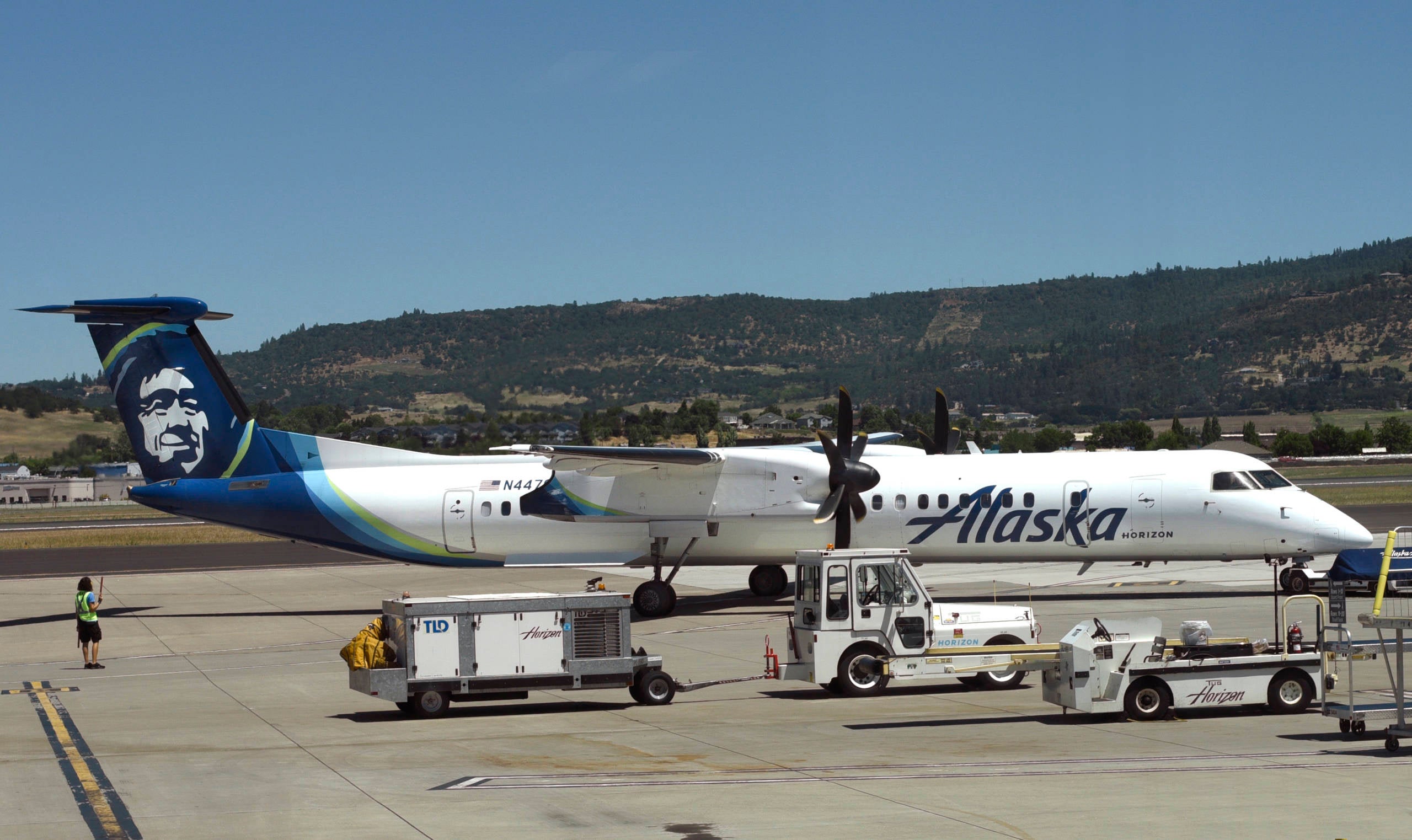
"We're definitely on the lookout for new opportunities and new service," said Jason Foster, air service and economic development manager at Rogue Valley International-Medford Airport (MFR) in Oregon.
The airport, in the southern part of Oregon, offers nonstop service to 10 cities and handled more than one million passengers in 2018. (Compare that to the more than 215 cities reachable on nonstop flights from Denver, where 64.5 million passengers passed through in 2018.)
The Medford airport does not view its small size as a liability in wooing airline expansion. It, too, offers incentives on everything from marketing to landing fees.
"We're doing everything out there that we can do to bring that service in here to our community, just like any other larger airports are doing," Foster said, noting that Medford is also competing with smaller airports.
"We're checking to see what the airlines are doing, what aircraft orders are coming in, who's coming online with equipment or new routes," said Foster, noting he's always looking for a good match.
Medford administrators know strong air service is crucial to the economic well-being of their community -- just like larger cities and airports.
"Businesses want to know where you fly to, how well they're going to be able to connect to clients and partners in other parts of the country or the world," Foster said.
For its sales pitch to airlines, Medford focuses on the tech, business, and environmental consultants based in the region. It also markets itself as a tourism center, highlighting a Shakespeare festival as well as the city's proximity to Crater Lake National Park and the Oregon coast.
The airport recently announced nonstop service to San Diego, beginning June 4 on Allegiant Airlines.
Despite a strong economy and targeted marketing campaigns, airport expansion may be tempered in the months ahead. Observers acknowledge airlines have been stymied by issues out of their control, including the grounding of the Boeing 737 MAX.
"There's no question that the MAX grounding is really keeping a lid on what American, United, Southwest and Air Canada and others can really do," Schorr said. This includes initiating new flights as well as maintaining current capacity.
So you may think a nonstop flight to New York or London from your hometown would be nice, but keep in mind, profitability is often the deciding factor.
"It's knowing what's in your pantry and what your opportunities are," Meyer said, "and then figuring out who the right airline that is to talk with."
TPG featured card

at Capital One's secure site
Terms & restrictions apply. See rates & fees.
| 5X miles | Earn 5X miles on hotels, vacation rentals and rental cars booked through Capital One Travel |
| 2X miles | Earn unlimited 2X miles on every purchase, every day |
Pros
- Stellar welcome offer of 75,000 miles after spending $4,000 on purchases in the first three months from account opening. Plus, a $250 Capital One Travel credit to use in your first cardholder year upon account opening.
- You'll earn 2 miles per dollar on every purchase, which means you won't have to worry about memorizing bonus categories
- Rewards are versatile and can be redeemed for a statement credit or transferred to Capital One’s transfer partners
Cons
- Highest bonus-earning categories only on travel booked via Capital One Travel
- LIMITED-TIME OFFER: Enjoy $250 to use on Capital One Travel in your first cardholder year, plus earn 75,000 bonus miles once you spend $4,000 on purchases within the first 3 months from account opening - that’s equal to $1,000 in travel
- Earn unlimited 2X miles on every purchase, every day
- Earn 5X miles on hotels, vacation rentals and rental cars booked through Capital One Travel
- Miles won't expire for the life of the account and there's no limit to how many you can earn
- Receive up to a $120 credit for Global Entry or TSA PreCheck®
- Use your miles to get reimbursed for any travel purchase—or redeem by booking a trip through Capital One Travel
- Enjoy a $50 experience credit and other premium benefits with every hotel and vacation rental booked from the Lifestyle Collection
- Transfer your miles to your choice of 15+ travel loyalty programs
- Top rated mobile app