$8 cap on credit card late fees is latest win in Biden's plan to eliminate ‘junk fees’


Editor's Note
Federal regulators have finalized a rule to cap credit card late fees, closing a loophole the Consumer Financial Protection Bureau claims has been long exploited by large credit card issuers. The CFPB finalized the rule Tuesday, thus lowering the typical late fee from $32 to $8 for credit card issuers with 1 million or more open accounts and continuing President Joe Biden's push to eliminate fees on travel and credit cards.
According to CFPB estimates, this new rule will help American families save more than $10 billion in late fees annually once it goes into effect later this year. That's an average savings of $220 annually for the more than 45 million Americans who are charged late fees.
"For over a decade, credit card giants have been exploiting a loophole to harvest billions of dollars in junk fees from American consumers," CFPB Director Rohit Chopra said. "Today's rule ends the era of big credit card companies hiding behind the excuse of inflation when they hike fees on borrowers and boost their own bottom lines."
The loophole referenced was part of the Credit Card Accountability Responsibility and Disclosure Act of 2009. The law banned credit card companies from charging excessive penalty fees, but the rule included an immunity provision that allowed credit card companies to charge up to $25 for the first late payment and up to $35 for subsequent late payments. Both amounts were allowed to be adjusted for inflation and rose to $30 and $41, respectively.
Rather than using late fees as a means to penalize customers, the new rule is designed to allow issuers to charge a fee that is enough to cover the collection costs incurred due to late payments. The CFPB found that $8 is typically sufficient for large card issuers to do that. Under the new rule, card issuers can charge fees above this threshold only if they can prove a higher fee is necessary to cover their collection costs.
This consumer protection-driven crackdown is just the latest win in Biden's initiative to ban so-called junk fees tacked on to hotel stays, airfare and credit cards after the fact.
The tendency of hotels to refrain from disclosing resort, destination and amenity fees seems to have gotten a bit out of control, depending on who you ask.
The president apparently agrees with travelers' woes, as expressed in his 2023 Junk Fee Prevention Act, which would ban these surprise fees that are essentially hidden surcharges that appear on a consumer's bill without warning.
Among the fees the president intends to ban are resort fees, which can cost up to $90 a night at hotels, not resorts, as Biden lamented during last year's State of the Union address.

"Biden knows good politics when he sees it. Many Americans are fed up with fees tacked on by hotels, airlines and credit card companies for things that consumers believe should be free," said Brian Sumers, an industry expert who authors The Airline Observer newsletter. "I have no doubt that many Americans agree with the president's sentiments and would like to see these fees go away. This is an easy way to score political points."
Additionally, this bill would address airline fees, including requiring airlines to show the entire fare price upfront, inclusive of all taxes and fees, during the booking process. This move would build on Biden's efforts to ban fees for family members to sit together with young children on planes.
Related: Are airlines required to seat families together? Guide to airline family seating policies
Several airlines, including Alaska Airlines, United Airlines, American Airlines and Frontier Airlines, have recently shifted their seating policies to let families sit together without paying additional fees.
"We'll prohibit airlines from charging up to $50 round-trip for families just to sit together," Biden said during the 2023 State of the Union address. "Baggage fees are bad enough — they can't just treat your child like a piece of luggage."
Most airlines charge travelers to select seats in advance when flying with certain fare types, as it's the only way to guarantee seats together in these cases.
Even if your fare type includes complimentary seat selection, whether a couple could find two seats together, let alone three or more for a family, depends on the number of seats available at the time of booking.
If you don't prepay for a seat assignment, all airlines will automatically assign you one for free during check-in.
Southwest Airlines is known (and often criticized) for its unconventional boarding process, requiring passengers to select seats based on the order in which they board, often creating an anxiety-inducing, competitive process.
Because Southwest does not allow travelers to select seats in advance, the only way to increase your chances of sitting together is to purchase the airline's EarlyBird Check-In, which automatically checks you in 24 hours ahead of your flight, guaranteeing an earlier boarding position and the opportunity to select your preferred seat, if available.
Though having EarlyBird attached to your reservation used to guarantee an A boarding position, those days are over. To truly secure an A boarding position, you'll need to pay an extra $30 to $60 each way to receive an A1-A15 boarding position.
Traditional airline seat fees, including those charged by American Airlines, Delta Air Lines and United Airlines, can end up costing travelers anywhere between $20 and $100 each way, depending on the airline, fare type and route.
An airline's most restrictive fare type, usually known as basic economy, is typically not eligible for assigned seats without paying a fee.
In January 2023, Biden reminded airlines of the existing Department of Transportation policy prohibiting charging travelers age 13 and younger for selecting a seat next to an accompanying adult.
Based on that, airlines still appear to be violating this policy, raising the question of why the DOT has refrained from taking harsher action.
Airlines for America, a trade group representing several of the country's major airlines, including American, Delta and United, tweeted that its airlines "make every effort to accommodate customers traveling together ... without additional charges."
To ensure compliance, the White House confirmed the DOT would "publish a family seating fee dashboard and launch a rulemaking to ban the practice" as Biden calls upon Congress to "fast-track the ban on family seating fees so that the DOT can crack down on these practices more quickly than through a rulemaking."
Biden's bill aligns with ongoing congressional efforts, including lowering merchant credit card fees in the name of market competition and introducing legislation to provide a bill of rights for air travelers and to address some of the aforementioned airline fees.
Per our previous reporting, government efforts to wholly eliminate these fees remain unlikely.
"Some of the fees he cites, like a city hotel's resort fees, really are junk. Most of us have checked into a city hotel without any amenities and have been shocked to find an extra fee tacked onto the final bill that gives us access to very little," Sumers said. "These hotel fees make it nearly impossible to compare total prices among hotels in the same market."
Although Sumers thinks airline fees are a bit better given stronger regulation of airlines versus hotels, weird fees remain, such as those doled out by the ultra-low-cost carrier Spirit Airlines, which is notorious for charging extra for nearly everything beyond the fare itself, including a passenger usage fee that Sumers says most travelers probably don't even notice or understand.
But he questions the likelihood of taking aim at more reasonable fees, including ones "passengers love to hate," such as seat selection fees.
"As United CEO Scott Kirby used to say, not every seat is created equal. People tend to prefer aisle or window seats in the front of the plane and like seats with extra legroom," he said. "To me, it seems reasonable to charge extra for the better seats on the plane."
Even so, he sees the legitimacy of families, like his own, wanting to sit together during a flight.
"As a father of two, I see a caveat. Families should be allowed to sit with each other. They might be assigned the worst seats on the plane, but they should be together," he said. "Some airlines make it seem like families will be separated if they don't pay extra fees. That's not acceptable."
Related reading:
- Proposal to limit late and overdraft fees: How to avoid them in the first place
- Airlines, just let families with children sit together for free already
- Southwest Airlines offers expanded family boarding ages on some flights
- Capital One-Discover merger: Here's what it means for consumers and the Credit Card Competition Act
- Here's how many Marriott hotels actually have resort fees
TPG featured card
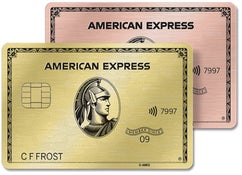
at American Express's secure site
Terms & restrictions apply. See rates & fees.
| 4X | Earn 4X Membership Rewards® points per dollar spent on purchases at restaurants worldwide, on up to $50,000 in purchases per calendar year, then 1X points for the rest of the year. |
| 4X | Earn 4X Membership Rewards® points per dollar spent at US supermarkets, on up to $25,000 in purchases per calendar year, then 1X points for the rest of the year. |
| 5X | Earn 5X Membership Rewards® points on prepaid hotel stays booked through AmexTravel.com or the Amex Travel App™. |
| 3X | Earn 3X Membership Rewards® points on flights booked through AmexTravel.com, the Amex Travel App™, or purchased directly from airlines. |
| 2X | Earn 2X Membership Rewards® points on prepaid car rentals booked through AmexTravel.com or the Amex Travel App™ and cruises booked and paid through AmexTravel.com. |
| 1X | Earn 1X Membership Rewards® point per dollar spent on all other eligible purchases. |
Pros
- Valuable dining and food-related credits
- Flexible rewards with airline and hotel transfer partners
- Multiple travel and purchase protections
- No foreign transaction fees
- Access to Amex Offers for additional savings (enrollment required)
Cons
- Not as useful for those living outside the U.S.
- Some may have trouble using Uber and other dining credits
- You may be eligible for as high as 100,000 Membership Rewards® Points after you spend $8,000 in eligible purchases on your new Card in your first 6 months of Card Membership. Welcome offers vary and you may not be eligible for an offer. Apply to know if you’re approved and find out your exact welcome offer amount – all with no credit score impact. If you’re approved and choose to accept the Card, your score may be impacted.
- Earn 4X Membership Rewards® points per dollar spent on purchases at restaurants worldwide, on up to $50,000 in purchases per calendar year, then 1X points for the rest of the year.
- Earn 4X Membership Rewards® points per dollar spent at US supermarkets, on up to $25,000 in purchases per calendar year, then 1X points for the rest of the year.
- Earn 5X Membership Rewards® points on prepaid hotel stays booked through AmexTravel.com or the Amex Travel App™.
- Earn 3X Membership Rewards® points on flights booked through AmexTravel.com, the Amex Travel App™, or purchased directly from airlines.
- Earn 2X Membership Rewards® points on prepaid car rentals booked through AmexTravel.com or the Amex Travel App™ and cruises booked and paid through AmexTravel.com.
- Earn 1X Membership Rewards® point per dollar spent on all other eligible purchases.
- Pay It® lets you tap in the American Express® App to quickly pay for small purchase amounts throughout the month and still earn rewards the way you usually do. Plan It® gives you the option to split up big purchases into equal monthly payments with a fixed fee. You’ll know upfront exactly how much you’ll pay.
- $120 Dining Credit: Earn up to a total of $10 in statement credits monthly when you pay with the Gold Card at Grubhub (including Seamless), Buffalo Wild Wings, Five Guys, The Cheesecake Factory, and Wonder. This can be an annual savings of up to $120. Enrollment required.
- $100 Resy Credit: Get up to $100 in statement credits each calendar year at over 10,000 qualifying U.S. Resy restaurants after you pay for eligible purchases with the American Express® Gold Card. That’s up to $50 in statement credits semi-annually. Enrollment required.
- $84 Dunkin' Credit: Earn up to $7 in monthly statement credits after you pay with the American Express® Gold Card at U.S. Dunkin’ locations. Enrollment required.
- $120 Uber Cash on Gold: Enjoy up to $120 in Uber Cash annually with your Gold Card. Just add your Card to your Uber account and you'll get $10 in Uber Cash each month to use on orders and rides in the U.S. when you select an Amex Card for your transaction.
- Enjoy complimentary Hertz Five Star® Status benefits like skipping the counter at select locations, adding an additional driver at no additional cost*, and vehicle upgrades**. Benefit enrollment and Hertz Gold+ registration are required. *Additional drivers must meet standard rental qualifications and must be a spouse or domestic partner to qualify as complimentary. Other additional drivers subject to fees. **Benefits are subject to availability and vary by location. Additional Hertz program Terms and Conditions including age restrictions apply.
- Book two nights or more with The Hotel Collection through AmexTravel.com or the Amex Travel App™ and receive a $100* credit towards eligible charges at over 1,400 upscale hotels worldwide. *Eligible charges vary by property.
- Book your travel through the Amex Travel App™ with added peace of mind – backed by American Express® service and support. Only for American Express® Card Members.
- Whenever you need us, we're here. Our Member Services team will ensure you are taken care of. From lost Card replacement to statement questions, we are available to help 24/7.
- No Foreign Transaction Fees.
- Annual Fee is $325.
- Terms Apply.