Exclusive: Southwest wants business travelers and will double down on them as it recovers from the pandemic

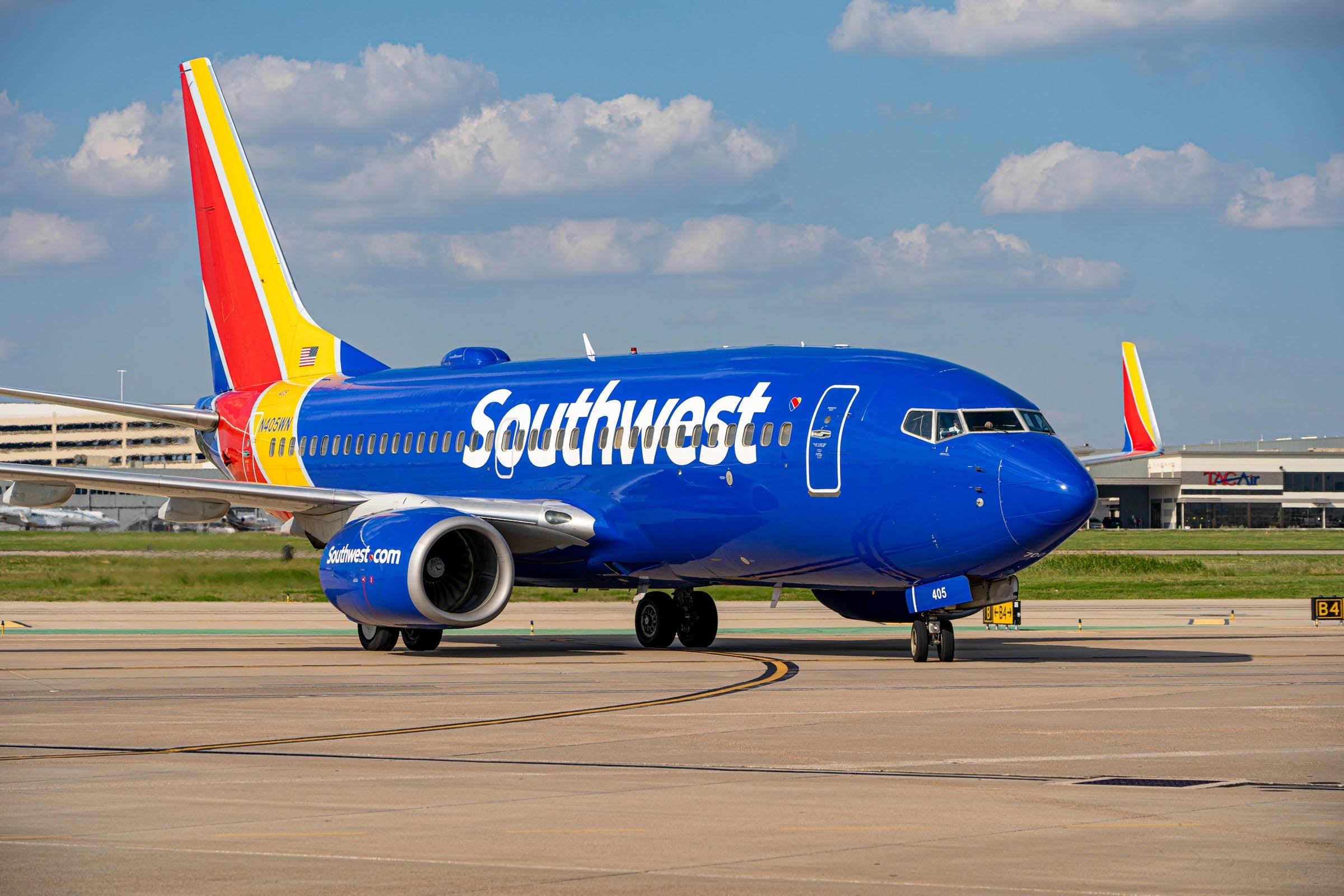
When Southwest launched 50 years ago, it did so with a cheeky bit of counterculture, undercutting established (and regulated) carriers with low fares across Texas, a lot of double-entendre and sex appeal, and plenty of free-flowing whiskey on board.
A lot has changed in the last 50 years. Southwest now wears a family-friendly visage, flies a sprawling route network across the continental U.S., Hawaii, the Caribbean and Central America.
Now, as it emerges from the COVID-19 pandemic, the airline has its sights set on another group that — to Southwest, at least — is untapped: corporate travel.
In an exclusive interview with TPG at Southwest's 50th-anniversary celebration, airline president Tom Nealon laid out the airline's desire to sell tickets to managed corporate travel accounts as a central part of its post-pandemic growth plan.
"The pie may be smaller, domestically," Nealon said, referring to the scale of post-pandemic business travel, "but we're going to have a bigger slice of it."
In 2019, Southwest announced a new "Southwest Business" team along with plans to begin selling tickets through several global distribution systems for the first time. That took effect in 2020, when the airline integrated its reservations system with Travelport's Apollo and Worldspan GDSs, as well as the popular Amadeus Travel Platform.
Until that point, Southwest had insisted on selling tickets exclusively through its own platforms, rather than through third-party systems, including most online travel agencies.
Many companies, however, use corporate travel management platforms — such as SAP's Concur — to manage their business travel. By refusing to participate in the GDSs, Southwest limited itself to business travelers who were allowed by their employers to book tickets on their own, or those who worked for companies with which Southwest had signed a direct deal.
According to Nealon, that was a large pie to miss out on.

"The corporate managed travel business is about a $10 billion business," he said. "That's just domestic coach travel. I guarantee you we are severely underindexed against that."
"So there's a lot of opportunity for us," he added.

Some carriers have expanded and turned to counterintuitive practices to win some corporate accounts. United, for instance, restored transcontinental service from New York's JFK Airport — even though it previously suggested the routes were money-losers — in an effort to win contracts. For Southwest, Nealon said the plan is to instead double down on what it knows, simply focusing on expanding distribution.
"We've got the network, we've got the price points, we've got the frequencies," he said. "There's still so much growth for us within the 737 platform," he said, rejecting the idea of Southwest launching significant transcontinental — or even transoceanic — service in the foreseeable future. The growth opportunities are numerous, Nealon said, "whether it's Hawaii, whether it's Canada, whether it's just more depth and frequency within our core network."
Notably, the airline does not currently offer service to Canada, despite offering international routes to several destinations in the Caribbean, Mexico and Central America.
"The thing I love about our point-to-point service is that it's like a spiderweb," Nealon said. "The denser we make the spiderweb, the more frequencies and points of connections we bring in."
"There's still a lot of points on our network, after 30 years, that have never been directly connected. So there is so much connectivity still to bring into the core network."
That argument, of course, might sound familiar: It's the one made by JetBlue founder David Neeleman, talking about his new airline startup, Breeze, which will focus on the niche of point-to-point service between small- and medium-sized markets that have not been directly connected before.
Nealon, though, doesn't see a threat.
"We pay attention, obviously, because at one point 50 years ago, we were them," he said. "Very different business model, but we were a startup."
"It's very early days, but we take them seriously, we don't discount them," he added.
Related: How to quickly earn the Southwest Companion Pass
In 2019 and then throughout the 2020 pandemic, Southwest adjusted its destination airports, shifting around in New York and making a play for some unexpected markets, such as Chicago's O'Hare airport, after previously only serving Midway. That, Nealon said, is another move for business travel.
"There's a whole new client base, corporate customer base, that's out in northern Chicago," he said. Serving O'Hare helps appeal to business travelers.
And so does serving destinations like New York.
"New York is important for us, it's an important destination," he said. "It's not like we're the No. 1 carrier in New York, but we are the No. 1 carrier in other markets. And those customers originating in Nashville or Austin, we're it, and we need to get them to the desired destination, so that's New York's role in our network."
Related: Complete guide to Southwest elite status
Ultimately, the return of business travel — which, even without managed corporate travel, made up about 35% of Southwest's passengers pre-pandemic — may help the airline through the fall, when the restored leisure demand that is currently elevating the airline industry customarily dips.
"I'll tell you anecdotally, I'm starting to see more briefcases and sports coats than I saw a month ago," Nealon said. "We're starting to hear from corporate travel managers that they're chomping to go, so I think we're in recovery."
Whatever the future of Southwest holds, it will have a new leader at the helm to see it through. CEO Gary Kelly announced this week that he will be stepping down. Although Nealon had been considered a contender, Kelly will be succeeded by Bob Jordan, currently Southwest's executive vice president of corporate services.
"Bob and I have worked side by side for more than 30 years," Kelly said in a Wednesday statement announcing the transition.
"He is a gifted and experienced executive and well-prepared to take on this important role," Kelly continued. "Working closely with President Tom Nealon and Chief Operating Officer Mike Van de Ven, we will begin developing transition plans in the coming weeks and months. These three top-notch Leaders make for a powerful team to lead us forward."
TPG featured card

at Capital One's secure site
Terms & restrictions apply. See rates & fees.
| 5X miles | Earn 5X miles on hotels, vacation rentals and rental cars booked through Capital One Travel |
| 2X miles | Earn unlimited 2X miles on every purchase, every day |
Pros
- Stellar welcome offer of 75,000 miles after spending $4,000 on purchases in the first three months from account opening. Plus, a $250 Capital One Travel credit to use in your first cardholder year upon account opening.
- You'll earn 2 miles per dollar on every purchase, which means you won't have to worry about memorizing bonus categories
- Rewards are versatile and can be redeemed for a statement credit or transferred to Capital One’s transfer partners
Cons
- Highest bonus-earning categories only on travel booked via Capital One Travel
- LIMITED-TIME OFFER: Enjoy $250 to use on Capital One Travel in your first cardholder year, plus earn 75,000 bonus miles once you spend $4,000 on purchases within the first 3 months from account opening - that’s equal to $1,000 in travel
- Earn unlimited 2X miles on every purchase, every day
- Earn 5X miles on hotels, vacation rentals and rental cars booked through Capital One Travel
- Miles won't expire for the life of the account and there's no limit to how many you can earn
- Receive up to a $120 credit for Global Entry or TSA PreCheck®
- Use your miles to get reimbursed for any travel purchase—or redeem by booking a trip through Capital One Travel
- Enjoy a $50 experience credit and other premium benefits with every hotel and vacation rental booked from the Lifestyle Collection
- Transfer your miles to your choice of 15+ travel loyalty programs
- Top rated mobile app