Delta extends first-class seat blocking through the holidays

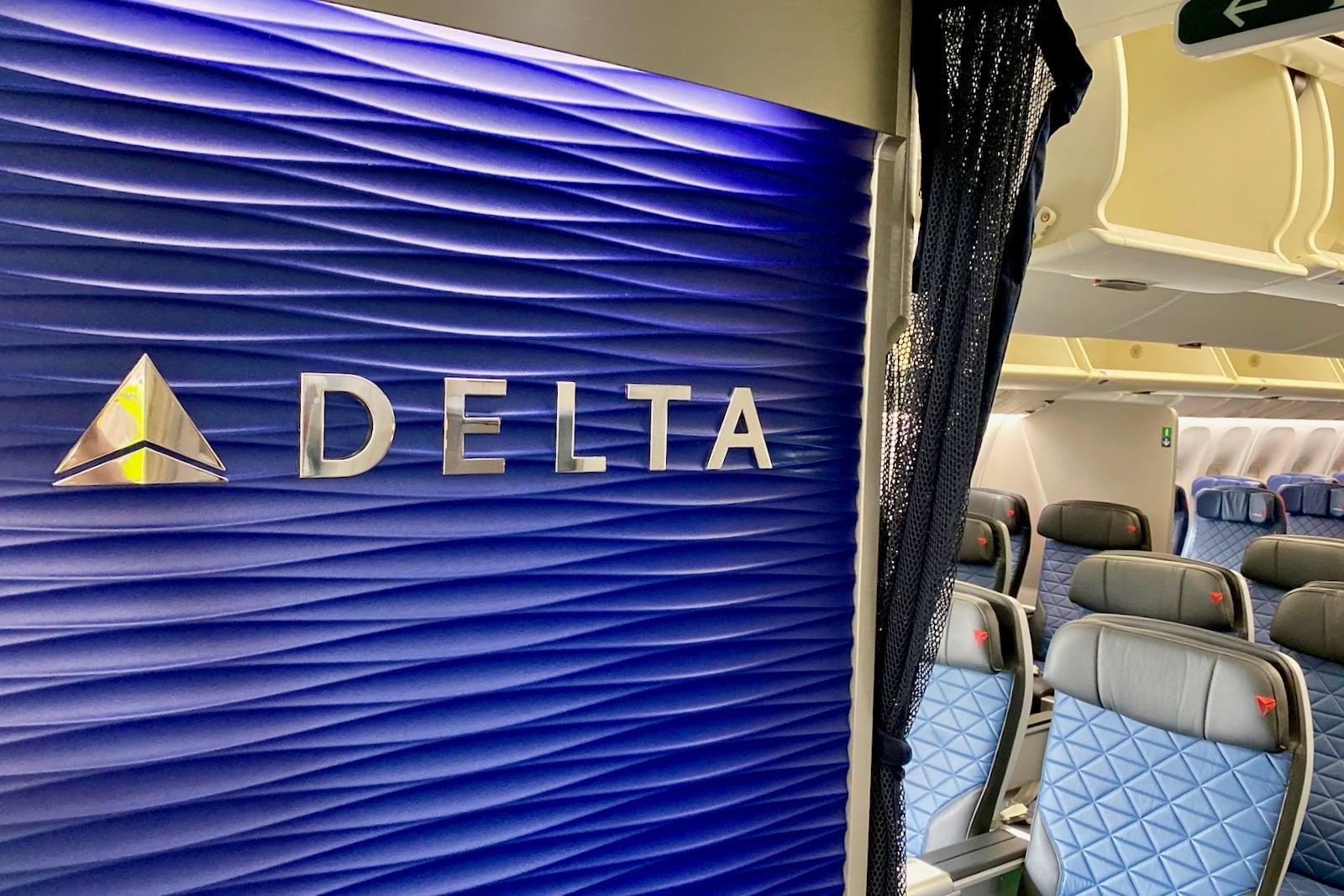
Every major U.S. carrier has launched an anti-coronavirus health and wellness campaign.
Though the details (slightly) differ by airline, Delta's done a comprehensive job of ensuring passenger safety. Like its competitors, the airline has implemented strict mask requirements and enhanced cleaning procedures. But, the Atlanta-based carrier has done even more to modify the end-to-end travel journey, including installing hand sanitizer stations outside lavatories and rolling out antimicrobial security bins.
On April 13, Delta began blocking middle seats to maximize onboard distancing. The carrier has extended the duration of its seat-blocking policy multiple times throughout the pandemic, and as of August promised more space for travelers through Jan. 6, 2021 — though the capacity cap increased to 75% (from 60%) — notably including the Thanksgiving and December holidays. The capacity change allows groups of three travelers or more to reserve seats together, even if it includes the middle.
Sign up for TPG's free new biweekly Aviation newsletter for more airline-specific news!
While the August announcement was welcome news for coach flyers, the airline only promised to cap first class (in a 2-2 configuration) at half capacity through at least Oct. 31.
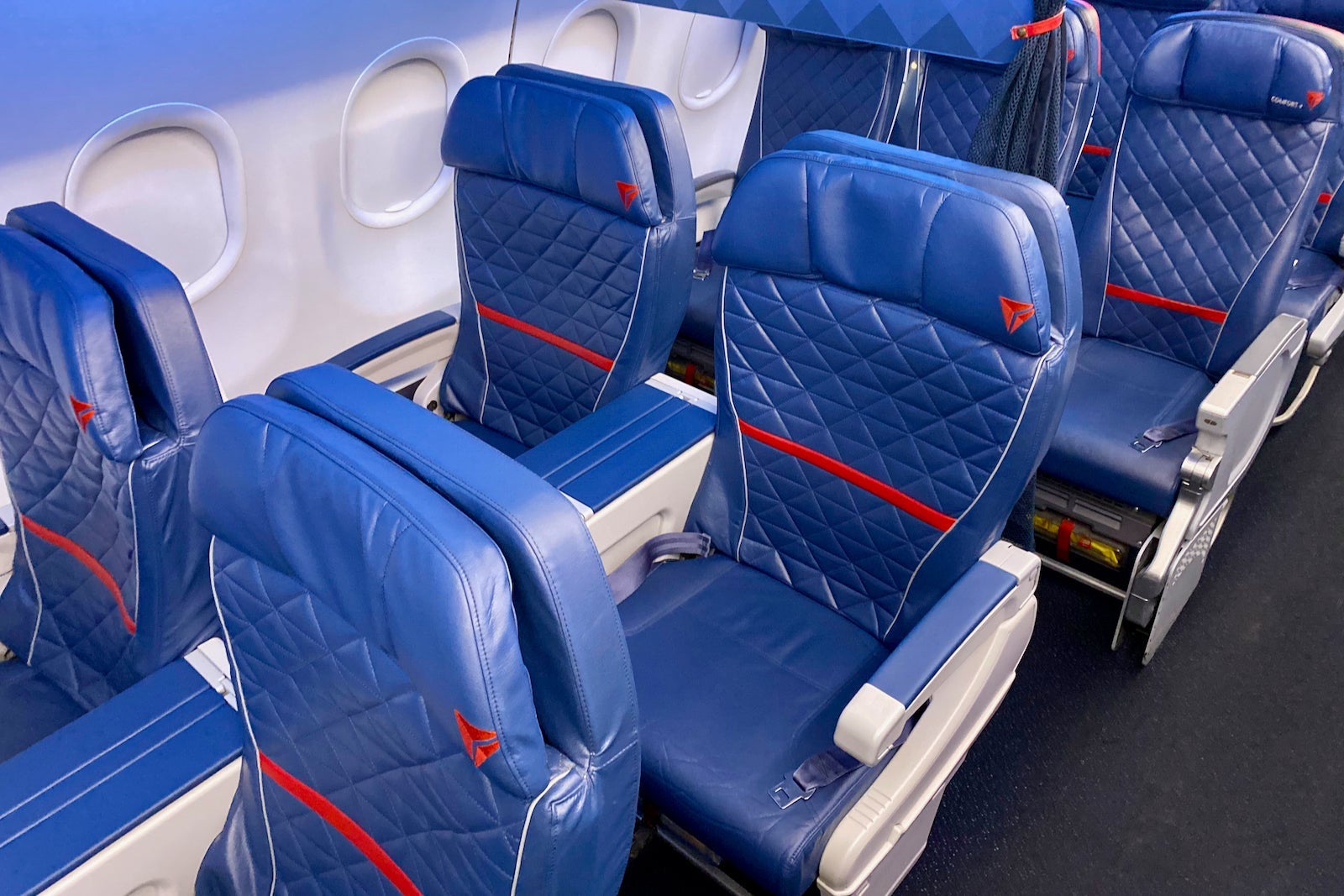
Well, there's good news for those paying for the fancy recliners. The carrier will indeed continue blocking first-class seats through at least Jan. 6. This extension was first spotted on Delta.com and was later confirmed to TPG by a carrier spokesperson.
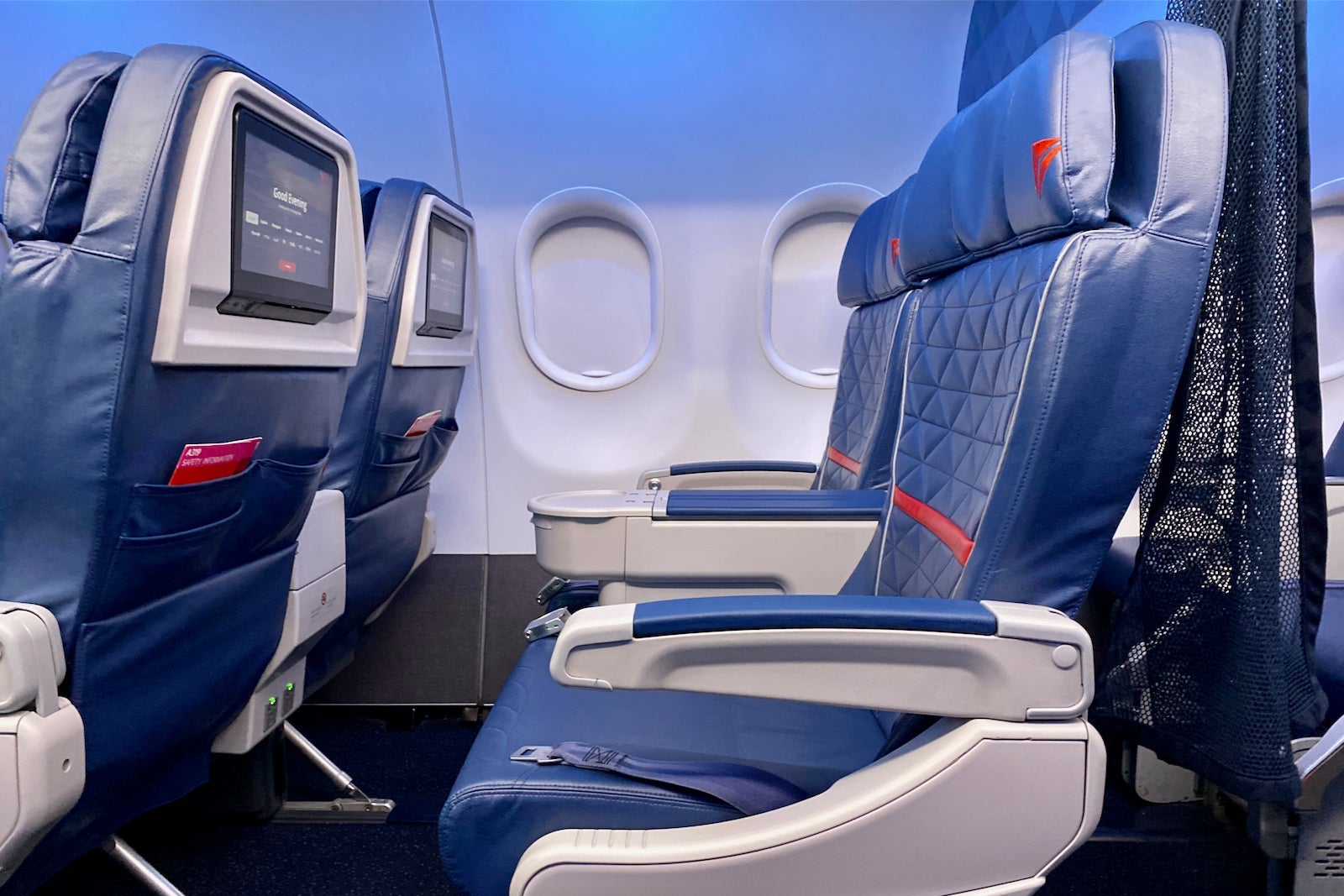
Like coach, most adjacent first-class seats will be blocked, on both domestic and international flights operated by a narrowbody plane. However, groups of two may select seats together. Note that Delta won't sell the cabin to 100% even if there are exclusively even-numbered parties booked in first. If you are flying solo in first class, the adjacent seat will remain empty.
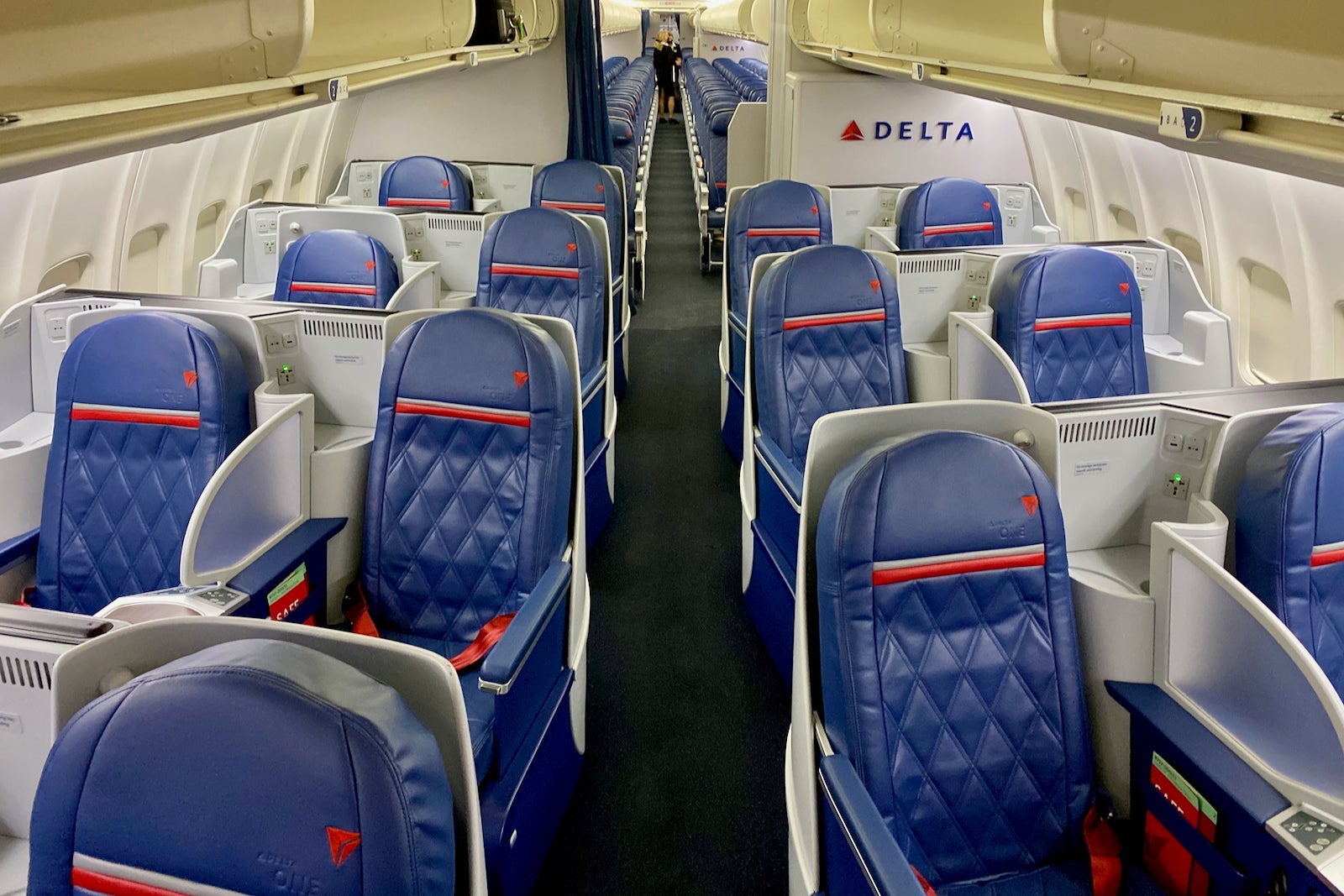
This extended seat-blocking policy also applies to the Delta One cabin on the carrier's single-aisle Boeing 757s. There are no longer capacity limitations on the Delta One cabin on widebody jets, regardless of whether the plane is flying domestically or internationally. That's because these cabins are "designed with more space and privacy built-in," according to a spokesperson.
Related: Delta will cap seats into 2021 in bid to reassure flyers

Delta will likewise continue blocking first-class seats on regional jets that feature a 1-2 configuration. With the newly extended policy, however, a solo passenger could theoretically be sitting right across the aisle from a couple. Of course, this possibility is unlikely since it'd require one of the parties to purposely choose a seat across from another party.
Airlines initially rolled out passenger caps and blocked middle seats under the auspices of social distancing onboard flights. But now, blocking seats is more about making travelers feel comfortable.
When the carrier first announced the holiday season extensions in August, Bill Lentsch, chief customer experience officer at Delta, said in a statement, "We believe that taking care of our customers and employees and restoring confidence in the safety of air travel is more important right now than filling up every seat on a plane."
Related: Which US airlines are blocking middle seats?
Delta is one of just five U.S. carriers, including Alaska Airlines, Hawaiian, JetBlue Airways and Southwest Airlines, capping the number of flyers onboard their planes during the coronavirus pandemic. Alaska is blocking seats through Nov. 30, JetBlue through Jan. 5 and Southwest through Nov. 30. Hawaiian hasn't specified an expiration date for its seat-blocking policy.
Either way, Delta's premium flyers should rest assured: the carrier will indeed be blocking first-class seats through the holidays.
TPG featured card
at American Express's secure site
Terms & restrictions apply. See rates & fees.
| 4X | Earn 4X Membership Rewards® points per dollar spent on purchases at restaurants worldwide, on up to $50,000 in purchases per calendar year, then 1X points for the rest of the year. |
| 4X | Earn 4X Membership Rewards® points per dollar spent at US supermarkets, on up to $25,000 in purchases per calendar year, then 1X points for the rest of the year. |
| 5X | New! Earn 5X Membership Rewards® points on prepaid hotel stays booked through AmexTravel.com or the Amex Travel App. |
| 3X | Earn 3X Membership Rewards® points on flights booked through AmexTravel.com, the Amex Travel App, or purchased directly from airlines. |
| 2X | Earn 2X Membership Rewards® points on prepaid car rentals booked through AmexTravel.com or the Amex Travel App and cruises booked and paid through AmexTravel.com. |
| 1X | Earn 1X Membership Rewards® point per dollar spent on all other eligible purchases. |
Pros
- Valuable dining and food-related credits
- Flexible rewards with airline and hotel transfer partners
- Multiple travel and purchase protections
- No foreign transaction fees
- Access to Amex Offers for additional savings (enrollment required)
Cons
- Not as useful for those living outside the U.S.
- Some may have trouble using Uber and other dining credits
- You may be eligible for as high as 100,000 Membership Rewards® Points after you spend $8,000 in eligible purchases on your new Card in your first 6 months of Card Membership. Welcome offers vary and you may not be eligible for an offer. Apply to know if you’re approved and find out your exact welcome offer amount – all with no credit score impact. If you’re approved and choose to accept the Card, your score may be impacted.
- Earn 4X Membership Rewards® points per dollar spent on purchases at restaurants worldwide, on up to $50,000 in purchases per calendar year, then 1X points for the rest of the year.
- Earn 4X Membership Rewards® points per dollar spent at US supermarkets, on up to $25,000 in purchases per calendar year, then 1X points for the rest of the year.
- New! Earn 5X Membership Rewards® points on prepaid hotel stays booked through AmexTravel.com or the Amex Travel App.
- Earn 3X Membership Rewards® points on flights booked through AmexTravel.com, the Amex Travel App, or purchased directly from airlines.
- Earn 2X Membership Rewards® points on prepaid car rentals booked through AmexTravel.com or the Amex Travel App and cruises booked and paid through AmexTravel.com.
- Earn 1X Membership Rewards® point per dollar spent on all other eligible purchases.
- Pay It® lets you tap in the American Express® App to quickly pay for small purchase amounts throughout the month and still earn rewards the way you usually do. Plan It® gives you the option to split up big purchases into equal monthly payments with a fixed fee. You’ll know upfront exactly how much you’ll pay.
- Updated! $120 Dining Credit: Earn up to a total of $10 in statement credits monthly when you pay with the Gold Card at Grubhub (including Seamless), Buffalo Wild Wings, Five Guys, The Cheesecake Factory, and Wonder. This can be an annual savings of up to $120. Enrollment required.
- $100 Resy Credit: Get up to $100 in statement credits each calendar year at over 10,000 qualifying U.S. Resy restaurants after you pay for eligible purchases with the American Express® Gold Card. That’s up to $50 in statement credits semi-annually. Enrollment required.
- $84 Dunkin' Credit: Earn up to $7 in monthly statement credits after you pay with the American Express® Gold Card at U.S. Dunkin’ locations. Enrollment required.
- $120 Uber Cash on Gold: Enjoy up to $120 in Uber Cash annually with your Gold Card. Just add your Card to your Uber account and you'll get $10 in Uber Cash each month to use on orders and rides in the U.S. when you select an Amex Card for your transaction.
- New! As an American Express® Gold Card Member, you can enjoy complimentary Hertz Five Star® Status. Enjoy benefits like skipping the counter at select locations, adding an additional driver at no additional cost*, and vehicle upgrades**. Benefit enrollment and Hertz Gold+ registration are required. *Additional drivers must meet standard rental qualifications and must be a spouse or domestic partner to qualify as complimentary. Other additional drivers subject to fees. **Benefits are subject to availability and vary by location. Additional Hertz program Terms and Conditions including age restrictions apply.
- Take advantage of a $100 credit towards eligible charges* at over 1,300 upscale hotels worldwide when you book The Hotel Collection through AmexTravel.com or the Amex Travel App **. *Eligible charges vary by property. **The Hotel Collection requires a two-night minimum stay.
- Book your travel through the Amex Travel App with added peace of mind – backed by American Express® service and support. Only for American Express® Card Members.
- Whenever you need us, we're here. Our Member Services team will ensure you are taken care of. From lost Card replacement to statement questions, we are available to help 24/7.
- No Foreign Transaction Fees.
- Annual Fee is $325.
- Terms Apply.