Pfizer says its booster shot is effective at protecting against omicron variant

Editor's note: This is a recurring post, regularly updated with new information and offers.
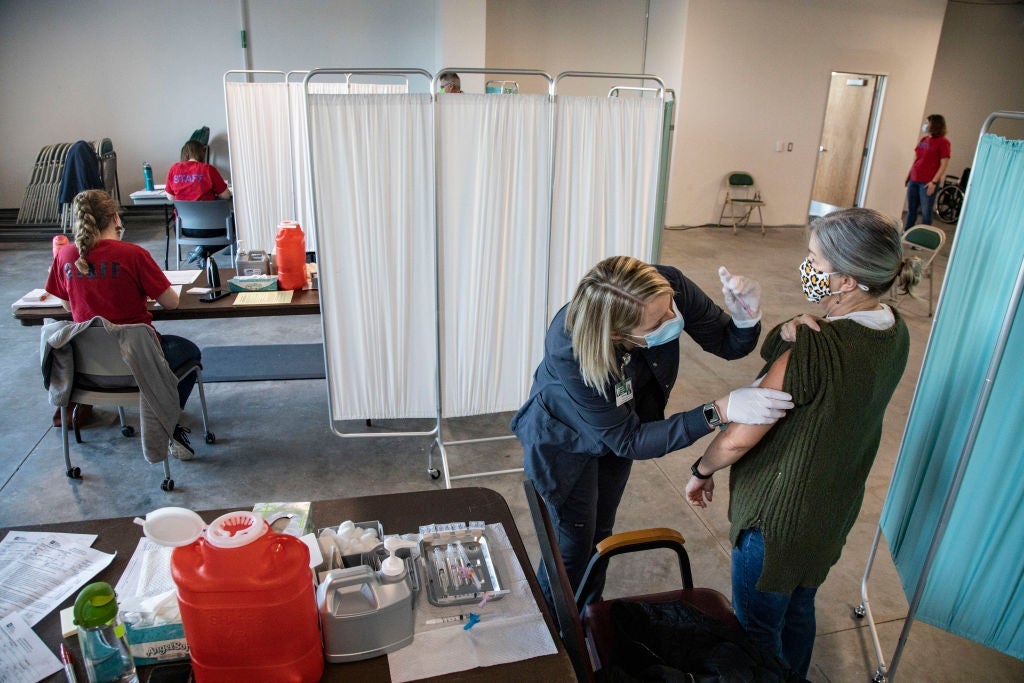
The U.S. Centers for Disease Control and Prevention is recommending that all Americans receive a COVID-19 booster due to the latest COVID-19 variant.
People who got the Pfizer-BioNTech and Moderna vaccines should get a booster six months after their last dose, while those who received the Johnson and Johnson vaccine should get a booster two months after that dose.
The omicron variant may be more contagious than others, as it contains several spike protein mutations that may make it less responsive to COVID-19 vaccines. It was deemed a "variant of concern" — the most severe category — by the World Health Organization.
"The recent emergence of the omicron variant (B.1.1.529) further emphasizes the importance of vaccination, boosters, and prevention efforts needed to protect against COVID-19," CDC Director Dr. Rochelle Walensky said in a statement on Nov. 29.
"Early data from South Africa suggest increased transmissibility of the omicron variant, and scientists in the United States and around the world are urgently examining vaccine effectiveness related to this variant," the statement continued.
There's been a lot of news on booster shots as the pandemic has evolved. Here's everything you need to know about COVID-19 boosters right now — and what it could mean for your upcoming travel plans.
The latest
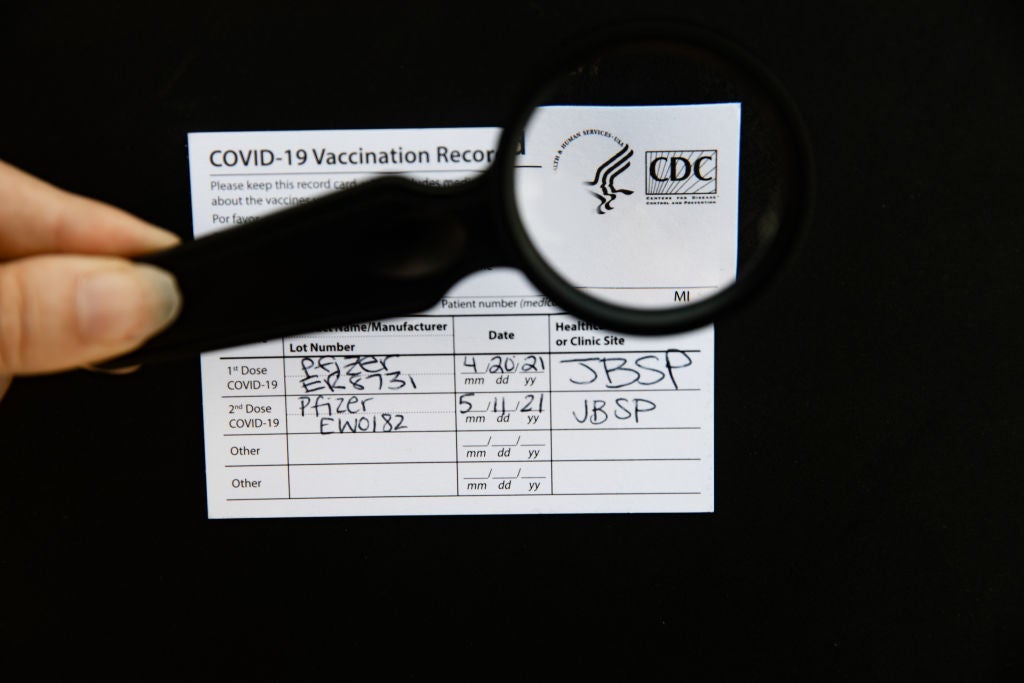
Pfizer on Dec. 8 said that two doses of its vaccine showed "significantly reduced" effectiveness against the omicron variant; however, three doses proved to "neutralize" the variant. Pfizer noted that even people with just two doses of the vaccine (and not the booster) may still be protected against severe forms of COVID-19.
"Although two doses of the vaccine may still offer protection against severe disease caused by the omicron strain, it's clear from these preliminary data that protection is improved with a third dose of our vaccine," said CEO and chairman Albert Bourla.

The announcement came less than a day after Dr. Anthony Fauci, the National Institute of Allergy and Infectious Disease director, said the variant appeared to be less severe than the delta variant.
"It's too early to be able to determine the precise severity of disease, but inklings that we are getting, and we must remember these are still in the form of anecdotal ... but it appears that with the cases that are seen, we are not seeing a very severe profile of disease," Fauci said on Dec. 7, according to the Hill.
Worldwide, countries have raced to react to the variant.
The Biden administration in late November suspended entry to the United States by travelers from eight South African nations, including South Africa, Botswana and Zimbabwe. The temporary ban applies to those who have been in the affected countries within 14 days of attempted entry to the U.S. and does not include American citizens or permanent residents. Non-U.S. citizens coming from the impacted countries are restricted from entering the U.S. with limited exceptions.
Several countries, including Israel and Morocco, put travel restrictions in place due to the omicron variant. The travel restrictions and bans come as the World Health Organization cautioned countries against immediately imposing travel restrictions in response to news of a new COVID-19 variant, saying there must be a "risk-based and scientific approach."
On Nov. 29, President Biden again urged Americans to get a booster shot to protect against the variant, saying "a fully vaccinated boosted person is the most protected against COVID."
Who is eligible for a COVID-19 booster shot?

The CDC says everyone 18 and older should get a booster shot. People inoculated with the two-dose Pfizer, or Moderna vaccines must have completed their initial series at least six months ago. People who received the single-dose Johnson and Johnson vaccine should get a booster at least two months after completing that dose.
What have health experts said about COVID-19 booster shots?
With the omicron variant's spread, health experts are taking a more urgent approach to making booster shots available to Americans.
Fauci said in early August that immunocompromised people might not have sufficient protection with the two-dose vaccines. More recently, Fauci said people should get a booster dose due to the new variant.
"Whether or not we're headed into a bleak or bleaker winter is really going to depend upon what we do," Fauci said on NBC's "Meet The Press" on Nov. 28. "So this is a clarion call as far as I'm concerned of saying let's put aside all of these differences that we have and say, 'If you're not vaccinated, get vaccinated. If you're fully vaccinated, get boosted and get the children vaccinated also.' We now have time."
But there are concerns about the inequitable rollout of COVID-19 vaccines, particularly in the Global South, where millions still wait for their first and second doses.
While many developed countries vaccinate their citizens en masse, much of the African continent lags behind the rest of the world in vaccine rollouts. According to the health agency, more than 80% of the world's vaccines have gone to wealthy countries, while low-income countries, most of them in Africa, have received just 0.6% of all vaccines. WHO has repeatedly called on wealthier nations to rethink their booster strategies to give lower-income countries time to vaccinate their citizens.
"Every day, there are six times more boosters administered globally than primary doses in low-income countries," WHO Director Tedros Adhanom Ghebreyesus said in early November. "This is a scandal that must stop now."
What if I got the Johnson & Johnson vaccine?
The Johnson & Johnson vaccine has a 66% efficacy rate, compared to 95% for Pfizer and 94% for Moderna.
Preliminary data suggests that people who got the one-shot Johnson & Johnson vaccine may benefit from a Moderna or Pfizer booster.
And now, the FDA has recommended that people who got a Johnson & Johnson shot receive a booster shot of the same vaccine as early as two months after their first dose. That's good news for the millions who received the Johnson & Johnson vaccine in the United States and will undoubtedly be beneficial for travel purposes as some countries don't accept the vaccine for travel purposes.
What about children?
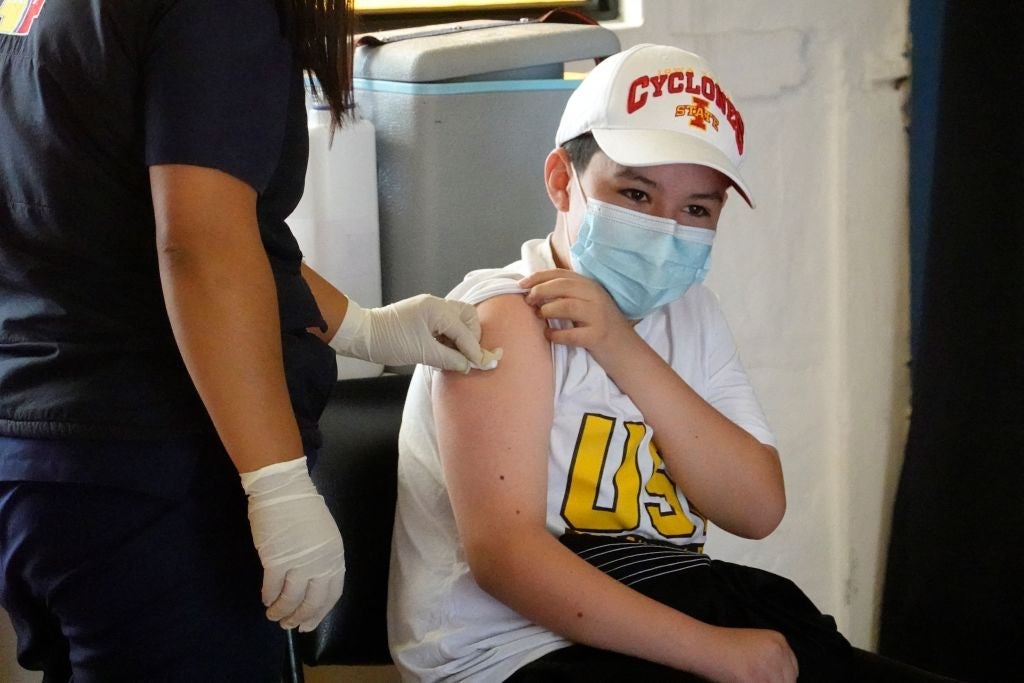
Families with children under 5 might be wondering what a mixed-vaccine status might mean for their travel plans.
There are no COVID-19 testing or vaccination requirements if you're traveling domestically with children. However, New York City requires children ages 5 to 11 to show proof of at least one dose beginning Dec. 14. Those 12 and older will need to show proof of full vaccination against COVID-19 by Dec. 27 to eat indoors or access entertainment venues.
But even if you haven't left home since the onset of the pandemic, you probably won't be shocked to hear that traveling abroad with kids is a bit different than it used to be. Vaccinated adults traveling with unvaccinated kids may, in some instances, have additional travel requirements as a result of the pandemic.
However, many countries with strict vaccination requirements accept proof of a negative COVID-19 test for children ineligible to be vaccinated.
Currently, the Pfizer vaccine is the only vaccine given emergency use authorization by the FDA for children as young as 5.
Vaccines go through a rigorous process even to obtain emergency use authorization. The FDA has previously said it would not "cut any corners" regarding the authorization of vaccines for very young children, seemingly seeking to assuage nervous parents. The agency also said it was investigating different dosing regimens, so young children will likely not receive an adult vaccine dose.
The Moderna and Johnson & Johnson vaccines are only available to people 18 and older at this time. The CDC recommends all people five and older get vaccinated against COVID-19.
Additional reporting by Caroline Tanner.
TPG featured card

at American Express's secure site
Terms & restrictions apply. See rates & fees.
| 3X | Earn 3X Miles on Delta purchases. |
| 1X | Earn 1X Miles on all other eligible purchases. |
Pros
- Delta SkyClub access when flying Delta
- Annual companion ticket for travel on Delta (upon renewal)
- Ability to earn MQDs through spending
- Various statement credits for eligible purchases
Cons
- Steep annual fee of $650
- Other Delta cobranded cards offer superior earning categories
- Earn 100,000 Bonus Miles after you spend $6,000 or more in purchases with your new Card within the first 6 months of Card Membership and an additional 25,000 bonus miles after you make an additional $3,000 in purchases on the Card within your first 6 months, starting from the date that your account is opened. Offer Ends 04/01/2026.
- Delta SkyMiles® Reserve American Express Card Members receive 15 Visits per Medallion® Year to the Delta Sky Club® when flying Delta and can unlock an unlimited number of Visits after spending $75,000 in purchases on your Card in a calendar year. Plus, you’ll receive four One-Time Guest Passes each Medallion Year so you can share the experience with family and friends when traveling Delta together.
- Enjoy complimentary access to The Centurion® Lounge in the U.S. and select international locations (as set forth on the Centurion Lounge Website), Sidecar by The Centurion® Lounge in the U.S. (see the Centurion Lounge Website for more information on Sidecar by The Centurion® Lounge availability), and Escape Lounges when flying on a Delta flight booked with the Delta SkyMiles® Reserve American Express Card. § To access Sidecar by The Centurion® Lounge, Card Members must arrive within 90 minutes of their departing flight (including layovers). To access The Centurion® Lounge, Card Members must arrive within 3 hours of their departing flight. Effective July 8, 2026, during a layover, Card Members must arrive within 5 hours of the connecting flight.
- Receive $2,500 Medallion® Qualification Dollars with MQD Headstart each Medallion Qualification Year and earn $1 MQD for each $10 in purchases on your Delta SkyMiles® Reserve American Express Card with MQD Boost to get closer to Status next Medallion Year.
- Enjoy a Companion Certificate on a Delta First, Delta Comfort, or Delta Main round-trip flight to select destinations each year after renewal of your Card. The Companion Certificate requires payment of government-imposed taxes and fees of between $22 and $250 (for itineraries with up to four flight segments). Baggage charges and other restrictions apply. Delta Basic experiences are not eligible for this benefit.
- $240 Resy Credit: When you use your Delta SkyMiles® Reserve American Express Card for eligible purchases with U.S. Resy restaurants, you can earn up to $20 each month in statement credits. Enrollment required.
- $120 Rideshare Credit: Earn up to $10 back in statement credits each month after you use your Delta SkyMiles® Reserve American Express Card to pay for U.S. rideshare purchases with select providers. Enrollment required.
- Delta SkyMiles® Reserve American Express Card Members get 15% off when using miles to book Award Travel on Delta flights through delta.com and the Fly Delta app. Discount not applicable to partner-operated flights or to taxes and fees.
- With your Delta SkyMiles® Reserve American Express Card, receive upgrade priority over others with the same Medallion tier, product and fare experience purchased, and Million Miler milestone when you fly with Delta.
- Earn 3X Miles on Delta purchases and earn 1X Miles on all other eligible purchases.
- No Foreign Transaction Fees. Enjoy international travel without additional fees on purchases made abroad.
- $650 Annual Fee.
- Apply with confidence. Know if you're approved for a Card with no impact to your credit score. If you're approved and you choose to accept this Card, your credit score may be impacted.
- Terms Apply.
- See Rates & Fees