Aviation milestone! Avianca turns 100 today

One of Latin America's largest carriers, Avianca, turns 100 today, joining KLM in the exclusive club of airlines in their second century.
Bogotá-based Avianca was founded as Sociedad Colombo-Alemana de Transportes Aéreos, or Scadta, on Dec. 5, 1919, in Barranquilla, Colombia. However, like many of its peers, the airline did not operate its first flight for another nine months, a "test flight" some 546 miles from Barranquilla to Puerto Berrío near Medellin that took place from Sept. 8-10, 1920.
By comparison, fellow centenarian KLM was founded in October 1919 but similarly did not take to the skies until several months later in May 1920.
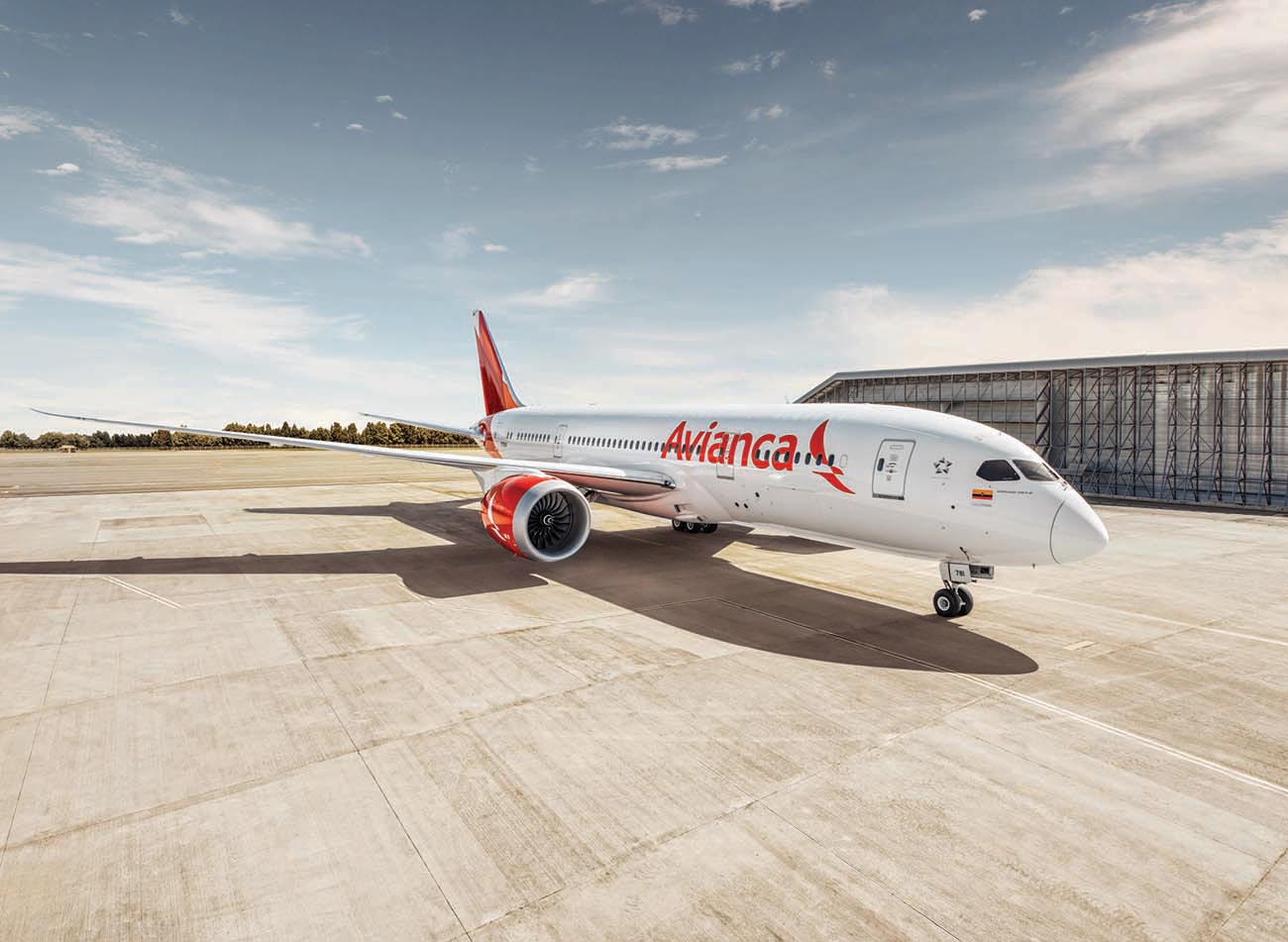
From these humble beginnings, Avianca has risen to become the second-largest airline group in Latin America behind only LATAM Airlines. The Star Alliance carrier serves 108 destinations across the region with major bases in Bogotá (BOG), Lima (LIM), and San Salvador (SAL) in El Salvador. It operated 181 aircraft, including Airbus A320 family, Airbus A330 and Boeing 787 jets, as well as ATR turboprops, at the end of September.
Sign up for the free daily TPG newsletter for more airline news!
Seaplanes to Jumbos
Scadta began scheduled passenger service between Barranquilla to Girardot, which was about 87 miles from Bogotá, in October 1920. The choice of Giradot, and not the Colombian capital, as the terminus was driven by the aircraft used — two Junkers F-13 seaplanes that needed a body of water to land on. Giradot's location on the Magdalena River provided a suitable landing strip for the fledgling airline.
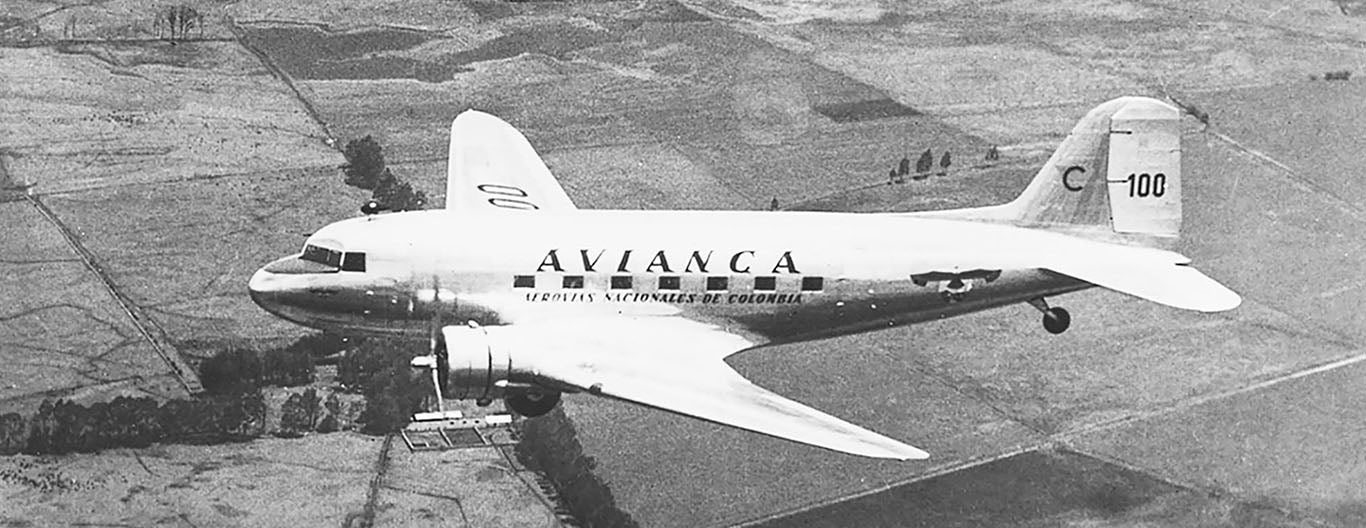
The Avianca name, which stands for Aerovías Nacionales de Colombia, was adopted in 1940. Its first modern airliner, the iconic Douglas DC-3, arrived that same year.
Flights to the U.S. began after World War II in 1947, with service between Bogotá and Miami via Barranquilla operated with Douglas DC-4 props. The route was extended to New York two years later.

Avianca began flying to Europe in 1950 connecting Bogotá and Rome via Barranquilla, Bermuda, the Azores, Lisbon and Madrid. Regular transatlantic air service was still relatively new at the time, with only BOAC and Pan American Airways flying across the North Atlantic until KLM joined them in 1946.
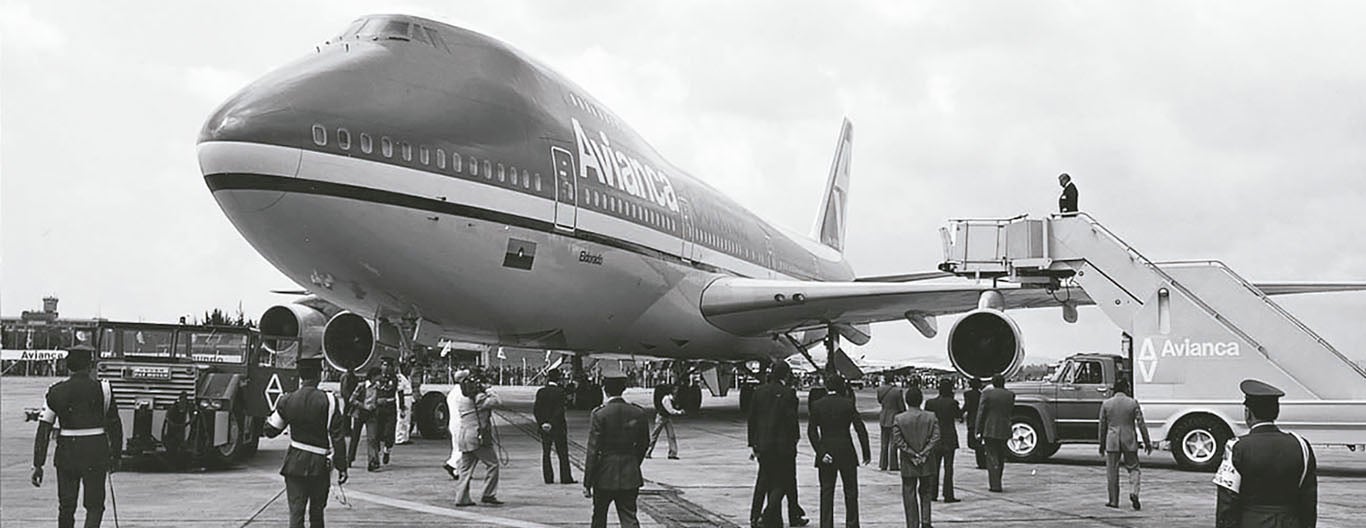
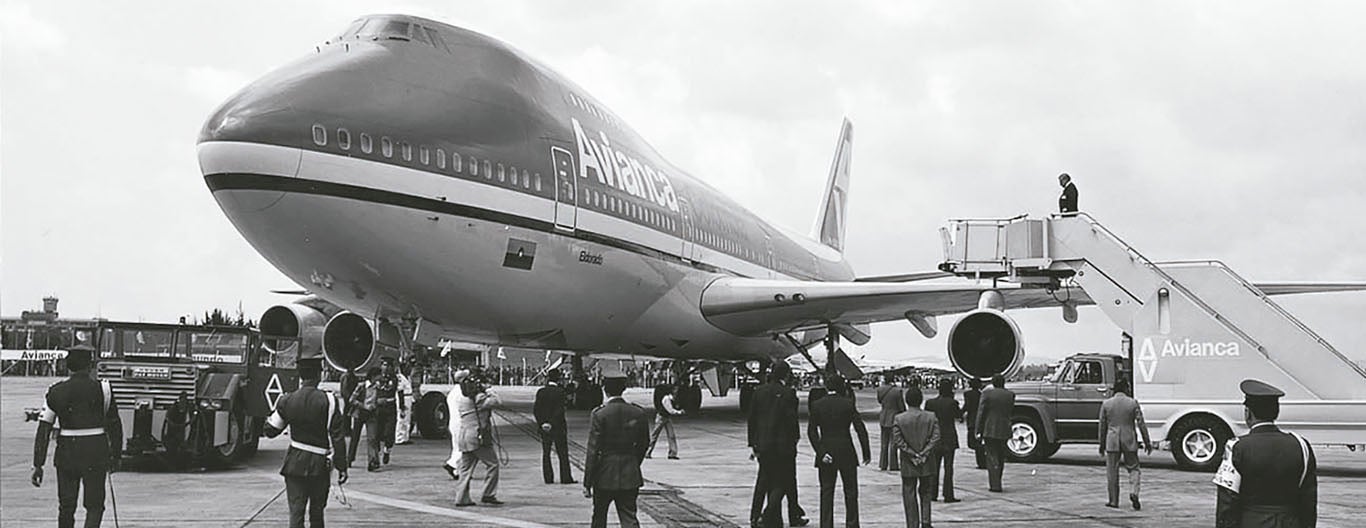
The jet age came to Avianca in 1960 with the delivery of a Boeing 707-120, and the jumbo jet era in 1976 with the airline's first Boeing 747-200. By its 60th anniversary in 1979, the carrier served three continents with a network stretching from Buenos Aires to London and Los Angeles.
Related: Brian Kelly reviews his first Avianca flight from Medellin to New York
Avianca's growth was not without issues. The airline flew through years of civil unrest in Colombia, including the bombing of one of its flights by drug kingpin Pablo Escobar in 1989, and several fatal crashes during the 1980s. It also was reorganized under U.S. Chapter 11 bankruptcy law from 2003 to 2004.
But Avianca overcame those challenges. The airline was elevated above its status as a primarily Colombian carrier via its 2010 merger with El Salvador-based TACA Airlines. The combination added a significant Central American presence, as well as a Lima base, to Avianca's network.
Global partner
Avianca is increasingly a global player. The airline joined Star Alliance in 2015, and announced plans to form a strategic partnership with United Airlines two years later. That partnership, which will also include Copa Airlines and possibly Azul, has the potential to create one of the largest combined networks between the U.S. and Latin America.
Despite this, the carrier is in the midst of another rough patch. Avianca's largest shareholders, Synergy and Kingsland Holdings, engaged in a legal battle over the proposed United partnership that culminated in the ouster of majority shareholder German Efromovich from the airline's board this May. At the same time, its financial performance has declined and the brand took a hit when its Brazilian peer, Avianca Brasil, shut down in May. Avianca Brasil was a separate company from the Colombian-based carrier, sharing only a brand by way of their shared owner Synergy.
Avianca appointed a new CEO, former Aeromexico executive Anko van der Werff, in July to lead a restructuring of the carrier.
"Avianca is an airline with a proud history, but a very messy present state," Atmosphere Research founder and president Henry Harteveldt told TPG. "The airline has an unclear brand image, lacks a compelling product offering, has a terrible reputation due to poor reliability and service, and seems to be losing to LATAM, Copa, Azul, and various Latin LCCs and ULCCs."
Avianca plans to shrink its fleet through the end of 2020 while at the same time focusing on expanding its partnerships with other carriers. The expansive tie up with Azul, Copa and United is one aspect of that, but the airline is also seeking other partners, including a new codeshare with Gol in Brazil.
More changes are expected at Avianca as the airline looks ahead to continuing to connect passengers in its second century flying.
Related: Azul could join giant Latin America alliance sought by United, Avianca, Copa
TPG featured card

at Capital One's secure site
Terms & restrictions apply. See rates & fees.
| 5X miles | Earn 5X miles on hotels, vacation rentals and rental cars booked through Capital One Travel |
| 2X miles | Earn unlimited 2X miles on every purchase, every day |
Pros
- Stellar welcome offer of 75,000 miles after spending $4,000 on purchases in the first three months from account opening. Plus, a $250 Capital One Travel credit to use in your first cardholder year upon account opening.
- You'll earn 2 miles per dollar on every purchase, which means you won't have to worry about memorizing bonus categories
- Rewards are versatile and can be redeemed for a statement credit or transferred to Capital One’s transfer partners
Cons
- Highest bonus-earning categories only on travel booked via Capital One Travel
- LIMITED-TIME OFFER: Enjoy $250 to use on Capital One Travel in your first cardholder year, plus earn 75,000 bonus miles once you spend $4,000 on purchases within the first 3 months from account opening - that’s equal to $1,000 in travel
- Earn unlimited 2X miles on every purchase, every day
- Earn 5X miles on hotels, vacation rentals and rental cars booked through Capital One Travel
- Miles won't expire for the life of the account and there's no limit to how many you can earn
- Receive up to a $120 credit for Global Entry or TSA PreCheck®
- Use your miles to get reimbursed for any travel purchase—or redeem by booking a trip through Capital One Travel
- Enjoy a $50 experience credit and other premium benefits with every hotel and vacation rental booked from the Lifestyle Collection
- Transfer your miles to your choice of 15+ travel loyalty programs
- Top rated mobile app