How to avoid seasickness on your next cruise

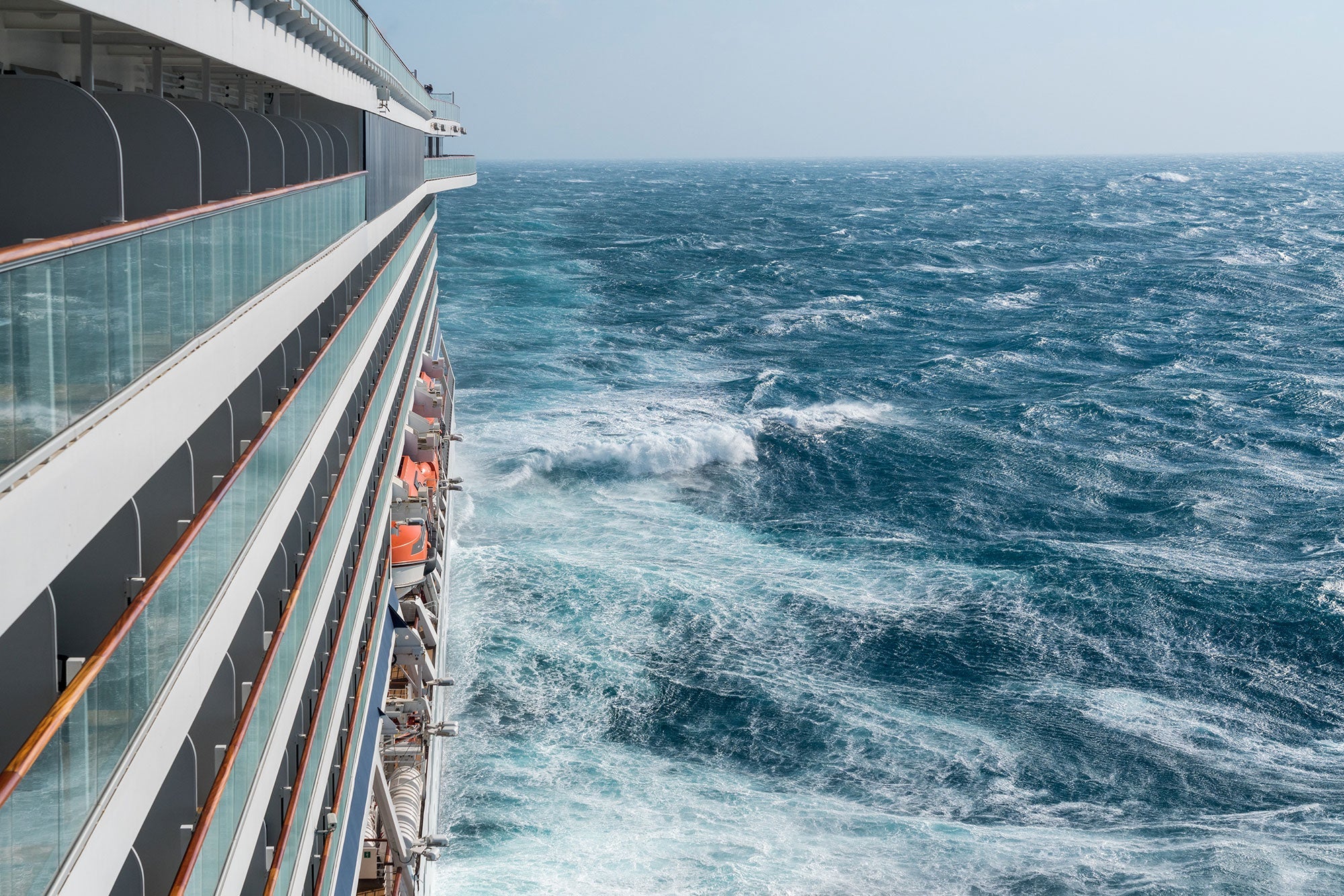
Will I get seasick if I go on a cruise? That question was, unfortunately, not something I asked myself when I packed for my first ever sailing to Greece. And that ship rocked. It bounced. It rolled over the waves in a way that made my stomach feel like a water bottle being spun round and round.
As I approached the windy shores of Mykonos, I wondered how I could be so unprepared to feel so queasy — and desperately wished for some magic potion that would make my motion sickness go away.
Luckily, that first Greece cruise didn't dissuade me from setting sail. I love being on a boat. I even got married on a yacht in the New York Harbor. And my sea legs are usually pretty strong.
However, as every seasoned traveler knows, being prepared is the most important part of travel. Even those of us not prone to mal-de-mer can find ourselves in storms and rough waters that bring on those unpleasant queasy feelings. If you can't avoid seasickness on your sailing, you can at least be ready to minimize its ill effects.
In my attempt to seek out the best remedy for seasickness on a cruise, I reached out to Dr. Jenny Yu of Healthline (a subsidiary of TPG's parent company Red Ventures). She offered in-depth guidance on how to prevent seasickness on a cruise, along with great tips on how to keep your stomach from flip-flopping should the waves start rocking and rolling on future journeys.
What are the symptoms of seasickness?
Seasickness, mal-de-mer, motion sickness: It's all the same thing. It's that funny feeling in your stomach and cloudiness or dizziness in your head that can sometimes turn to nausea when you're traveling by car, plane, train, bus or boat.
When suffering from seasickness on a cruise, you could just feel a bit "off," start to feel sick to your stomach or, in its worse form, vomit. You may also feel like you've lost your sense of balance and stumble a bit as you walk around the ship.
Related: 21 tips and tricks that will make your first cruise go smoothly
What causes seasickness?
"Motion sickness, in general, is caused by conflicting signals that are sent to the brain by the eyes, ears and our neuromuscular system," said Dr. Yu. "Our eyes and ears (the vestibular system) senses motion while our neuromuscular system senses stillness. When these signal systems send conflicting information to the brain, it can cause the symptoms of dizziness, nausea, irritability, fatigue, sweating and inability to concentrate."

Dr. Yu says this can happen not only while you are on a ship, but also in a car, plane or train or even playing VR and/or video games.
We get seasick when our sense of motion and balance get out of sync. When your ship starts sailing, it will transfer motion to you. If you're inside and away from a window, you're not seeing the motion, but you're feeling it. This creates a dissonance that can be problematic for your body.
Related: Tips for avoiding motion sickness while traveling
Who's at risk to suffer from seasickness?
Some people are more prone to seasickness than others and doctors can't explain why. But they do know that children ages 2 to 12 are more apt to suffer from the illness, as are pregnant women. Therefore, it's more important for those groups to try to avoid getting seasick in the first place.
How to prevent and treat seasickness
How do you prevent seasickness on a cruise so you don't have to feel ill and treat the symptoms? Old salts will give you all sorts of tips to avoid getting sick while at sea. These are TPG's favorites:
Spend time on deck as the ship gets underway
Once your cruise ship has set sail from its embarkation port, you might feel compelled to go explore the ship or relax in your room. Resist the urge; instead, spend some time on an open deck, watching the horizon. This "helps the eyes visually process movement," says Dr. Yu.
Give your eyes, body and brain a chance to "sync up." As you feel the ship moving through the water, and see the horizon bob in the distance, your brain can "reprogram" its sense of balance and normalcy. This helps a lot. Just be sure to sit parallel to the horizon or face the same direction as the ship's movement. You don't want to face the opposite direction — that can confuse your sensory inputs.
If you are somewhere inside the ship and start feeling sick at any point during the voyage, head right to an open deck for some fresh air as you train your eyes on the horizon. It will give your brain a chance to correctly interpret the signals it's receiving from all your senses.
Pick a big ship
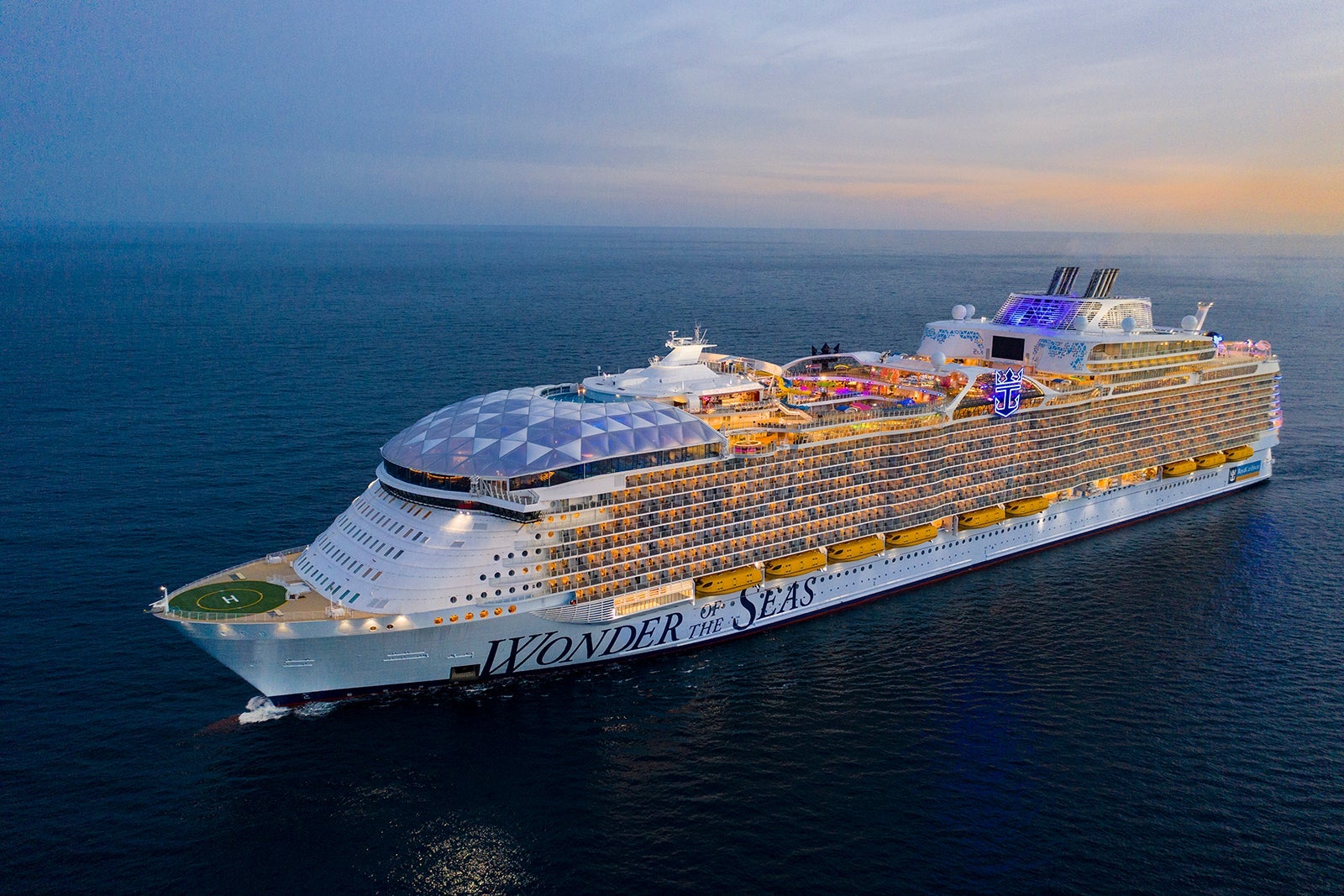
How much you feel the ocean's movement will depend on the type of ship you're sailing. The smaller the ship, the more movement you'll feel.
To minimize the risk of seasickness, book one of the world's largest ships, such as Royal Caribbean's Wonder of the Seas. Keep in mind that the ocean is much larger than even the most gargantuan ships, so when the seas are rough, you can still feel movement — just less than if you're sailing on a 100-person yacht.
Related: What to do if you find yourself on a wildly tilting cruise ship
Pick the right cabin
If you're worried about seasickness, pick a cabin that's as close to the water level as possible and in the center of the ship. You'll be at the ship's fulcrum point, which means you'll feel less movement than people on higher decks with cabins far forward or all the way at the back.
Spring for a room with a view of the water, or with outdoor space if possible, says Dr. Yu, so you can easily keep an eye on the horizon and have quick access to fresh air.
Related: The 5 best cabin locations on any cruise ship
Select the right itinerary

If you think you'll be plagued by seasickness, pick an itinerary with more time spent in port and fewer days spent entirely at sea.
Also, consider a voyage that sails calm waters. For example, Alaska Inside Passage voyages, sailing round-trip from Seattle or Vancouver, are known to be smooth sailing most of the time; one-way itineraries that cross the Gulf of Alaska can be rockier. River cruises excel at offering slow travel without swells and with frequent port stops.
Avoid cruise regions with a reputation for rockiness, such as the Pacific Ocean or the Drake Passage between South America and Antarctica.
Related: 8 cabin locations on cruise ships that you definitely should avoid
Eat and drink the right things
On embarkation day, it's smart to eat balanced meals and avoid anything greasy or acidic (so skip that burger and fries or an Italian feast on the first day of your cruise). Also, avoid alcohol. Anything that causes dehydration can be a trigger for seasickness.
Don't skip meals altogether, though. It's important to have food in your stomach at the beginning of your cruise. Dr. Yu suggests choosing carbonated beverages to accompany a light meal to help with feelings of nausea.
After the first day at sea, you should be able to resume your normal eating and drinking habits. Dr. Yu also recommends taking antihistamines (such as Claritin or Alavert) at the start of the cruise, which can be helpful when setting sail.
Related: 5 reasons you should splurge on a cruise ship specialty restaurant
Natural remedies may work
If you do start feeling off, you don't necessarily need to medicate. While natural remedies can't treat all symptoms of seasickness, says Dr. Yu, lemon, green apple, ginger and peppermint all have anecdotal evidence of treating nausea.
Personally, I'm a fan of peppermint tea and ginger chews, which I now always pack for cruise vacations. Many cruise ship main dining rooms set out a bowl of ginger in the reception area.
Dr. Yu also suggests one of my favorite natural seasickness remedies — acupressure wristbands. These are wristbands that apply directed pressure to a particular point on the inside of your wrist that is known for reducing nausea.
Finally, don't rule out shut-eye as a cure-all. "Sleep is beneficial for helping with vertigo and dizziness," advised Dr. Yu.
Related: How to book a cruise using points and miles
Medications

If all of the precautions above don't stop the onset of seasickness symptoms, it's time to take medications, says Dr. Yu.
Dramamine (dimenhydrinate, an antiemetic), scopolamine (a patch that you affix behind your ear for up to three days) and antihistamines are all medications that can help when you're treating motion or seasickness.
Many cruisers pack over-the-counter Bonine or Antivert, which are just the brand name for the antihistamine meclizine. Your doctor can also provide a prescription for meclizine that you can get filled at your pharmacy. Benadryl (diphenhydramine) also works for some people.
The key with these drugs is to take the first pill about an hour before the ship starts moving.
Not all antihistamines reduce the symptoms of motion sickness, so if you pack one, be sure it will work for this purpose. Talk with your doctor to pick the best option for you and your family.
Note that there can be side effects — like dry mouth and drowsiness — with each of these drugs.
You'll want to bring seasickness prevention products from home, so be sure to pack them in your travel first-aid kit. Some cruise lines will give out certain remedies at the reception desk for free, but if you need to buy them at the onboard boutique, be ready to pay an inflated price.
If you get very sick, make an appointment with the ship's doctor, who may give you any of the above drugs or promethazine (a combined antihistamine and antiemetic) or ephedrine.
Your regular health insurance will not cover visits to the ship's doctor or prescriptions obtained on board; you'll need to pay out of pocket and file a claim with your regular or travel insurance when you return home.
Bottom line
Don't let the worry of seasickness stop you from booking a cruise. Many travelers have gone on dozens of voyages and never had an issue.
Even if you do experience motion sickness on board, there are plenty of methods to stop that funny feeling in its tracks. Just board your ship prepared with some of the suggestions above, and you'll be ready for a great cruise.
Planning a cruise? Start with these stories:
- The 5 most desirable cabin locations on any cruise ship
- A beginners guide to picking a cruise line
- The 8 worst cabin locations on any cruise ship
- A quick guide to the most popular cruise lines
- 21 tips and tricks that will make your cruise go smoothly
- 15 ways cruisers waste money
- 12 best cruises for people who never want to grow up
- What to pack for your first cruise
Additional reporting by Andrea Rotondo.
TPG featured card

at American Express's secure site
Terms & restrictions apply. See rates & fees.
| 3X | Earn 3X Miles on Delta purchases. |
| 1X | Earn 1X Miles on all other eligible purchases. |
Pros
- Delta SkyClub access when flying Delta
- Annual companion ticket for travel on Delta (upon renewal)
- Ability to earn MQDs through spending
- Various statement credits for eligible purchases
Cons
- Steep annual fee of $650
- Other Delta cobranded cards offer superior earning categories
- Earn 100,000 Bonus Miles after you spend $6,000 or more in purchases with your new Card within the first 6 months of Card Membership and an additional 25,000 bonus miles after you make an additional $3,000 in purchases on the Card within your first 6 months, starting from the date that your account is opened. Offer Ends 04/01/2026.
- Delta SkyMiles® Reserve American Express Card Members receive 15 Visits per Medallion® Year to the Delta Sky Club® when flying Delta and can unlock an unlimited number of Visits after spending $75,000 in purchases on your Card in a calendar year. Plus, you’ll receive four One-Time Guest Passes each Medallion Year so you can share the experience with family and friends when traveling Delta together.
- Enjoy complimentary access to The Centurion® Lounge in the U.S. and select international locations (as set forth on the Centurion Lounge Website), Sidecar by The Centurion® Lounge in the U.S. (see the Centurion Lounge Website for more information on Sidecar by The Centurion® Lounge availability), and Escape Lounges when flying on a Delta flight booked with the Delta SkyMiles® Reserve American Express Card. § To access Sidecar by The Centurion® Lounge, Card Members must arrive within 90 minutes of their departing flight (including layovers). To access The Centurion® Lounge, Card Members must arrive within 3 hours of their departing flight. Effective July 8, 2026, during a layover, Card Members must arrive within 5 hours of the connecting flight.
- Receive $2,500 Medallion® Qualification Dollars with MQD Headstart each Medallion Qualification Year and earn $1 MQD for each $10 in purchases on your Delta SkyMiles® Reserve American Express Card with MQD Boost to get closer to Status next Medallion Year.
- Enjoy a Companion Certificate on a Delta First, Delta Comfort, or Delta Main round-trip flight to select destinations each year after renewal of your Card. The Companion Certificate requires payment of government-imposed taxes and fees of between $22 and $250 (for itineraries with up to four flight segments). Baggage charges and other restrictions apply. Delta Basic experiences are not eligible for this benefit.
- $240 Resy Credit: When you use your Delta SkyMiles® Reserve American Express Card for eligible purchases with U.S. Resy restaurants, you can earn up to $20 each month in statement credits. Enrollment required.
- $120 Rideshare Credit: Earn up to $10 back in statement credits each month after you use your Delta SkyMiles® Reserve American Express Card to pay for U.S. rideshare purchases with select providers. Enrollment required.
- Delta SkyMiles® Reserve American Express Card Members get 15% off when using miles to book Award Travel on Delta flights through delta.com and the Fly Delta app. Discount not applicable to partner-operated flights or to taxes and fees.
- With your Delta SkyMiles® Reserve American Express Card, receive upgrade priority over others with the same Medallion tier, product and fare experience purchased, and Million Miler milestone when you fly with Delta.
- Earn 3X Miles on Delta purchases and earn 1X Miles on all other eligible purchases.
- No Foreign Transaction Fees. Enjoy international travel without additional fees on purchases made abroad.
- $650 Annual Fee.
- Apply with confidence. Know if you're approved for a Card with no impact to your credit score. If you're approved and you choose to accept this Card, your credit score may be impacted.
- Terms Apply.
- See Rates & Fees