The Points Guy believes that credit cards can transform lives, helping you leverage everyday spending for cash back or travel experiences that might otherwise be out of reach. That's why we publish a variety of editorial content and card comparisons: to help you find a great card to turn your goals into reality.
Our site may earn compensation when a customer clicks on a link, when an application is approved, or when an account is opened with our partners, and this may impact how or where these products appear. While we don't cover all available credit cards, our editorial team creates and maintains all of the analysis of these cards, and our content is not influenced nor subject to review by any credit card company, bank or partner prior to (or after) publication. Please view our advertising policy and product review methodology for more information.
Advertiser disclosure
The Points Guy believes that credit cards can transform lives, helping you leverage everyday spending for cash back or travel experiences that might otherwise be out of reach. That's why we publish a variety of editorial content and card comparisons: to help you find a great card to turn your goals into reality.
Our site may earn compensation when a customer clicks on a link, when an application is approved, or when an account is opened with our partners, and this may impact how or where these products appear. While we don't cover all available credit cards, our editorial team creates and maintains all of the analysis of these cards, and our content is not influenced nor subject to review by any credit card company, bank or partner prior to (or after) publication. Please view our advertising policy and product review methodology for more information.
Credit card writer Danyal Ahmed is an avid traveler, averaging about 100,000 aeronautical miles per year. He regularly applies that knowledge and his expertise in credit cards to his role as a credit card writer at TPG.
Augusta Stone is a credit cards writer for TPG. She joined the TPG team in 2023 and is excited to take points and miles beginners with her on a journey toward maximizing rewards.
also contributed to this story
January 22, 2025 • 9 min read
The cards we feature here are from partners who compensate us when you are approved through our site, and this may impact how or where these products appear. We don't cover all available credit cards, but our analysis, reviews, and opinions are entirely from our editorial team. Terms apply to the offers listed on this page. Please view our advertising policy and product review methodology for more information.
Editorial note: This is a recurring post, regularly updated with new information and offers.
Editorial disclaimer: Opinions expressed here are the author's alone, not those of any bank, credit card issuer, airline or hotel chain, and have not been reviewed, approved or otherwise endorsed by any of these entities.
Comments
By commenting, you agree to our Community Guidelines to help create a positive space for conversation. The responses below are not provided or commissioned by the bank advertiser, our partners, or The Points Guy (“TPG”). They have not been reviewed, approved, or otherwise endorsed by any of these parties. All responses are submitted by individual contributors, and neither the bank advertiser, our partners, nor TPG are responsible for ensuring that all posts and/or questions are answered.
Related stories
Quick summary
Store credit cards are designed for use at specific retailers and can be easier to qualify for than traditional credit cards, especially for those with average credit.
There are two main types: closed-loop cards, usable only at the issuing store, and open-loop cards, which can be used more broadly wherever major payment networks are accepted.
These cards often offer exclusive discounts, rewards or flexible payment options, making them appealing for frequent shoppers at particular stores.
However, they typically come with higher interest rates and lower credit limits compared to general-purpose credit cards.
What to consider
Closed-loop cards restrict usage to the issuing retailer, while open-loop cards offer broader acceptance and rewards.
Store credit cards may have more lenient approval criteria but often feature higher interest rates and lower spending limits.
Deferred interest offers and exclusive discounts can be valuable but may encourage overspending if not managed carefully.
What you'll miss from the article
A detailed comparison of open- versus closed-loop store cards and tips for maximizing benefits based on your shopping habits.
Generated by AI with support from our editorial team.
Store credit cards have been around for a long time. If your spending habits favor one store over others, a store-branded credit card may be the right solution for you.
Store-branded credit cards are easier to get approved for, even without excellent credit, but they often come with high annual percentage rates. Over the years, many store credit cards have improved, offering better rewards to cardholders and more versatility for everyday spending.
We explore the best store credit cards, how they work and when adding one to your existing card lineup makes sense.
The information for the Prime Visa, Target Circle Mastercard and My Best Buy Visa Card has been collected independently by The Points Guy. The card details on this page have not been reviewed or provided by the card issuer.
What is a store credit card?
There are two types of store credit cards: closed-loop and open-loop.
Closed-loop cards can only be used at the brand that issues them, such as Target or Best Buy. Open-loop cards can be used anywhere and are associated with merchant networks such as Visa and Mastercard.
OSCAR WONG/GETTY IMAGES
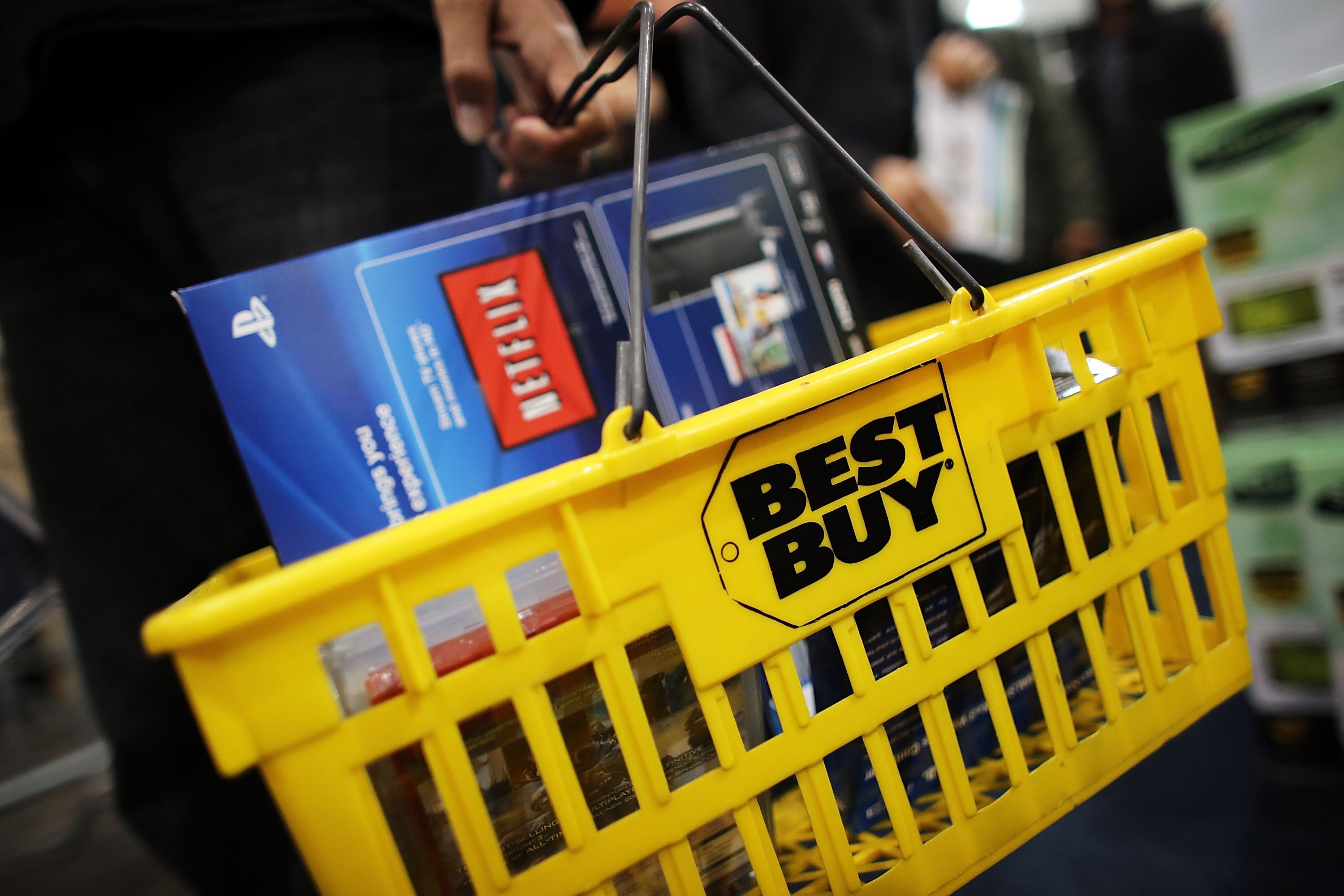
Retailers can offer one or both types of store credit cards. For example, Best Buy offers two credit cards issued by Citi: the My Best Buy® Credit Card and the My Best Buy Visa Card.
The former can only be used for Best Buy purchases, while the latter is a Visa card that can be used outside of Best Buy to earn rewards.
If you’re unsure whether a card is a store or store-cobranded credit card, look out for the Visa or Mastercard logo. This is a clear indication of the card being a cobranded store card.
Store credit cards work differently than regular credit cards. If the card is not a Visa, Mastercard or American Express, it will only work at a specific merchant or its associated retailers.
Also, store credit cards generally offer store-specific perks, favorable terms and payment options, making them popular with consumers who are loyal to a specific store or brand.
STEPHEN ALLEN/TARGET
For example, the Target Circle Mastercard gives cardholders a 5% discount on purchases at Target or Target.com, including in-store Starbucks locations, specialty gift cards, drive-up and same-day delivery. If you are a loyal Target shopper, the savings can quickly add up.
Store credit cards can even provide flexible financing options. This can be a great way to defer interest charges on large purchases such as electronics, living room sets or home remodeling jobs.
The pros and cons of store credit cards can vary depending on the card you select.
PIXDELUXE/GETTY IMAGES
Here are some pros and cons to look out for:
Pros
Special discounts and offers: Store credit cards can give cardholders exclusive deals at specific stores, including discounts on purchases, free shipping or early access to newly released products.
Rewards for store purchases: Store credit cards can offer rewards such as cash back, points or other incentives that can be redeemed for future purchases.
Easier approval: Generally, store credit cards have more relaxed approval criteria than traditional ones.
Cons
High interest rates: Store credit cards often charge higher APRs than regular credit cards.
Low credit limit: Many store credit cards offer lower average credit limits than traditional ones. This could limit you if you want to make one or more large purchases.
Potential to overspend: Generous offers such as deferred interest, discounts or other rewards could tempt you to overspend.
How to choose a store credit card
It seems like almost every major retailer has its own credit card and offers it to customers as soon as they check out at the register or online.
LECHATNOIR/GETTY IMAGES
Here are some things to remember when choosing a store credit card:
Do your research: Do not feel pressured to apply for a store credit card at the checkout counter. Compare the benefits and downsides of different store credit cards and read the fine print.
Differentiate between open- and closed-loop cards: If you’re looking for a store credit card with benefits at a particular retailer, select a closed-loop card. If you want broader rewards on everyday spending, go with the open-loop card.
Understand your credit: Take the time to determine if opening a store credit card is worth it from a credit score standpoint. Consider factors such as Chase’s 5/24 rule and whether the store credit card is worth occupying a space in your wallet.
When used properly, store credit cards can help you save money through discounts or deferred interest plans. These plans let you pay off your purchases within a set time frame without accruing interest.
SPENCER PLATT/GETTY IMAGES
Several years ago, I opened a My Best Buy Visa Card to make a large purchase for a home entertainment system. At the time, the closed-loop card offered 24 months of deferred interest, which made it worthwhile.
Whether your store credit card is closed- or open-loop will determine how best to maximize it. Both card types are best used at their respective retailers for the best discounts, cash back or payment plans.
MANDEL NGAN/CONTRIBUTOR/GETTY IMAGES
Open-looped cards offer value through the retailer and on everyday purchases. The Costco Anywhere Visa Card offers 5% cash back on gas at Costco and 4% cash back on other eligible gas and electric vehicle charging (on the first $7,000 in combined spend per year, then 1%), 3% on restaurants and eligible travel and 2% on all other purchases from Costco and Costco.com.
You can redeem your cash back as an annual reward certificate for a statement credit or Costco merchandise. If you shop at Costco frequently, the redemption options are a great way to offset future purchases.
Here are some answers to common questions about store credit cards.
OSCAR WONG/GETTY IMAGES
What store credit cards are easy to get?
Based on personal experience and data points from the internet, My Best Buy Visa and the Target Circle Mastercard are easier cards to get for those with mid-tier credit scores.
Yes. Store credit cards require a Social Security number to apply, are issued by banks such as Citi or TD Bank and are reflected on your credit profile.
If you maintain a low credit utilization ratio and make timely payments, it will be reported to the credit bureau and help build your credit.
If you have an open-loop store credit card like the Costco Anywhere Visa, then yes, you can use the card anywhere instead of just with that particular retailer.
THOMAS BARWICK/GETTY IMAGES
However, if you have a closed-loop card, you can only use it in person or online at the associated retailer. The absence of an issuer logo (e.g., Visa, Mastercard, American Express, etc.) indicates that you’re using a closed-loop store credit card.
Store credit cards have value, but you need to choose a card that matches your spending habits. If you’re only going to shop at a store a handful of times, getting a store credit card is probably not worth it.
Before you apply, check your wallet to see if your existing credit cards provide sufficient value.
By commenting, you agree to our Community Guidelines to help create a positive space for conversation. The responses below are not provided or commissioned by the bank advertiser, our partners, or The Points Guy (“TPG”). They have not been reviewed, approved, or otherwise endorsed by any of these parties. All responses are submitted by individual contributors, and neither the bank advertiser, our partners, nor TPG are responsible for ensuring that all posts and/or questions are answered.