Shocker: Math proves boarding planes is actually really efficient

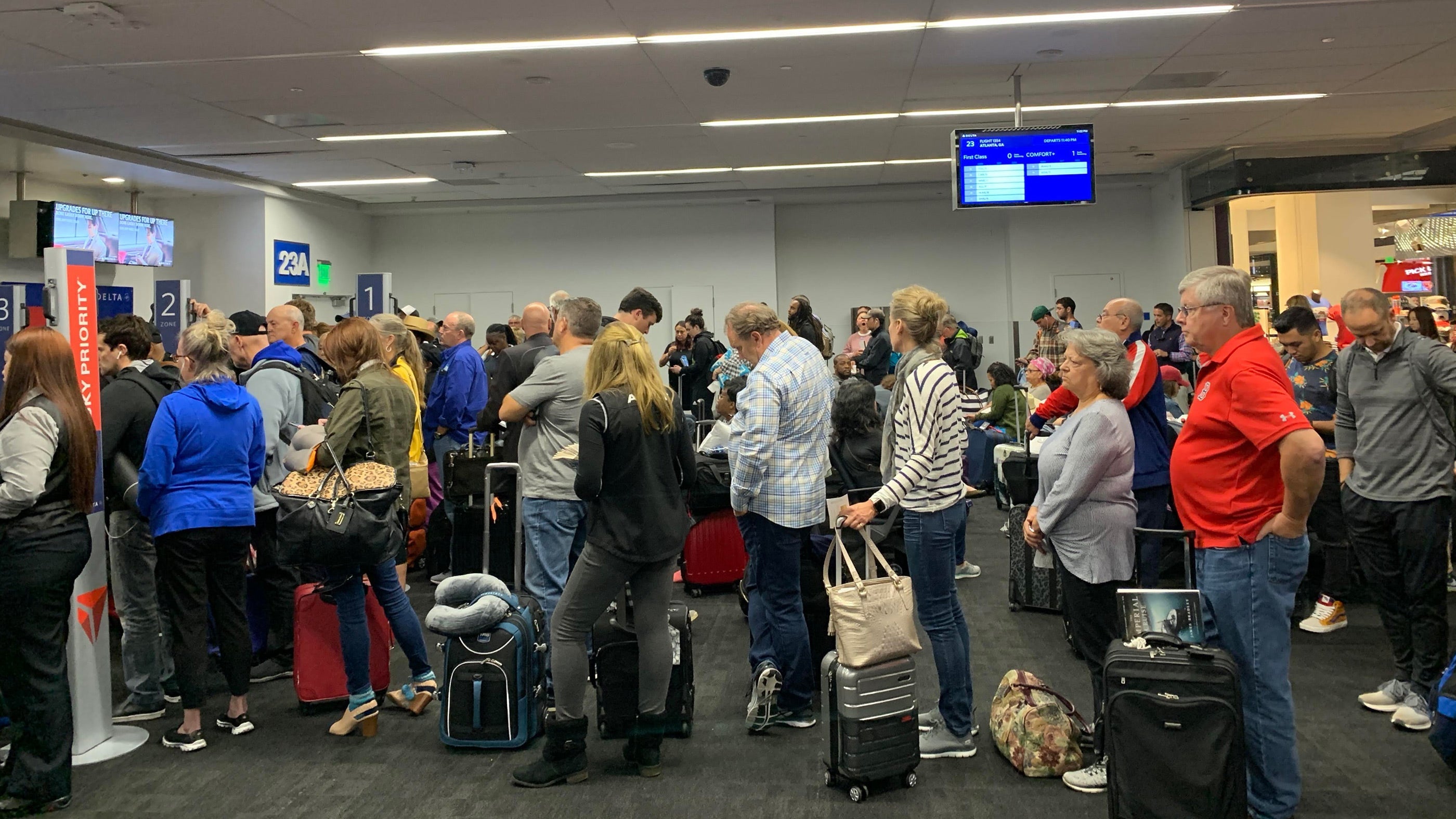
Somehow, boarding an airplane always seems like it takes forever — it's a lot of hurry up and wait.
But, according to a new study published by the American Physical Society last month, many airlines are getting at least one thing right about the boarding process.
For more TPG news delivered each morning to your inbox, sign up for our daily newsletter.
It turns out the preboarding segment for passengers with children and travelers who require extra assistance is more than just a nice courtesy. It can speed up the entire boarding process by as much as 28%.
"It's not only humanitarian, it's also the correct thing to do if you're utilitarian," said Eitan Bachmat, an associate professor of computer science at Ben-Gurion University.
Bachmat worked on the study with Sveinung Erland and Vidar Frette of Western Norway University of Applied Sciences; Jevgenijs Kaupužs of Riga Technical University; and Rami Pugatch, also from Ben-Gurion University.
The team studied airplane boarding procedures using a mathematical model that was first introduced to describe Einstein's theory of relativity.
"You can either model the universe — that's what this other dude did — or you can model airplane boarding, and that's pretty much it," Bachmat said.
He said until about five years ago, he and his fellow researchers concentrated on the efficiency of other airplane boarding methods, such as back-to-front versus front-to-back, or by zone. But then, Bachmat said, he stumbled across a magazine article that described how some airlines were trying to speed up the process by letting passengers with no carry-on baggage onto the plane first.

"The idea of the article would be we should go with fast passengers first, because more people enter the plane more quickly," he said. "We never tried that, separating into groups with different speeds."
Counterintuitively though, Bachmat and his fellow researchers found that boarding is more efficient when slow passengers get onto the plane first.
"Many calculations later, it turned out that, under any circumstances — and when I say any circumstances, it doesn't matter how much the fast group is faster than the slow group or what the airplane configuration is," he said. "Somehow, boarding slow passengers first is a little bit faster than boarding fast people first."
Related: The best starter travel credit cards
Letting the slower passengers board first, according to Bachmat, means there's ore opportunity for the fast people to essentially catch up before the boarding door closes, and that speeds things along for everyone.
Airlines are always looking for more efficient ways to get people on their planes, because the less time an aircraft spends on the ground, the more profitable it can be. A 2008 report from Boeing showed that saving just 10 minutes on turn time on 2,000 trips per year could mean over 300 more hours that could be available for additional flights
"This whole airplane business eventually boils down to a tug of war between two things: the speed of airplane boarding and how much you're willing to annoy your passengers," Bachmat said.
It turns out, random boarding remains generally the most efficient process, but that leaves elites and premium cabin travelers to scrum with those in cattle class, and is more or less unpopular with everybody.
Other methods for more efficient boarding include the one proposed by Jason Steffen, an astrophysicist at Northwestern University, who suggested parallel versus serial boarding: a system in which all window seat customers board first, followed by middle seat passengers and finally those in aisle seats. In 2012, Steffen told TPG his method was faster by a factor of two compared to boarding by zones, and was also faster than the random first-come, first-served method used by Southwest Airlines.
Steffen's idea hasn't found much traction, and has been criticized as impractical in most real-world applications. His method could mean that groups or families traveling together with seats in the same row would have to board separately.
TPG featured card

at Capital One's secure site
Terms & restrictions apply. See rates & fees.
| 5X miles | Earn 5X miles on hotels, vacation rentals and rental cars booked through Capital One Travel |
| 2X miles | Earn unlimited 2X miles on every purchase, every day |
Pros
- Stellar welcome offer of 75,000 miles after spending $4,000 on purchases in the first three months from account opening. Plus, a $250 Capital One Travel credit to use in your first cardholder year upon account opening.
- You'll earn 2 miles per dollar on every purchase, which means you won't have to worry about memorizing bonus categories
- Rewards are versatile and can be redeemed for a statement credit or transferred to Capital One’s transfer partners
Cons
- Highest bonus-earning categories only on travel booked via Capital One Travel
- LIMITED-TIME OFFER: Enjoy $250 to use on Capital One Travel in your first cardholder year, plus earn 75,000 bonus miles once you spend $4,000 on purchases within the first 3 months from account opening - that’s equal to $1,000 in travel
- Earn unlimited 2X miles on every purchase, every day
- Earn 5X miles on hotels, vacation rentals and rental cars booked through Capital One Travel
- Miles won't expire for the life of the account and there's no limit to how many you can earn
- Receive up to a $120 credit for Global Entry or TSA PreCheck®
- Use your miles to get reimbursed for any travel purchase—or redeem by booking a trip through Capital One Travel
- Enjoy a $50 experience credit and other premium benefits with every hotel and vacation rental booked from the Lifestyle Collection
- Transfer your miles to your choice of 15+ travel loyalty programs
- Top rated mobile app