The Points Guy believes that credit cards can transform lives, helping you leverage everyday spending for cash back or travel experiences that might otherwise be out of reach. That's why we publish a variety of editorial content and card comparisons: to help you find a great card to turn your goals into reality.
Our site may earn compensation when a customer clicks on a link, when an application is approved, or when an account is opened with our partners, and this may impact how or where these products appear. While we don't cover all available credit cards, our editorial team creates and maintains all of the analysis of these cards, and our content is not influenced nor subject to review by any credit card company, bank or partner prior to (or after) publication. Please view our advertising policy and product review methodology for more information.
Advertiser disclosure
The Points Guy believes that credit cards can transform lives, helping you leverage everyday spending for cash back or travel experiences that might otherwise be out of reach. That's why we publish a variety of editorial content and card comparisons: to help you find a great card to turn your goals into reality.
Our site may earn compensation when a customer clicks on a link, when an application is approved, or when an account is opened with our partners, and this may impact how or where these products appear. While we don't cover all available credit cards, our editorial team creates and maintains all of the analysis of these cards, and our content is not influenced nor subject to review by any credit card company, bank or partner prior to (or after) publication. Please view our advertising policy and product review methodology for more information.
Guides
Global Entry vs. TSA PreCheck: Which is more beneficial?
Clint Henderson is a managing editor at TPG who has worked in the journalism industry for more than 25 years. He is obsessed with travel and has used points and miles to explore the world.
also contributed to this story
July 13, 2025 • 9 min read
The cards we feature here are from partners who compensate us when you are approved through our site, and this may impact how or where these products appear. We don't cover all available credit cards, but our analysis, reviews, and opinions are entirely from our editorial team. Terms apply to the offers listed on this page. Please view our advertising policy and product review methodology for more information.
Editorial note: This post has been updated with new information.
Editorial disclaimer: Opinions expressed here are the author's alone, not those of any bank, credit card issuer, airline or hotel chain, and have not been reviewed, approved or otherwise endorsed by any of these entities.
Comments
By commenting, you agree to our Community Guidelines to help create a positive space for conversation. The responses below are not provided or commissioned by the bank advertiser, our partners, or The Points Guy (“TPG”). They have not been reviewed, approved, or otherwise endorsed by any of these parties. All responses are submitted by individual contributors, and neither the bank advertiser, our partners, nor TPG are responsible for ensuring that all posts and/or questions are answered.
Related stories
Quick summary
TSA PreCheck and Global Entry are expedited screening programs for travelers at U.S. airports, with Global Entry also offering faster reentry to the U.S. from abroad.
TSA PreCheck allows eligible travelers to use dedicated security lanes and keep certain items in their bags and on their person during screening.
Global Entry includes all TSA PreCheck benefits and provides access to automated kiosks for customs processing at select airports.
Both programs require an application, background check and in-person interview, with Global Entry generally more useful for frequent international travelers.
What to consider
TSA PreCheck is available at over 200 U.S. airports but only with participating airlines, and access is not always guaranteed even for enrolled members.
Global Entry applicants may face appointment backlogs but can use Enrollment on Arrival after international trips; children need their own membership to use Global Entry lanes.
Many travel rewards cards offer application fee credits for these programs, potentially offsetting the cost.
What you'll miss from the article
A detailed comparison of program benefits, eligibility, enrollment steps and tips for maximizing application fee credits.
Generated by AI with support from our editorial team.
When navigating U.S. airport security, there’s no better way (in our humble opinion) to expedite your trip than by being both a Clear and TSA PreCheck user.
A third program, Global Entry, completes the trifecta for speeding your way through airport lines.
You might ask yourself whether it's necessary to have TSA PreCheck and Global Entry, let alone all three. We are here to tell you that they are worth the investment — but let’s take a closer look at these programs so you can decide which is best for you.
What is TSA PreCheck?
JOE RAEDLE/GETTY IMAGES
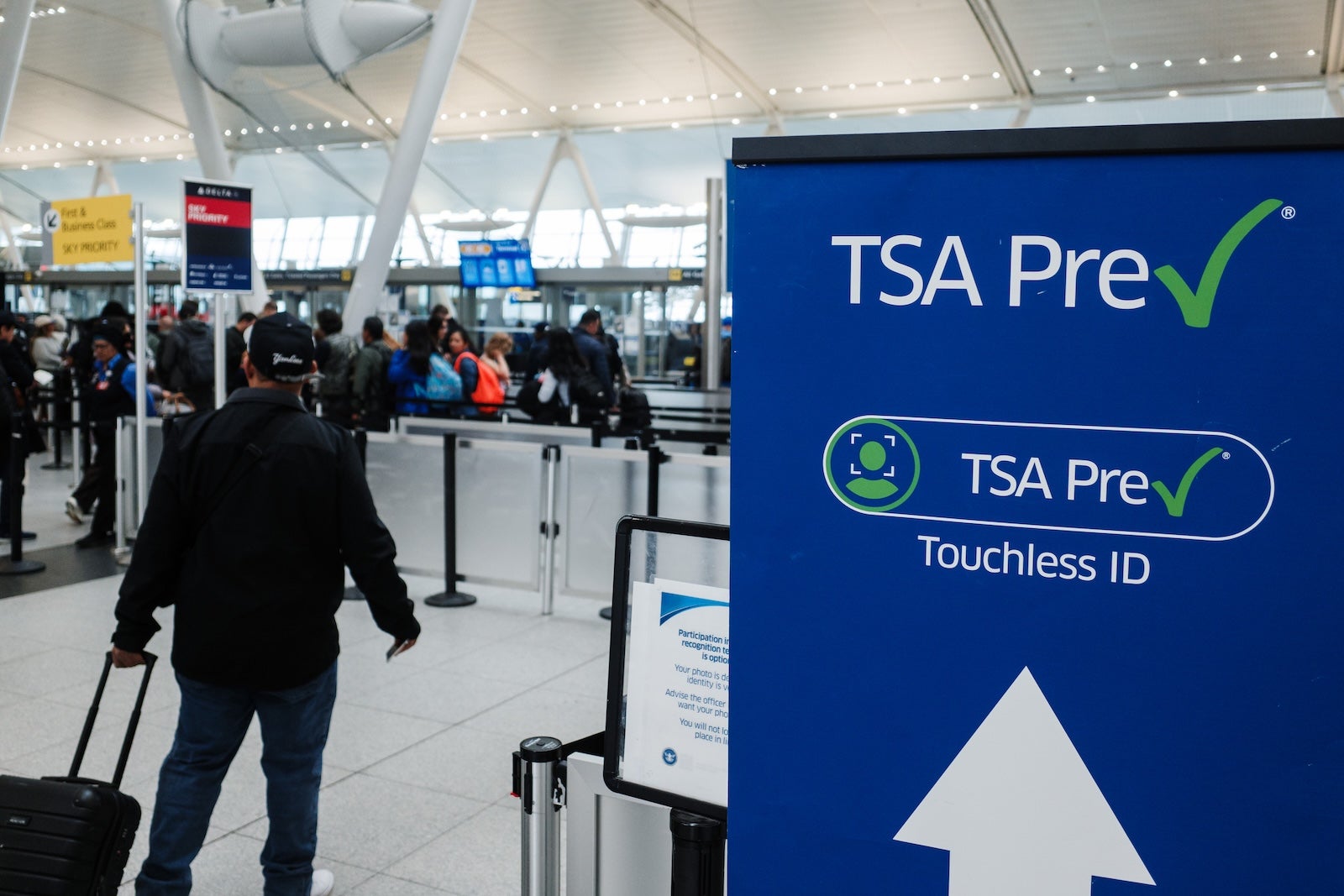
TSA PreCheck is an expedited security program run by the U.S. Transportation Security Administration, allowing preapproved, low-risk travelers to pass through a dedicated TSA PreCheck security line without taking off their belt and light jacket or removing their laptop and liquids from their bag. TSA PreCheck users are also usually screened with a traditional metal detector.
Although TSA PreCheck screening is separate from non-TSA PreCheck screening, sometimes a dedicated TSA PreCheck screening line isn’t available. In this case, you’ll need to use the standard TSA lane. However, even when using the regular security lane, you won’t need to remove the aforementioned items.
To enroll in TSA PreCheck, you must create a Trusted Traveler account and complete the application online. Once your application is approved, you’ll be required to schedule an in-person interview at one of some 400 enrollment centers. The interview should take about 10 minutes and includes a background check and fingerprinting.
After your interview, you should be approved to use TSA PreCheck within a few days (though some applications can take up to 30 days to process). Upon approval, you’ll receive a Known Traveler Number, which you must add during the booking process each time you make an airline reservation. If you forget, you can add it anytime before you check in for your flight. Add your KTN to your frequent flyer programs for added ease.
Though unlikely, it is possible that you still won’t be able to access TSA PreCheck even as a registered user with a KTN.
“TSA uses unpredictable security measures, both seen and unseen, throughout the airport,” per the TSA. “All travelers will be screened, and no individual is guaranteed expedited screening.”
U.S. citizens, U.S. nationals and lawful permanent residents over age 12 are eligible for TSA PreCheck. Travelers 12 and younger may use the TSA PreCheck lane when traveling with a parent or guardian with a TSA PreCheck indicator on their boarding pass.
What is Global Entry?
JEFFREY GREENBERG/UNIVERSAL IMAGES/GETTY IMAGES
Global Entry is a U.S. Customs and Border Protection program facilitating expedited arrival into the U.S. for preapproved, low-risk travelers via automated kiosks at more than 75 airports across the U.S. and select preclearance locations abroad.
A Global Entry membership includes a TSA PreCheck membership, so TPG recommends going through the extra steps and costs.
When entering the U.S. at participating airports, Global Entry members don’t need to fill out paperwork or wait in processing lines. Instead, they can approach a Global Entry kiosk.
At some kiosks, you'll need to present your machine-readable passport or U.S. permanent resident card, place your fingers on the scanner for fingerprint verification, and complete a customs declaration. You'll get a printout to share with customs.
Facial recognition makes the process even easier at some airports, eliminating the need to show a printed receipt to an officer before exiting the baggage claim area. The spread of biometric technology is making the entry process even easier at many U.S. airports, and we expect the tech to get even better in the coming years.
Although unlikely, some members may be selected for further examination when entering customs (i.e., having Global Entry doesn’t mean you’ll always be able to bypass an interview when returning to the U.S.).
How to enroll in Global Entry
To apply for Global Entry, complete the online application via the Trusted Traveler Programs website. Like TSA PreCheck, a Global Entry membership is valid for five years.
If CBP conditionally approves your application, first attempt to schedule an interview at a Global Entry enrollment center, but note this may be difficult given the ongoing application backlog.
If you are unable to schedule an appointment, your best bet is to interview upon arrival in the U.S. after an international trip via a process known as Enrollment on Arrival. This service lets you complete the interview during the customs process upon entering the U.S. from abroad.
During this service, you’ll undergo a background check, interview and fingerprinting. One TPG staffer's interview for Global Entry took about five minutes.
U.S. citizens, U.S. lawful permanent residents, Korean Smart Entry Service members and citizens of Germany, Panama and Mexico may also apply for Global Entry. Additionally, Canadian citizens and residents are eligible for Global Entry benefits through membership in the Nexus program.
You may not be eligible for participation in Global Entry for various reasons, including conviction of any criminal offense, pending criminal charges, outstanding warrants or inability to satisfy CBP of your low-risk status.
To apply for Global Entry, you must submit a nonrefundable $120 membership fee. Upon approval for Global Entry, you’ll have access to both Global Entry and TSA PreCheck for five years.
There are two enrollment providers for TSA PreCheck — applying through Idemia costs $76.75, and applying through Telos costs $85. It costs $70 if you renew online through Telos. It costs $58.75 to renew online via Idemia.
Many credit cards offer cardholders up to $120 in statement credit reimbursement for the application fees associated with TSA PreCheck or Global Entry, including a variety of low-annual-fee and premium cards, including:
Most cards that offer an application fee credit also allow you to cover a Global Entry membership for someone else. So, if you have an unused Global Entry credit on your Amex Platinum, you could charge another person's Global Entry fee to your card and get reimbursed for the purchase.
This credit is typically available every four to five years, but check your card’s terms for the exact frequency. See here for a complete list of credit cards that offer a discount for TSA PreCheck.
The Amex Platinum even provides a Global Entry or TSA PreCheck application fee credit for each person you add as an authorized user. However, Amex will only reimburse you if you charge one fee to each card.
Should I apply for TSA PreCheck or Global Entry?
M STUDIO IMAGES/GETTY IMAGES
Global Entry is most useful for frequent international travelers. Since you can enroll on arrival upon conditional approval, it may be more convenient than visiting a TSA PreCheck enrollment center.
Global Entry costs more, but it includes all the benefits of TSA PreCheck and expedited clearance when returning to the U.S. Plus, if you have a credit card that reimburses Global Entry or TSA PreCheck application fees, you won’t even need to worry about the higher cost.
Bottom line
CLINT HENDERSON/THE POINTS GUY
If you have one of the above credit cards that will reimburse your TSA PreCheck or Global Entry fee and are eligible for one or both programs, there’s no reason not to apply. If you are unsure which program is better, remember that Global Entry also includes TSA PreCheck.
For rates and fees of the Amex Platinum, please click here For rates and fees of the Amex Business Platinum, please click here
Comments
By commenting, you agree to our Community Guidelines to help create a positive space for conversation. The responses below are not provided or commissioned by the bank advertiser, our partners, or The Points Guy (“TPG”). They have not been reviewed, approved, or otherwise endorsed by any of these parties. All responses are submitted by individual contributors, and neither the bank advertiser, our partners, nor TPG are responsible for ensuring that all posts and/or questions are answered.