What you should know about 'travel bubbles' -- and why they're so important to the industry

When you think of a "bubble," particularly during the COVID-19 pandemic, the NBA's use of so-called bubbles to sequester players, coaches and members of the media in Orlando might come to mind. People in the bubble were able to move about freely, albeit with some restrictions, such as daily testing and, of course, not being allowed to leave. It functioned as a veritable city: Meals were catered by on-hand chefs and the bubble even had its own barbershops.
Travel is much more widespread than even the largest basketball organization, of course, but several countries are considering adopting a similar model to restart the industry.
Here's what you need to know about travel bubbles around the world.
What is a travel bubble?

You might be hearing much more about travel bubbles (also called travel corridors, green zones, air bridges or green lanes) in the weeks and months to come as travel begins to reopen in destinations around the world.
Basically, travel bubbles are agreements between countries believed to have controlled the spread of COVID-19. They allow travel — including nonessential trips — across otherwise closed borders, often without lengthy quarantines or other significant restrictions such as mandatory testing.
Travel bubbles to watch
United States-United Kingdom
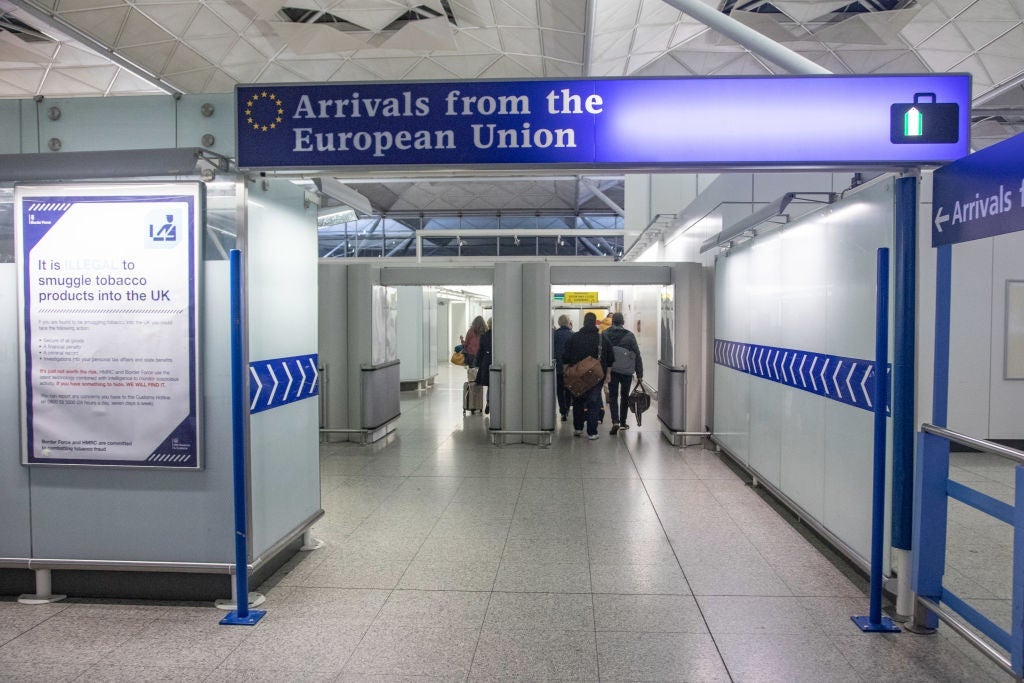
Right now, non-U.S. citizens from China, Iran, the European Schengen Area, the United Kingdom, Ireland, Brazil, South Africa and India are banned from entering the United States.
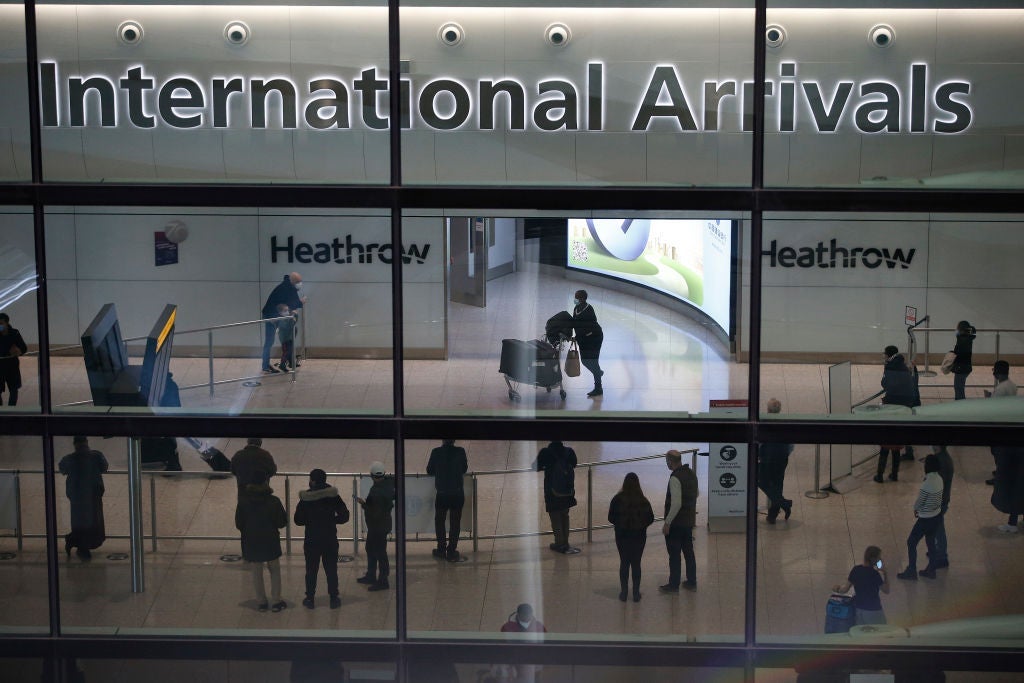
Of those countries, none is perhaps more critical to the travel industry right now than the U.K.
The travel industry has clamored for a travel corridor between the U.S. and U.K., and even made its case during the G7 meeting, mounting pressure on the respective governments to open a long-awaited corridor between the two countries. CEOs of each of the airlines that offer nonstop service between the U.S. and the U.K. as well as travel organizations joined forces in support of the corridor.
Why do travel providers so badly want a corridor between the U.S. and the U.K.? The answer is mainly financial.

According to Skift, the airlines said that reopening the corridor would boost the U.S. economy by $4 billion this summer alone. Domestic air travel has picked up recently, with the Transportation Security Administration (TSA) screening more than 2 million flyers for the first time since March of 2020 -- but business and long-haul international travel remain depressed.
For two economies still reeling from the effects of the pandemic, it seems as though U.S. and U.K. leaders listened. President Joe Biden and Prime Minister Boris Johnson this week quickly agreed to work toward reopening transatlantic travel.
"We're pleased to announce a joint [taskforce] to help facilitate the reopening of transatlantic travel," the U.K.'s secretary of state for transport, Grant Shapps, said in a tweet.
The travel industry reacted positively to the news.
"The travel industry enthusiastically applauds the Biden administration and U.K. government for being responsive to the calls to advance a bilateral travel corridor, and hopes to see it implemented by early July," the U.S. Travel Association, an organization that represents the travel industry, said earlier this month.
Even with travel officials on both sides of the Atlantic pushing for a travel corridor between the two nations, however, there are still hurdles. It's clear that both countries are still in the early stages of discussions, with Britain's foreign secretary telling a news station that a travel corridor was "not something we'll be announcing imminently."
Both nations also have several restrictions -- or outright bans -- on travelers from the other country.
Most U.S. travelers are still required to quarantine for 10 days upon landing in the U.K. And even with nearly half of its population fully vaccinated, the Delta variant, which accounts for a significant portion of new COVID-19 cases in the U.K. has posed concerns. England also delayed lifting lockdown restrictions by an additional month due to the variant.
The U.S. Centers for Disease Control and Prevention (CDC) also still lists the U.K. as a Level 3 "high risk" nation, even following last week's advisory update. The U.S. State Department on June 16 listed the United Kingdom at its second-highest designation, "Level 3: Reconsider Travel," due to COVID-19. And while 55% of U.S. adults have been fully vaccinated against the coronavirus, experts have said widening gaps between rural and urban vaccination rates could extend the pandemic.
U.S.-European Union
Not to be confused with the U.S.-U.K. corridor in talks, as the U.K. is no longer a European Union member, the EU added the United States to its so-called travel "white list" this week. The list will allow vaccinated visitors to skip quarantine requirements and move freely between the 27 EU nations.
The EU agreed to add the U.S. and seven other countries or territories — Albania, Hong Kong, Lebanon, Macao, North Macedonia, Serbia and Taiwan — to the list of nations from which travel is allowed. It remains unclear if the addition of the U.S. to the list will take effect immediately, though the approval is a promising sign for Americans.
But, as noted in the section above, for a full corridor to be possible, the EU is still looking for the U.S. to relax its travel restrictions on EU countries before the transatlantic corridor fully reopens.
Hong Kong-Singapore
Singapore and Hong Kong serve as significant financial and travel hubs in Asia, so a corridor between the two destinations seemed inevitable. But the launch has been postponed several times.
The travel bubble between the two cities was initially set to launch in November of 2020. However, it was delayed because of a spike in cases in Hong Kong. It was then pushed to May 26, though that has indefinitely been delayed again. According to the South China Morning Post, the travel bubble was put on hold for a second time in mid-May amid a rise in untraceable cases in Singapore. Now, the two countries will review the travel bubble again in July.
St. Lucia-Caribbean
St. Lucia has a travel bubble with 11 Caribbean countries. Travelers moving within the bubble can skip quarantine, but they must still present a negative COVID-19 PCR test taken no more than five days before arriving in St. Lucia.
The U.S. is not included in the bubble, and international visitors from outside the St. Lucia travel bubble will be required to remain at their COVID-19-certified property and only participate in certified tours and activities for the duration of their stay.
Australia-New Zealand
Australia and New Zealand launched their long-awaited travel bubble for quarantine-free journeys between the two countries in April.
People looking to travel in the bubble must have spent the previous 14 days in Australia or New Zealand only. However, travelers who have been to Victoria, New South Wales or Queensland cannot travel to New Zealand from anywhere in Australia until at least 14 days after being in those destinations. This pause is expected to last through June 22.
And don't expect the U.S. to be added to the bubble. It may still be some time before New Zealand and Australia open their borders to other tourists. New Zealand has indicated that its borders may remain shut for 2021, while Australia says its borders will be closed until 2022.
Have there been travel bubbles before?

Still reeling from the effects of the coronavirus pandemic worldwide, the travel industry has experimented with travel bubbles on a much smaller scale.
These bubbles still aim to accomplish the same task: controlling who is or is not allowed into the bubble.
For instance, multiple U.S.-based airlines now offer COVID-19-tested flights. Delta Air Lines, for example, announced last month that Italy would reopen to any Americans who travel on specific flights. American Airlines and United Airlines also made similar announcements.
And Hawaii earlier this year launched an "enhanced movement quarantine," or "resort bubble" program. Guests participating in the resort bubble program can move about the property and access pools, dining and beaches during the 72-hour quarantine period. During the three days of mandatory quarantine, however, guests can't leave the resort except for medical care and must have their movements monitored by a bracelet. Travelers who arrive in the country without a negative test can't participate in the program.
Travelers must proceed directly to their resort bubble either by hotel transport or a car service type of ground transportation. No rental cars are allowed until the traveler is released from the bubble program.
Even though travel bubbles have been in the works since last year, they will still clearly play a crucial role in safely restarting travel all over the world — and even facilitating easier trips much closer to home.
TPG featured card
at American Express's secure site
Terms & restrictions apply. See rates & fees.
| 4X | Earn 4X Membership Rewards® points per dollar spent on purchases at restaurants worldwide, on up to $50,000 in purchases per calendar year, then 1X points for the rest of the year. |
| 4X | Earn 4X Membership Rewards® points per dollar spent at US supermarkets, on up to $25,000 in purchases per calendar year, then 1X points for the rest of the year. |
| 5X | Earn 5X Membership Rewards® points on prepaid hotel stays booked through AmexTravel.com or the Amex Travel App™. |
| 3X | Earn 3X Membership Rewards® points on flights booked through AmexTravel.com, the Amex Travel App™, or purchased directly from airlines. |
| 2X | Earn 2X Membership Rewards® points on prepaid car rentals booked through AmexTravel.com or the Amex Travel App™ and cruises booked and paid through AmexTravel.com. |
| 1X | Earn 1X Membership Rewards® point per dollar spent on all other eligible purchases. |
Pros
- Valuable dining and food-related credits
- Flexible rewards with airline and hotel transfer partners
- Multiple travel and purchase protections
- No foreign transaction fees
- Access to Amex Offers for additional savings (enrollment required)
Cons
- Not as useful for those living outside the U.S.
- Some may have trouble using Uber and other dining credits
- You may be eligible for as high as 100,000 Membership Rewards® Points after you spend $8,000 in eligible purchases on your new Card in your first 6 months of Card Membership. Welcome offers vary and you may not be eligible for an offer. Apply to know if you’re approved and find out your exact welcome offer amount – all with no credit score impact. If you’re approved and choose to accept the Card, your score may be impacted.
- Earn 4X Membership Rewards® points per dollar spent on purchases at restaurants worldwide, on up to $50,000 in purchases per calendar year, then 1X points for the rest of the year.
- Earn 4X Membership Rewards® points per dollar spent at US supermarkets, on up to $25,000 in purchases per calendar year, then 1X points for the rest of the year.
- Earn 5X Membership Rewards® points on prepaid hotel stays booked through AmexTravel.com or the Amex Travel App™.
- Earn 3X Membership Rewards® points on flights booked through AmexTravel.com, the Amex Travel App™, or purchased directly from airlines.
- Earn 2X Membership Rewards® points on prepaid car rentals booked through AmexTravel.com or the Amex Travel App™ and cruises booked and paid through AmexTravel.com.
- Earn 1X Membership Rewards® point per dollar spent on all other eligible purchases.
- Pay It® lets you tap in the American Express® App to quickly pay for small purchase amounts throughout the month and still earn rewards the way you usually do. Plan It® gives you the option to split up big purchases into equal monthly payments with a fixed fee. You’ll know upfront exactly how much you’ll pay.
- $120 Dining Credit: Earn up to a total of $10 in statement credits monthly when you pay with the Gold Card at Grubhub (including Seamless), Buffalo Wild Wings, Five Guys, The Cheesecake Factory, and Wonder. This can be an annual savings of up to $120. Enrollment required.
- $100 Resy Credit: Get up to $100 in statement credits each calendar year at over 10,000 qualifying U.S. Resy restaurants after you pay for eligible purchases with the American Express® Gold Card. That’s up to $50 in statement credits semi-annually. Enrollment required.
- $84 Dunkin' Credit: Earn up to $7 in monthly statement credits after you pay with the American Express® Gold Card at U.S. Dunkin’ locations. Enrollment required.
- $120 Uber Cash on Gold: Enjoy up to $120 in Uber Cash annually with your Gold Card. Just add your Card to your Uber account and you'll get $10 in Uber Cash each month to use on orders and rides in the U.S. when you select an Amex Card for your transaction.
- Enjoy complimentary Hertz Five Star® Status benefits like skipping the counter at select locations, adding an additional driver at no additional cost*, and vehicle upgrades**. Benefit enrollment and Hertz Gold+ registration are required. *Additional drivers must meet standard rental qualifications and must be a spouse or domestic partner to qualify as complimentary. Other additional drivers subject to fees. **Benefits are subject to availability and vary by location. Additional Hertz program Terms and Conditions including age restrictions apply.
- Book two nights or more with The Hotel Collection through AmexTravel.com or the Amex Travel App™ and receive a $100* credit towards eligible charges at over 1,400 upscale hotels worldwide. *Eligible charges vary by property.
- Book your travel through the Amex Travel App™ with added peace of mind – backed by American Express® service and support. Only for American Express® Card Members.
- Whenever you need us, we're here. Our Member Services team will ensure you are taken care of. From lost Card replacement to statement questions, we are available to help 24/7.
- No Foreign Transaction Fees.
- Annual Fee is $325.
- Terms Apply.