Why we miss travel so much, according to psychologists


Simran Sethi has rarely stayed in the same place for longer than four months in eight years. She's an author, an educator and a public speaker, yet she says "her identity has been defined by travel."
"I wrote a book that took me to five continents," she told me during a Sunday morning phone call to Mérida, Mexico, where she's been since January. "When I started moving, I thought it was temporary ... But I'd get to the next place and say, 'Where do I see myself?' And I just kept coming back to, 'I see myself everywhere.'"
But now that the novel coronavirus has caused the near shutdown of travel, she says, "I don't know who I am anymore."
For more TPG news delivered each morning to your inbox, sign up for our daily newsletter.
Sethi isn't alone. Frequent flyers and travel professionals have described a range of emotions in response to the shutdown of travel operations all over the world. Some say they feel irritable and unmotivated — others are craving the anticipation and excitement that comes with just knowing there's a trip around the corner. For people whose livelihoods are rooted in travel, they feel understandably anxious, confused and unfulfilled.
"Personally, I feel unmoored, a bit directionless ..." said travel writer Erin Lindholm, "because everything about how travel is going to look in the future is such an unknown right now." Lindholm says she's already feeling nostalgic about how easy it was, just a few months ago, to cross oceans and borders. "I deeply miss that human connection that invariably comes with travel ...."
It's easy to imagine that most people, even those who don't identify as frequent flyers or AvGeeks, are feeling ill at ease. But for people who consider themselves travelers, being on lockdown isn't just frustrating: It can unravel everything you thought you knew about yourself.
Inside a traveler's mind

"To understand why people like to travel, you have to consider the psychological needs that travel meets," said Seth Meyers, Psy.D., a licensed clinical psychologist, television contributor and writer based in Los Angeles. "At [its] root, travel is a psychologically stimulating activity on a physical, visual and social level. Travel offers a break from the monotony of daily routines and often pulls people out of their comfort zone to the point that they often try new or unusual activities they wouldn't be inclined to try from ... their home base."
Michael Brein, Ph.D., a social psychologist and author with a specialty in travel, points to Maslow's pyramid, which illustrates the hierarchy of human needs. Once your basic physiological and safety needs are satisfied, you can begin ascending the pyramid. You fulfill your psychological desire for belonging and love; then develop your self-esteem; and ultimately reach self-actualization, way at the top of the pyramid.

If you're a frequent flyer, you may be satisfying your psychological needs, growing your confidence and achieving self-actualization all through the act of travel.
"[Travel is] so stimulating and memorable," Brein said. "We remember our connections with people more than anything else. [And] it happens so fast and furiously. We get rewarded [with] self-esteem and self-confidence. Travel puts you in a situation where new stimuli and novelty is coming at you so fast, and the more that it engulfs you and you incorporate it [in your life], the more you grow as a person."
Travel becomes not just the way we derive satisfaction, but the lens through which others see us and, ultimately, how we see ourselves.
"For men and women who travel extensively for work," Meyers said, "the travel — or the constant sense of being in motion — becomes a part of their identity."
It's a concept Sethi describes with the language of a frequent flyer.
"The question people ask [me] is, 'Where are you in the world right now?'" she explained. "They know this is who I am. I am the Executive Platinum status, Diamond Medallion status ... [Travel] is a central part of how I see myself and how other people see me ... I'm trying to reconcile how I relate to myself when I'm not out in the world, being fed by the world ... How do I orient myself at all?"
Coping with the loss of travel
While working as a policy executive with the Canadian government, Johanna Read kept experiencing burnout, something the World Health Organization has classified as an occupational syndrome. "Essentially, your life becomes a to-do list," she said.
After her second burnout, Read turned to a psychologist. "She helped me realize that I get bored very easily if I don't feel like I'm learning and growing. So, I create work for myself to keep feeding that insatiable need to learn and be challenged, which eventually leads to being overwhelmed with work and commitments." Then, she turned to travel.
Before the pandemic, Read — who is now a management consultant and freelance travel writer and photographer — says she traveled once or twice a month. "Exploring a new country and culture ... is the best way to satisfy my need to learn and be challenged."
Many frequent travelers, Brein said, are high-energy and seek novelty. He describes serious travelers as people who are "quest-oriented seekers" and "action-oriented participators." During this time of shelter-in-place orders and self-isolation, "we're not getting that sort of satisfaction in our lives that travel offers us," Brein explained. "It's no wonder we're going to feel more pent-up, anxious [and] frustrated."
So, how do you cope with having your wings clipped?
"I have other techniques to keep burnout at bay that I need to rely more on right now," Read said, citing mindfulness exercises, writing and other creative activities, taking walks and enjoying time outside.
Meyers says that looking forward — and preparing for a time when we're not all sheltering in place — can help people manage the loss of travel.
"To reignite a sense of hope and freedom, start designing your first post-quarantine trip today and be ready when health officials determine it's safe to travel again," he said. "Research shows that the anticipation of a vacation brings more satisfaction than the actual vacation itself, so men and women can derive some gratification during quarantine simply by looking forward to their next planned trip."
Brein also says it's a good time to think about what comes next. Maybe you'll lose yourself in a book about someone else's travels, or your own travel photographs. But as long as you're "realistic and cautious," he said, you can begin to ask yourself, "What can I do next?"
There may be no substitute for travel that feels as deeply enriching and satisfying, especially for those of us who use it to maintain excitement, manage anxiety, connect with others and stay challenged and engaged. But this time in lockdown has helped some travelers gain a new perspective.
Finding home
When a work trip came to an abrupt halt, travel writer Olivia Balsinger found herself quarantining alone in a secluded bungalow in Krabi, Thailand. She tells me it's the longest she's been in one place for half a decade. "Without the distraction of where and what my next move will be, my mind [is] churning," Balsinger said. "I question why I never took the time to breathe in the first place, or why I've always believed my life needs to be set in the fast lane."
Now, after 51 days, Balsinger said she began "to realize [her] constant need to schedule travel was to fill a void."
The more time she spent away, the more she felt estranged from her home. "Suddenly, I wasn't going home anymore because I didn't know what home was ... My priorities will shift when we can begin traveling again. I want to build more of a base and feel more grounded."
Balsinger isn't the only traveler who has developed a new interest in the concept of home.
"I am definitely experiencing a shift," said Robin Hutson, a family travel advisor and founder of LuxeRecess.com. "My internet escapism has shifted from travel to real estate websites, fantasizing [about] where I want to hunker down."
Brein says travel can be "a form of escapism," and an opportunity to shift gears or to gain perspective. But that for all of us — whether we're frequent flyers, self-proclaimed road warriors, nomads or simply people who love to travel — it's important to have a home base, or at least carve out the time and space to apply our experiences and anticipate what's next. "I think it's good to take this time, which is such a rare opportunity, to contemplate all of [your experiences] and see how that may contribute to your own sense of self."
Whether you've found yourself home for the first time in years, or have simply discovered a new understanding of what home is or could be to you, Brein says now is the moment to rest, recuperate and regenerate. Settle down, if only for this strange, unexpected moment and, in anticipation of the new travel experiences ahead, decide where and how you want to go forward.
You might even discover an entirely new understanding of what home is to you. Perhaps home is the people you travel with. Perhaps it's the city you return to again and again to recharge. And just maybe, it's a bungalow overlooking the Andaman Sea that you can call your own.
"Who knew," Balsinger says over email, "that a sleepy beach town in Thailand in the midst of the global pandemic would be the reason this perpetual nomad, normally operating at the speed of light, would want to permanently settle down?"
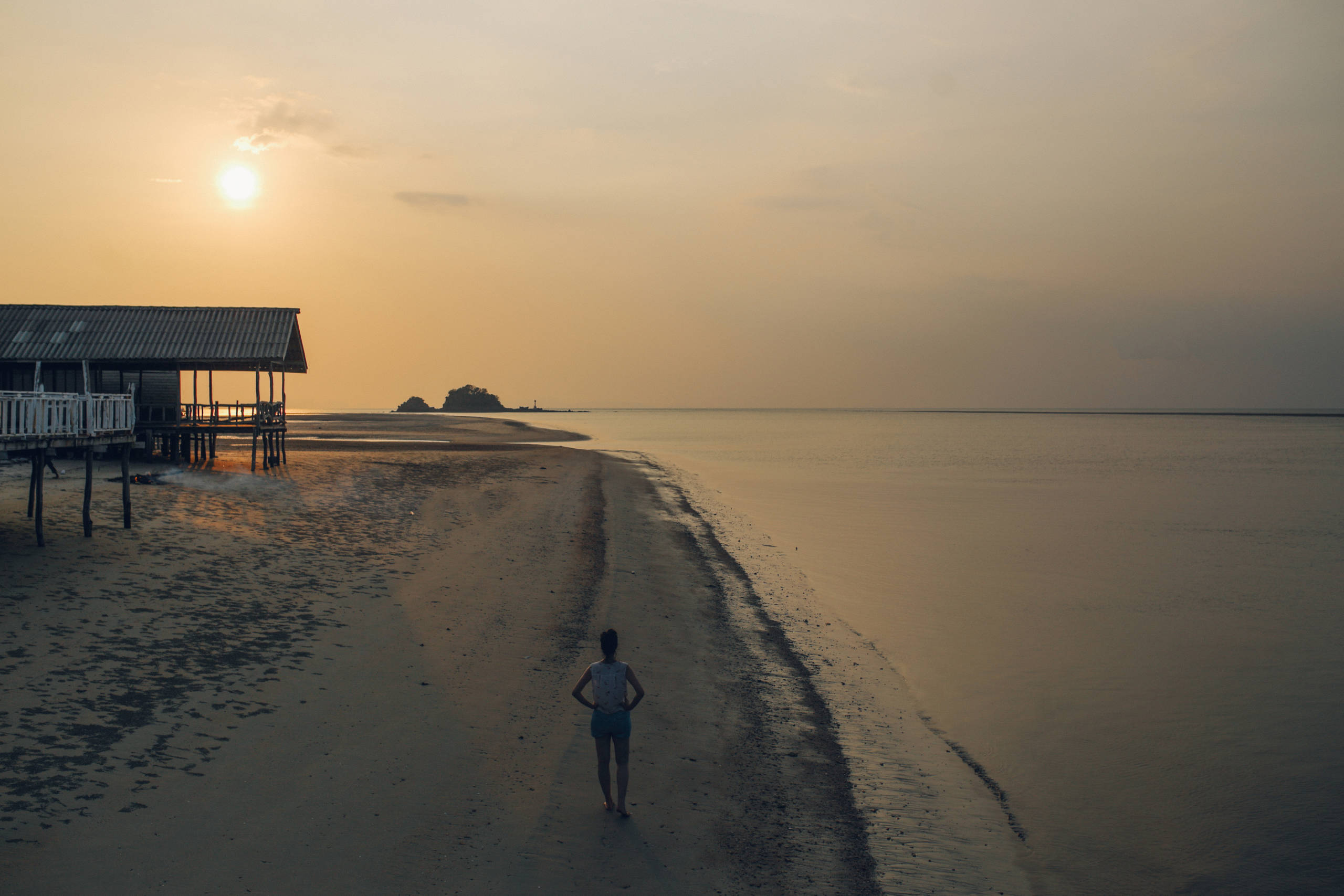
Sethi says she misses airports. "I miss looking at the board and figuring out where I need to be ... I'm fumbling in the pandemic, but drop me in any airport anywhere in the world and I will figure that out."
In airport terminals and new, unfamiliar cities, is where Sethi feels most at home. "These are the skills I've acquired — they're what I miss. I just can't wait to get out there and travel again."
Feature photo by martin-dm / Getty Images.
TPG featured card

at American Express's secure site
Terms & restrictions apply. See rates & fees.
| 3X | Earn 3X Miles on Delta purchases. |
| 1X | Earn 1X Miles on all other eligible purchases. |
Pros
- Delta SkyClub access when flying Delta
- Annual companion ticket for travel on Delta (upon renewal)
- Ability to earn MQDs through spending
- Various statement credits for eligible purchases
Cons
- Steep annual fee of $650
- Other Delta cobranded cards offer superior earning categories
- Earn 100,000 Bonus Miles after you spend $6,000 or more in purchases with your new Card within the first 6 months of Card Membership and an additional 25,000 bonus miles after you make an additional $3,000 in purchases on the Card within your first 6 months, starting from the date that your account is opened. Offer Ends 04/01/2026.
- Delta SkyMiles® Reserve American Express Card Members receive 15 Visits per Medallion® Year to the Delta Sky Club® when flying Delta and can unlock an unlimited number of Visits after spending $75,000 in purchases on your Card in a calendar year. Plus, you’ll receive four One-Time Guest Passes each Medallion Year so you can share the experience with family and friends when traveling Delta together.
- Enjoy complimentary access to The Centurion® Lounge in the U.S. and select international locations (as set forth on the Centurion Lounge Website), Sidecar by The Centurion® Lounge in the U.S. (see the Centurion Lounge Website for more information on Sidecar by The Centurion® Lounge availability), and Escape Lounges when flying on a Delta flight booked with the Delta SkyMiles® Reserve American Express Card. § To access Sidecar by The Centurion® Lounge, Card Members must arrive within 90 minutes of their departing flight (including layovers). To access The Centurion® Lounge, Card Members must arrive within 3 hours of their departing flight. Effective July 8, 2026, during a layover, Card Members must arrive within 5 hours of the connecting flight.
- Receive $2,500 Medallion® Qualification Dollars with MQD Headstart each Medallion Qualification Year and earn $1 MQD for each $10 in purchases on your Delta SkyMiles® Reserve American Express Card with MQD Boost to get closer to Status next Medallion Year.
- Enjoy a Companion Certificate on a Delta First, Delta Comfort, or Delta Main round-trip flight to select destinations each year after renewal of your Card. The Companion Certificate requires payment of government-imposed taxes and fees of between $22 and $250 (for itineraries with up to four flight segments). Baggage charges and other restrictions apply. Delta Basic experiences are not eligible for this benefit.
- $240 Resy Credit: When you use your Delta SkyMiles® Reserve American Express Card for eligible purchases with U.S. Resy restaurants, you can earn up to $20 each month in statement credits. Enrollment required.
- $120 Rideshare Credit: Earn up to $10 back in statement credits each month after you use your Delta SkyMiles® Reserve American Express Card to pay for U.S. rideshare purchases with select providers. Enrollment required.
- Delta SkyMiles® Reserve American Express Card Members get 15% off when using miles to book Award Travel on Delta flights through delta.com and the Fly Delta app. Discount not applicable to partner-operated flights or to taxes and fees.
- With your Delta SkyMiles® Reserve American Express Card, receive upgrade priority over others with the same Medallion tier, product and fare experience purchased, and Million Miler milestone when you fly with Delta.
- Earn 3X Miles on Delta purchases and earn 1X Miles on all other eligible purchases.
- No Foreign Transaction Fees. Enjoy international travel without additional fees on purchases made abroad.
- $650 Annual Fee.
- Apply with confidence. Know if you're approved for a Card with no impact to your credit score. If you're approved and you choose to accept this Card, your credit score may be impacted.
- Terms Apply.
- See Rates & Fees