Don't make these 5 mistakes when buying your first RV


A few weeks ago,I bought an RV in an attempt to take back travel for my family.
As a complete beginner, I had plenty of studying to do and questions to ask when I set out to buy my first recreational vehicle. Thanks to RV owner groups I found on Facebook and a plethora of great videos on YouTube, self-study is easily achievable and, with the right amount of time dedicated to research, you can quickly get yourself up to speed.
Related: Maximizing points and miles on summer road trips
I spent approximately six weeks studying, and many hours touring RVs for sale, both from private sellers and dealers. Many points and miles enthusiasts would love the RV world because, though complex, there are different approaches and ways to save money and find deals. But there are a lot of things I wish I'd known or focused on from the start.
These are the five most important things I learned when buying my first RV — but it's by no means an exhaustive list. Keep these tips in mind, and you'll avoid making these common mistakes if you're a first-time RV buyer.
For more TPG news delivered each morning to your inbox, sign up for our daily newsletter.
The RV market is hotter than ever
Thousands of Americans are stepping into the RV market for the first time. Because the pandemic has severely restricted travel, many people have discovered the appeal of being able to hit the road in their own self-contained residence.
But if you want a deal, now is not the time to buy. It's a seller's market, and it's obvious the moment you go to an RV dealer and see ... not much. Dealers I spoke with said in some cases, they have 10% of the inventory they'd typically have sitting on their lots.
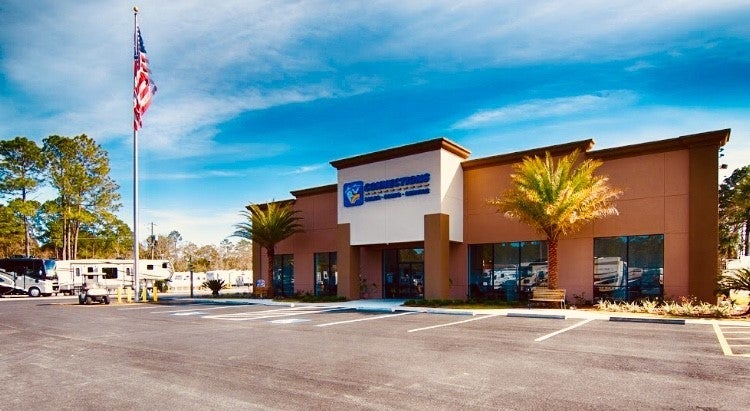
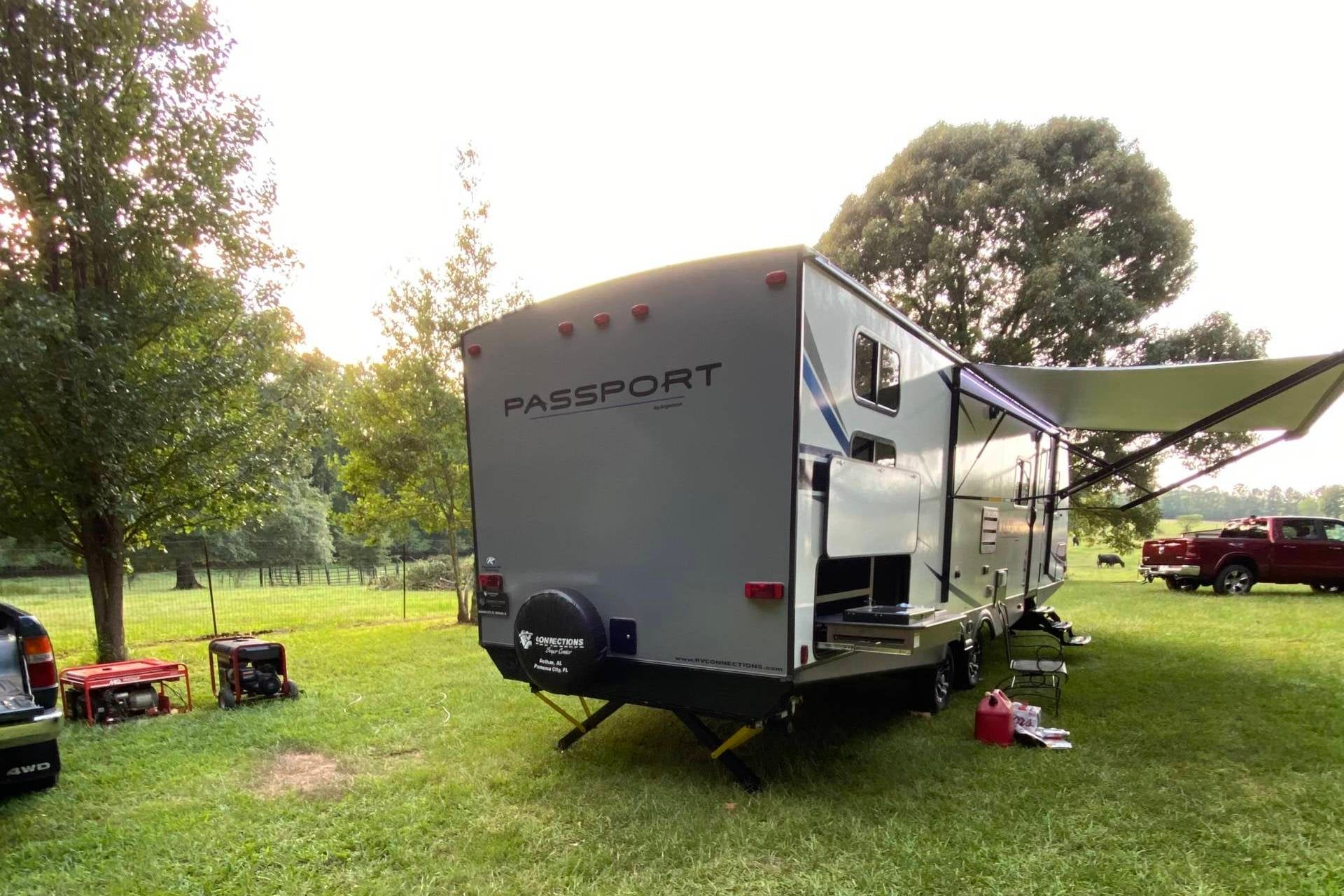
The dealer I ultimately purchased from, RV Connections in Panama City, Florida, told me they usually have 300 travel trailers, fifth wheels and motor homes on the lot — but lately, they can't keep more than 50 in stock.

On top of demand, most U.S. RV manufacturers closed their factories in March and April, after COVID-19 was declared a pandemic. This has put further strain on the supply of new RVs. If you'd rather not put down a deposit and wait two months for the exact model you want (which is a possibility), you'll have to choose from the existing inventory.
Right now, typical RV selling practices are out the window. New RVs can generally be negotiated for up to 40% off the manufacturer's suggested retail price (MSRP), but you'll find right now there's far less wiggle room. Private sellers on sites like RV Trader have used travel trailers and fifth wheels listed for the price of a new vehicle.
I dealt with a number of dealers while trying to find the best price for the travel trailer I wanted. And when it came to negotiations, it was clear the dealer didn't have to offer much because if I declined the inflated price, they'd simply sell it to someone else.
Units are selling so fast, dealers can't keep their website inventory accurate. I called twice to confirm the make and model I wanted was still on the lot, and by the time I arrived later that day, the RV had been sold.
If you find something you like and want it now, you can typically give the dealer a $500 refundable deposit to hold it for you.
Related: 6 things you should know before you rent your first RV
Tow math is hard
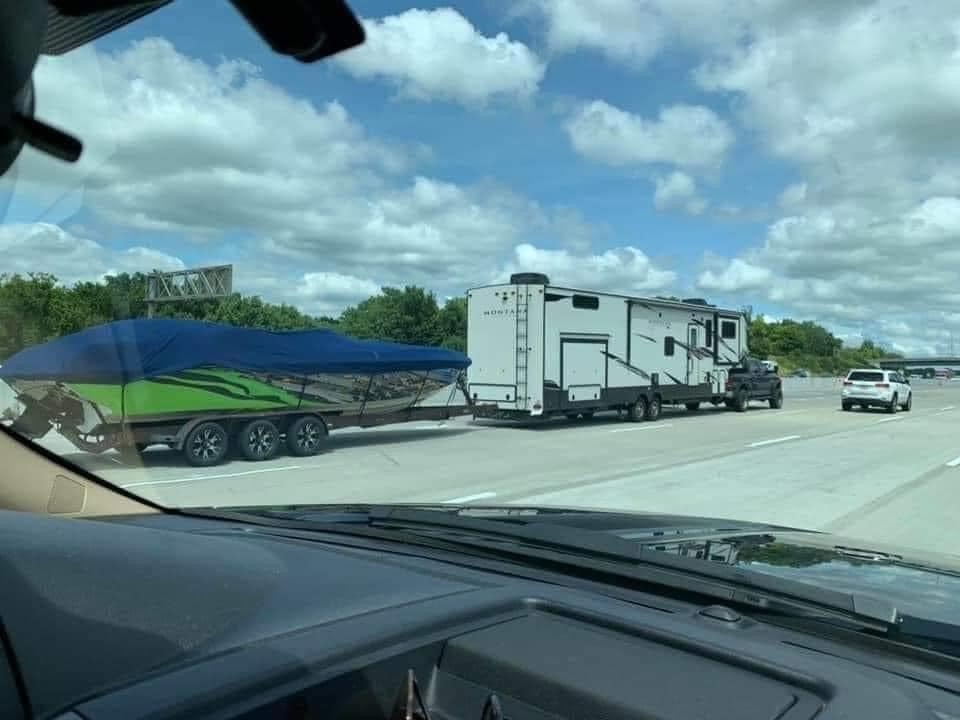
If you're new to the world of towing, the best advice I can give you is: Ignore what the car, truck or RV dealer tells you about a vehicle's actual tow capability.
I spent most of the RV-buying process researching how to safely tow because of the implications of doing it wrong. I want to avoid damaging an expensive truck and travel trailer and ensure I keep my family and other motorists safe. Every truck and RV dealer I spoke with gave incorrect information on one or multiple aspects of safely towing a travel trailer or fifth wheel.
So, let me bust some popular myths of towing:
The advertised tow capacity does not dictate a safe RV weight
You will likely exceed multiple other limits of your truck or trailer before ever coming close to its advertised tow capacity. If your truck is advertised as having a 12,000-pound tow capacity, I guarantee you won't be able to safely tow anywhere close to a 12,000-pound RV.
The "80% rule" means nothing
There's an old urban myth that says you should only tow up to 80% of what your truck is designed to tow. But it's not based on math. Again, the advertised tow capacity of your vehicle is a number you'll likely never come close to meeting before you exceed other limits of your tow vehicle or trailer.
Enhanced features won't increase the tow capacity
Fancy suspension add-ons such as airbags, Roadmaster Active Suspension or stiffer coils don't increase the towing capacity of your truck. All they'll do is make the ride smoother or decrease the "squat" of your tow vehicle.
Most of the time, your tow vehicle will be limited by its "payload" capacity (read: how much cargo your truck can handle on its own two axles). The payload includes the weight of anything you put on either of those axles outside of the tow vehicle's curb weight. This includes the weight of gas, passengers, cargo and, most importantly, the tongue or hitch weight of the RV you want to tow.
If you take my 2020 Ram 1500 Laramie Ecodiesel as an example, my specific trim level with included options has a payload capacity of 1,600 pounds, found on the sticker on the inside panel of the driver's door seal. From that 1,600 pounds, you have:
- 25 gallons of diesel at 7 pounds per gallon weighing 175 pounds
- My family of four, weighing approximately 470 pounds
- Car seats and miscellaneous cargo weighing 40 pounds
That means that, without putting another single thing in the truck, the tongue weight of my RV cannot exceed 915 pounds. The tongue weight of a trailer should be between 10 to 15% of the gross trailer weight, meaning the maximum my trailer could weigh fully loaded is just 6,100 pounds or as high as 9,150 pounds as to not exceed the payload capacity of the truck.
The dealer's advertised tow capacity is 11,000 pounds, but I won't get close to that without exceeding the truck's capacity and, likely, other truck design maximums.
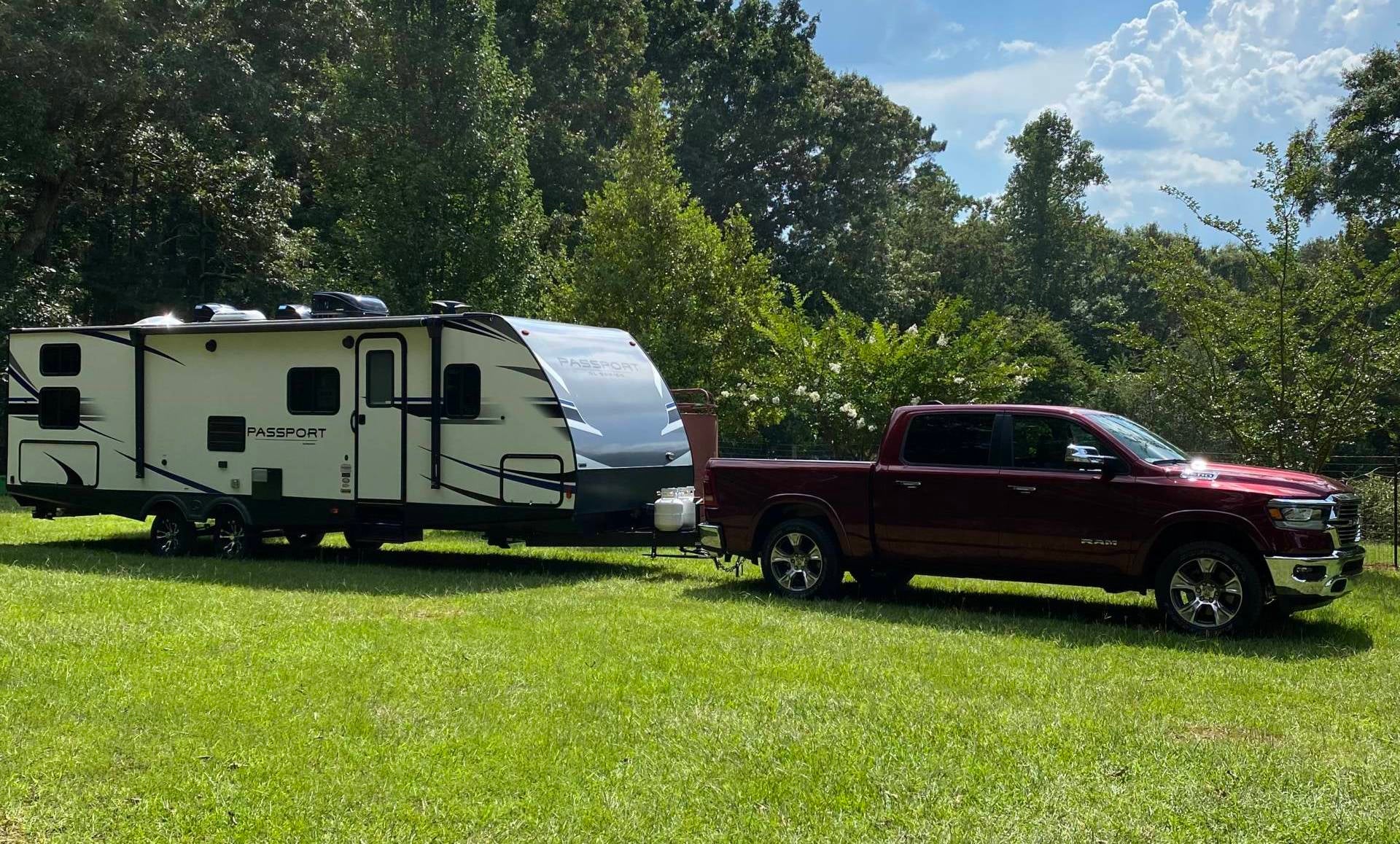
What you'll find after doing the proper tow research is the majority of people towing on the road are exceeding one or several of the limits of their tow vehicle or RV. More than likely, they simply haven't done the math and are just considering the towing capacity and RV weight after a dealer, trying to make a sale, said they were good.
There are many other considerations for safe towing such as axle maximums, gross combined vehicle weights, trailer brakes, weight distribution hitches, sway control, proper mirrors and more. Please do your towing research and be safe. Exceeding design limits can damage or break your tow vehicle or trailer — or worse, get someone killed.
Related: How to rent a relocation RV for only $1 a day
Dealers can include fun extras
If you're buying a new RV, ask the dealer to throw in a few inexpensive (for them) extras that will make life easier for you and prevent annoying repairs down the line. You can also prevent a secondary pitch from the dealer by requesting these add-ons first. Some things to request:
Bug screens for outdoor vents
Your RV will have vents to the outside for everything from the hot water heater to your refrigerator, freezer and oven. They have covers, but aren't bug proof. Dirt daubers and wasps, for example, find the warm vents great places to build nests. Dealers can add metal mesh to the outside of these vents that prevent pests of this size from gaining access and wreaking havoc.
Roof vent covers
There will be roof vents in your trailer to allow air circulation; one typically in the bathroom area and another in the main living area. These have mesh covers to keep out bugs and debris but will be open to the rain. The vent covers you want to request are plastic and have rear air openings. They're inexpensive, but need to be properly sealed to the roof to allow the vents to stay open when it's raining or when you're driving down the road and don't want your RV to get hot inside.
Hitch assembly
You're less likely to be hit with a labor charge if you buy your hitch from the dealer, but either way, ask the dealer to build your hitch on delivery day and ask if you can bring your own. If you have a weight-distribution hitch and sway control, you wouldn't be able to assemble these correctly anyway until you have the actual trailer, meaning you're going to have work to do on delivery day to drive away safely with your trailer or fifth wheel.
The dealer can always say no, but these are easy items to agree to that make both parties feel they've won.
Related: 5 lessons learned from taking a road trip in the age of coronavirus
Hire a third-party RV inspector
Private party sellers with used RVs, as well as dealers unloading trade-ins, can be good deals. The problem with a used RV is you just don't know the true condition of the systems, and many times the warranty has either expired or is not transferable. That's why, if you're buying a used RV, you want to bring a third-party inspector.
If you want to save some money and avoid the depreciation of a new RV purchase, you need to ensure you're not getting a lemon and hire an independent RV inspector to check out your potential purchase.
The National Recreational Vehicle Inspectors Association allows you to easily locate and contact an accredited inspector in your area. They'll check out your investment, typically for a couple of hundred dollars, and inspect every system and structure of the RV to see what problems and costs may lie ahead. If a seller or dealer doesn't want an inspector to check out the RV, you can go ahead and pass on that deal.
Understand manufacturer and dealer warranties
Warranties are a great selling point but come with fine print and asterisks you need to understand.
Manufacturers typically offer their own warranties that cover the workmanship for one year and the structure for up to three years, and these are transferable to new owners. Many RV dealers offer a warranty for life that's not transferable to new owners. That may sound like a great deal, but you have to take your RV to be inspected on a yearly basis, which can cost $300 per inspection.
Getting work on your RV covered by a warranty can also be a headache. Many owners report a week- or month-long wait to get an opening for warranty repair work, and parts are in such short supply right now because of production issues you could wait even longer to get your RV back.
Don't let the warranty alone be a selling point that sways your decision unless you completely understand and accept the limitations and requirements of the warranty.
Related: Best credit cards for road trips
Bottom Line
RVs and tow vehicles can be large investments. You want to be smart when putting this much on the line from a financial and safety standpoint. That means you need to do your own independent research and not rely on dealers alone to give you correct information.
There's an entire outdoor world to explore, and an RV can make that happen for you right now. Be smart, be safe, learn from my mistakes and enjoy taking a leap into a new world if you're a first time RV buyer.
Feature photo by Richard Kerr/The Points Guy.
TPG featured card

at Capital One's secure site
Terms & restrictions apply. See rates & fees.
| 5X miles | Earn 5X miles on hotels, vacation rentals and rental cars booked through Capital One Travel |
| 2X miles | Earn unlimited 2X miles on every purchase, every day |
Pros
- Stellar welcome offer of 75,000 miles after spending $4,000 on purchases in the first three months from account opening. Plus, a $250 Capital One Travel credit to use in your first cardholder year upon account opening.
- You'll earn 2 miles per dollar on every purchase, which means you won't have to worry about memorizing bonus categories
- Rewards are versatile and can be redeemed for a statement credit or transferred to Capital One’s transfer partners
Cons
- Highest bonus-earning categories only on travel booked via Capital One Travel
- LIMITED-TIME OFFER: Enjoy $250 to use on Capital One Travel in your first cardholder year, plus earn 75,000 bonus miles once you spend $4,000 on purchases within the first 3 months from account opening - that’s equal to $1,000 in travel
- Earn unlimited 2X miles on every purchase, every day
- Earn 5X miles on hotels, vacation rentals and rental cars booked through Capital One Travel
- Miles won't expire for the life of the account and there's no limit to how many you can earn
- Receive up to a $120 credit for Global Entry or TSA PreCheck®
- Use your miles to get reimbursed for any travel purchase—or redeem by booking a trip through Capital One Travel
- Enjoy a $50 experience credit and other premium benefits with every hotel and vacation rental booked from the Lifestyle Collection
- Transfer your miles to your choice of 15+ travel loyalty programs
- Top rated mobile app